LONDON — It was supposed to be our easy day.
A play, a tour of the reconstructed Globe Theater, and a take-home meat pie for dinner.
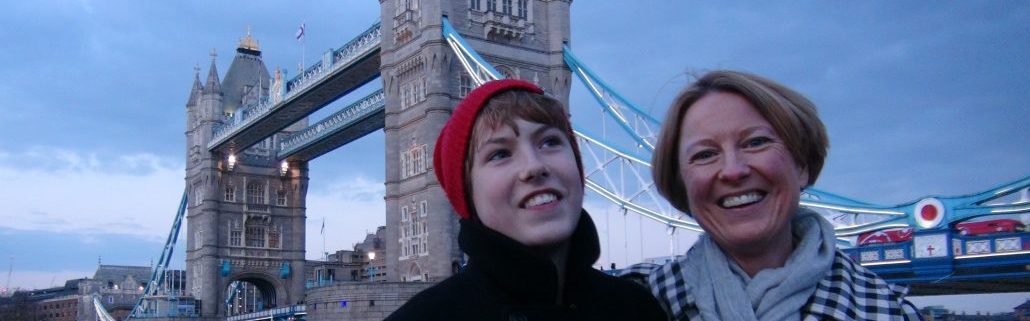
Instead, we ended up in what Will termed a “passive-aggressive” argument at dinner in the shadow of the Tower about whether the take the Tube home at 7:30 p.m. or a cab. Obviously, we again tried to do too much. But that is the joy of travel, n’est-ce pas?
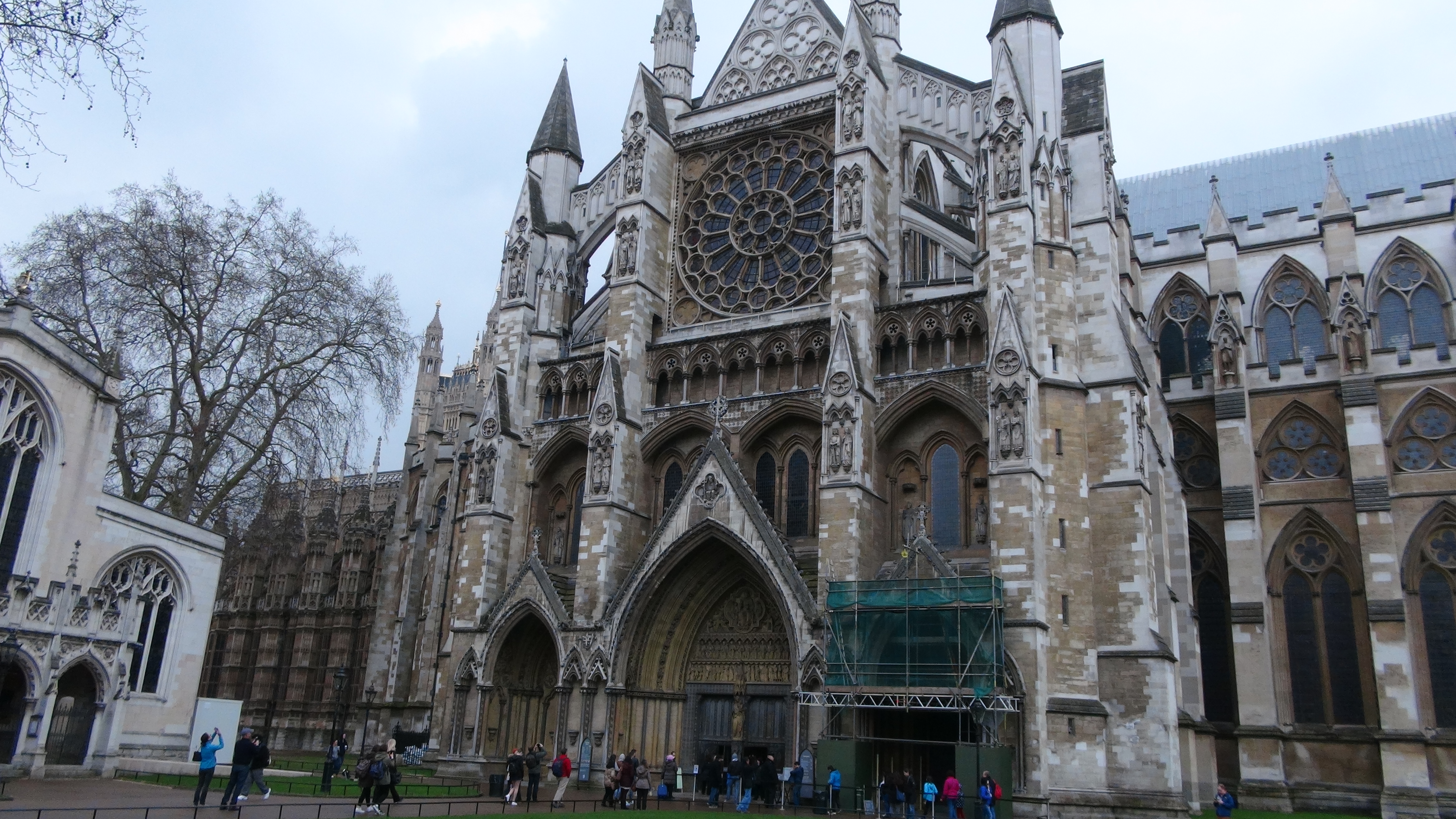
We started the day at Westminster Abbey, the 11th century former monastery that is the old English heart and soul. Here is where the kings and queens are buried, where poets are honored, where the Royal Air Force is commemorated and the Tomb of the Unknown Soldier lies. Its sense of history is overwhelming.
But the highlight of our visit was to the very heart of the abbey itself — the sanctuary of St. Edward the Confessor — the holiest spot in the abbey, a place not on the guided tour, the place the Pope himself came to pray on his visit to London. A sweet old volunteer told me, when we entered the abbey, that we could visit the shrine of the only English saint still intact and still buried in his original spot if we joined the 11 a.m. prayer. We thought it would be crowded, but only about eight of us showed up, to be ushered into the sanctuary, where lay the Confessor, the 11th century king who built the first abbey here. His tomb had been desecrated and stripped of ornament during the Reformation, but the chaplain told us King Henry VIII didn’t dare disturb the saint. Other saints were not so lucky, and their remains “scattered to the wind.” Richard II and Edward III, as well as Edward I Longshanks and Henry III were also entombed in striking bronze tombs in this elevated area.
We joined the chaplain in the Paternoster, and prayed for, among other things, peace among nations, end to strife, the health of the Queen and the realm, and asked Edward to hear us. It was quite lovely.
We then saw the tombs of Queen Elizabeth I, who shares her tomb with her Catholic half-sister Mary, who had once imprisoned her in the Tower. On the opposite side of the chapel lay Mary, Queen of Scots, who had been executed on the orders of her second cousin Elizabeth. They are all laid to rest together. As I said, it’s all a little overwhelming.
Will stood on tombs as diverse as Charles Darwin, whose seat he had taken yesterday at Ye Olde Cheshire Cheese, to Clementi, whose music he has played on the piano. We admired the lovely ceilings of the Henry VII chapel, as well as the Chapter House, where parliaments met from the 14th to the 16th centuries.
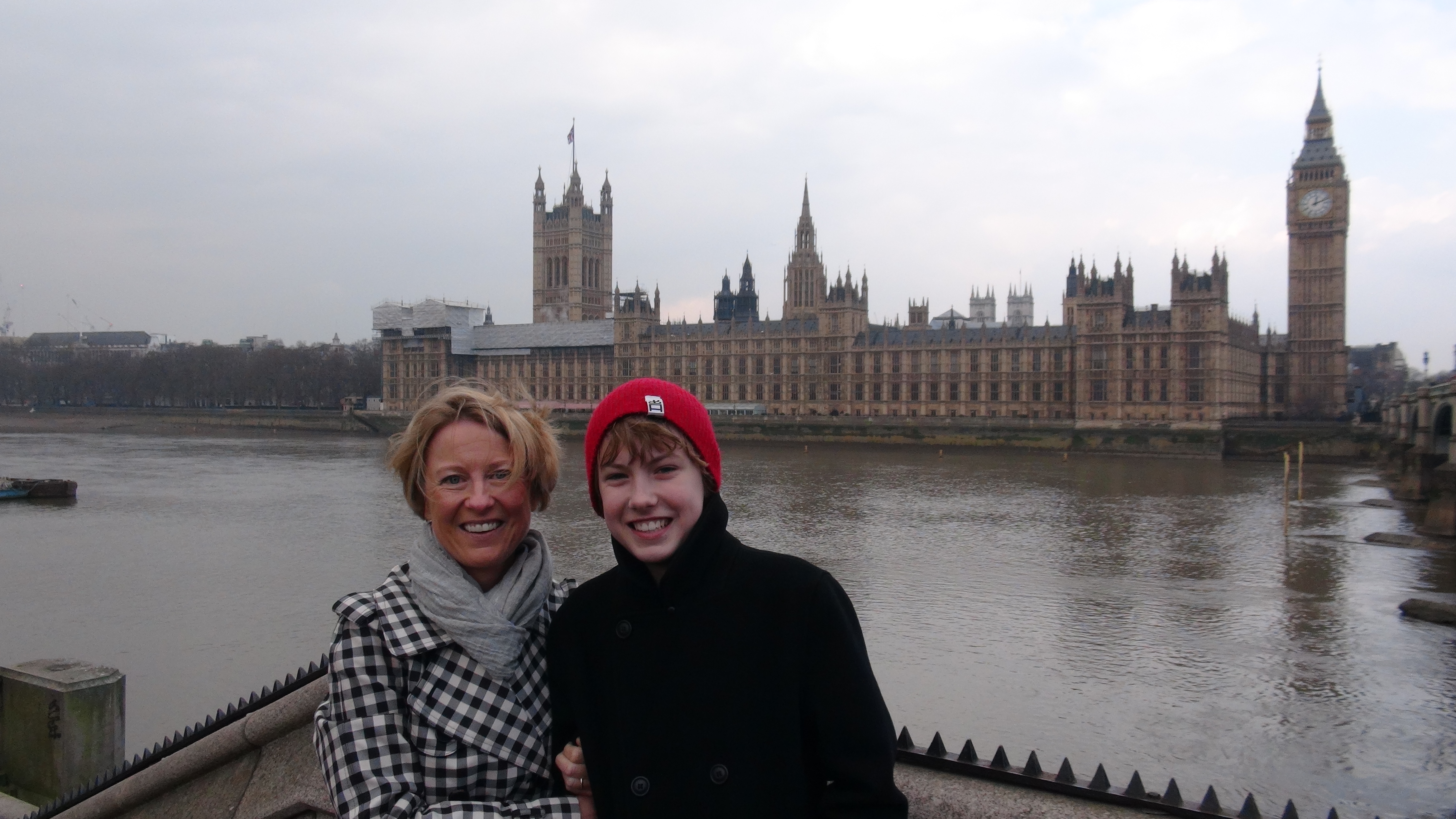
Lunch was in the old County Hall building across Westminster Bridge, a lovely lunch of crab cakes with a view across the Thames at the north bank. We then walked along the south bank, dodging the State Fair atmosphere at the base of the London Eye, and made our way to the Olivier Theater at the National Theater — we had just seen Olivier’s tomb, so it seemed fitting to be seeing a play in his theater. Treasure Island had some terrific sword-play, as well as the most incredible set that rose and fell into the stage, rotating, sprouting pirate ships and islands. Someone told us it’s one of only two such stages in the world — I think the other may be in Ashland. Remind me to check on that. Anyhow, the acting was good, but the second half got a little bloody, which was hard to square with the comedy. Also fittingly, Will’s favorite character was a ship crew member named Grey, whose name no one could ever remember. Grey, Will’s favorite painting at the Tate Modern, now Grey, the nondescript comedy relief.
Our favorite line in the play was just before one of the ships’ mates, a hefty woman very fond of pies, declared just before she died, “Thanks for the pies and adventuring.” Exactly our thoughts.
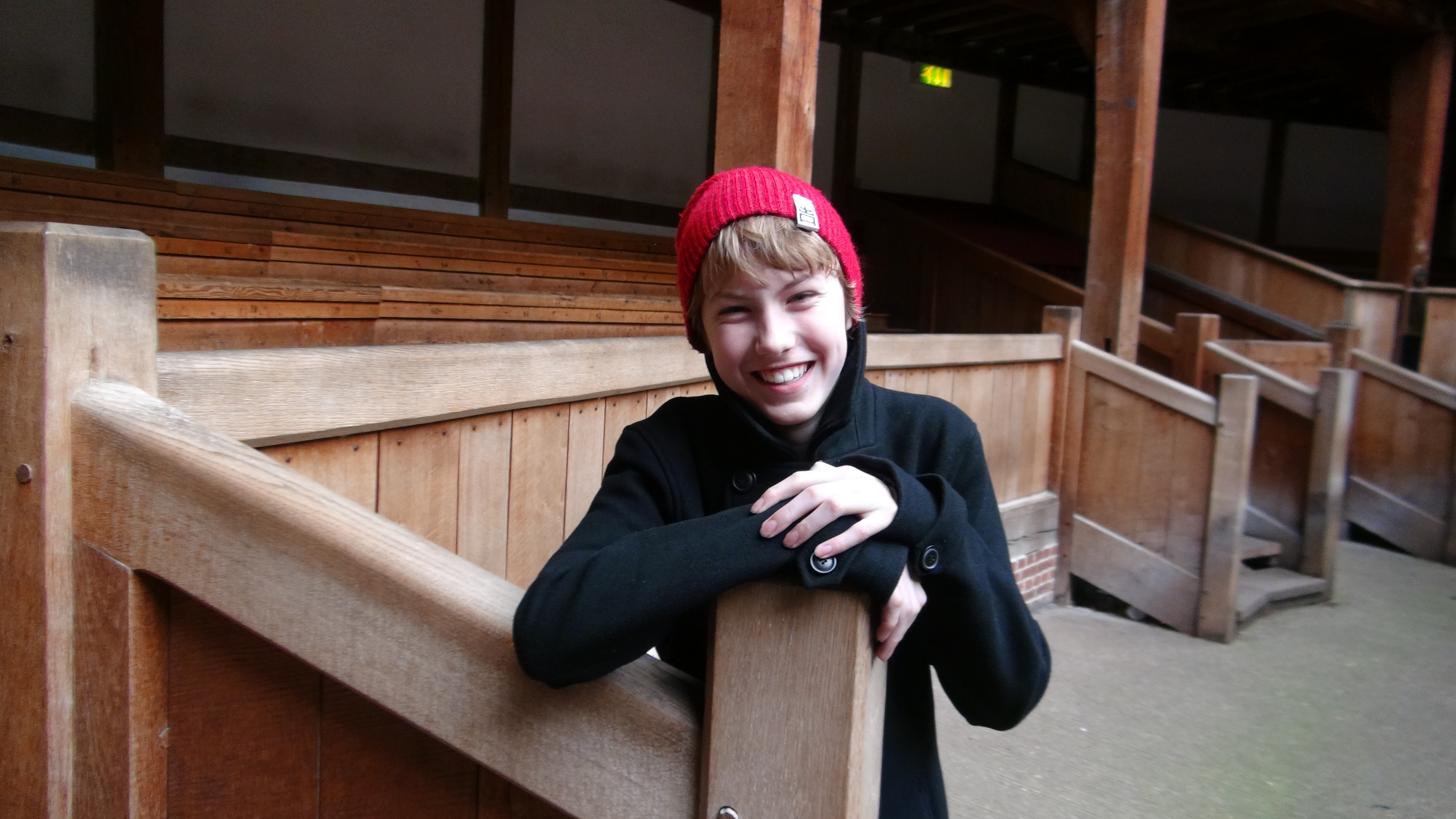
We then raced down the Thames to catch the last tour of the Globe, the vision of American director and actor Sam Wanamaker, built in the 1990s to recreate the theater that Shakespeare wrote for, down to the animal hair in the plaster walls. Rick was disappointed with the tour, since he wanted to hear how it was constructed, but it was interesting and wonderful to see. The guide talked more about the experience of the theater for a 16th century audience, who would pay one penny to stand in the pit at the base of the open air theater. More pennies got you a seat and better comforts, such as a pillow. The groundlings, or the 1,000 who crammed into the pit, apparently smelled quite atrocious, what with the lack of bathing and the penchant for eating raw garlic to ward off the plague. When they roared at the action on stage, apparently they let off a big stink, thus they were called the Pennystinkers. Rick thought the same name suited a certain boy we know and love, as well as a certain black Labrador. Our little Pennystinkers….
Looking back over the day, it seemed incredible we saw the tombs of the kings who appear in the plays by the playwright whose 400-year-old theater we just saw reconstructed. The Oregon Shakespeare Festival just announced they will put on Richard II next season, and here Will saw his tomb and his famous portrait at Westminster, as well as the memorial bust to Shakespeare. It all weaves together…
We were then off to dinner at the Perkin Reveller on the recommendation of our friends’ the Riches, and we had a wonderful dinner (yes, meat pies again, with Will eating half of mine, again) with evening views of Tower Bridge, the creamy stones of the Tower itself, and the Thames.
We ended with the fateful passive-aggressive argument — resolved when we took both the Tube and a cab. Good night all and cheers from London!
 The Thompson Attigs
Maybe you’ll take up making meat pies when you get home.