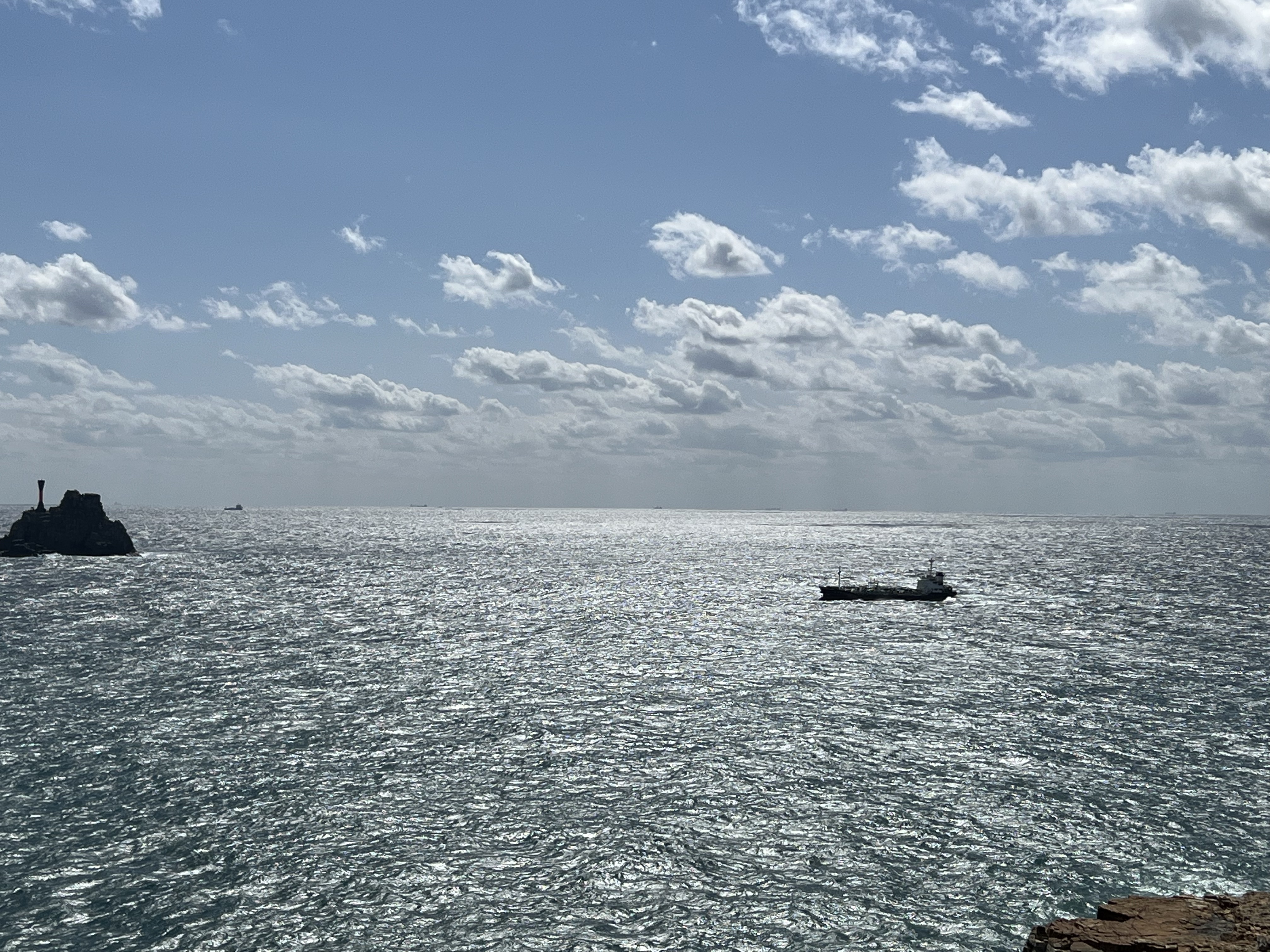
Saturday, Oct. 8, 2022 — On our last full day in Busan, we took a long cab ride to Taejongdae Resort Park to see all that powers this great city — the rugged coastline, the rough seas, the massive container ships making their way into the world’s sixth busiest port.
Taejongdae is a thick pine forest that sits at the southernmost end of Yeongdo Island, where, sixteen hundred years ago, the Shilla King Taedong liked to show off his archery skills. It’s the most stunning natural place we’ve seen during our time in Korea, where rocky cliffs fall off hundreds of feet down to a churning ocean, which was exceptionally wild this day, with howling winds whipping up huge swells that sent spray over the bows of the massive container ships making their way into the port.
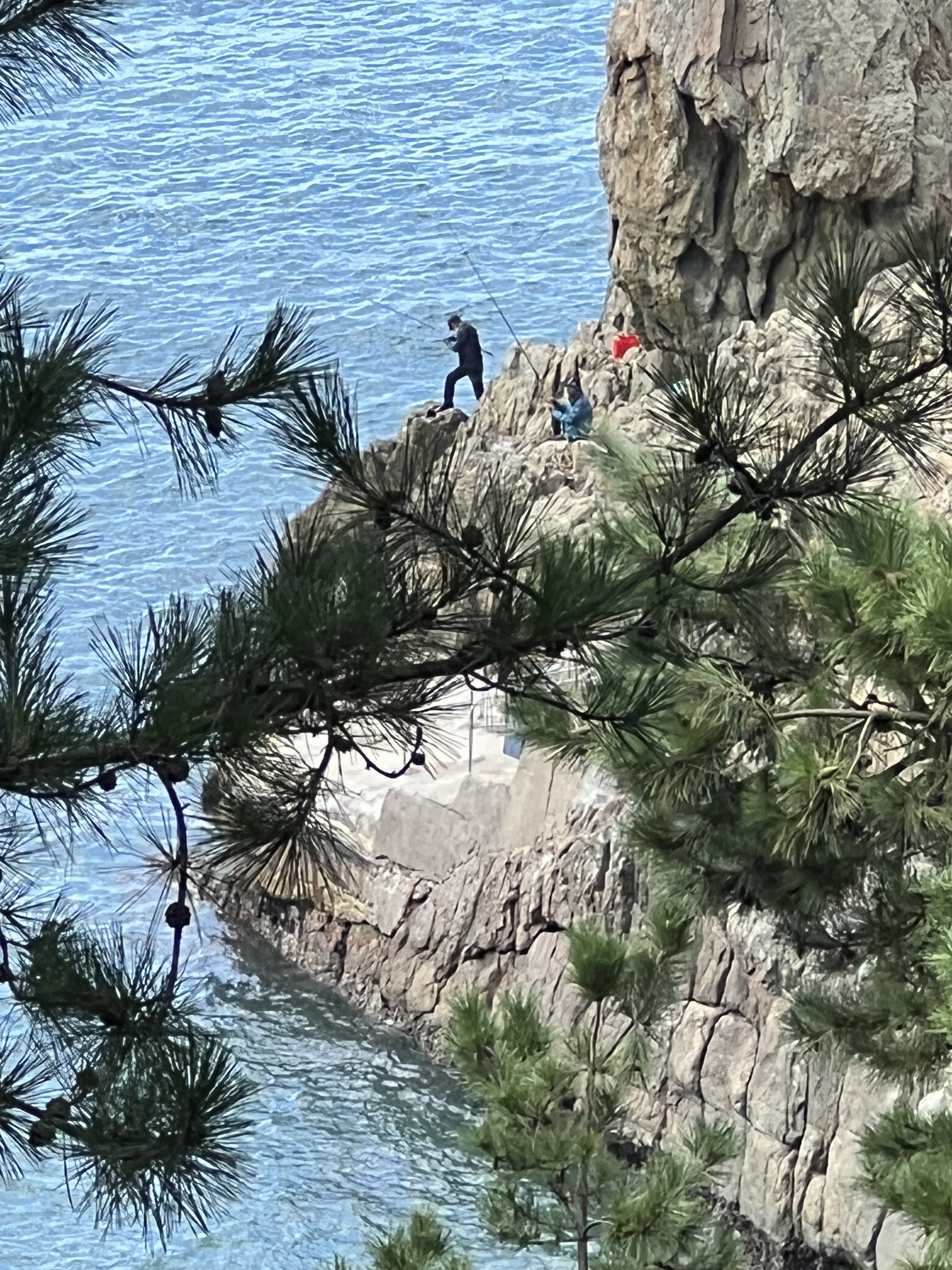
We walked a mile or so through the forest, looking down on fishermen clinging to the rocks on the quiet side of the island protected from the winds, where more than a dozen tankers and other ships were anchored. The park’s cute little tourist train, the Danubi Train, three cars on wheels, went past us a few time. The first stop was an observatory, at the southern point of the island, and, braced against the wind, we could look out and see, very close, Tea Kettle Island, and then about thirty five miles away, the blue-gray outline of a Japanese island, Tsushima, just 50 kilometers away.
Courtenay had some questions about what we were seeing, and what was ahead, for one of the park docents, a tiny, narrow-shouldered woman, who, rather than answer them, eagerly led us on to the Yeongdo Lighthouse, which has been a beacon for ships coming into Busan for over 100 years. “Many, many steps,” Courtenay’s new friend told us. She was a geologist by training, 75 years old, very excited to practice her English, and it turned out that she spoke fluent Japanese, and so the two of them walked shoulder to shoulder, gesturing, chatting, connecting, in three languages, the older woman clearly reluctant to say goodbye, as Asma and I followed along behind.
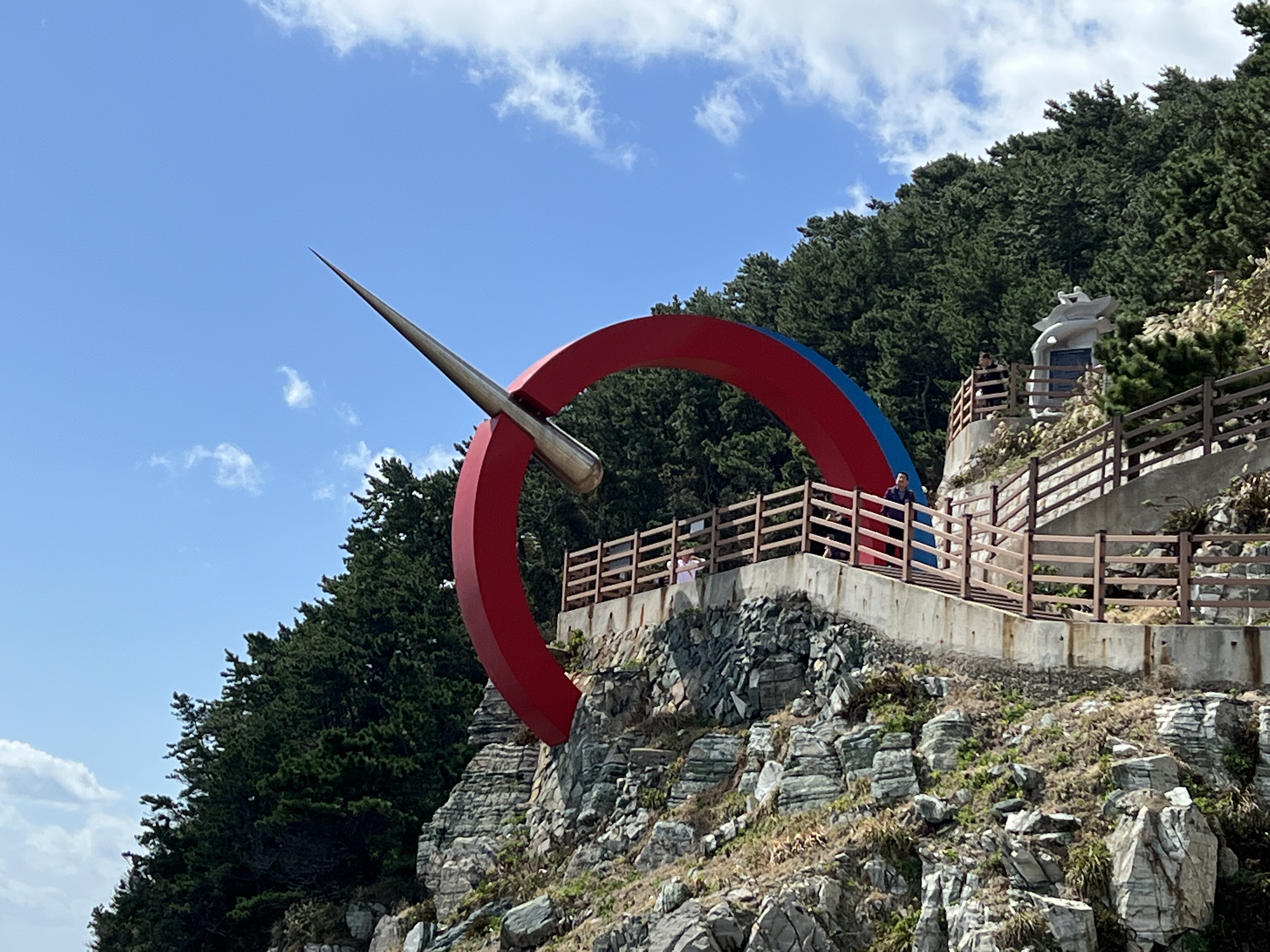
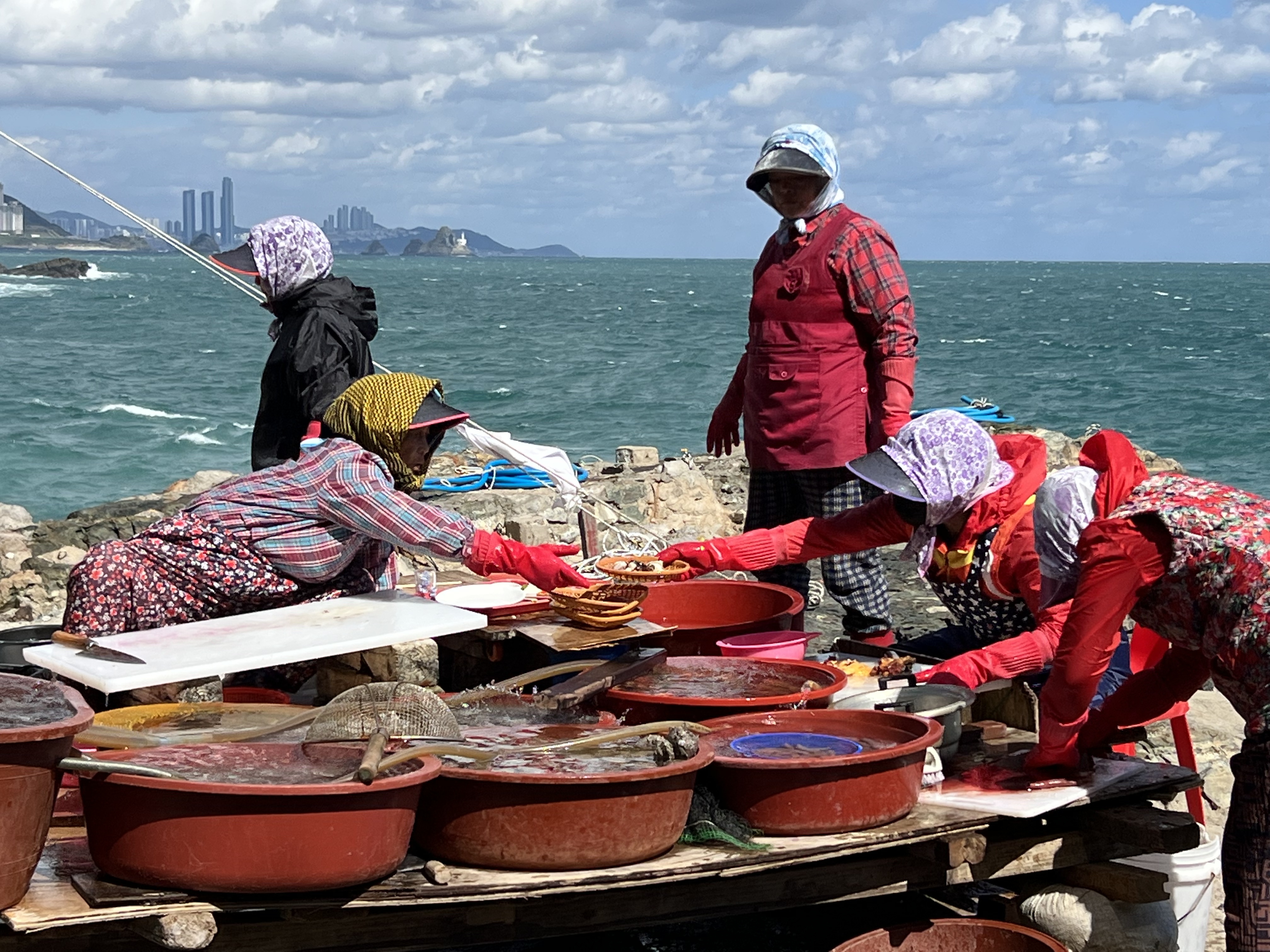
We walked “many, many steps” past the signature statue at the lighthouse, a silver needle in a circle of blue and red, pointed out to sea, and down a long, steep stairway to the rocky shoreline, where a half dozen women in brilliantly colored clothes cleaned and chopped fresh-caught abalone, clams, sea cucumbers and other seafood, the hard wind sending sea spray over them, and serving it to Korean families who sat on plywood platforms tucked behind the rocks.
It was an unforgettable scene, the deep blue-green water, all the ships, the women braced against the wind, the sun shining on the glittering surface. There is a Korean word, “절경 /jeol-gyeong/.” The word means a scenic view that can’t be better. That will be our lasting memory of Busan.
 The Thompson Attigs