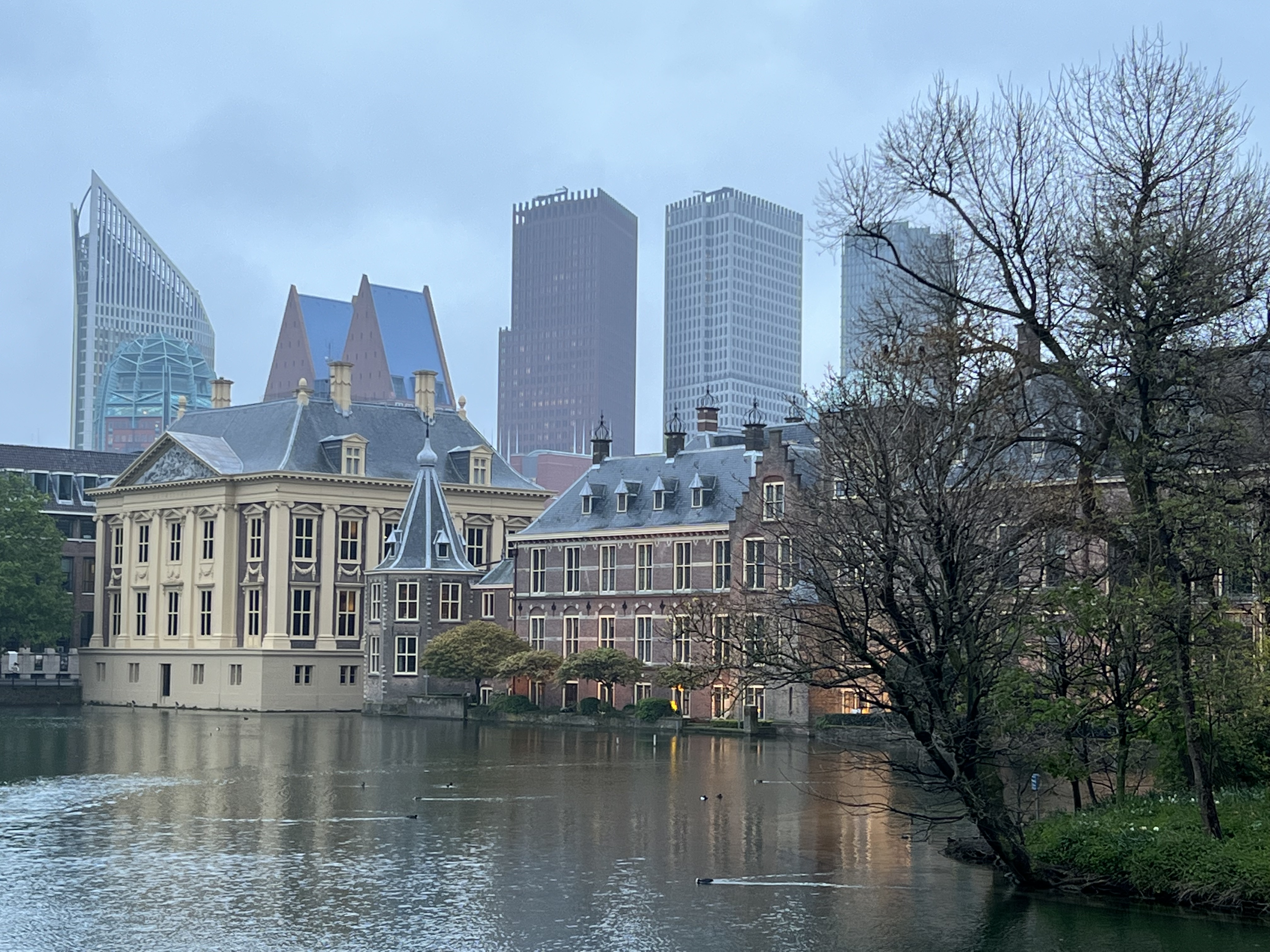
Friday, April 28, 2023, THE HAGUE, The Netherlands — We left the crowds and tumult of Amsterdam this morning and took an early train to The Hague. Fog and mist drifting in from the nearby North Sea wreathed the entire city, including the regal, deeply historic Hotel Des Indes, our home for one night. The Hague was cool, quiet and dignified, befitting a city that contains not only the International Court of Justice and the International Criminal Court, but also The Netherland’s Cabinet, States Genera, and its Supreme Court.
It was also beautiful, with the stone walls and spires of the The Binnenhof, a long row of historic government buildings, and the warm, light yellow walls of the Mauritshuis museum reflecting in the canal waters. The “Peace Palace,” built with a huge donation from Andrew Carnegie and home to the international courts run by the United Nations, is another quiet, graceful building that has a deep and important history.
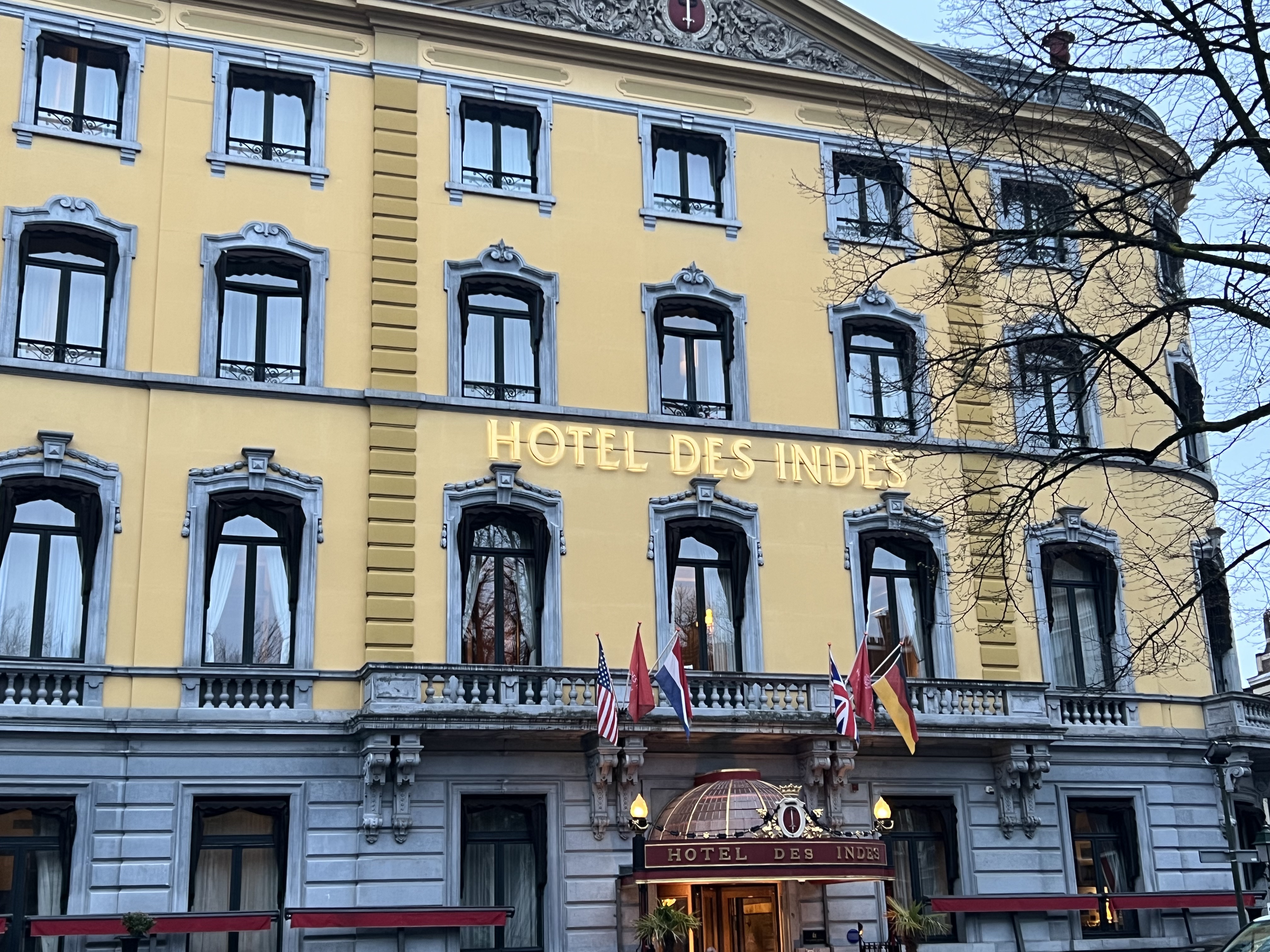
We were pleasantly surprised by everything about The Hague, including the amazing Hotel Des Indes, which warmly welcomed us to our room, even though it was only 9 in the morning. Like so much of The Hague, the Des Indes has an incredible history dating back to the 19th century, having welcomed everyone from King Ferdinand (whose later assassination triggered World War I), to Teddy Roosevelt, to German occupiers, and to Churchill, Eisenhower and other Allied leaders after the Nazis were driven out of The Netherlands. All kinds of other notables have stayed at the Des Indes, including Eleanor Roosevelt, Mata Hari, the Kennedys, Bono, Michael Jackson, Josephine Baker and Prince..
We started our day in The Hague with, yes, an early visit to the Mauritshuis art museum, home to Vermeer’s “Girl with a Pearl Earring” and other wonderful paintings, including many by Rembrandt and Hals. We also loved Paulus Potter’s 1647 huge painting of a bull and other barnyard animals, which is amazingly lifelike, right down to the bull’s twitching whiskers and the buzzing flies.
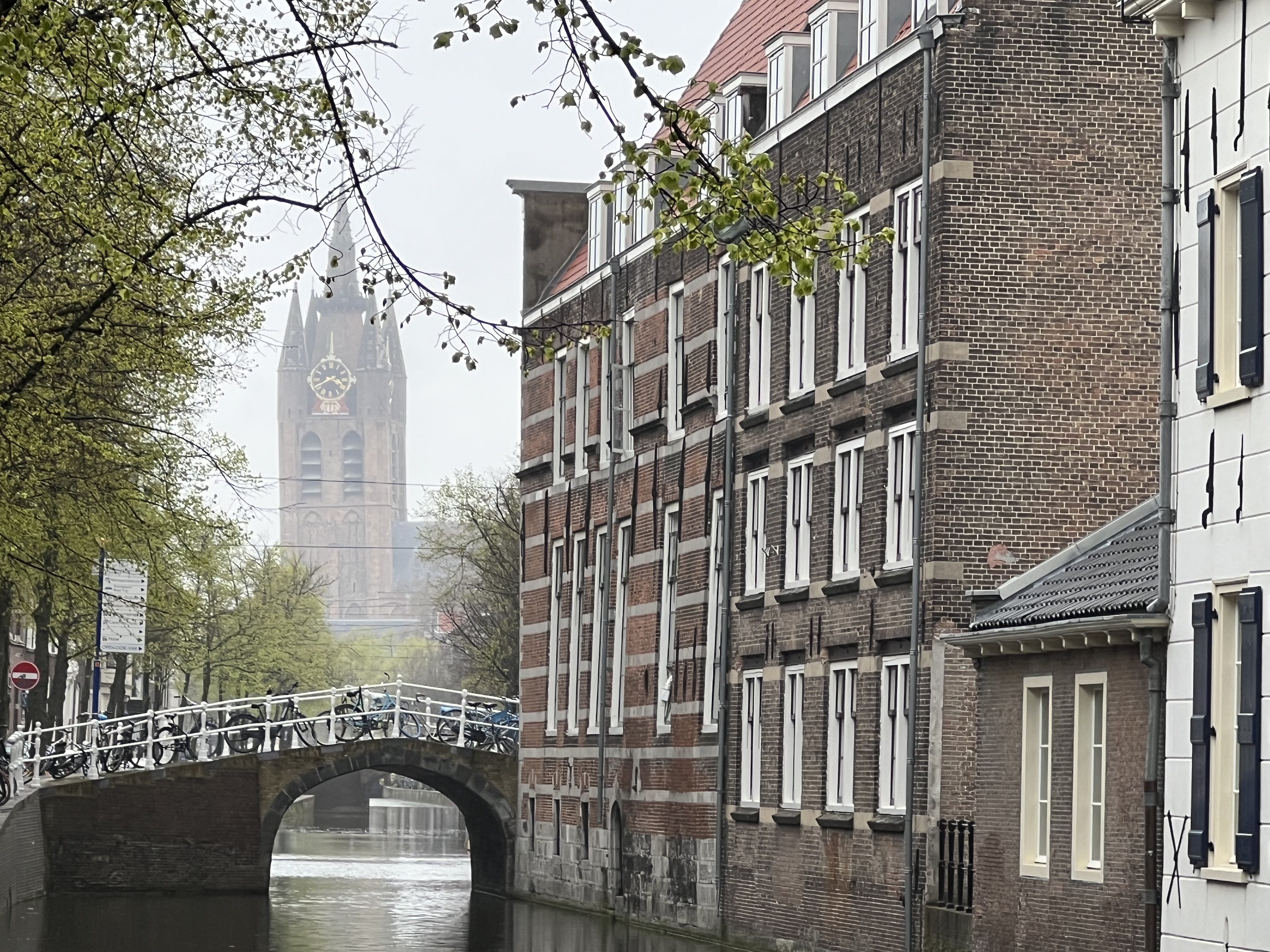
After a break for some coffee and homemade apple pie, from a hole-in-the-wall cafe with a funny, sweet server, we took a tram out to Delft, Vermeer’s hometown and the place with all that blue-and-white Delft pottery comes from. It rained lightly the whole time we were in Delft, but we were mostly inside, in both the Prinsenhof Museum, where they had a Vermeer exhibit and where the beloved William the Silent was assassinated, and the impressive Vermeer center, which gave a full and interesting account of his life and paintings. It a great way to round out our Vermeer expedition. William the Silent, also known as William I of Orange, led the revolt against the Spanish in the 1500s that resulted, eventually, in independence for The Netherlands. Children who visit the Prisenhof are given small metal “detective” cases that include a magnifying glass and other equipment to investigate William’s murder. Two bullet holes remain in the stairwell. Kids were down on their knees studying the holes with their magnifying glasses. (It was somewhat cuter than it sounds.) William is entombed in the beautiful “new” cathedral that we visited in Delft.
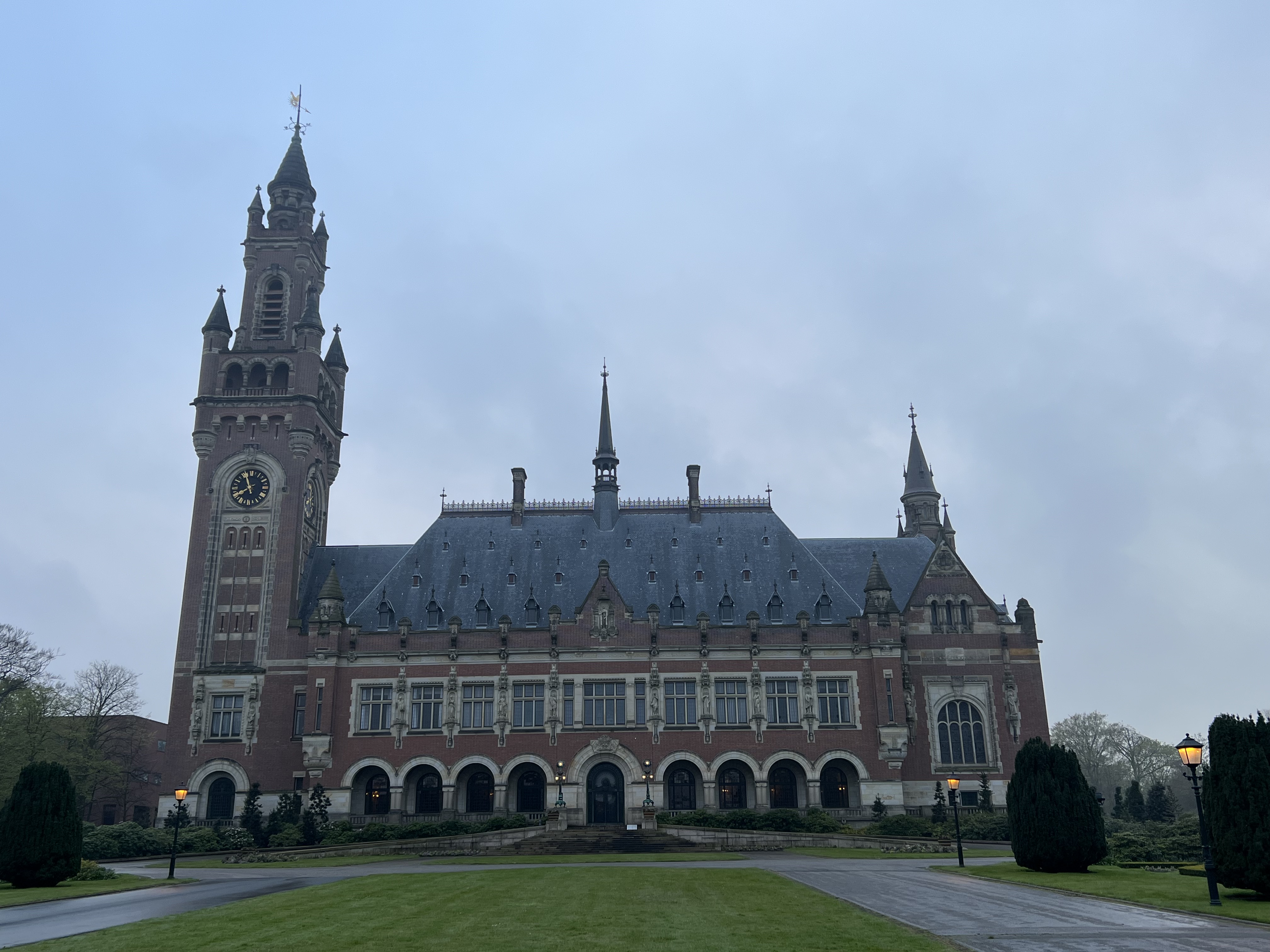
After we trained back from Delft, we had a wonderful Italian dinner in a tiny restaurant near the Hotel Des Indes and walked through the fading light to the Peace Palace, which was closed and quiet for the day. We stood behind the metal fence and hoped aloud that Putin and other Russians responsible for so much horror and death in Ukraine would one day be brought to justice in the building.
 The Thompson Attigs