







Kanazawa, Japan, Nov. 7, 2023 — We’re nearing the end of our three days in Kanazawa, a place we will remember for its atmospheric samurai and geisha districts, for its busy seafood market and an unforgettable sushi dinner, for the hawks known as black kites that swooped and soared over the beautiful castle grounds, and, most of all, for the timeless beauty of the Kenrokuen Garden and its twisted, evocative trees.
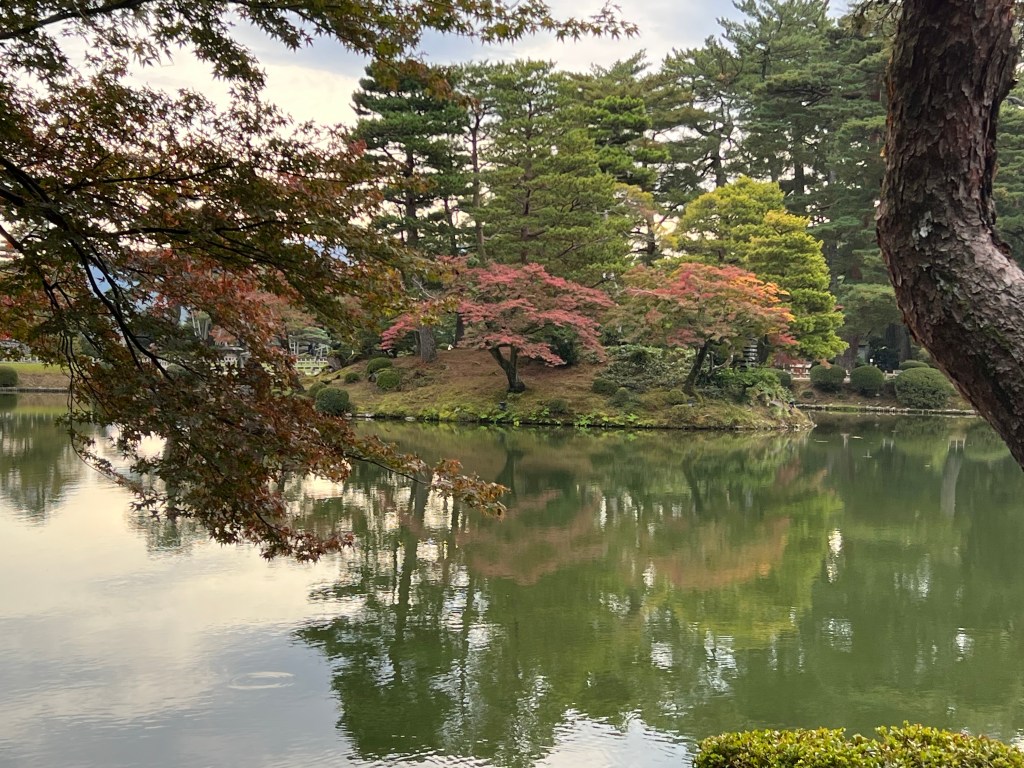
It was during our quiet morning strolling the curved paths of Kenrokuen, considered one of Japan’s three greatest landscape gardens, the only sounds the splash of water and the distant thrum of the city, that I felt most connected to Kanazawa, and the most in love with the city. The name Kenrokuen literally means “Garden of the Six Sublimities,” referring to spaciousness, seclusion, artificiality, antiquity, abundant water, and broad views, which are said to be the six attributes that make up a perfect Japanese garden. They make for a really nice city, too.
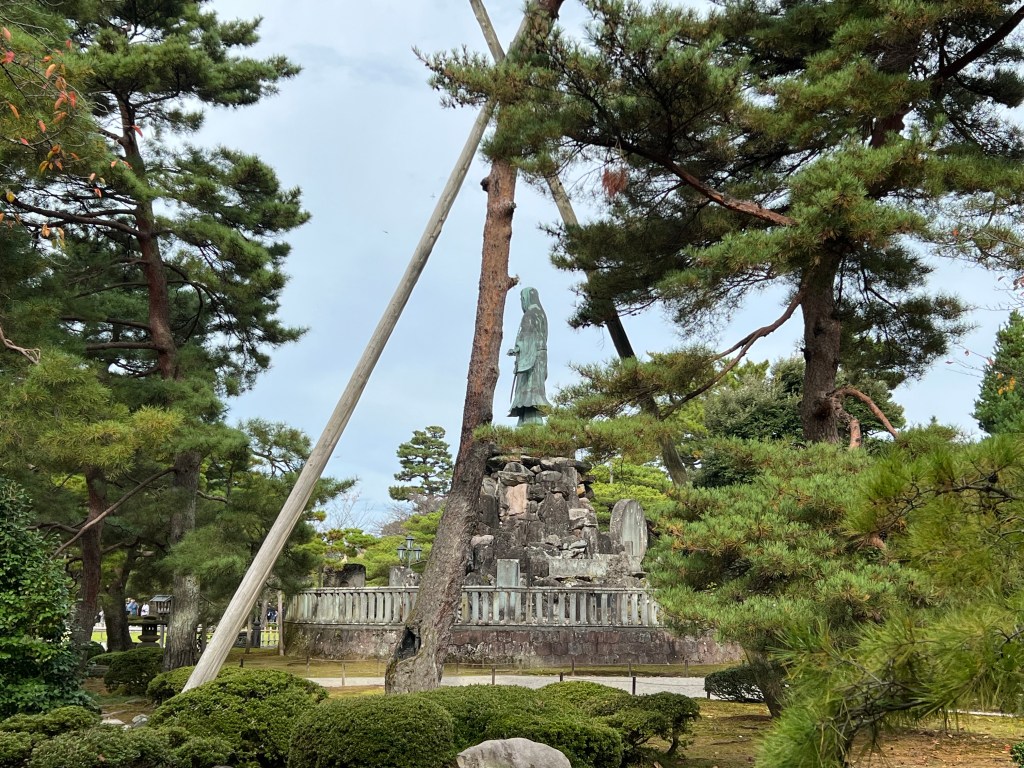
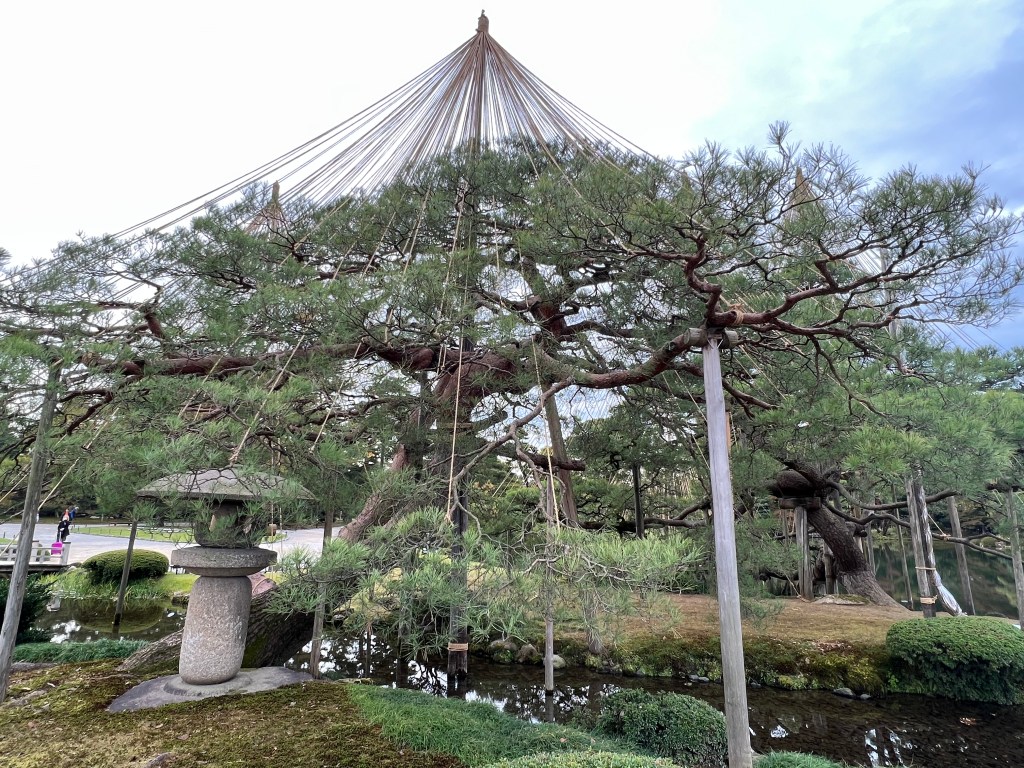
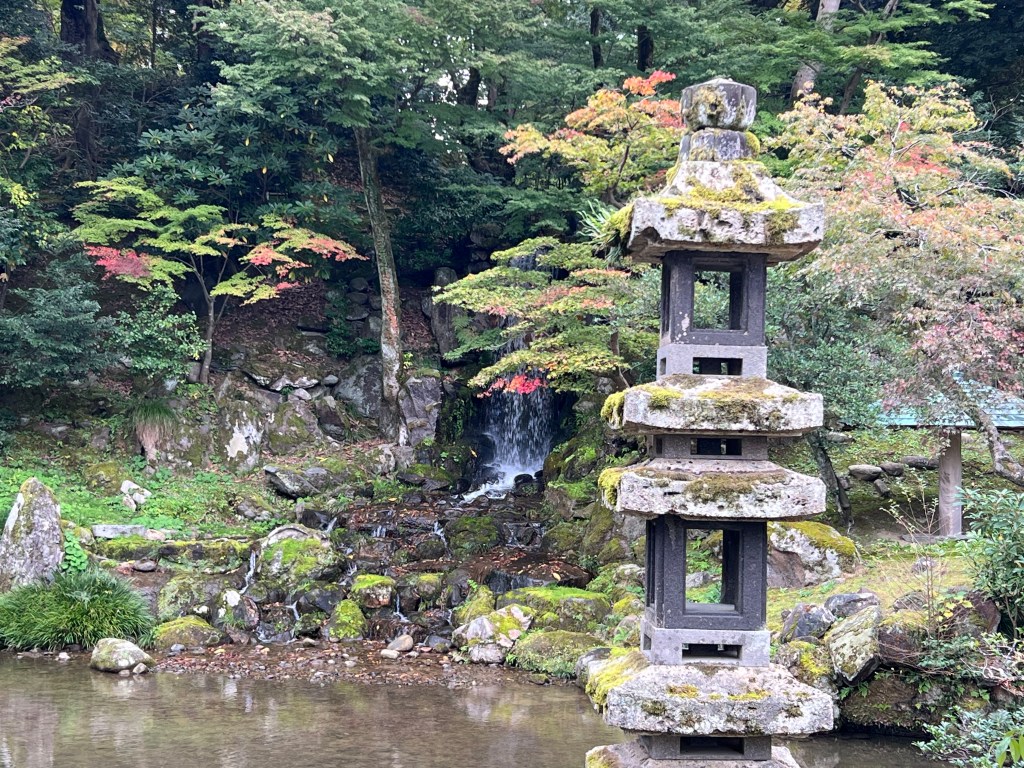
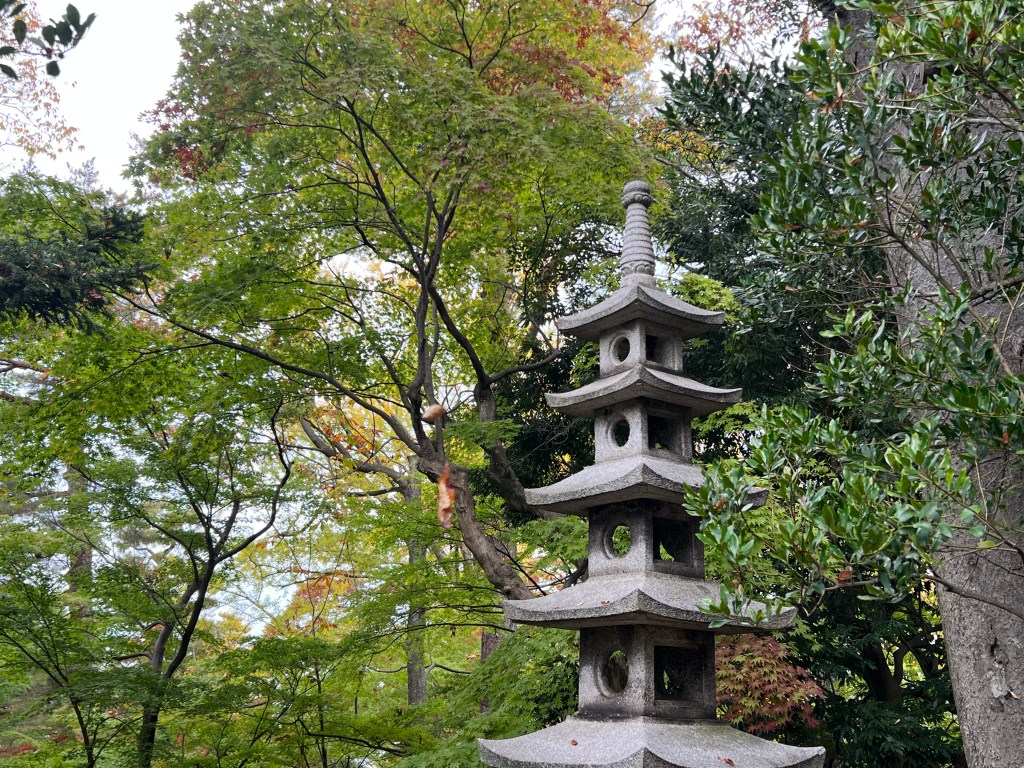
It’s taken centuries of hard work to make Kenrokuen the incredible garden it is today. The spacious grounds used to be the outer garden of Kanazawa Castle and were constructed by the ruling Maeda family over a period of nearly two hundred years. Kenrokuen was opened to the public in 1871. One-hundred-and fifty-odd years later, around every corner there is something to experience, to see and feel: Ponds, streams, bridges, teahouses, flowers, stones, viewpoints, lanterns, and thousands of trees, many of them very old, very twisted trees with their limbs propped up with all kinds of supports, some of them hanging low over ponds and streams. Many of the trees, especially the expressive pines, struck us as individuals, old men and old women, who had seen and lived through so much history, and we even wondered whether the gardeners had named them.
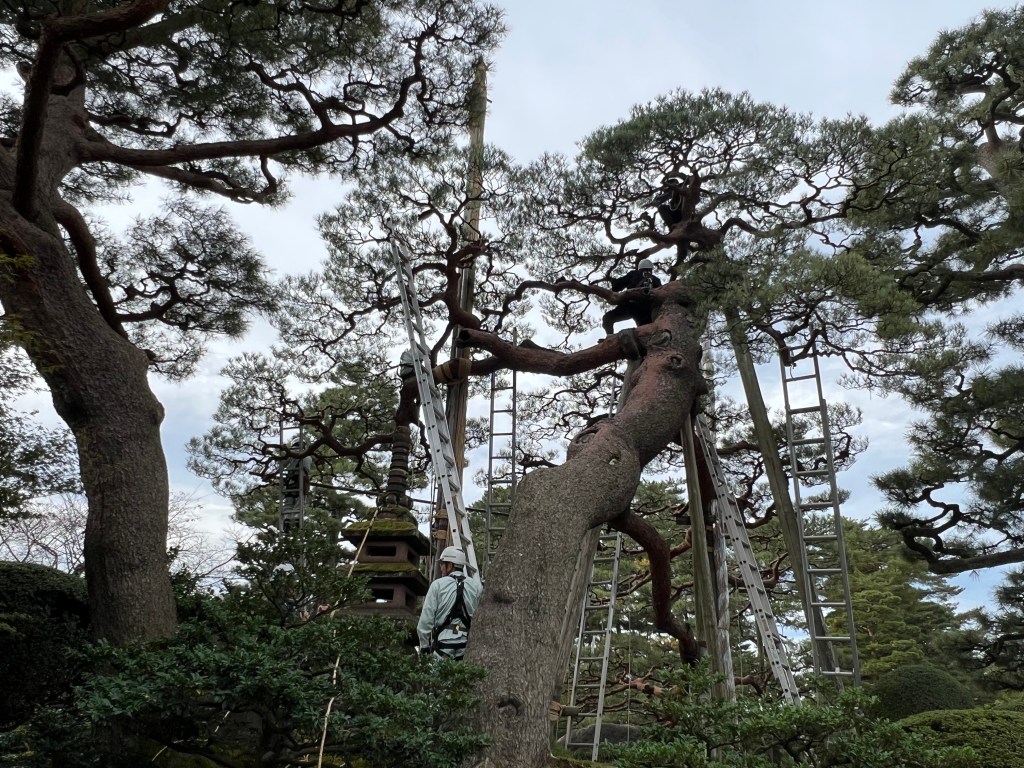
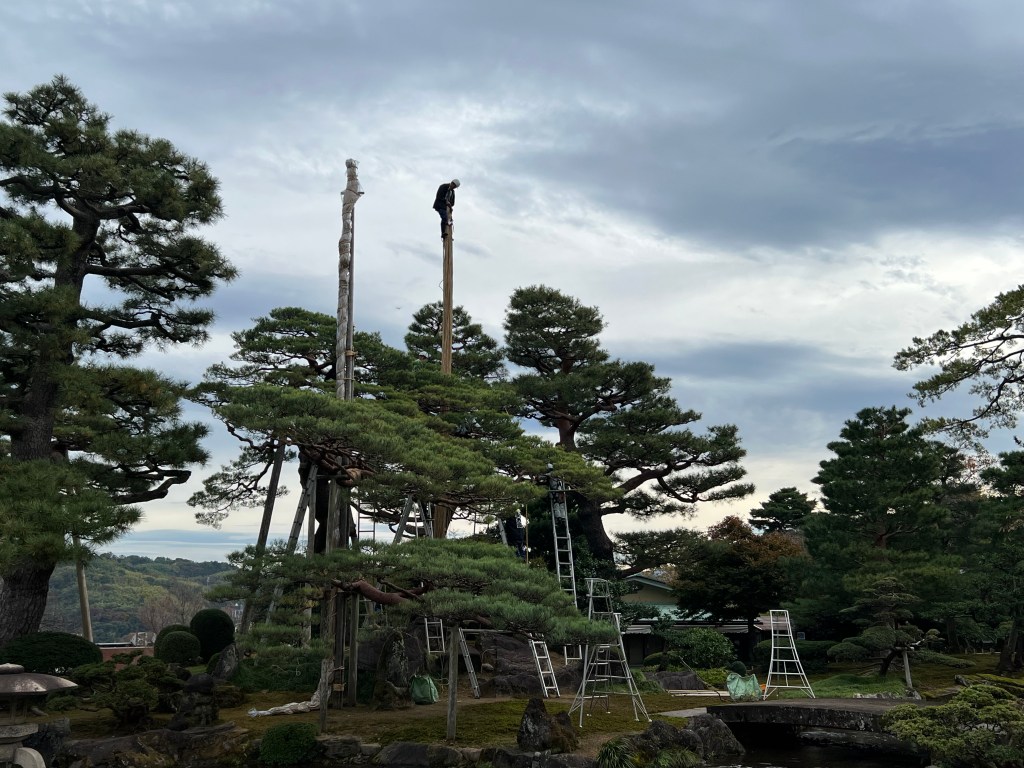
We’ve been in other gardens, in Japan and elsewhere, where the hard work of caring for them seem deliberately hidden, where the gardeners seemed to keep out of sight, perhaps not to affect the experience of the visitors, or maybe to make the landscape seem more natural than it actually is. Not so at Kenrokuen, at least not during our visit. The grounds were busy with crews picking up pine needles, plucking leaves from shallow streams, and, most spectacularly, a group of men who leaned ladders all over one of those big, expressive pines, and climbed among the heavy branches, even perching on the tip top of a towering center pole, while installing the elaborate rope supports that give the long-limbed pines the strength they need to hold up the heavy snows that will arrive in Kanazawa in the coming months.
Over a couple hours of wandering Kenrokeun, we saw and felt and experienced every one of those many “sublimities,” the space and water and solitude, ancient stone paths, burbling creeks and quiet ponds, and on the edge of the garden, the broad views looking out across modern Kanazawa. We walked through a grove of plum trees, their last yellow leaves falling to the ground. We came up one path and discovered three wildlife photographers with two-foot-long telephoto lenses excitedly photographing something, we dared not interrupt them, the motor drives of their cameras firing away. We never saw what they were photographing.
It must have been another one of those beautiful sublimities.
 The Thompson Attigs
Wow 😊