MADRID, Spain — March 6, 2025 — All the guidebooks say the same thing: When you come to Spain: don’t bring up, don’t ask questions, say nothing about the Spanish Civil War. Almost 90 years after the war, which was triggered by a Nationalist military coup against the democratically elected Republican government, it’s still too sensitive, too raw. And, supposedly, Spaniards of all sides “agree” on what they call a pact of silence about a terrible war that saw hundreds of thousands of military deaths and executions, and culminated in four decades of Fascist rule.
So, on this, our first morning in Madrid, we had many questions about the Spanish Civil War, which we knew mostly through Hemingway’s wonderful novel “For Whom the Bell Tolls.” We took a remarkable tour with Almudena Cros, an historian and guide who leads walking tours that are a tribute to the Spanish Republic, the International Brigades, and the forgotten victims of Fascism. We met at the Ciudad Universitaria, the City University, and as a light rain fell Almu led us onto the campus where students streamed in and out of buildings pockmarked by bullets and masonry damaged by mortar rounds. The university is where Republican forces stopped the Nationalist march on the Spanish capital, Madrid, and where, from a maze of trenches, both sides battled for years.
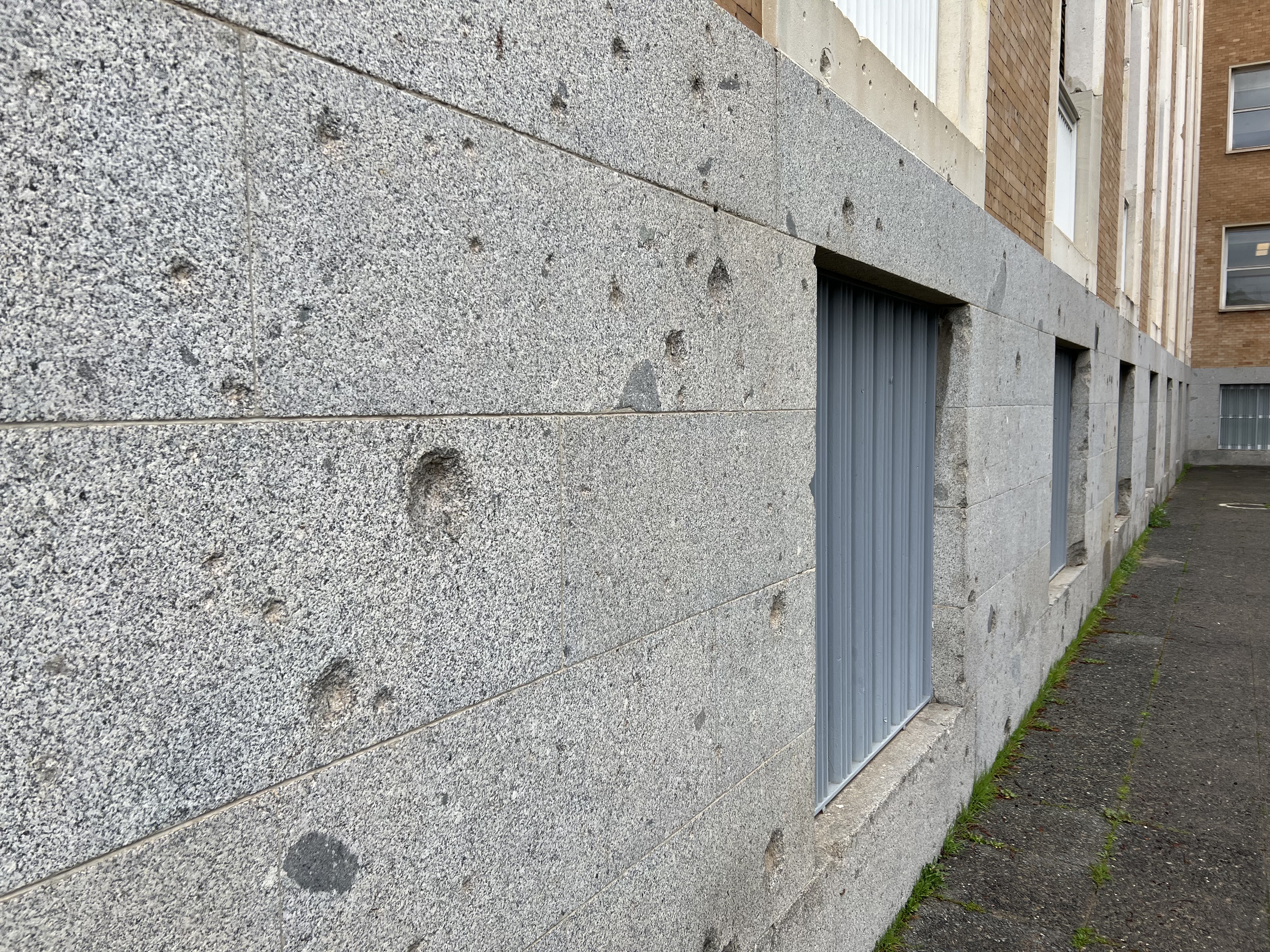
It’s hard to imagine a more powerful example of Spain’s pact of silence, its collective refusal to talk about, acknowledge, or even remember, what occurred after its Civil War broke out in 1936, than to learn that every day thousands of college students walk in and out of buildings riddled with bullet and mortar holes and other damage from the war, and yet are generally oblivious about what happened there less than a century ago.
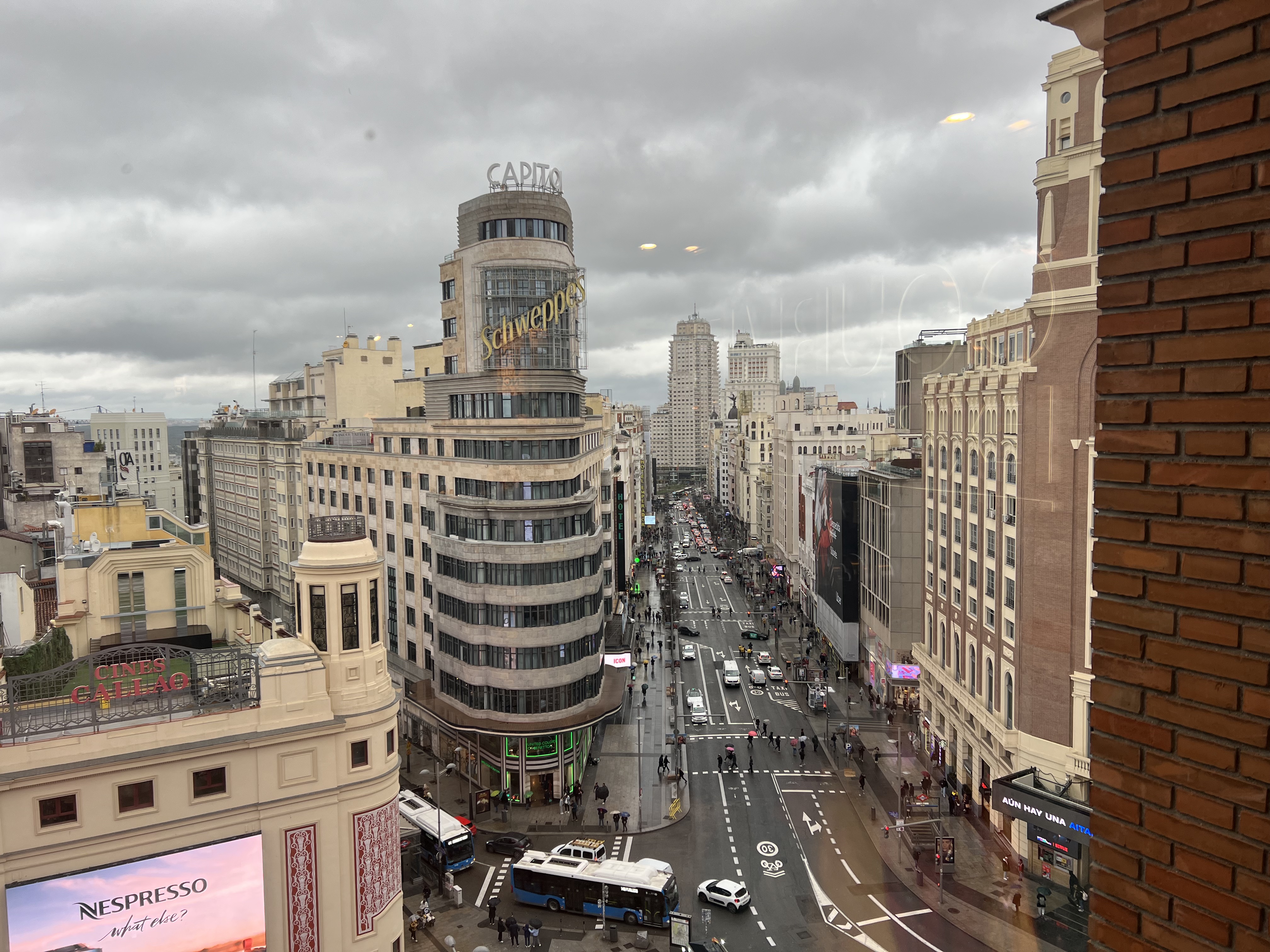
Almu walked us briefly through the history of the war in Madrid, showing us historic pictures of important sites during the war. We went into a nine-story building that was built on the site of the Hotel Florida, where Ernest Hemingway and many other international journalists had stayed and worked during the war. We saw the Plaza Mayor, where Nazi bombs had carved huge holes. We walked down some of Madrid’s most beautiful, and most lively, streets and compared them with Almu’s black and white photographs showing these same streets lined by crumbling buildings and rubble. How many of the thousands of people on those streets today know what happened there?
Almu fiercely believes it’s past time for Spaniards, and their government, to have more honest conversations about the war, to put up plaques and memorials that tell more fully, more truthfully, what happened. She seems to be a fairly lonely voice. Spaniards, it seems, are against digging into this part of their history, even refusing, in many cases, to unearth the mass graves of those executed during and after the war.
Thanks to Almu, we had an unforgettable introduction to Madrid and to the history of the Spanish Civil War. Her advice to visitors to Madrid, and her wish for those students that we walked past today, is this: Ask questions, notice the bullet holes, remember what happened there, and why, and take time to honor those who lost their lives fighting to defend democracy in Spain.
 The Thompson Attigs