By Will
During our first full day in the beautiful city of Taipei, we had the opportunity to visit the Yingge Ceramic Museum in the far suburbs of the city. We got to wake up at a respectable time, and the morning moved at a slower pace than the preceding early rising Meiho school days. After a traditional Taiwanese breakfast at the hotel, we left around 9:15 for the train station. It was raining super hard, and many of us were confused about what line to take and which way to walk to get to the correct train. In our two groups–Carter’s group and Li-Lings group–we were able to work out the train system, first the city train and from there we took a bigger and longer train to the suburb of Yingge. The full trip took over an hour, and being “Quiet Americans” was very difficult on the crowded train.
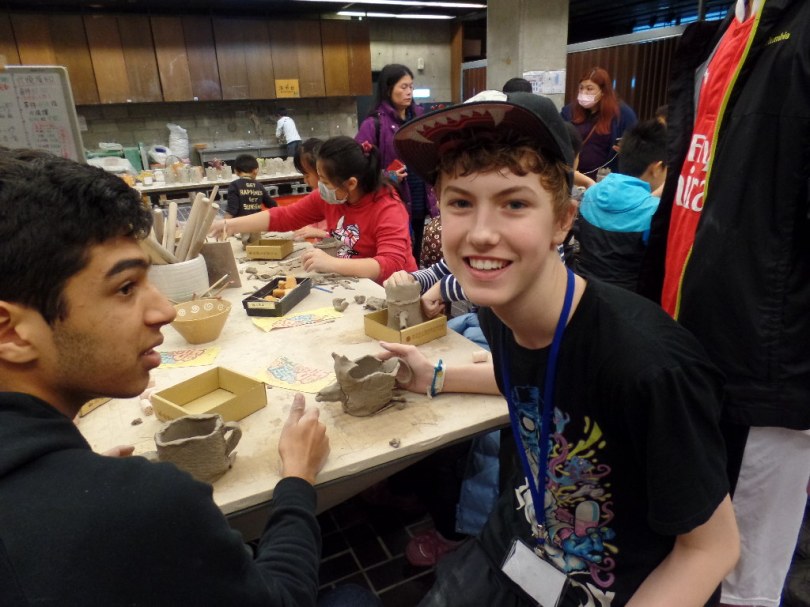
SAMSUNG CAMERA PICTURES
Once we arrived in Yingge, we took a peaceful ten minute walk past many ceramic shops, a sign of what was to come. Li-Ling told us that we had a ceramic class scheduled at eleven. I was ecstatic! Not only would we get to see the amazing ceramic art, but we would get to try it for ourselves! We walked past down the stairs to the ceramic studio and took a look around. It was a big room, with towering two story tall ceilings and tables stacked with all kinds of tools. They ranged from toothpicks to scrap paper, with mounds of caramel-colored clay rolled into balls and stacks on rectangular tables surrounded by small wooden stools. We spent the next hour learning to make a small clay teapot while the instructor showed us what to do on a huge projector while she spoke to us in sharp, quick Chinese. Because of the need for forty five days of kilning for the pots to solidify, we were unfortunately not able to bring our creations home.
After this experience, I was starving, and we walked over to the museum coffee shop and had a very nice lunch. Many people went back for seconds and thirds. After lunch we began the next section of our day, touring the museum. We were told to each pick one work of art about which we would write many specific details, along with how the artwork made you feel. This portion took about an hour and a half, and afterward some people went back to the coffee shop to eat more food. We toured the museum for a little bit more before beginning on the long journey home.
As you can imagine, it was just as long, crowded, and noisy as before, and afterward we were ready to unwind at the hotel. We will be spending about an hour and a half here before going out for dinner at the famous “Toilet Restaurant” in Taiwan, where all the food is served in toilets and we will be sitting on toilets while we eat. After this we will be shopping and touring the Ximending shopping district. After this, I expect that we will be very tired, and ready to rest up for the long day of touring the city with our new Kangchiao homestay buddies.


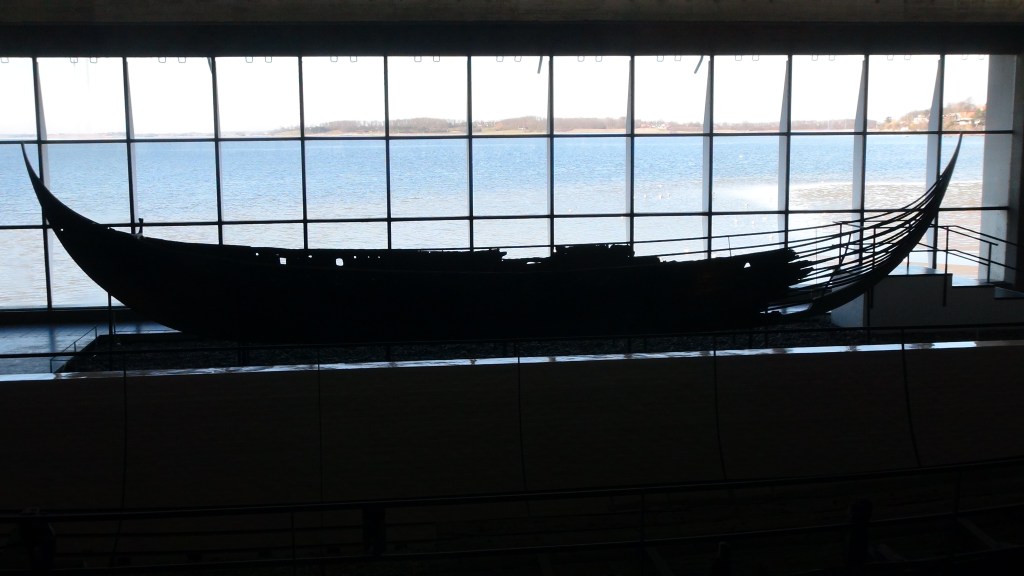
 Museum, where they have the remarkable remains of six original Viking ships. The Vikings apparently had deliberately scuttled these ships in an effort to block one of the access points to the harbor, and keep invaders out. The Viking Ship Museum is in an uninspiring concrete bunker,but the restored ships, with their scarred wood, were amazing. Outside the museum was a row of seagoing replica ships, built to the actual dimensions of the originals, constructed all by hand, just like the Vikings. A crew had sailed the largest of the ships, a long narrow battleship, all the way to Ireland. On our visit, that ship was up on blocks in the winter grass, a lone man sanding on its stern.
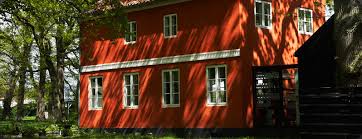 Last night we had one of our most memorable dinners ever, traveling twenty minutes or so north of Copenhagen to Den Rode Cottage, a tiny restaurant of eight tables or so situated in a dark forest of trees. We were there almost three hours, eating small, perfectly prepared dishes and watching the lights of fishing boats move slowly across the sound.


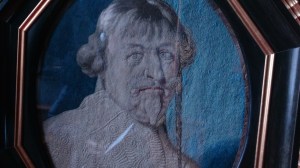
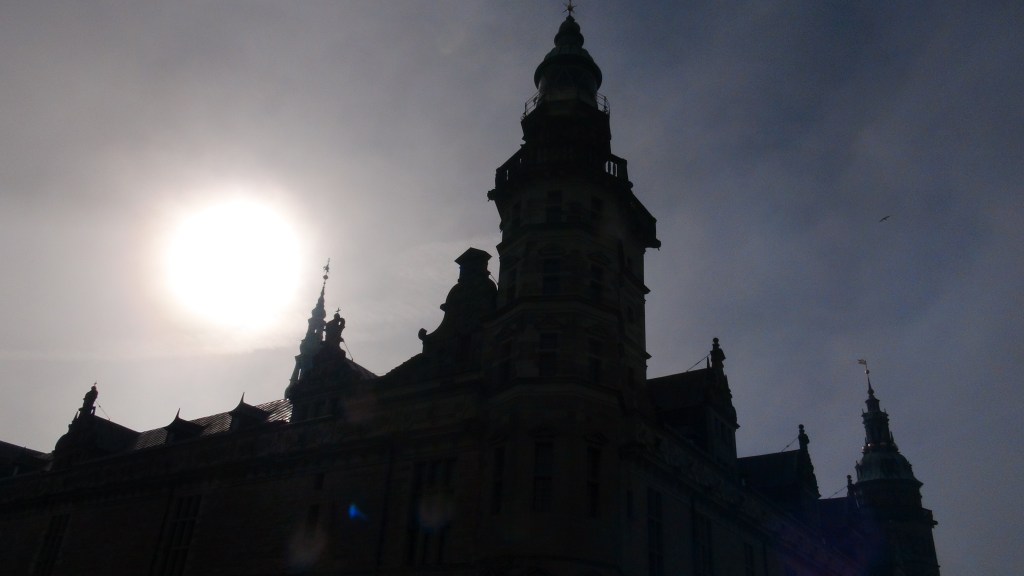
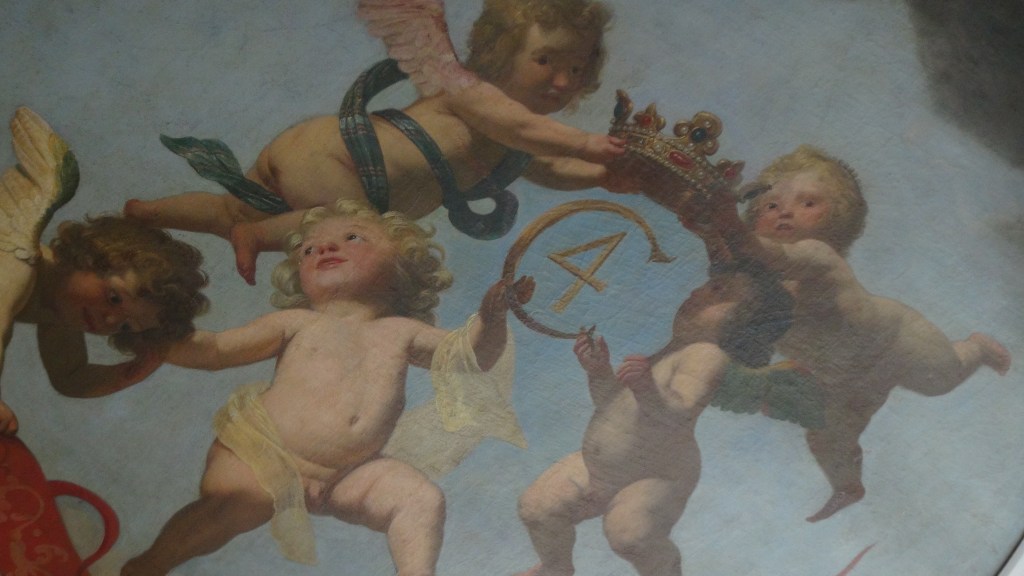
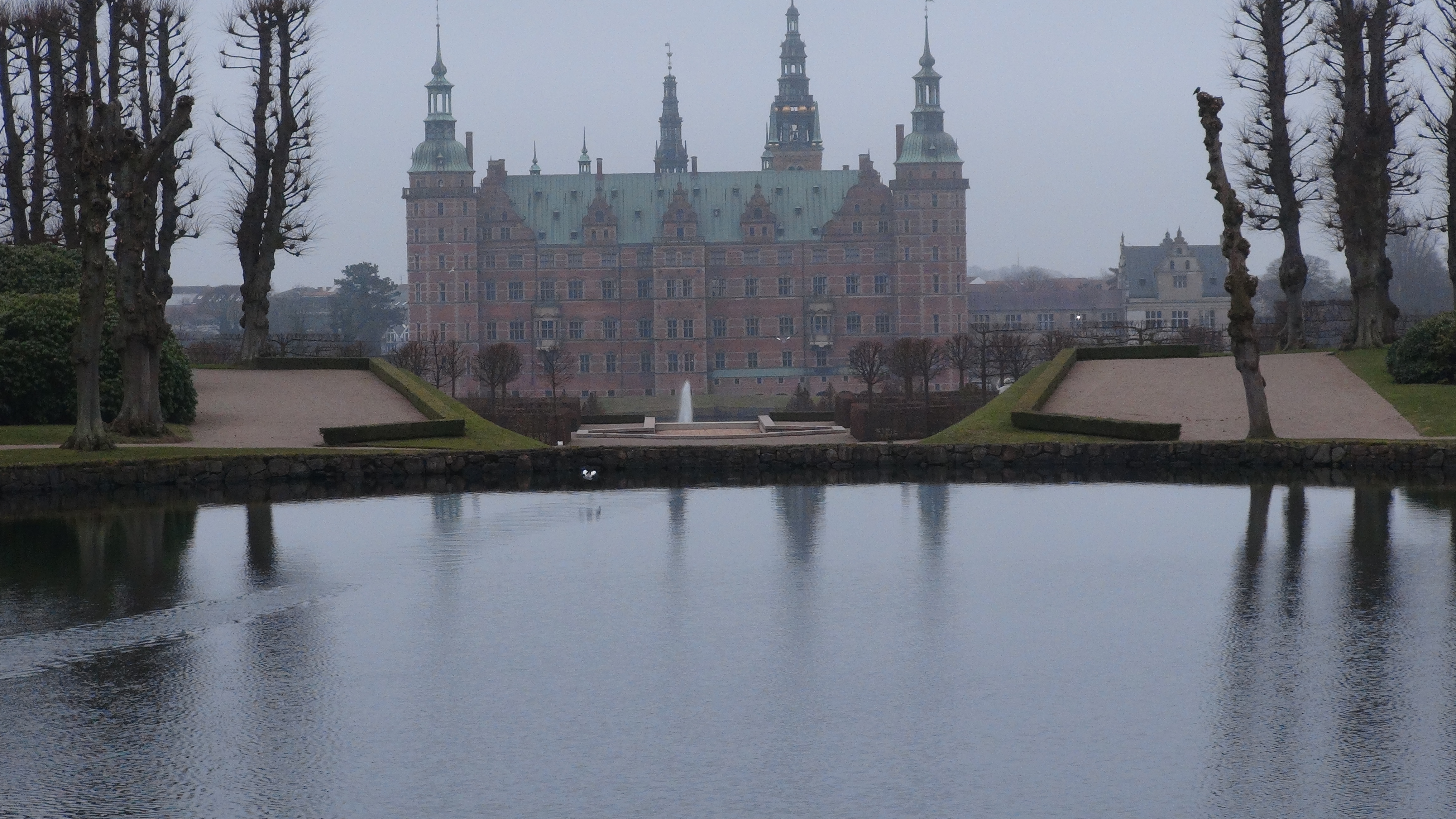 Well, we decided to hurtle off to the Fredericksborg Castle instead, on a super convenient commuter train (which left on its one-hour trip north every TEN MINUTES!) Lordy, the street car in Portland doesn’t even come every 20 minutes, what is it about once an hour now? We sat in a QUIET CAR (loving the caps today, sorry) — yes, a section of the train that had a sealed door so that no one inside could TALK ON THEIR CELL PHONE, or sing along with their iPod, or mutter to themselves, or carry on an inane conversation in the seat next door. It was pure silent bliss as we sped northwest to the fantastisk (favorite Danish word of the day) 16th-17th century Renaissance castle built by our favorite new King, Christian IV. This party animal, who rocked the English court of King James I in the early 17th century with his wild drinking and fantastisk Danish ships, built some of the most memorable landmarks in Denmark, including the Rosenborg Castle we visited yesterday that so impressed Rick with its boring furniture. I think that was the adjective he used. Anyhow, this picturesque, copper-turreted brick castle, set on a lake with the view of a lovely Baroque garden across the water, contains the national picture gallery, with a wonderful tour through Danish history as you walked through its ornately decorated rooms. Christian IV was larger than life, portly, and wore a signature rat-tail braid straggling down from behind his left ear. So Portlandia. He ruled at the height of Danish power, apparently spent most of their money, and it was all downhill from there. Well, I exaggerate, but it’s late and I’m tired and I want to get up early again tomorrow to watch the bike commuters.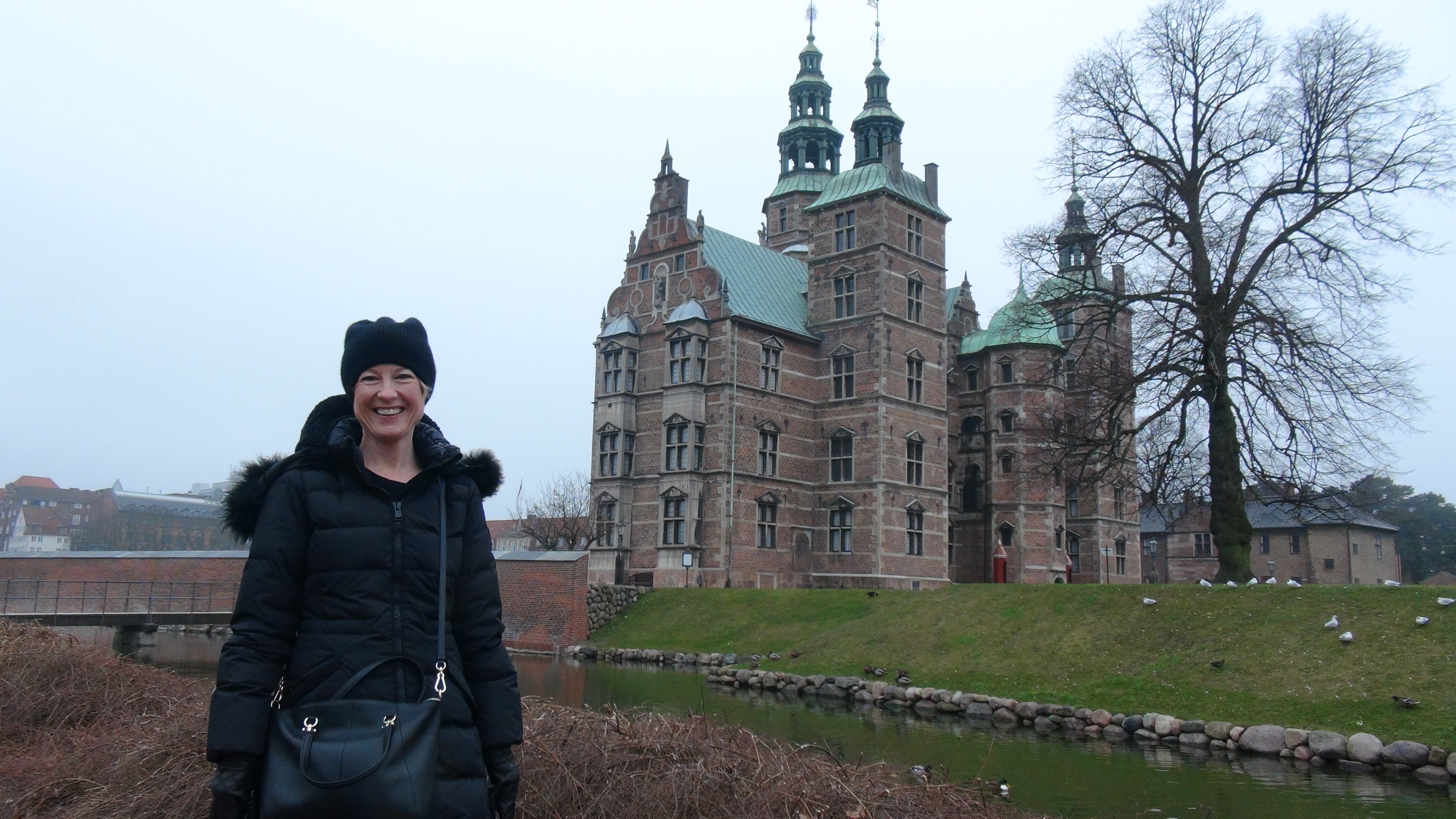
 The Thompson Attigs