
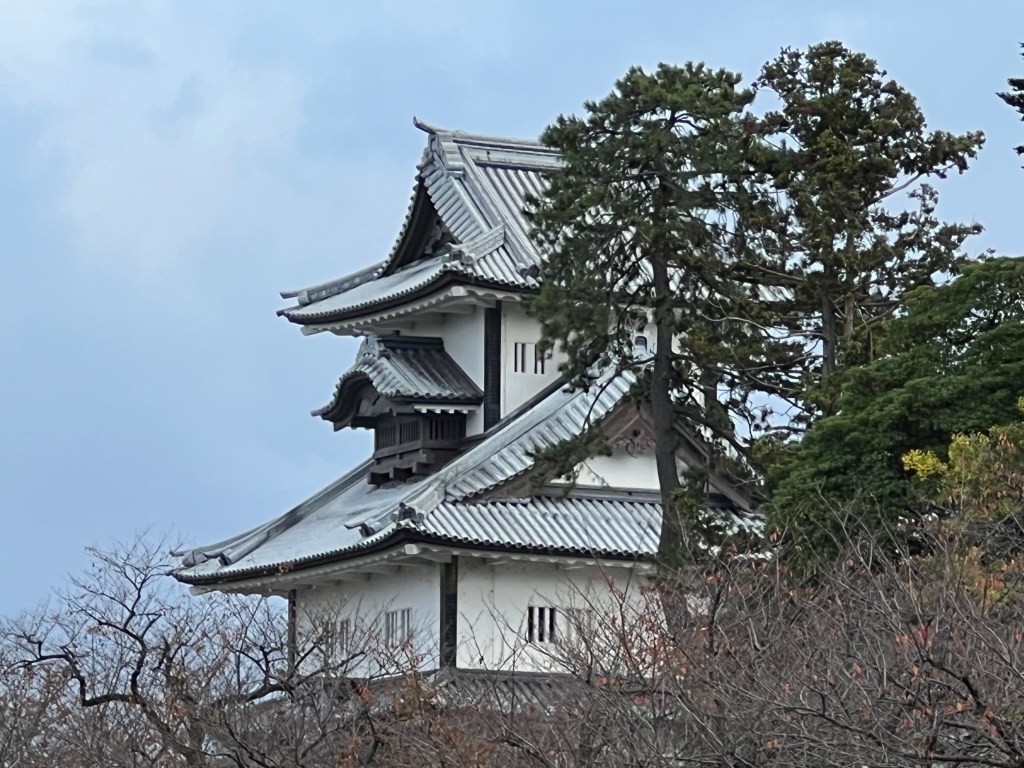
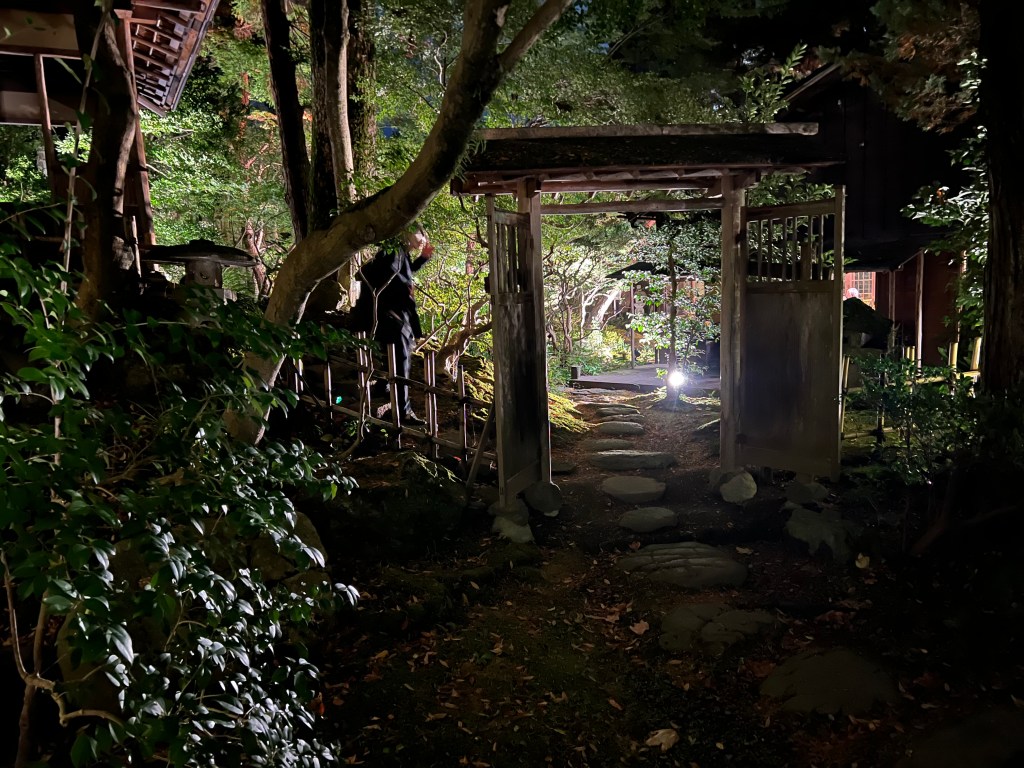
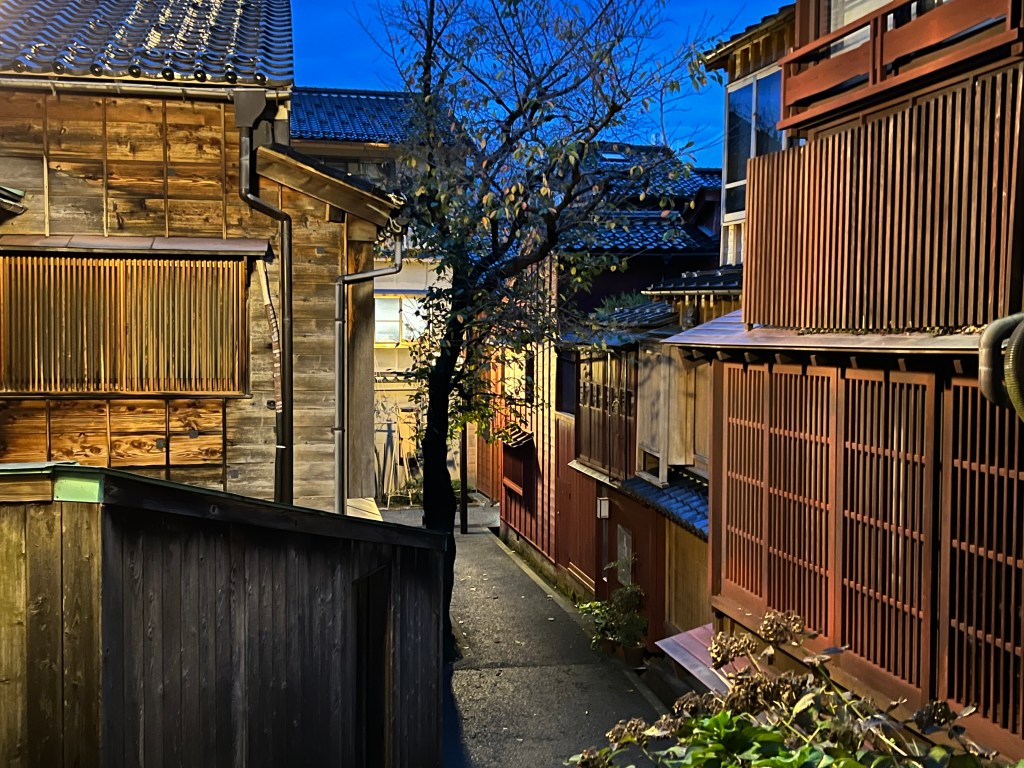
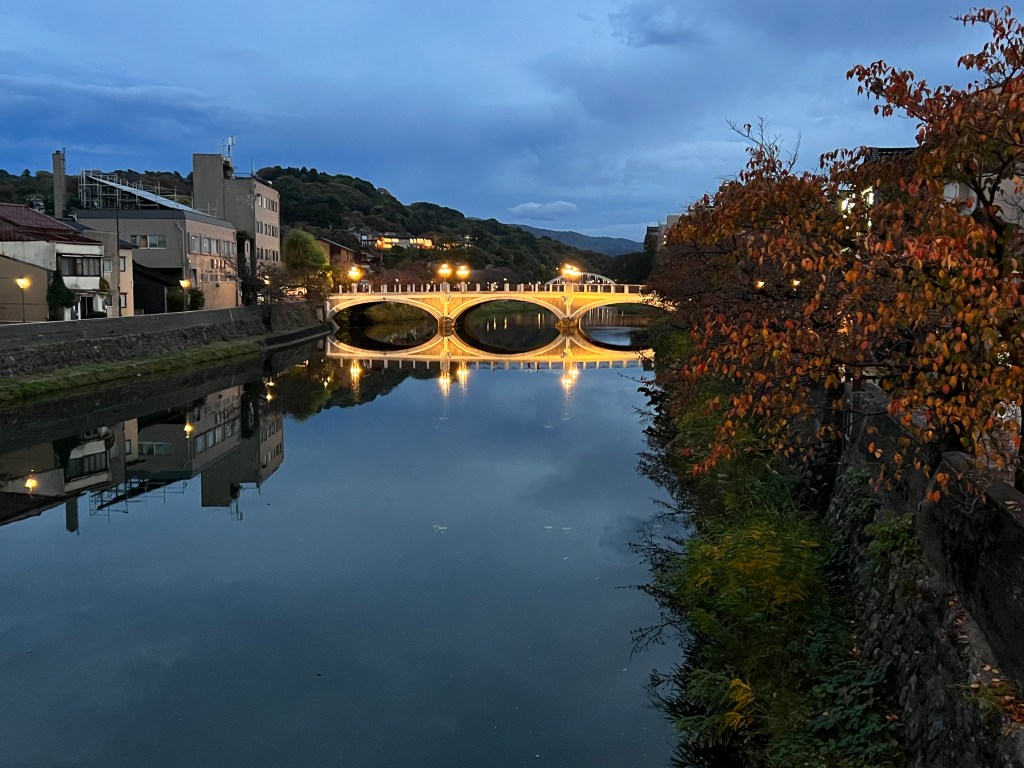
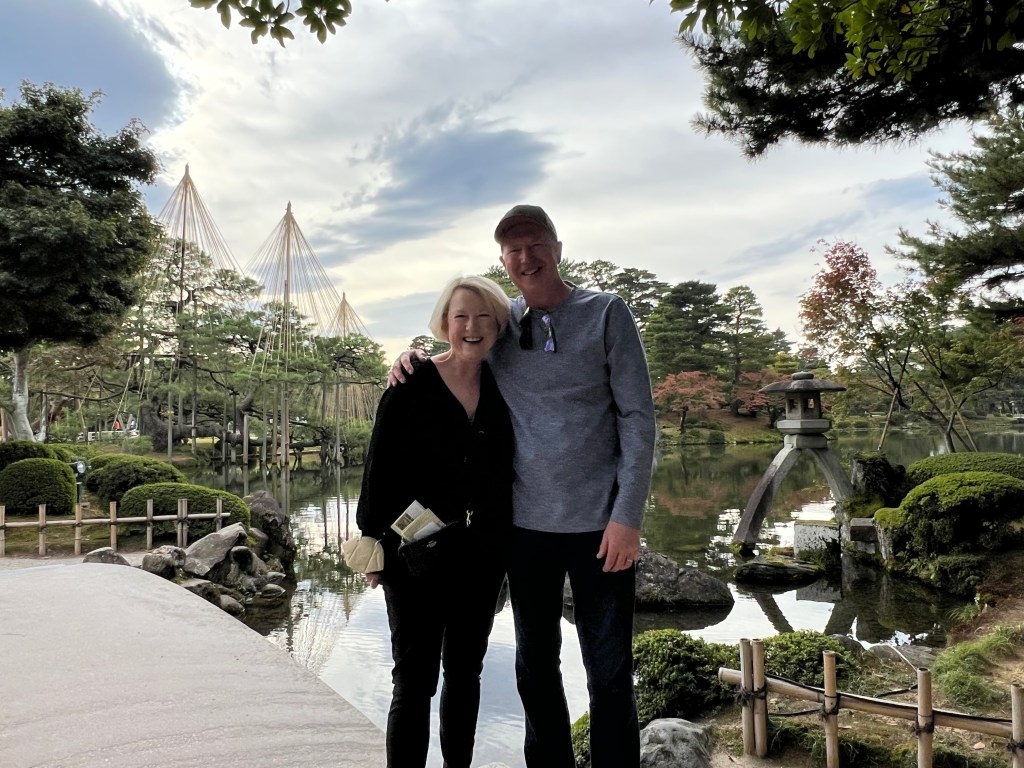
Kanazawa, Japan, Nov. 7, 2023 — We’re nearing the end of our three days in Kanazawa, a place we will remember for its atmospheric samurai and geisha districts, for its busy seafood market and an unforgettable sushi dinner, for the hawks known as black kites that swooped and soared over the beautiful castle grounds, and, most of all, for the timeless beauty of the Kenrokuen Garden and its twisted, evocative trees.
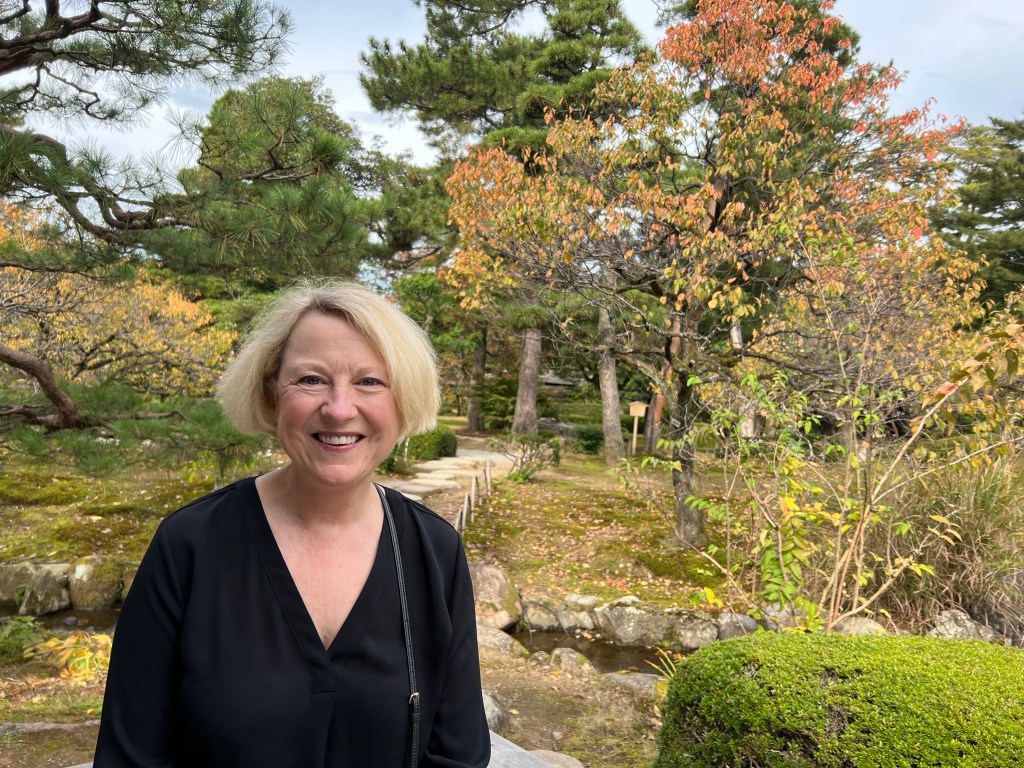
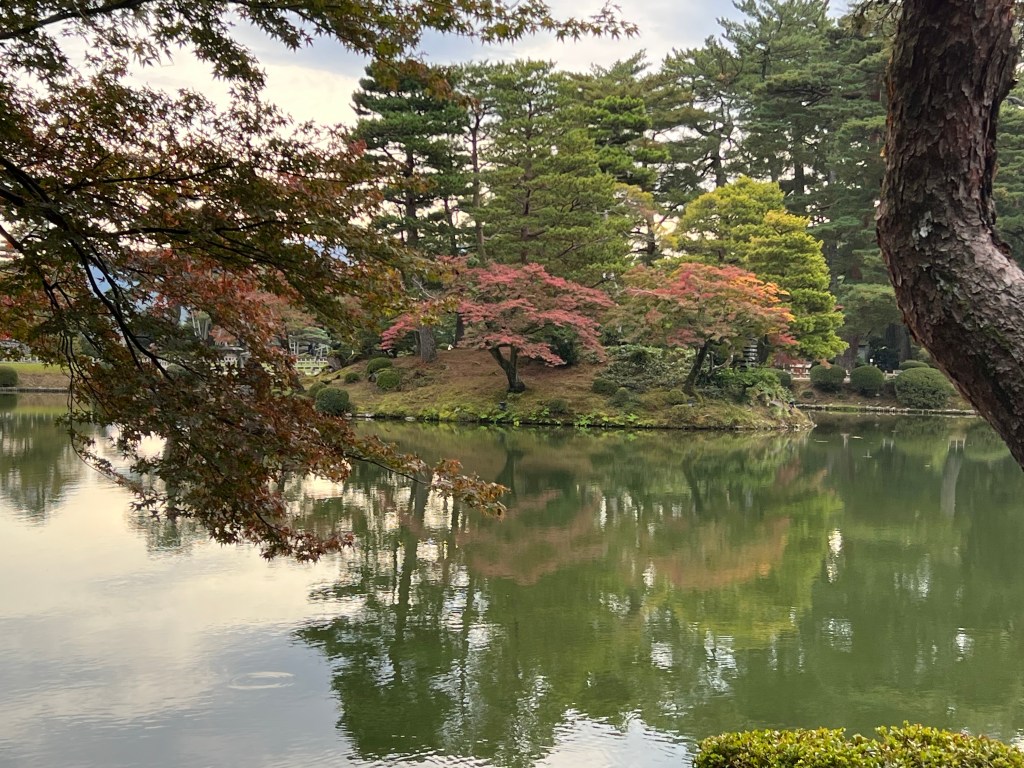
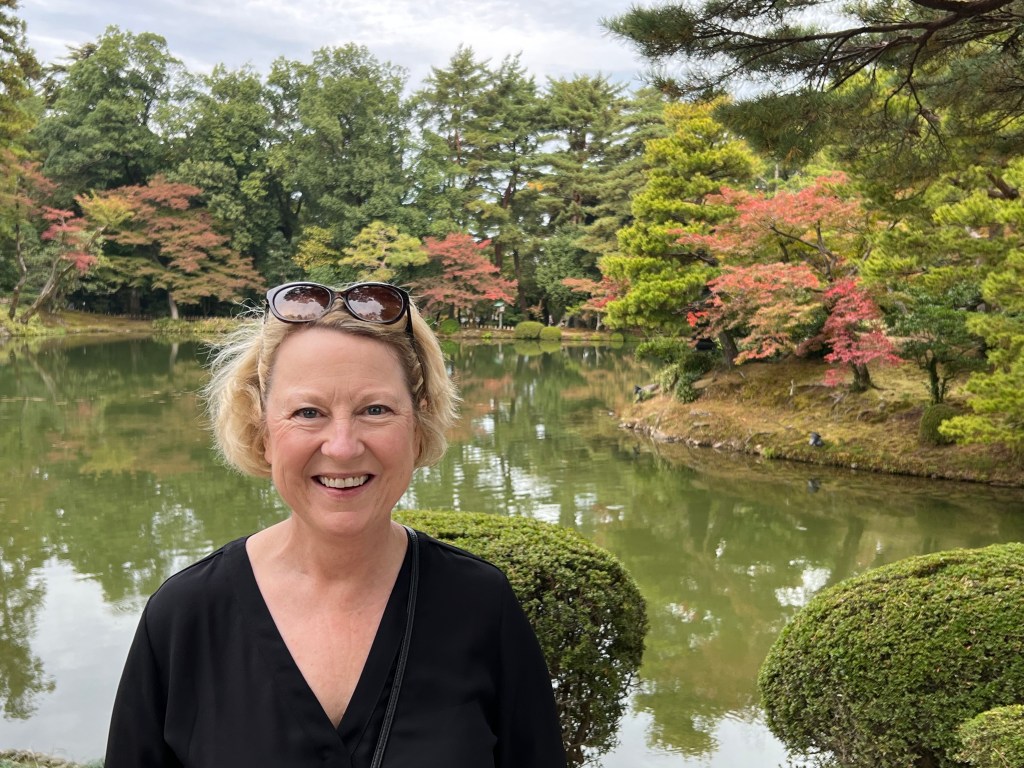
It was during our quiet morning strolling the curved paths of Kenrokuen, considered one of Japan’s three greatest landscape gardens, the only sounds the splash of water and the distant thrum of the city, that I felt most connected to Kanazawa, and the most in love with the city. The name Kenrokuen literally means “Garden of the Six Sublimities,” referring to spaciousness, seclusion, artificiality, antiquity, abundant water, and broad views, which are said to be the six attributes that make up a perfect Japanese garden. They make for a really nice city, too.
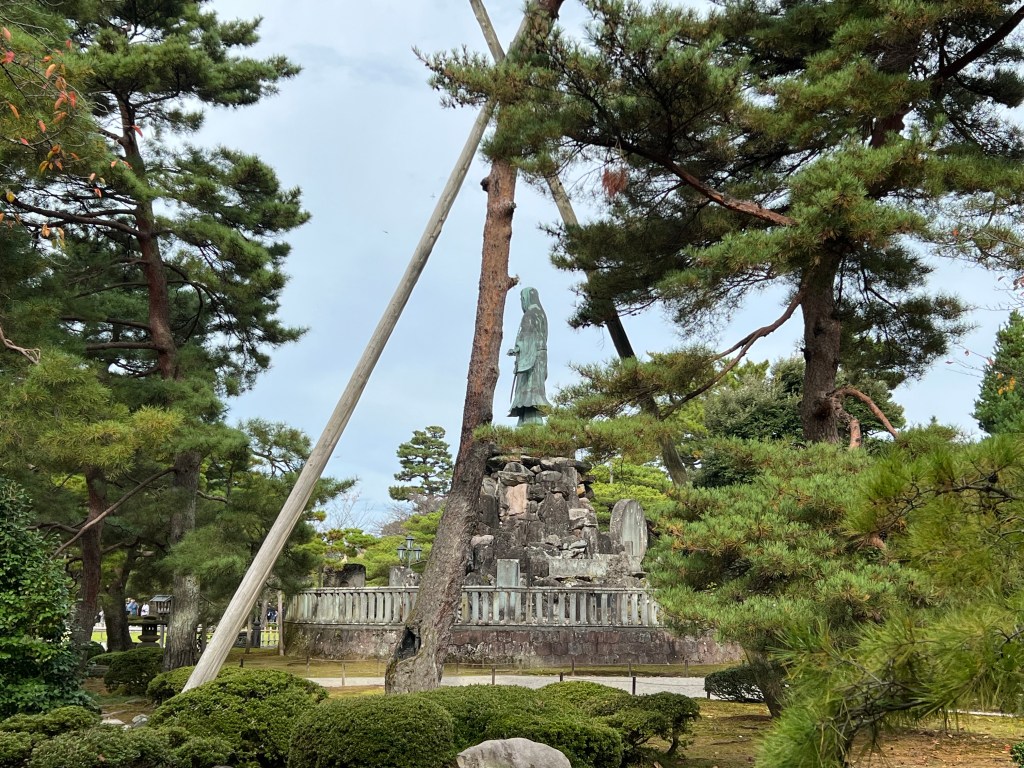
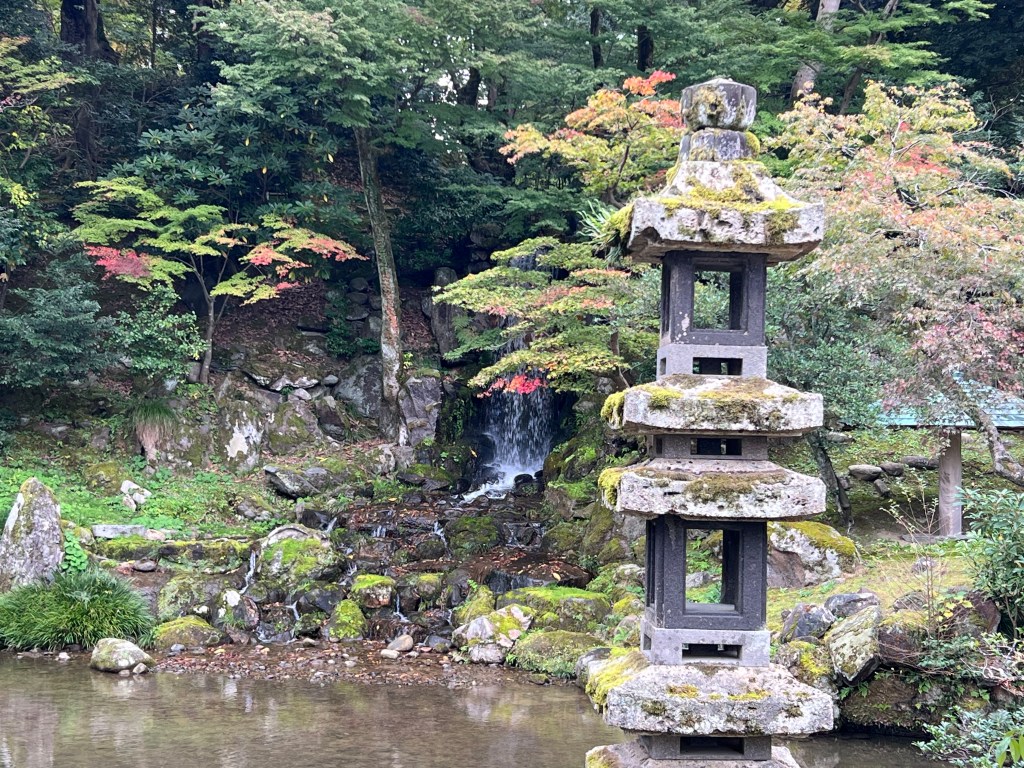
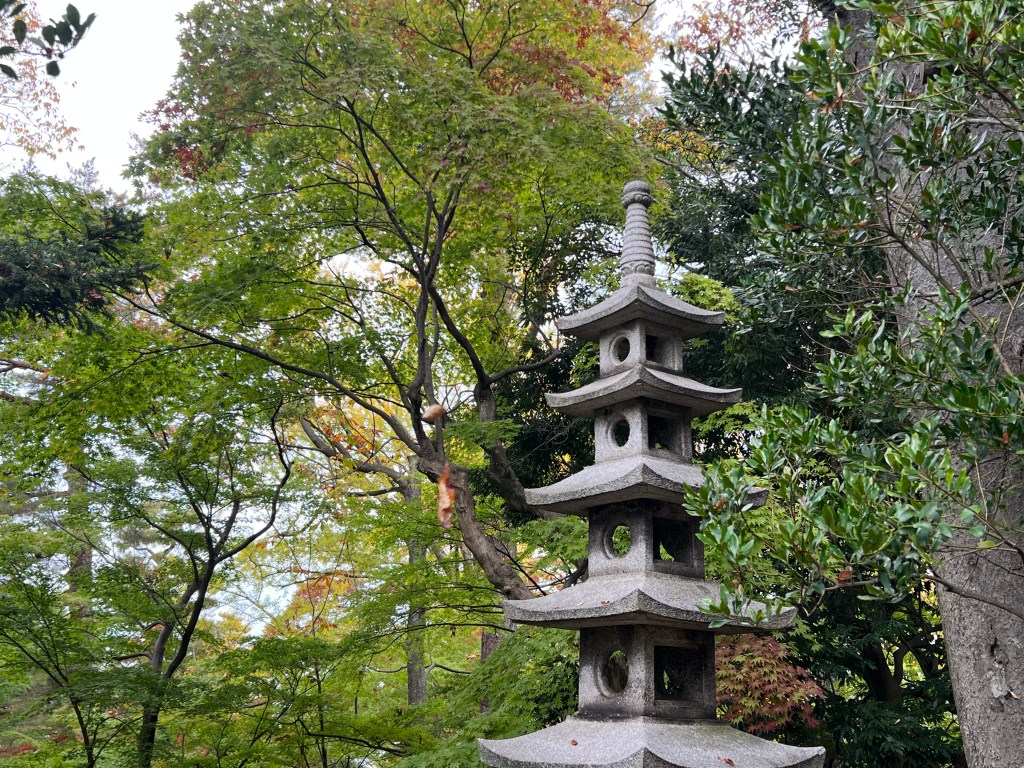
It’s taken centuries of hard work to make Kenrokuen the incredible garden it is today. The spacious grounds used to be the outer garden of Kanazawa Castle and were constructed by the ruling Maeda family over a period of nearly two hundred years. Kenrokuen was opened to the public in 1871. One-hundred-and fifty-odd years later, around every corner there is something to experience, to see and feel: Ponds, streams, bridges, teahouses, flowers, stones, viewpoints, lanterns, and thousands of trees, many of them very old, very twisted trees with their limbs propped up with all kinds of supports, some of them hanging low over ponds and streams. Many of the trees, especially the expressive pines, struck us as individuals, old men and old women, who had seen and lived through so much history, and we even wondered whether the gardeners had named them.
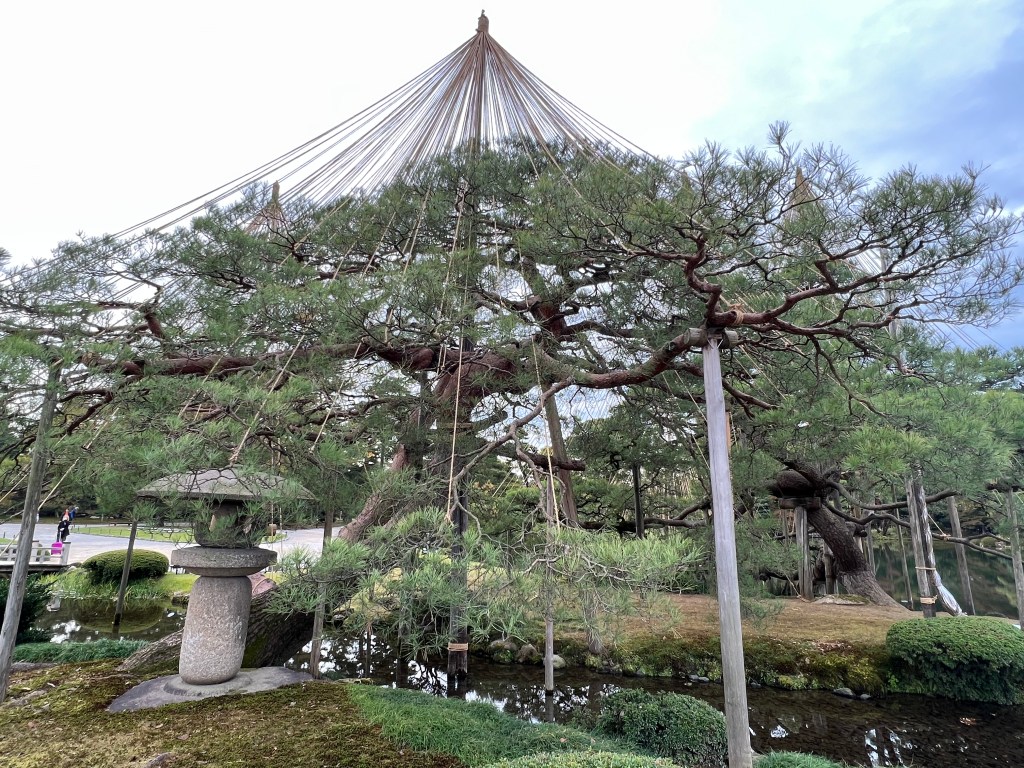
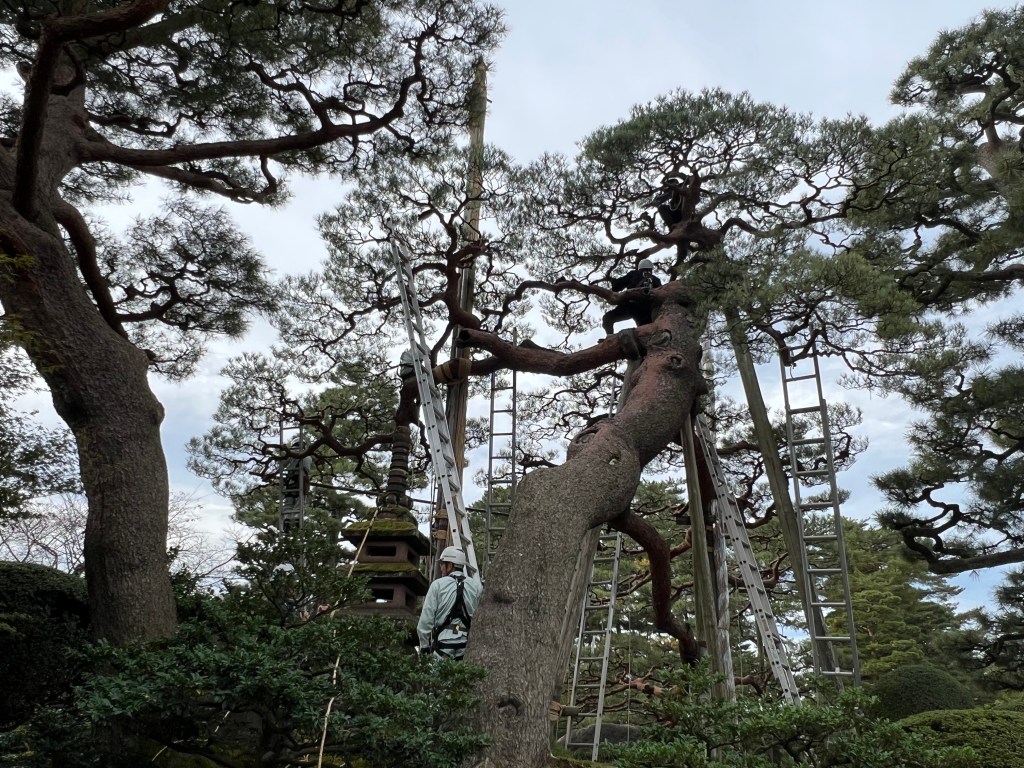
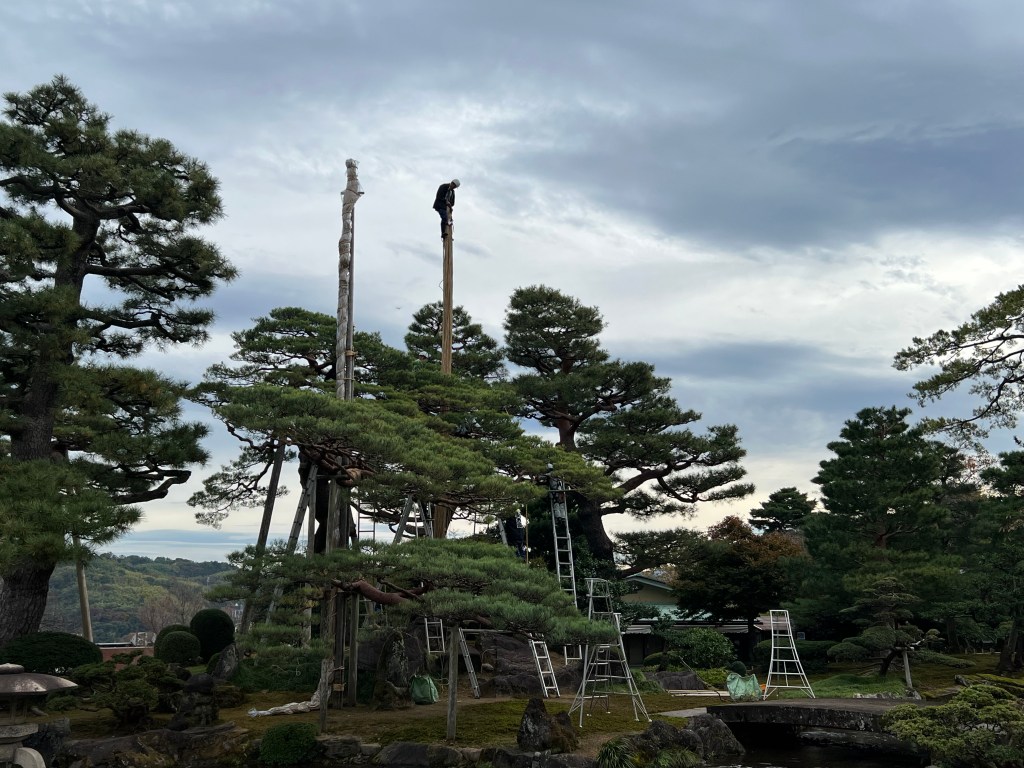
We’ve been in other gardens, in Japan and elsewhere, where the hard work of caring for them seem deliberately hidden, where the gardeners seemed to keep out of sight, perhaps not to affect the experience of the visitors, or maybe to make the landscape seem more natural than it actually is. Not so at Kenrokuen, at least not during our visit. The grounds were busy with crews picking up pine needles, plucking leaves from shallow streams, and, most spectacularly, a group of men who leaned ladders all over one of those big, expressive pines, and climbed among the heavy branches, even perching on the tip top of a towering center pole, while installing the elaborate rope supports that give the long-limbed pines the strength they need to hold up the heavy snows that will arrive in Kanazawa in the coming months.
Over a couple hours of wandering Kenrokeun, we saw and felt and experienced every one of those many “sublimities,” the space and water and solitude, ancient stone paths, burbling creeks and quiet ponds, and on the edge of the garden, the broad views looking out across modern Kanazawa. We walked through a grove of plum trees, their last yellow leaves falling to the ground. We came up one path and discovered three wildlife photographers with two-foot-long telephoto lenses excitedly photographing something, we dared not interrupt them, the motor drives of their cameras firing away. We never saw what they were photographing.
It must have been another one of those beautiful sublimities.
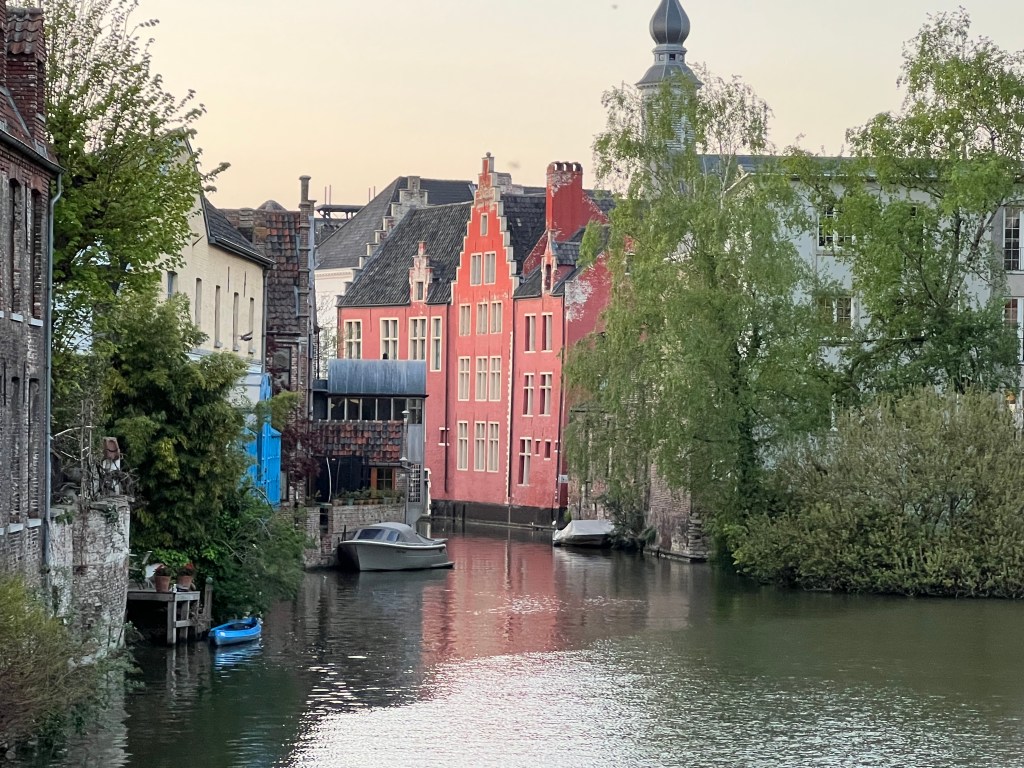
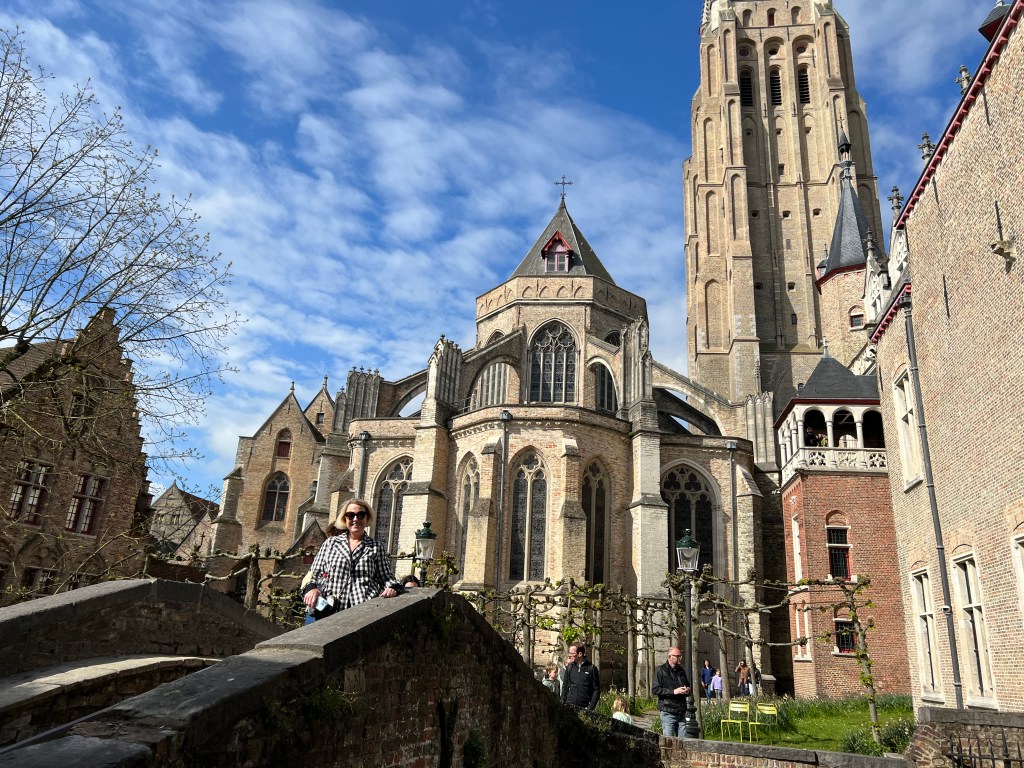
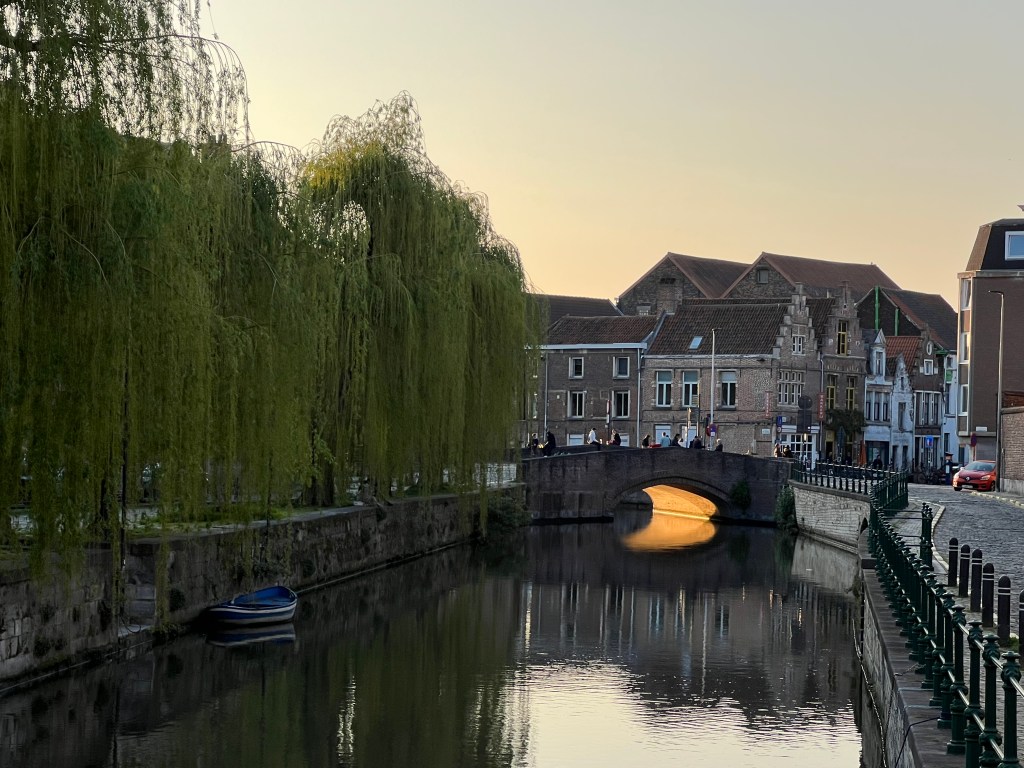
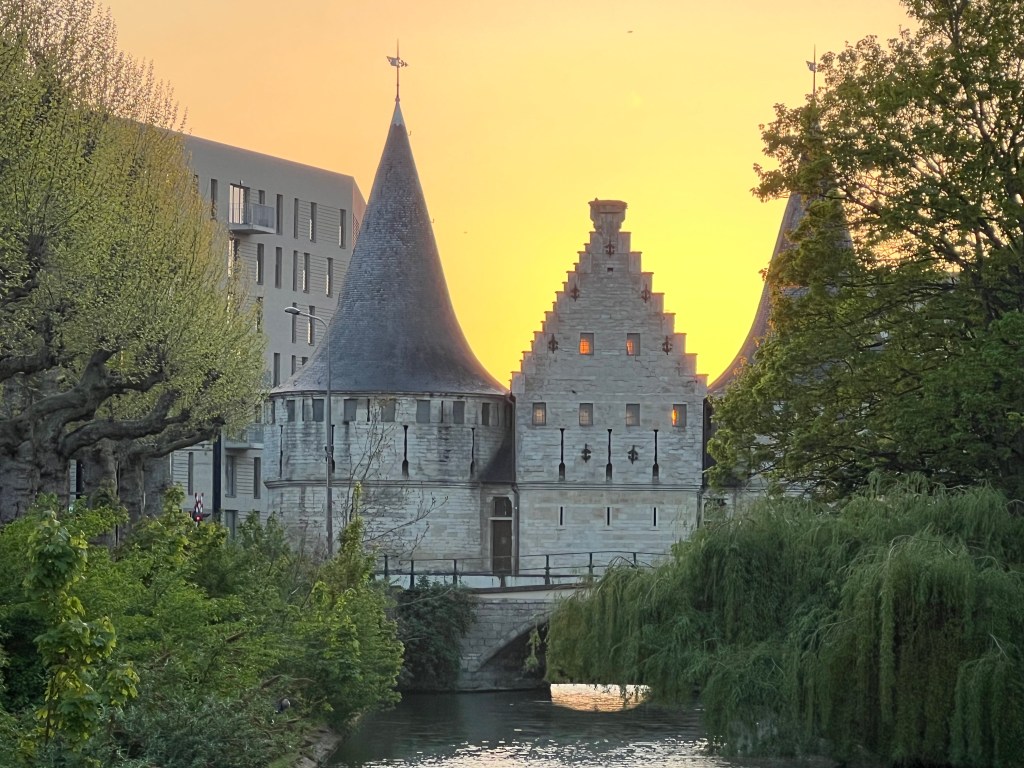
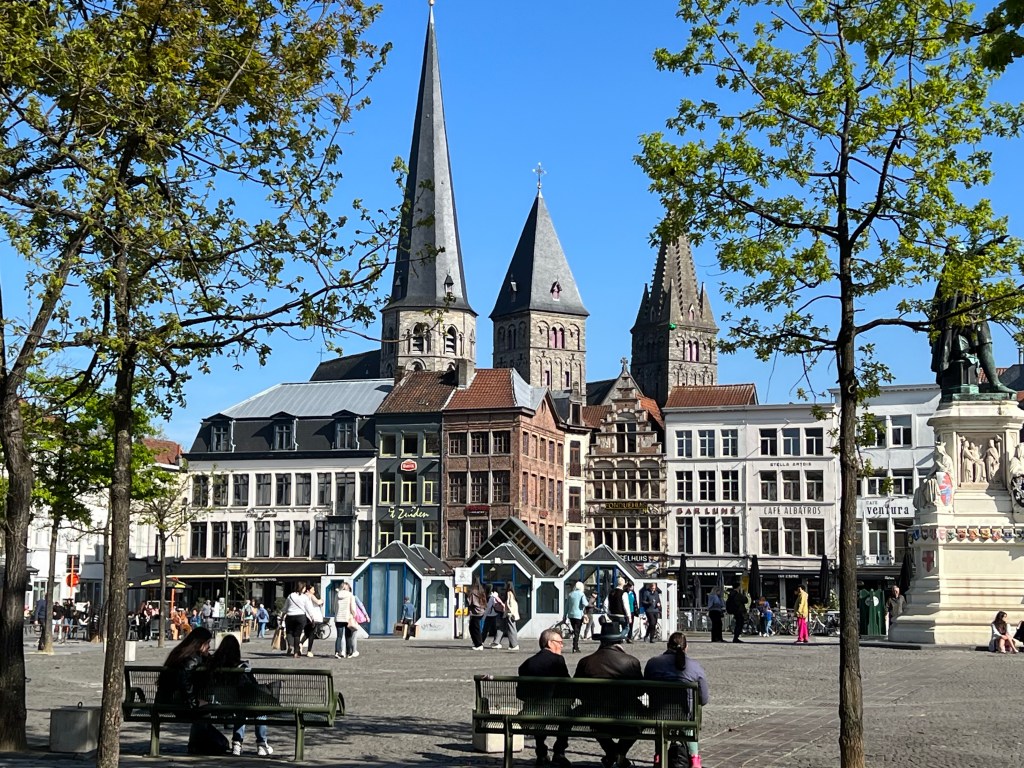
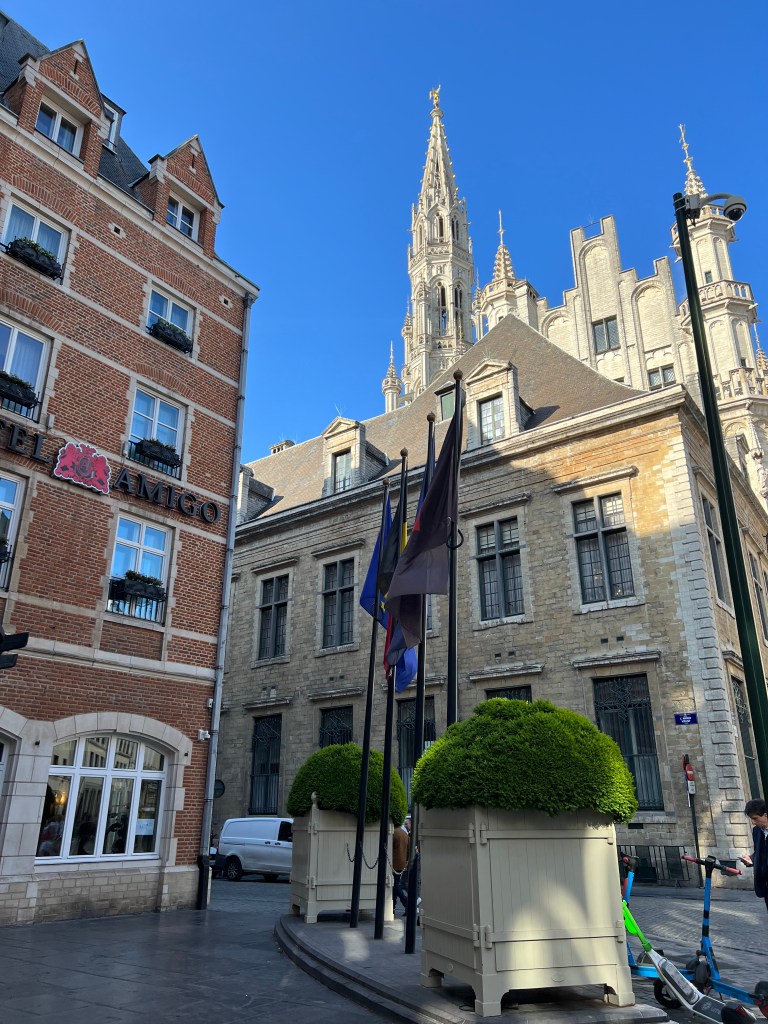
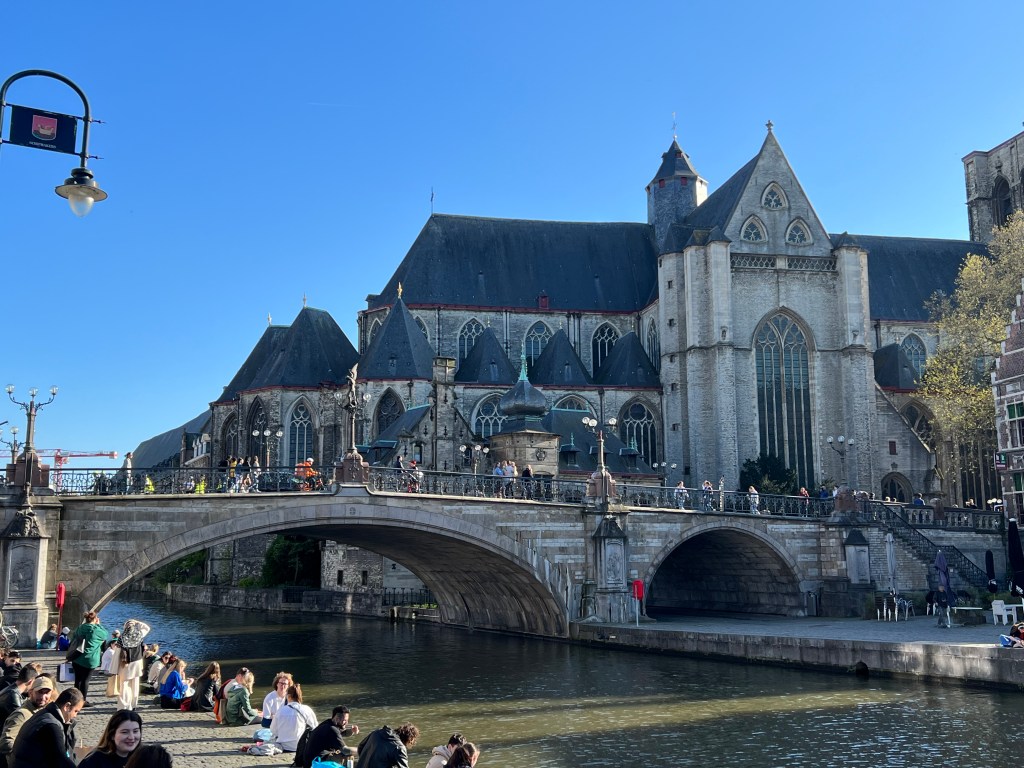
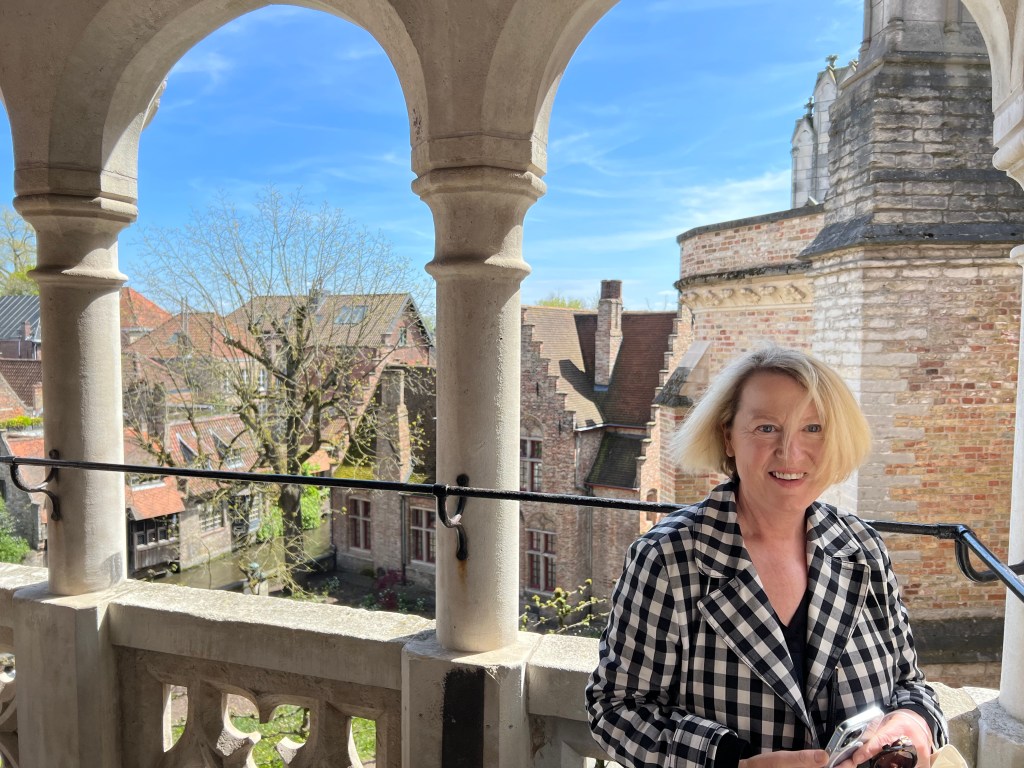
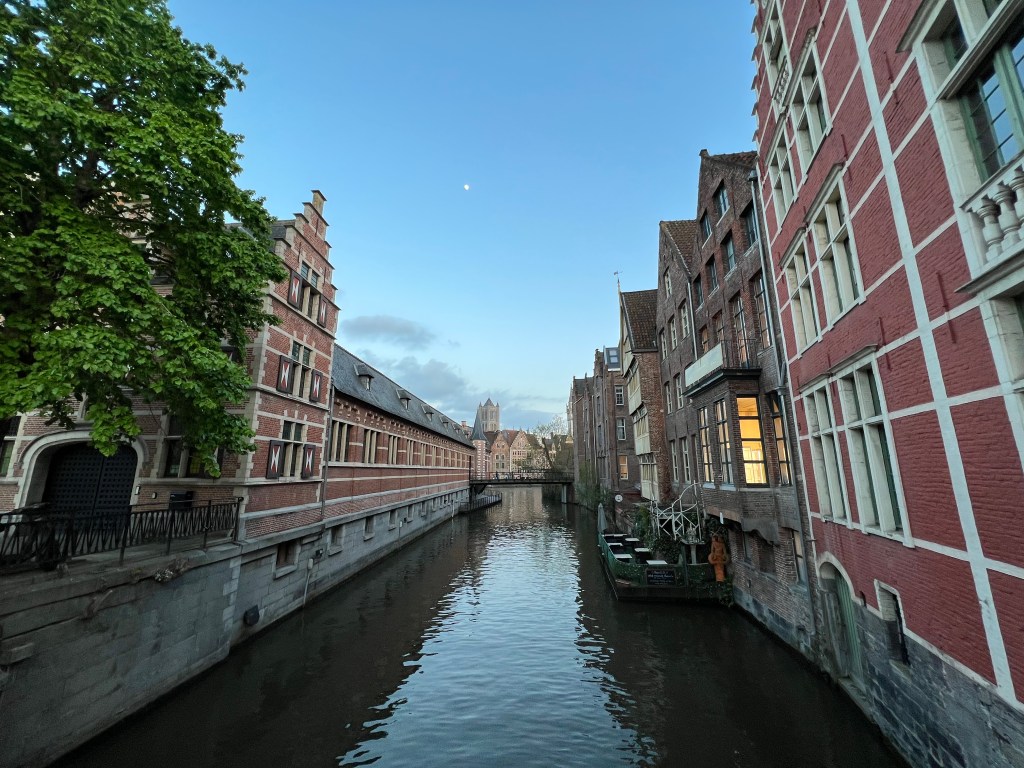
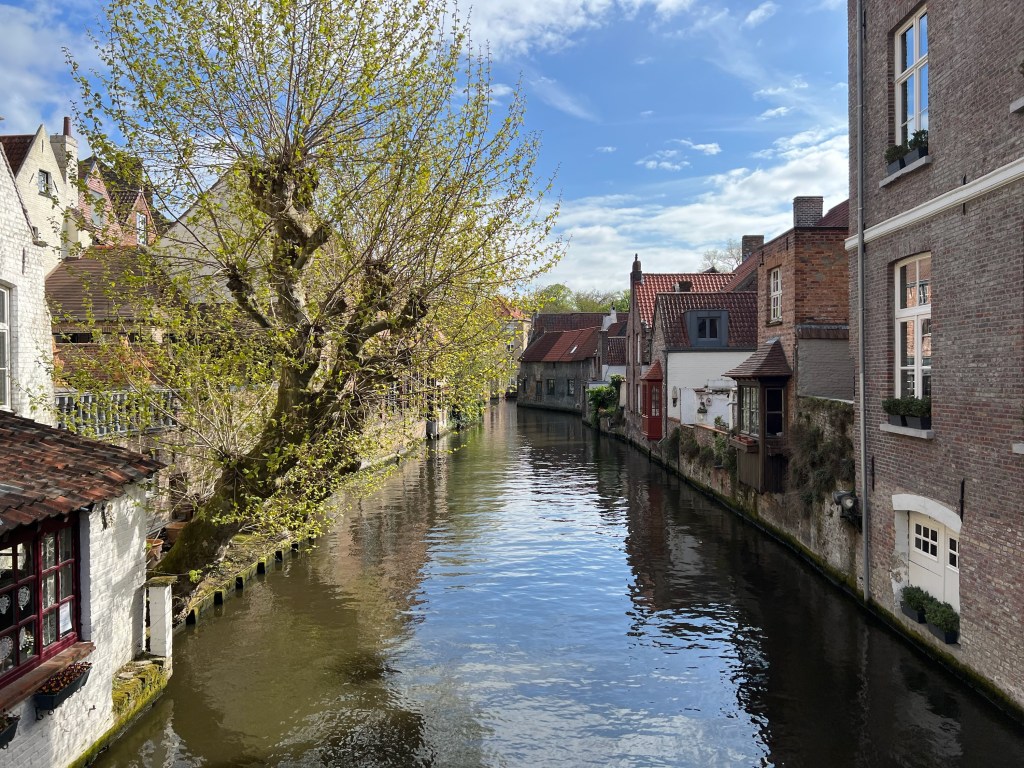
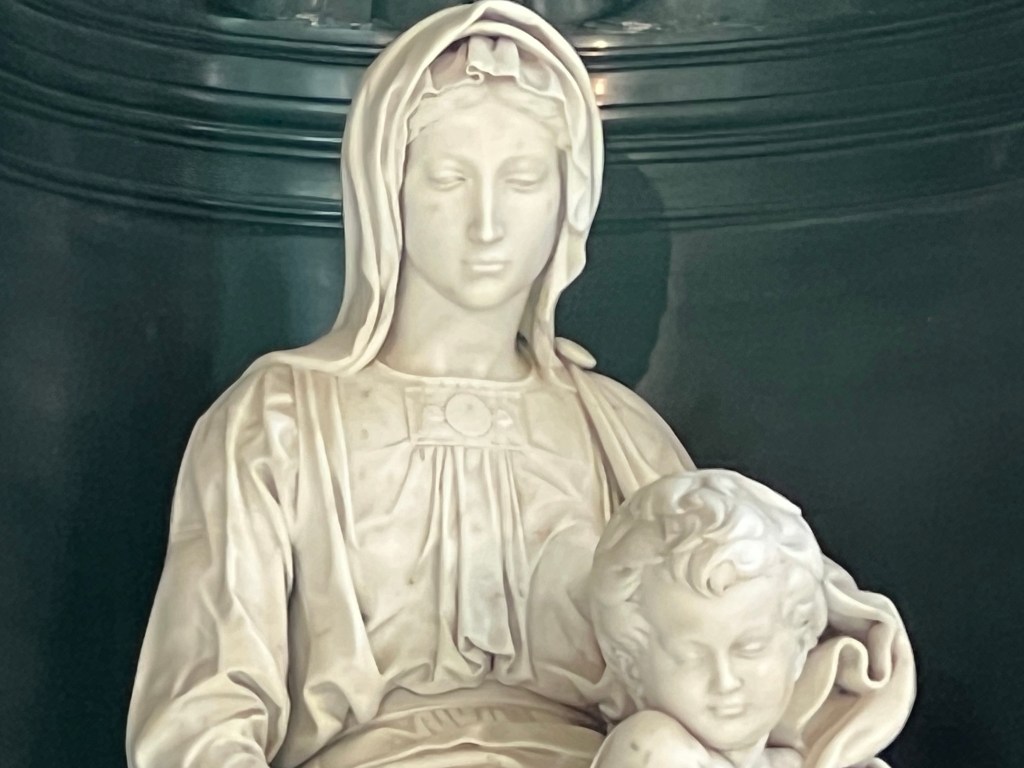
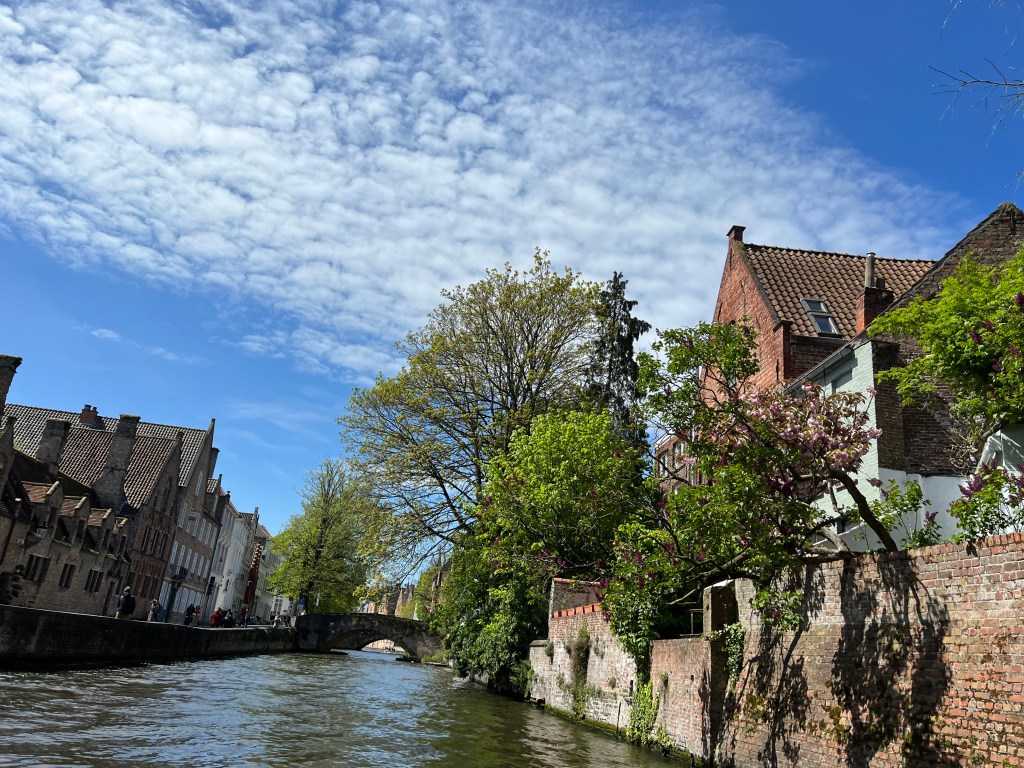
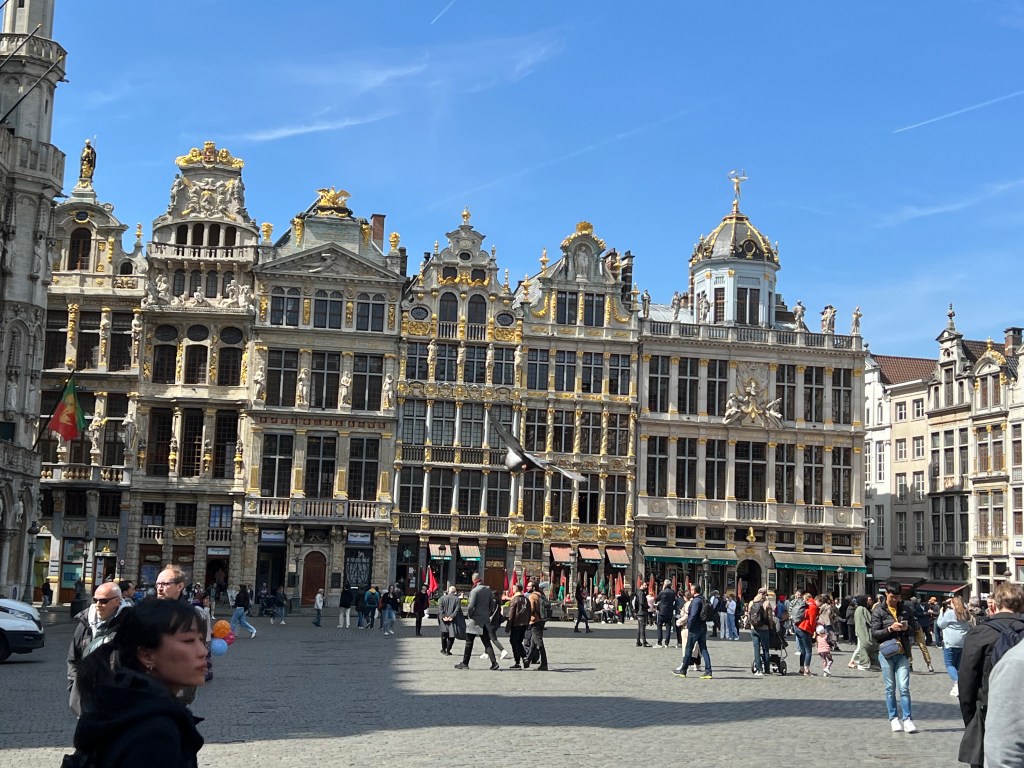
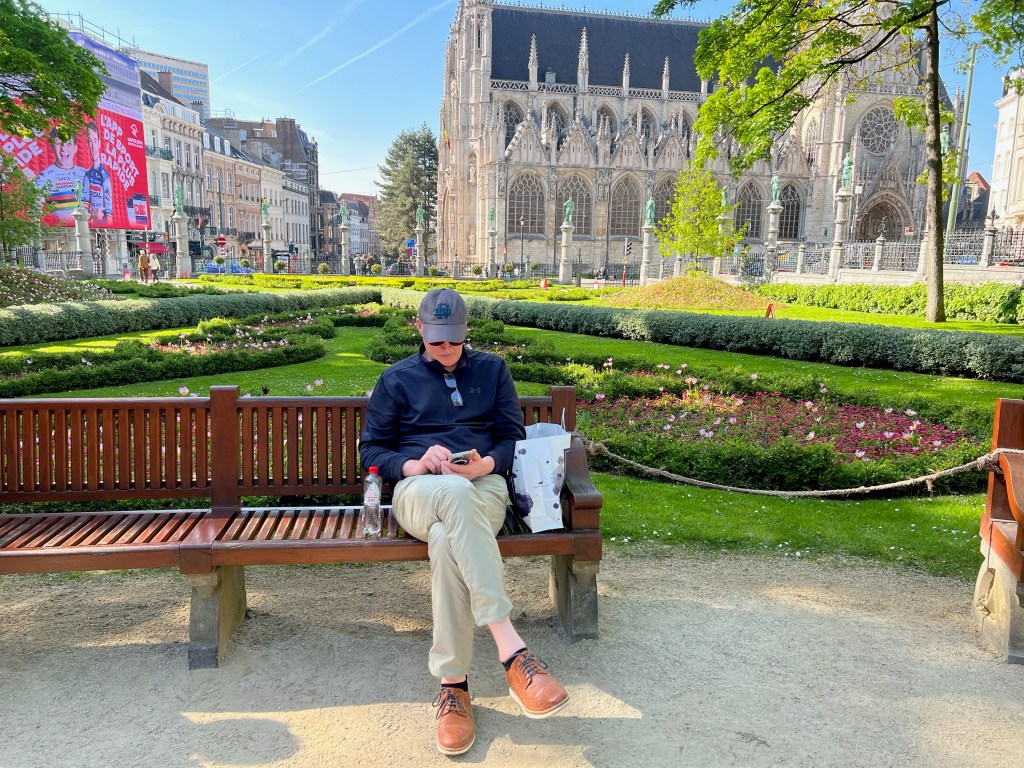
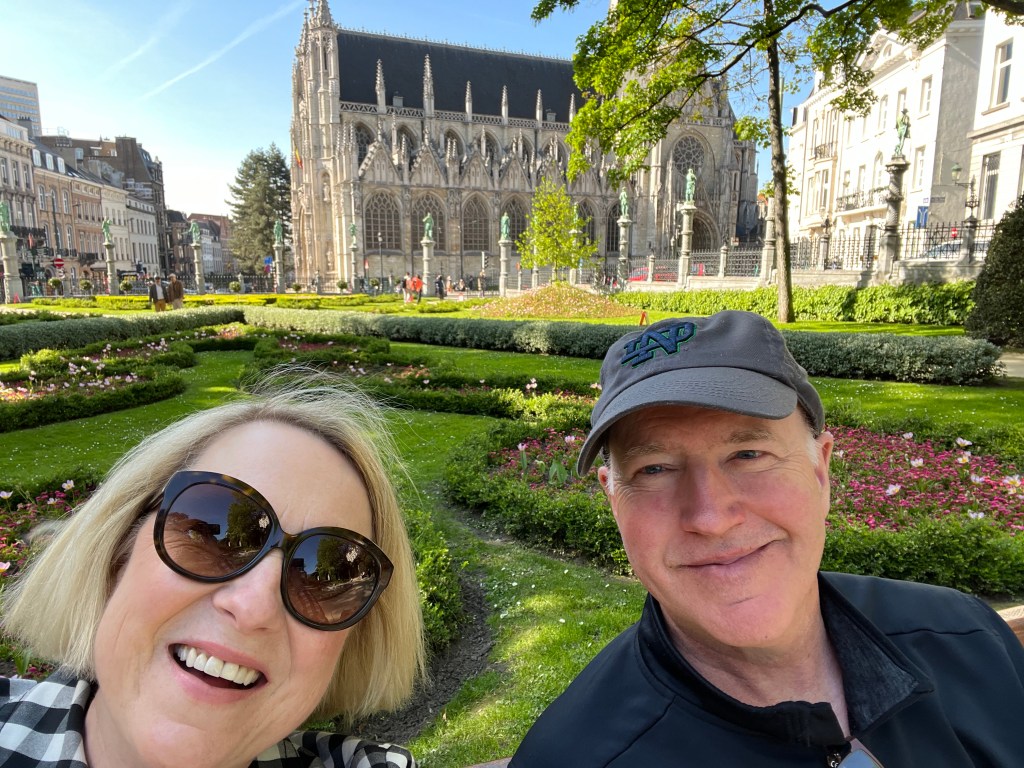
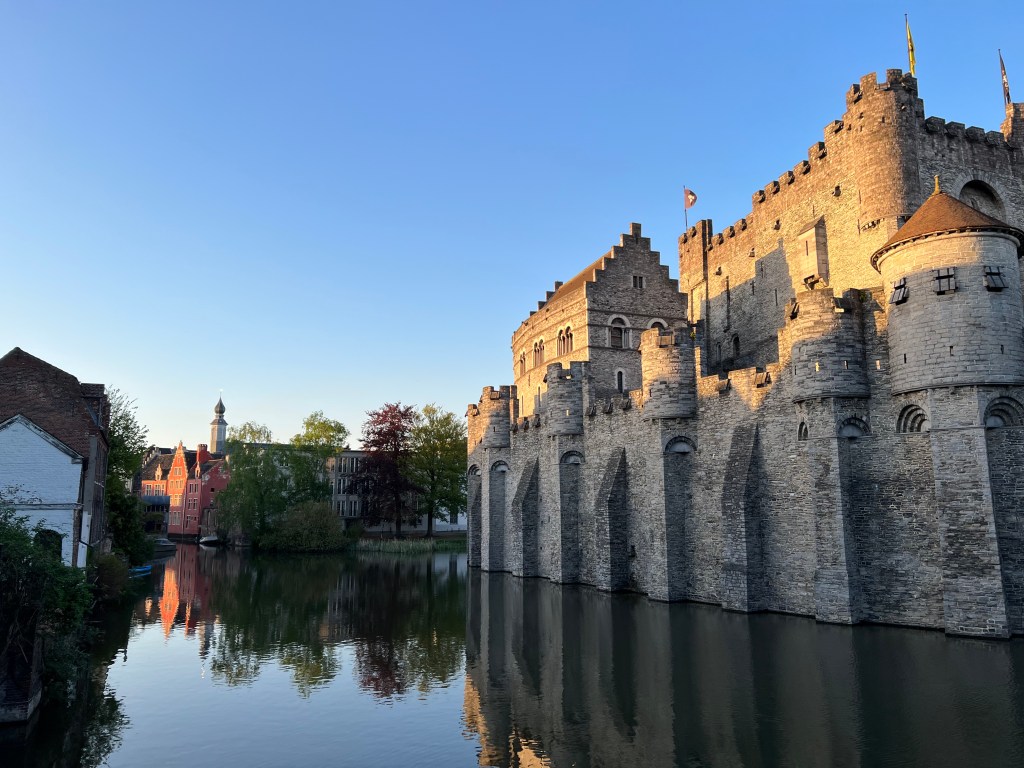
May 3, 2023 — BRUSSELS, Belgium — We traveled from Ghent to Brussels today, our last stop on our Netherlands/Belgium tour. Yesterday we took a day trip to Bruges. It’s getting late, both tonight and on our trip, and we’re too tired to write about it. We plan to write more about our memories from Ghent, Bruges and Brussels, but for now we’ll just post the slide show above.
Mostly we want to let our moms know that we’re doing well, and having a great time.
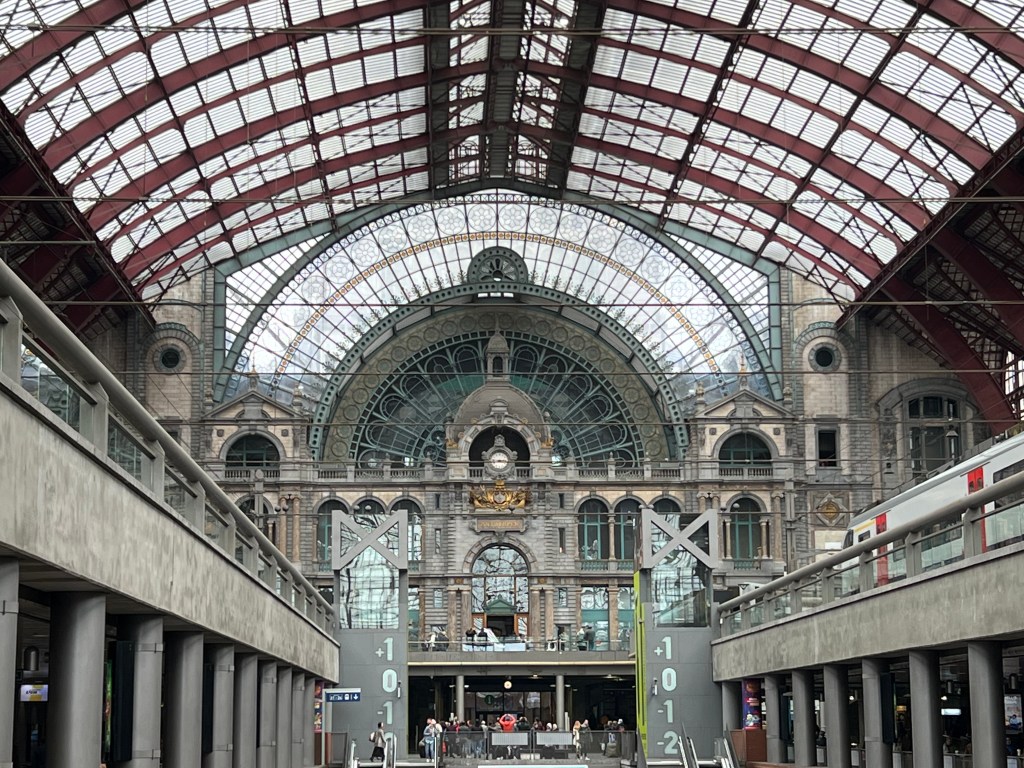
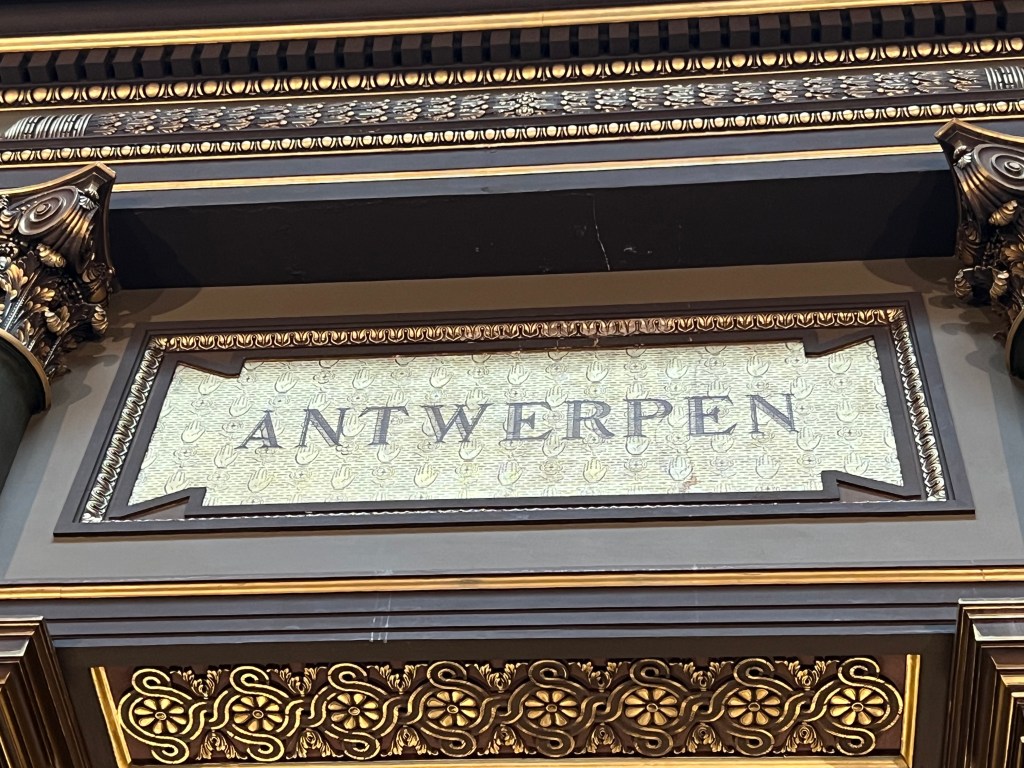
April 29, 2023, ANTWERP, Belgium — Following two short train rides from The Hague to Rotterdam, we left behind The Netherlands and rolled into the historic and very busy central train station of Antwerp in the mid-afternoon. We pulled our bags down the cobbled sidewalks and checked in to our hotel, which sits on the edge of a botanical garden, but failed to tip our welcoming hostess, which would later result in an icy glare in the lobby. (Rick later made amends and all is copacetic now.)
We started our exploration of Antwerp with a decadent dessert (one chocolate mousse and one apple/lemon chiffon creation) at a lovely patisserie run by pastry chef Willem Verlooy and his family, and then of course, a trip to the Royal Fine Arts Museum, which has a pretty fabulous collection of Rubens, and many other impressive pieces by some of the artists I have come to recognize and appreciate over the past few days, especially Frans Hals and Artemisia Gentileschi, one of the greatest female painters of the Renaissance.
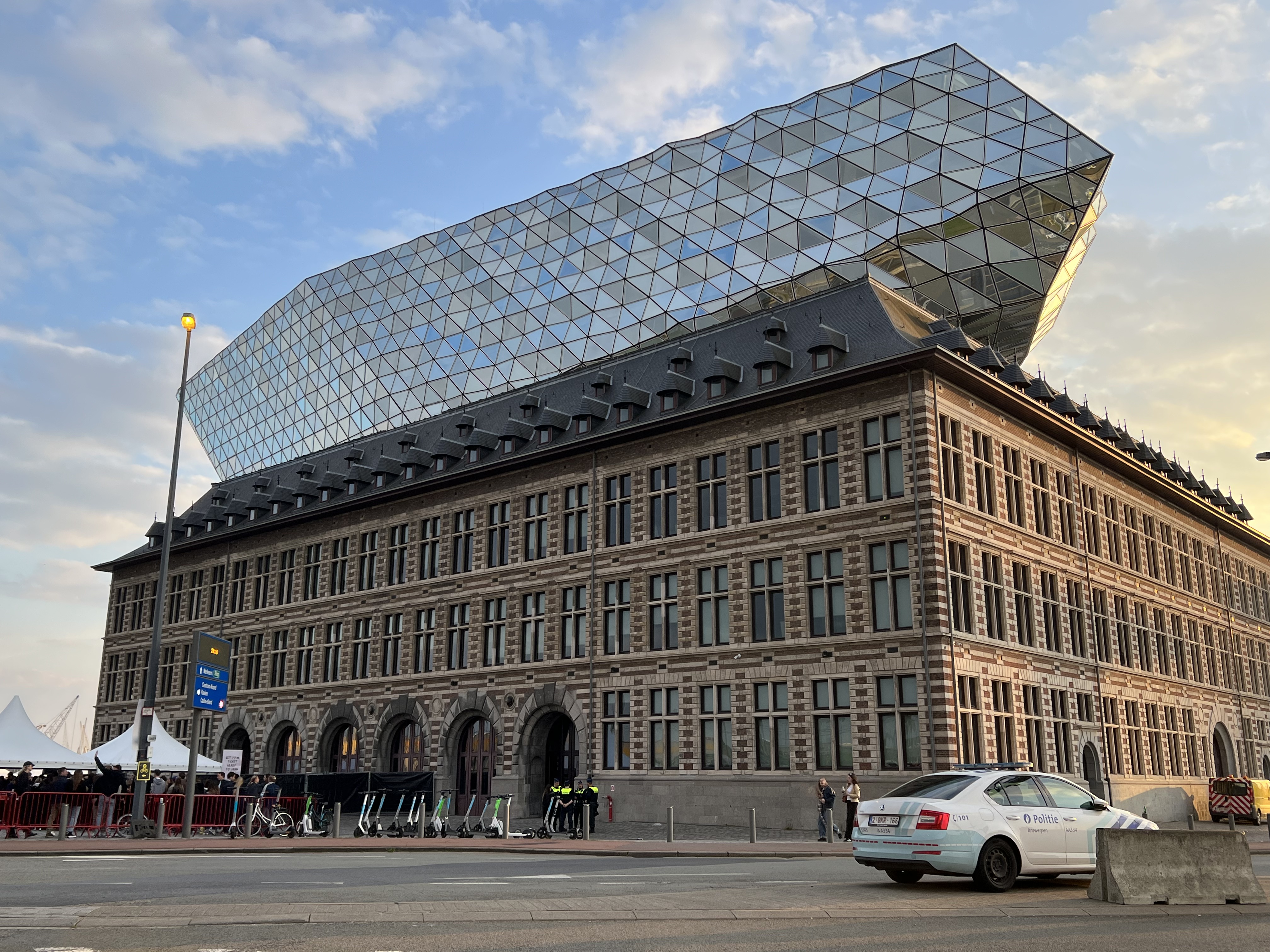
Antwerp is one of the largest and busiest ports in Europe, and we took an Uber out to the harbor’s edge on the far north of the city, where we had dinner at Het Pomphuis, renovated pump house with soaring ceilings and wonderful seafood. Outside the windows, barges and other ships glided past, and enormous windmills turned slowly in the breeze.
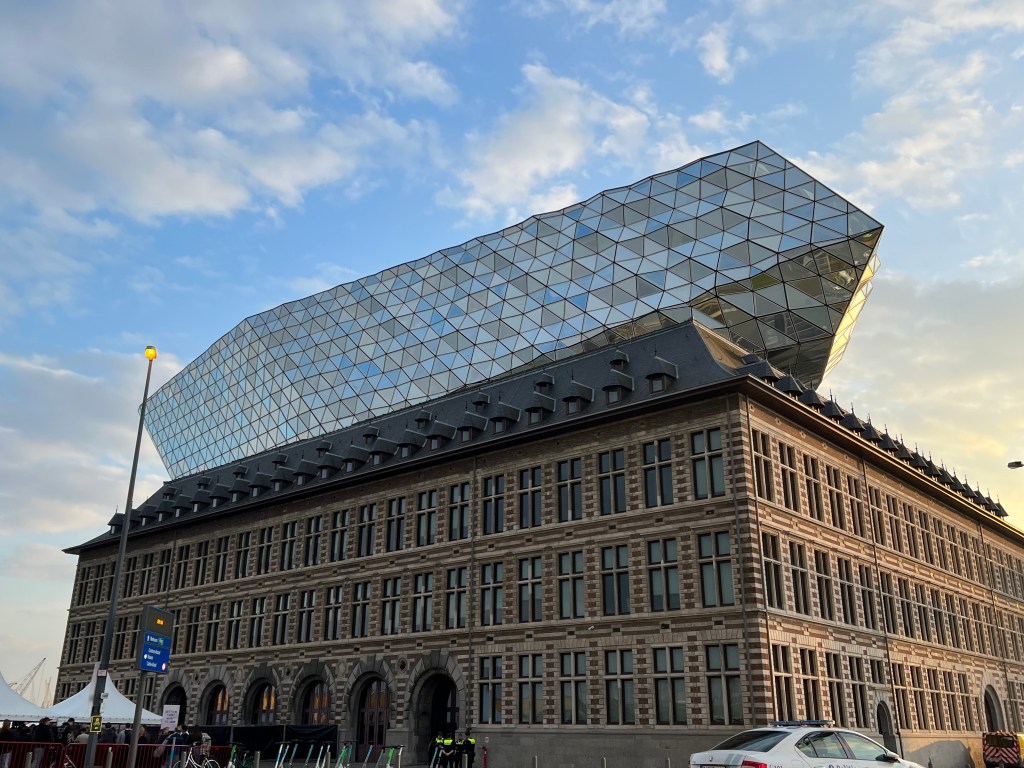
A hot air balloon floated over the center of the port, and across the road from the restaurant, a hundreds of party-goers streamed into a sold-out live electronic dance concert at the astonishing Havenhuis, the old harbor master building topped with a shimmering silver structure designed by Zaha Hadid. The building is hard to describe, but we have pictures. Hadid is the same Iraqi-British architect who designed the fabulous swooping Dongdaemun Design Plaza we visited with Asma this fall. After dinner we walked to the edge of the port and watched the sun setting over the ships and the windmills, and then to the thump of the electronic dance music, walked to catch a tram back to the center of Antwerp.
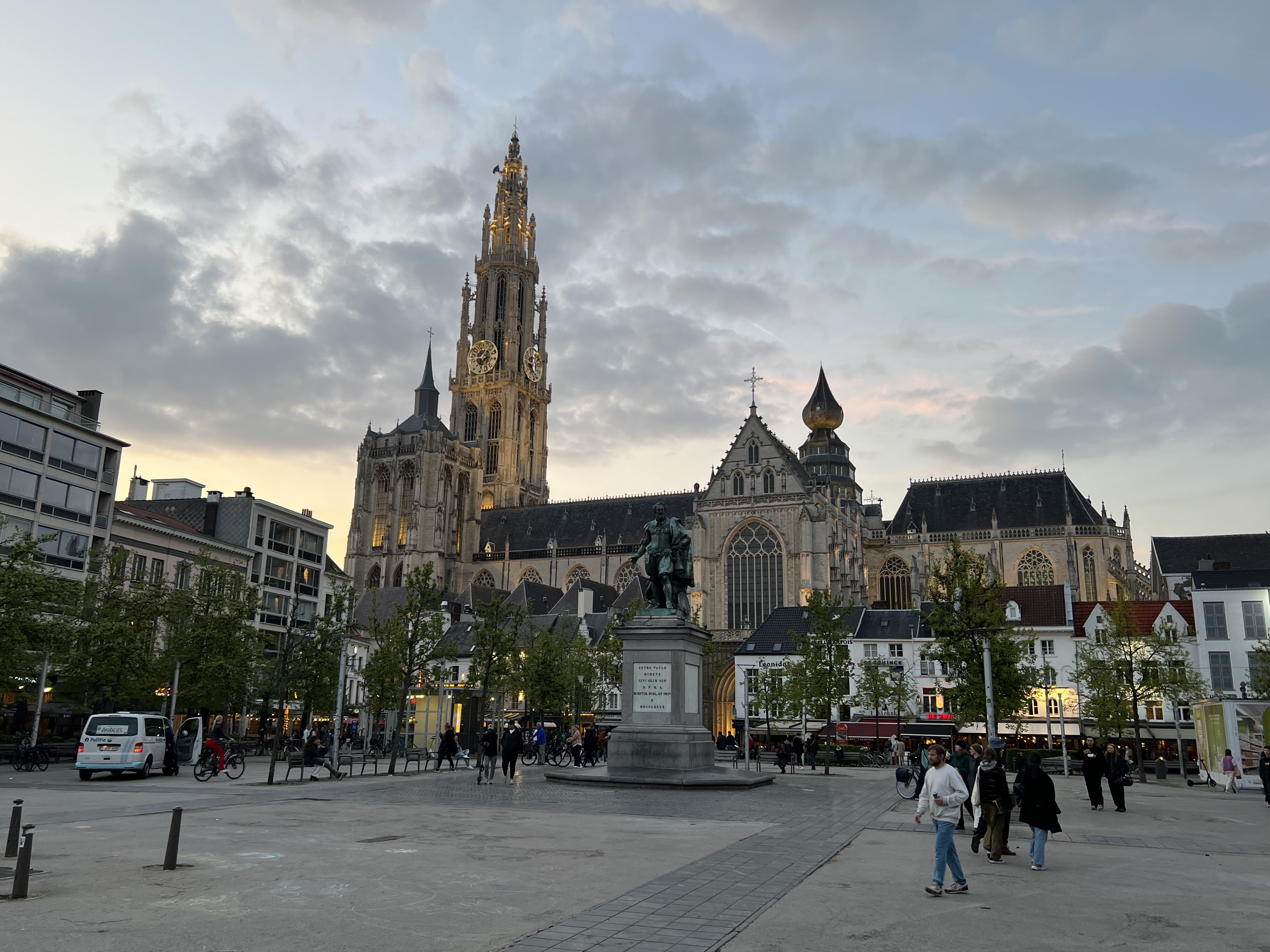
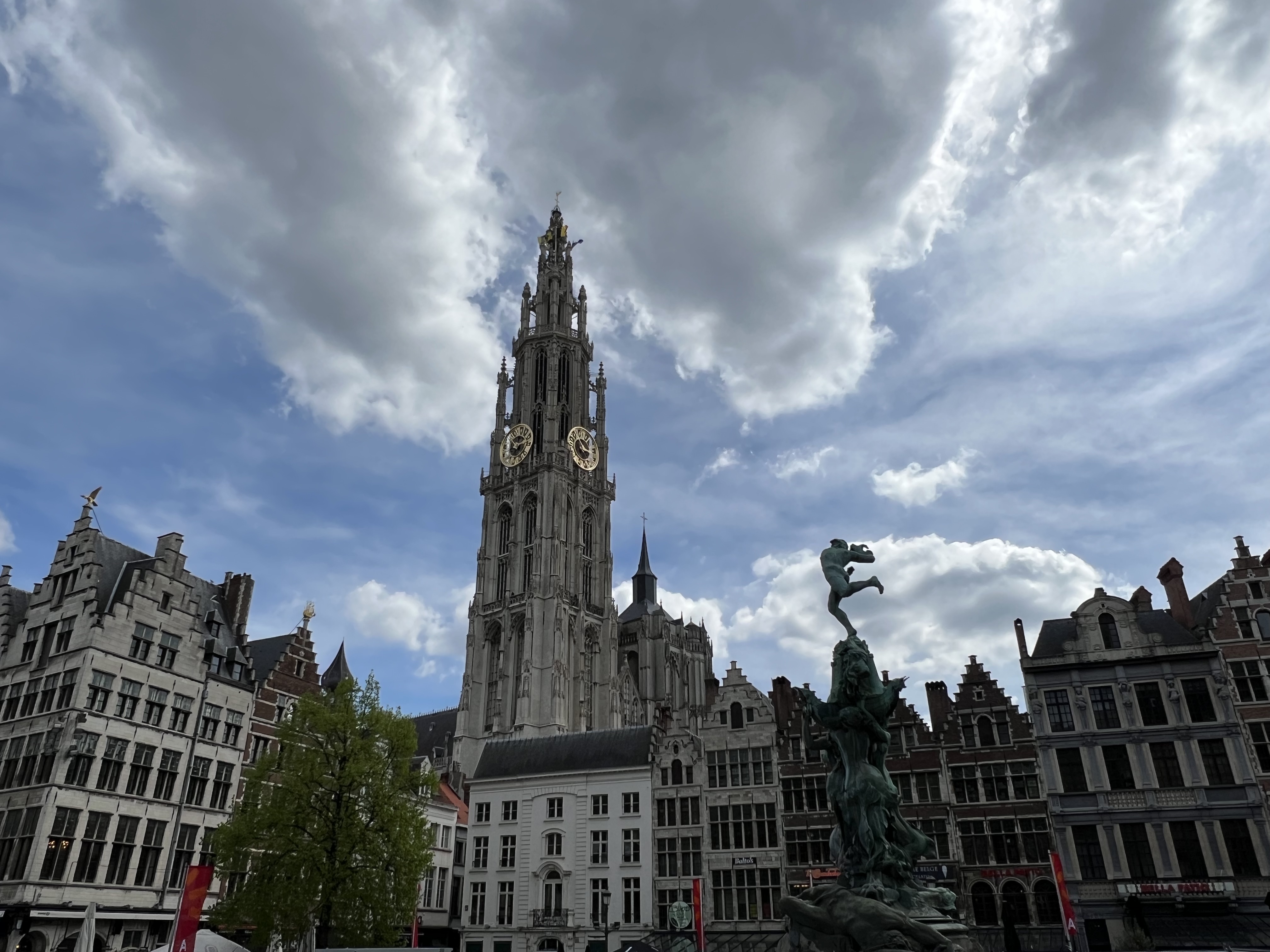
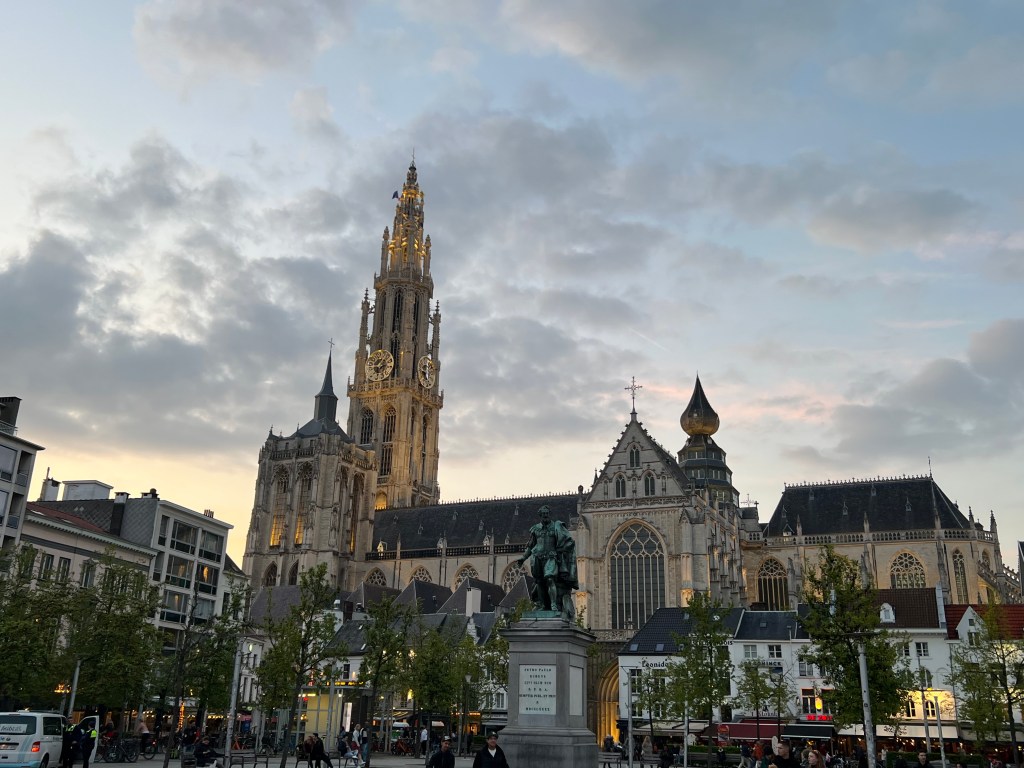
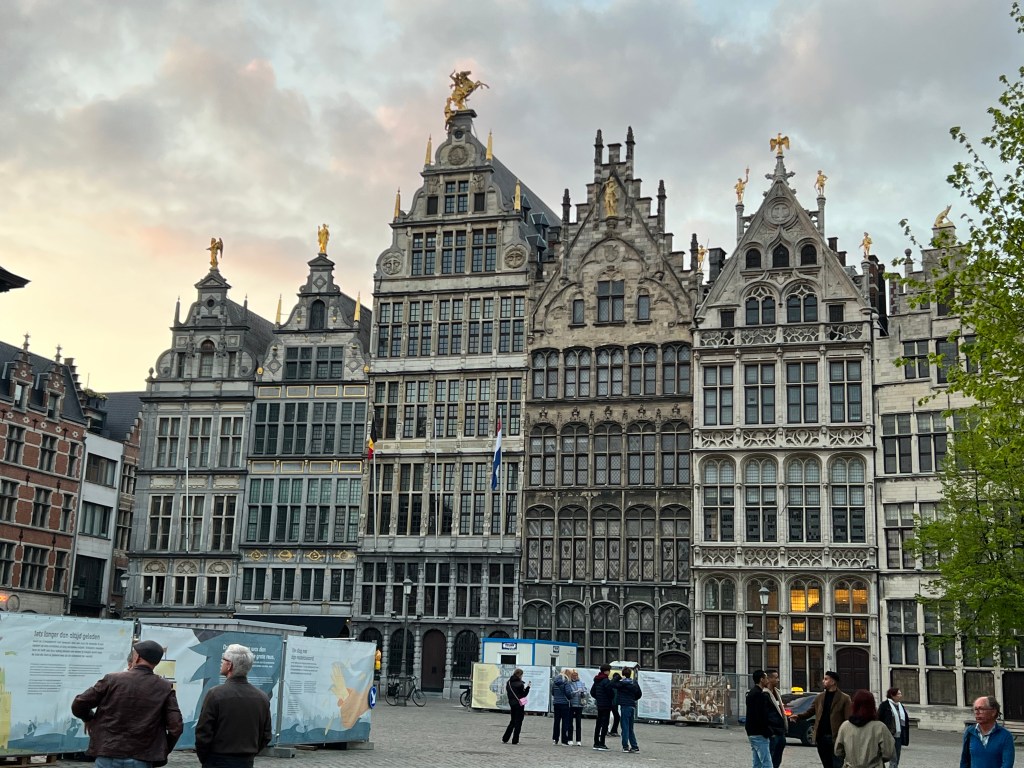
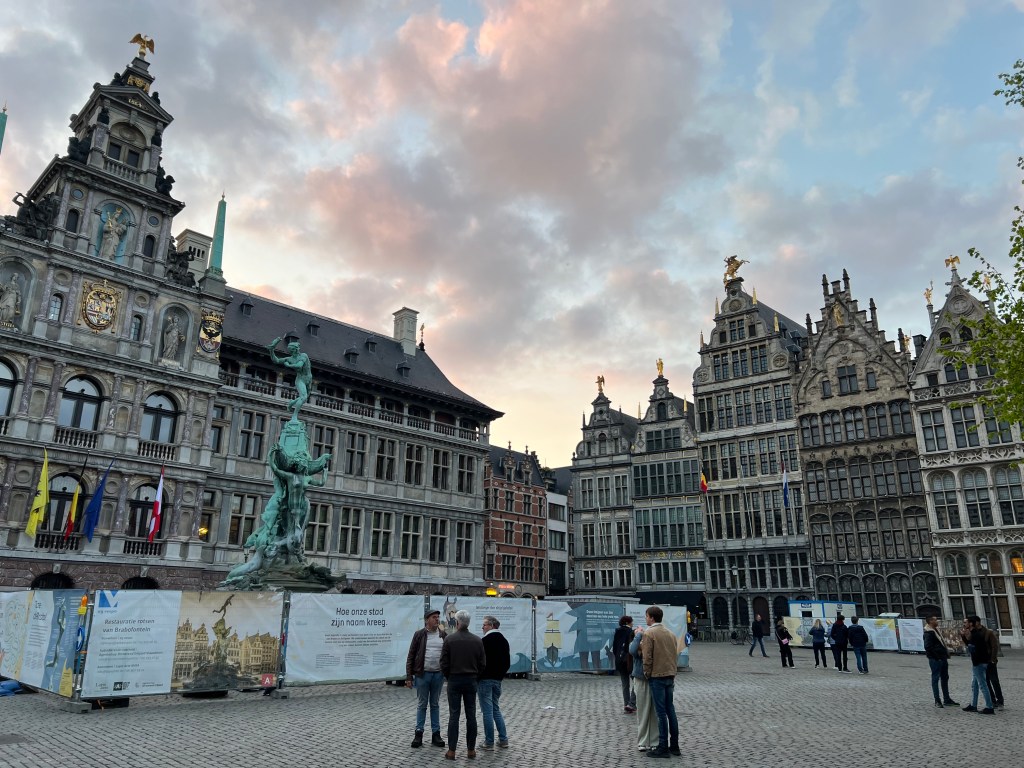
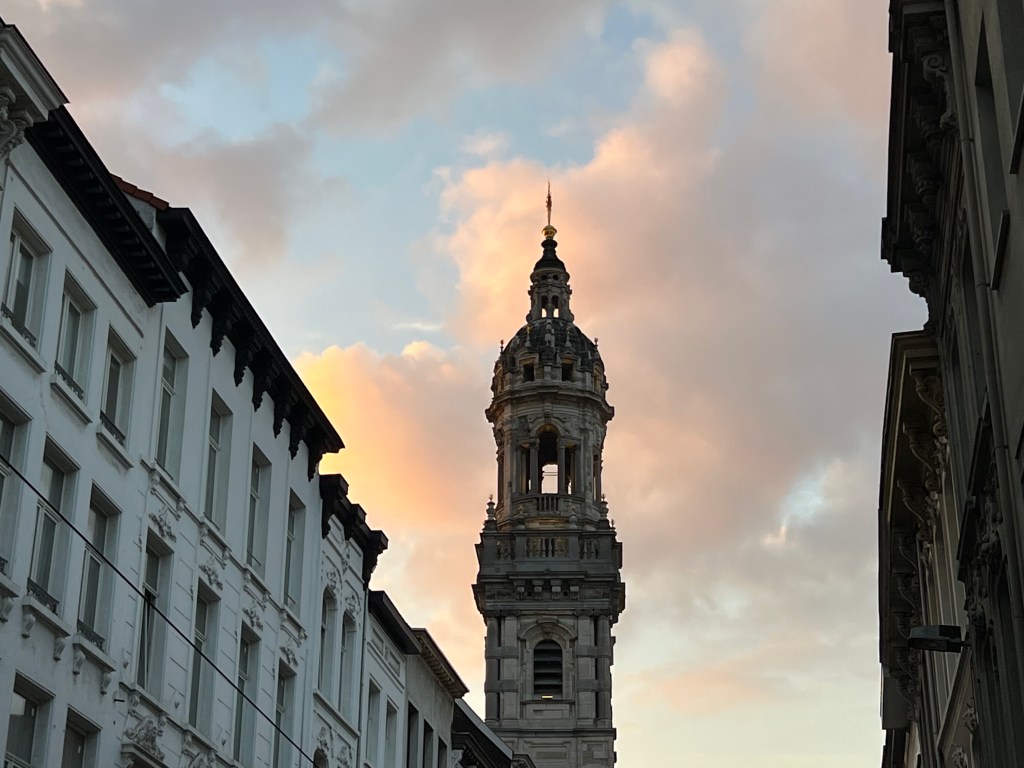
We finished the night walking through Antwerp’s historic center, which is packed with historic buildings and, on a Saturday night, busy restaurants. The imposing cathedral, which we plan to tour tomorrow, towers over the old town. Our late evening walk through the town center as the clouds colored from pink to blue, was a sweet and pleasant end to a good, good day.
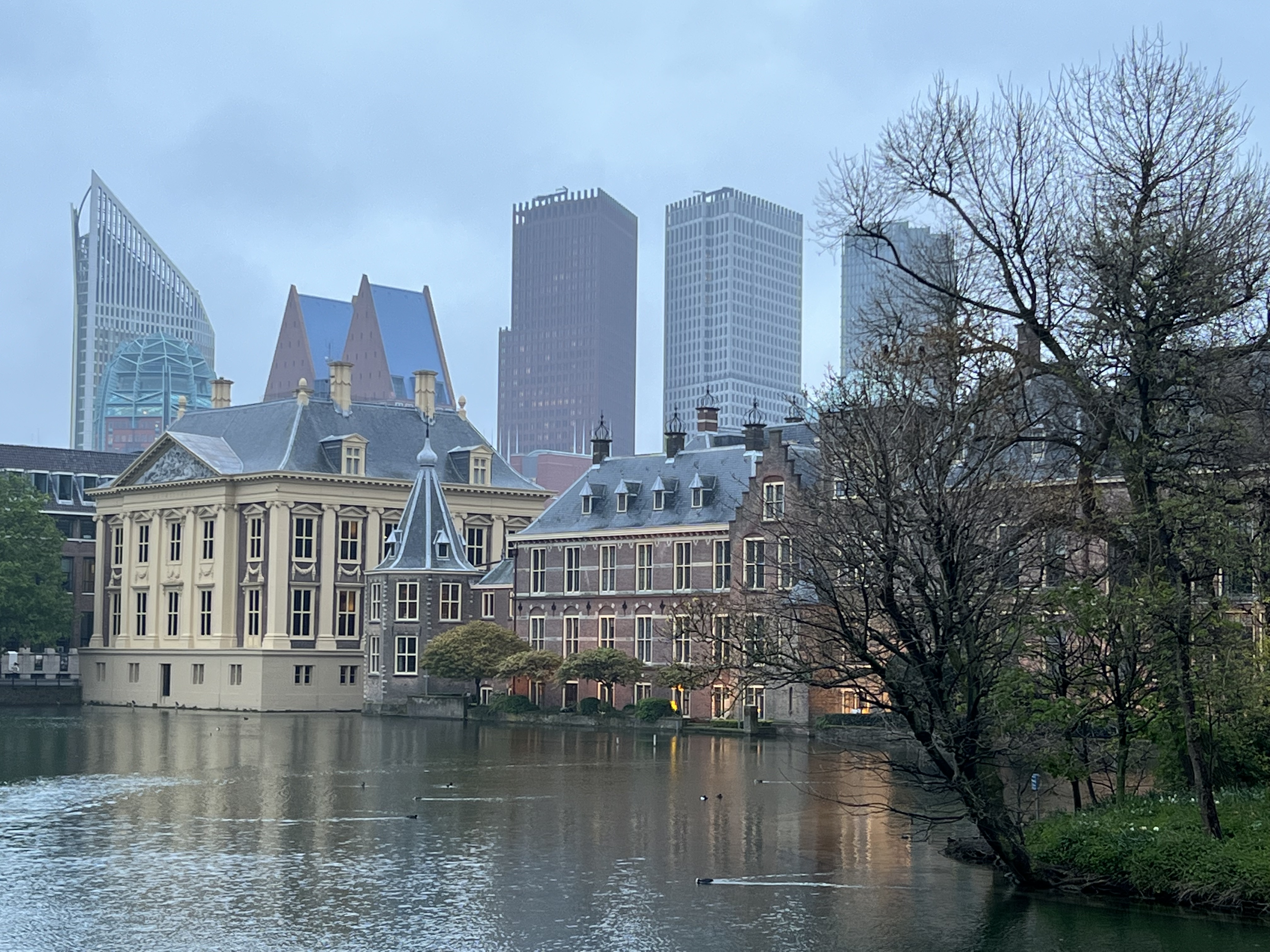
Friday, April 28, 2023, THE HAGUE, The Netherlands — We left the crowds and tumult of Amsterdam this morning and took an early train to The Hague. Fog and mist drifting in from the nearby North Sea wreathed the entire city, including the regal, deeply historic Hotel Des Indes, our home for one night. The Hague was cool, quiet and dignified, befitting a city that contains not only the International Court of Justice and the International Criminal Court, but also The Netherland’s Cabinet, States Genera, and its Supreme Court.
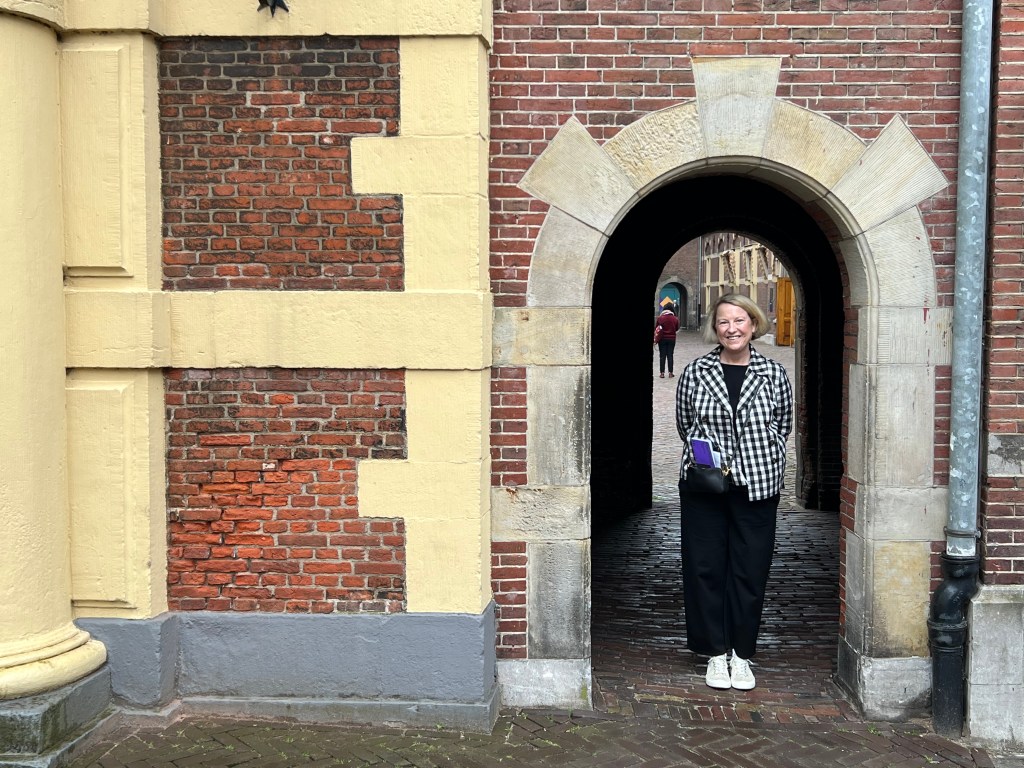
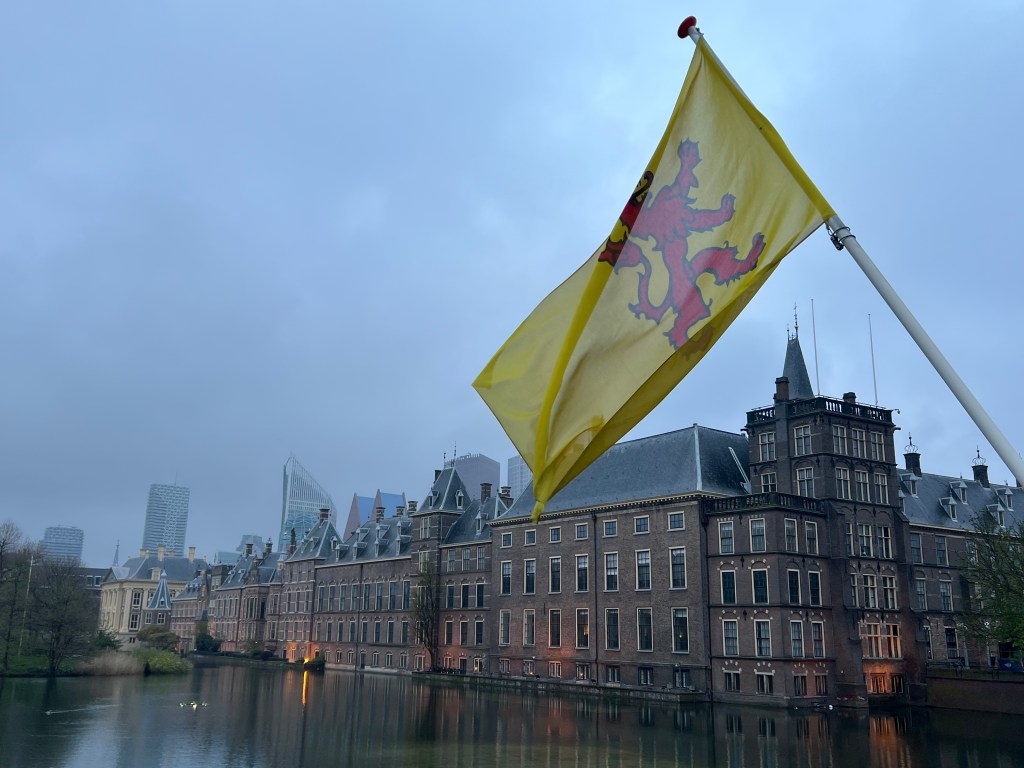
It was also beautiful, with the stone walls and spires of the The Binnenhof, a long row of historic government buildings, and the warm, light yellow walls of the Mauritshuis museum reflecting in the canal waters. The “Peace Palace,” built with a huge donation from Andrew Carnegie and home to the international courts run by the United Nations, is another quiet, graceful building that has a deep and important history.
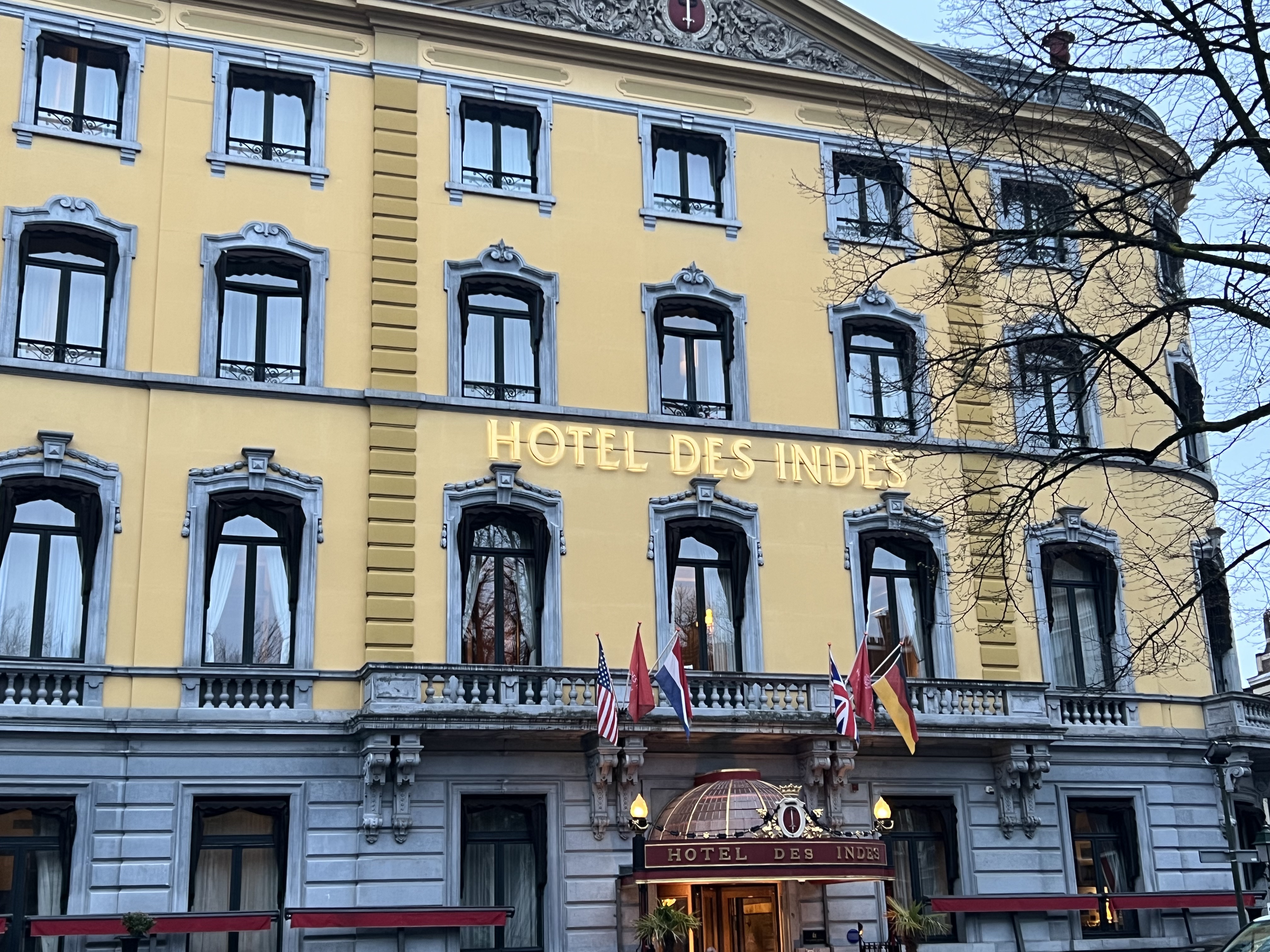
We were pleasantly surprised by everything about The Hague, including the amazing Hotel Des Indes, which warmly welcomed us to our room, even though it was only 9 in the morning. Like so much of The Hague, the Des Indes has an incredible history dating back to the 19th century, having welcomed everyone from King Ferdinand (whose later assassination triggered World War I), to Teddy Roosevelt, to German occupiers, and to Churchill, Eisenhower and other Allied leaders after the Nazis were driven out of The Netherlands. All kinds of other notables have stayed at the Des Indes, including Eleanor Roosevelt, Mata Hari, the Kennedys, Bono, Michael Jackson, Josephine Baker and Prince..
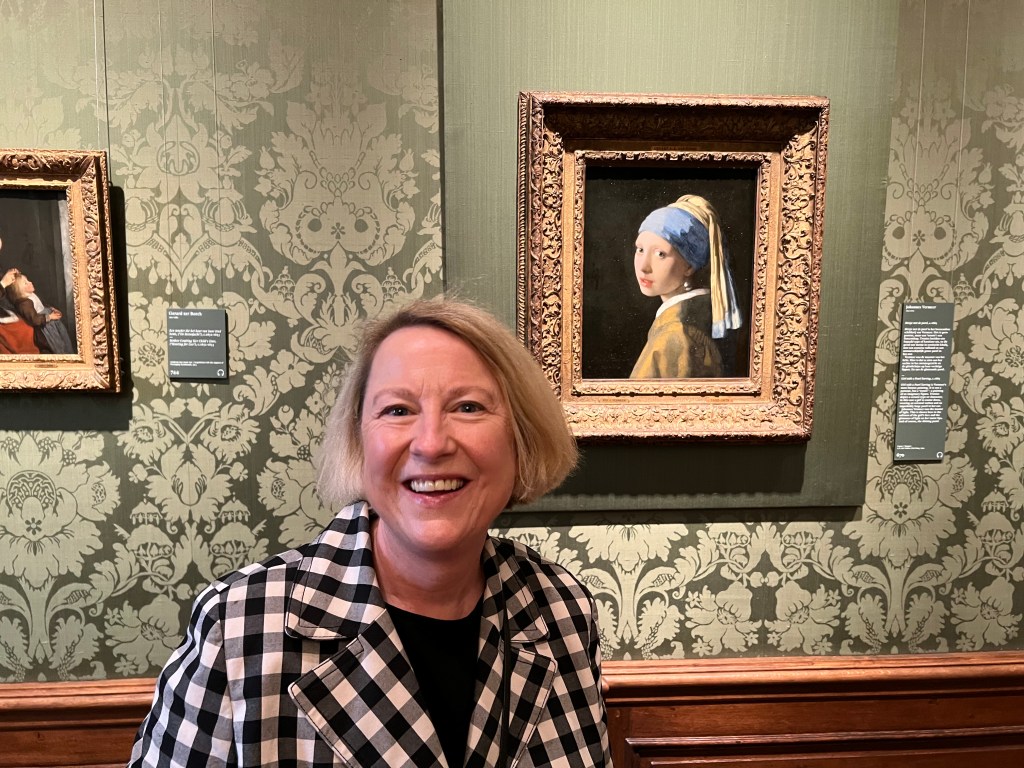
We started our day in The Hague with, yes, an early visit to the Mauritshuis art museum, home to Vermeer’s “Girl with a Pearl Earring” and other wonderful paintings, including many by Rembrandt and Hals. We also loved Paulus Potter’s 1647 huge painting of a bull and other barnyard animals, which is amazingly lifelike, right down to the bull’s twitching whiskers and the buzzing flies.
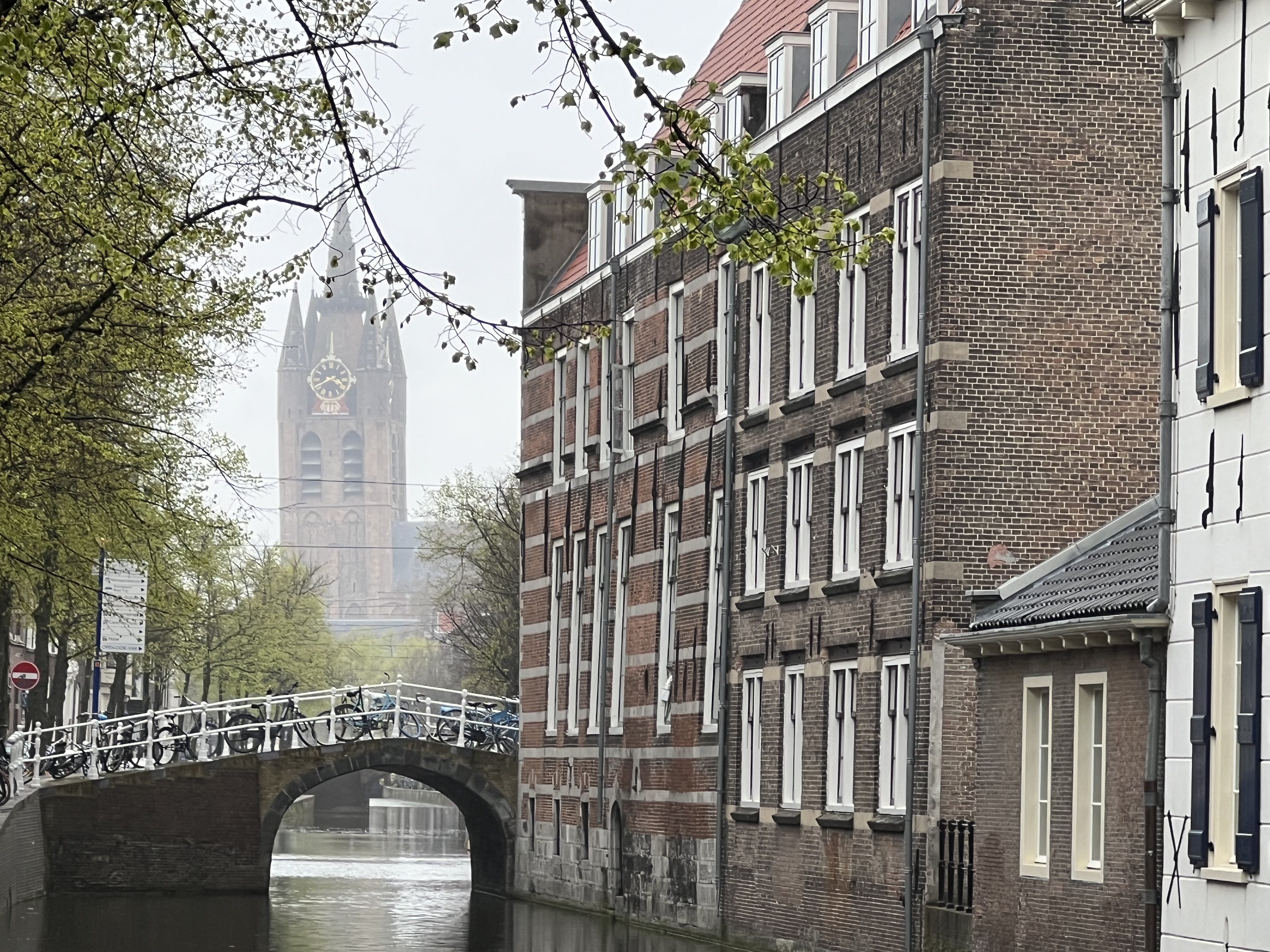
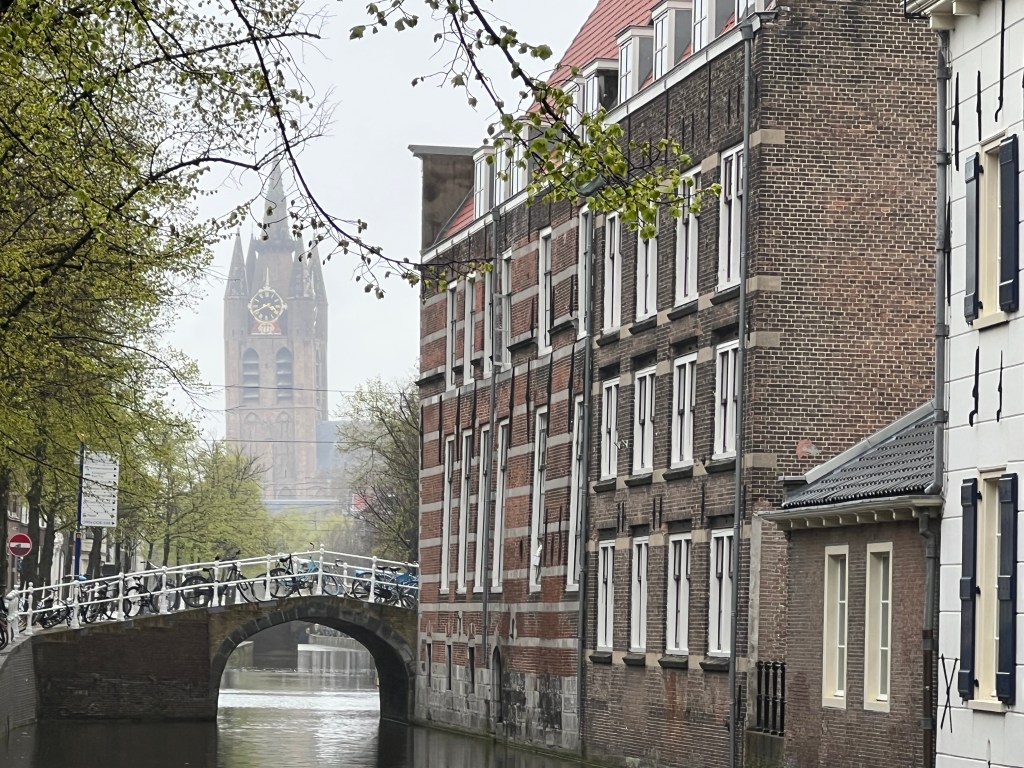
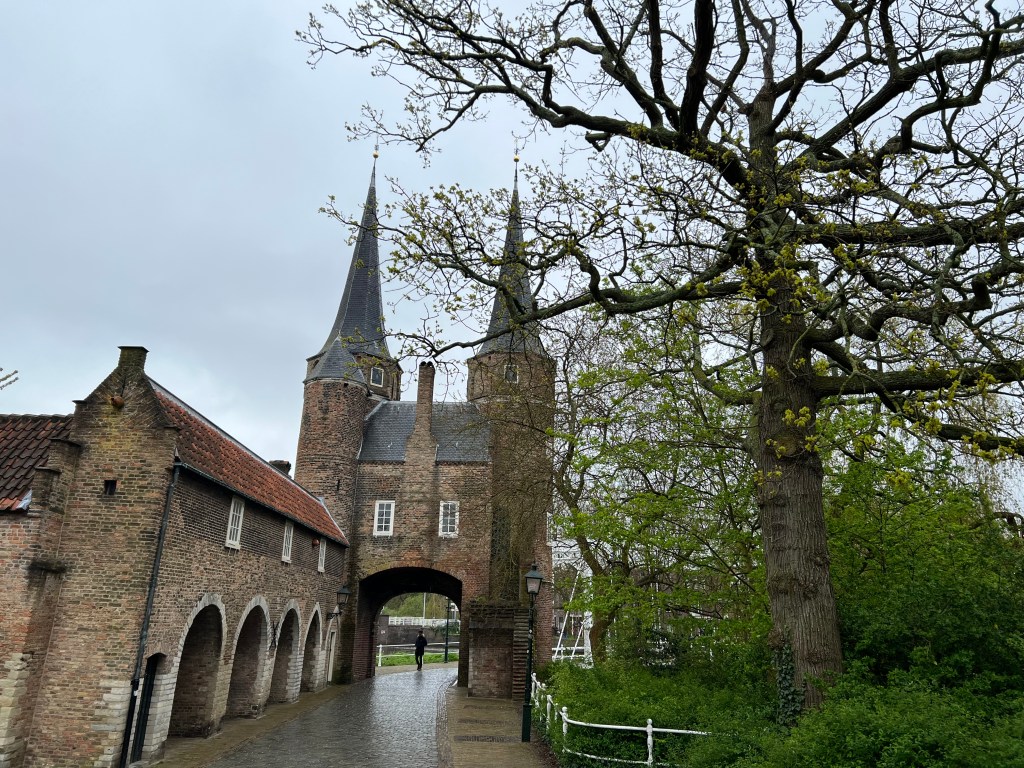
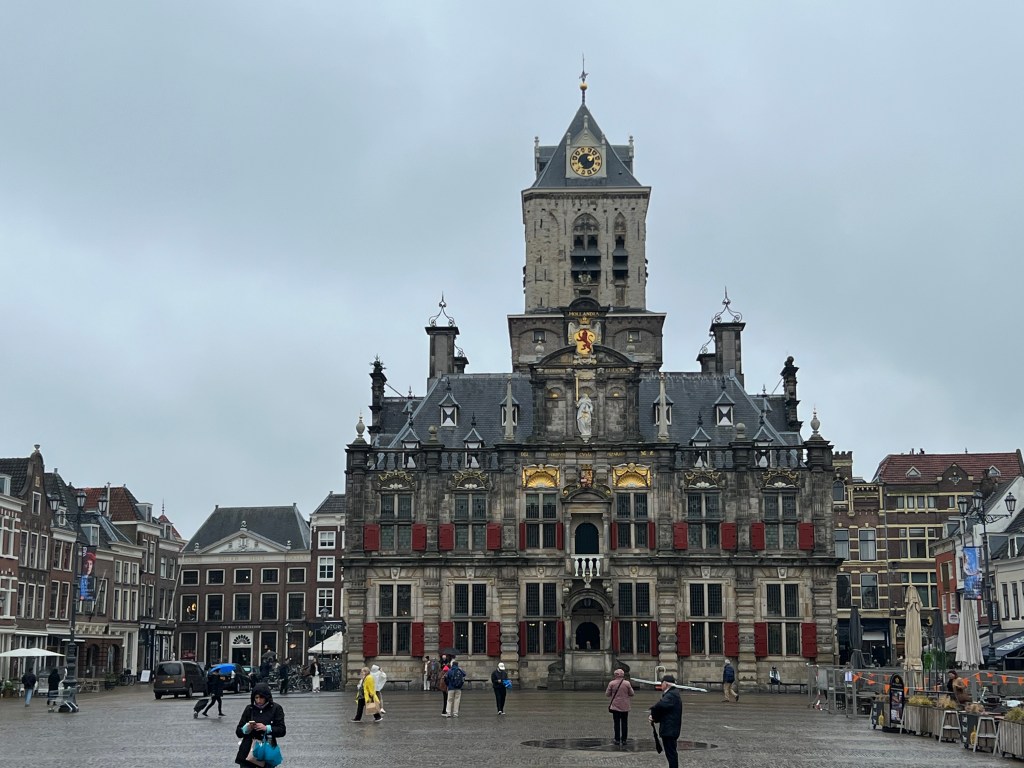
After a break for some coffee and homemade apple pie, from a hole-in-the-wall cafe with a funny, sweet server, we took a tram out to Delft, Vermeer’s hometown and the place with all that blue-and-white Delft pottery comes from. It rained lightly the whole time we were in Delft, but we were mostly inside, in both the Prinsenhof Museum, where they had a Vermeer exhibit and where the beloved William the Silent was assassinated, and the impressive Vermeer center, which gave a full and interesting account of his life and paintings. It a great way to round out our Vermeer expedition. William the Silent, also known as William I of Orange, led the revolt against the Spanish in the 1500s that resulted, eventually, in independence for The Netherlands. Children who visit the Prisenhof are given small metal “detective” cases that include a magnifying glass and other equipment to investigate William’s murder. Two bullet holes remain in the stairwell. Kids were down on their knees studying the holes with their magnifying glasses. (It was somewhat cuter than it sounds.) William is entombed in the beautiful “new” cathedral that we visited in Delft.
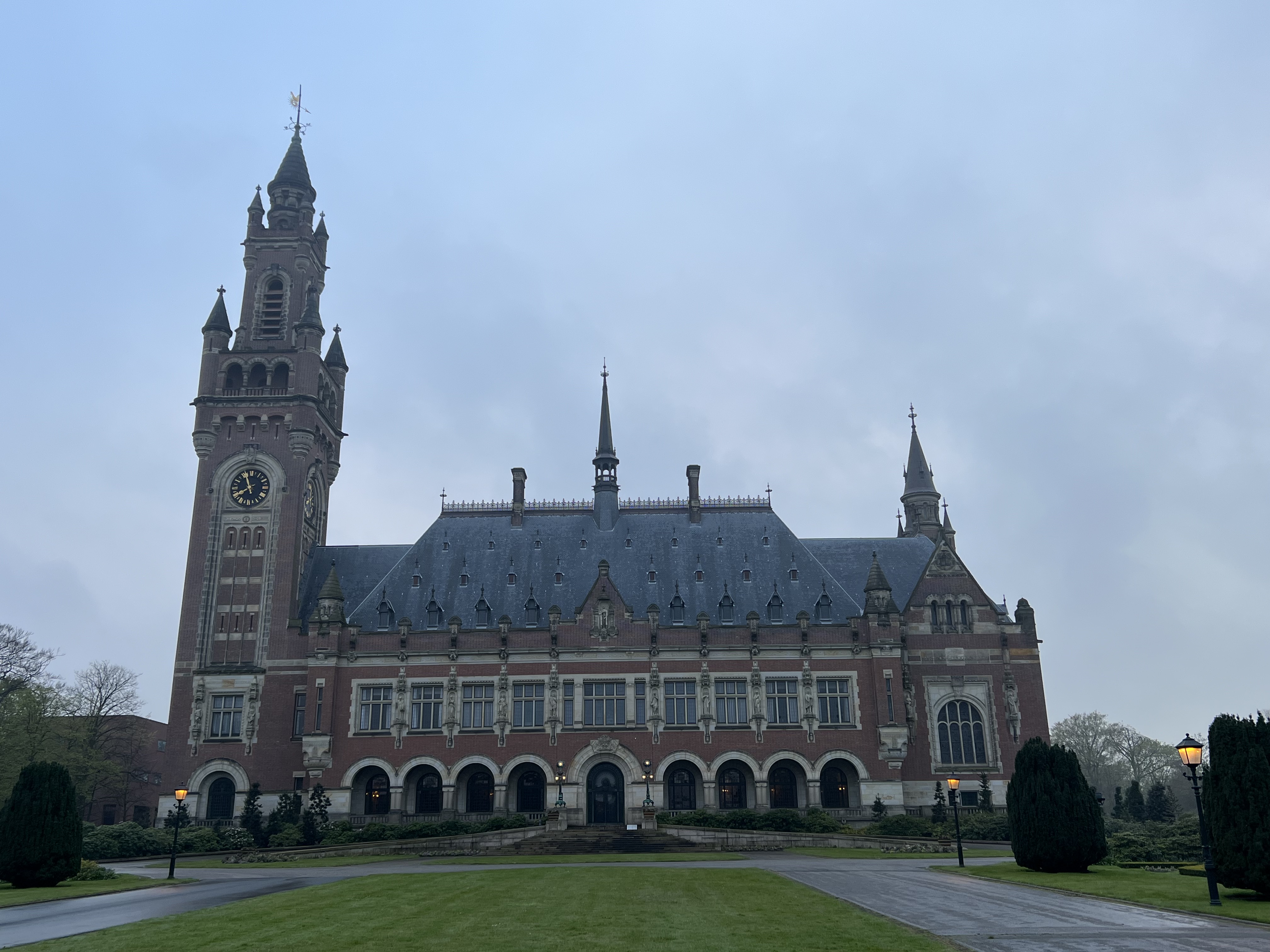
After we trained back from Delft, we had a wonderful Italian dinner in a tiny restaurant near the Hotel Des Indes and walked through the fading light to the Peace Palace, which was closed and quiet for the day. We stood behind the metal fence and hoped aloud that Putin and other Russians responsible for so much horror and death in Ukraine would one day be brought to justice in the building.
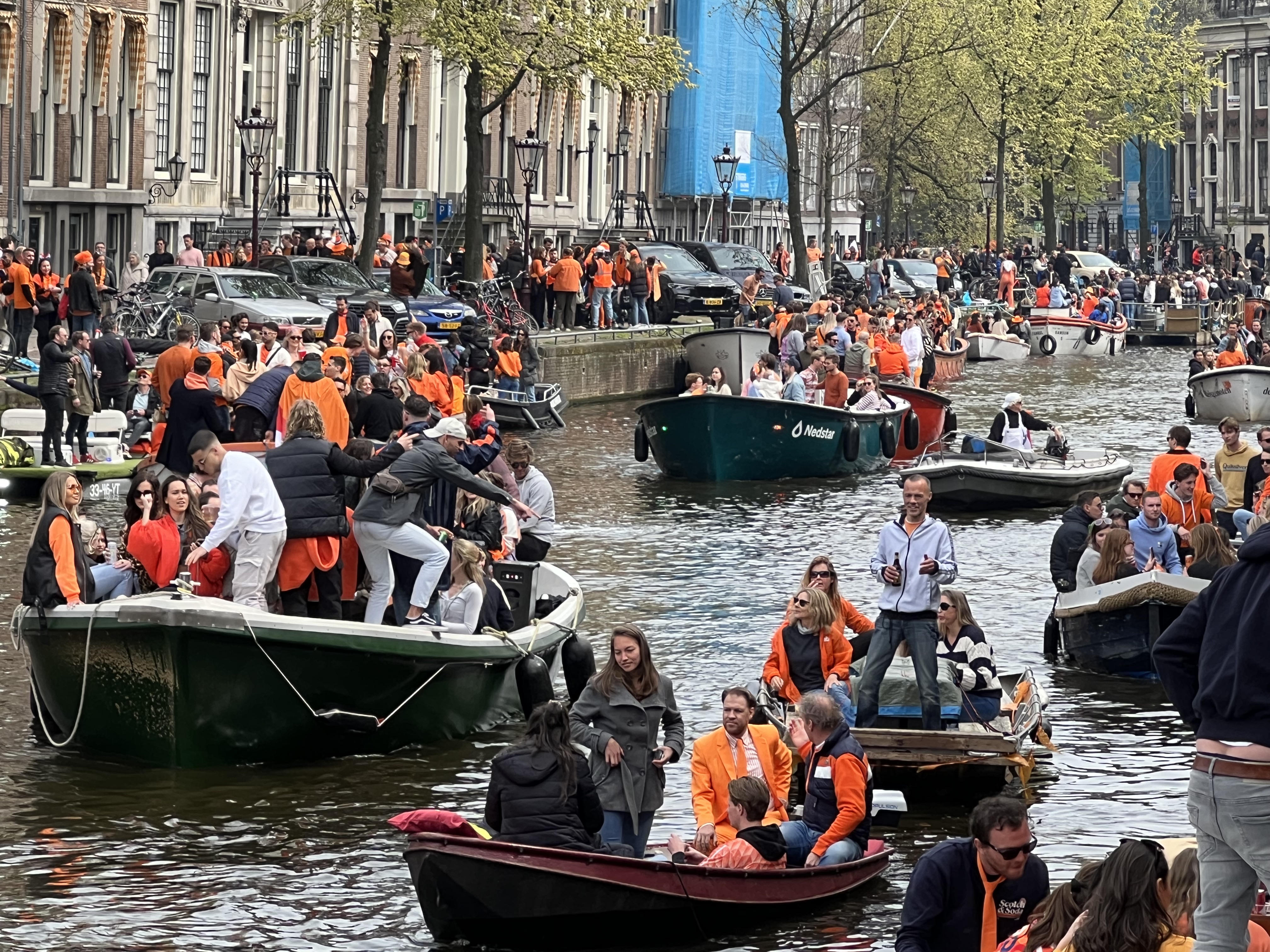
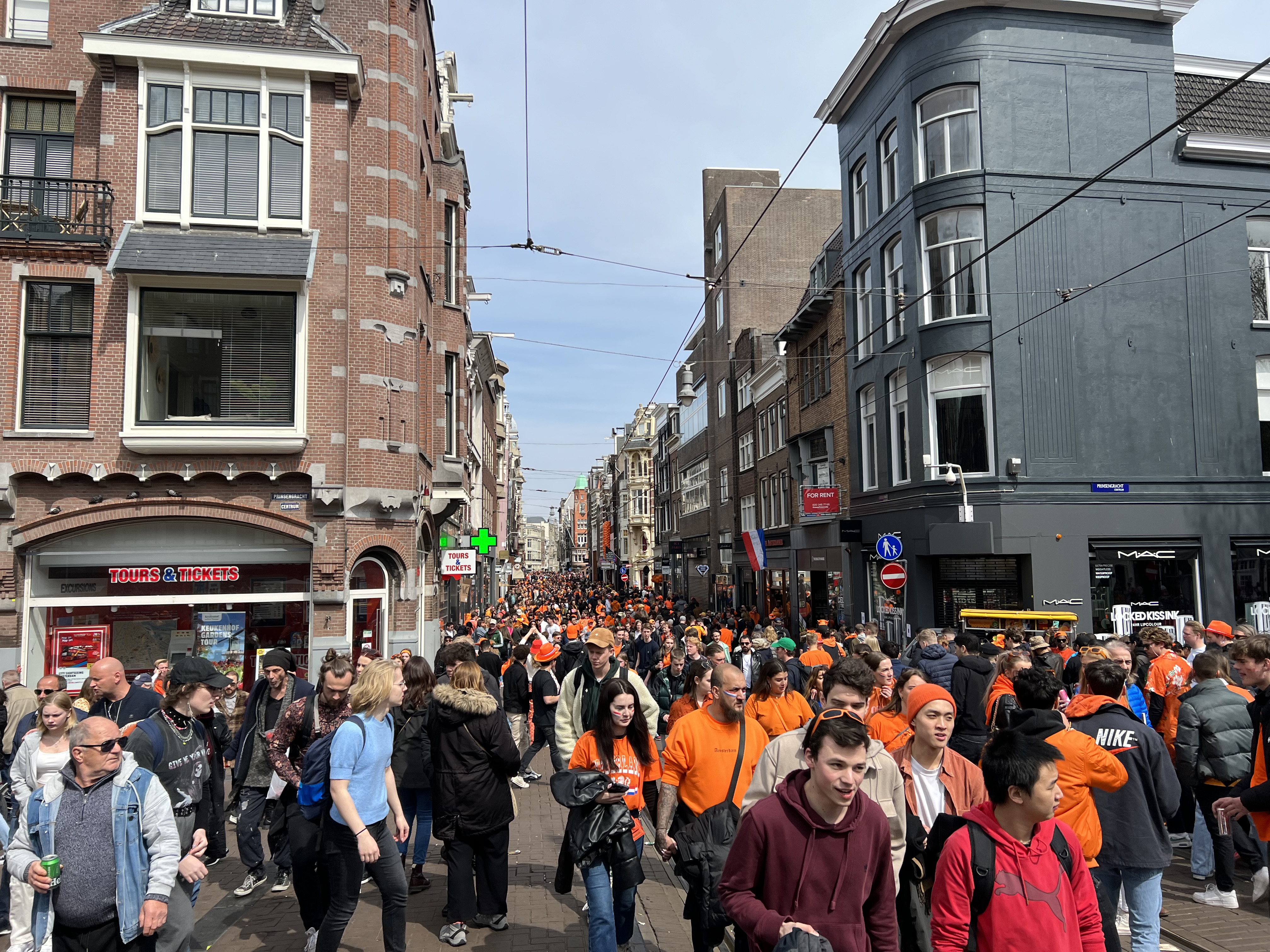

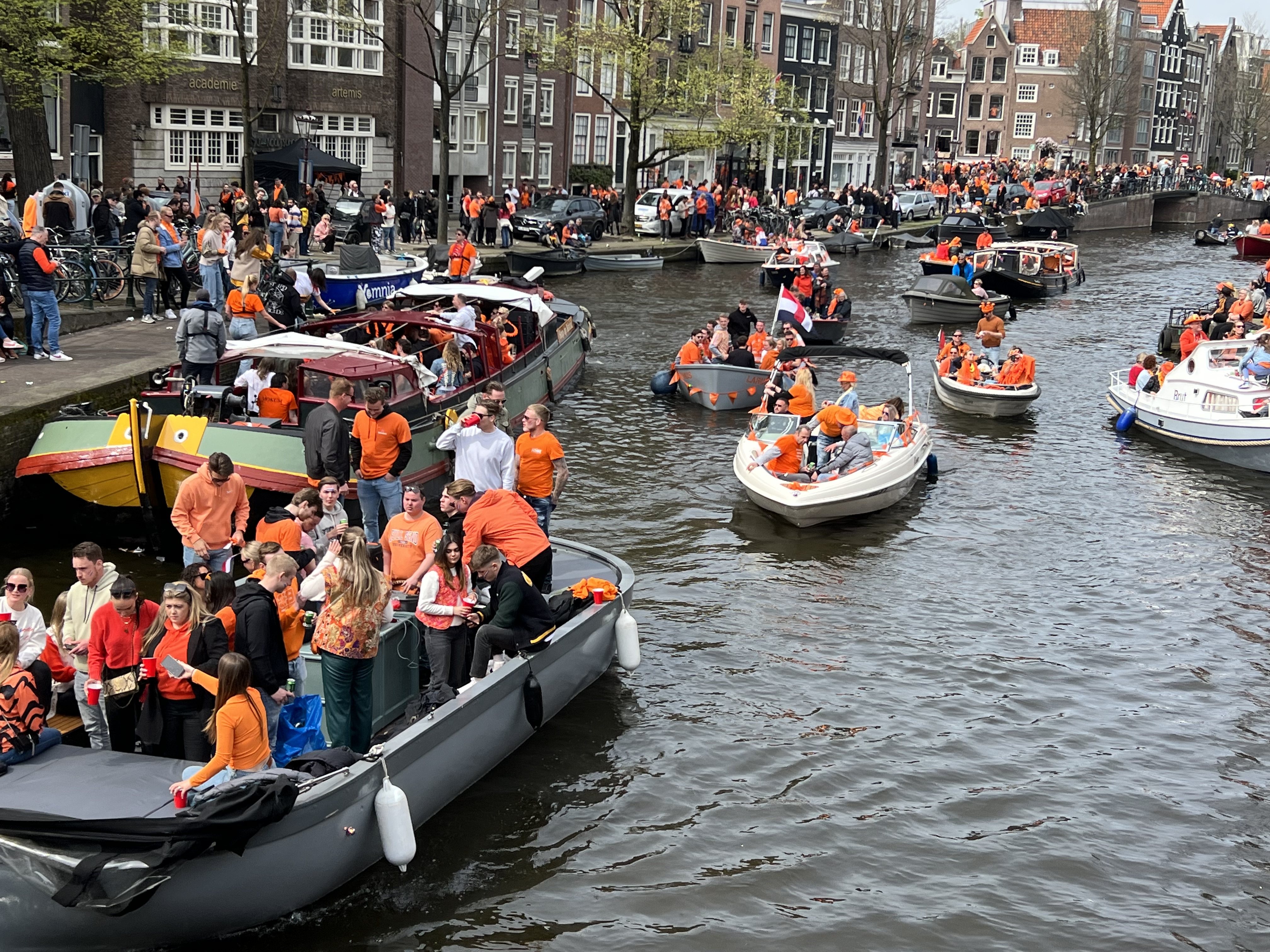
Thursday, April 27, 2023 — AMSTERDAM, The Netherlands — Mix beer, all manner of boats, blaring music, garish orange, hundreds of thousands of people, endless sidewalk junk sales, and much more beer, and you get King’s Day, or Koningsdag, in Dutch. It’s a national holiday, and it marks the birth of King Willem Alexander, and dates back to 1885. When the Dutch monarch is female, the holiday is known as Koninginnedag, or Queen’s Day.
In either case, it’s one hell of a party. We saw it, felt it, coming as early as the afternoon before, when walking the historic streets in the medieval center of of Utrecht, a college town, where there was a palpable sense of excitement and anticipation, people were staking out places for the sidewalk sales, the beer tents were going up, and the city crews were hurriedly placing pissoirs (urinals) along the canals and streets.
Still, King’s Day was wilder, bigger, louder, than we ever imagined. We came out of the Rijksmuseum, after our long-awaited viewing of the amazing Vermeer collection, into a sea of orange, with tens of thousands of people surging up and down the streets. We made our way to the first of the ring canals and watched the endless flotilla of party boats, blaring music, all packed with people drinking, dancing, and waving flags, a few of them puffing with smoke machines. The whole historic downtown was absolutely jammed with people drinking and watching the boats, and stepping around the yard sale tables set up everywhere on the sidewalks. One little girl was selling her Pokemon cards. We bought a couple ice-cold Heineken beers from a sweet pair of Dutch boys who looked about twelve years old.
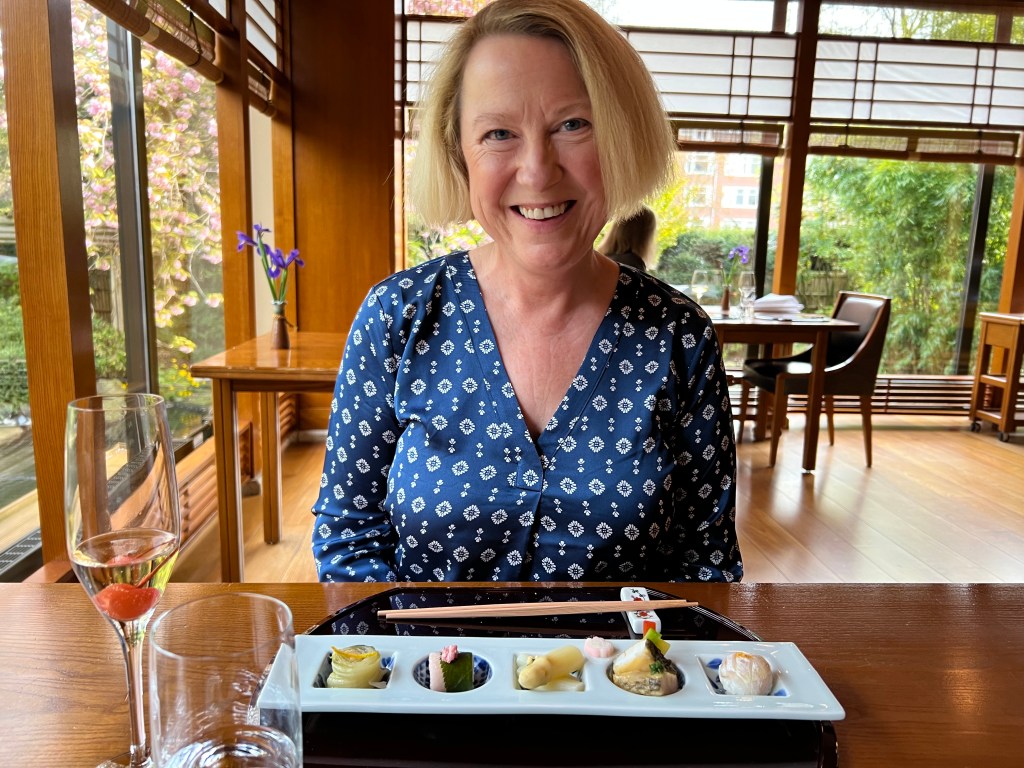
The party wasn’t confined to just the downtown, either. The entire tram system was canceled or blocked, more or less, and so we walked the mile or two back to our hotel. All the way home we passed thickets of partiers gathered around bars and tents, dancing and drinking, more sidewalk sales, and drunk guys leaning into the public pissoirs. Even hours later, as young Japanese women in kimonos served us an unforgettable multi-course dinner at our hotel, the Okura, we could hear the faint sounds of the boatloads of King’s Day partiers still floating past on the canal outside.

























 The Thompson Attigs