Les Baux, Bulls and a Crossbow that Shoots Cork

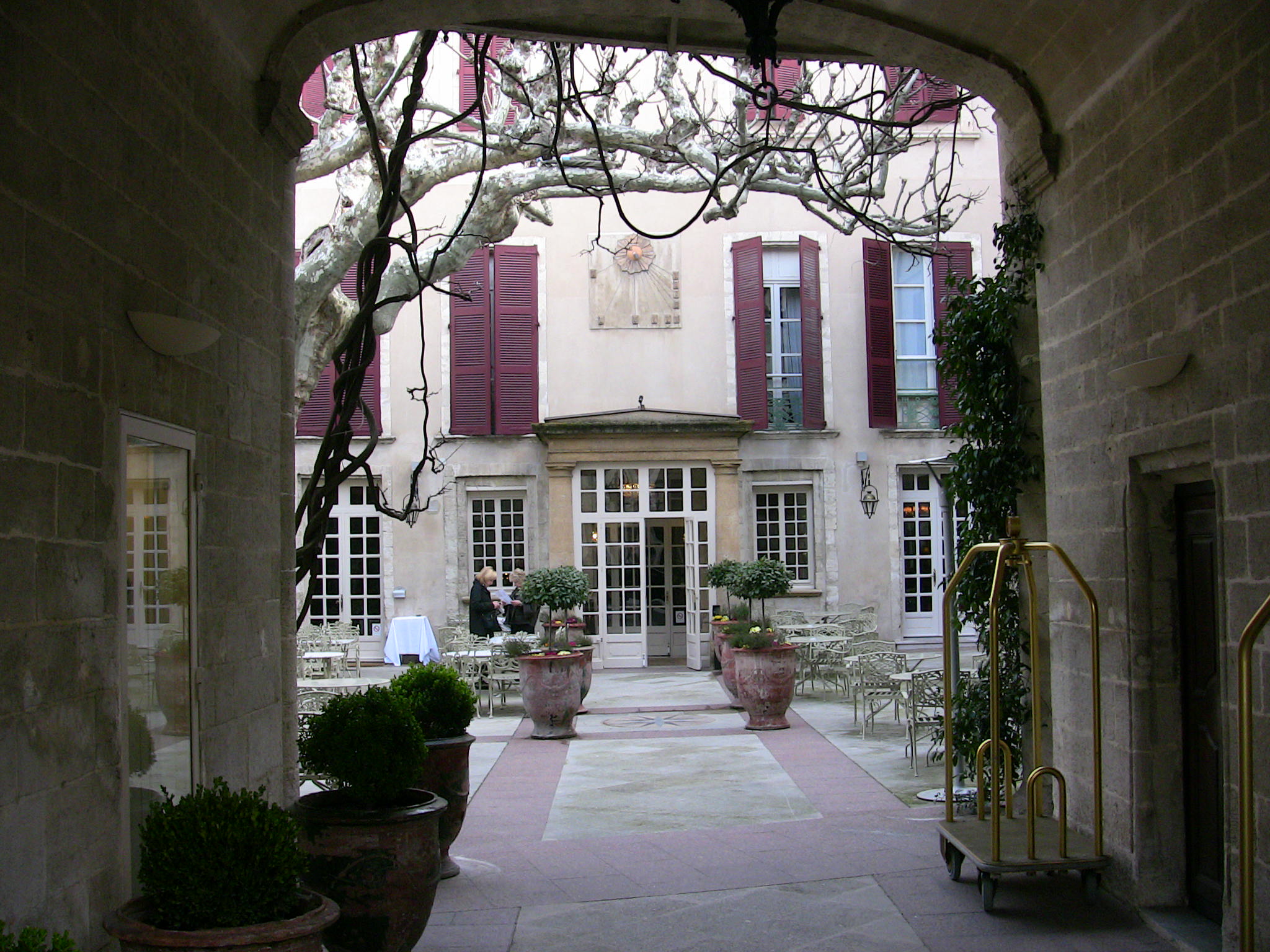
Arles, France, Saturday, March 27, 6 p.m. — Here we sit in our funky, stone-walled hotel, the Hotel d’Arlatan, a 15th century mansion of a former count, relaxing after another rather exhausting day. Will is winding down by shooting his new wooden crossbow — the ammo is wine corks — at the wall, trying to flick on the light-switch. Set just off a bustling square, the hotel is tucked into a corner and a bit hard to find; it was a hair-raising drive down narrow, twisting streets to reach the hotel, and Rick is still recovering hours later from the trauma.
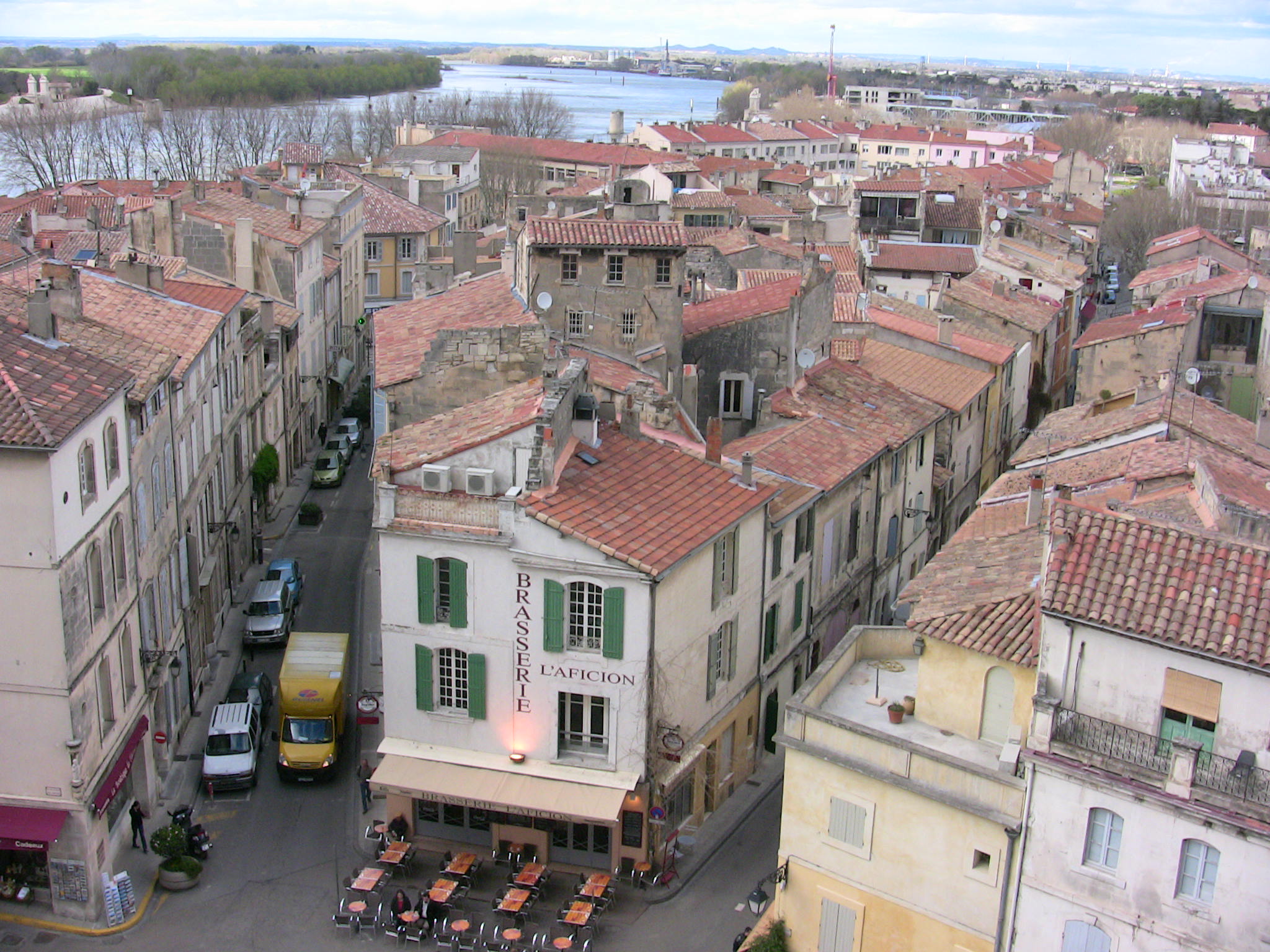
The mean streets of Arles
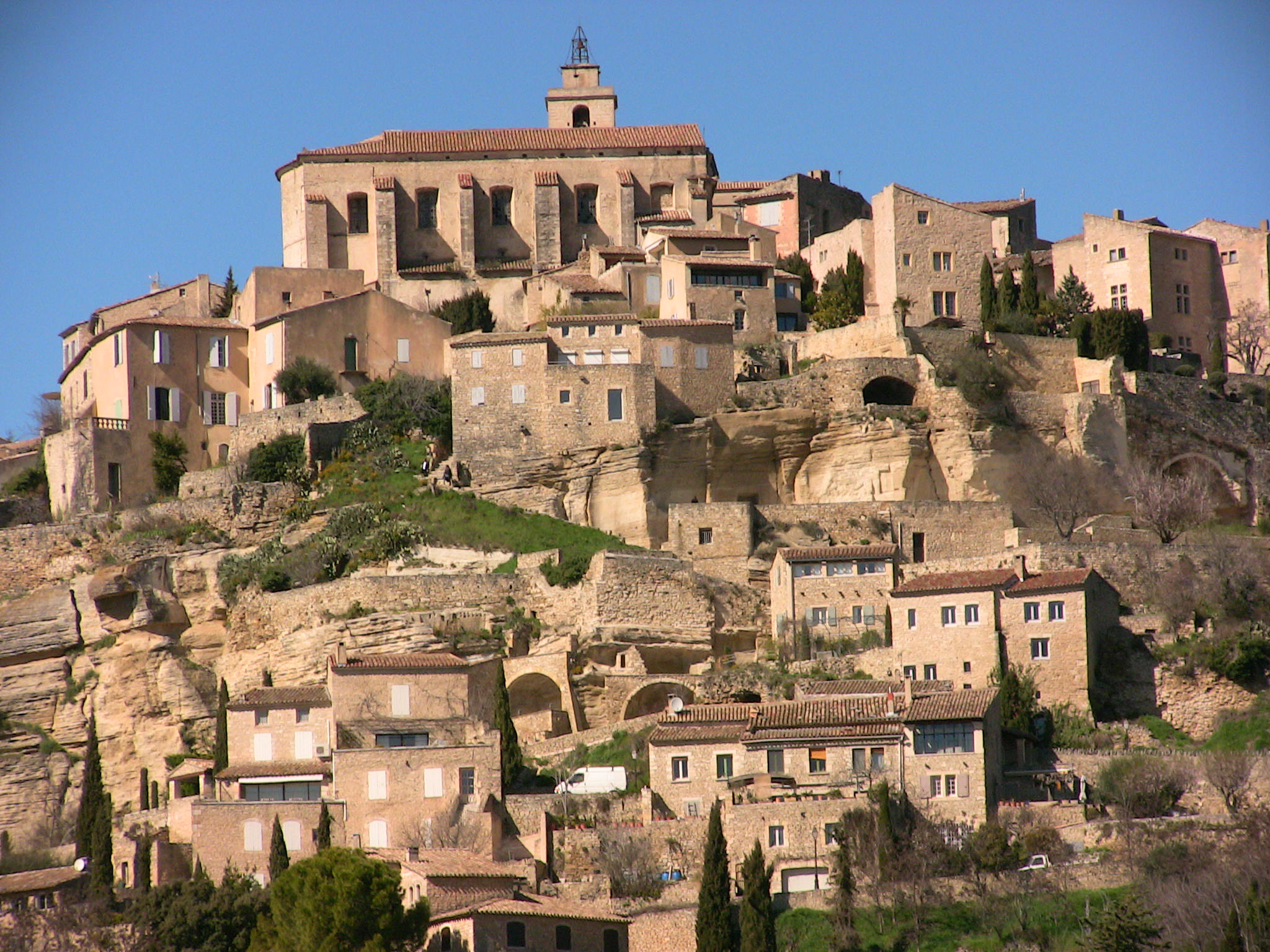
View of the village below the castle at Les Baux

We woke in Saint-Remy, after a rather un-sleepfilled night because of the smoking, talking guests who parked out under our window until 4 a.m. Yes, 4 a.m. I got some people to leave at midnight, but they continued to converge — and we were supposed to be in the country. Anyhow, that may be why we are kind of tired today. Though we did have a great morning in Les Baux, a village and medieval castle perched on a spur of the Alpilles mountains near St. Remy. Because it is so picturesque, it is also very touristy, but we were fortunate to be there in the off-season and early in the morning before the postcard shops opened. Will had a fabulous time clamboring around the steep stairways and narrow paths of the former castle, which was finally destroyed in 1631. The views across the valley and out toward the Mediterranean were spectacular — vineyards and olive orchards into the distance.

We then saw the Val d’Enfer, or the Valley of Hell, which has inspired everyone from Dante to Jean Cocteau with its weird rock formations. We then came down to Arles where we had one of the worst meals of our lives. Will compared it to a dismal night we spent in Salt Lake City when we missed our plane to Sun Valley and ate in the most horrible restaurant imaginable on the airlines’ dime — the most horrible until today. Recommended by three guide books as a charming “Van Gogh” inspired restaurant, it was ghastly. And expensive. Can’t wait to get onto Trip Advisor with this one.
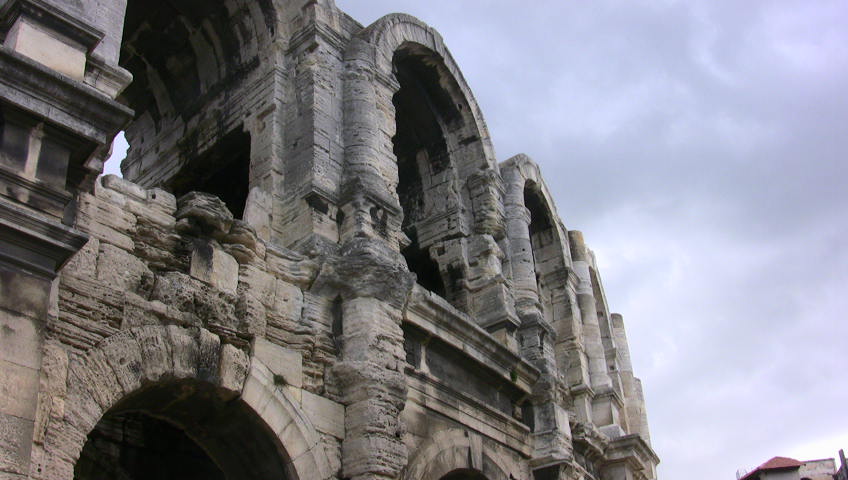
Roman Arena at Arles

We then  toured the Roman ruins in Arles, but maybe we’re tired, and maybe we’re spoiled by the amazing ruins we’ve seen so far, because Rick, Will and I were underwhelmed. The theater and the arena were in much worse shape than elsewhere — though the arena is still open for bullfights and other events. Rick is bummed because a bullfight festival starts tomorrow — too late for us to see as we plan to head back to Paris in the early afternoon. He doesn’t want to see the bullfight, but the running of the bulls — so Hemingway of him.

We’ve got a reservation at a restaurant called something like the “Gullet of the Wolf,” so we’ve got our fingers crossed for a good Provencale meal to end our time in the south. Will says he doesn’t want to leave France, but he really misses his dog. Hang in there, Zeus, we’ll be on our way home soon!
A Perfect Day in Provence

Saint-Remy-de-Provence, Friday, March 26, 2010, 5:30 p.m. – I am sitting in the quiet garden outside our hotel, a 200-year-old stone farmhouse called “Mas de Carassins.” There’s a lovely pool in front of me, a fountain framing the rocky outcrops of the Alpilles mountains that van Gogh loved to paint while he was convalescing at a sanatorium less than a kilometer from here. The sun is amazingly warm, the air fresh, and Will is playing ping-pong with his dad while we await a bottle of local red wine to enjoy by the pool. Can you say perfect in French? Parfait!

We had a perfect day in Provence, our best yet in the south. We woke to a driving rain, Mitchell even saw hail, and our host, Michael, told us to rethink our plans of seeing the Roman ruins, the sanatorium, the villages I’d mapped out in the hills to the east. Undaunted, Rick, Will and I donned our raingear and set off for the ruins of Glanum, just a hop and a skip up the road. We parked at the sanatorium, which had views so familiar from van Gogh’s paintings. There were reproductions of his paintings with the actual backdrops behind along the road into the hospital where he took refuge for a year after he cut off part of his right ear while living with Gaugin in nearby Arles. Van Gogh was exceptionally productive during his time here, and we walked through the cloisters of the hospital, which is still being used by psychiatric patients. In fact, a silent but friendly patient greeted us with a huge vacant smile and a very soft handshake. Rick, in particular, was moved by the experience, perhaps all the time he spent at the Oregon State Hospital. “Thinking of van Gogh in that little room and painting all these amazing things,” Rick said.

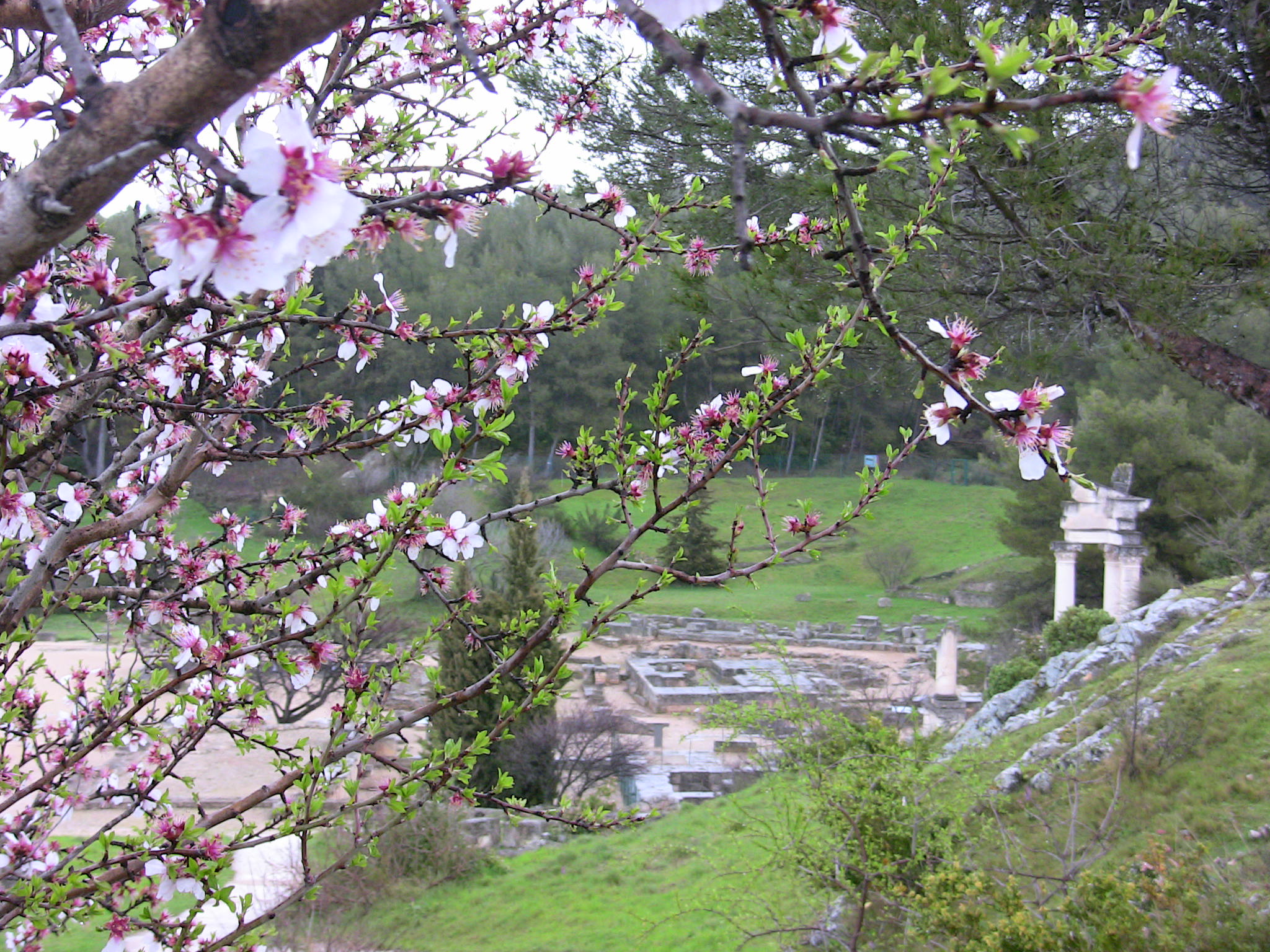
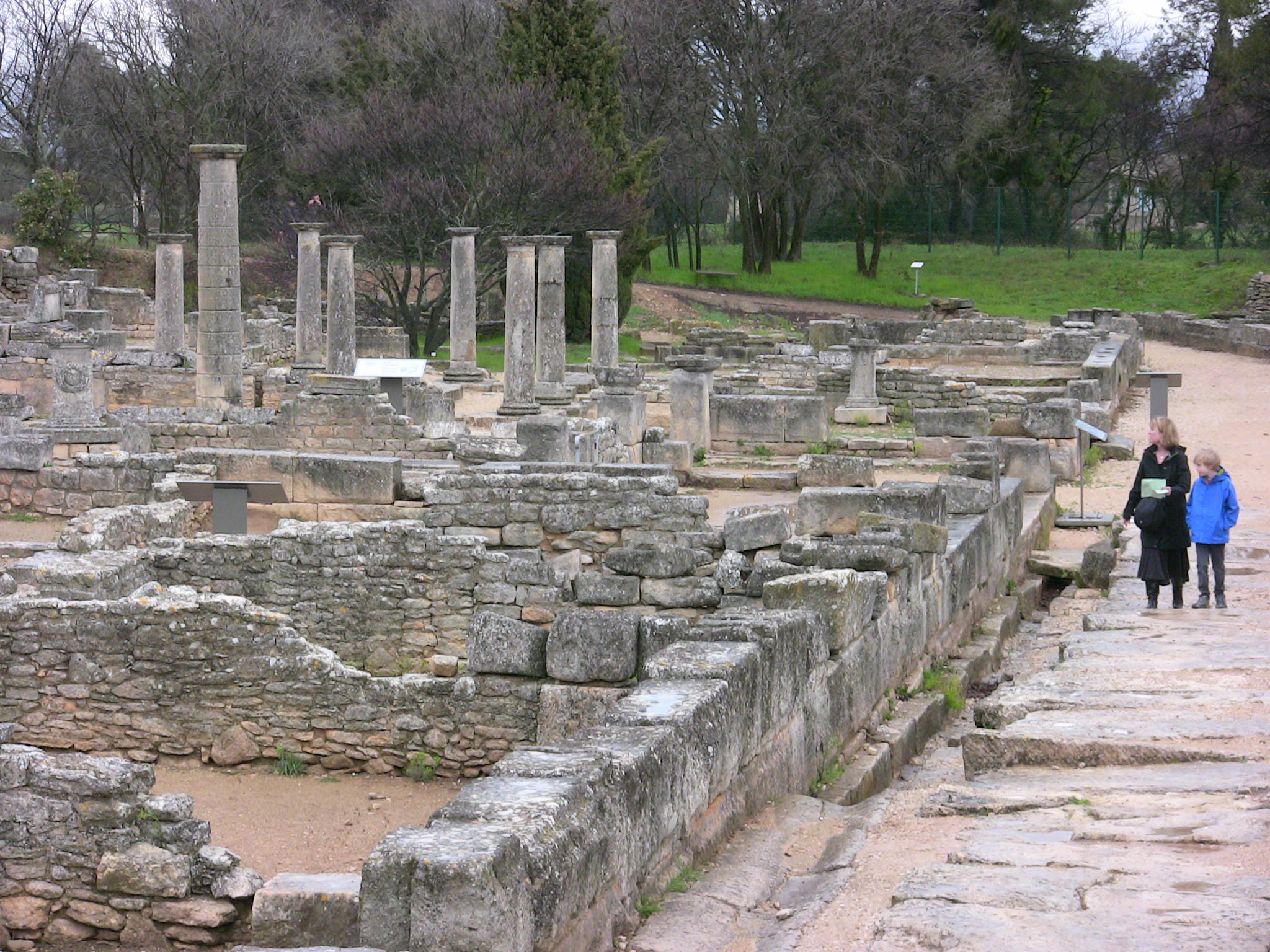
But before we toured the small room, which re-created van Gogh’s actual room, we noticed the sky clearing, so we headed across the road to the Roman ruins of Glanum. What a treat! These were the most amazing ruins we have found (Nigel told us it would be so, and he was sooo right.) Set in a narrow valley under beautiful rock outcroppings, Glanum was a fully formed urban town in the time of the Roman empire. Earlier still, local Celt/Ligurians inhabited the same place, the site of a sacred spring, which Will, to his delight, discovered.

The ruins stretched up the valley and included a forum, meeting places, large stately houses, temples, wells, sewers. It was the first place in Provence that made us feel the power we felt in Greece at the ancient sites there. Fortunately, perhaps because of the weather, we were alone at the site, which made it feel even more special, and made it easier to imagine walking the streets alongside men in togas.

The weather continued to improve as we swung out of town toward the hilltop town of Gordes on the Vaucluse Plateau. We stopped at an amazing Provencale restaurant, La Farigoule, just below Gordes, where we had fancy salads with foie gras and Will had an unbelievable chocolate cake with the texture of mousse.

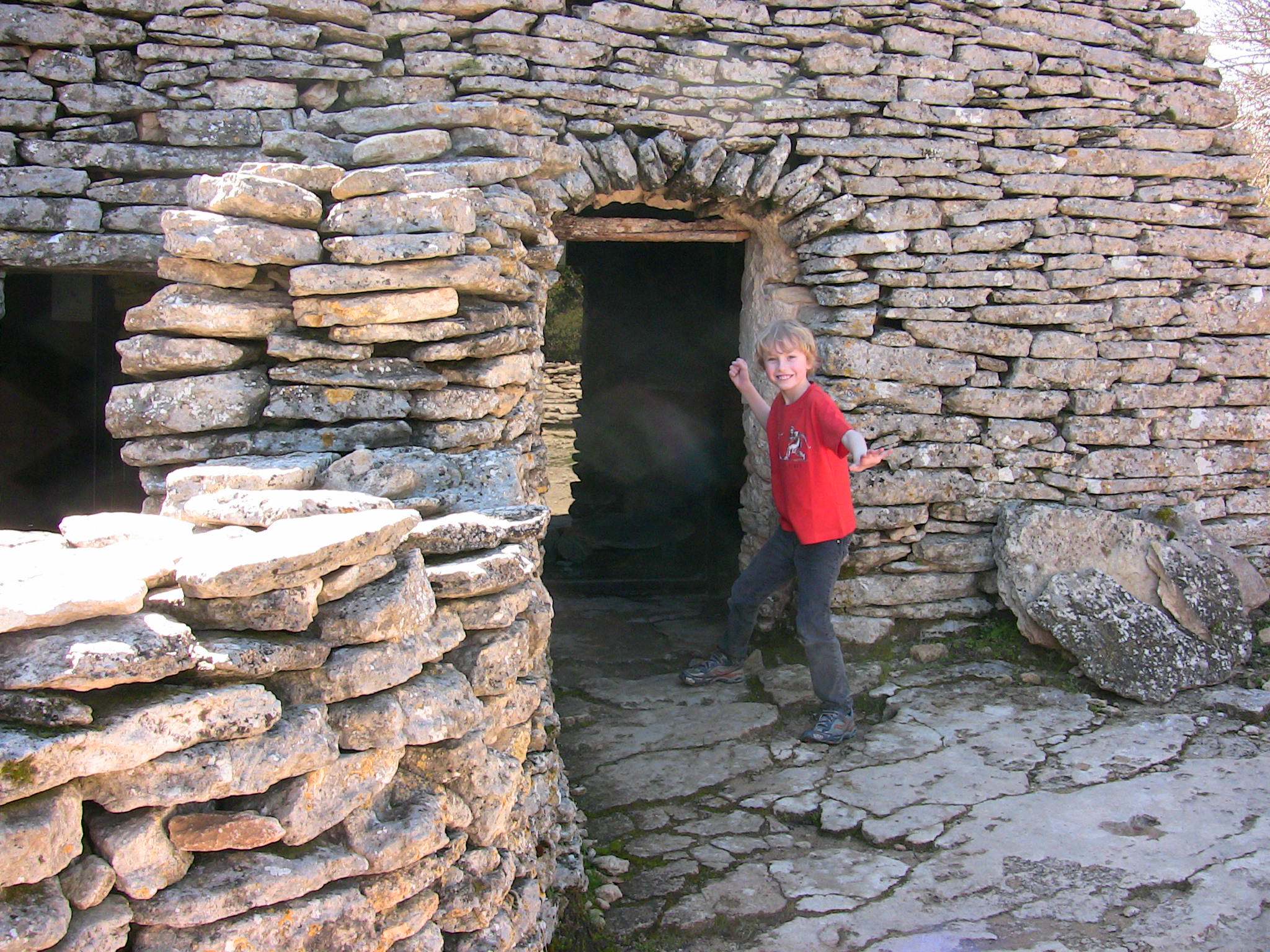
We then stopped at the Village des Bouries, the site of an ancient village where all the buildings were built of stacked stones. People lived alongside their cattle, sheep and pigs and threshed their grain on the huge flat rocks underlying the site. The last inhabitants left in the early 18th century, but it was restored in the 1970s. It was a delight for Will to run through the buildings and around the site, imagining he was living in a time long ago.

We then headed up to Gordes, perched on a hilltop, topped by a castle. We wandered the narrow steep cobblestone streets and enjoyed the wonderful views across the valley to the Luberon mountains. Fantastique! We then veered down the mountain to the russet-colored Roussillon, another hilltop village built from the ochre-hued earth in the area. We bought a few souvenirs – lavender soap, a few sachets – and headed down the valley again to the Pont Julien, a 2,000 Roman bridge. One final stop up the other side of the valley, in Bonnieux, where Rick watched men playing bocci and Will scored another pain au chocolat. (I won’t mention the cream-filled almond croissant and raspberry-pistachio tarte Rick and I just devoured.)

We arrived here an hour ago and plan to eat here (again) tonight. Fabulous food. Tonight salmon, last night veal. Rick was just asking if we could cancel our hotel in Arles tomorrow to stay here. I think we would have stayed here the entire time, if we had known how lovely it would be. We will return!

We send love home and will touch base tomorrow, after a trip to Les Baux and Arles, our final full day in Provence.

Glad to (not) be a Gladiator

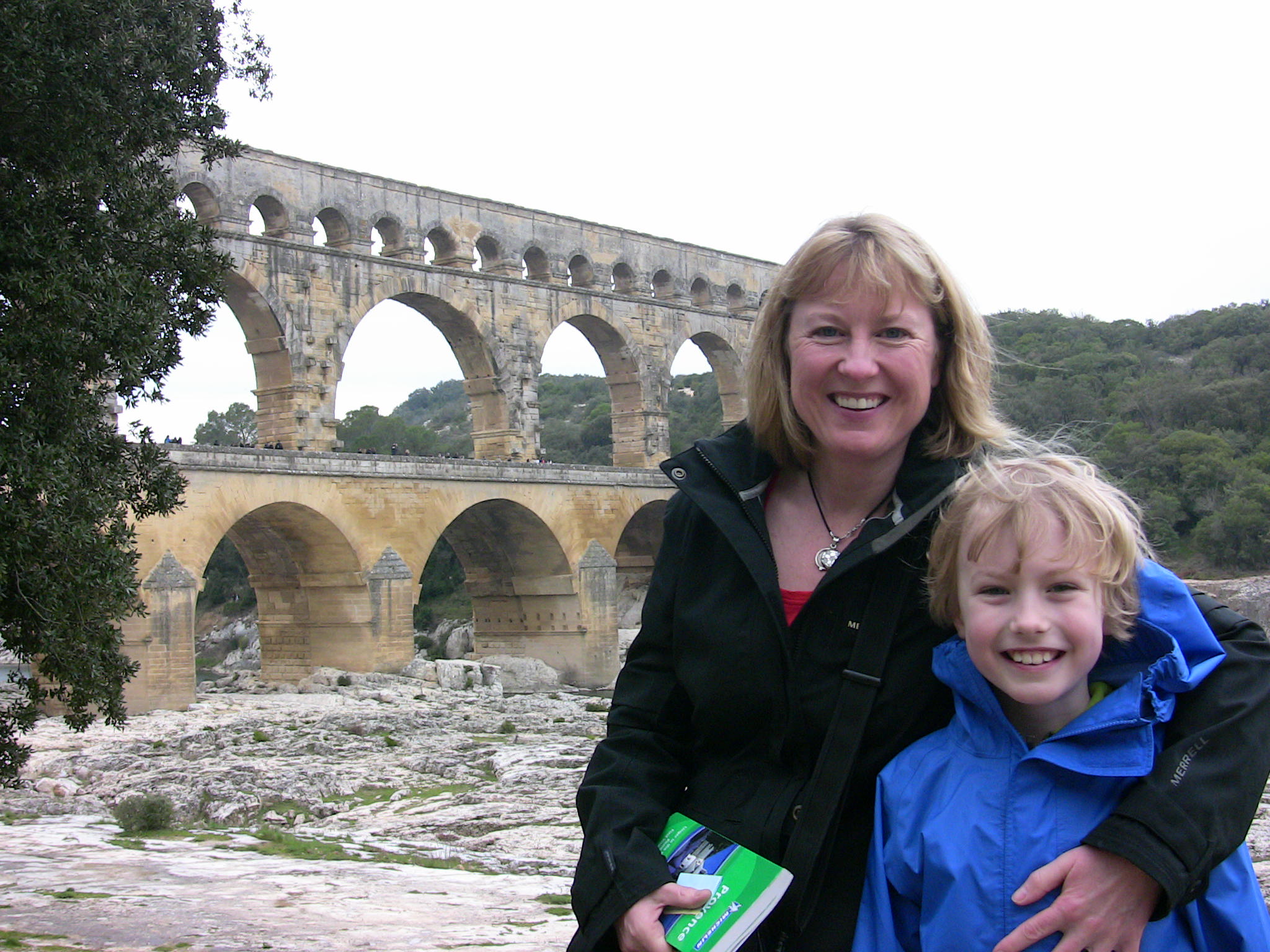
St. Remy-de-Provence, Thursday, March 25, 7 p.m. — We have arrived at a charming stone farmhouse/hotel in the small town of St. Remy, near the picturesque Alpilles mountains. We had an amazing day of touring Roman ruins, most spectacularly the Pont du Gard, a 2,000-year-old aquaduct that brought water 31 miles down to the Roman town of Nimes. It was truly lovely, amazingly intact, the aquaduct still visible at the top of the structure. We walked across the bridge on the old pedestrian span and enjoyed the views up and down the river. Despite threatening clouds, we managed the trip without getting wet.

Next we drove to Nimes, home to the serge de Nimes, of Levi-Strauss fame (de-nimes, denim, get it, cool eh?), which caused Rick much stress trying to navigate the narrow roads, but was a great walkable city once we got parked. We had a nice lunch on top of the museum, then saw the “near-perfect-Roman-temple” Maison Carree (on which Thomas Jefferson based the Virginia statehouse) but it was wrapped in construction scaffolding, so a bit disappointing. We walked through the winding, pedestrian-only shopping streets of the central city to the Arena, a truly impressive stadium built at the same time as the Coliseum at Rome in about 100 A.D. It seated thousands of spectators to watch wild animals fight, prisoners put to death by animals and, most famously, gladiator fights. Will was transfixed by the stories of the gladiators. The arena is still used in the spring for bullfighting.

We then drove a short drive to St. Remy. Tomorrow, we plan  to visit the amazing Roman ruins at Glanum a mile down the road and then tour some small towns in the mountains. We also got Gramma Go a gift, because things haven’t been easy with Zeus. Go Gramma Go, Go! We’ll be home a tout a l’heure.

Fattening up in Provence

Our first full day in Provence began with crepes in Avignon, featured pizza in Orange and, after a day of touring Roman ruins, ended with beef, foie gras and cheesecake back in Avignon. As Will chortled near the end of the last meal, “Mom is fattening up in Provence!”

The day featured only one hiccup, a stubborn Hertz clerk who refused to rent us our minivan unless the name on the credit card matched the name on my driver’s license. Since we had only brought Courtenay’s credit card this morning with my driver’s license, her insistence required a 20-minute round trip cab ride back to the hotel to fetch my credit card. Once we were in the van and underway, we drove through a soulless stretch of highway between Avignon and Orange that reminded us of some of the worst stretches of Oregon roads–Columbia Boulevard in Portland, Lancaster in Salem, the 100 miserable miles from Lincoln City south….

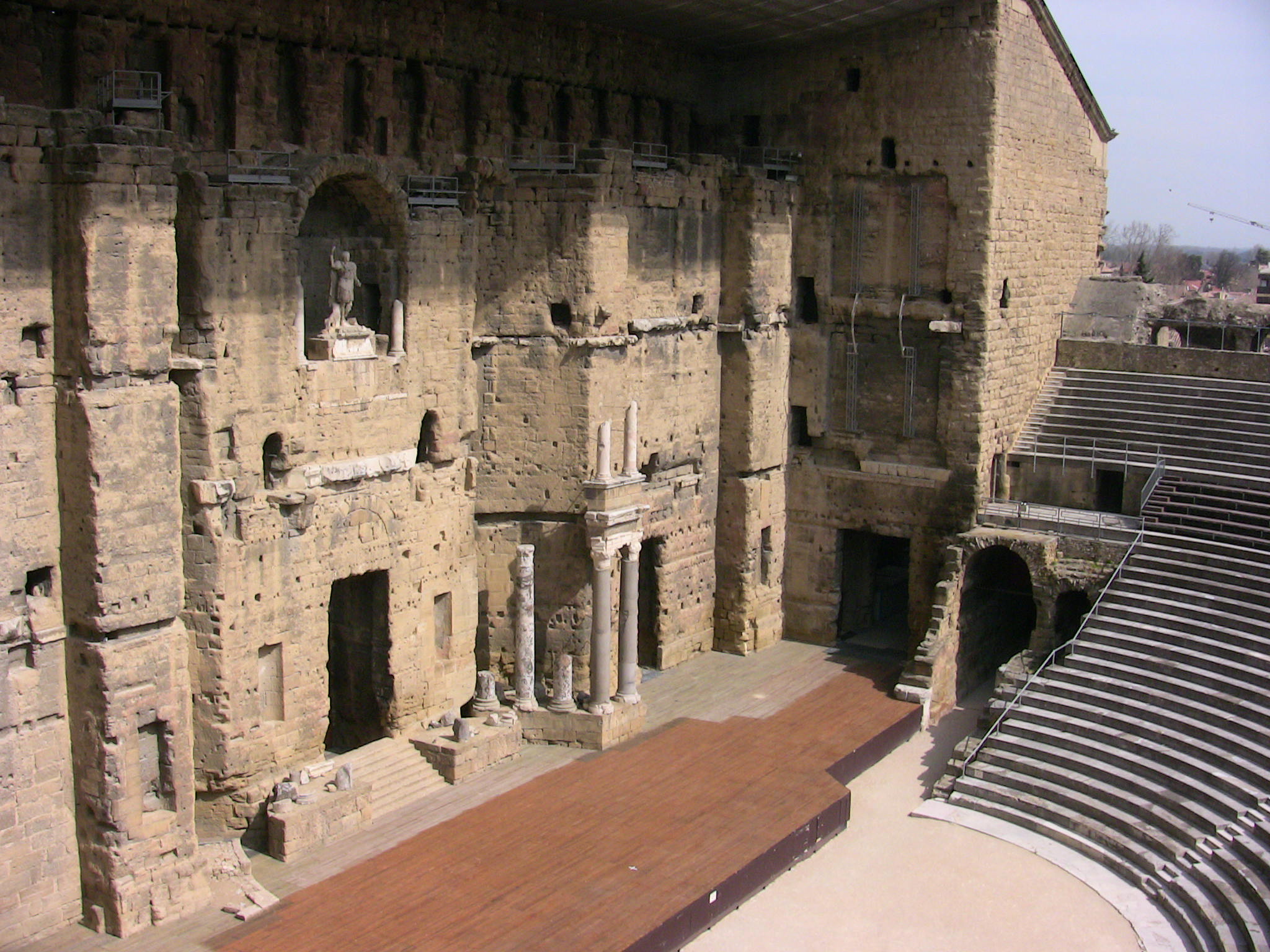
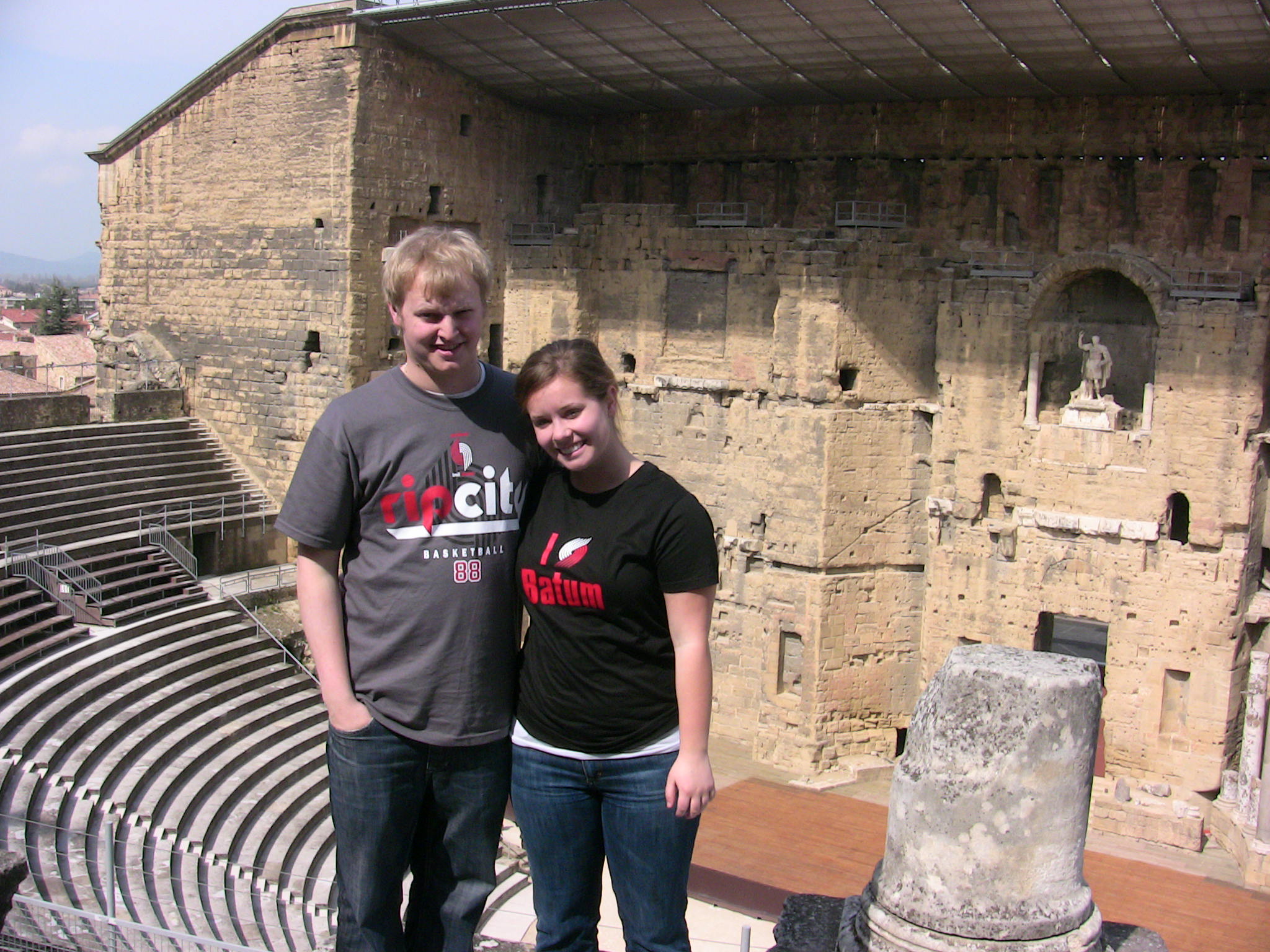
However, Orange and its ancient theatre were worth suffering that drive. The theatre, which dates back to the time of Christ, has a remarkably well preserved stage. It’s still in use, seating around 10,000 people. Will ran through the tunnels and up and down the steps, while Mitchell and Alex posed for pictures in their Trailblazers T-shirts, hoping one day to be featured on the TrailBlazers TV highlights featuring Blazers’ fans traveling around the world.

After leaving the ancient theatre, we hurried through a small museum and then wandered over to a central plaza, where the kids had pizza while Courtenay and I had large salads. From there, we drove through Orange to the Arc de Triomphe that sits in the middle of a roundabout on the edge of the city. Erected in 21 BC, the decorative friezes and carvings of battle scenes, enslaved Gauls and naval equipment celebrate Roman supremacy on land and sea.

After leaving Orange, we drove to the second great Roman town in the region, Vaison-la-Romaine, a city of about 5,000 on the east bank of the Ouveze River. Vaison includes terrific fields of Roman ruins, including one pond surrounded by broken marble columns that especially caught Courtenay’s fancy. There’s another fine restored theatre in Vaison, a bit smaller than the one in Orange, seating about 6,000 people. The ruins and the theater were great, but Vaison is topped off by a towering Cite Medievale, a medieval stronghold overlooking the city. After some trouble driving up to the cliffs, and navigating the narrow streets and pathways, some marked by “Warning Cliff” signs, we emerged at the ruined chateau, and looked down, way down, at Vaison and the Ouveze River.

Tired, and somewhat grumpy as a group, we made our way back to Avignon, a little rest and another big meal. We’re ready for tomorrow, which includes the stunning Pont du Gard aquaduct, the vibrant city of Nimes and our country home for the next two nights, St Remy de-Provence. More later.

Striking out for Provence

Avignon, Wednesday, March 24, 8 a.m. — We’ve fallen a bit behind in our blogging, but it’s hard to blog when you’re going 300 kilometer per hour. We had a minor strike scare on Monday afternoon, when we realized that a major French rail strike was set to take place Tuesday, the very day we were hoping to take the TGV high-speed rail to Provence in the south of France. Thanks to Chrystele, a French radio journalist, we were able to find out that our train wasn’t going to be affected, but 1/3 of the other TGV were cancelled. We suspect Chrystele, a union boss herself, was behind an attempt to keep us in Paris, but she had her heavies relent at the last minute and free our train.

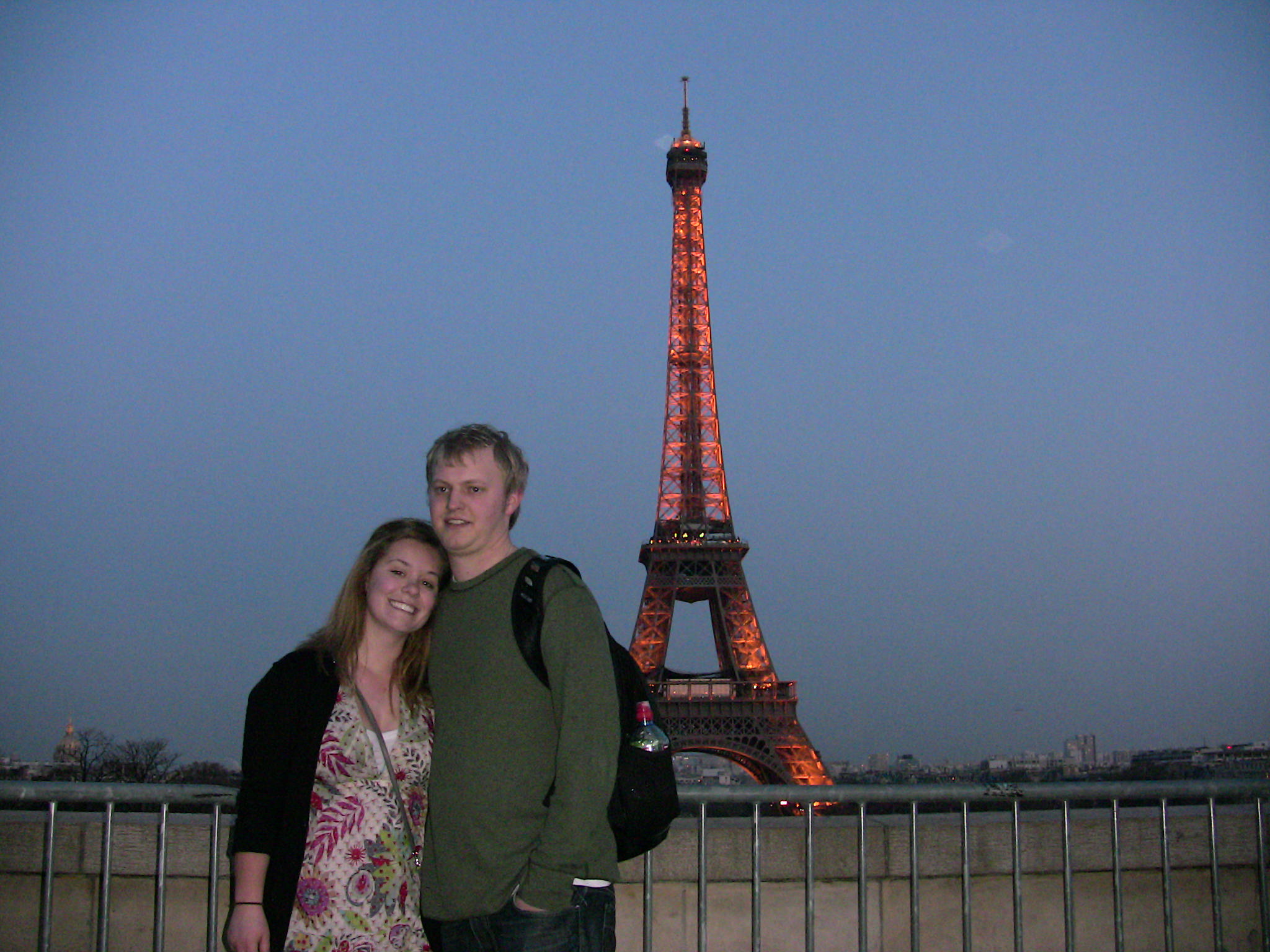
In the evening, we trudged to the Eiffel Tower. We tried to take the metro but someone had thrown themselves on the tracks, so we took two cabs to the heart of touristy Paris. Will begged to go up in the Tower, but the wait was far too long for the elevator to the top, so we bought tickets to take the stairs to the first level — that broad part you see partway up. We fought off some impudent Italian high school students and made our way up for the sunset and a great view of the city. As we left up the Trocadero, across the Seine with a view down on the tower and the Champs de Mars, the tower lit up. As a bride and groom had their wedding photos shot against that backdrop, we descended to the metro, where Rick deftly averted a pickpocketing with one of his steely glares. (The guy saw Rick’s backpack and darted off after him; I noticed, so did Rick, and the guy veered away. Phew.)

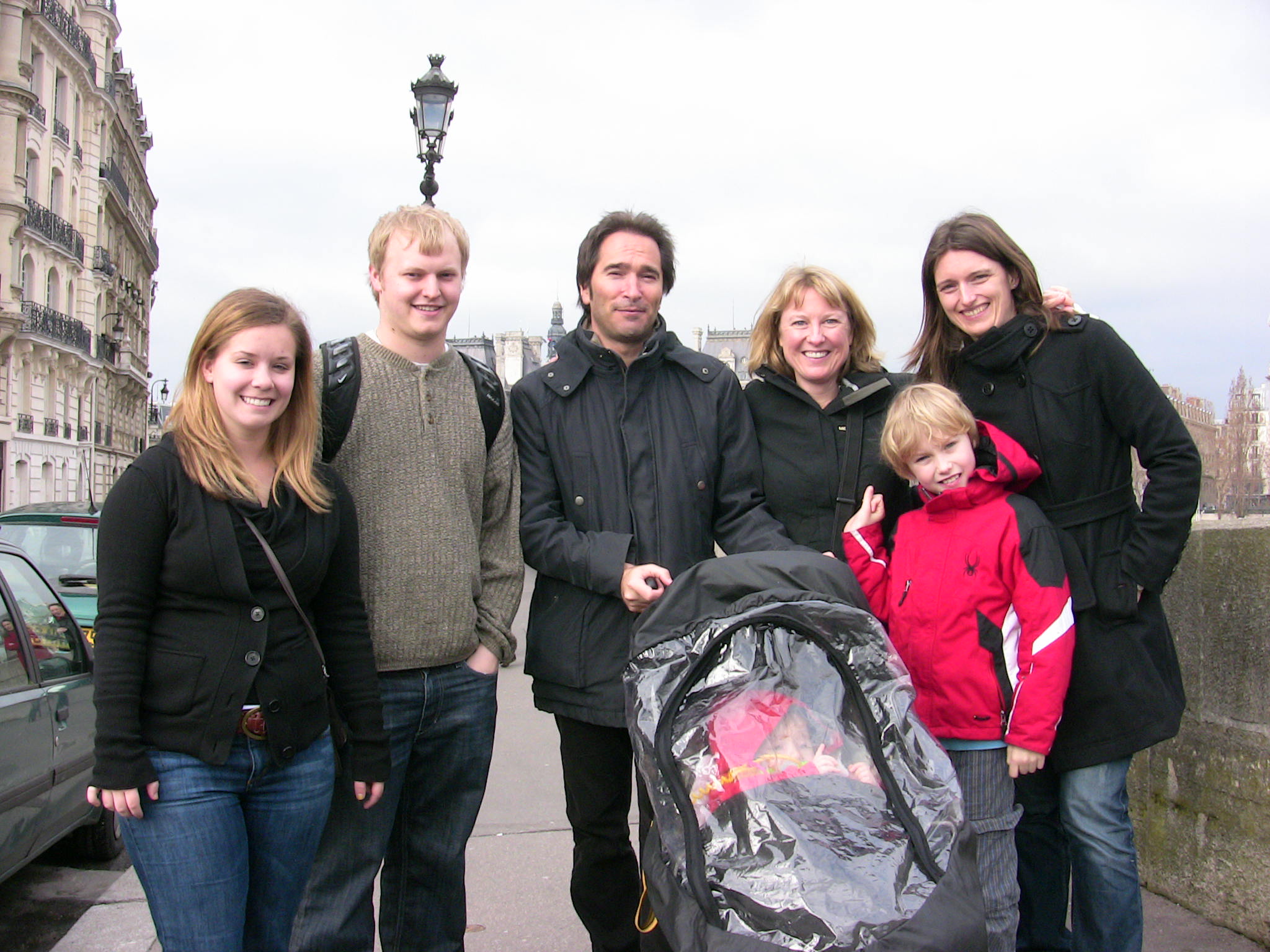
We had a lovely last dinner with the Papes in Paris at a charming, friendly restaurant near the Louvre and the Palais Royal. Luka and Will held out despite the late hour. We walked the Papes back to their bus through a lively neighborhood filled with busy cafes and restaurants. It was really sad saying goodbye to them; we hope to see them again soon and before Luka gets too much bigger. As you can see from the photos, he’s totally adorable.

We got off to a rough start Tuesday. We arrived at the Gare de Lyon more than an hour early, just in case there was strike-related travel chaos, but there wasn’t. Until we boarded the train. I found what I thought to be our seats, but there were people in three of the five seats. One man produced a ticket showing he, too, was in seat 21. The two women glared at me disinterestedy. Since Rick, Will, Mitchell and Alex stood behind me, lugging their suitcases and blocking the aisle, I retreated to try to find someone to help us find our real seats. Upstairs, downstairs, all around, I finally told everyone to sit down in an open seat and wait until I could figure it out. I found a very harried conductor, who told me, yes, my seats were down were I had originally been. By then the man occupying seat 21 found me and apologized, explaining he was mistaken (I think he was saving face for being such an ass) and the women were very, very angry as I showed them my tickets. They moved to other seats nearby. Whatever. I think they had figured I would give up and go away.

The Hotel D’Europe

The train ride was otherwise uneventful. Just 2 1/2 hours all the way to the south of France, what would have been a 6 1/2 hour drive. And on the one leg of our journey I had not pre-planned to the nth degree — the ride from the train station to the hotel in Avignon — we of course were left standing at an empty taxi queue at the station with no taxis in sight — and some helpful person had scratched out part of the phone number to call a cab. The weather was beautiful, but we were all bundled up for cold, so we were HOT. A taxi swung around the corner in the glaring sun and Will leapt to his feet and shouted, “SOS!!” Well, needless to say we weren’t in danger of anything, and I managed to call a cab big enough to get us to our lovely old hotel just inside the medieval city walls of this city, home of the popes and the center of Christendom during the 14th century.

The Palais des Papes

We dropped our luggage and headed out to catch the Palais des Papes, the 14th century fortress that rises above the winding streets of the city. It is a labyrinth of corridors and rooms used by the rogue popes who had moved here from Rome early in the 1300s. The first pope was austere, but the ones who followed were more like party-guys who built sumptuous chambers and beautifully arched feasting and meeting halls. (Don’t tell anyone, but Will and I think it doesn’t hold a candle to the castles in Scotland.)

We then climbed to the park behind the castle, where an unusual rock formation was the fortress of the original inhabitants of the area. Below, was the Pont St. Benezet, better known as the Pont d’Avignon of nursery-rhyme fame. It was built 200 or years before the palace and has withstood the ferocity of the Rhone river for centuries. It’s broken off half way, but it still made a magical spot to look back on the palace and the walls of Avignon in the fading sunlight.

We had a great dinner at La Fourchette, a cozy and extremely friendly restaurant near our hotel. We had an excellent Provencale meal; Mitchell ordered the escargot but declared they tasted like dirt. Will and Rick pitched in to eat a few. I had perfect salmon and a raw artichoke and parmesan salad (must try this at home); Rick and Will loved their Daube de Boeuf Provencale and mashed potatoes. Then home to bed.

King Darius Rocks the Louvre

Paris, Lundi, le 22 mars — Today, we tackled the Louvre. Everyone slept well last night because all the rugby fans had gone home, and it was blissfully quiet outside the hotel. We had our usual croissant from Gerard Mulot around the corner and then headed off on foot for the Louvre, a short walk away across the Seine. It was an unexpectedly clear and fresh morning, no clouds in sight, as we walked along the Seine toward the enormous palace that now houses the Musee du Louvre. Will exclaimed that if stood on its end, it would be as tall as the Empire State Building.

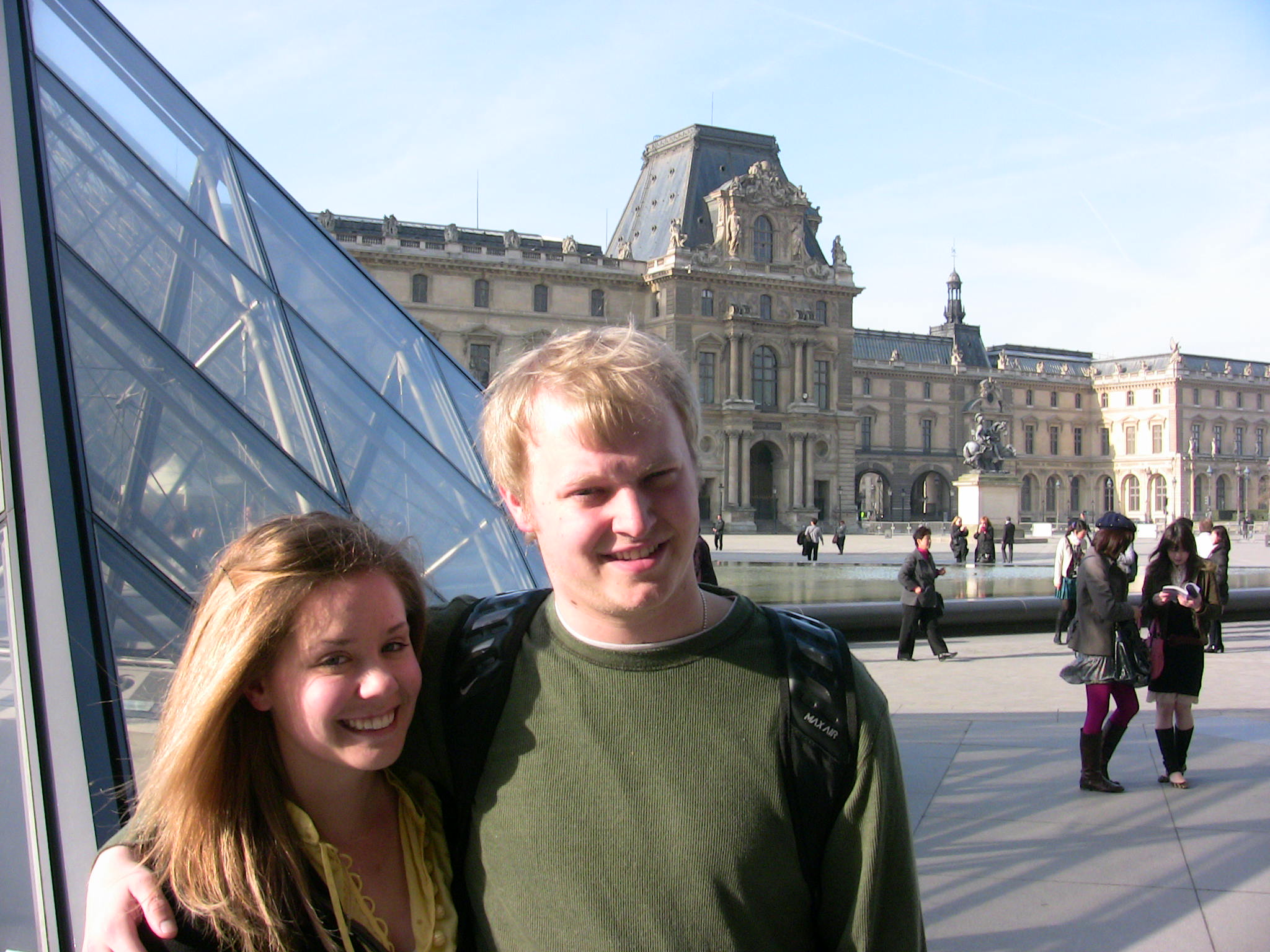
We had purchased tickets yesterday so were thankfully spared the freakishly long line leading to ticket sales in I.M. Pei’s glass pyramid entrance. Mitchell and Alex went their own way to explore, and the rest of us headed straight for the ancient Greek, Etruscan, Roman and Egyptian antiquities. For anyone who hasn’t been to the Louvre, it’s like a labyrinth in there, very hard to navigate all the stairs and levels and twists and turns. It puts poor ‘lil Mrs. Winchester to shame. The biggest (and really only) bummer was that much of the archaic Greek art, along with ALL THE POTTERY, were closed from view for renovations, which was a heartbreak to me. But there was plenty else to see in the three-hours we alloted ourselves. It was pleasant at first, not crowded, but by noon it was a sweltering mass of humanity and tour groups and totally despicable people fondling the statues. What is wrong with people?

Anyway, back to the good stuff. We saw the Mona Lisa — on Will’s insistence. The whole experience was summed up by a Japanese man, who pushed past us through the crowd surrounding the painting and declared, “Mimashita!” Which is the one-word Japanese sentence, “I saw (it).” So we mimashita’d and vamoosed past the Botticellis and DaVincis and Titians at breakneck speed to get back to our beloved antiquities. None of this Renaissance modern art for us.

We particularly enjoyed the statues of the Roman emperors, especially Will. As Rick and I blazed ahead, Will said critically, “You’re going a bit fast.” Oh, joy to a mother’s ears, he’s becoming a museum lover. We especially loved the art from Persian King Darius in the late 6th century B.C., these amazing wall murals made of green stone that were completely spectacular. There were the double-bull capitals of these enormous columns, the size of which was hard to imagine. I was completely blown away by the 3rd to 2nd millenium B.C. Near Eastern/Iranian pottery that sported the geometric patterns that reappeared on Greek pottery after the Dark Ages around the turn of the 1st millenium B.C. I think if I could reinvent myself I’d come back as an art historian of the Middle East.

At noon, with the crowds getting stifling, we headed for a local restaurant filled with French businessmen and had a lunch (burgers for Mitchell and Alex, the charcuterie plate for Will) and then took the metro to the catacombs — underground passages literally decorated with the bones of thousands of people from the 17th and earlier centuries. I was creeped out and didn’t want to go, but was outvoted. Much to my delight and the rest’s dismay, they were closed on Monday. So we trekked back to our hotel, where we are resting and preparing for the night out with Eric and Chrystele and the Tour Eiffel, which we were too tired to see last night.

Roman Ruins and Talking Toilets

Paris, Day 1 1/2. We survived the night, just barely, but it appears all the rugby fans are still hungover, so hopefully tonight will be quiet. We had an amazing day in Paris. We slept til 9:15 a.m. (Mitchell and Alex were up by 7 and out for croissant and coffee with the non-rugby- fan-Parisians carrying baguettes under their arms for breakfast) and then regrouped to go to Eric and Crystele’s new apartment for brunch. We took the metro, and passed by an amazing Sunday farmer’s market — fresh fish on ice, cheese spread, baguettes — on our way to their place. They live in a lovely neighborhood and have this super-cool 5th floor apartment with a loft and a 2-person elevator lift. They fed us an amazing breakfast of croissant (and everyone converted to the religion of The Almond Croissant, as in it’s what they eat on Mount Olympus), ham, cheese, pan au chocolat, lox, strong coffee, cherry chocolate cake — the list goes on and on. Will was basically in a diabetic coma by the time we left to go to Notre Dame, the Roman Ruins beneath and the Pompidou.

Will loved the ruins — we saw 1st century B.C. ramparts, which had 3rd century buildings built on top, including some public lavatories and communal hot baths, which had 6th century buildings built on top, then 16th century buildings built on top — you get the picture.
Notre Dame has incredible stained glass, soaring ceilings, of course, and beautiful architecture.

Other highlights of our walk: Passing the front window of the rodent control store, with the several dozen rats hanging from traps inside the store window, featured in the movie “Ratatouille.” As we were walking, we were passed by a group of a thousand or more roller skaters, led by Paris police and trailed by two Paris ambulances. Turns out it’s a Friday evening and Sunday afternoon ritual, this skate around the streets of Paris. We also joined Chrystele and Luka for Luka’s first ride on a streetside carousel in front of the ornate Paris City Hall, or Hotel de Ville.

It was late afternoon by the time we got to the crazy steamship like sculptures outside the Pompidou. We weren’t quite in the mood for the prevailing sense of sarcasm and anger of most of the modern art exhibits in the Pompidou museum. For instance, the naked woman doing the hula with a hoop made of barbed wire seemed to leave Will rather unimpressed. But we had a great whirlwind tour of early 20th century art with the museum’s amazing collection of artists such as Picasso, Braque, Duchamp, Matisse, Man Ray, Kandinsky and on and on. Will puzzled over a rendition of Duchamp’s famous found object, the urinal — “Is is art?” To his credit, he noted the clean lines and geometric vent holes, before moving on. Will did, however, have a strangely harrowing experience — I guess all par for the course at a modern art museum. After he used the toilet — not a Duchamp — the toilet began speaking loudly and angrily in French. We’re not sure what it said — Rick tried to go back to investigate — but it left Will in an apoplexy. “It talked, it really did,” he said. “It sounded like a radio.” Creepy, if you ask me.

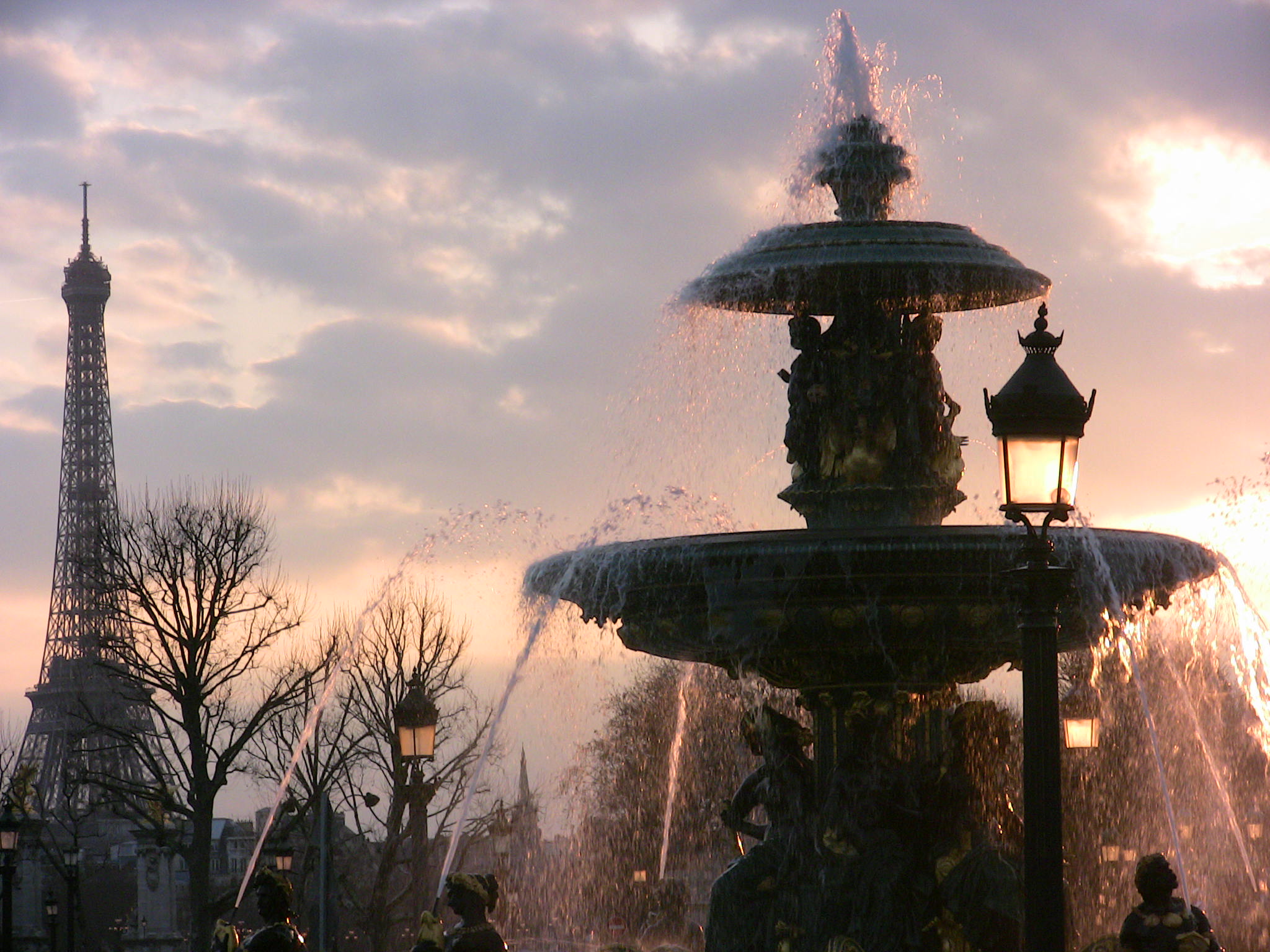
So after taking in the view of the city — it had cleared up and was gorgeous, we had a snack of streetside crepes and waffles, then we took the Metro to the Tuileries, an amazing garden and plaza stretching several miles from the Louvre past the Place de la Concorde to the Avenue des Champs-Elysees to the Arc de Triomphe. It was our favorite sight of the day, a slowly arriving sunset casting beautiful light on the statues, fountains and ponds of the Tuileries, with children pushing sailboats around the water with long sticks, people reclining in chairs in the nice early spring weather, and the lights coming on, steadily, across the Paris skyline.

We crowded into a cab (“I don’t take five,” the cabbie said, before relenting) past the beautifully lit Eiffel Tower back to our neighborhood, where we sat down for dinner at a very nice Italian restaurant recommended by Courtenay’s classics professor at Stanford, who had spent a year in Paris. We met the proprietor, who is planning to come to Oregon to pick up a large sailboat in the next few weeks, had a great dinner, shared several bottles of red wine, emerged from the restaurant and promptly got good and lost trying to find our way back to the hotel After 30 minutes of wandering a maze of back streets, squinting at a partial map in the dim light, asking a cabbie, a fish monger and several others for directions, we walked past the same Gap store at least twice, we finally emerged safely and happily back on the Boulevard Saint Germain, where we found our bearings and arrived at the hotel. Or at least until Mitchell found his bearings and got us home.

Now after a good night’s sleep (Will is still snoring gently) we are gearing up for a big morning at the Louvre, an underground tour of the crypts, a going-away dinner with Eric, Crystele and Luka, and a late-night visit to the Tour Eiffel.

There’s a Reason Rugby almost rhymes with Ugly

After a short nap, we met our friends here in Paris for a walk through St. Germaine-des-Pres and by the Sorbonne on our way to a nice little restaurant nearby. We had a lovely meal and got to catch up with Eric and Chrystele and their totally adorable 1-year-old Luka. He grinned nonstop, only pausing to graw on the heel of a baguette, apparently his favorite indulgence. Such a good little Parisian. When we came out of the restaurant into the drizzling Paris night, the narrow street was swarming with people, with an ominous, drunken roaring at one end. Eric at first hesitated wheeling the stroller that way, and explained that France was playing England for the championship. We past the bars spilling out rugby fans, and got some AMAZING gelato nearby — sorry Mio Gelato, but this far surpasses anything we’ve had in Portland. Sort of like comparing Nescafe to the real cafe.


Well, all was good until we tucked into bed — and realized our cute little hotel on a “quiet sidestreet” was just down the street from a bar, or some such. Or perhaps the whole city was on fire with drunken, rowdy Marseillese-singing rugby fans who had just witnessed their team win. It was a long night, let’s just say. The last revelers finally shut up about 3:15 a.m. or so. So no wonder we just got up at 9:15 a.m.
We are off to Eric and Chrystele’s for brunch, then maybe Notre Dame, the Roman ruins nearby and the Pompidou, a mecca for modern art and a word Rick just loves saying.

Paris Touchdown

Bonjour mes amis! Nous sommes arrives!! What was it Toot and Puddle said when they found each other in France? I whispered in French to Will as we pulled into Charles De Gaul airport, and he said, “Whatever. Sounds good!” Anyhow, we made it safely after a very smooth flight, which was only marred by Rick busting into his seatmate, some poor woman from Laurelhurst in Portland, while she was perched in the lavatory. They didn’t speak for hours afterwards.

Other than that, it was a smooth flight. Will slept a few hours en route. Alex did great despite misgivings about motion sickness and having been up until 3 a.m. the night before finishing a last-minute project. And Mitchell is his usual cheerful travel self, sampling first the pain au chocolat and then the very French Club Sandwich, pronounced “Sand-weech.”

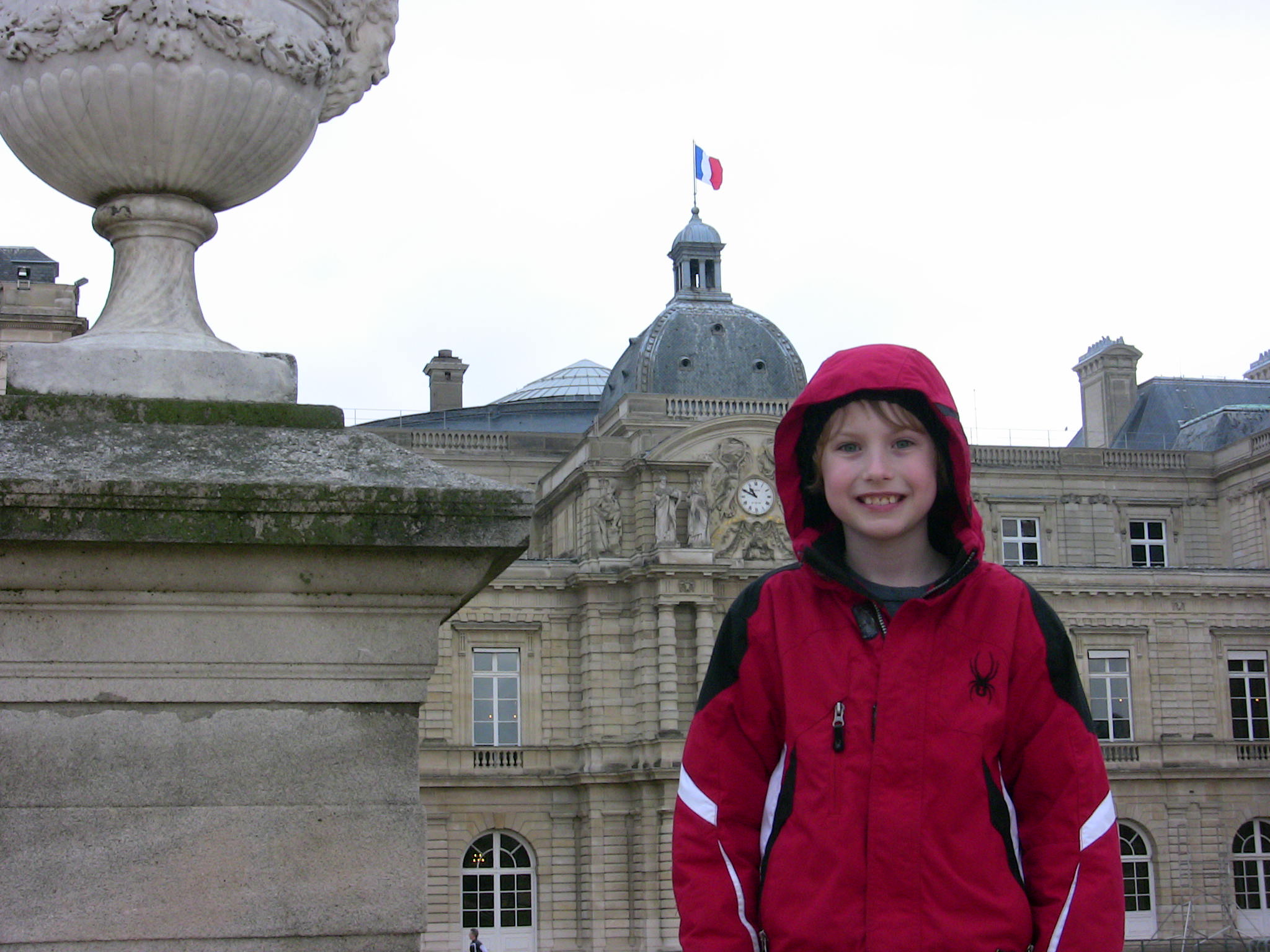
While we waited to check-in, we wandered the literary area of St. Germaine-des-Pres, the former haunt of Hemingway, Sartre, Camus, Picasso and even our old buddy Ben Franklin. We walked through the Luxemburg Gardens, saw the gothic St. Surplice church featured in the “Da Vinci Code,” and saw the building where the treaty ending the U.S. Revolutionary War was signed by Franklin, John Jay and John Adams. That was all before lunch — and a nap. We dined at the Cafe Deux Magot, where Hemingway liked to drink coffee, and then staggered back to the hotel for a nap. Croques Madames and Croque Provencales all around, except for Will’s salami and baguette sandwich, plain the way he likes it and can’t get it in the U.S., along with cornichons. Will declared, “I like the French,” as he tucked into his sandwich.
We then staggered back to our hotel for a rest. Our dear friend Eric insisted we only nap 2.5 hours, no more, much to Rick’s chagrin, but we are trusting Eric’s knowledge of Parisian jet lag, so we’re up and at em again. He, his wife Chrystele and their baby boy Luka are headed over to meet us in a few minutes. We send amour to tout le monde and we’ll post some photos later. Bisous!