Kanazawa: City of the Six Sublimities

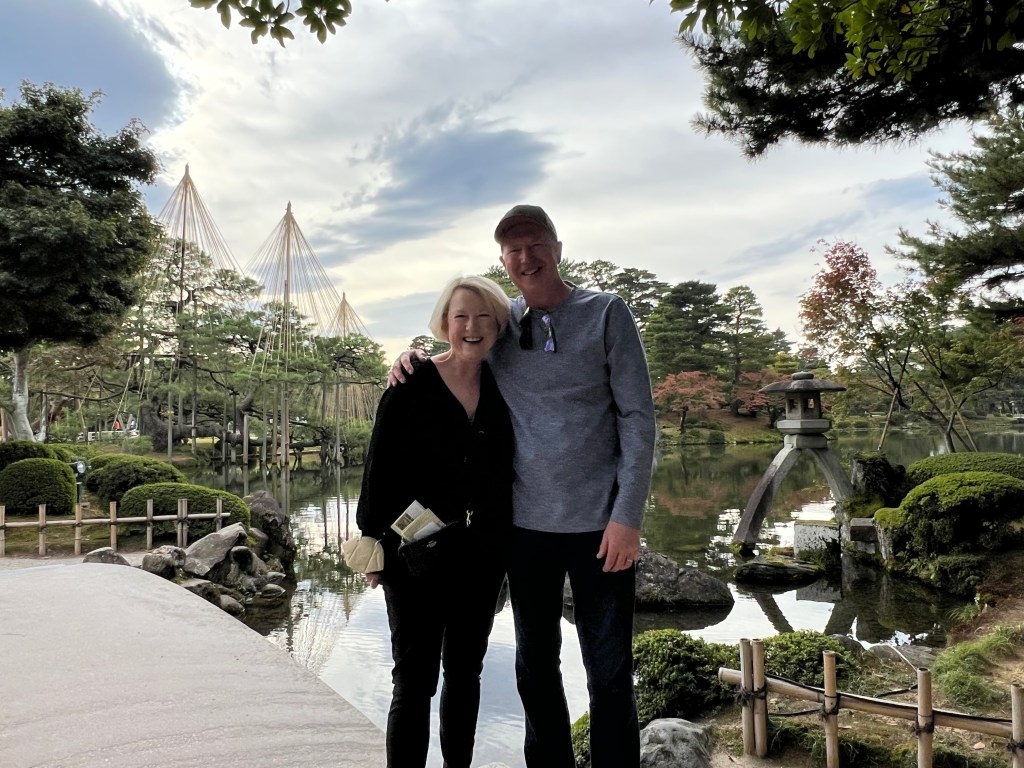
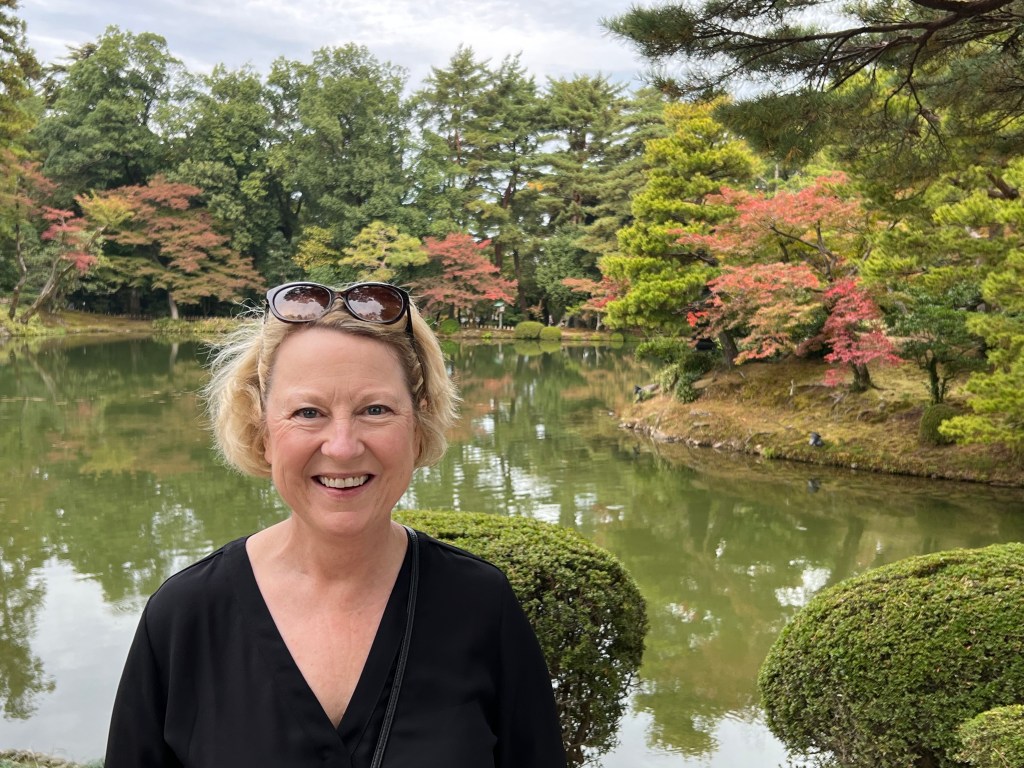
Kanazawa, Japan, Nov. 7, 2023 — We’re nearing the end of our three days in Kanazawa, a place we will remember for its atmospheric samurai and geisha districts, for its busy seafood market and an unforgettable sushi dinner, for the hawks known as black kites that swooped and soared over the beautiful castle grounds, and, most of all, for the timeless beauty of the Kenrokuen Garden and its twisted, evocative trees.

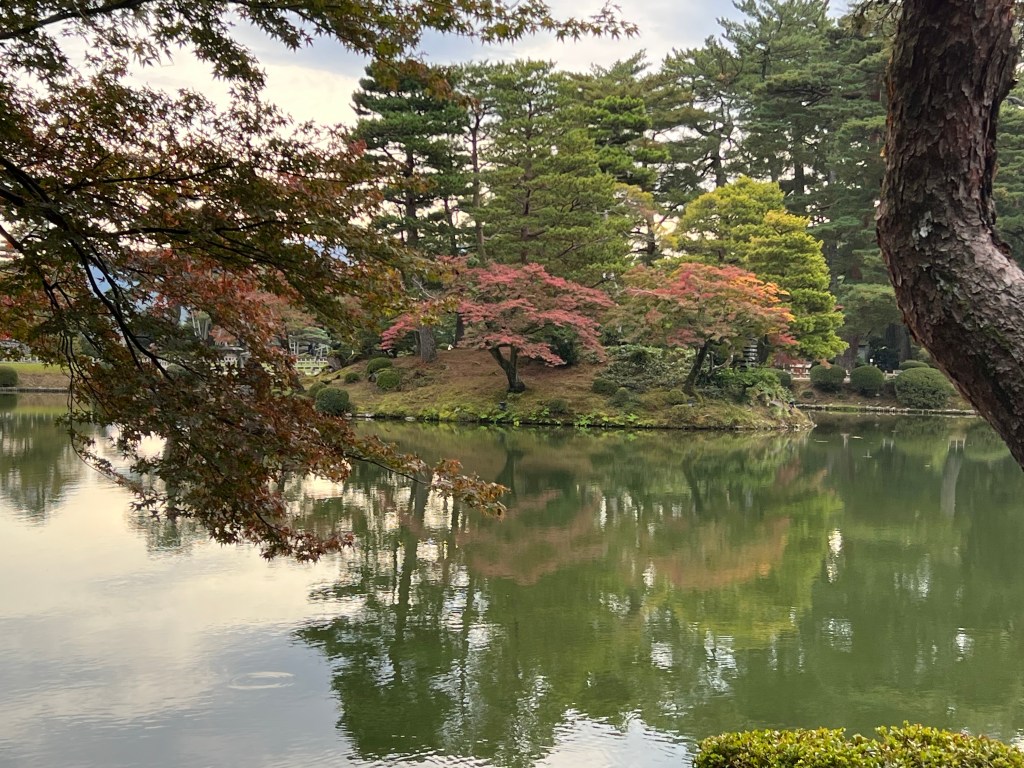
It was during our quiet morning strolling the curved paths of Kenrokuen, considered one of Japan’s three greatest landscape gardens, the only sounds the splash of water and the distant thrum of the city, that I felt most connected to Kanazawa, and the most in love with the city. The name Kenrokuen literally means “Garden of the Six Sublimities,” referring to spaciousness, seclusion, artificiality, antiquity, abundant water, and broad views, which are said to be the six attributes that make up a perfect Japanese garden. They make for a really nice city, too.

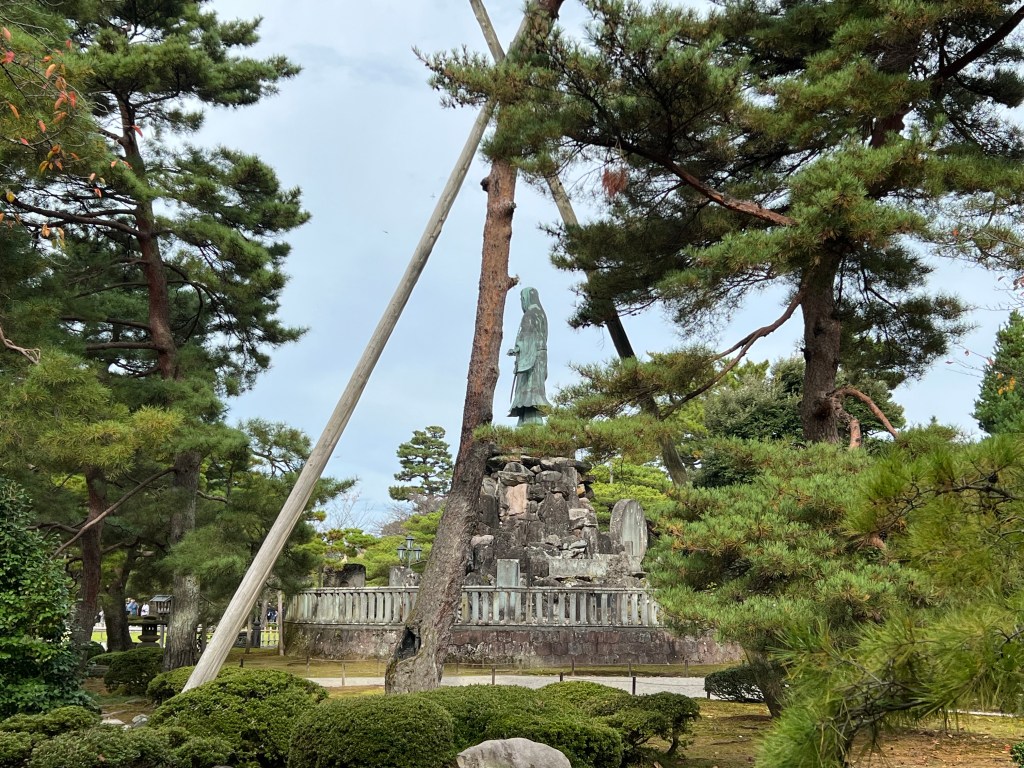
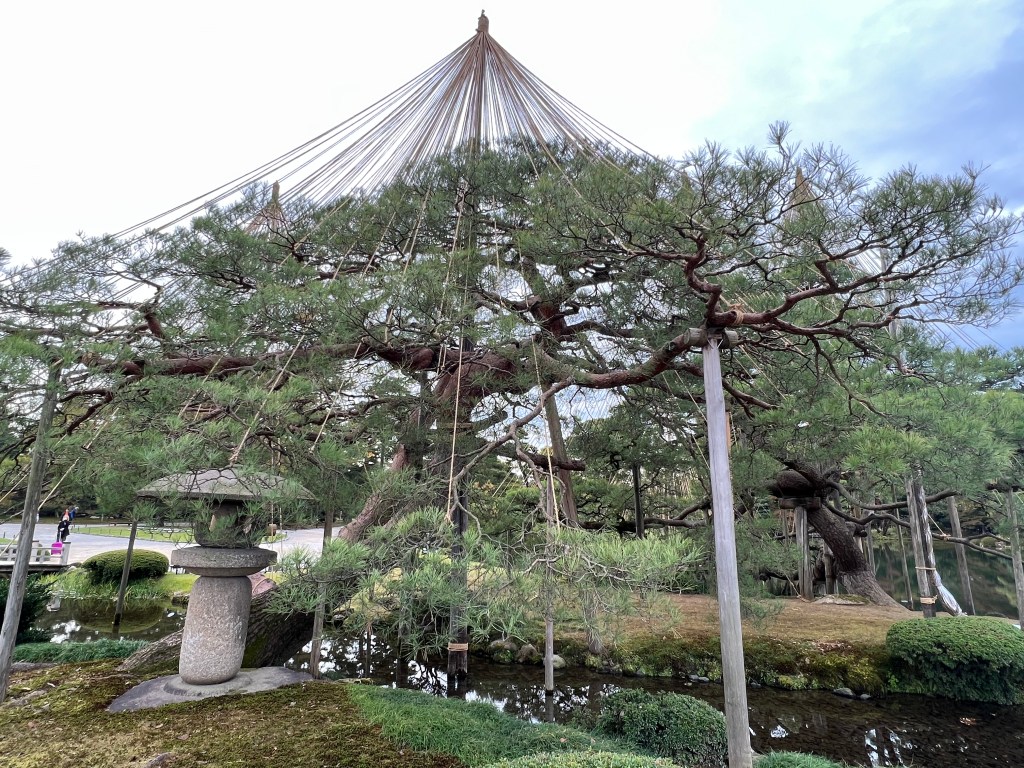
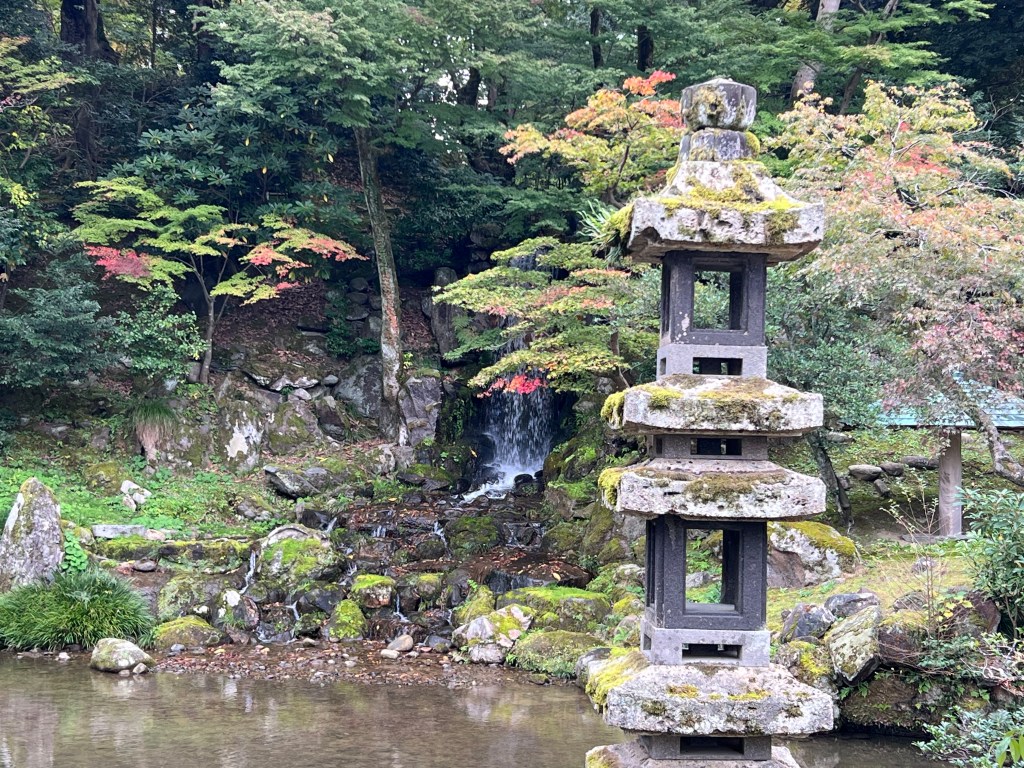
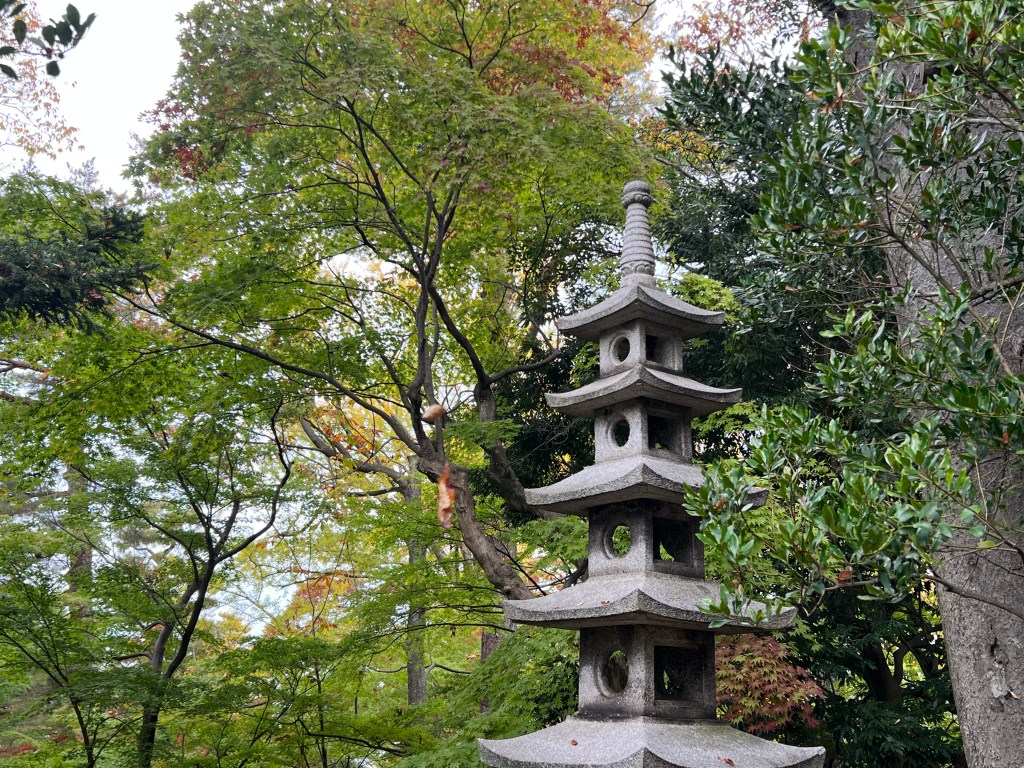
It’s taken centuries of hard work to make Kenrokuen the incredible garden it is today. The spacious grounds used to be the outer garden of Kanazawa Castle and were constructed by the ruling Maeda family over a period of nearly two hundred years. Kenrokuen was opened to the public in 1871. One-hundred-and fifty-odd years later, around every corner there is something to experience, to see and feel: Ponds, streams, bridges, teahouses, flowers, stones, viewpoints, lanterns, and thousands of trees, many of them very old, very twisted trees with their limbs propped up with all kinds of supports, some of them hanging low over ponds and streams. Many of the trees, especially the expressive pines, struck us as individuals, old men and old women, who had seen and lived through so much history, and we even wondered whether the gardeners had named them.

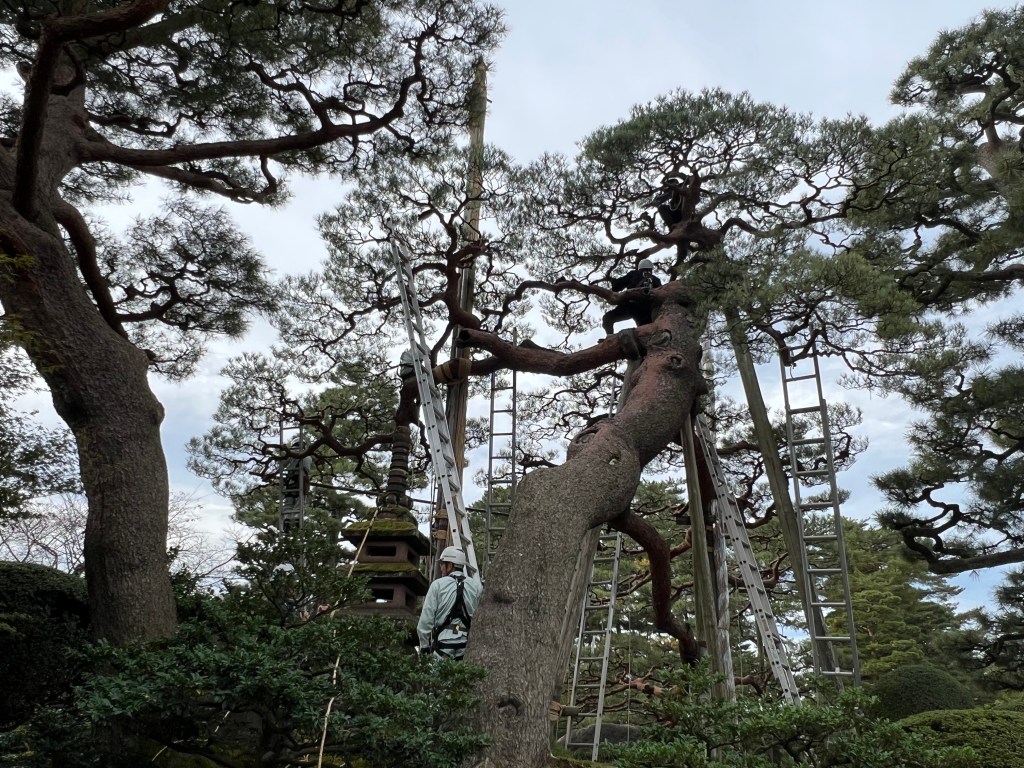
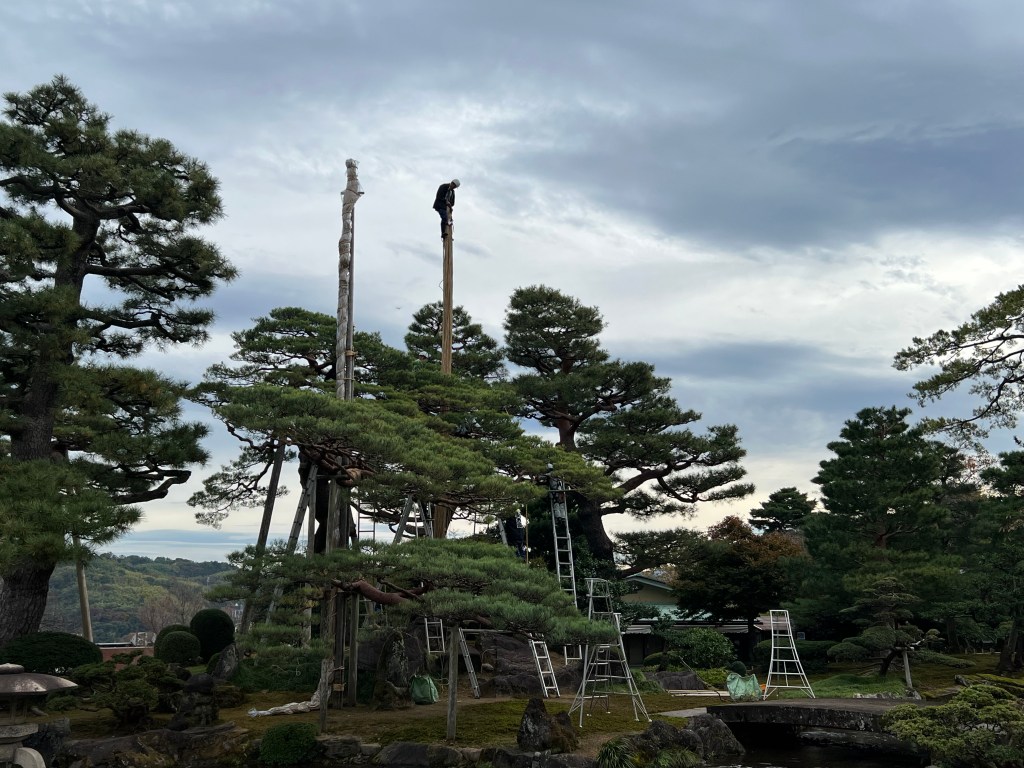
We’ve been in other gardens, in Japan and elsewhere, where the hard work of caring for them seem deliberately hidden, where the gardeners seemed to keep out of sight, perhaps not to affect the experience of the visitors, or maybe to make the landscape seem more natural than it actually is. Not so at Kenrokuen, at least not during our visit. The grounds were busy with crews picking up pine needles, plucking leaves from shallow streams, and, most spectacularly, a group of men who leaned ladders all over one of those big, expressive pines, and climbed among the heavy branches, even perching on the tip top of a towering center pole, while installing the elaborate rope supports that give the long-limbed pines the strength they need to hold up the heavy snows that will arrive in Kanazawa in the coming months.

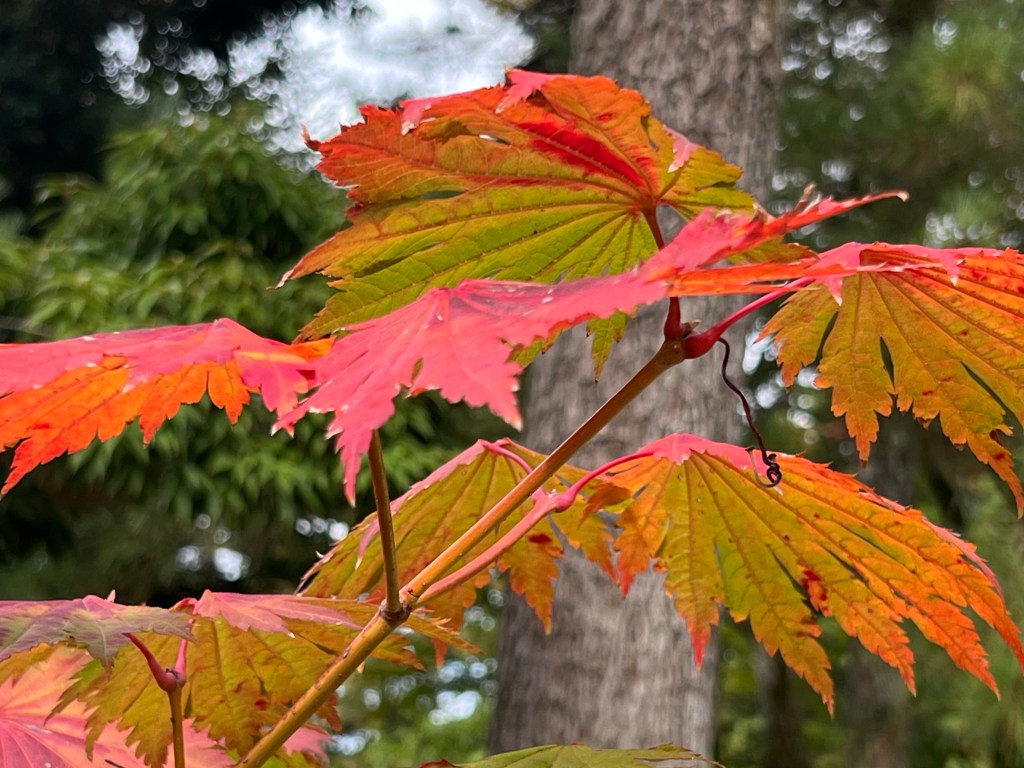
Over a couple hours of wandering Kenrokeun, we saw and felt and experienced every one of those many “sublimities,” the space and water and solitude, ancient stone paths, burbling creeks and quiet ponds, and on the edge of the garden, the broad views looking out across modern Kanazawa. We walked through a grove of plum trees, their last yellow leaves falling to the ground. We came up one path and discovered three wildlife photographers with two-foot-long telephoto lenses excitedly photographing something, we dared not interrupt them, the motor drives of their cameras firing away. We never saw what they were photographing.

It must have been another one of those beautiful sublimities.
Of Exploding Tigers made of Flowers, Scaling a Samurai Castle’s Ancient Stone Walls

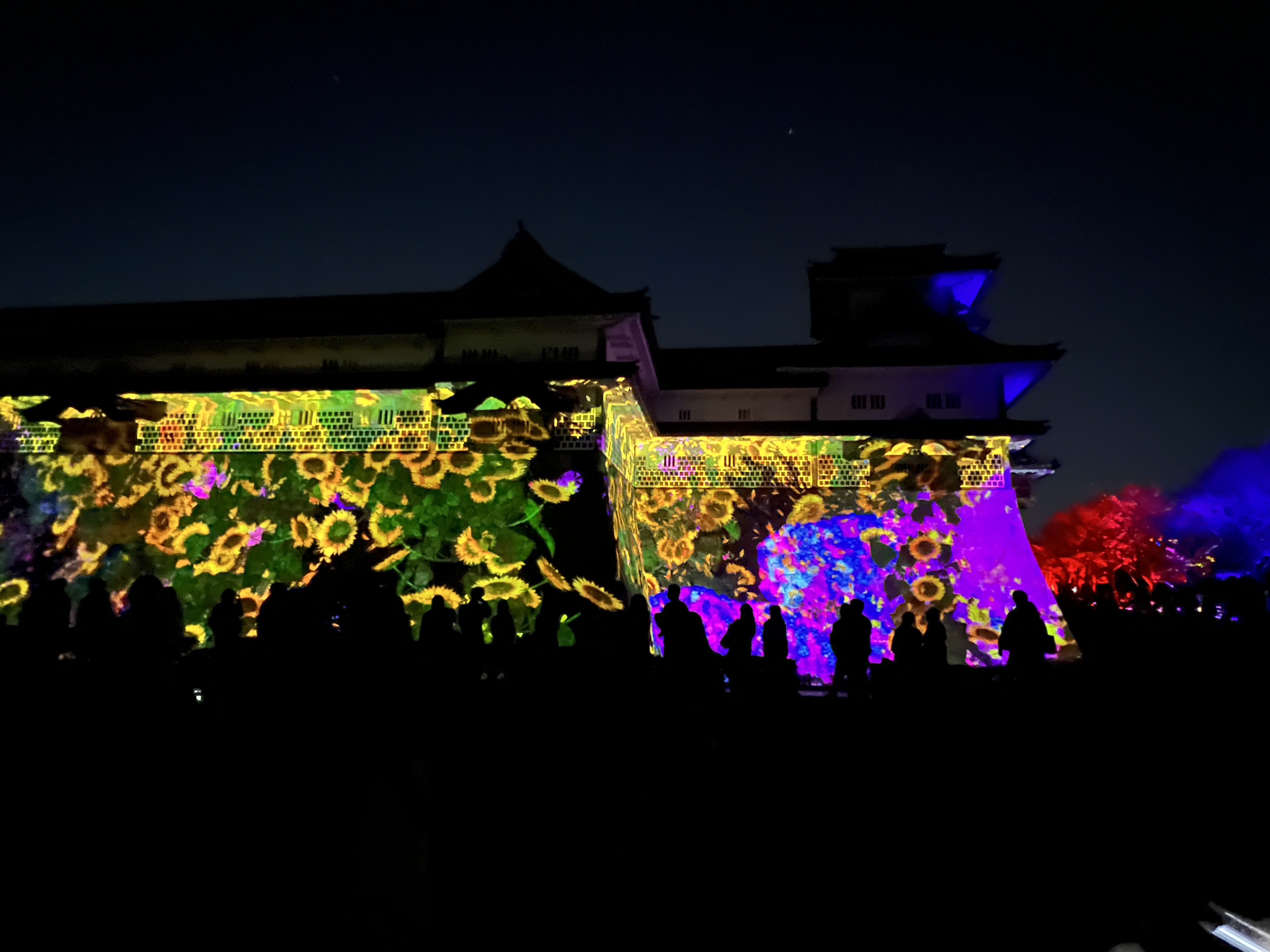
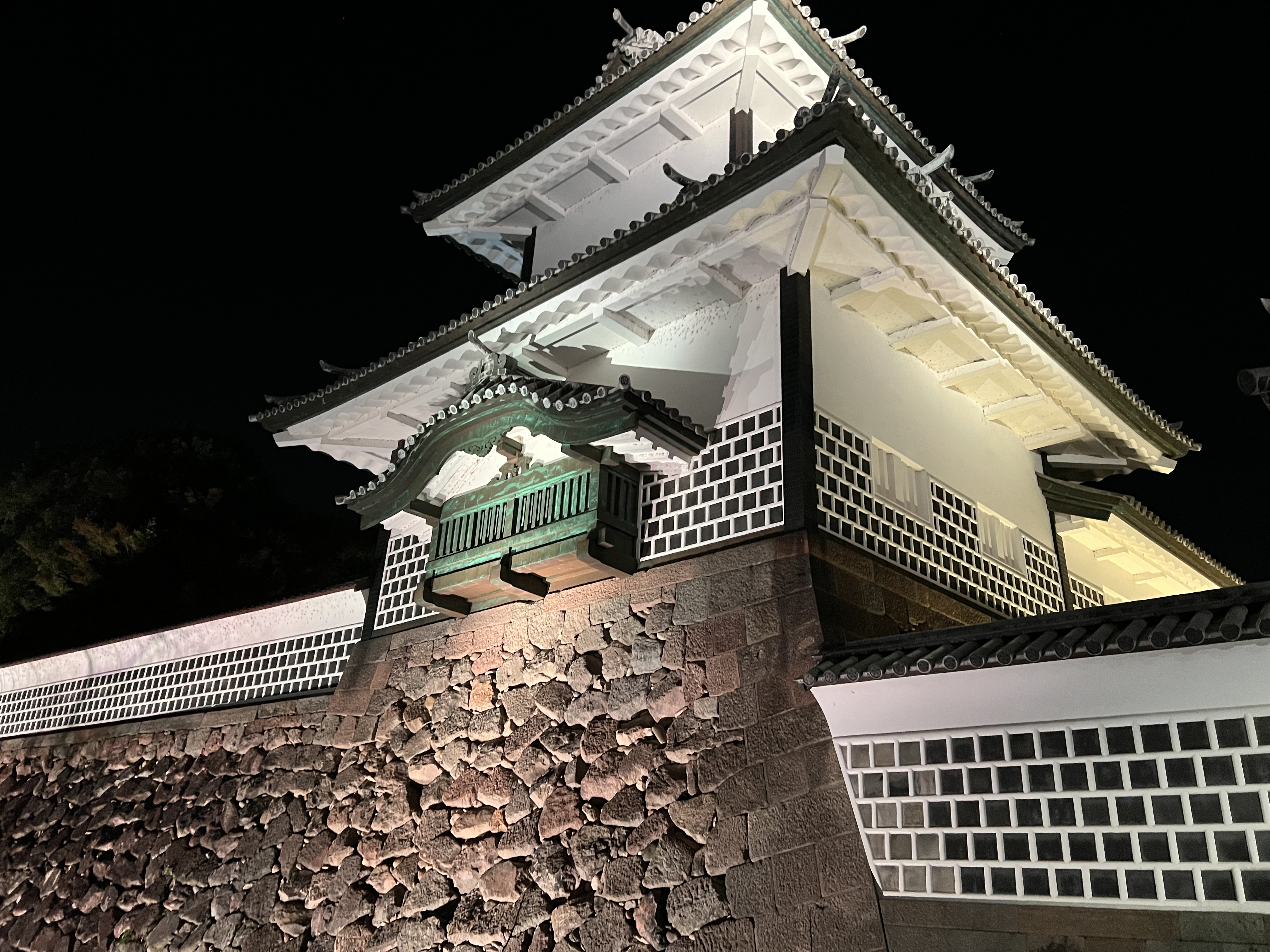
Kanazawa, Japan, Monday, Nov. 6, 2023 – It’s hard to even begin to describe the incredible spectacle that greeted us to Kanazawa, a culture-rich city on the Sea of Japan, home to beautifully preserved wooden houses, atmospheric geisha quarters, and mysterious temples used as a wily samurai lord’s secret defense weapons. We expected to experience the history of a city built by the Maeda samurai clan back in the late 16th and early 17th centuries. But we did not expect to find the castle grounds, and its surviving stone defensive walls, turned into a rich and moving digital art display, in turns amusing, inspiring, creepy, and beautiful, sometimes all at once. TeamLab, whose installation we saw in Tokyo Sunday (apparently everyone from BTS, to the Kardashians, Justin Bieber and U2 have also visited), is a somewhat mysterious collective of artists who produce digital art installations around the world. But this temporary exhibit in Kanazawa was much more powerful than the tourist-filled Instagram crowd in Tokyo. Crowds of hundreds of young Kanazawans climbed up the steep paths to the castle, which overlooks the city, to see spaces transformed by the magic of sound and light.

The first installation was of a famous Zen calligraphy practice known as Enso, where a Buddhist practitioner paints a circular shape using an ink brush as a form of meditation. The spontaneous act of painting embodies complicated religious concepts of impermanence and imperfection and being and nothingness, enlightenment and eternity, but this particular ink drawing was the projection of a ink painting on the massive stone walls – the image changed, and morphed, turning into fantastical shapes, before disappearing – and then it would start again.

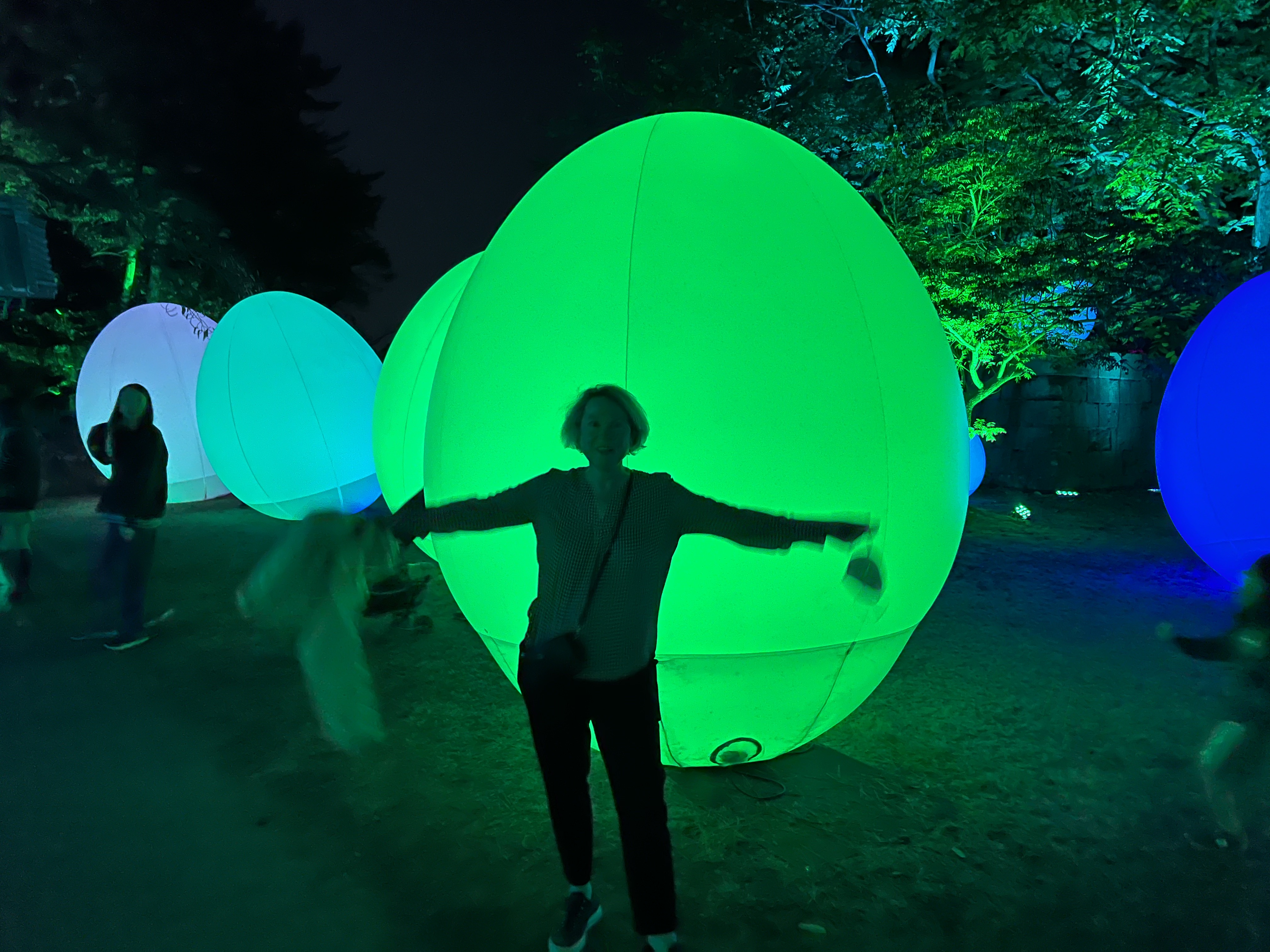
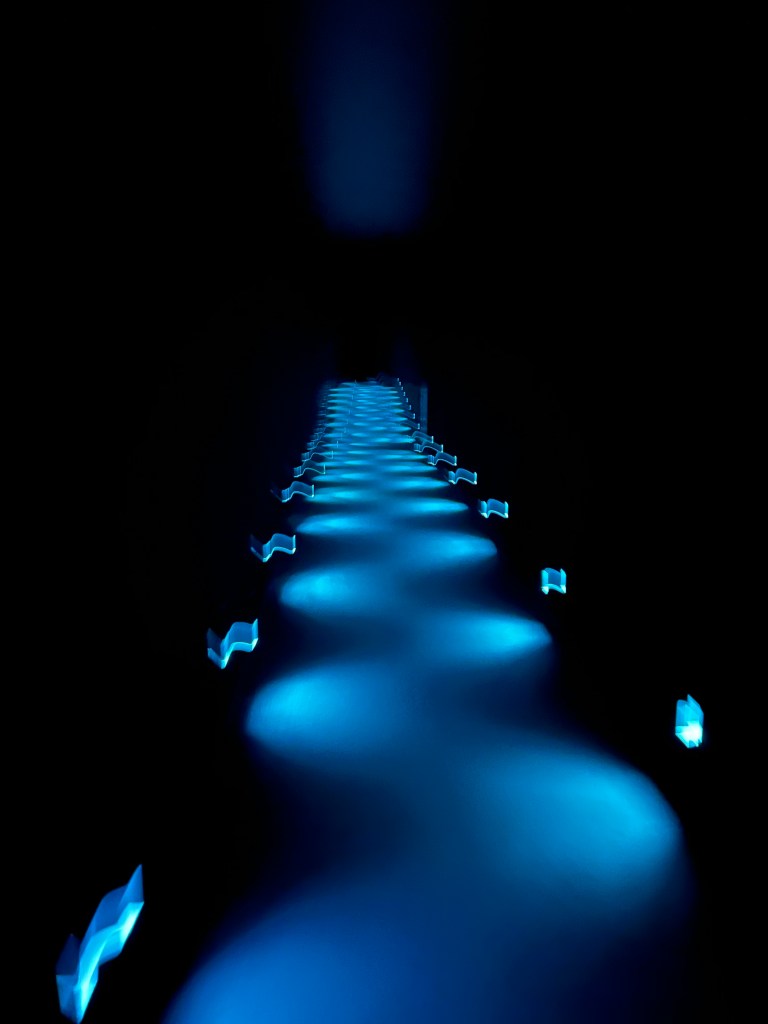
It’s hard to even describe what it was like to walk (sometimes stumble on the uneven surfaces in the dark) through the castle grounds, watching a row of trees lit up and humming with sound and color that changed as people walked by. There were strange ovoid shapes in a grove that would change colors and shape when you touched them. One stone corridor was filled with lines of marching creatures – frogs, and rabbits and humans wearing masks – in a very disturbing and vaguely martial procession. The images never repeat exactly, yet they repeat and repeat and repeat. Especially since they are projected on a castle’s walls, with its own violent history, they felt like a depressing reminder of how we humans can’t seem to break free of the cycle of violence.

But the piece de resistance was at the end, when massive images of creatures, from tigers to birds and various animals of indeterminate species – all made of flowers – cavorted on the stone walls of the castle. There was so much to love – the Enso was moving. The egg shapes in the forest were just delightful – everyone was breaking out laughing, and children were running wild, and the adults were also acting a little childlike. Japanese, American or European – the surprised and delighted laughter sounded exactly the same. The rabbit procession simply disturbed me, while the flower-tigers were gorgeous, if still a bit threatening. Though this is just a temporary display, I hope they make it permanent – ha, listen to me! Impermanence is the point… In any case, we loved it, and we love Kanazawa.

That was yesterday. Today we visited the famous Kenroku-en and the Myoryuji, or “Ninja Temple.” But those are stories for another day. Now, we have a omakase sushi dinner to get to….

Tadaima Tokyo!

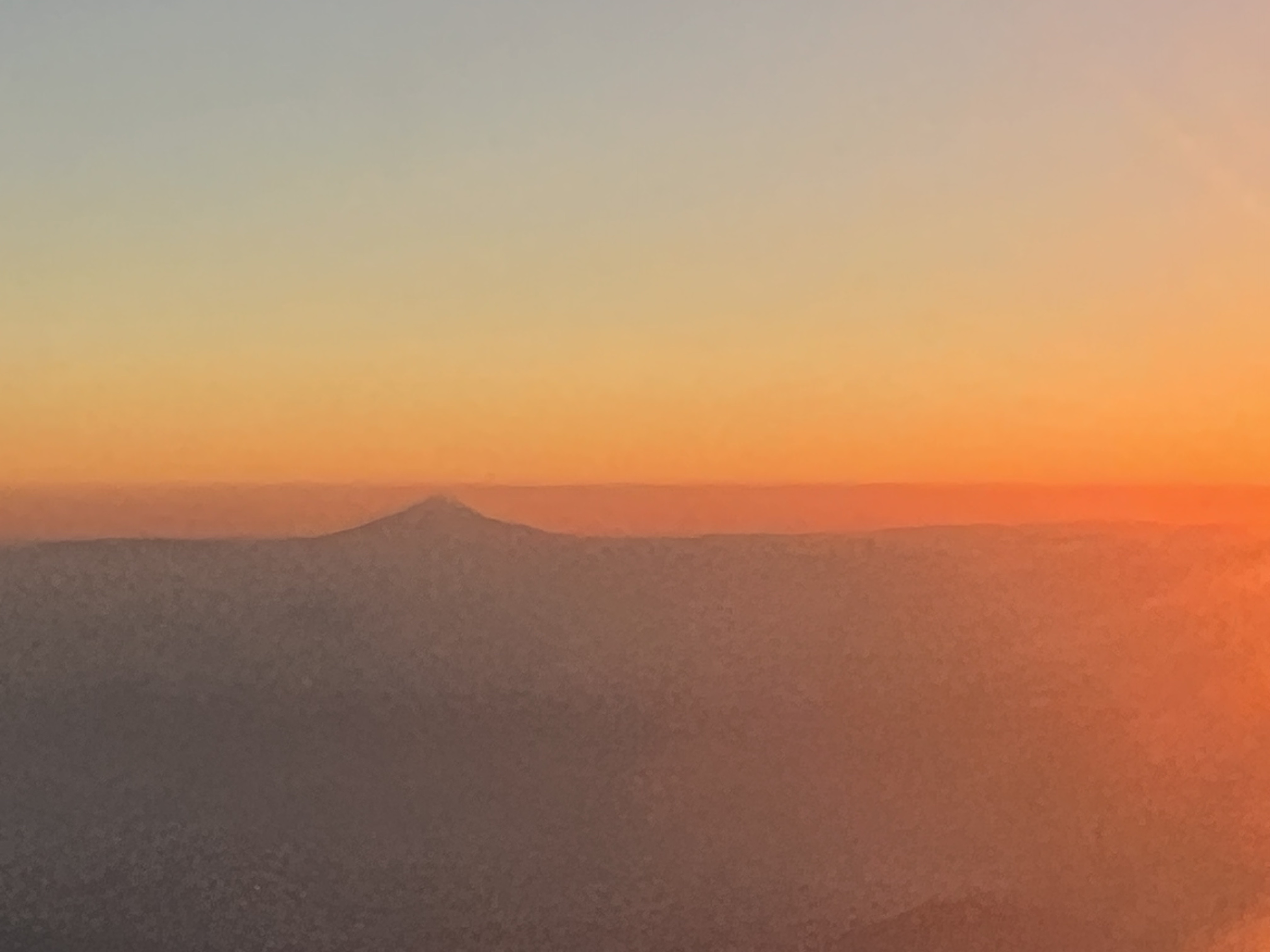
Saturday, Nov. 4, 2023 – After 11 years and at least three canceled trips, we finally made it back to Japan yesterday. It felt like a real triumph just to step off the airplane at Haneda. Six and a half years ago, we had already checked into our flight to Tokyo when a doctor told me not to get on the plane because I had blood cancer. I never thought I would make it back to Japan, or anywhere, ever again. Then a stem-cell-transplant a few harrowing years later, we planned a second trip in March 2020 with Mitchell, Alex and Will – that was obviously abruptly canceled by the pandemic. We tried again in 2021, but Japan still hadn’t opened back up to the world. I was increasingly anxious in the days leading up to this trip, certain that something horrible was going to happen. At the Seattle airport, we were told there was problem with our flight – a volcano in Russia blowing its top and sending a huge plume of ash into the sky, cancelling all flights into Seoul and Shanghai. I thought once again we would be foiled, but our flight made it, via a 2-hour detour south, stretching our trip into more than 12 hours. We were so grateful to make it. “Tadaima” is what you call out when you return home – and your family calls back “Okaeri-nasai!” or welcome back. I feel so lucky to be here.

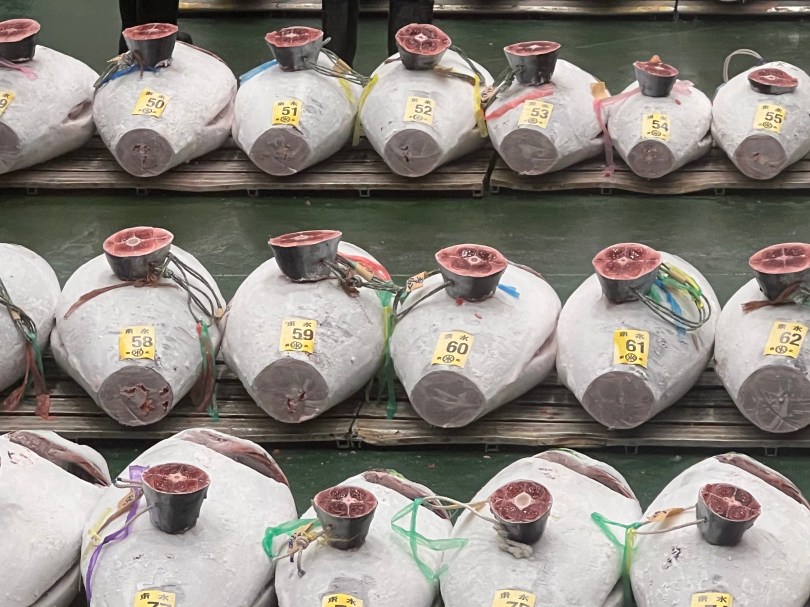
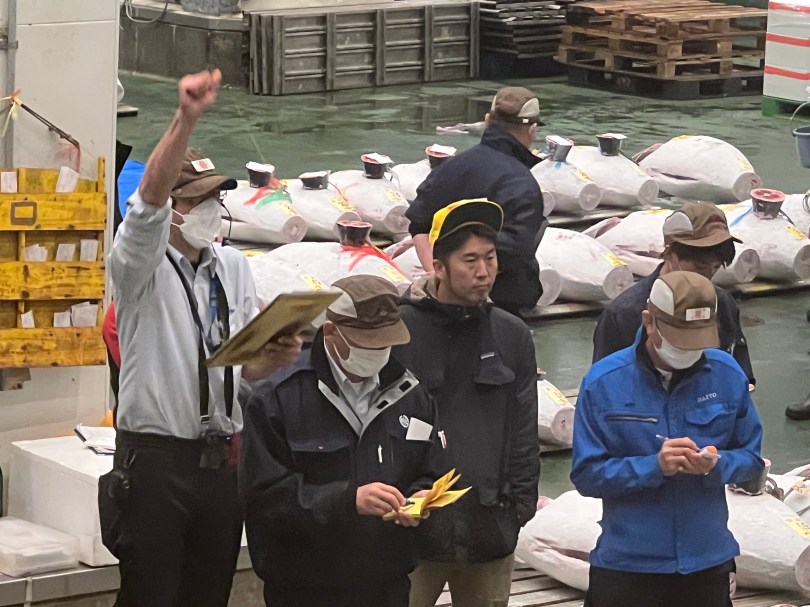
I will try to keep this short, since we are exhausted. Rick reminded me today how I pushed our friends Helen and Mike so hard on our first day in Tokyo 11 years ago that Helen actually cried because her feet hurt so bad. I still feel terrible about that, but Rick said I almost pushed him as far today! Not really, but it was a long day that started about 1:30 a.m. when Rick popped awake and never was able to go back to sleep. I think I woke up about 2:30 and called it a morning, fixed coffee and did laundry (no lines at that hour, conveniently the coin laundry was across the hall.) We are staying at a great hotel in Toyosu called the Matsui Garden Hotel Toyosu. Great design, absolutely phenomenal views from our 34rd floor room. It is small but perfect, and located very close to the new Toyosu wholesale seafood and produce market that replaced the old fish market at Tsukiji (more on that later). The hotel is also a short walk to the TeamLab Planets immersive digital art experience. (Elon Musk visited recently and loved it – it was also just named the leading attraction in Asia – yes, all of Asia.) We had no trouble making it to the tuna action at Toyosu Market at 5:30 a.m. We had won the lottery (only about 25 people a day win the lottery to get close to the daily tuna auction, where fish from all over the world are auctioned to the highest bidder and fish can go for over a hundred thousand dollars – per fish.)

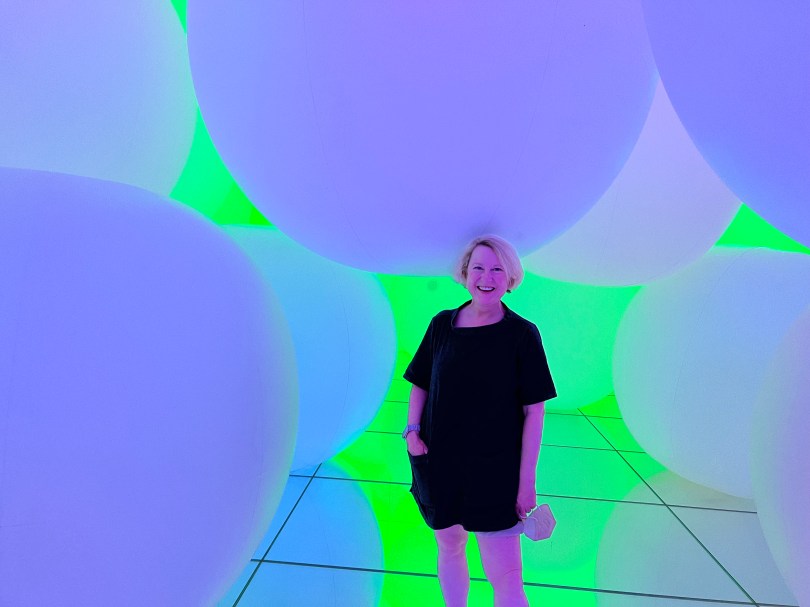
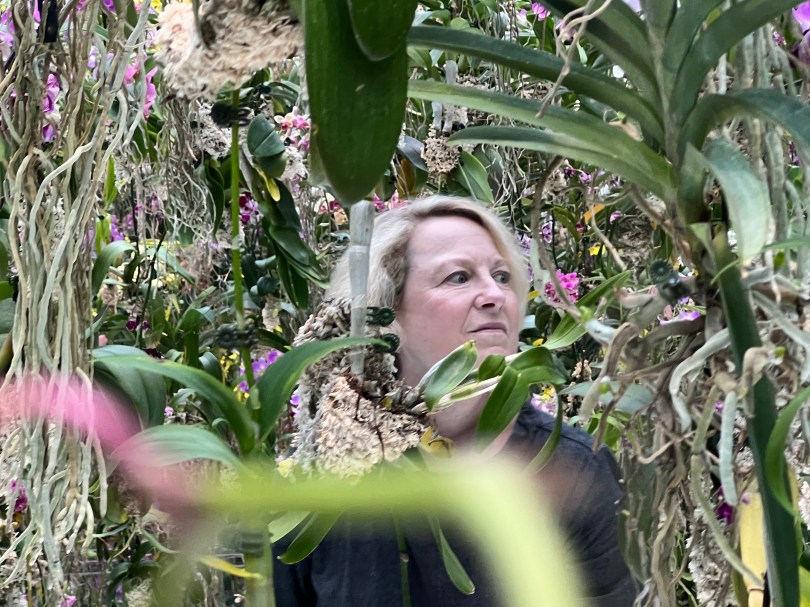
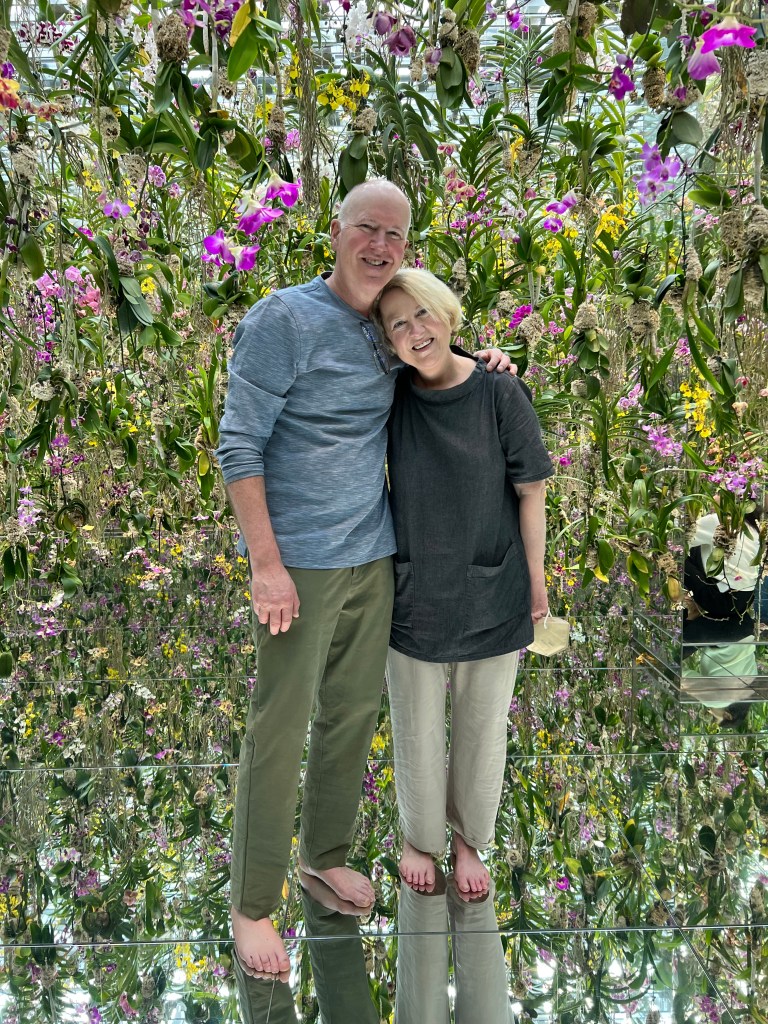
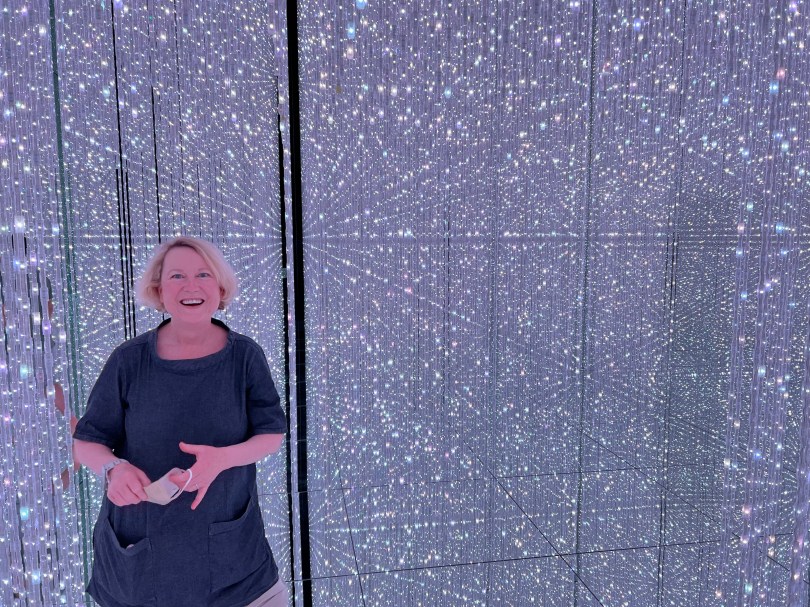
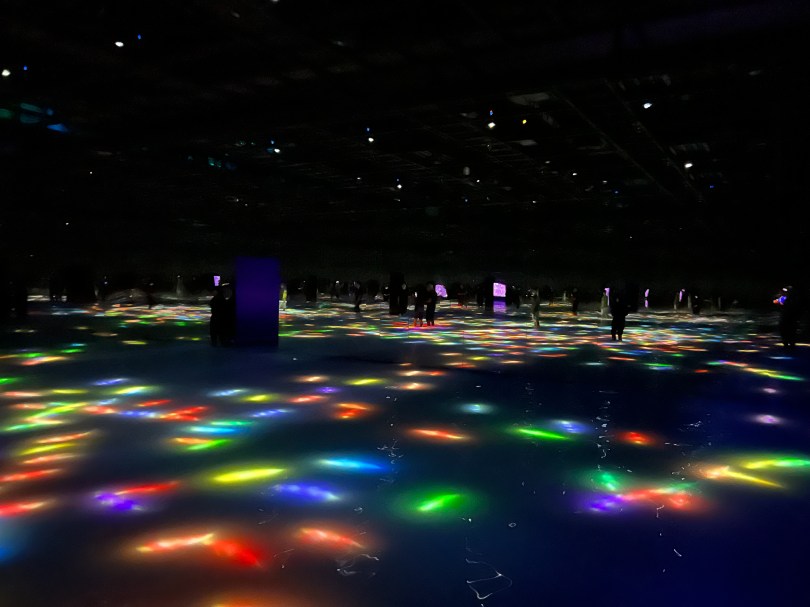
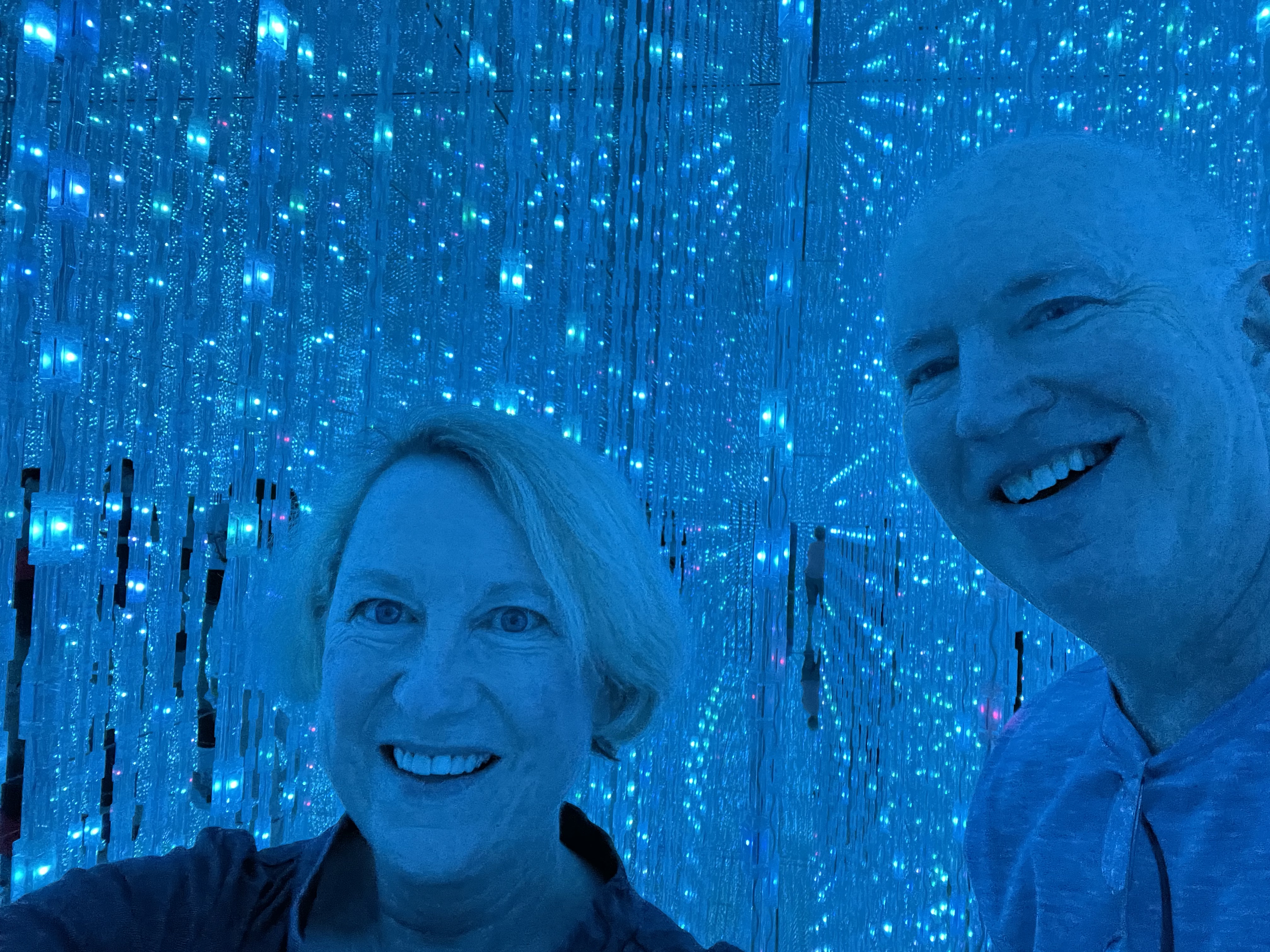
From there, we got in line at the digital art experience a half hour before it opened at 9 a.m. Though there were probably three dozen people in front of us in line, somehow we managed to get our shoes and socks stored in the lockers before everyone else and were the first people in. It gets very crowded so we felt lucky. We first navigated a hellish room with an uneven surface of collapsing marshmallow fun-house pillows – I fell at least three times – and from there it got better. There was an insanely beautiful “infinity” piece, where thousands of LED lights created gorgeous and dizzying light shows all around us. The mirrored floors and ceilings heightened the effect. It felt like Kusama Yayoi’s infinity pieces made infinite. Rick’s favorite was a room filled with water that reached up to our knees and was filled with digital fish swimming all around our legs. It was beautiful and so colorful. The images reacted to our movements, which was a little freaky. Perhaps the most gorgeous, but dangerous was the room where you were literally inundated with digital images of flowers. It was crazy – beautiful at first but then both Rick and I had severe vertigo – the whole room was spinning- and we fled.

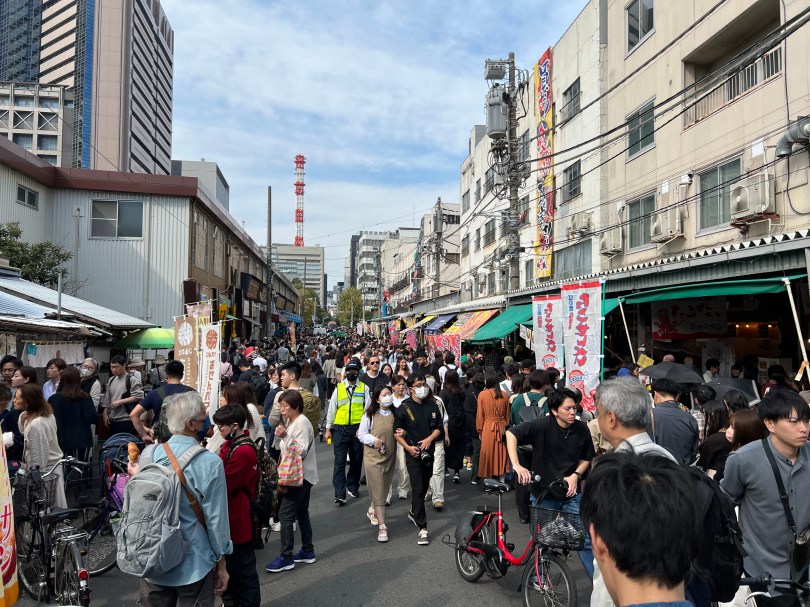
From there, we headed north, and stopped off in Tsukiji to buy a knife for Rick. I said, oh it’s close to the station, let’s just pop in to the Aritusgu knife shop. Well, we and about 100,000 other people were just “popping by” for lunch. The tiny streets around Tsukiji were crammed with holiday-goers, lining up in what looked like insanely long lines for sushi and ice cream and ramen and grilled anything. It was actually hard to even move at times it was so crowded. That experience drained us a bit, but not deterred we headed for Kappa-bashi, a street in the old part of Tokyo near Asakusa that caters to restaurants and chefs looking for everything needed to run a kitchen or a restaurant – knives, dishes, aprons, plastic fake food for display in the window, the signs and the curtains hanging over the entranceways to restaurants. It was so fun, but very hot and humid (in November!) and we wilted a bit. We bought some “Daigaku imo,” or university potato, a sticky-sweet roasted potato from what looked like an ancient shop, but could find no place to sit and eat them. You cannot eat on the street in Japan, which is hard when you want to eat street food! Rick was a gamer and we then took a subway to a neighborhood called “Kuramae,” described as the “Brooklyn of Tokyo.” It was filled with super hip coffee shops – on every block, filled with mostly fashionable young women – and expensive purse shops. It was a lovely, quiet neighborhood, the kind of place where a man noticed we were having trouble finding a subway station and walked us about 10 minutes to the correct entrance. Lovely.

Near Kappa-Bashi – view of SkyTree

We finished our day eating one of the “5 heritage rice dishes” of Japan – kamameshi – or the old fisherman’s dinner of clams over rice in the Kiyosumi-Shirakawa neighborhood on the east side of the Sumida River. We found a wonderful old hole-in-the-wall, famous for its kamameshi and just down the street from one of our favorite museums ever – the Fukagawa-Edo Museum. We brought Will here when he was little, and Mike and Helen a few years later. This was the first neighborhood where we saw Japanese women out walking in kimono – not the tourists in the rented “kimono” which were all over Asakusa, but just regular people out visiting the museum and temples in their neighborhood. (When I was here in the 1980s, kimono seemed much more common.) Here it seemed just normal. No one was taking selfies.

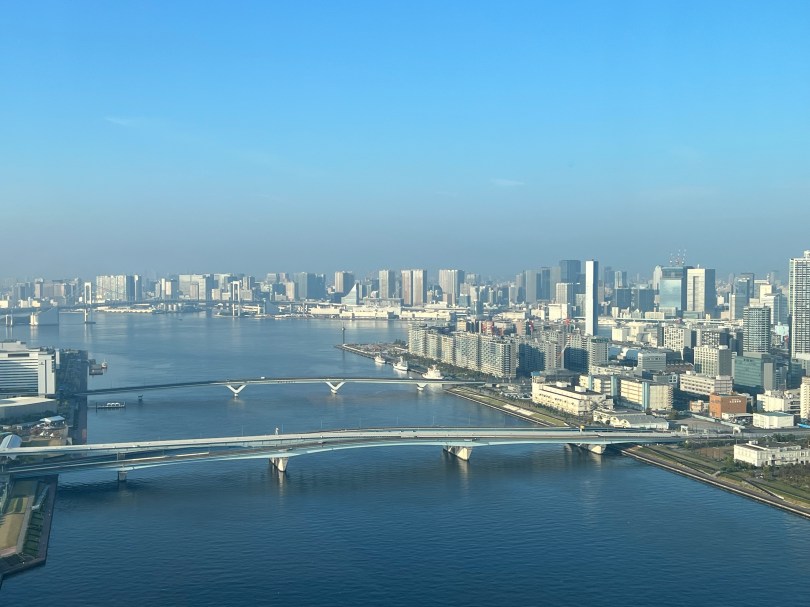
We are now back in the room – with our stunning view of skyscrapers stretching south along the Sumida River to the Toyosu Market and the bay beyond. Tomorrow – we head to Kanazawa. Hold onto your hats and stay tuned!

Kinosaki: A yukata for exploring, a voice for radio

By Will

Today we went to a small town in the mountins (this blog post will be shorter because we spent so much time eating an enormous dinner that I’m tired and do not have much time to write it). It is called Kinosaki.

We got there and went up in a tram ride to the top of the mountain. There was a strange guy in the tram who seemed to have been doing some drinking. He said: “Some of you speak Japanese and some of you don’t, Ha ha!” and to Mom,  “You have a good accent for radio, not for TV, Ho ho.” We got to the top to see a beautiful view of the Sea of Japan, which I’ve never seen before.

 We came down from there and went to see some sights in town and hit some gift shops. After that we went back to hotel and relaxed for a while before putting on our yukatas and going out. We were in these like… uh… elavated wooden shoe thingys (geta) that were just about as easy to ice skate in as to walk. We went to dinner at the ryokan we had sooo much food. We had: crab,pickles,rice,beef,vegtables,tofu,soup and whatever that was. Our server, a really nice woman named Keiko-san, brought us endless amounts of food. We were ABSOLUTELY STUFFED when ice cream finally came for me.We went back to the room and went to bed.  

(Mother’s note: Will used a lot of his Japanese today and charmed Keiko-san and many others that he met along the way.)

THE END

Zen and the Art of Maintaining Your Cool — and Your Gag Reflex

By Will

KYOTO, Japan, November 27, 2012, 9:28 p.m.–Today was a  really fun day but I am just going to tell you about the “experience” we had at vegetarian dinner at a Zen temple. We got there and took off our shoes at the entrance. The monk told us where the bathroom was and I thought we were supposed to GO there so everyone went to the table and I went to the bathroom. I put on these slippers and then got lost. I finally found our table.

For one, we had the whole room to ourselves and chairs were not just ANY chairs they were super awesome puffy rotating chair thingys–they were GREAT. They first brought out a plate of many different small pieces of beautiful food (I had NO idea what it all was). And we took turns picking what we were going to eat. So far everything was pretty good. It was lots of tofu and different things. We came to this little bowl of fried peas. The peas were great plus you could eat the dried seaweed bowl (Uh.. well I HOPE we could because we DID)

Then came out this pink thingymabop. I thought all the food so far was GREAT so I did not expect any TROUBLE from it. I went ahead and took a great big BITE out of it. I chewed and chewed and… AAHH It was worse than pancakeflabbergast! I gagged in front of everyone. Man I SERIOUSLY needed a emergency banana.

I managed to eat it. After that it was pretty good for the rest of it. We had some pickled ginger (that’s pretty spicy) and…I probably should have NOT eaten it in ONE bite I was not feeling GrEAT after that. There was rice and stuff but I did not eat much. We got a cab back to the hotel and Dad and I went to the hot baths. And I came back and wrote this blog, while we watched a crazy Japanese dancing competition.  

A stud finds the lunch spot

By Will

We woke up in the Nara Hotel and packed up our bags to prepare to go to Kyoto. We went out through a covered arcade of shops and restaurants to a small breakfast place where we had toast and eggs. It was really good. After that we went to a place called Mr. Donuts. I had a chocolate donut. It was good, but my mom had some stale thing that tasted like a soccer ball (YUM!). We found these silly little gumball machines that spit out little figures. Me and Mike each did it. I got this buff warrior monster guy. And Mike got a silly little lady Thing. He was mad so we did it over. This time we each got these dumb broken monster guys (WOW).

We went back to the hotel to get on a train to go to Kyoto. We (of course) rushed to the next train and got lost trying to find the hotel. We dropped our bags and went to have lunch. My Japanese-speaking mother could not find the place. So when we were about to give up hope, I found it. “BOO YAH” I said. I felt like a stud. (Editor’s note: Will found the place by reading the first Chinese character of the three-character name. He identified the “Dai” which means big. He later said, “I couldn’t have done it without Rieko-sensei.” In subsequent days, he’s been reading hiragana like crazy — today Thursday, he read “Ki-no-sa–on-sen” “Mom, it’s Kinosaki Onsen!” It’s exciting to see the learning take hold…End of Mother’s/Editor’s note….)

We had lunch. Then we were going to go to this temple. It was sooooo crowded. Shnitzels, We barely made it to the top. It was pretty cool. It was quite a hassle getting back to the hotel but we did. Then we went to bed.

A guzen moment in Nara: Turns out Monroe is so kakouii

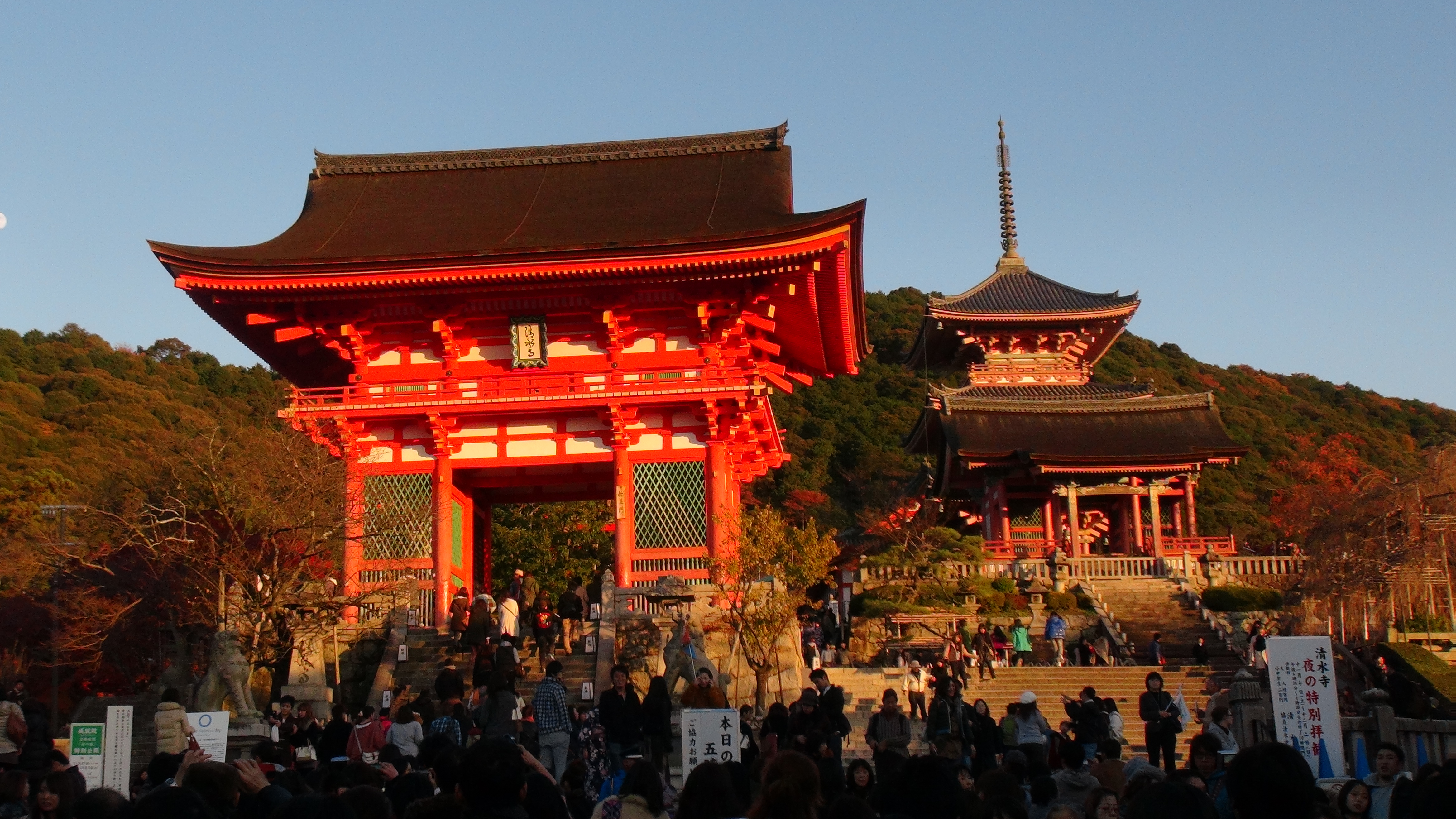
KYOTO, Japan, Monday, November 26, 2012 — So we’ve been a little busy and I haven’t had time to blog, but Will has been doing a fine job capturing the tenor of our days. We arrived in Kyoto yesterday and experienced the most unbelievably crowded fall leaf-viewing scene I’ve ever seen. Of course, Will was nearly in tears after we muscled our way up to Kiyomizudera, surrounded by mostly couples and families out enjoying the last of the beautiful weather, three-day holiday and fall leaves. It was insane. It reminded me of visiting Meiji Shrine in Tokyo on New Year’s Eve — massive crowds, moving forward at snail pace, patiently edging toward the goal. Once we got to the hillside temple, I kept worrying that the wooden super-structure of the temple deck, which juts out over the hillside, would collapse under the masses, but we managed to get lots of lovely photos of the temple, the city below, and the surrounding hills, all at sunset — super good planning on my part — oh right, sheer luck. We then dodged tour buses on the narrow streets leading off the hill and managed to grab a cab home.

I’ll skip today (Will will fill you in after dinner — rain rain rain!) to tell you about our crazy night in Nara. A little background: Rick and I trade barbs all the time because my mother’s family comes from Monroe, a tiny town outside Corvallis, while Rick’s mother’s family comes from the slightly larger Junction City to the south. Junction City people look down on Monroe people, and let’s just say his mother and he don’t let me forget it.

So I never thought I’d hear the word “cool,” much less the Japanese word “kakouii,” of the same meaning, in the same sentence.

 But two nights ago, I had the concierge of the Nara Hotel call to make a dinner reservation at a cool-sounding Oden (hot pot of sorts) restaurant. The staff looked at me askance, and it wasn’t until we got to the restaurant that it made sense why. It was a total hole-in-the-wall — a super cool old eatery in the old Nara-machi part of town. There was a small U-shaped bar, maybe 12 seats, and only Japanese (and Japanese menus) surrounding the bar. Well, it was a challenge for me to order for us, and I kept asking the young man next to me what they were having (I could see the food at least) and he gave me advice on food, etc. Anyhow, I really did bug him a lot, but he and his two dining companions (one of whom was his wife) were very nice.

He asked me where we were from; Oregon. He said young Japanese think of Portland as the coolest city in America. Then he said something about Corvallis, (this is all in Japanese of course) and I exclaimed I was BORN in Corvallis. And then to my shock he said the word “Monroe.” Monroe? Yes, the coolest place in America is Monroe. I just about died. I said my grandparents are buried in Monroe. My mother’s family is from Monroe. My great grandmother drove a damn antique taxi in Monroe. He couldn’t believe it. He was a designer and he had “visited” Monroe virtually on Google drive, and he thought the DariMart and other buildings just had the coolest vibe. He had made and sold T-shirts that say “Monroe Oregon,” and people actually bought them. He had photos of Monroe on his iPhone. I am not making this up, though Junction-City-Rick would like to think I am –- but Rick witnessed it, and this little tiny Oden shop in Nara, half-way around the world, yes, the guy loved Monroe. He was as shocked as I was to meet someone from Monroe. His wife said it was “guzen” and “unmei” – chance fate, that we happened to meet. What are the chances?

It made me think later about my grandpa Charlie, my mother’s dad, who was indeed from Monroe. A good friend and fishing buddy of his was of Japanese ancestry, living in Oregon, — Mom remembers his name as Yashui. His friend’s family had been interred during World War II. Anyhow, it seemed another unfinished connection between Japan and Monroe. 

Anyhow, my new friend, Yosuke Wainai, also said he loves Hemingway, Steinbeck, but mostly Raymond Carver, who is also one of our favorite writers. Anyhow, we exchanged email addresses, and our final goodbyes that we would see him and his wife in Oregon. Who knows? The world is a very small place indeed.