Category Archives: Portugal
Turns out, Porto plays, too
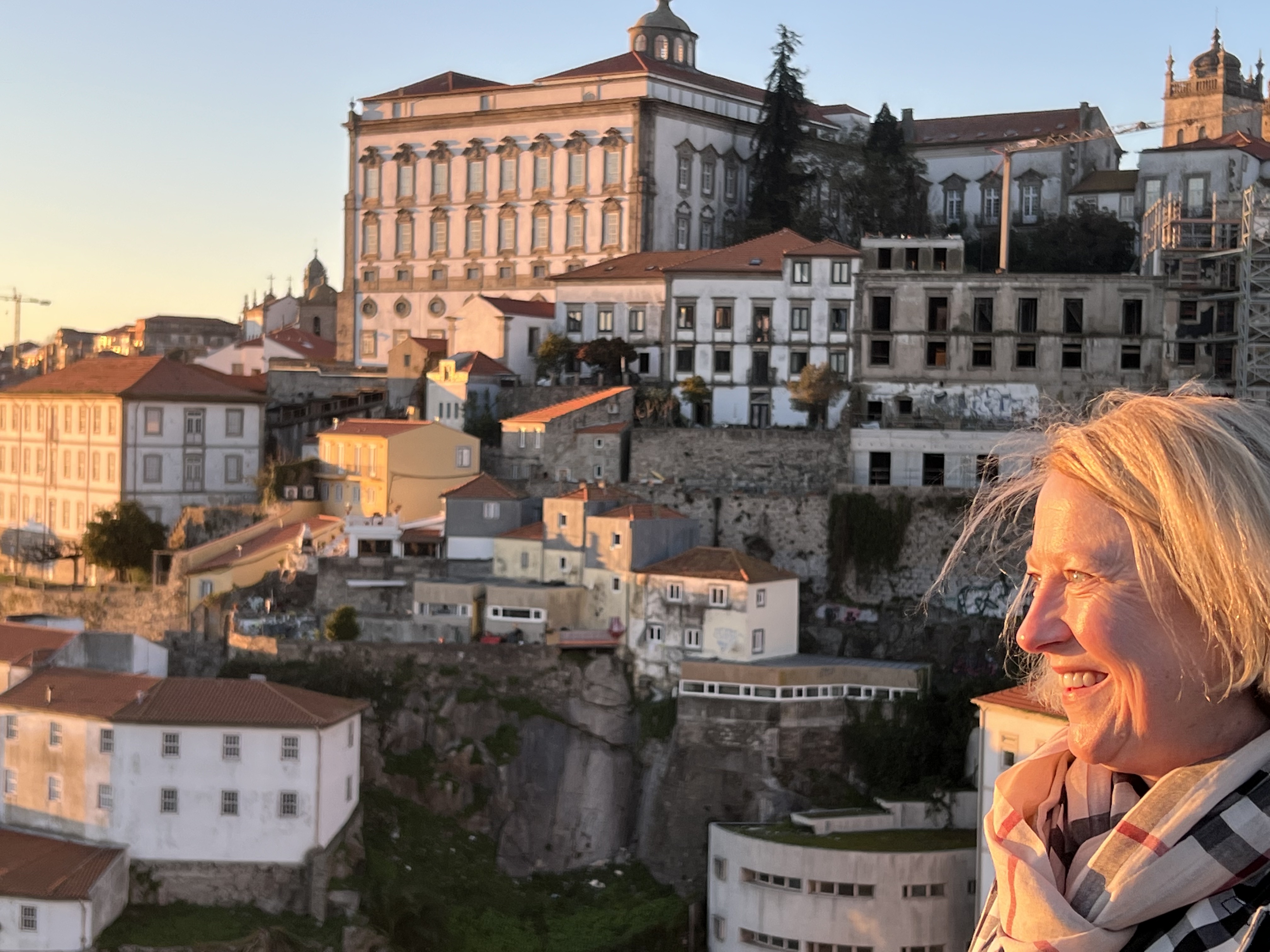
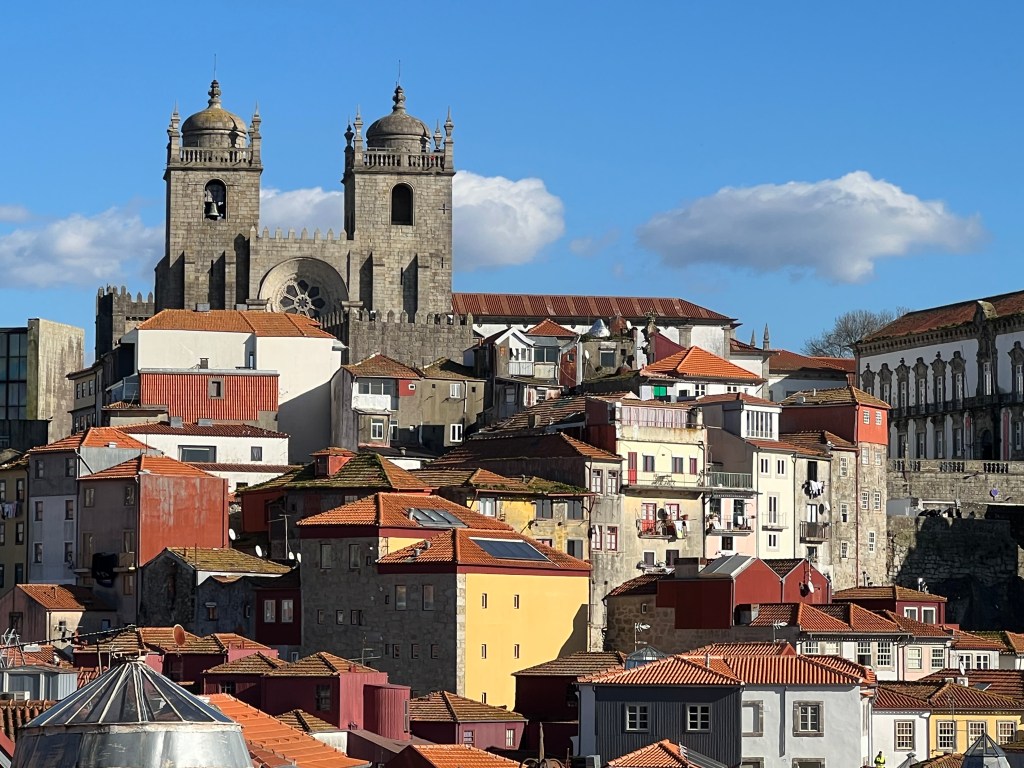
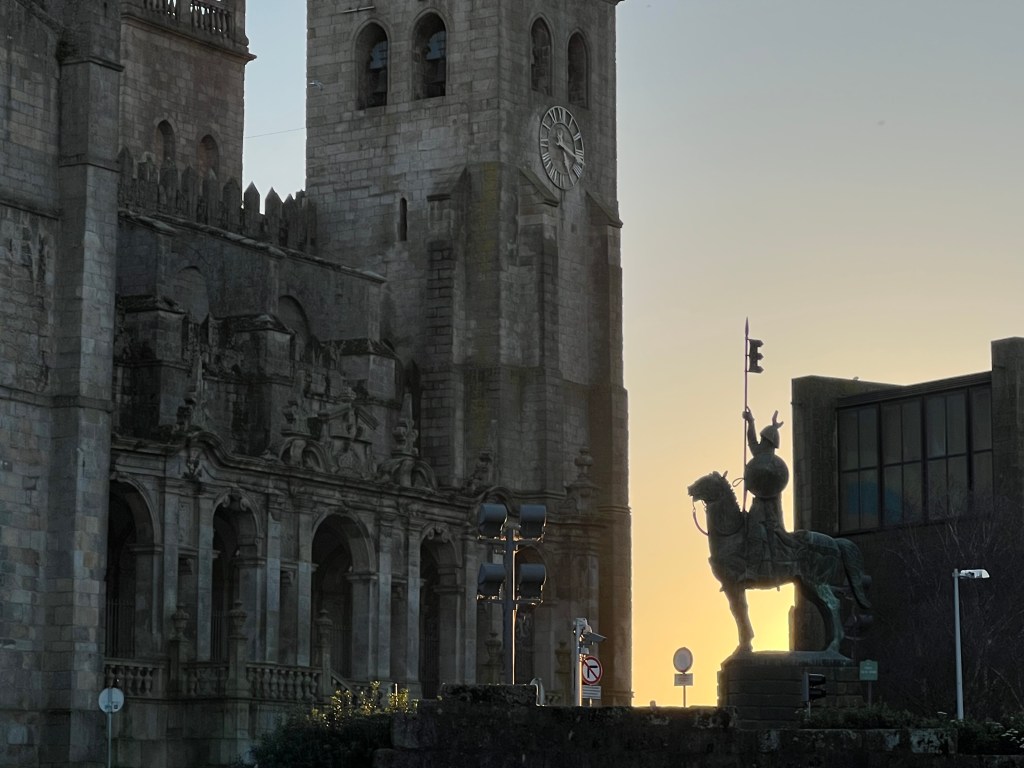
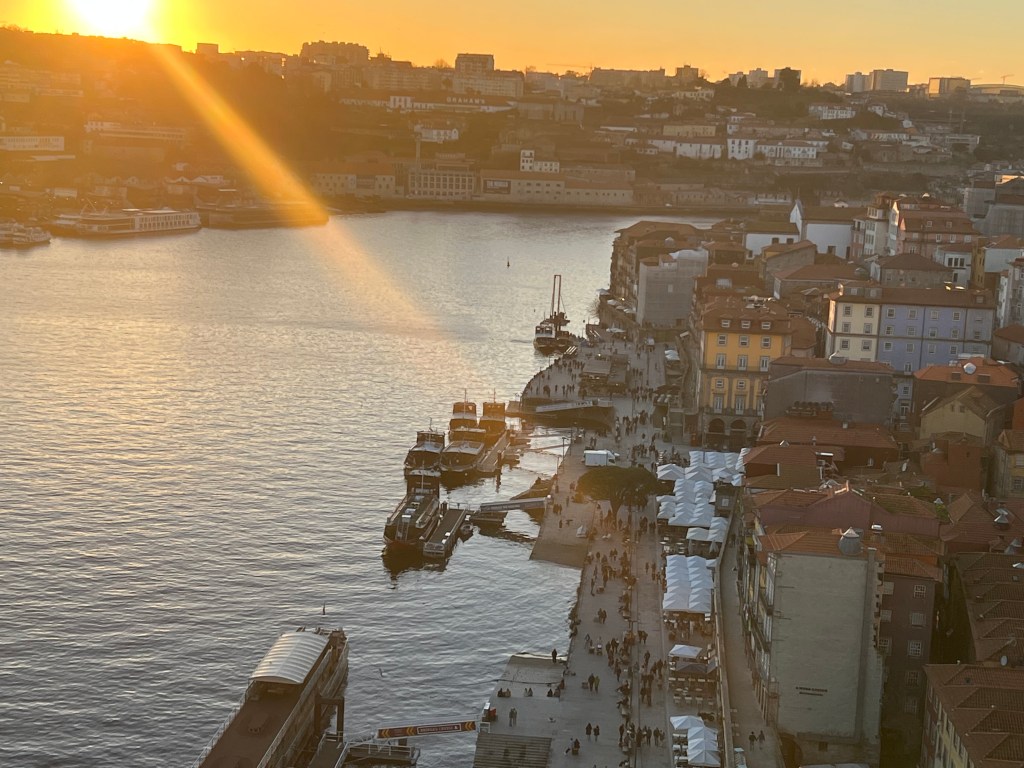
Saturday, Jan. 28, 2023, Porto, Portugal – Natives of this hard-working northern Portuguese city have a saying that “While Lisbon plays, Porto works” – in reference to its nearby textile manufacturing and especially its 300-year-old history of exporting port wine. But from our brief 48-hour experience so far, it appears that Porto has become a major playground both for Portuguese, but especially for foreign tourist from around Europe, Asia and the Americas. Lisbon was a ghost town compared to Porto. I think that while Portugal seems to be the “it” destination right now globally, Porto is the “it” destination within Portugal. (We were sitting by two restaurateurs the other night at a Lisbon rooftop restaurant, and they were discussing how to appeal to tourists – it was fascinating. They said you have to get your restaurant mentioned in one of the many “top 10” listicles by the various travel publications, and especially Time Out.) Well, Porto is apparently topping many lists – we tourists are like lemmings. But happy lemmings. And we have managed to not go over the cliff yet. There are lots of cliffs in this city that straddles the Douro River, 1.5 hours downstream from the UNESCO World Heritage port vineyards.
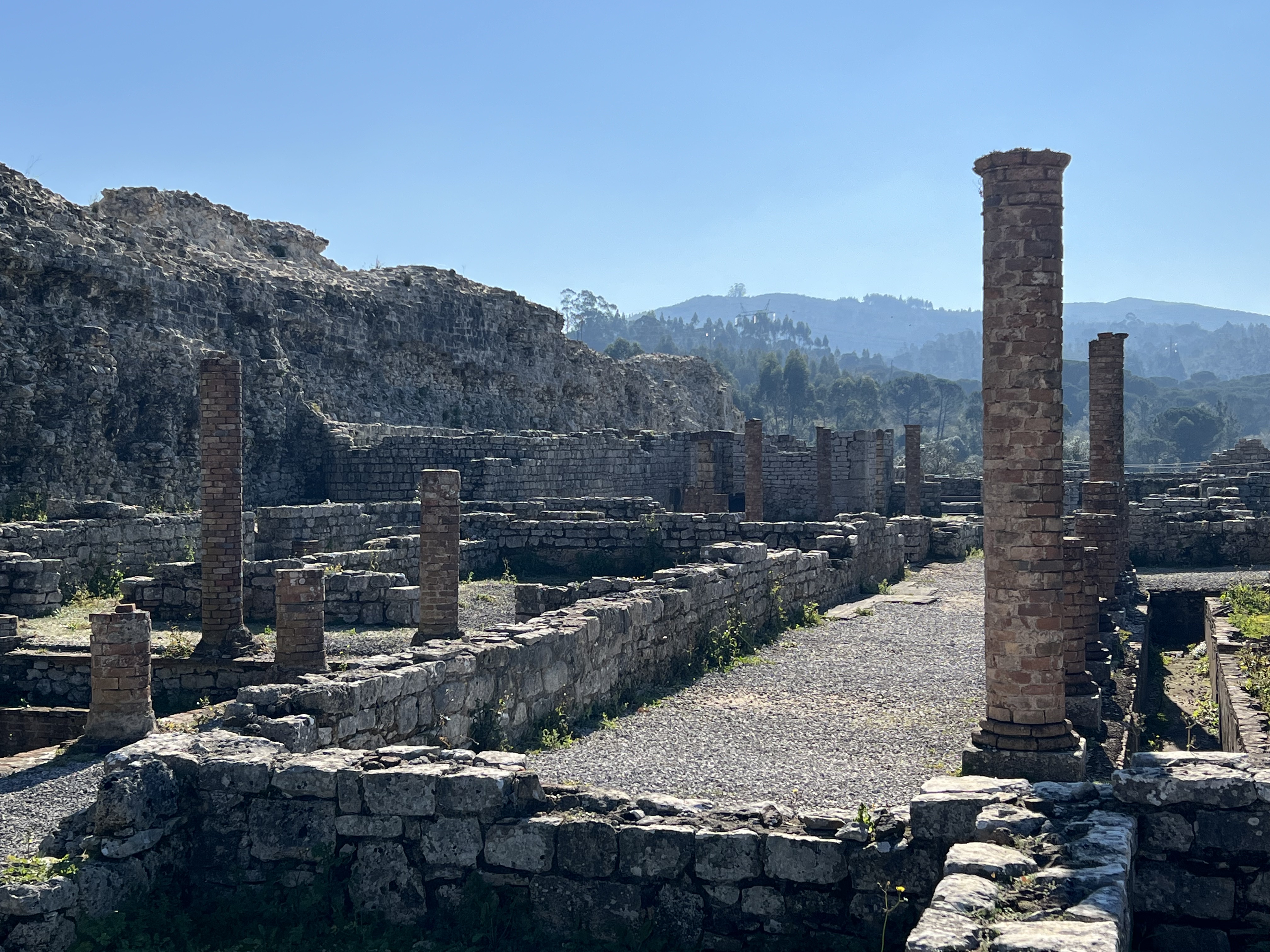
We drove up here from Lisbon on Thursday, stopping by the ruins of an ancient Roman city called Conimbraga, and the university town of Coimbra, two hours north of Lisbon. It rained on us in Coimbra – literally out of the blue – and we saw the remains of a wonderful, atmospheric 1st C. AD cryptoporticus. The Romans, who loved an engineering challenge, tried to figure out how to put their central forum – which needs a flat surface – on the top of the hill town of Coimbra. Never shy to remake the landscape, they simply built an enormous substructure to support the forum. We wandered through its evocative arches, decorated with the occasion ancient bust, and were amused by the diligent museum staff, who would not let us leave until we had visited ALL parts of the museum. It was hilarious – we wanted to skip the mediocre 18th century paintings and the table ware and the terracotta statues, but NO. This one man, in particular, would spy us edging toward the door and he would say, NOW, you must see the 12th century reliquaries! And off we would go. Finally, we extricated ourselves – and yes, we did see the entire museum – and made our way over to the university, one of the oldest in Europe. We knew from our readings that it was also a university that banned the study of science that was blossoming during the Enlightenment – too threatening to the Catholic church’s orthodoxy – but we did visit an amazing library – 60,000 books in a spectacularly ornate hall – and the “university prison.” We don’t think you would get thrown in the clink for bad grades, but perhaps for getting into a brawl at the tavern and punching your professor. We aren’t sure, but were in a hurry to get back to our car for a hair-raising drive another hour north to Porto. It was hair-raising because the A1 had two lanes – super slow trucks dominated the right lane, while super speeding cars populated the left lane. It was worse than Greece. Rick would just get into the left lane to pass a truck and someone would scream up behind us and we would have to get back in the right lane. Rick said it wasn’t as bad for him driving as for me sitting helpless and freaking out in the passenger seat. Don’t worry Ma, we survived. 🙂
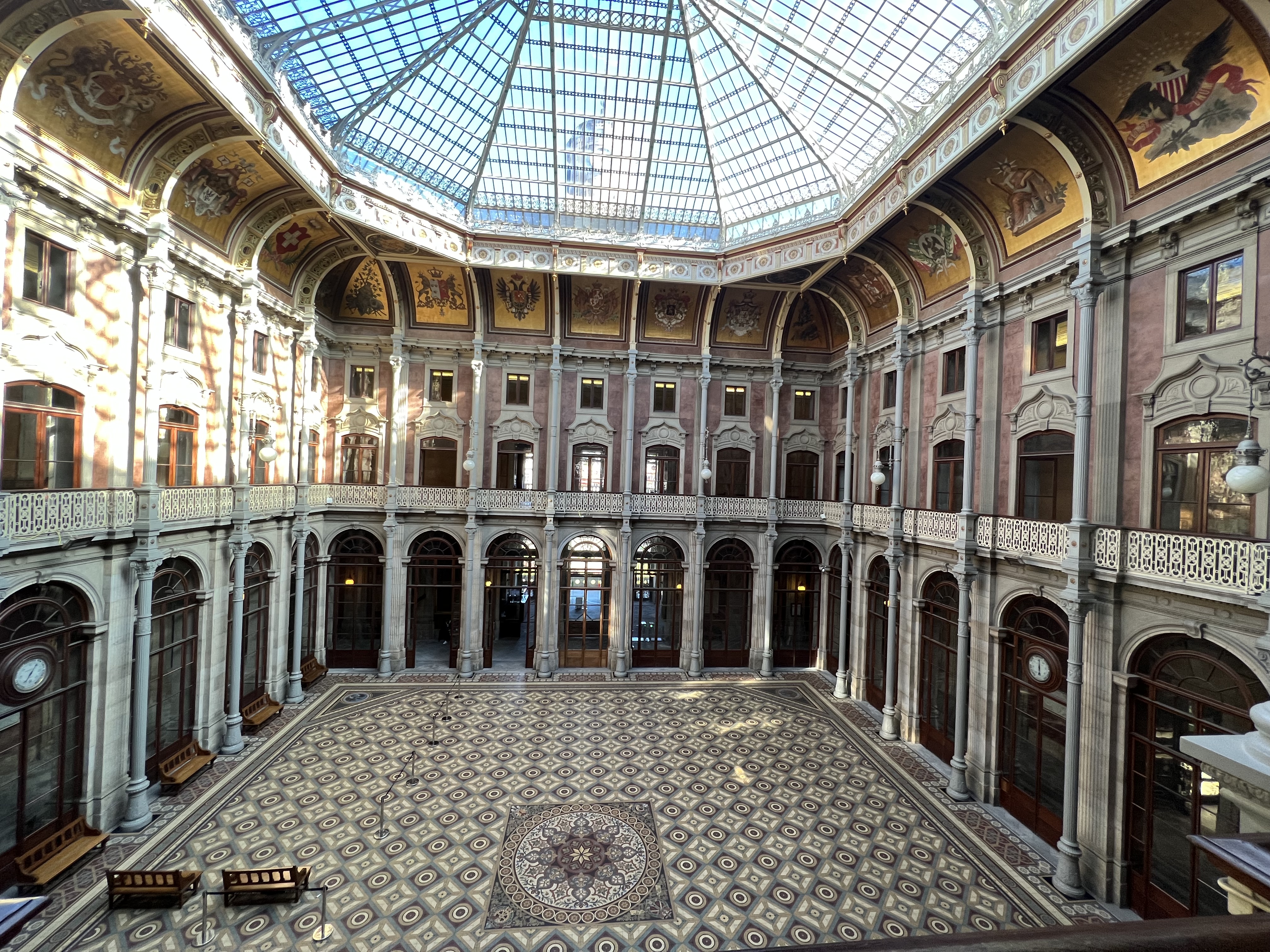
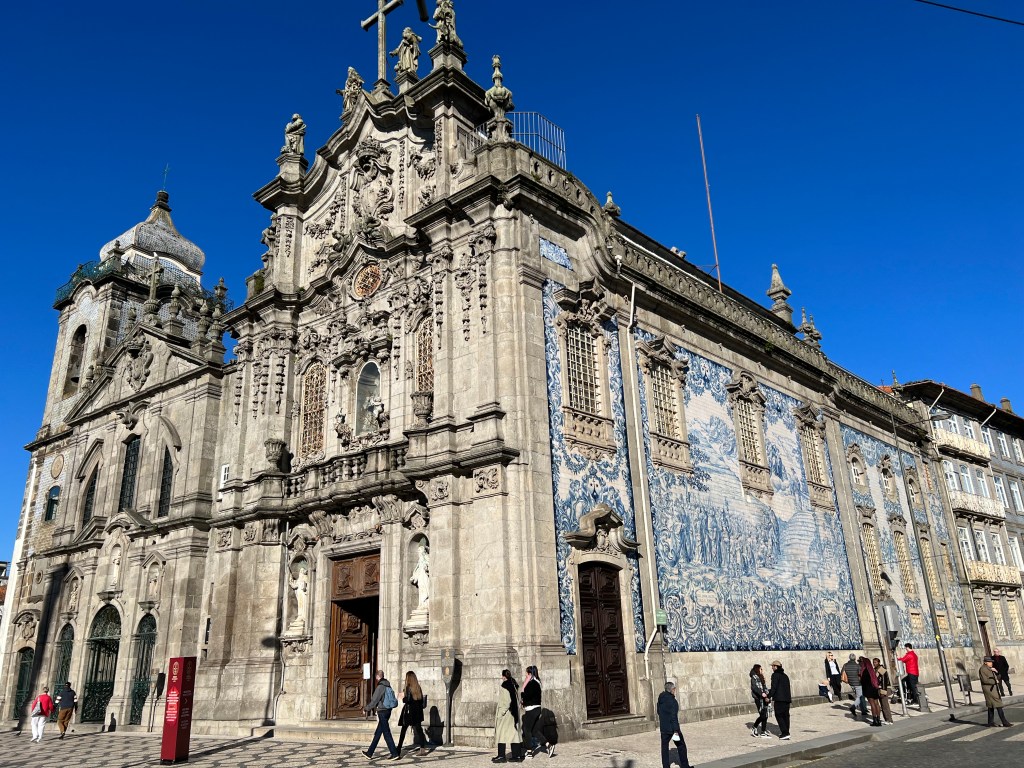
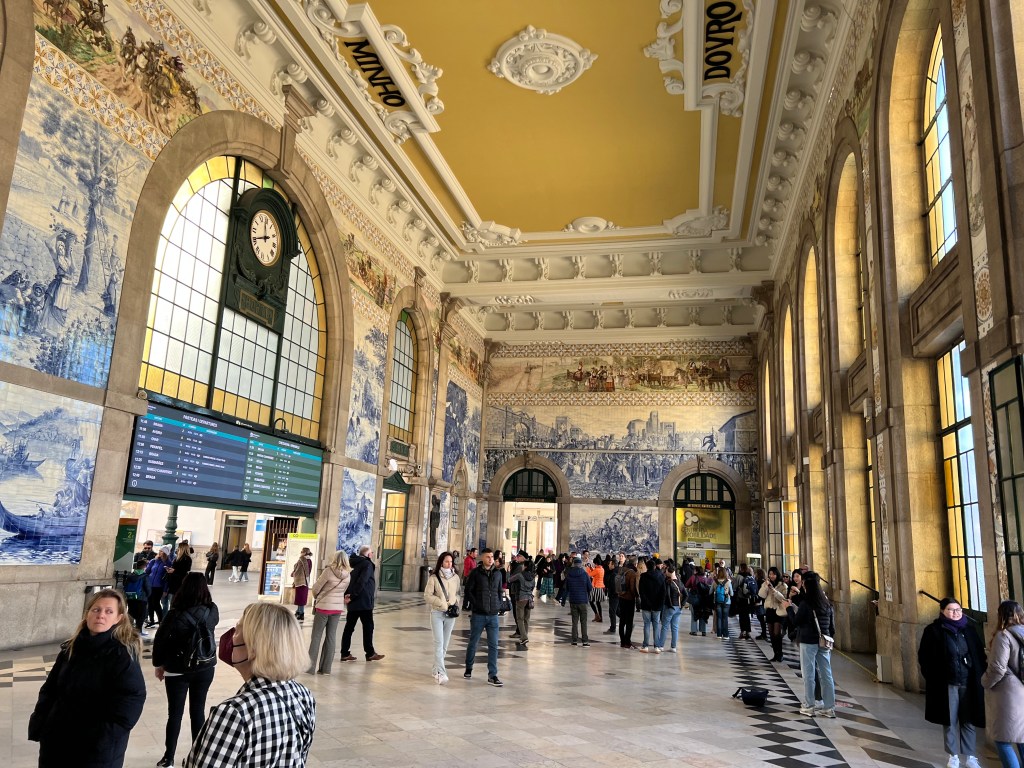
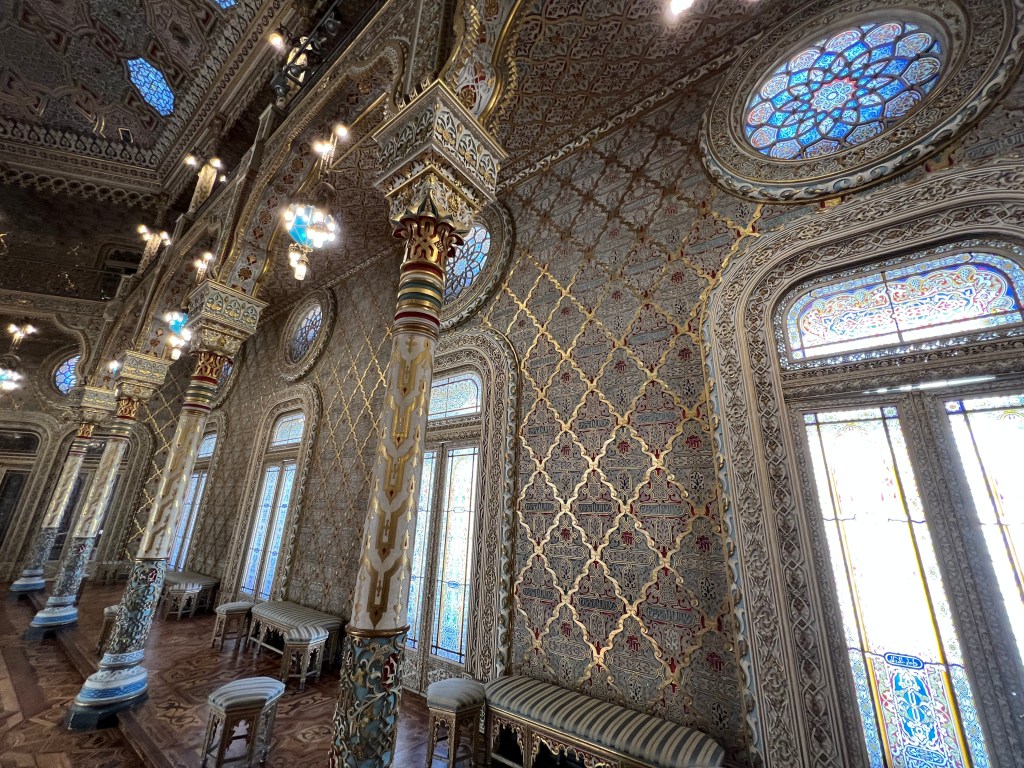
Finally Porto. It is a charming city, set on a hill overlooking the Douro River. On the south ban of the river is Gaia, where all the port wine cellars are located. We had a nice day Friday, when we toured the Palacio da Bolsa, which is not really a noble palace but a shrine built to commerce. The city’s merchants built the palace in the 19th century to house their various trade organizations – it is opulent, which inlaid floors, 1.5-ton chandeliers, and the best faux wood walls I have ever seen. The visit requires a guide, since the building is still the working office of the trade organization, though you can rent out any of the rooms for private events. The most-rented room – which goes for between $4,000 and $15,000 – is the last room we visited – with a Turkish theme, a gift from Queen Mary II. The guide seemed to take particular delight that the room had been rented for the first time last year to celebrate a divorce.
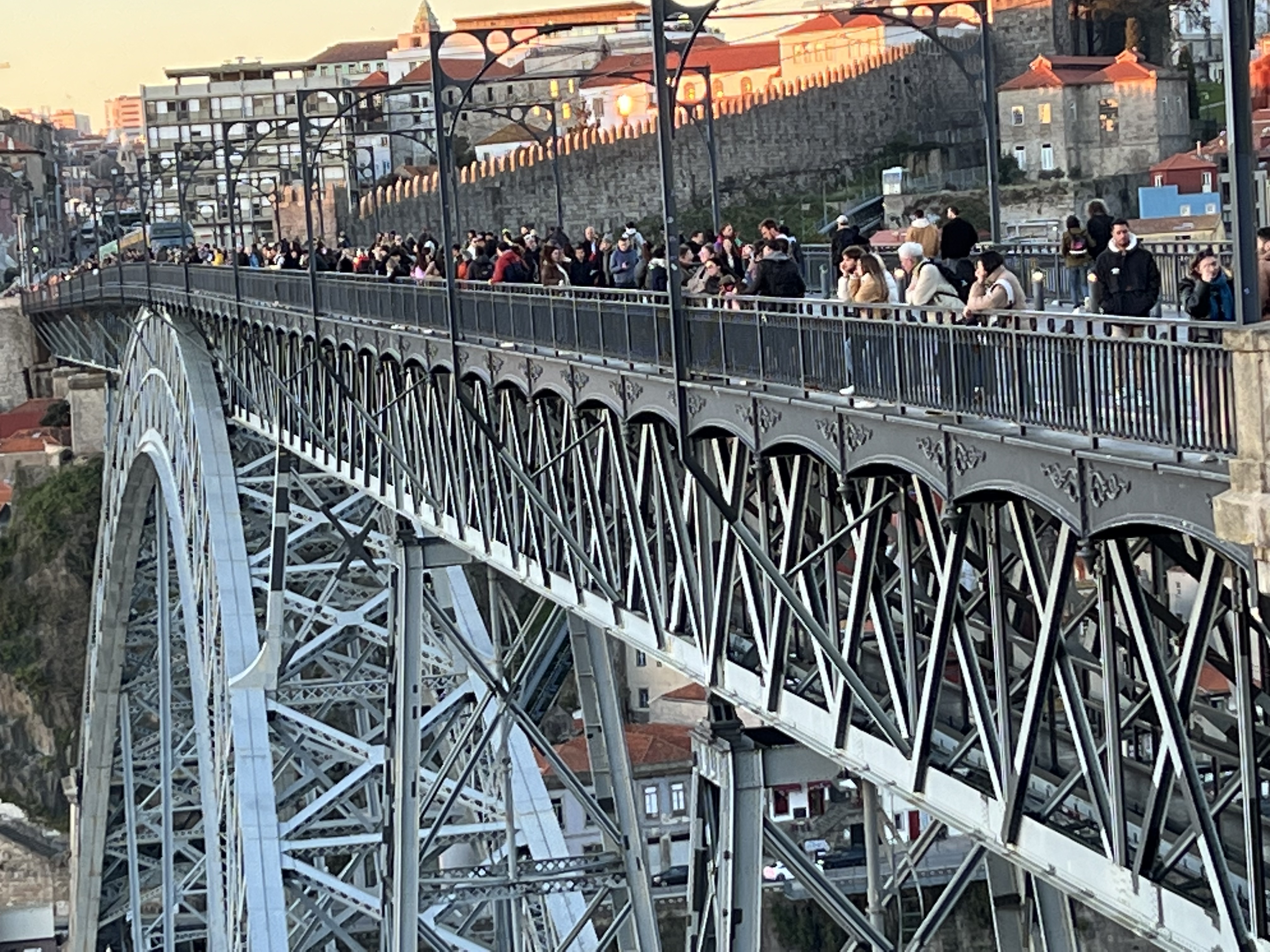
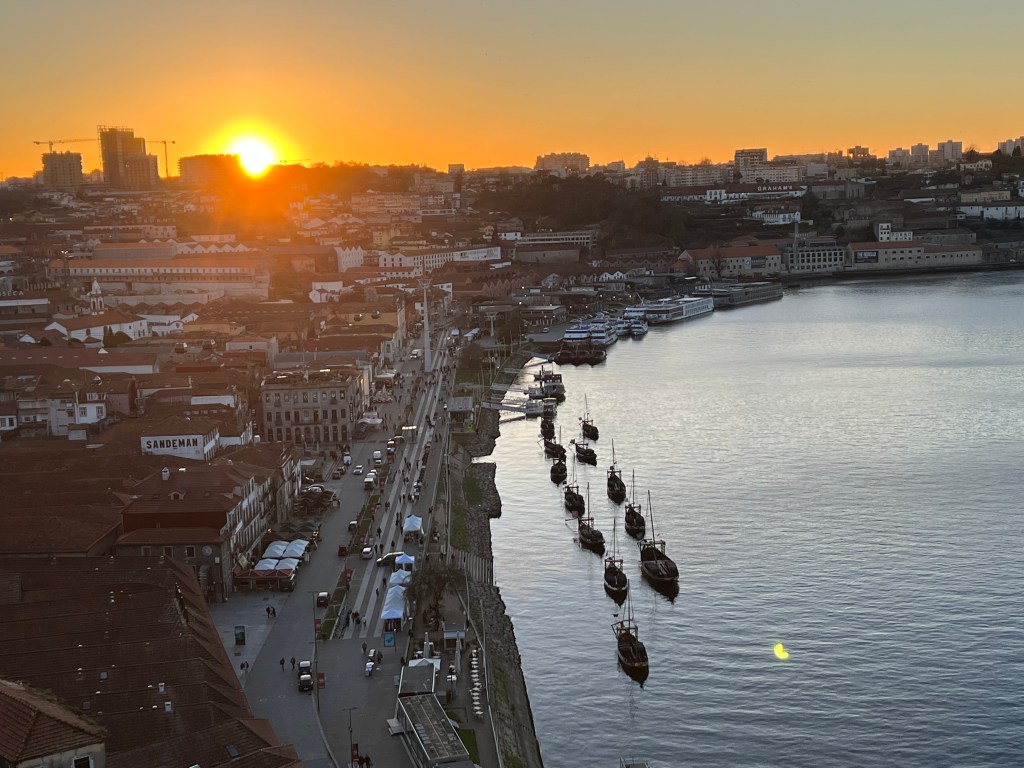
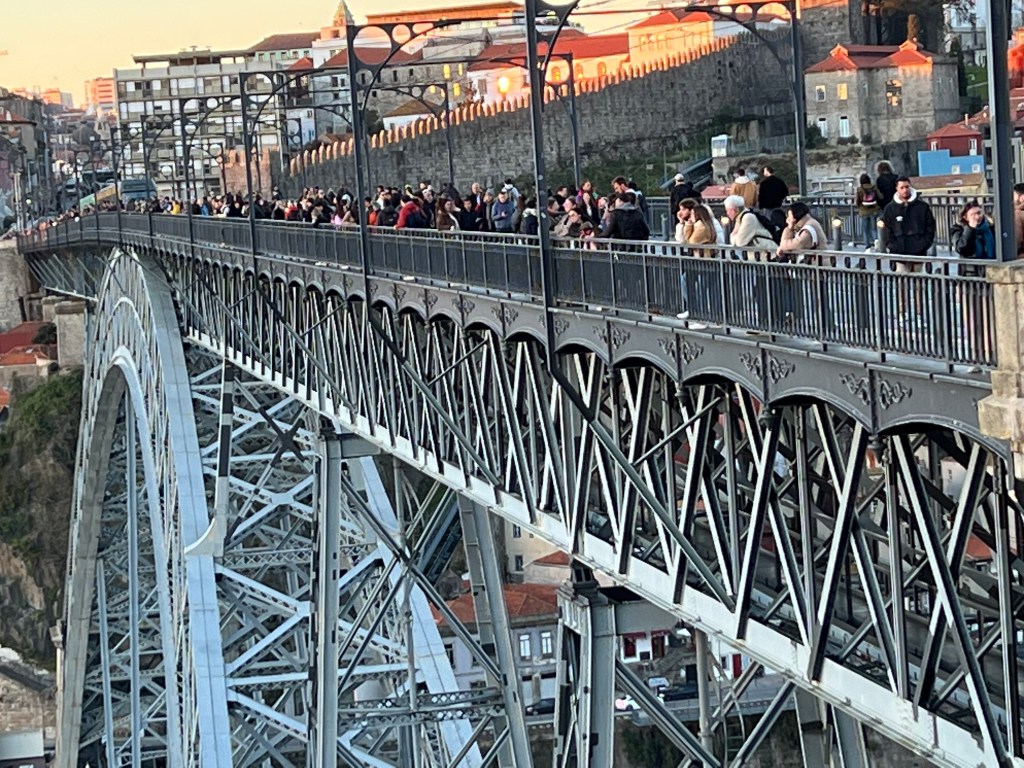
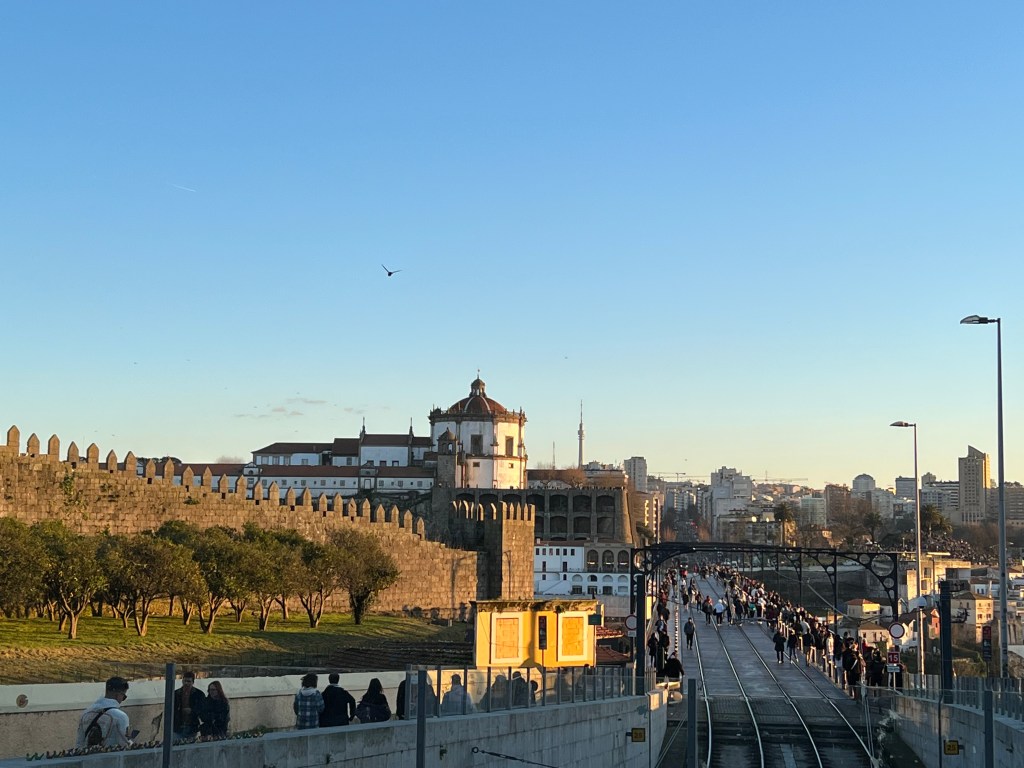
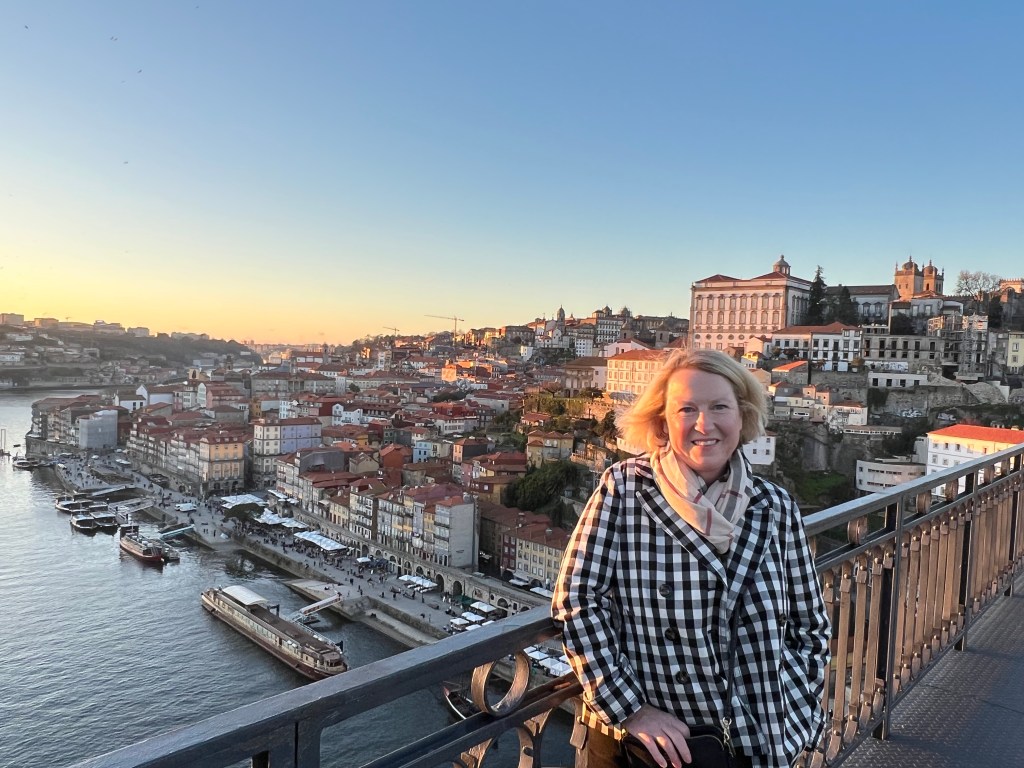
In the evening, we wanted to see the famous view of the city at sunset – best viewed from the south side of the river looking back at Porto, or from the Dom Luis I Bridge, which is shared by pedestrians and the modern light-rail. It turns out it wasn’t a very original idea – the bridge was packed with people snapping photos and selfies. We fit right in. The views were spectacular, and the mood was very festive. After walking to several restaurants we had read about – and been told there was no outside seating – we grabbed dinner at a random restaurant on one of the twisting streets on the steep hill rising up from the river. I am wary of any restaurant where they beckon you in, so I was heartened when the old woman who saw me looking at the menu just smiled and disappeared to the back of the restaurant. We asked to sit outside at one of two tiny tables with a small candle burning, and the waitress said, if you wish, but we won’t be able to seat you inside after, since they would fill up. It was supposed to get down into the 30s so she thought we were crazy, but it was only 44, and I am crazy, so we sat outside and had a wonderful meal of Portuguese seafood – shrimp, squid and octopus. Concept 31 – highly recommend.
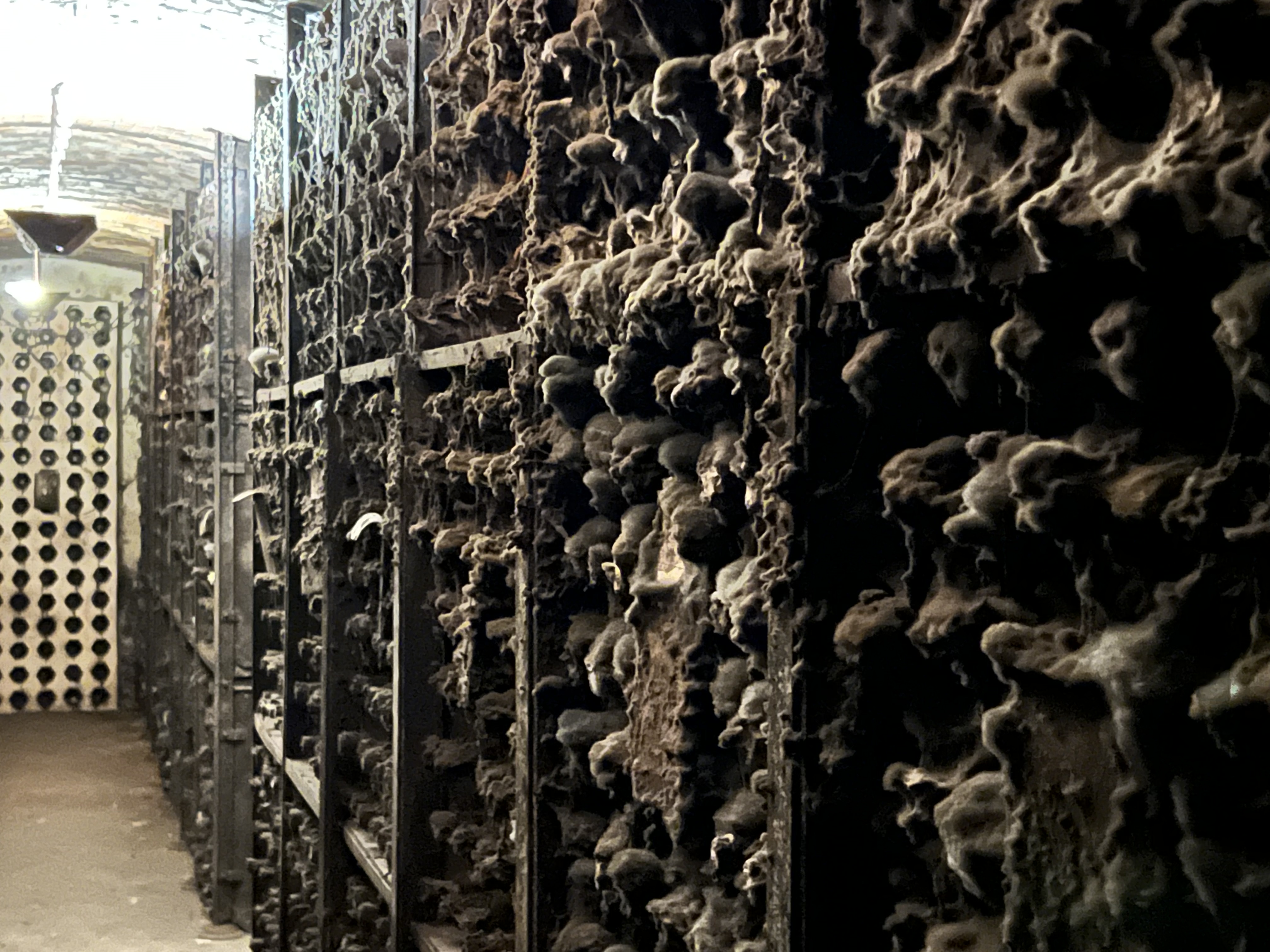
Today, we started the day visiting the port lodges – of which there are many – where you can learn about the port-making process and have a port tasting. This is the sort of thing I had done many times in my life with my dad – though it was always whiskey. Poor Will was dragged to distillery tours all through Scotland and Ireland – but I think he would have liked this one. We chose the least-touristy lodge that had been founded in 1756 by our old friend Carvalho, the Marques of Pombal, the crafty and brilliant and slightly vindictive right-hand-man to King Jose I. He is best remembered as the man who rebuilt Lisbon after the devastating earthquake of 1755, but somehow, in all the chaos, he found time the next year to found this particular company as a way to recapture control over the export of port to England and increase the duties on the exports. The English owned most all the port business, so Carvalho stepped in and created what was the world’s first designated regions for a product – basically the first DOP. A port wine must come from the Douro valley, or it is just another fortified wine. We saw the huge barrels in which the port is aged, and visited a very cool room where old bottles are stored amid a ghastly amount of dust and mold and cobwebs – apparently it is good for the port. The oldest bottle – which the guide claimed was still drinkable – dated to 1765. We saw bottles from 1831, and 2013. We finished the tour with a tasting of four ports. We thought of our friend Jonathan, who passed away recently, and was the only person we knew served port. He was part English, a Baronet no less, but had terrible taste in port, and Rick had never quite gotten over an after-dinner port we had at his house one night. Well, we had a sip of 40-year-old port for him today.
We walked back over another bridge to a wonderful market near our hotel called the Balhao Market. It was recently reopened after a massive renovation – it is clean and bright and has everything from heirloom tomatoes the size of a bowling ball to fancy dried fruits and organic vegetables, fresh baked goods, charcuterie, cheeses and wines. However, the Portuenses did not go the way of the much-criticized but widely successful Time Out Market in Lisbon, which features tourist-friendly food-cart-like fare. This market had only a few places to buy sandwiches – restaurants are promised on a second level, but have not yet opened. We hope the market succeeds – it tried to preserve the traditional sellers of the old market, but it appeared that the only people visiting the new market were tourists unlikely to buy all the gorgeous produce.
Now we are regrouping for out last outing of the day – maybe a trip to the seaside, a 20-minute Uber ride away. We had hoped to take the old tram there, but I fear that it will be jammed with all the crowds we saw on the streets today. And tomorrow, we are back to Lisbon, via a few stops, perhaps at the world-famous surf town of Nazare, perhaps at a medieval monastery.



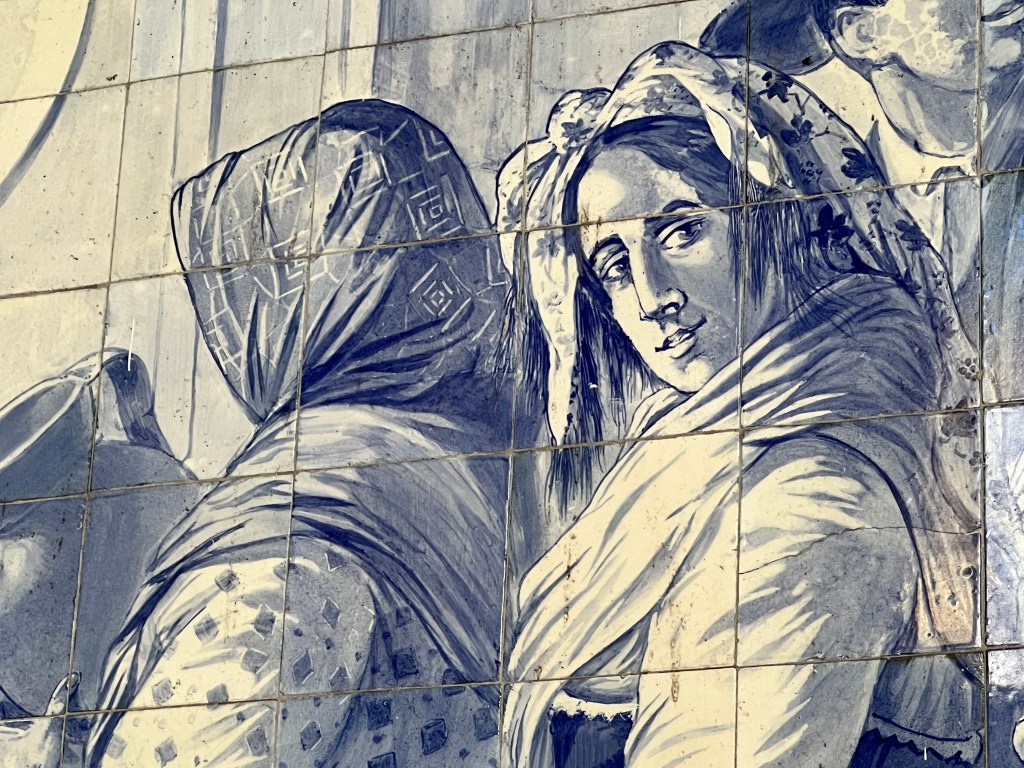
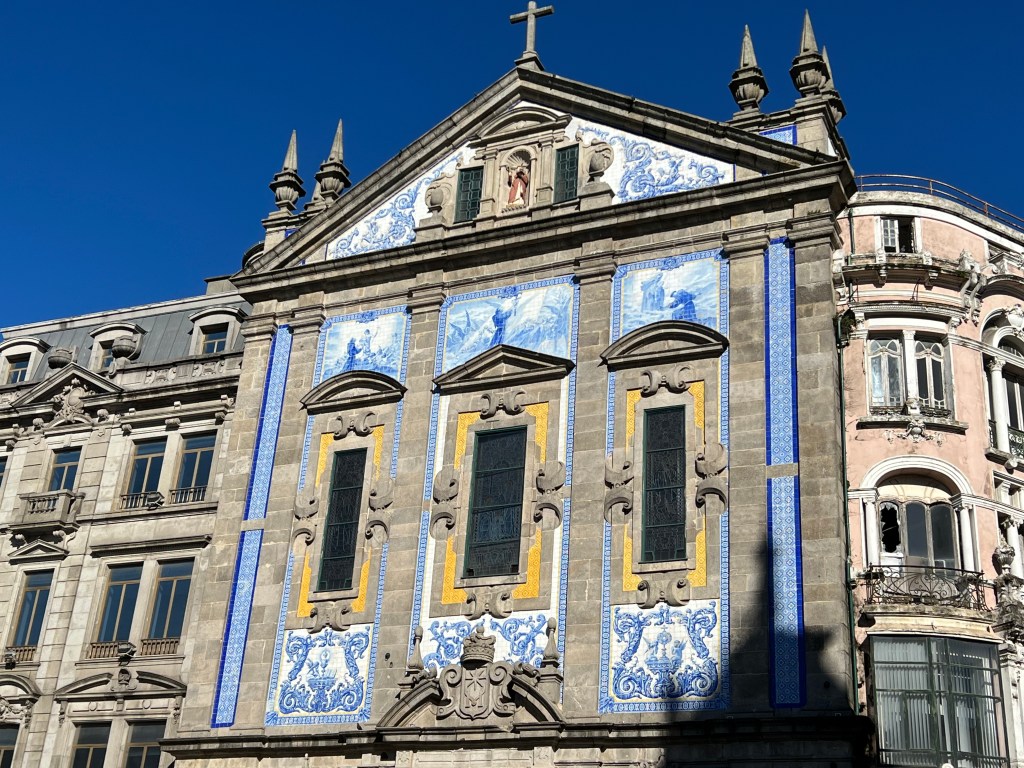
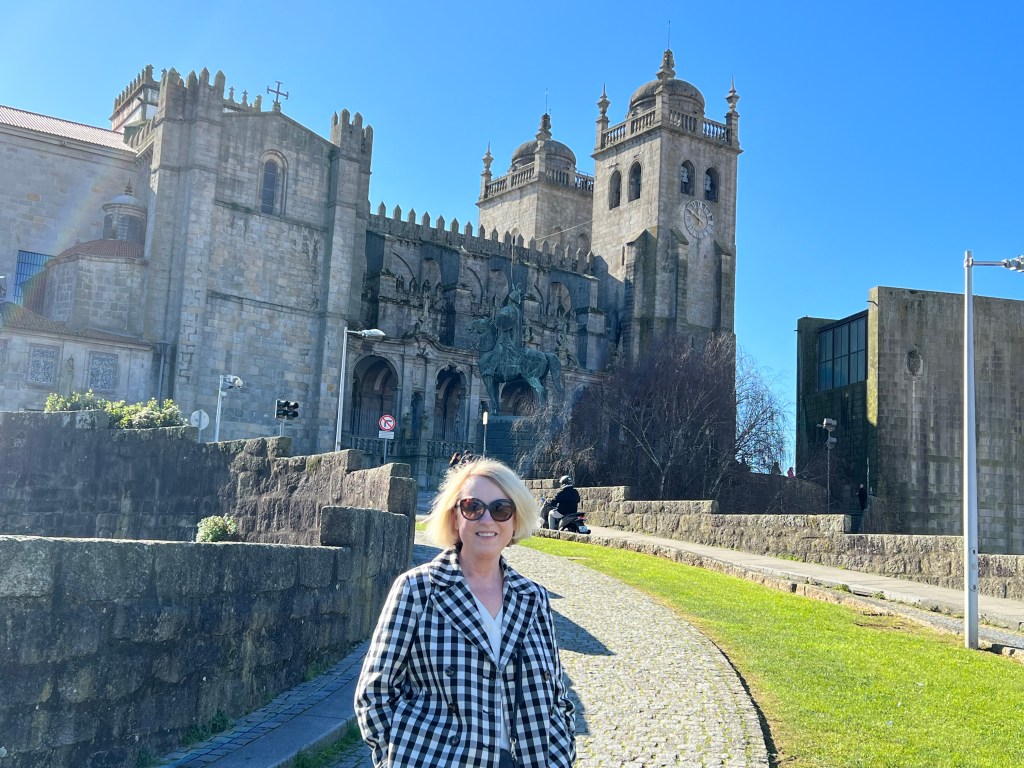
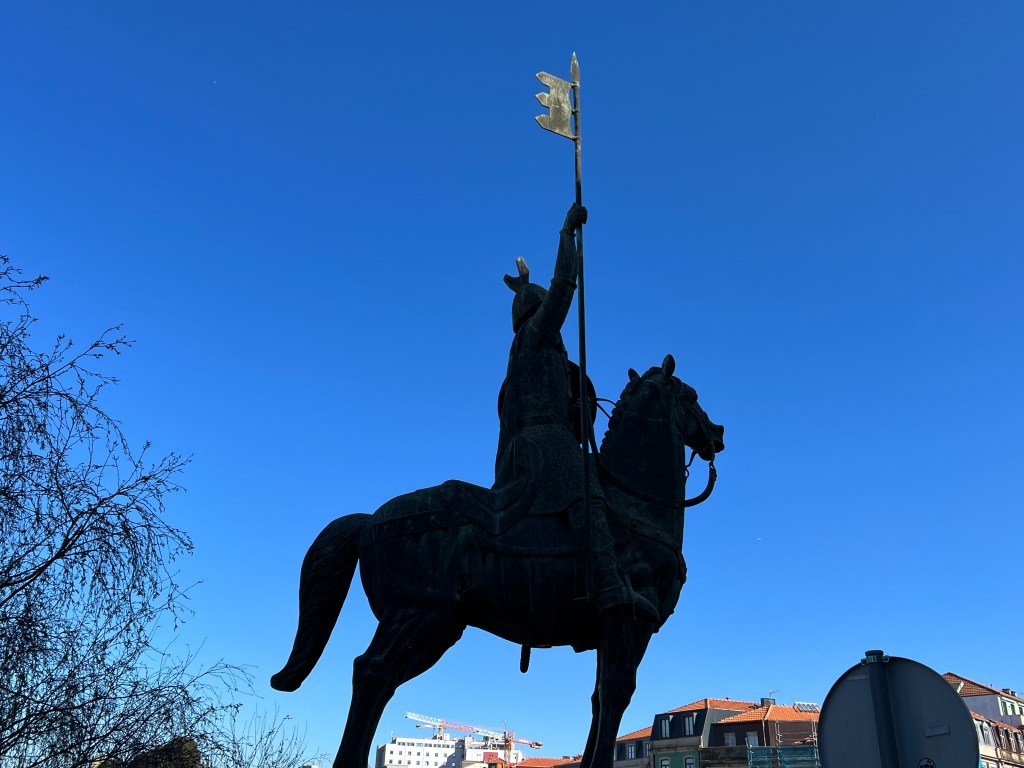







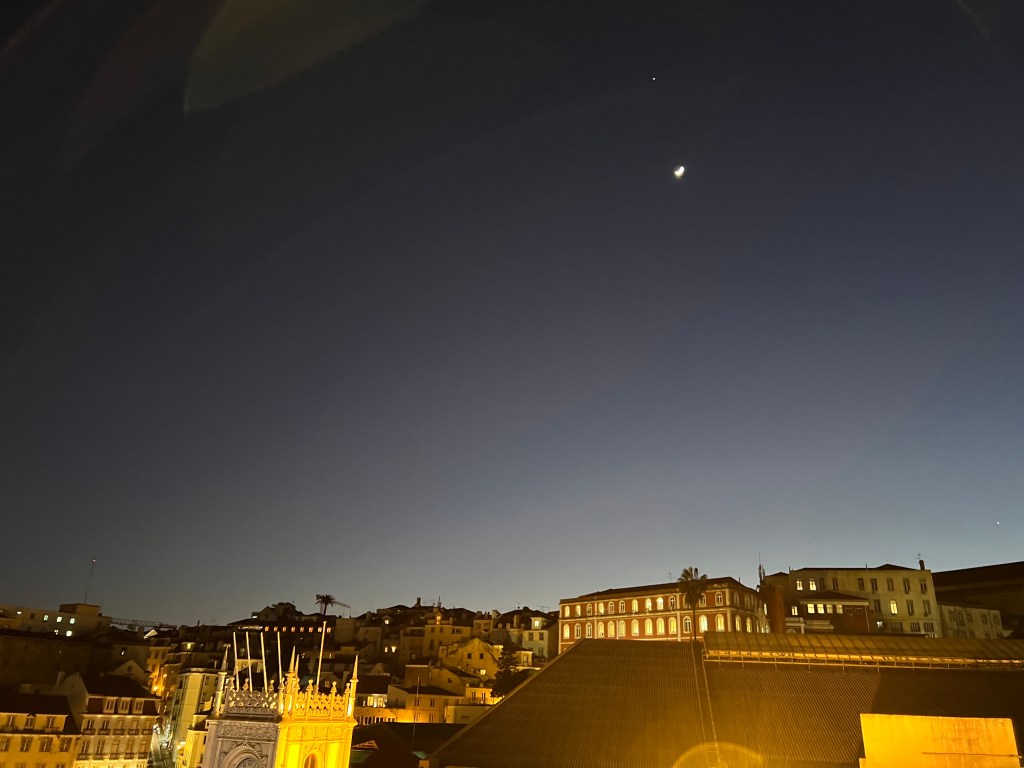
A Thing of Beauty
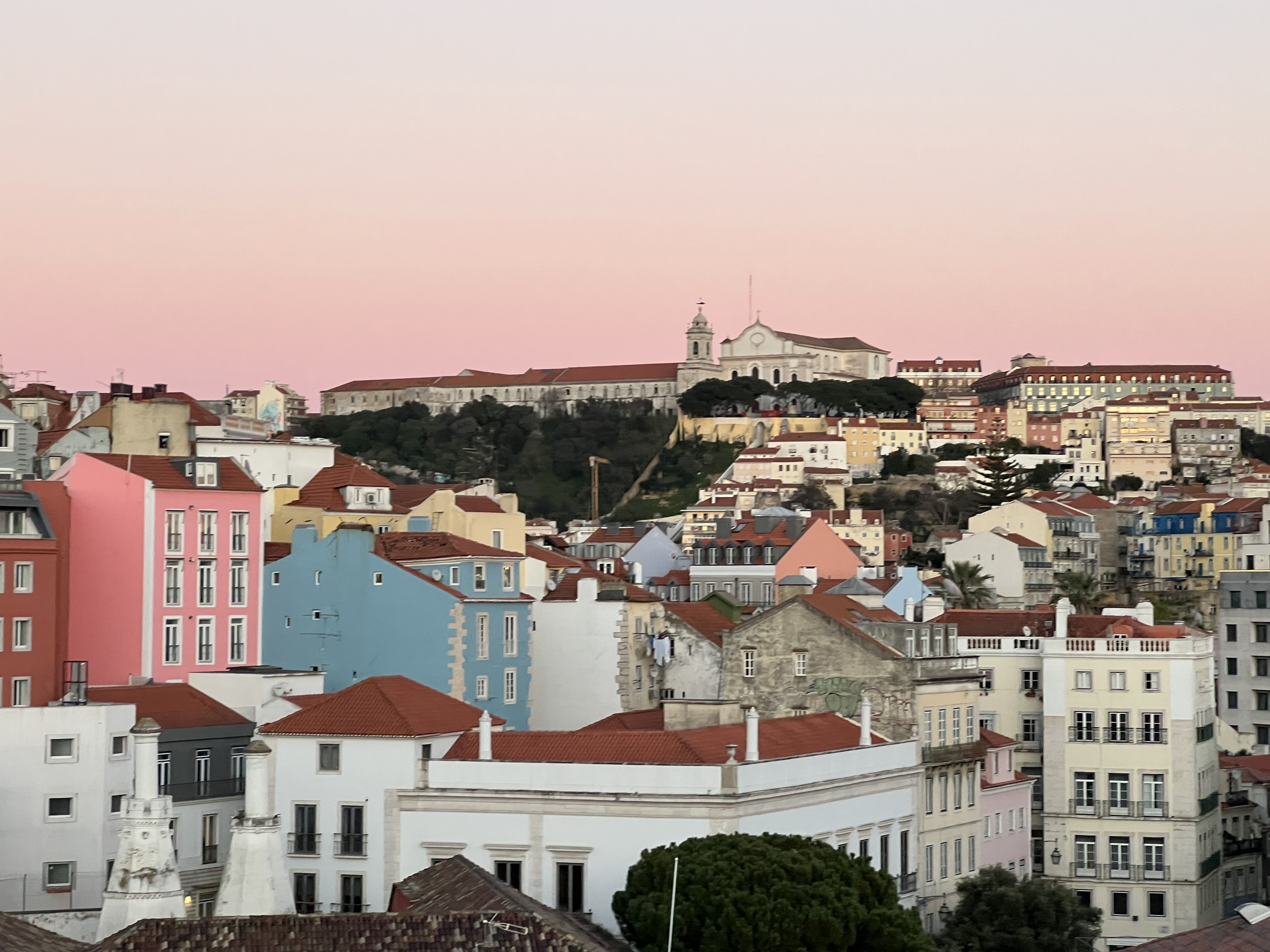
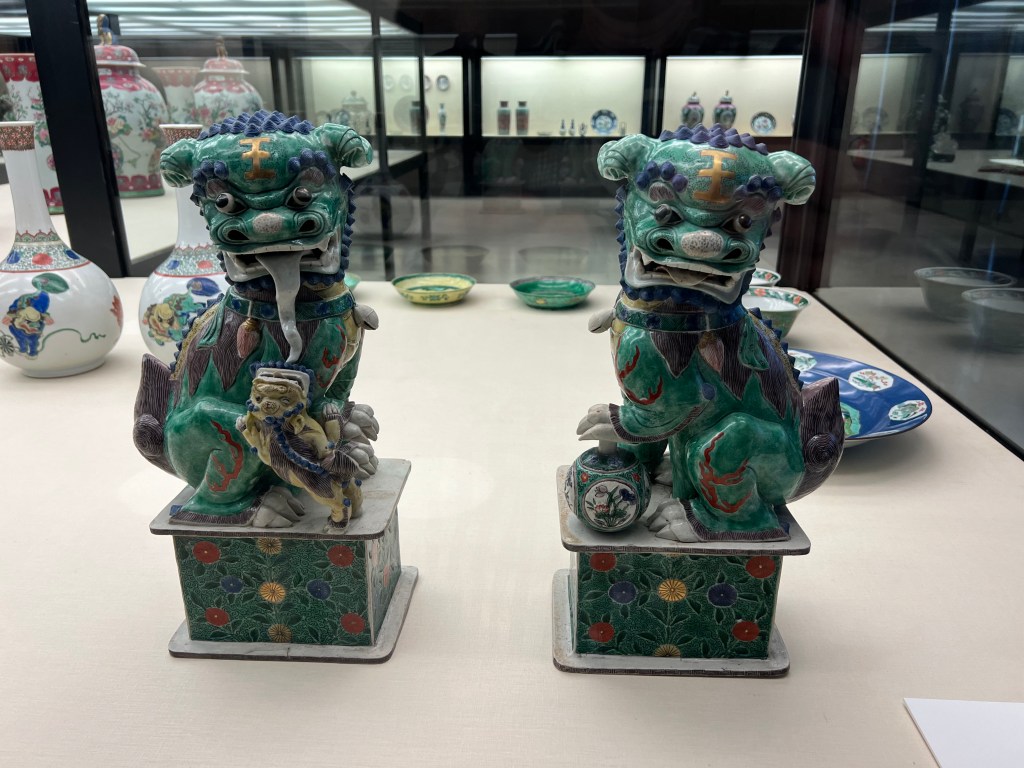
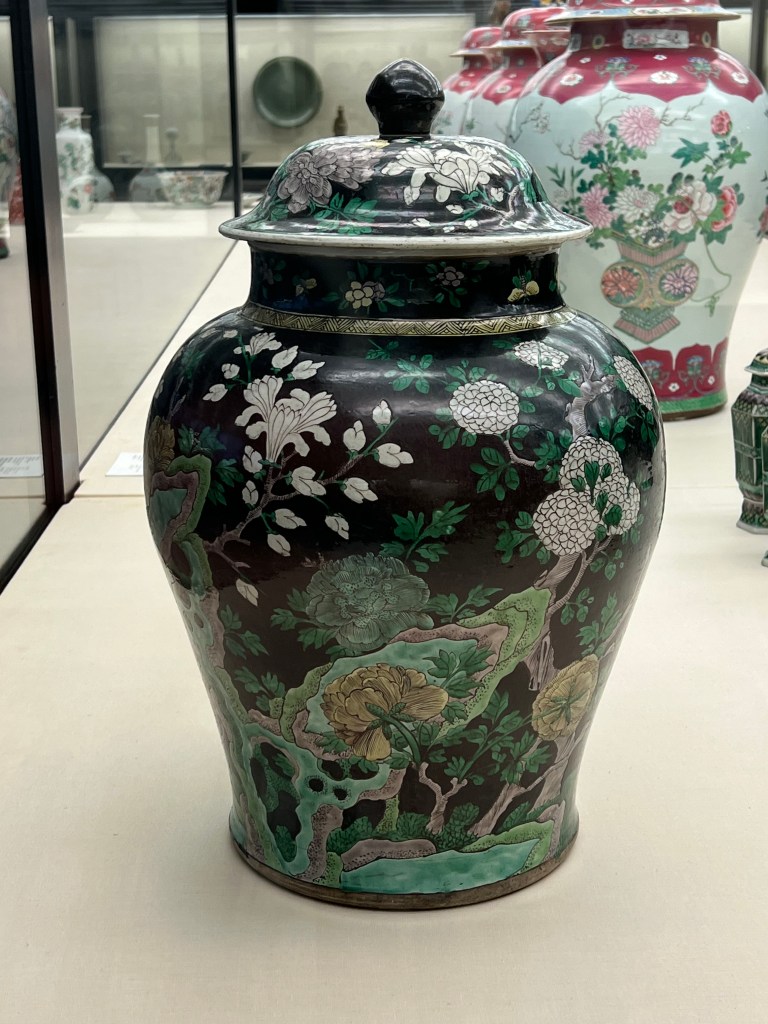
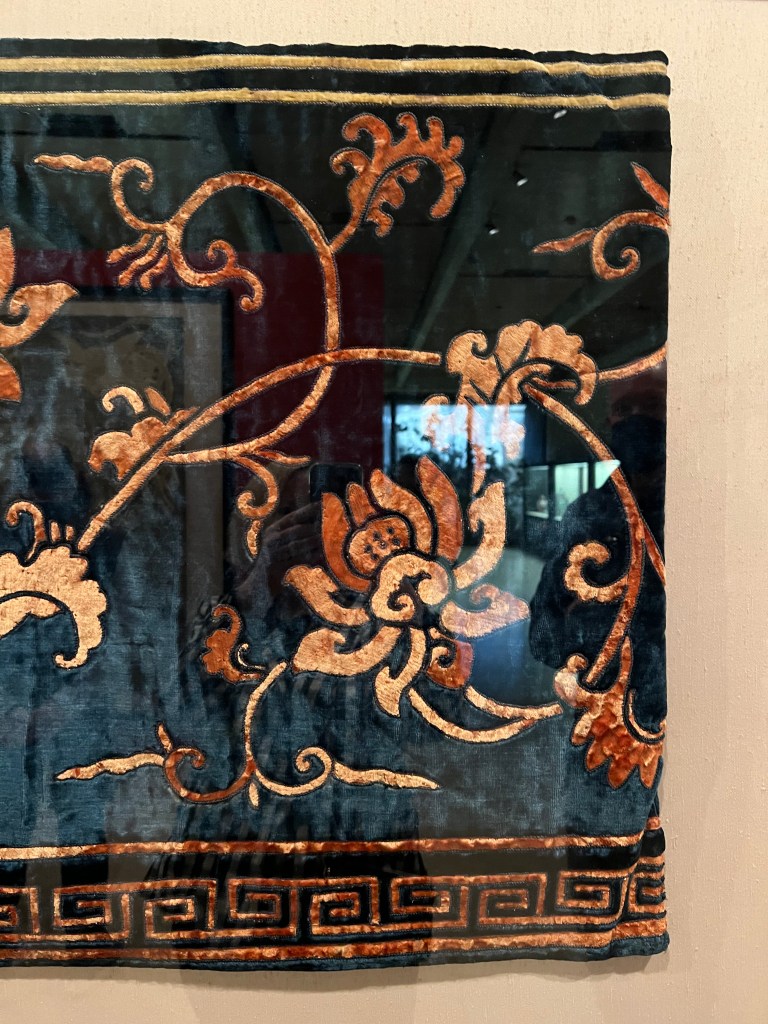
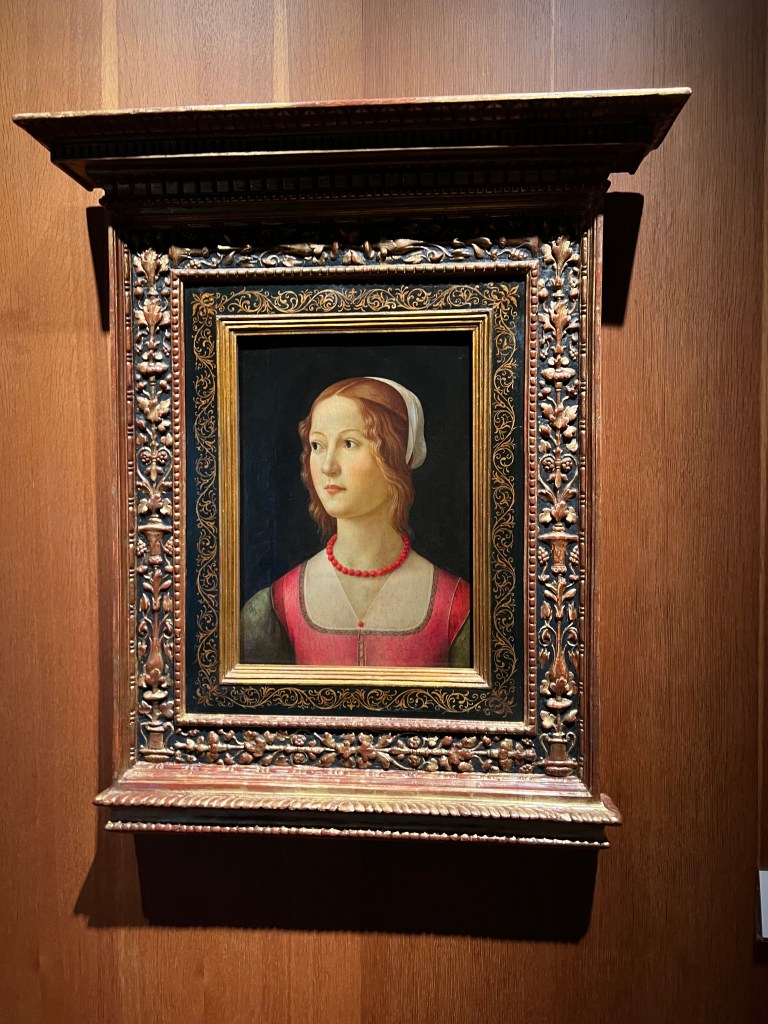
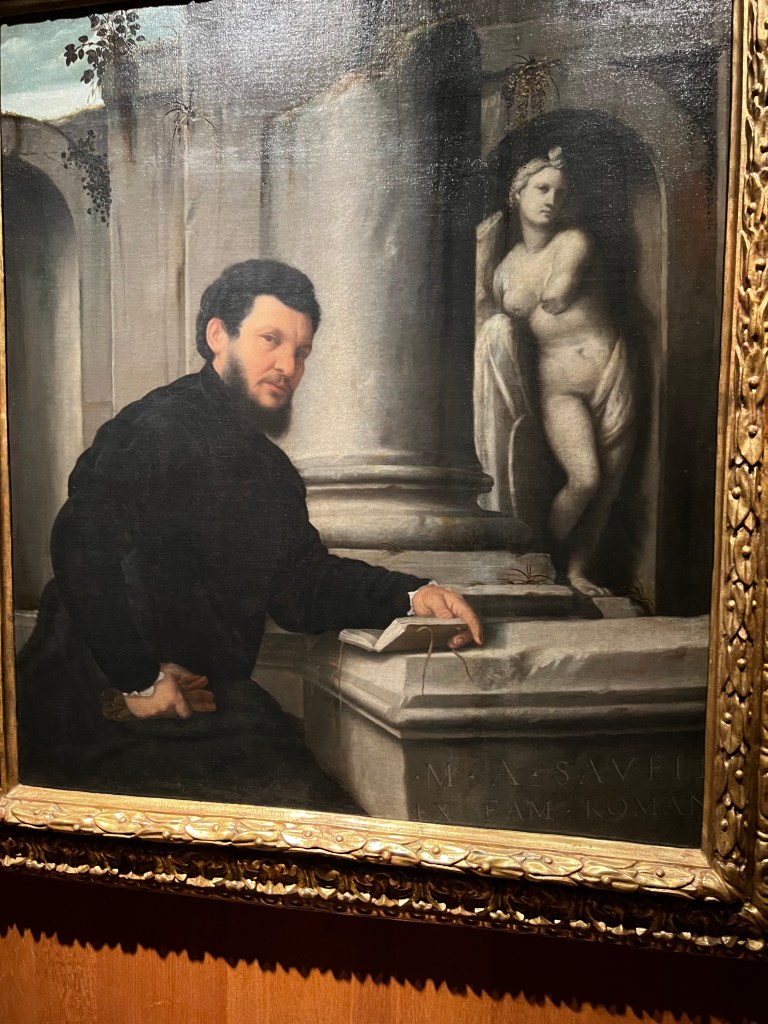
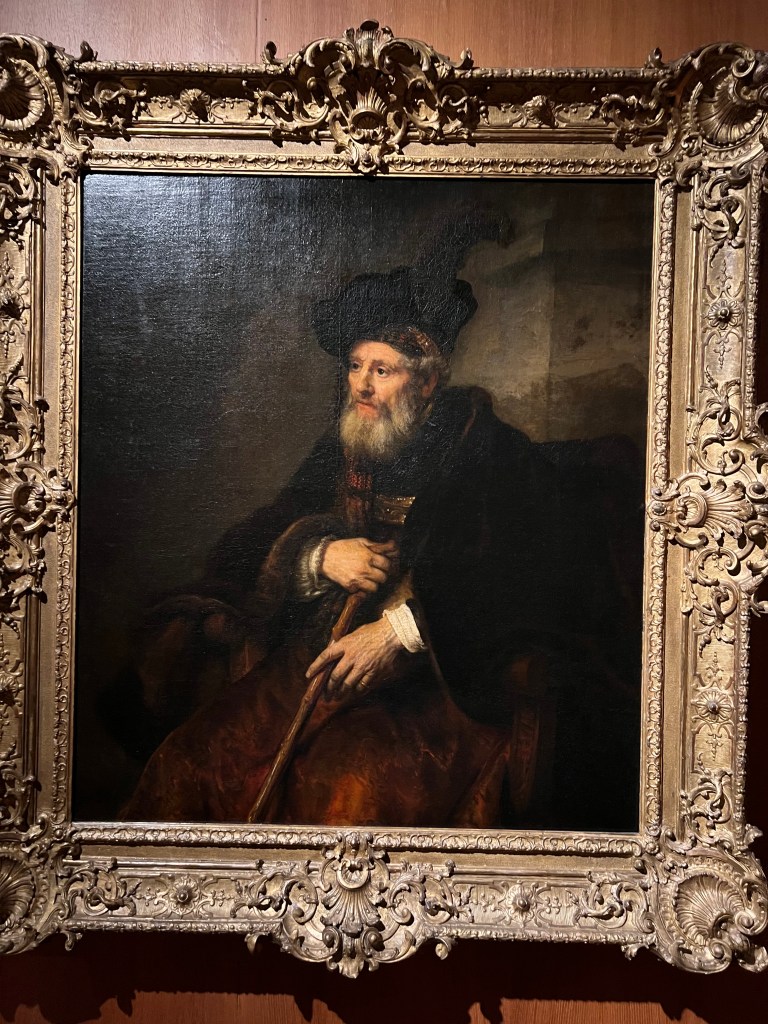
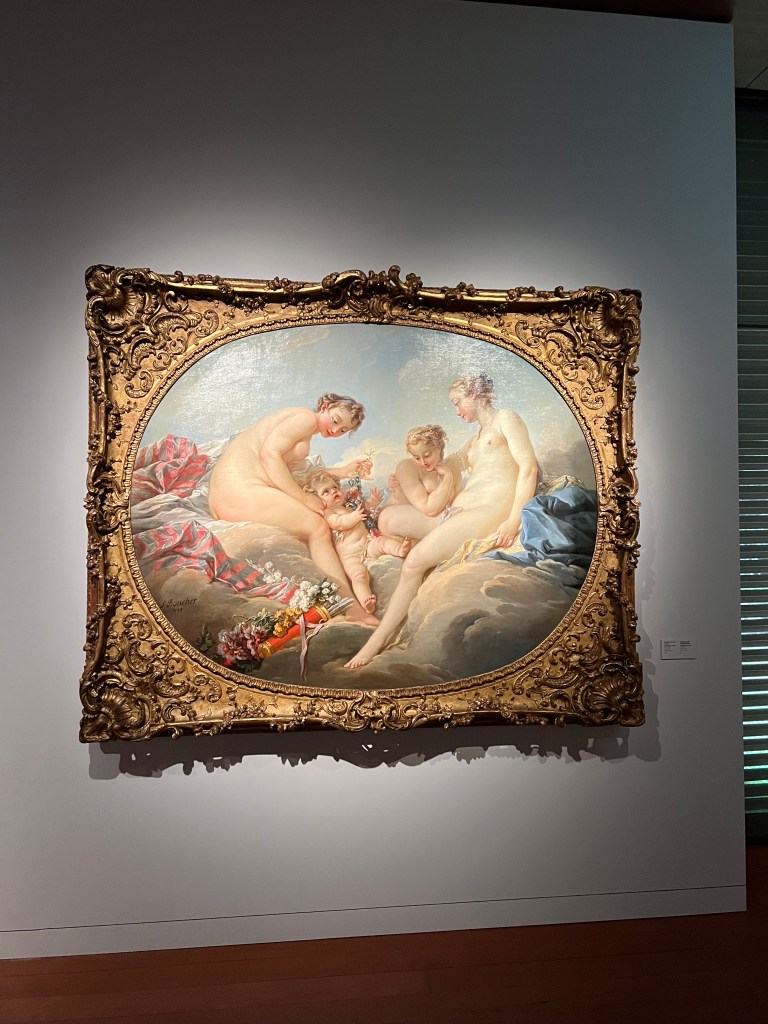
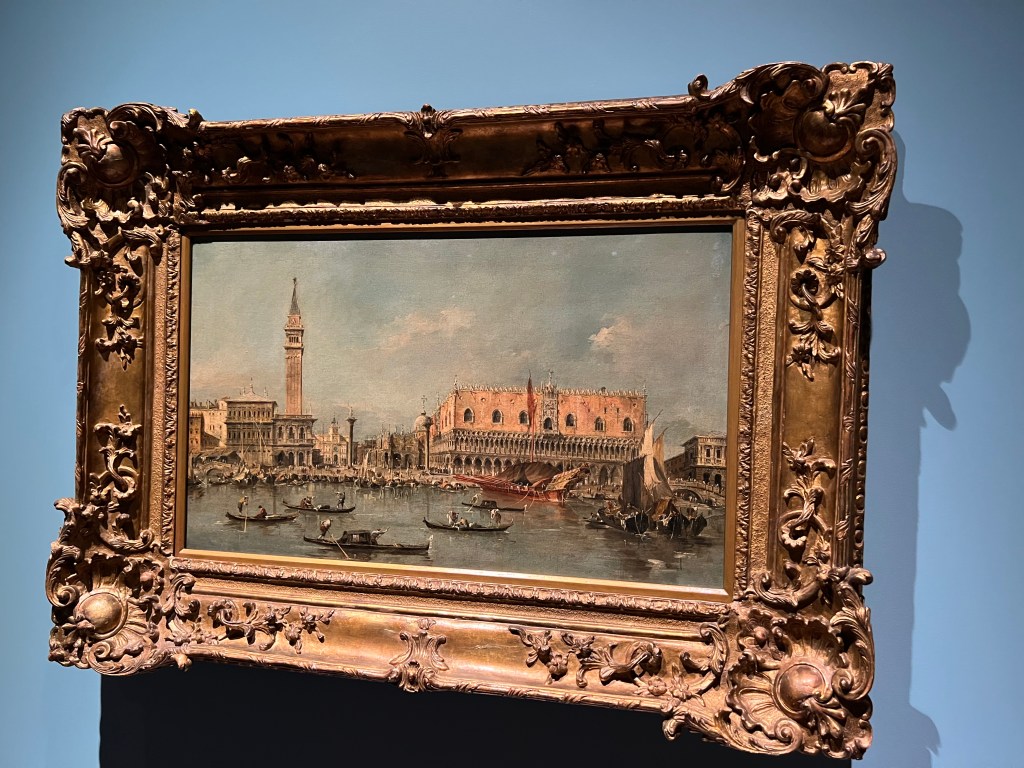
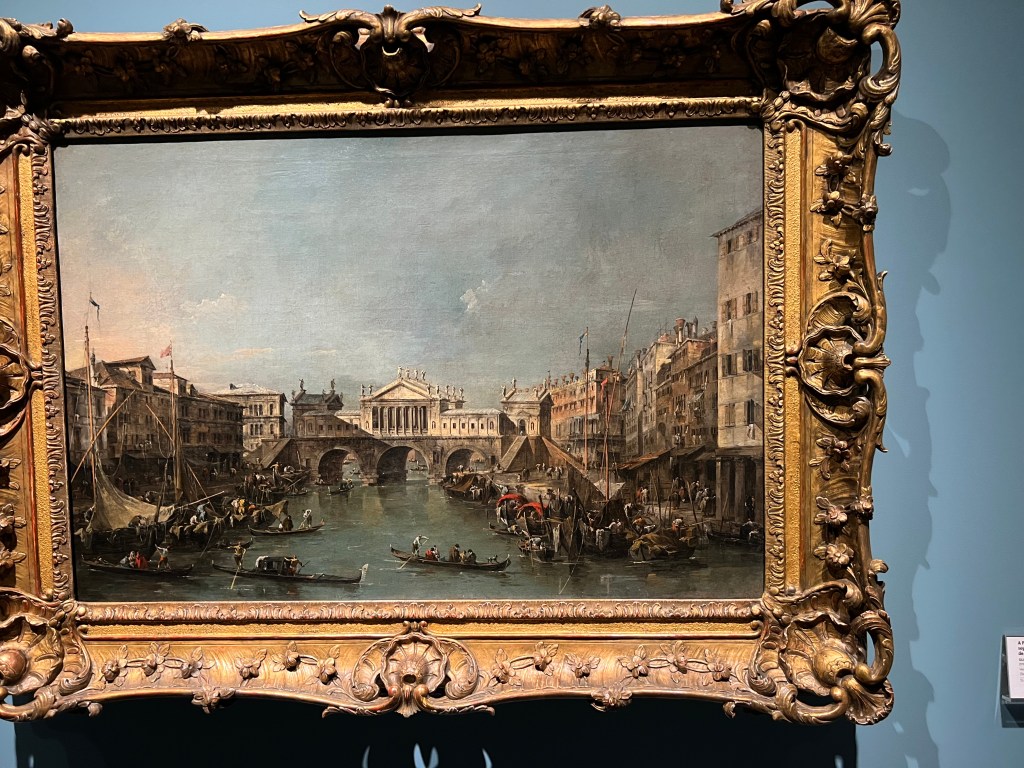
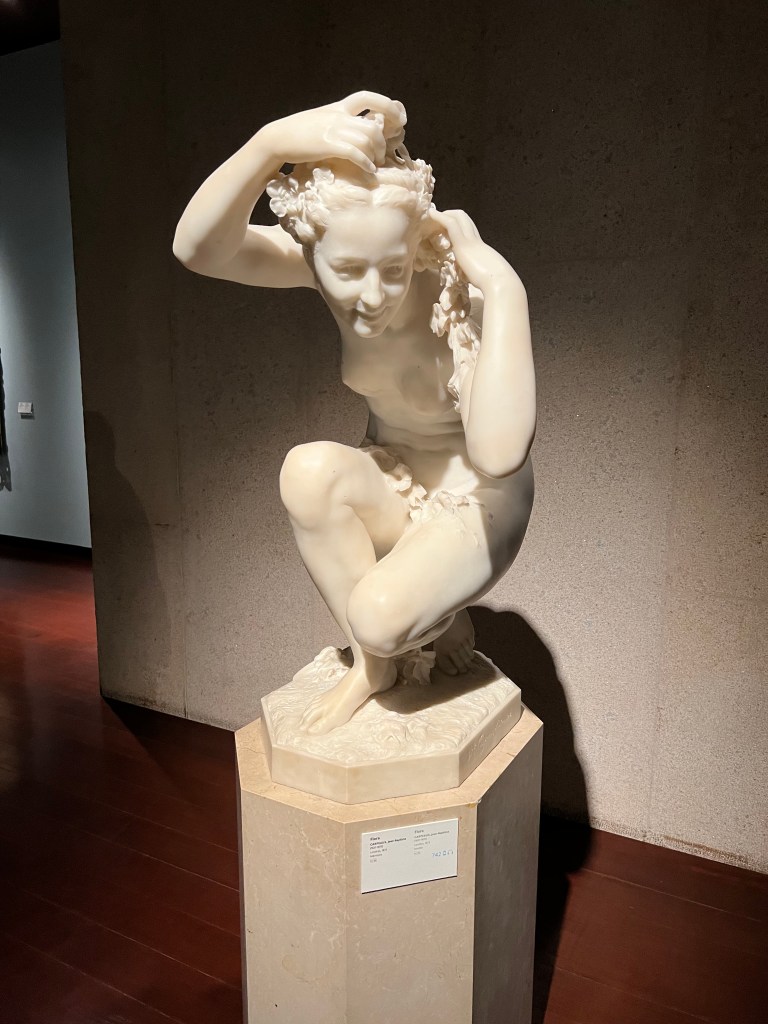
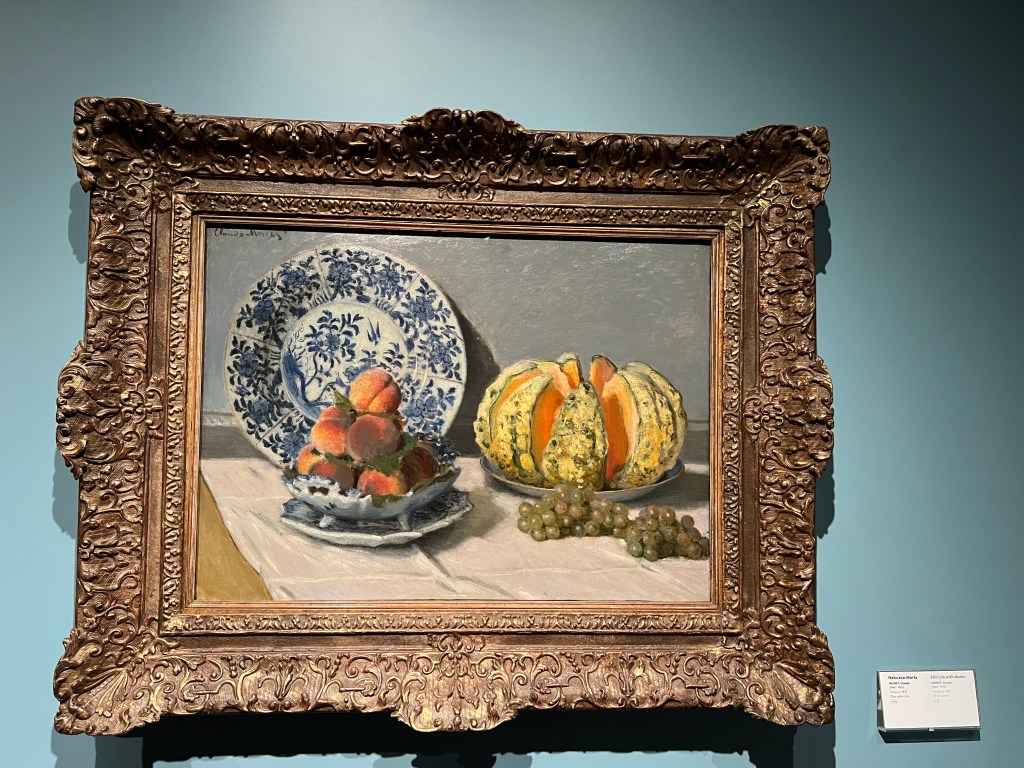
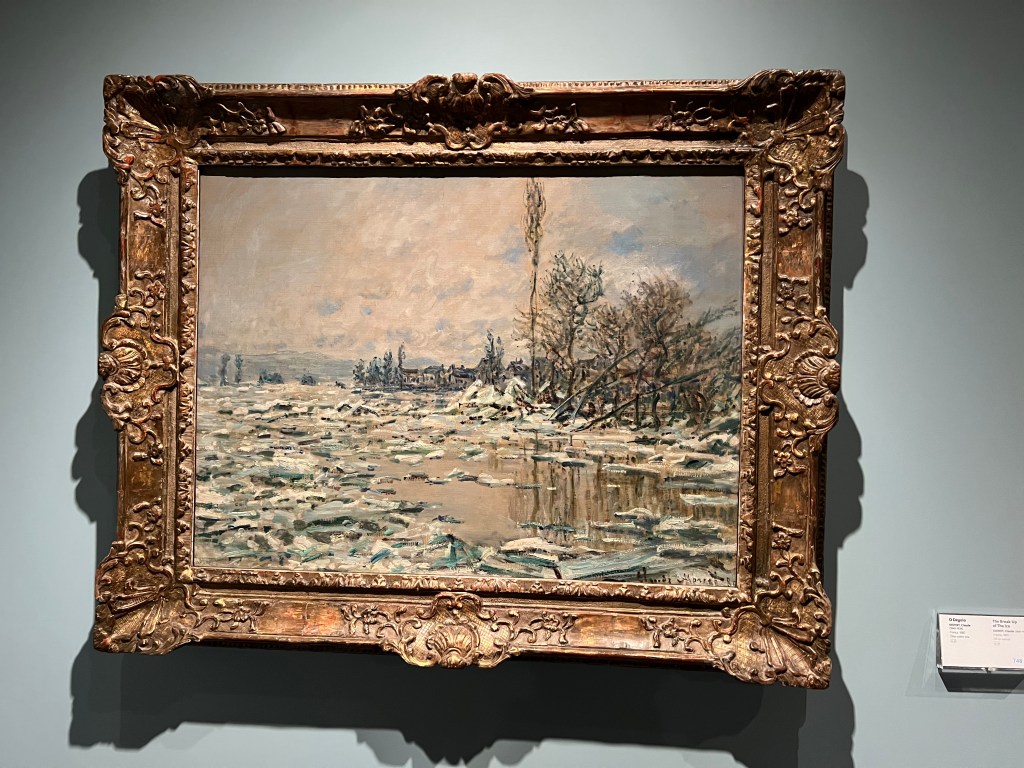
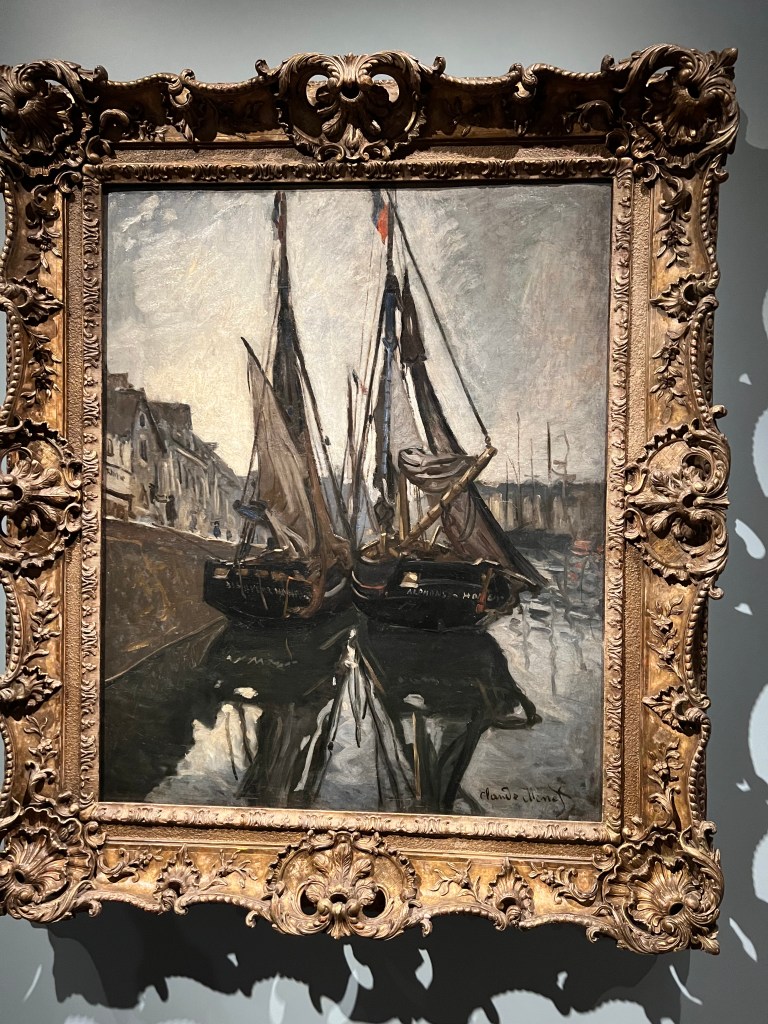
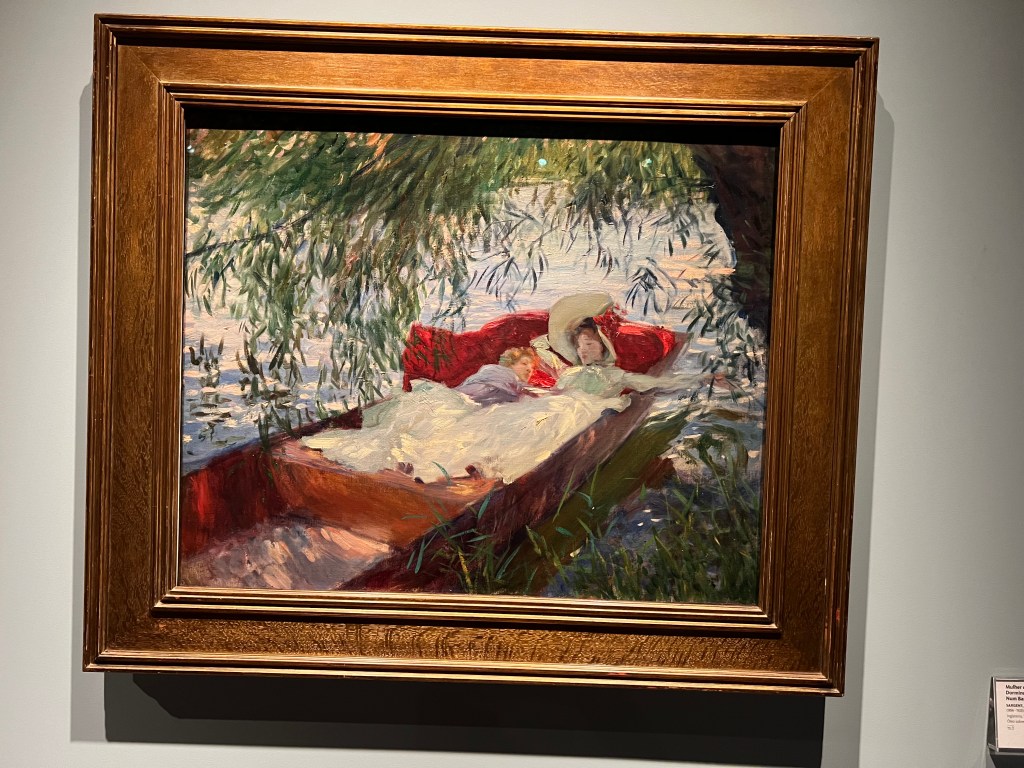
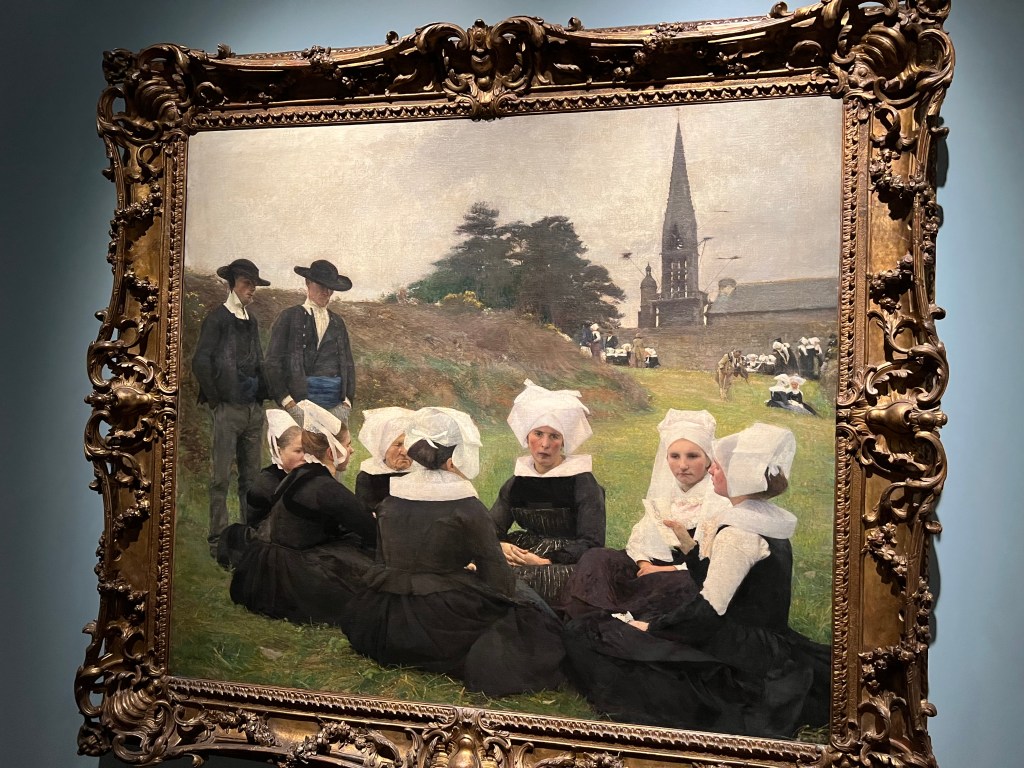
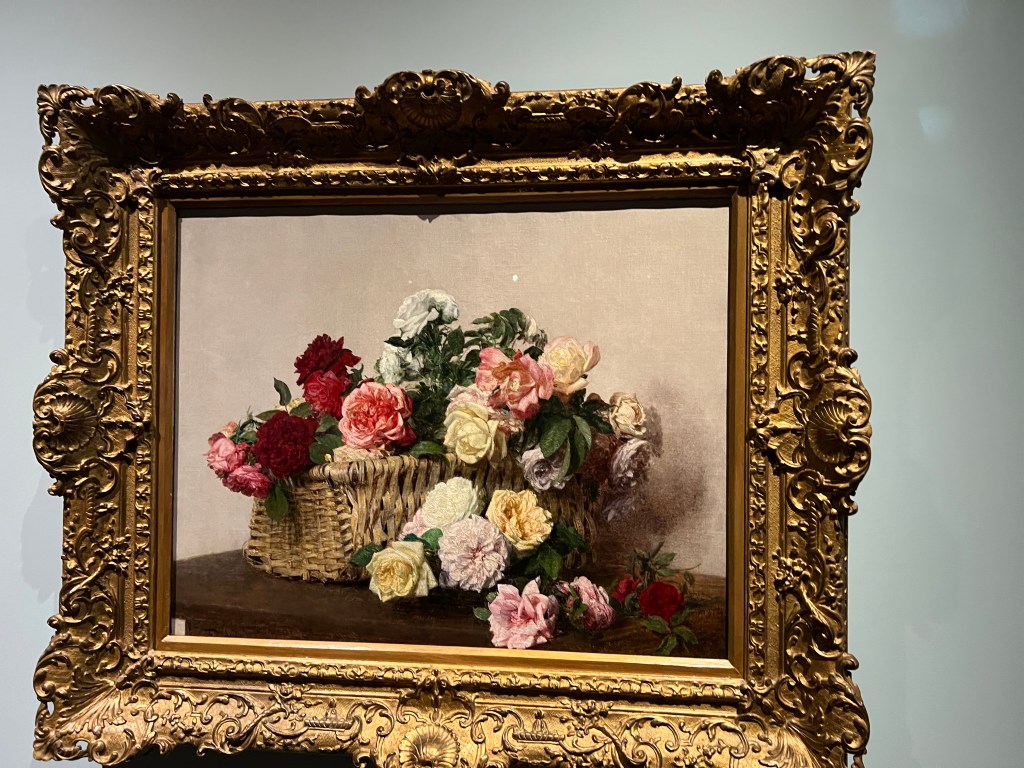
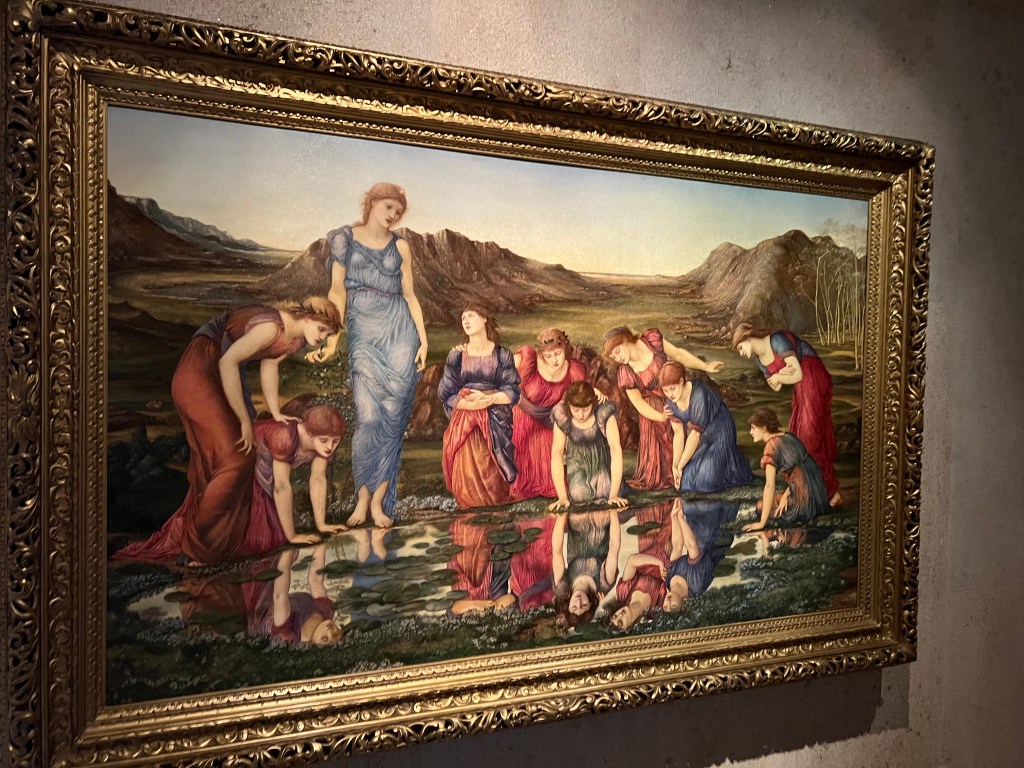
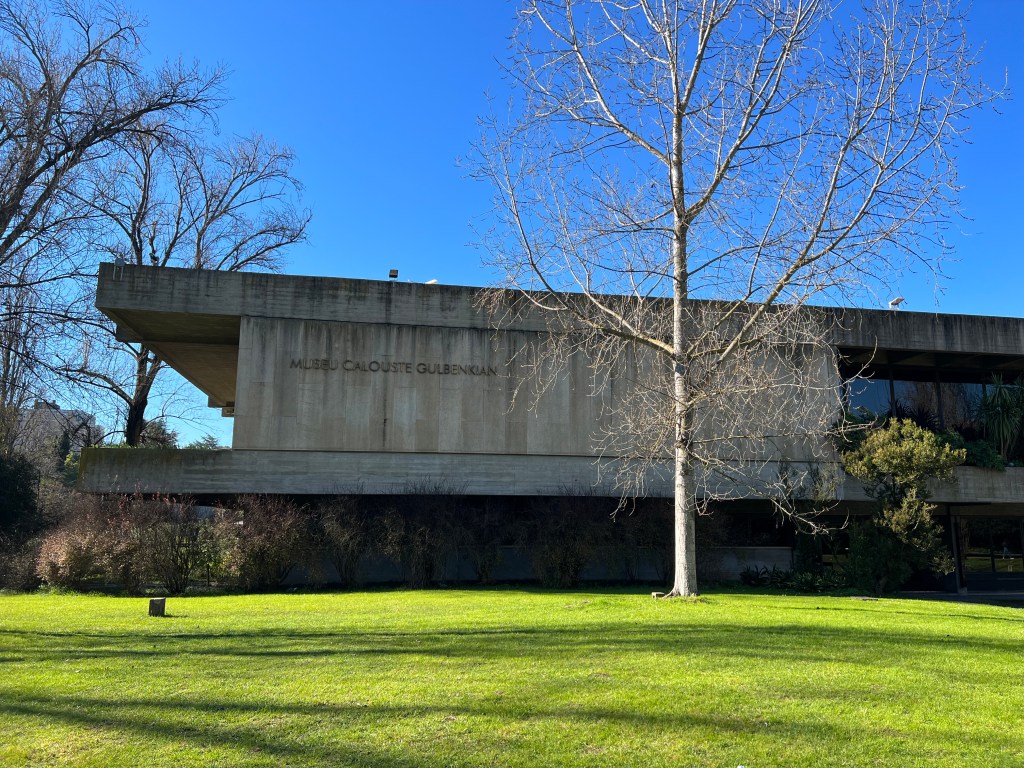
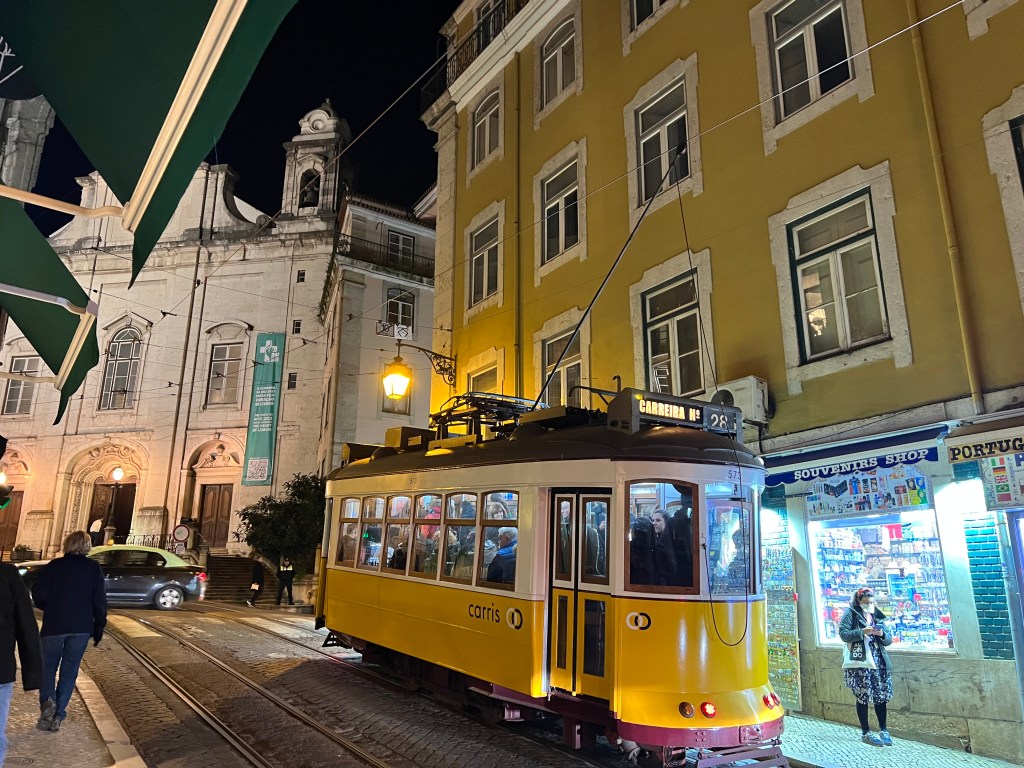
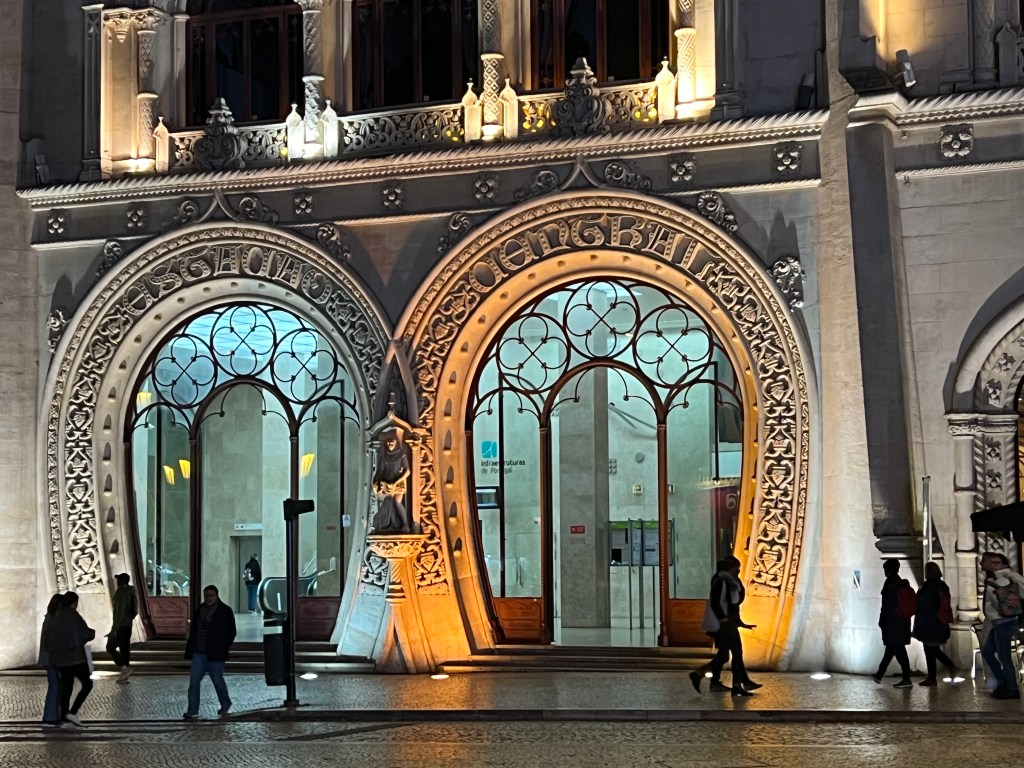
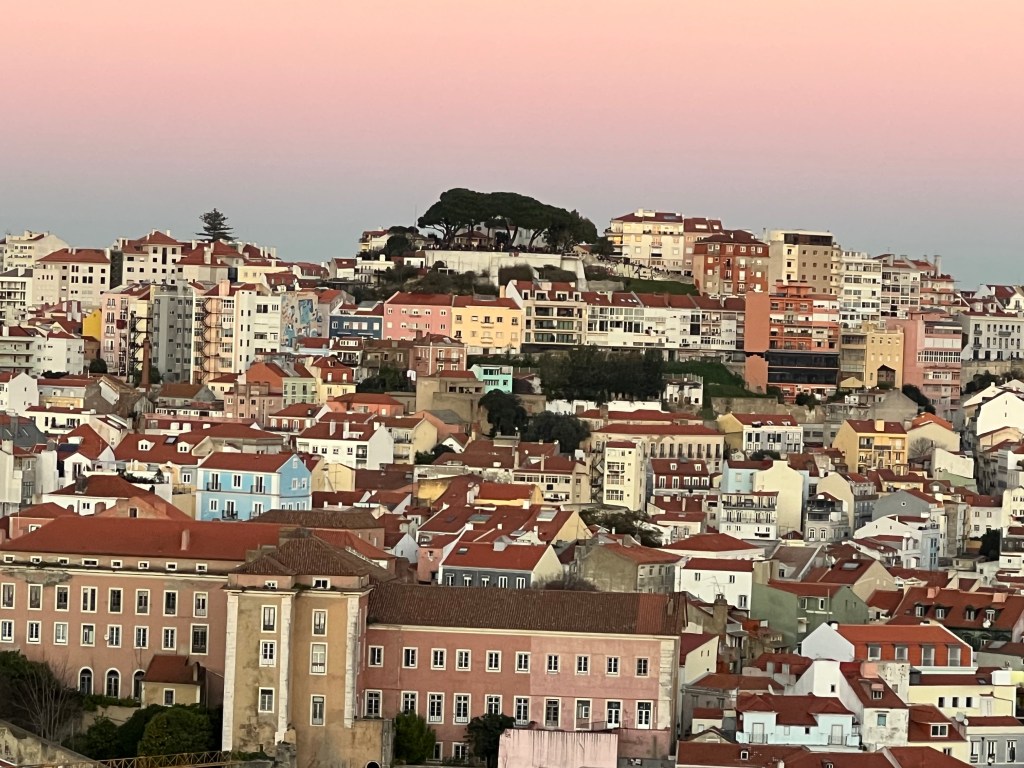
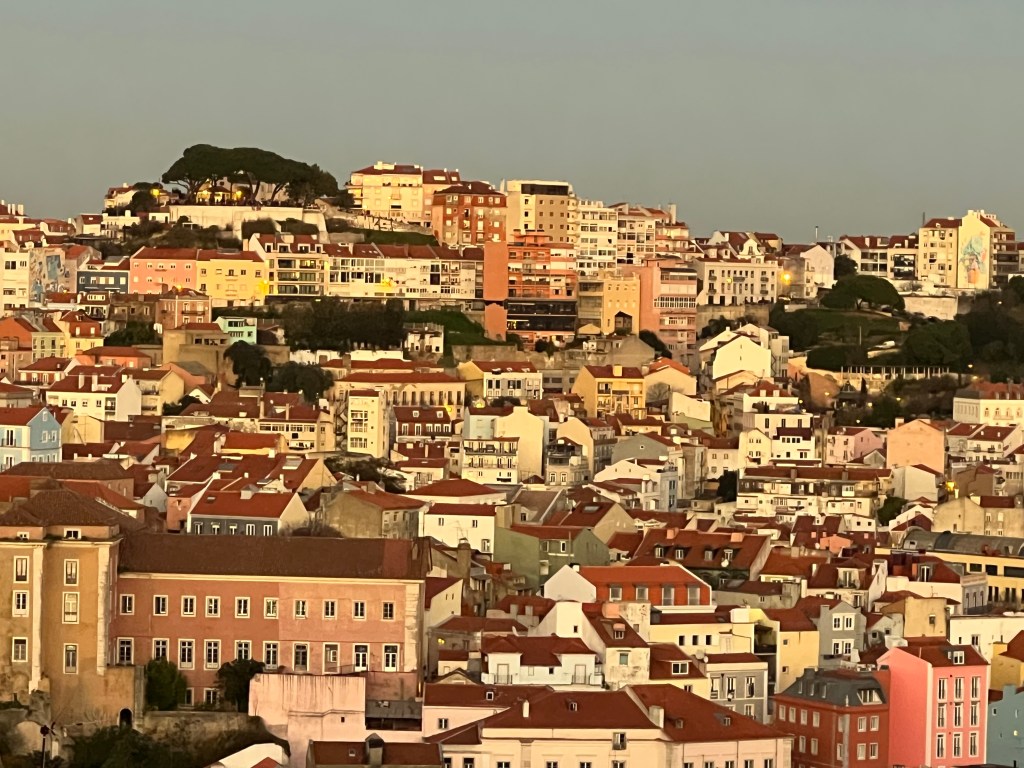
Lisbon, Portugal – Wednesday, Jan. 25, 2023 – We spent our last day in Lisbon immersed in beauty. The old city, its buildings slightly ragged but lovely in all their blues, roses, yellows and crumbling creams, was topped by a clear blue sky and edged by the soft gray-blues of the river at its base. It was cold today, in the low 40s, but I think that made the colors all the more crisp. We started the day at the Gulbenkian Museum, an amazing private collection of art that ranged from Islamic pottery and tapestries from the Ottoman Empire, to exquisite Chinese ceramics and a wonderful collection of European art, including Gainsborough, Rubens, Rembrandt and Sergeant, among so many others. Every object was beautiful, collected by an Armenian oil magnate who apparently loved beautiful, very expensive things. I felt like I could have an hour with each, taking in the shapes, colors and grace. It was not overwhelming, as some museums can be. Just a perfect museum.
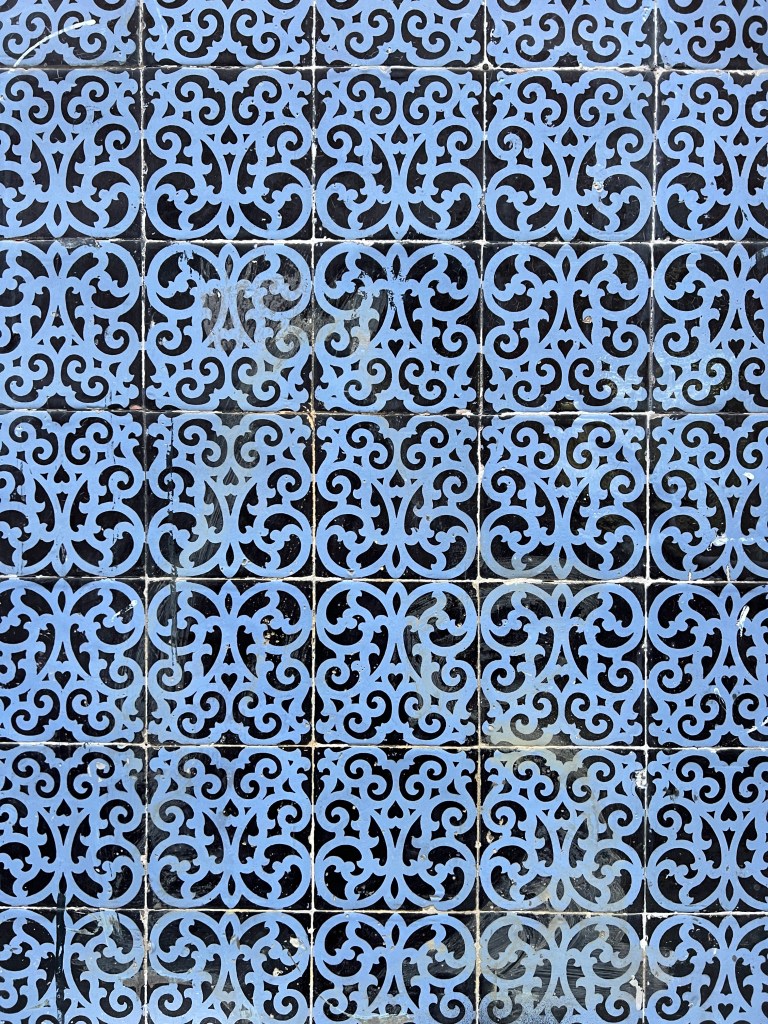
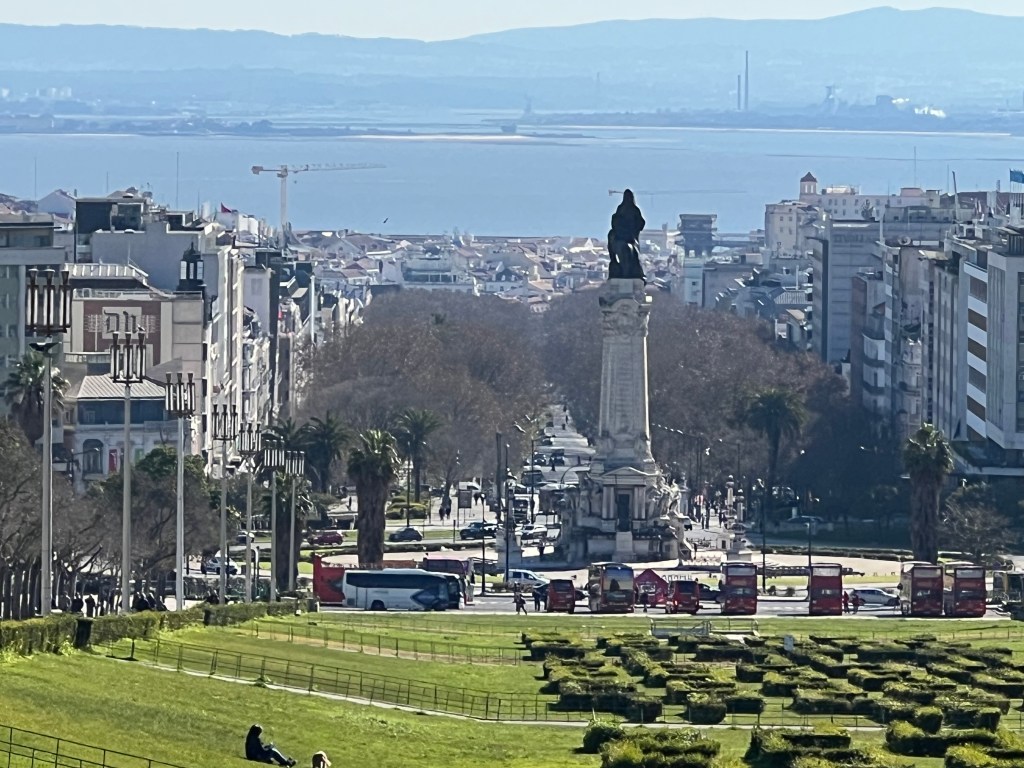
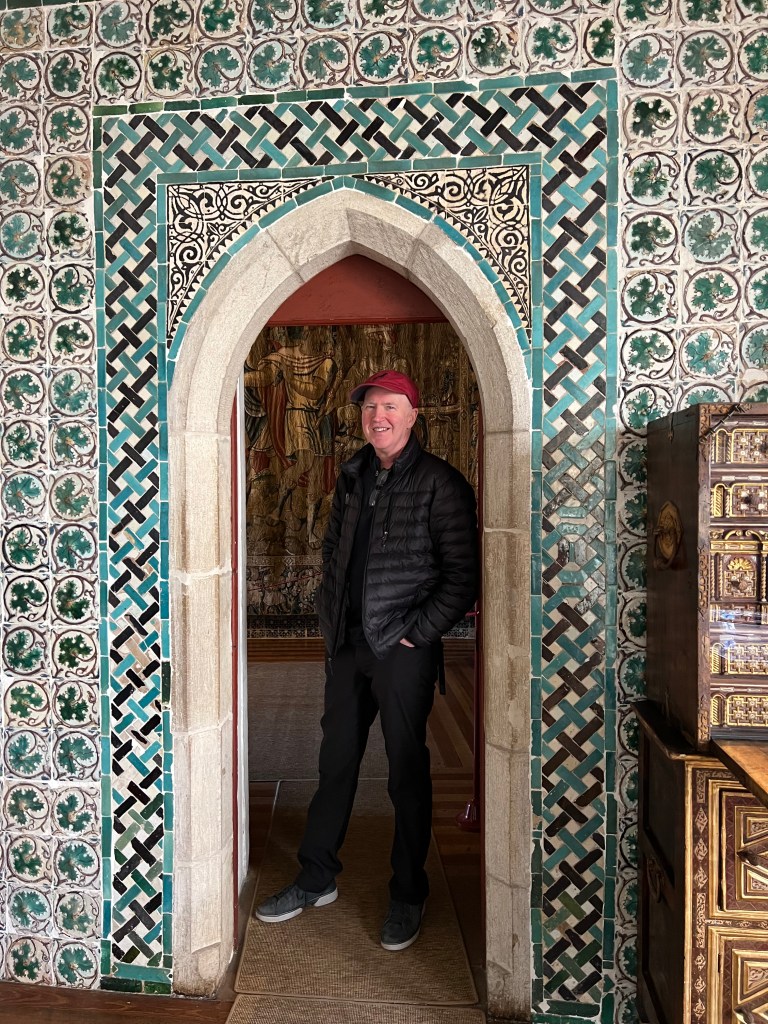
We then took in a lovely view from the top of the Parque Eduardo VII, which sweeps dramatically down through the city toward the river below, another stunning sight. We then headed over to Museu Nacional do Azulejos, which explores the history of the iconic tiles that adorn buildings, churches, walls all over Portugal. We were looking forward to learning how exactly artists managed to make such huge displays of tiles – sometimes entire walls – but the museum wasn’t big on explanation. But we did see a lot of interesting – and some disturbing – tiles. The building itself was built around an old cloister, so the spaces were beautiful, if the tiles – especially those of the 17th-18th centuries – were sometimes, well, a little weird. Creepy satyrs, monkeys driving carriages, some really bad modern ceramic art. But there was an amazing panoramic tile display of the entire city of Lisbon made a few years before the 1755 earthquake.
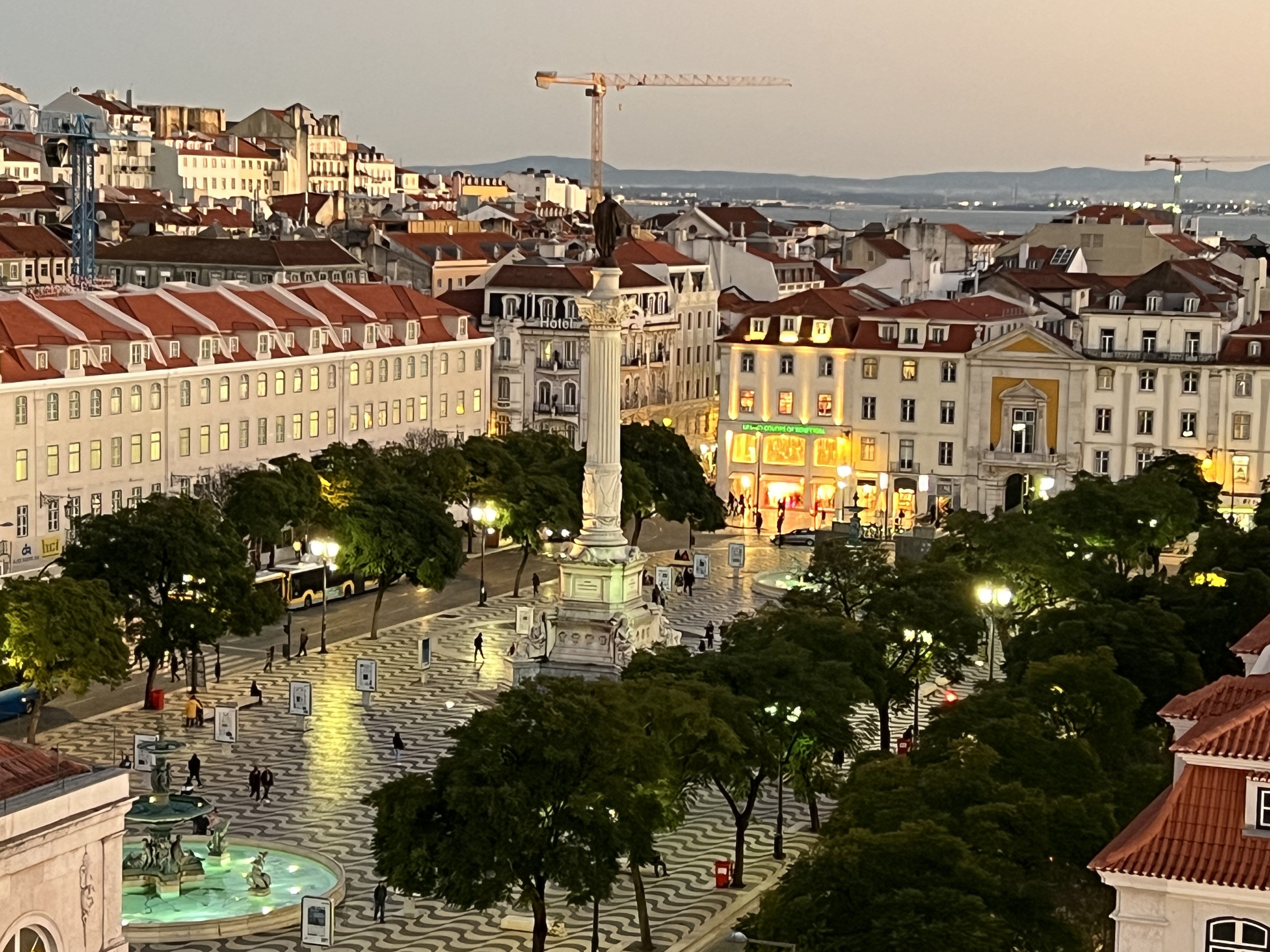
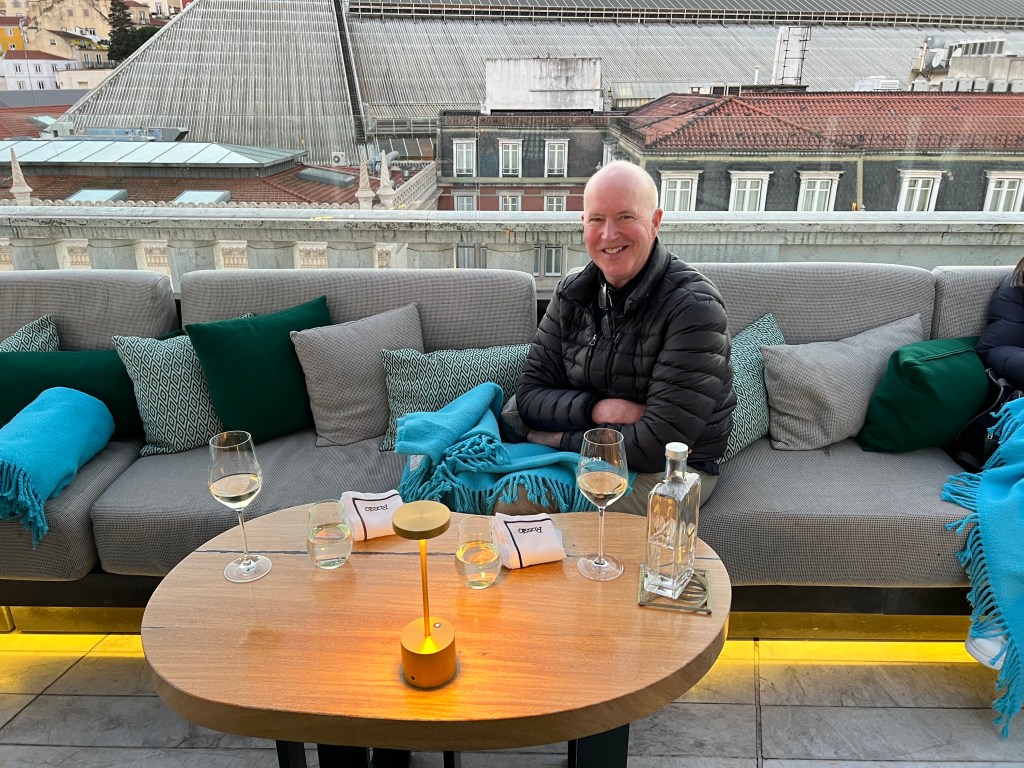
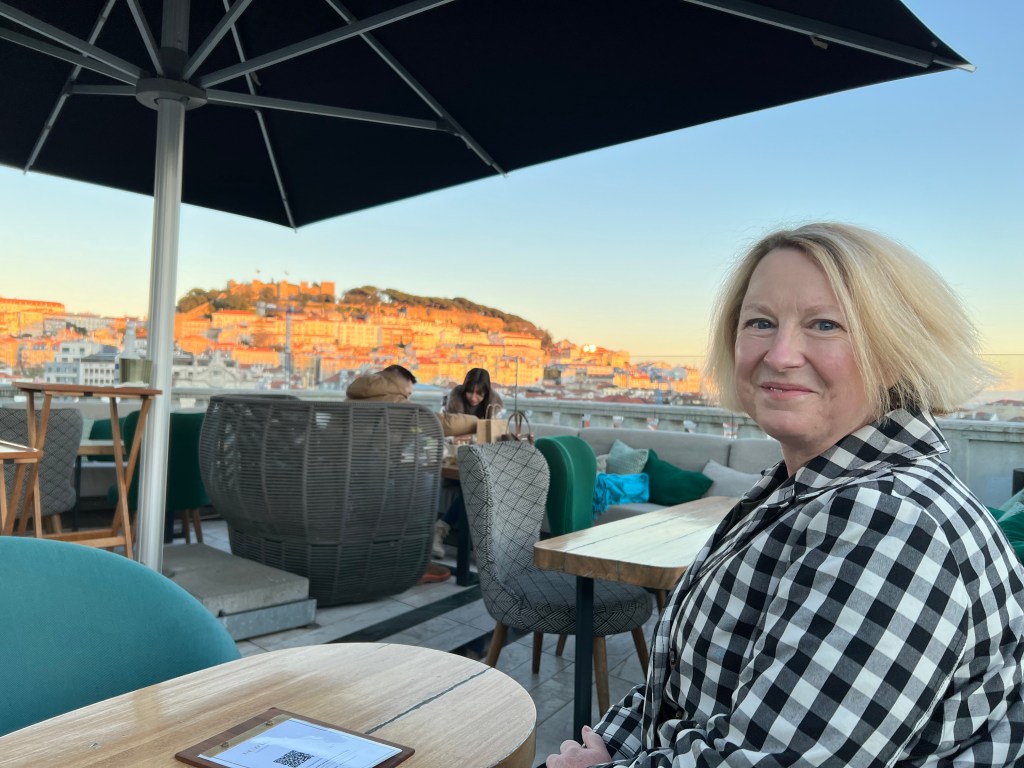
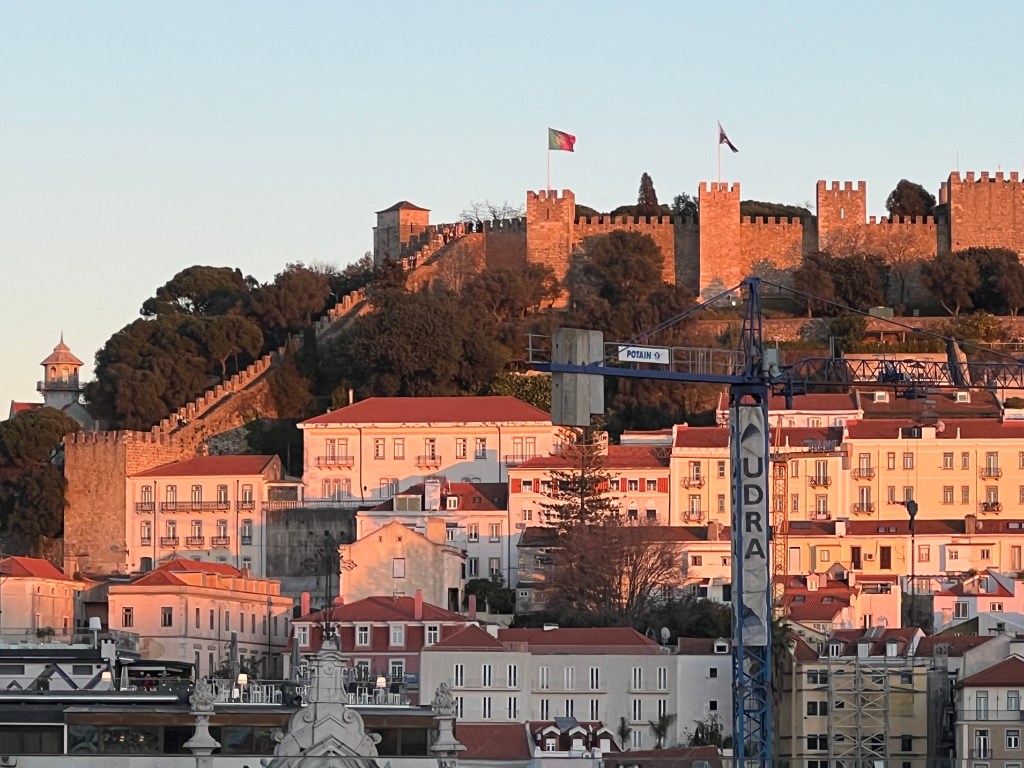
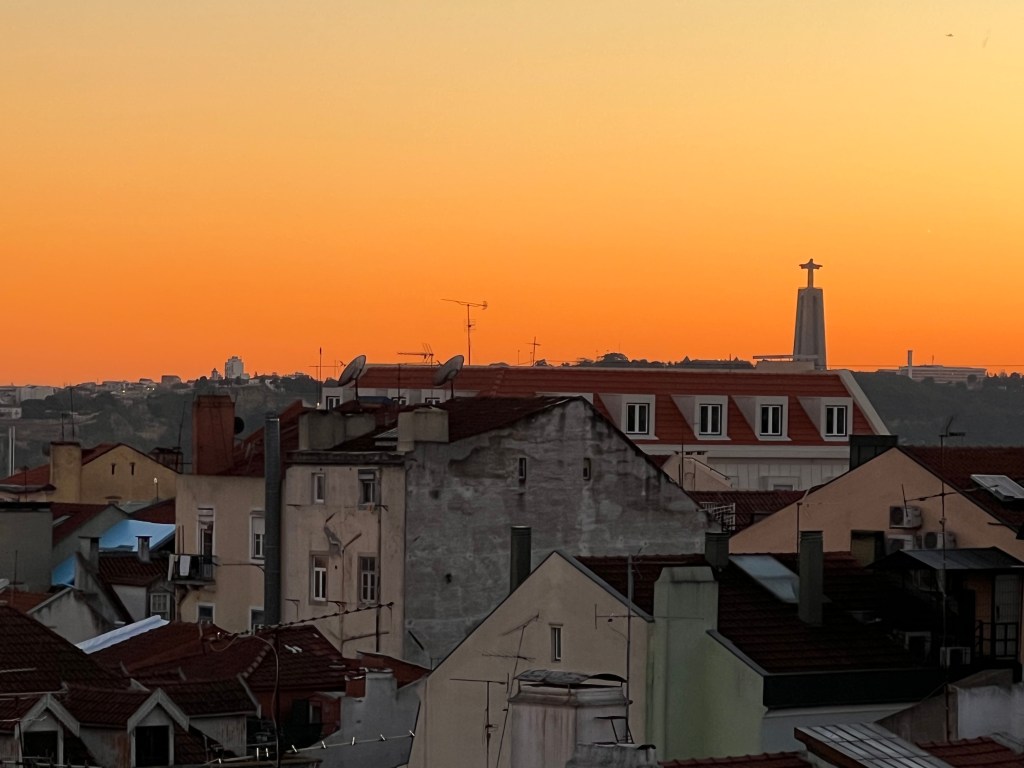
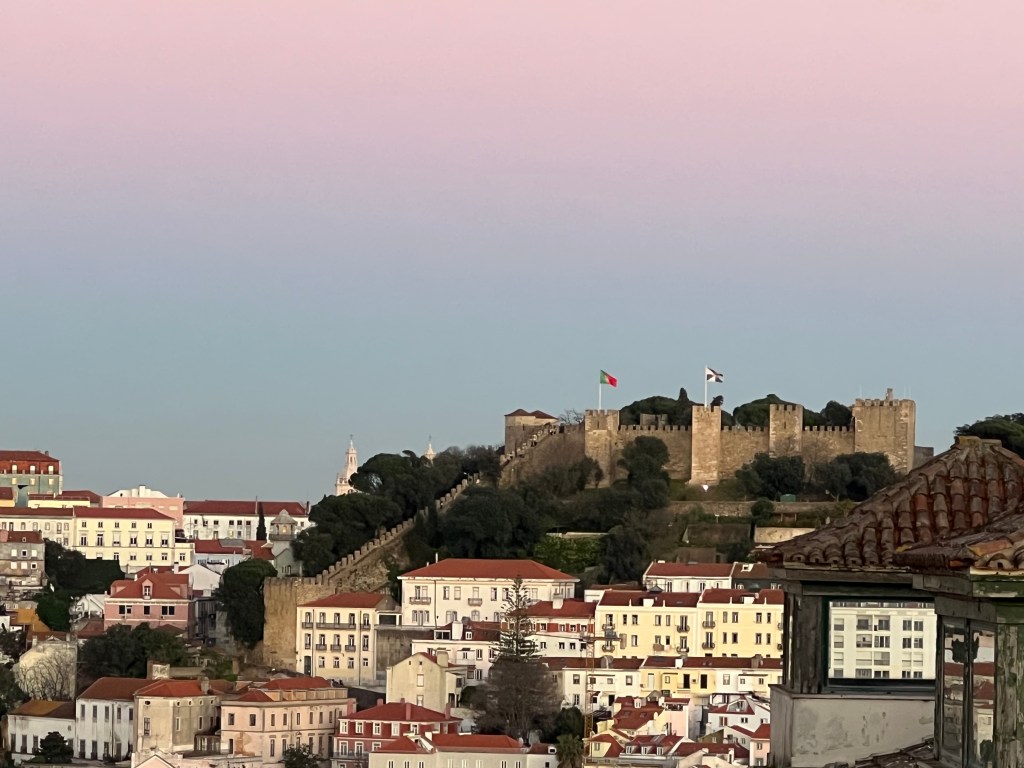
We ended the day with dinner at another rooftop bar – Lisbon has many of these wonderful spaces. They are saviors for people like me who don’t want to eat inside. And the views of the sunsets are spectacular! The city has low buildings, and hills, so it is possible to see huge vistas not blocked by annoying skyscrapers. This place, the Rossio Gastropub, had excellent food and huge panoramic view over the Castle of Sao Jorge, the Rossio square and Teju river beyond, and the Bairro Alto above. We watched the sky turn orange, then rose, then gentle blue, deeper blue, periwinkle, and finally a deep smoky blue. The sky is really lovely here. It was a perfect last evening in Lisbon.
We head out tomorrow by car to Coimbra and then on to Porto.
Evocative Evora – From 7,000-year-old Star Gazers to Roman Temples and an Incestuous Royal Love Spat that Started the Portuguese Inquisition
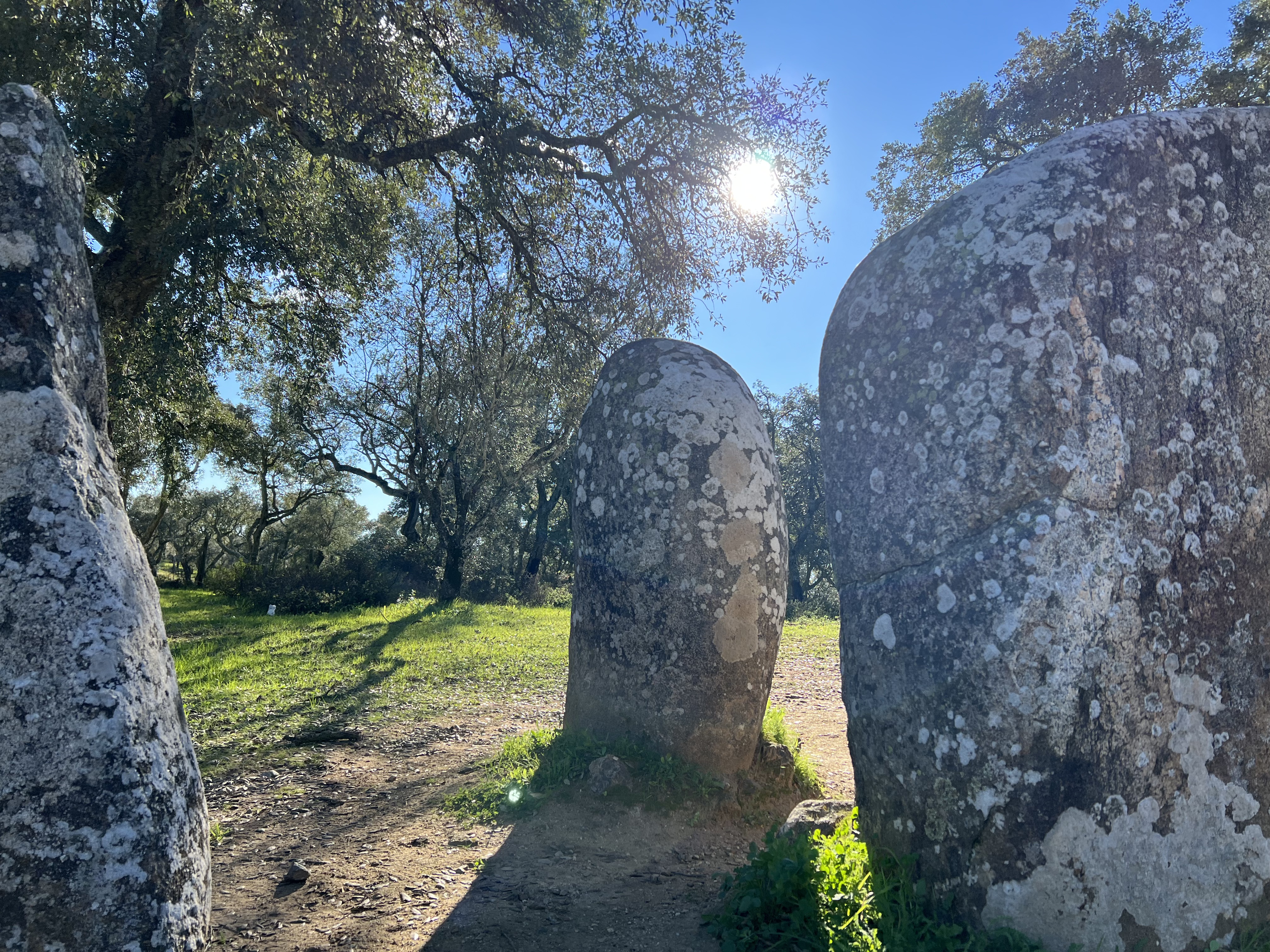
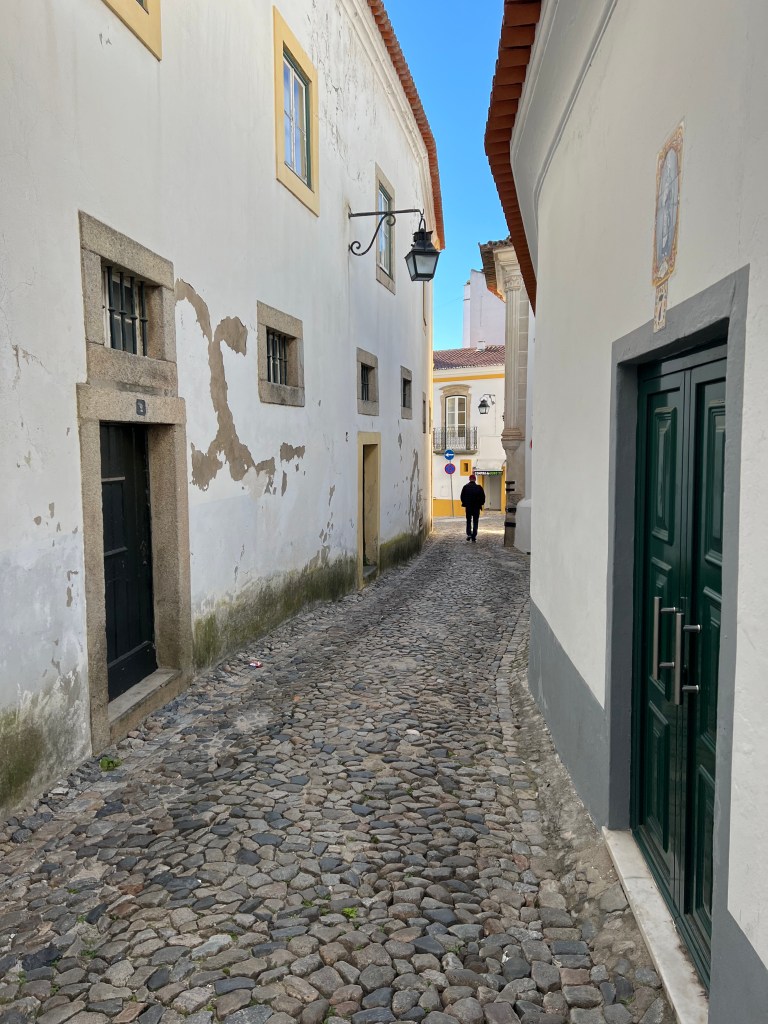
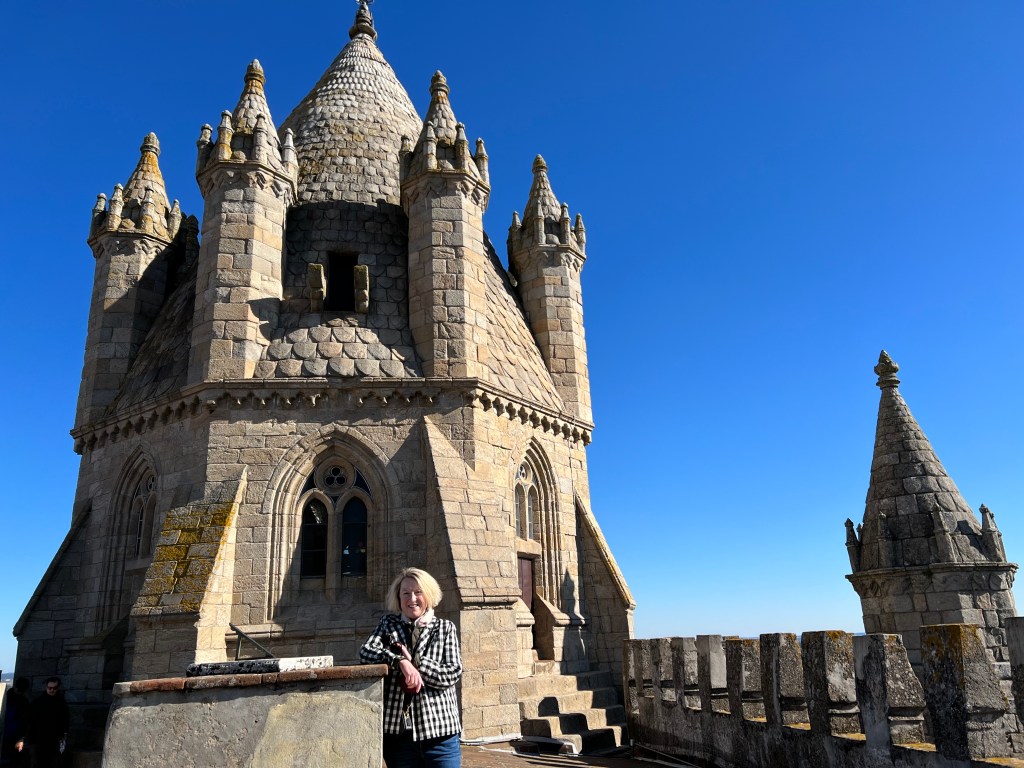
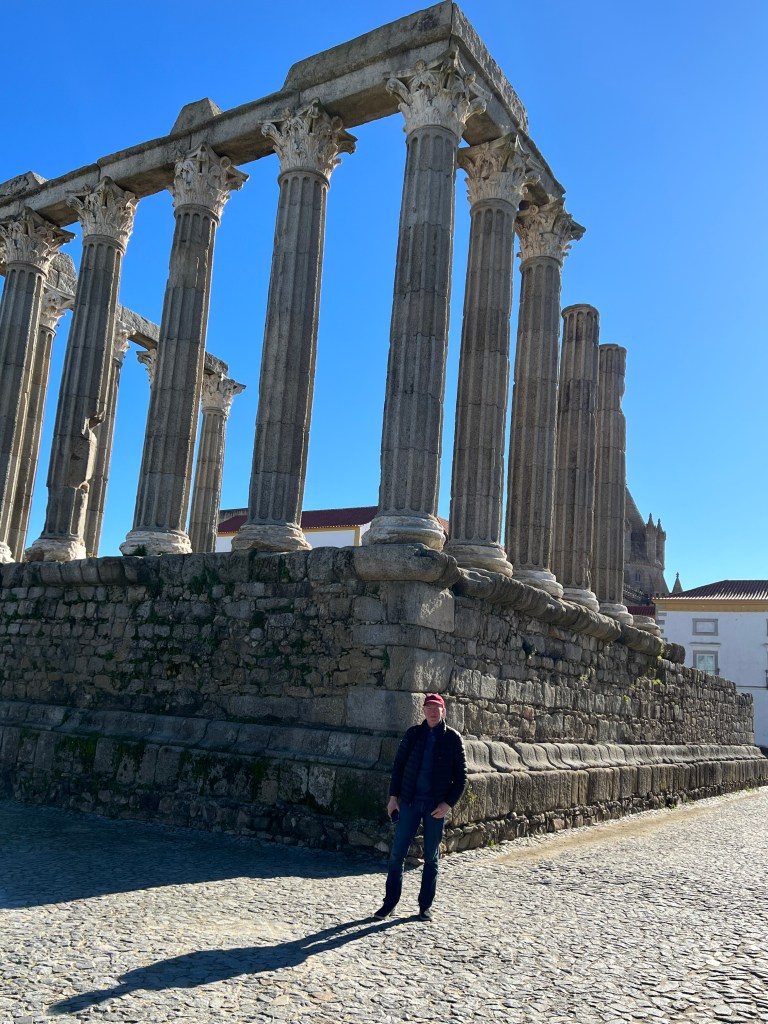
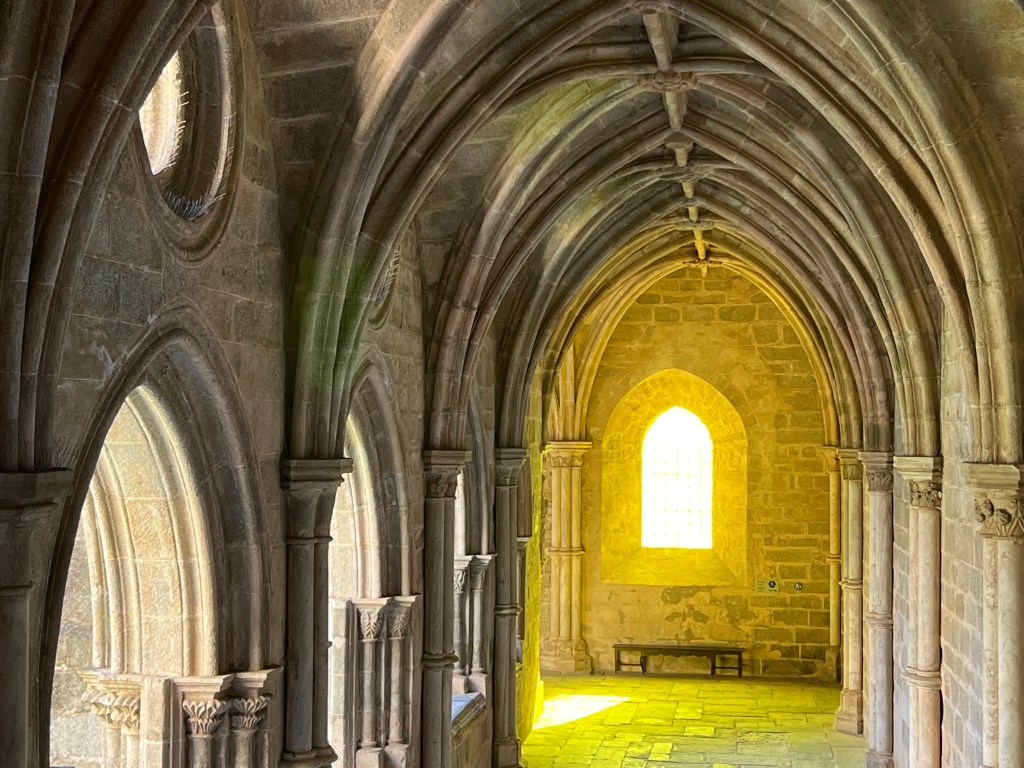
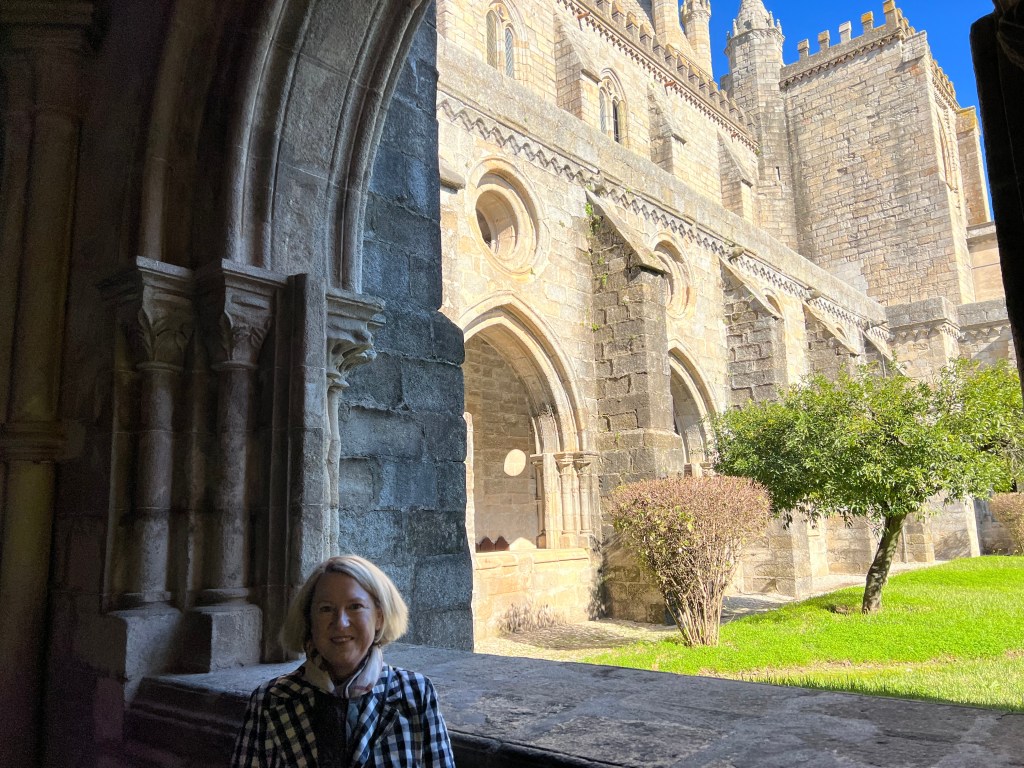
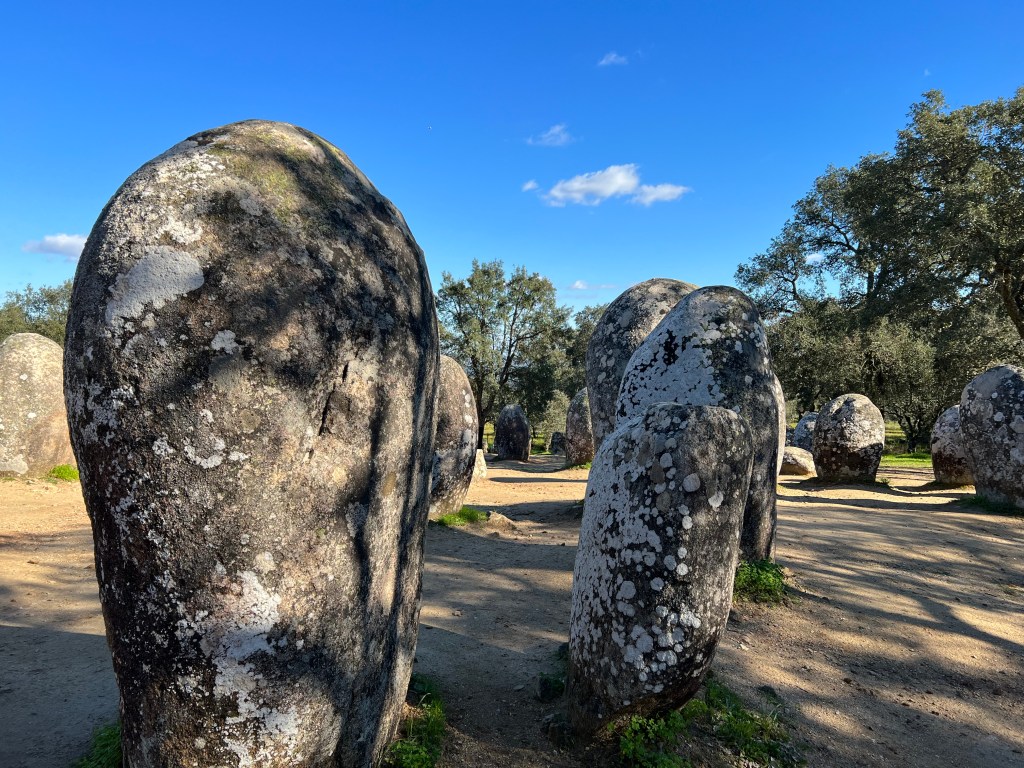
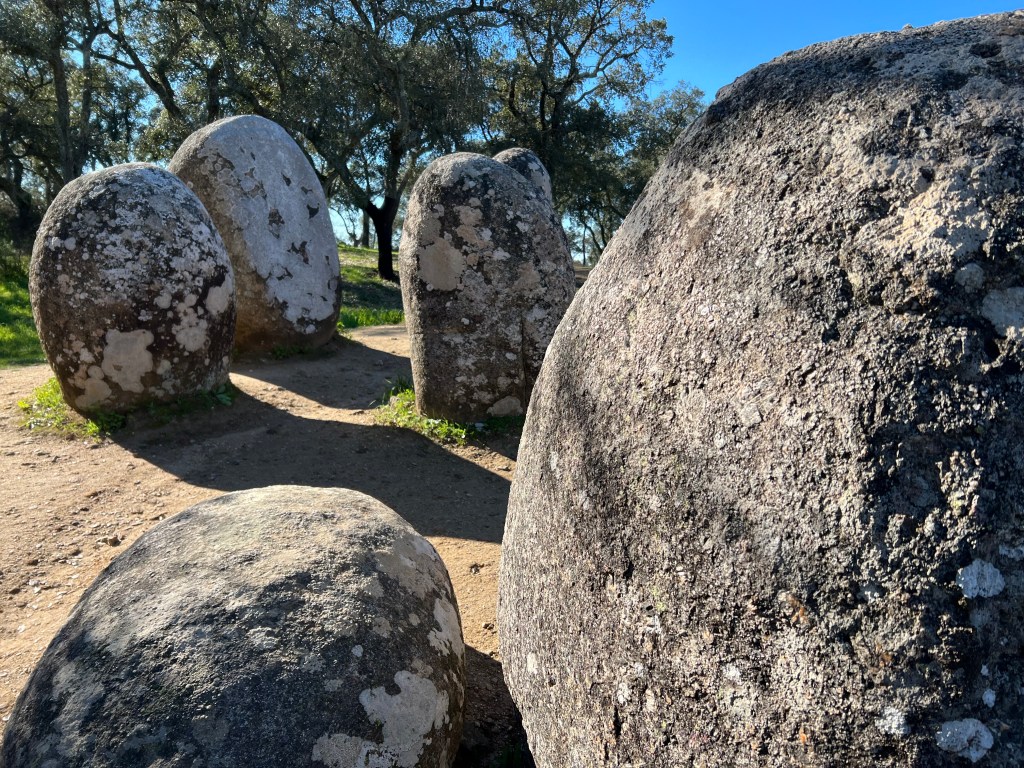
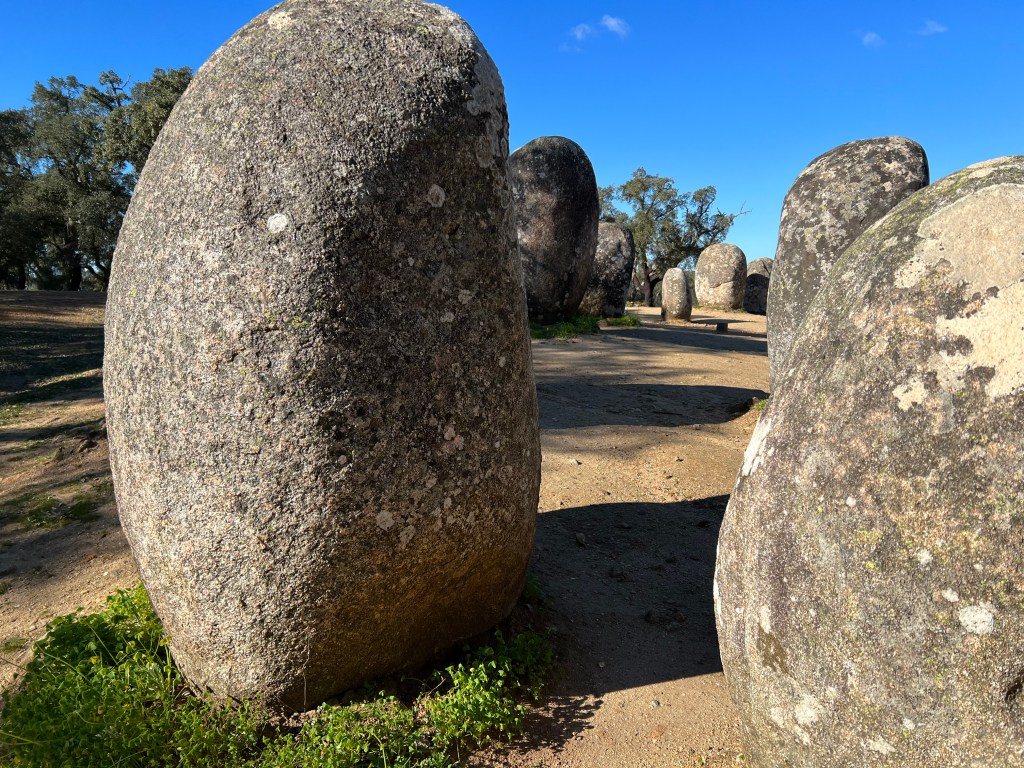
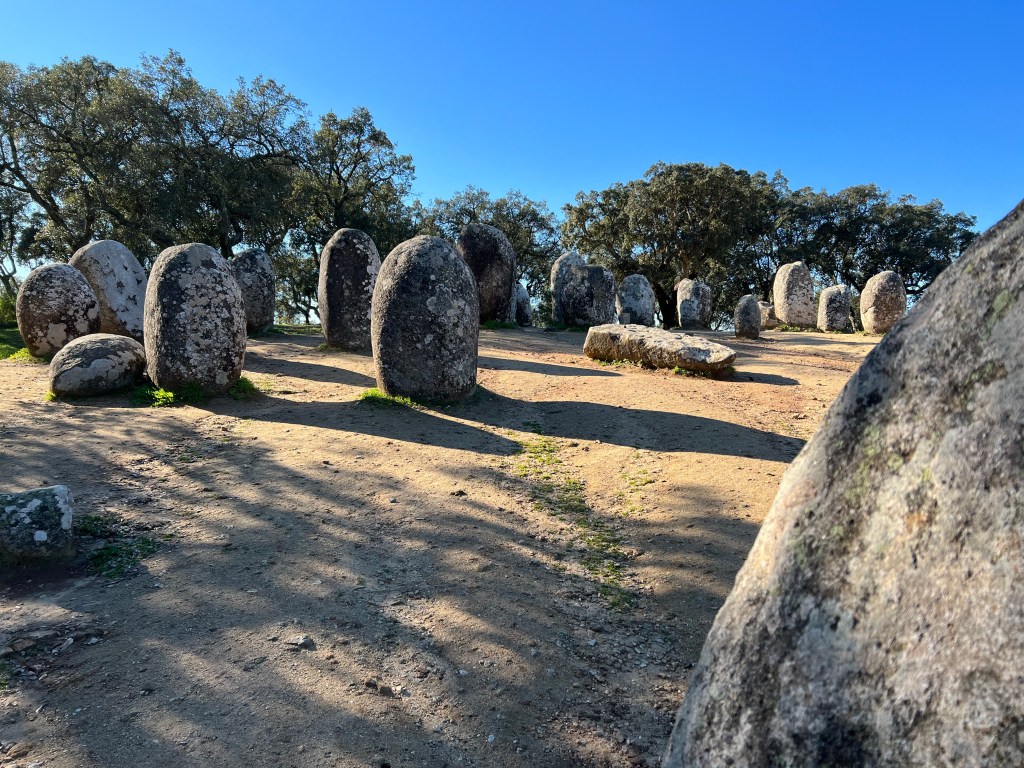
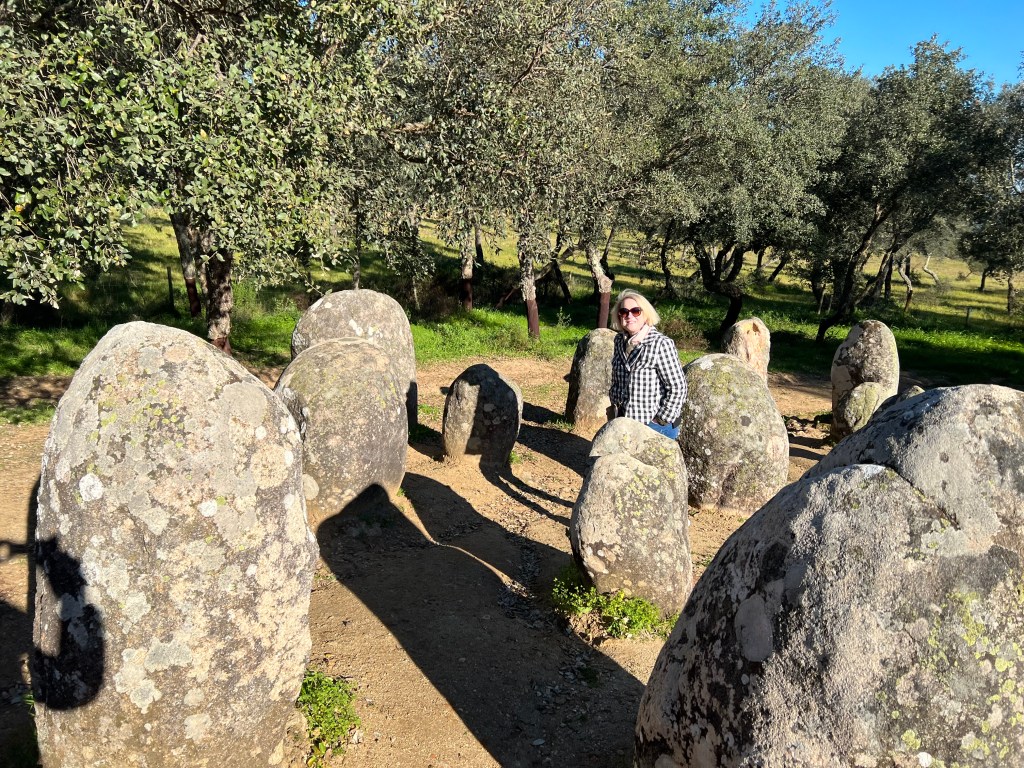
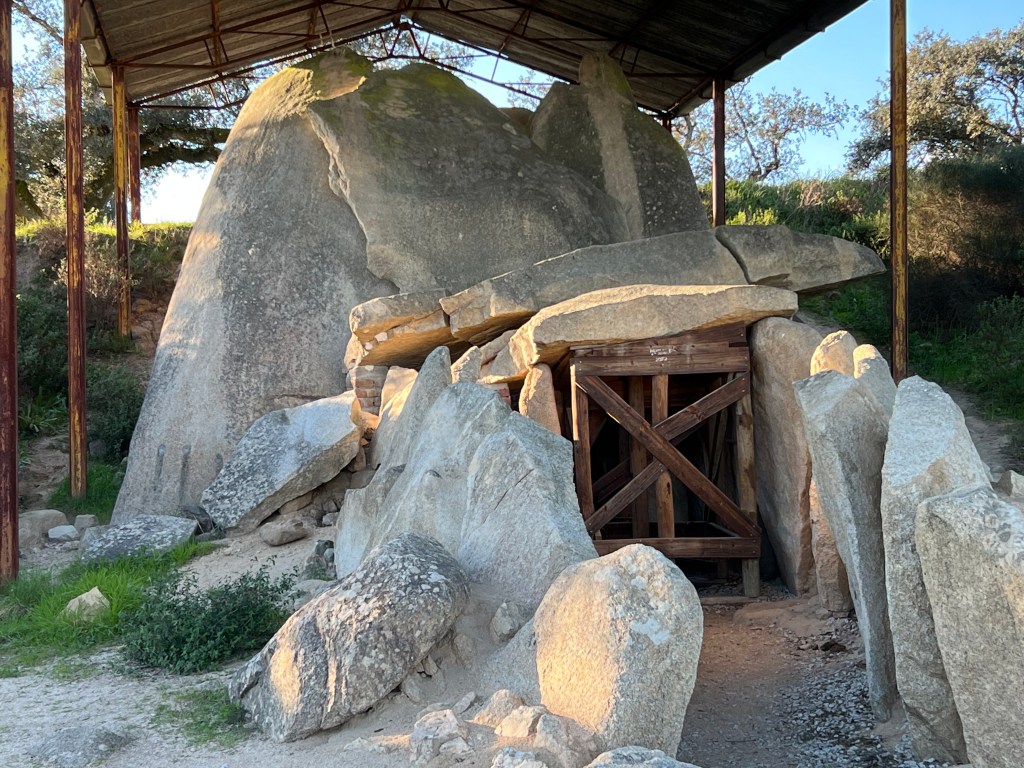
Lisbon, Wednesday, Sept. 25, 2023 – Ok, so there is no way I can possibly elaborate on everything in that much-too-long title, but that is how yesterday was – a mind-bending trip through history. We visited the oldest Megalithic site in Europe, huge granite boulders that helped ancient people trace the movements of the stars, and thus set their calendars for hunting, crops, harvest and preparing for winter. We saw an Augustan Age Roman Temple, still intact at the heart of the now Medieval city of Evora, where lawyer of history – the Romans, the Moors who ruled for 400 years, to the Christian King who set up shop here for a short period (and whose love spat sparked the Portuguese Inquisition.) We learned all this from a wonderful guide, Olga Miguel, whose life work is leading tours, and tours of the night sky, which we hope to do with her one day.
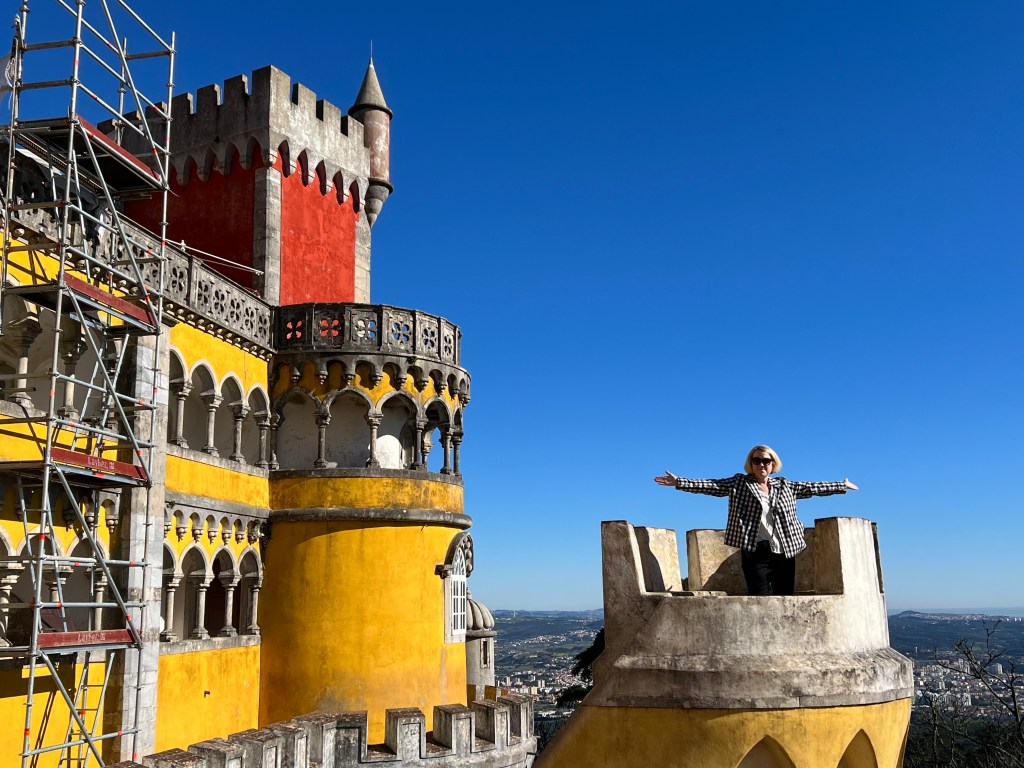
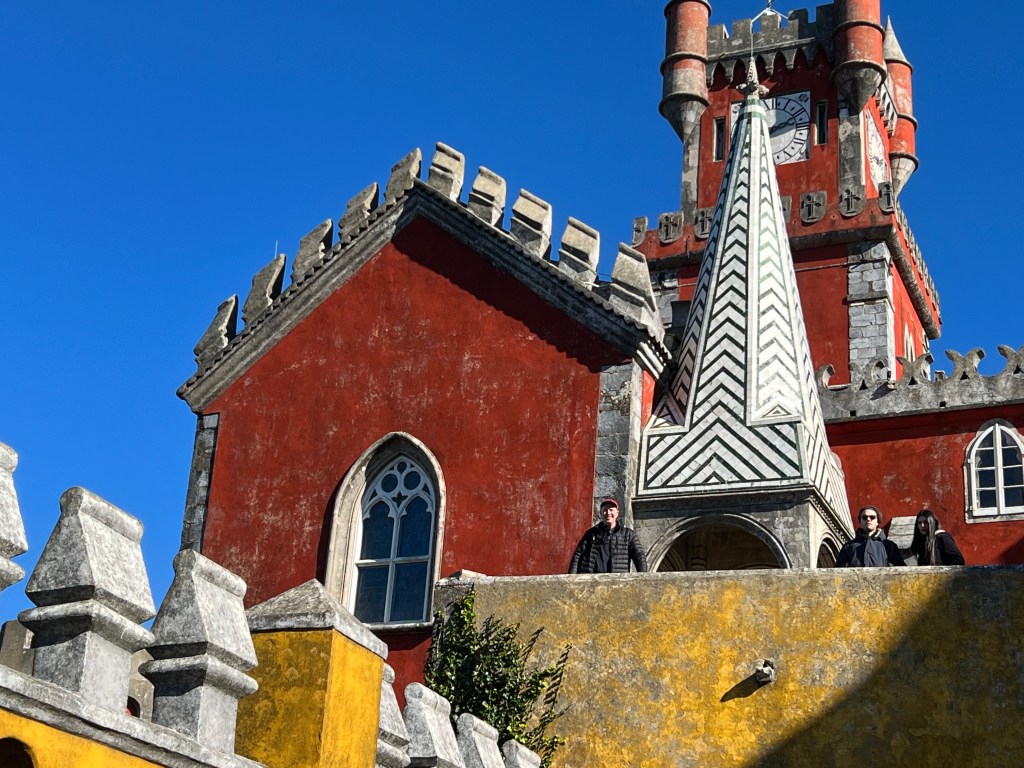
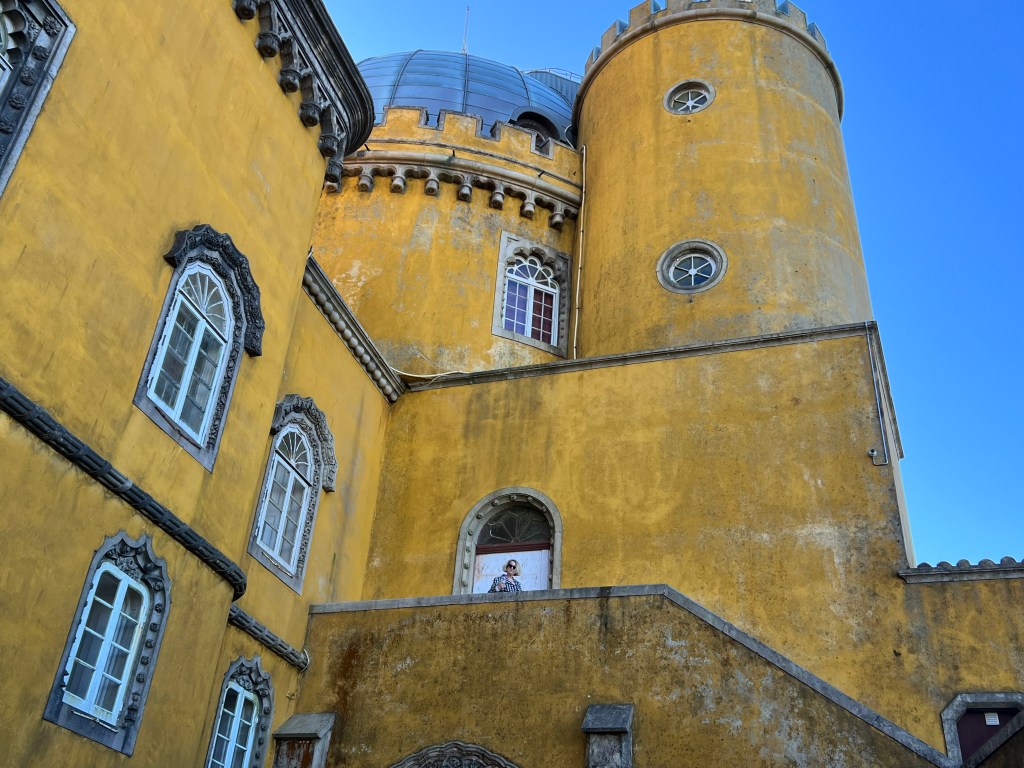
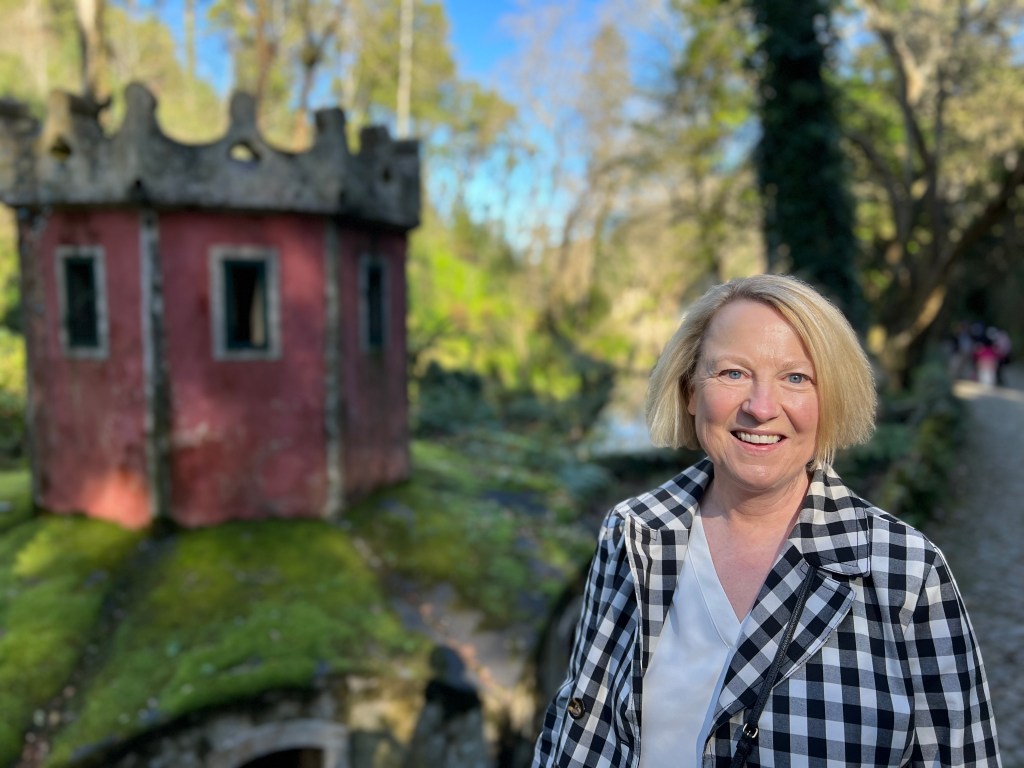
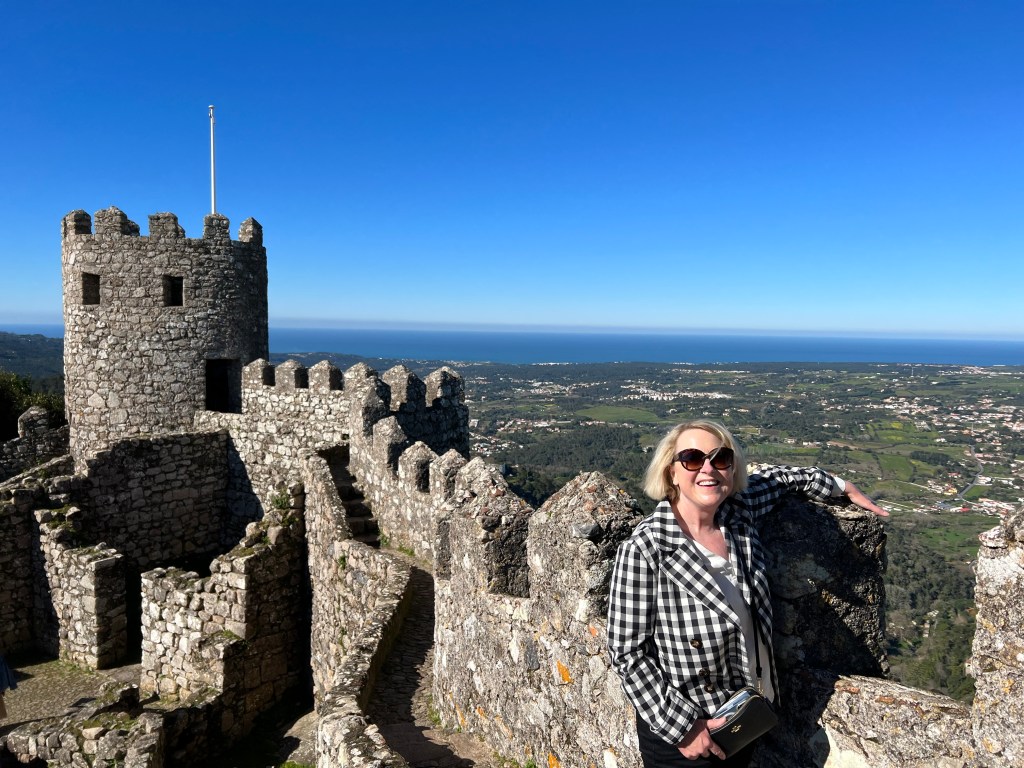
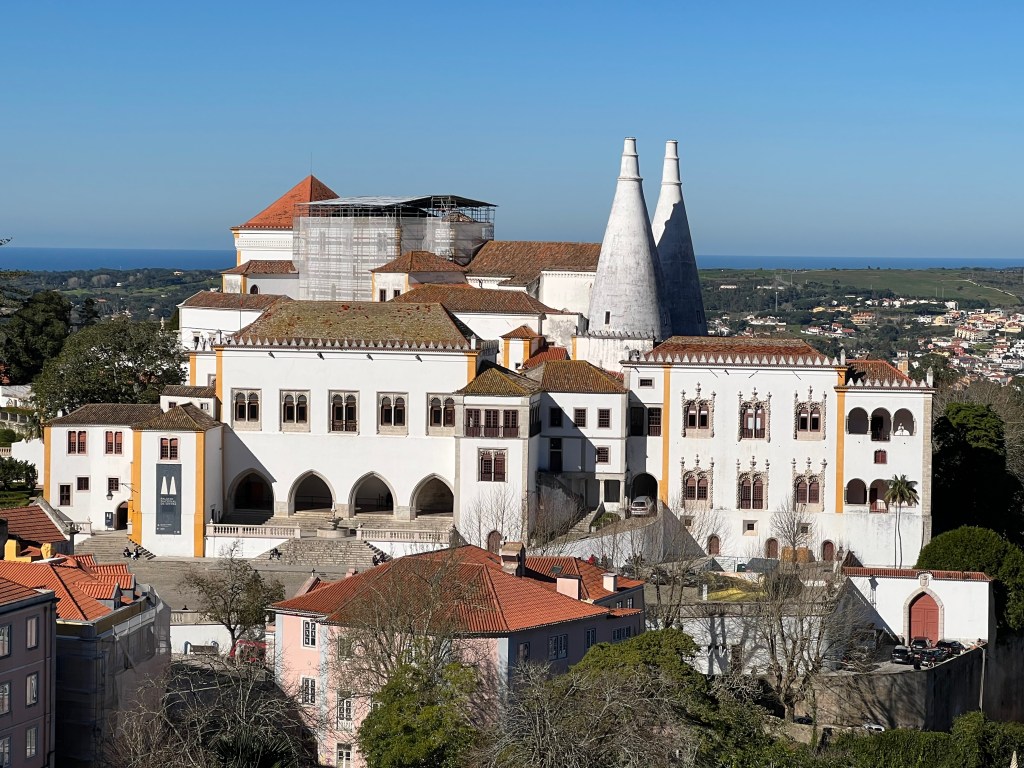
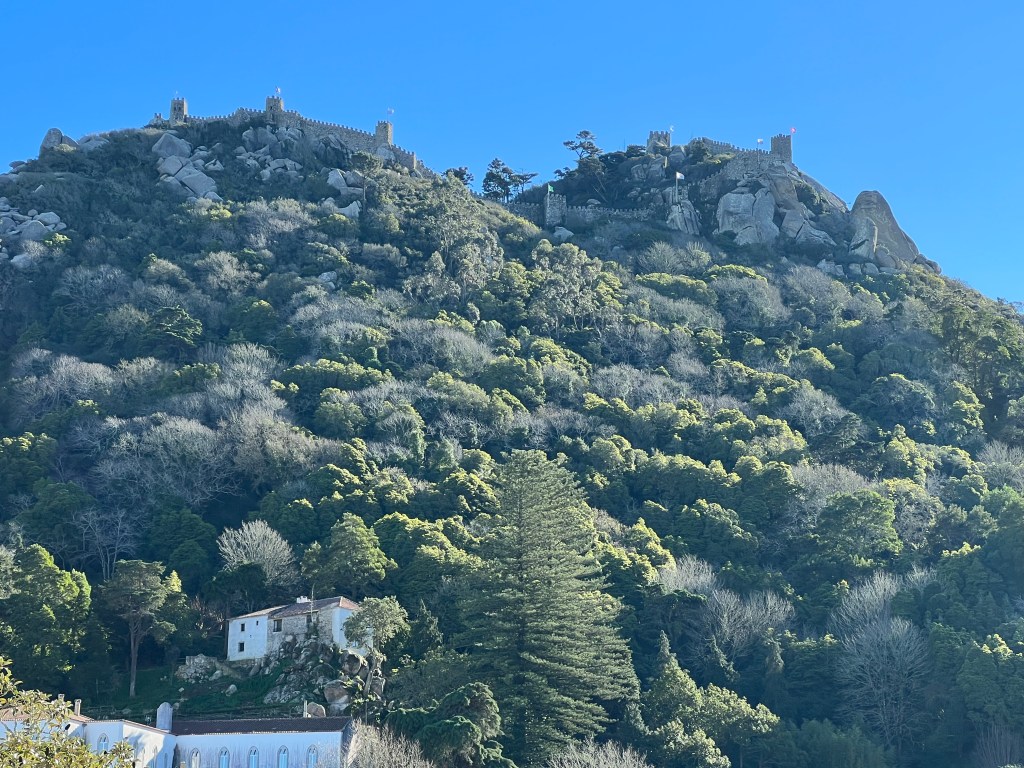
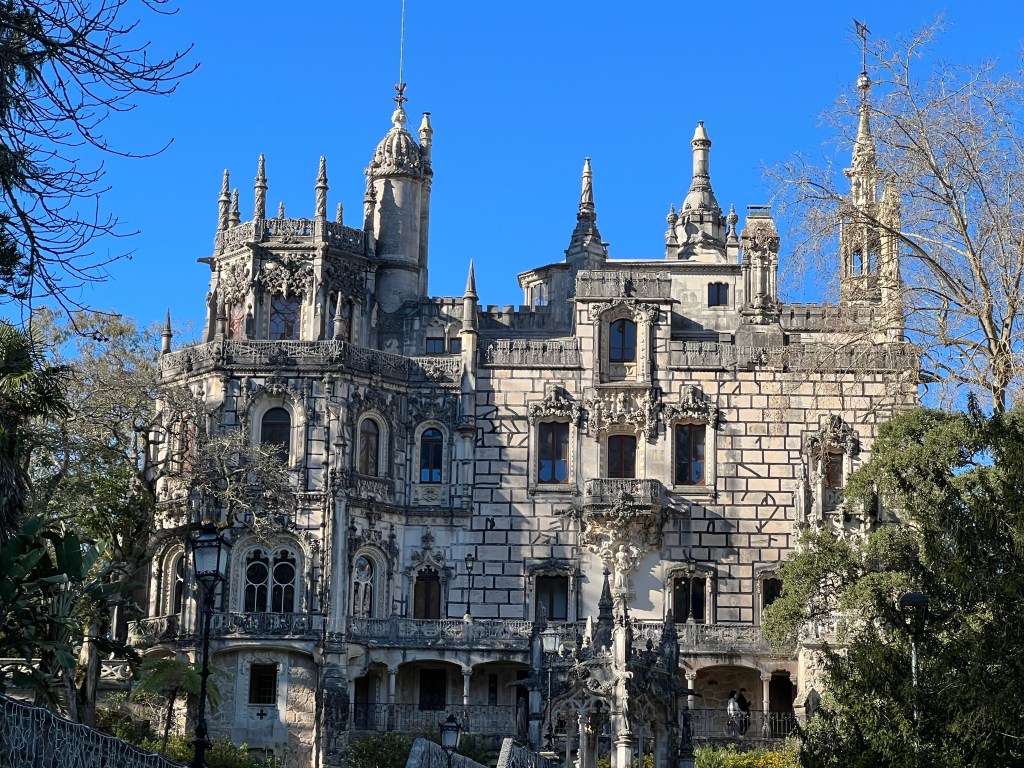
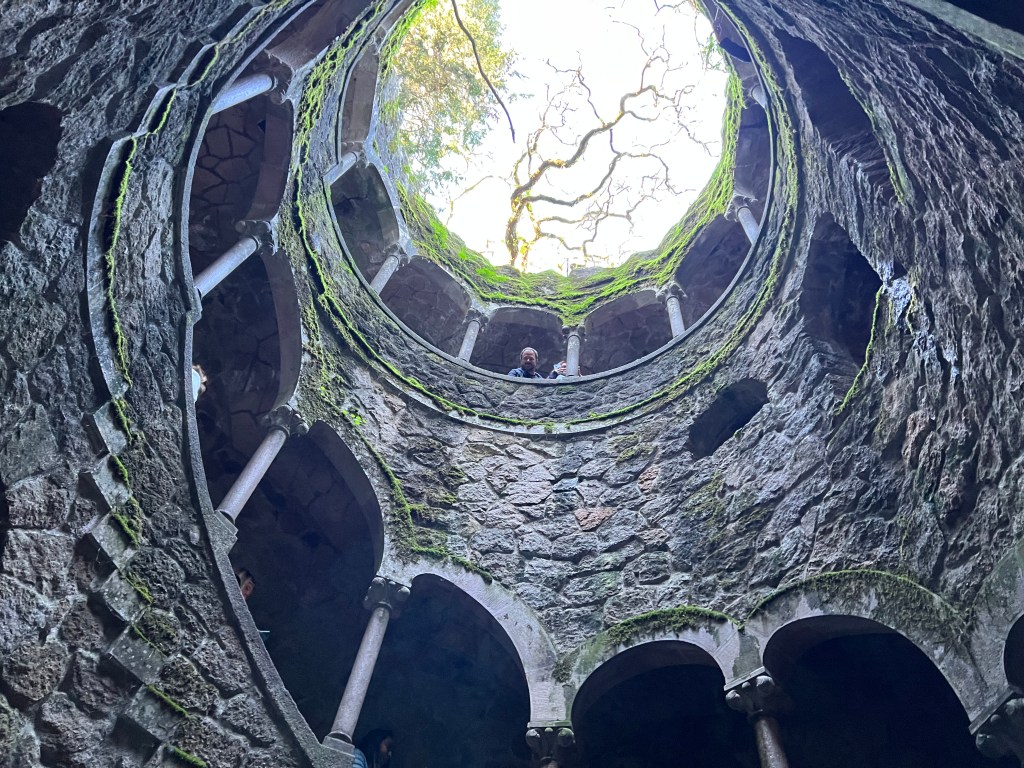
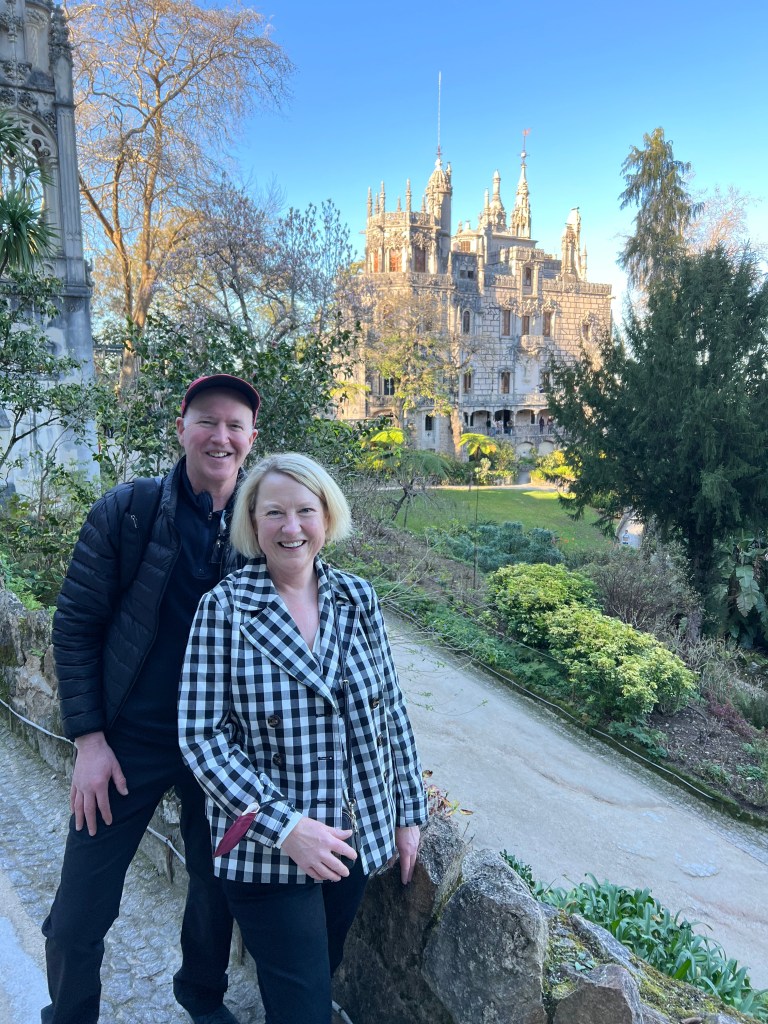
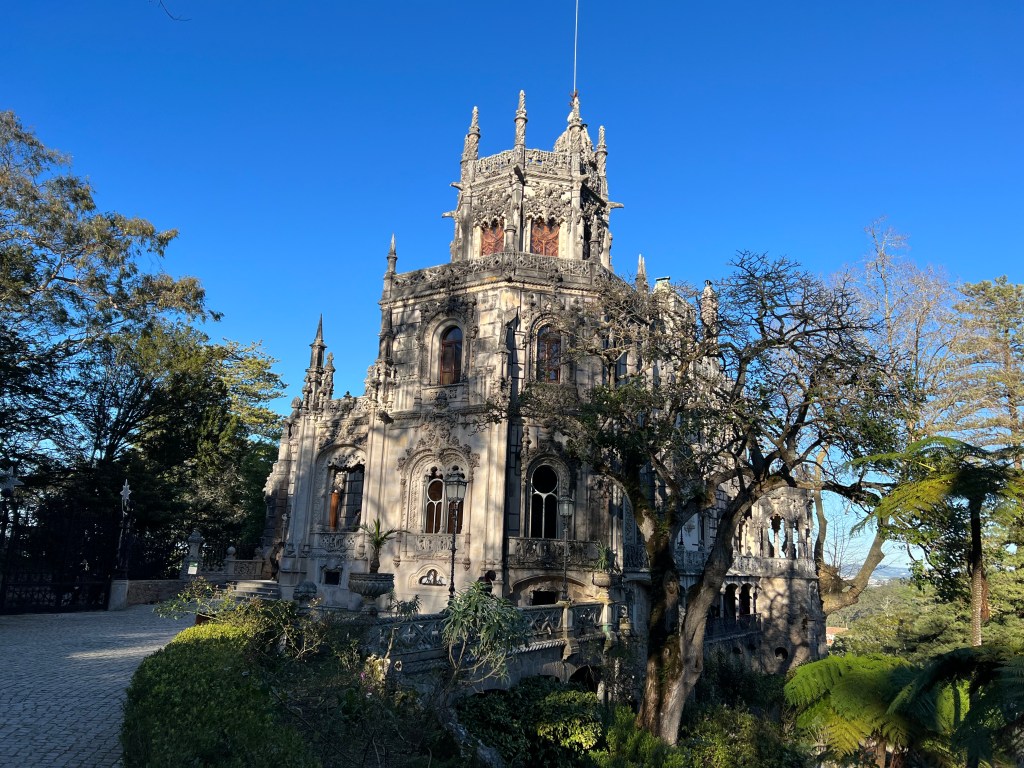
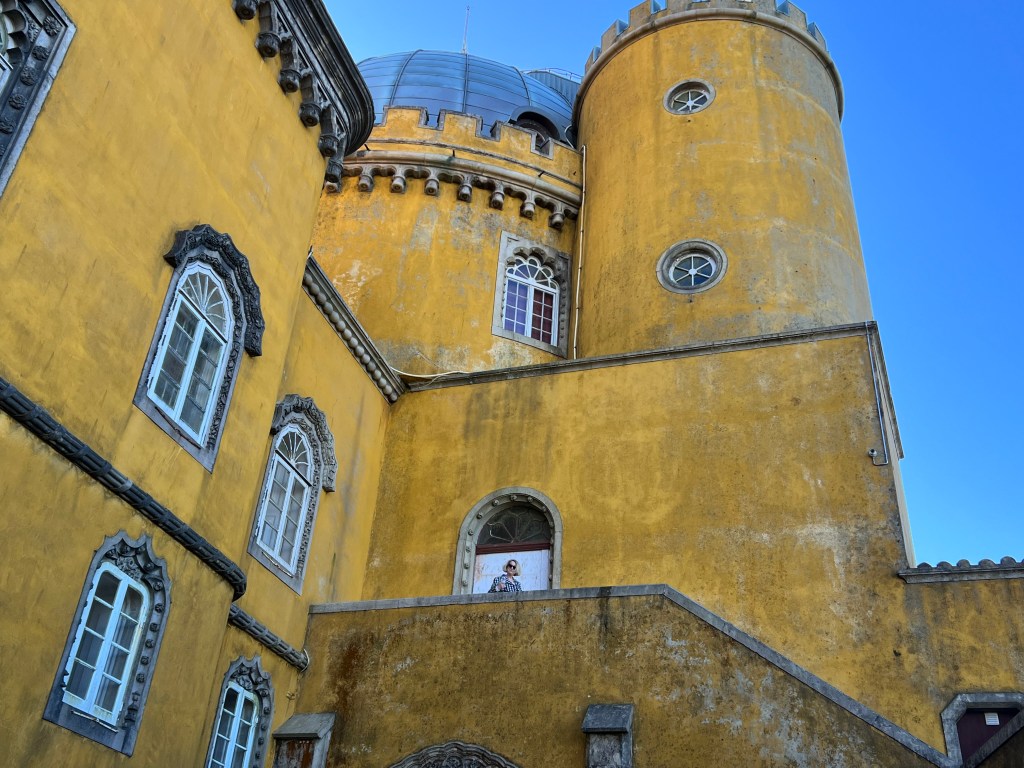
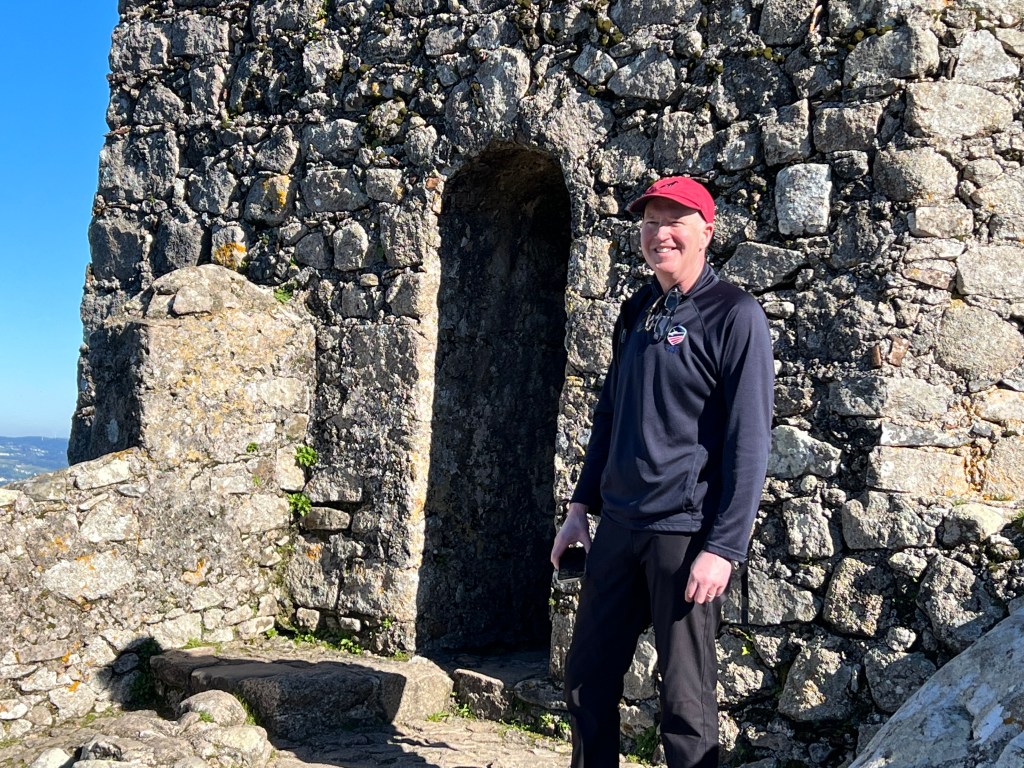
I wish I could tell more about our day trip to Evora, and the day trip the day before to Sintra, but we must be off to visit the Calouste Gulbekian Museum and the famous Azulejos tile museum. This is our last day in Lisbon and I will write more tonight when we are doing our laundry.





Happy Lunar New Year!
Monday, January 23, 2022, 6:30 a.m. Lisbon, Portugal – It’s still dark in Lisbon, the lights on the towers of the nearby cathedral, glimpsed from one of our windows, have been shut off. To the north, from another window, I can see an old apartment building rising against the Alfama hill that is topped by the castle of Sao Jorge. It has rows of tall windows, each with eight-panes, and just two are illuminated. In one, in an almost cinematic image, I can see the silhouette of a man – he just lit a cigarette – as he gets ready for the day, or perhaps is just getting home. It’s silent in the apartment, except for the coffee brewing.
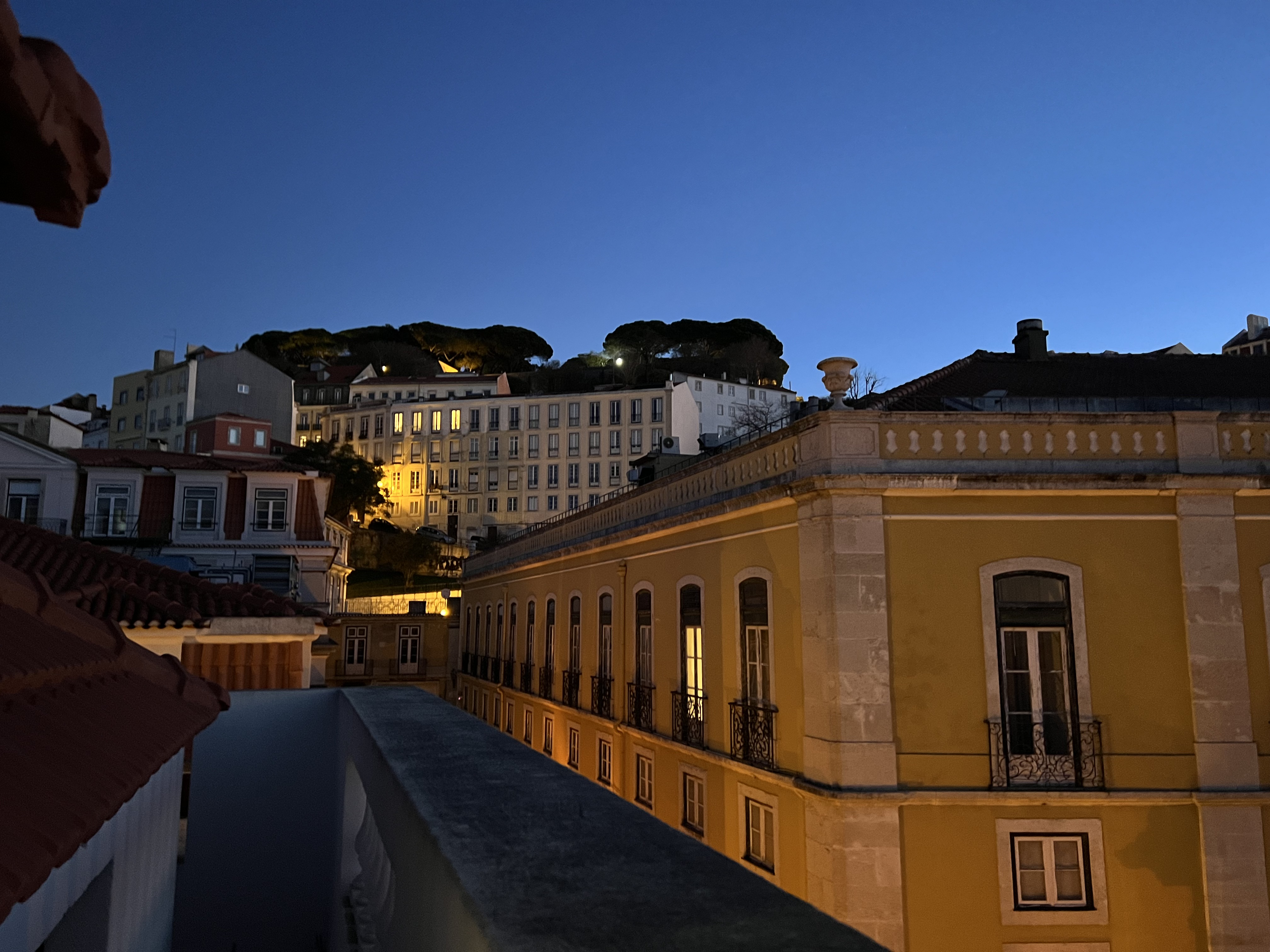
We had another wonderful day yesterday. Though we hadn’t planned it intentionally, we spent the Lunar New Year exploring Portugal’s ventures to the East during the 15th, 16th and 17th centuries, as Vasco da Gama and other explorers and conquerers found their way around the Horn of Africa to India, Southeast Asia, China and Japan. Rick and I had recently read a book by Roger Crowley, “The Conquerers,” so our thoughts about the monuments we saw yesterday glorifying the nautical achievements of these intrepid Portuguese were tempered by the knowledge that they were also brutal men who used force and cruelty to establish a maritime empire, an empire which they ruthlessly exploited for spices, treasure and slaves.
But I’m getting ahead of myself. We started the day heading west to the Museu Nacional de Arte Antiga, which held a collection of art and artifacts from the so-called Age of Discovery. Included were some fascinating Japanese paintings, known as Namban screens, since they depict the “namban” – as the Japanese called the “Southern Barbarian” Portuguese people who landed on their shores in big black ships. These Kano School screens were familiar from our time in Japan – I remember in particular the gorgeous gold screens in the Nijo Castle in Kyoto. But these screens didn’t just depict beautiful, twisted pine trees – they showed, in closely observed detail, the Portuguese in their puffy pantaloons and funny hats. A caption next to one read: “When we were exotic,” turning the tables on the Portuguese conception of themselves. The faces of the Portuguese were especially interesting – they were uniformly ugly, with comic long noses and strange pointed jaws. To me, they resembled masks, especially the red Tengu masks of Japan, which depict, appropriately, a mythical creature that is both evil and benevolent. Perhaps that is an apt image for the Portuguese explorers themselves – they brought trade, and a new religion – Christianity – but threatened much more. No wonder the Tokugawa Shogunate shut its doors and withdrew from the world.
Among the other fascinating treasures we saw was a spectacularly ornate silver dinner set – I had just breezed by the opulent pieces but Rick noticed that the set had been built by King Jose I after the earthquake of 1755 had leveled his city and he and his court were living in tents in Belem outside the destruction of the city(where we were headed yesterday afternoon.) This is the same man depicted on the horse in Commerce Square pictured earlier (he apparently never wore armor and was apparently a coward) – so as his people were suffering through the worst natural disaster in recent European history, King Jose was busy designing tea sets. Fascinating. (Our “insight” into the king comes from another excellent book, “The Last Day,” by Nicholas Shrady.)
We then walked along the Teju river to the Museum of the Oriente – which had free admission to celebrate Lunar New Year! This was a beautiful collection of art from throughout Asia, including another Namban screen, but also gorgeous ceramics and statuary. Some of the art was influenced by the Portuguese presence, but some was not. There were two 13th century wooden statues from China depiecting Boddhisatvas sitting astride lions that I found particularly captivating – beautiful, peaceful, colorful, calm – the position of their bodies a wonderful study in a kind of seated contrapposto.
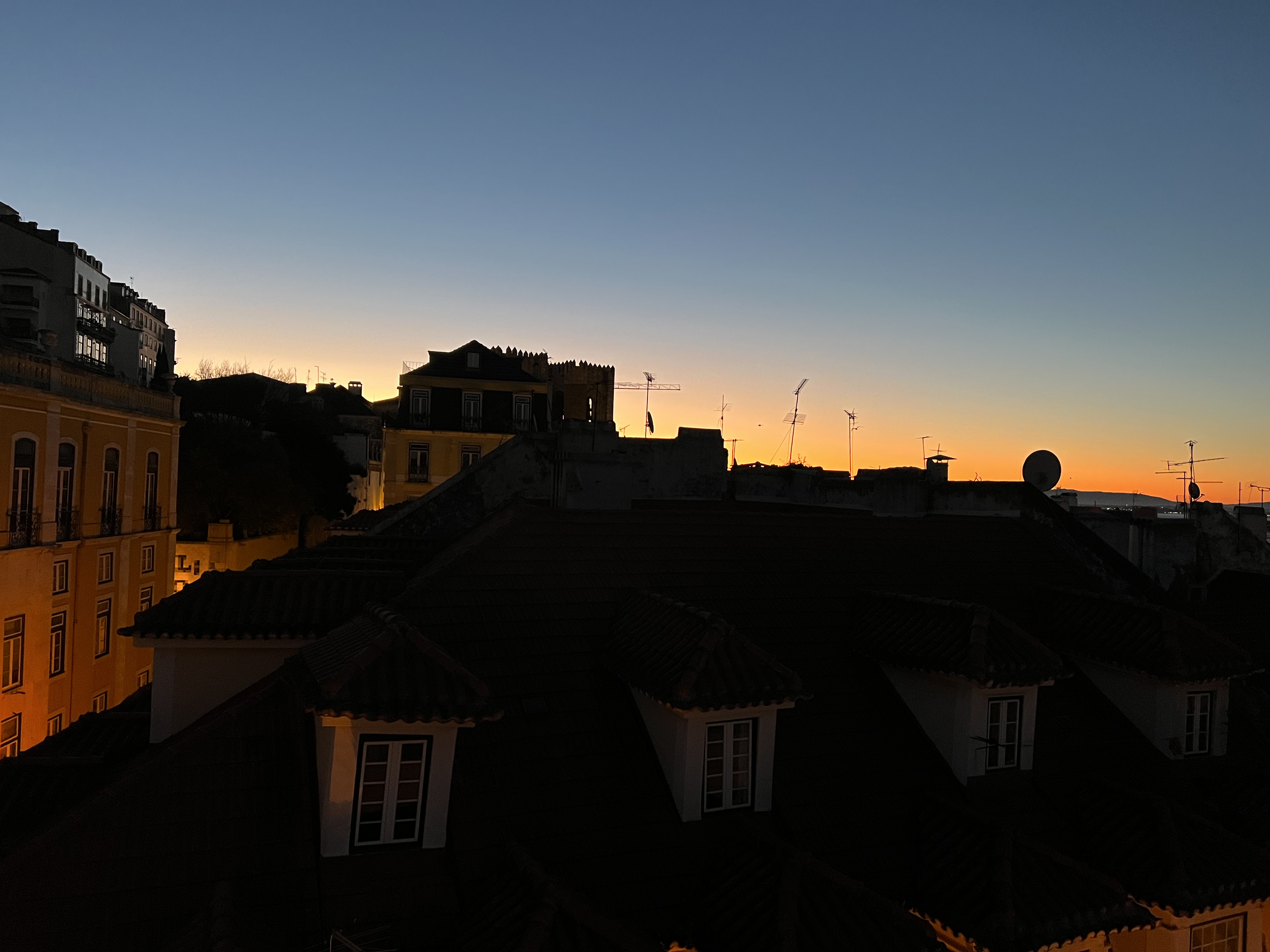
Now the dawn is breaking pink and blue behind the cathedral and the river. But back to yesterday, if any of you are still reading and haven’t dropped off to sleep. We ended the afternoon in Belem, located near the mouth of the river where it meets the Atlantic Ocean. Portugal is “where the land ends and the sea begins,” famously wrote Luis de Camoes, the 16th century poet who is revered by the Portuguese, and whose tomb we saw enshrined in the elaborate Gothic monastery in Belem. The Portuguese explorers and traders embarked from here, and King Manuel I built the monastery and a gothic tower fortress here in the early 16th century to celebrate the wealth and discoveries the Portuguese were making in the East. But yesterday, for most people, it appeared Belem was the best place to escape the city on a gloriously sunny and warm winter day. The sidewalks were crowded with bikers, joggers, and strollers – both the baby and the walking kind – as Lisboans spent the afternoon enjoying the rays, the beer and wine, the view of sailboats on the river. We passed a sailing school with a bunch of kids trying out their boats, and heard what seemed to be a class out on the water – I thought of my niece Anna, who would love sailing here.
We managed to dodge the crowds and saw the beautiful monastery and rather austere church, where both Camoes and Vasco da Gama are elaborately entombed. We ended our day back at the Time Out Market for a quick dinner of fried cod balls and fish and chips, before heading back to the apartment to rest and do laundry. Today, we will catch a train to Sintra, a nearby royal retreat for hundreds of years. I just heard someone leave our breakfast – fresh rolls and orange juice – on our door handle, so it’s time for breakfast. Maybe if I start eating, Rick will wake up. This place is like an AirBnB but much, much better. We will definitely stay here next time we are in Lisbon – and there has to be a next time, because Will would love this place. So would Mitchell and Alex – the twins might need a few more years – I logged 22,000 steps and 55 flights of stairs on Saturday. That would be a rough day in a stroller. 🙂
 The Thompson Attigs