Seoul Searching, and Finding

Wednesday, Oct. 12, 2022 – Seoul – 안녕히 계세요!!! Anyeongigeseyo!!! On Wednesday, we said goodbye to Korea. (We are home – it is Saturday in Portland). But on Wednesday – I mean 수요일 – we were so busy that I didn’t have the brain wave length to write. It is hard to recap all my feelings about the trip. It already feels unreal. 
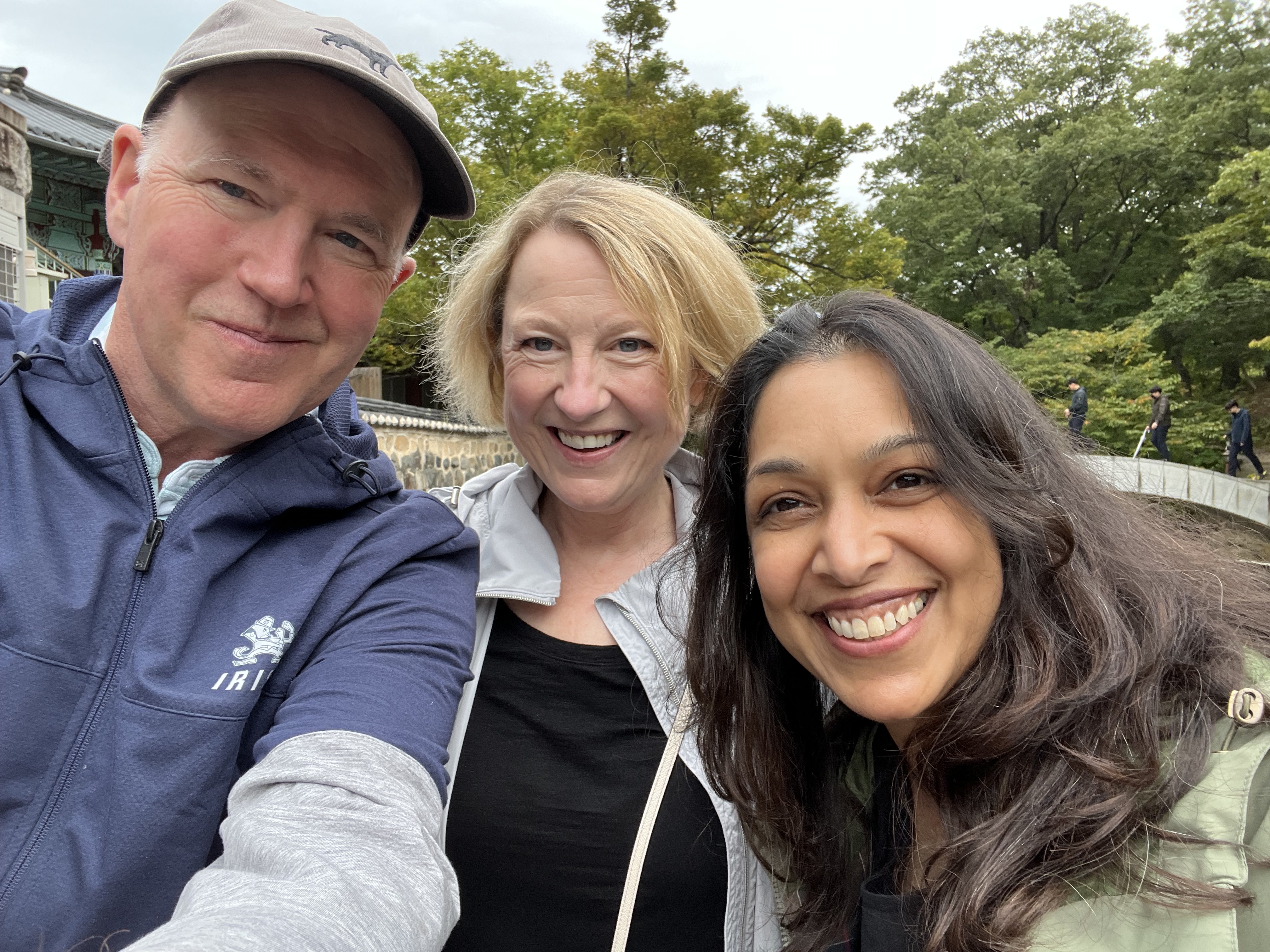
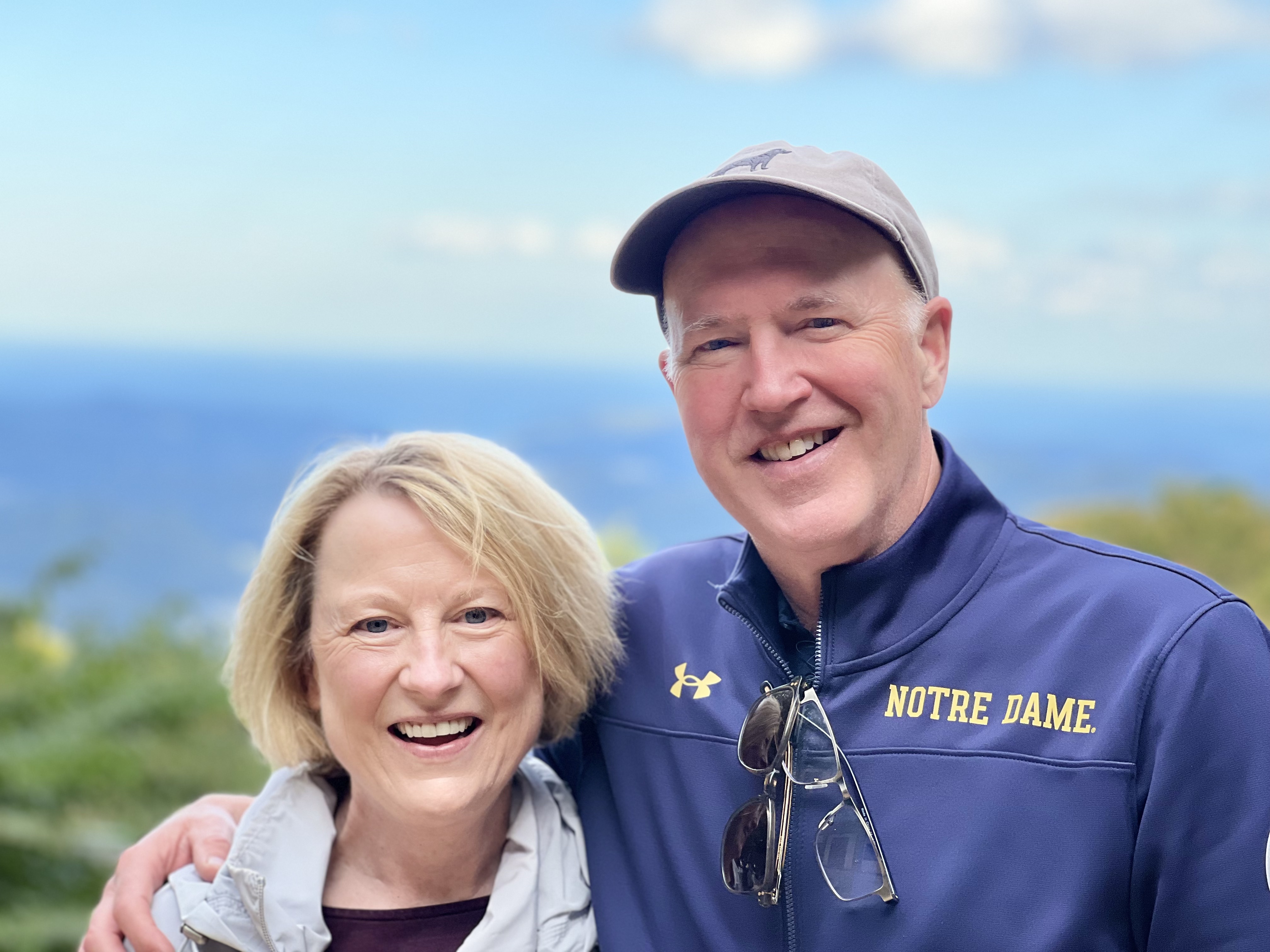
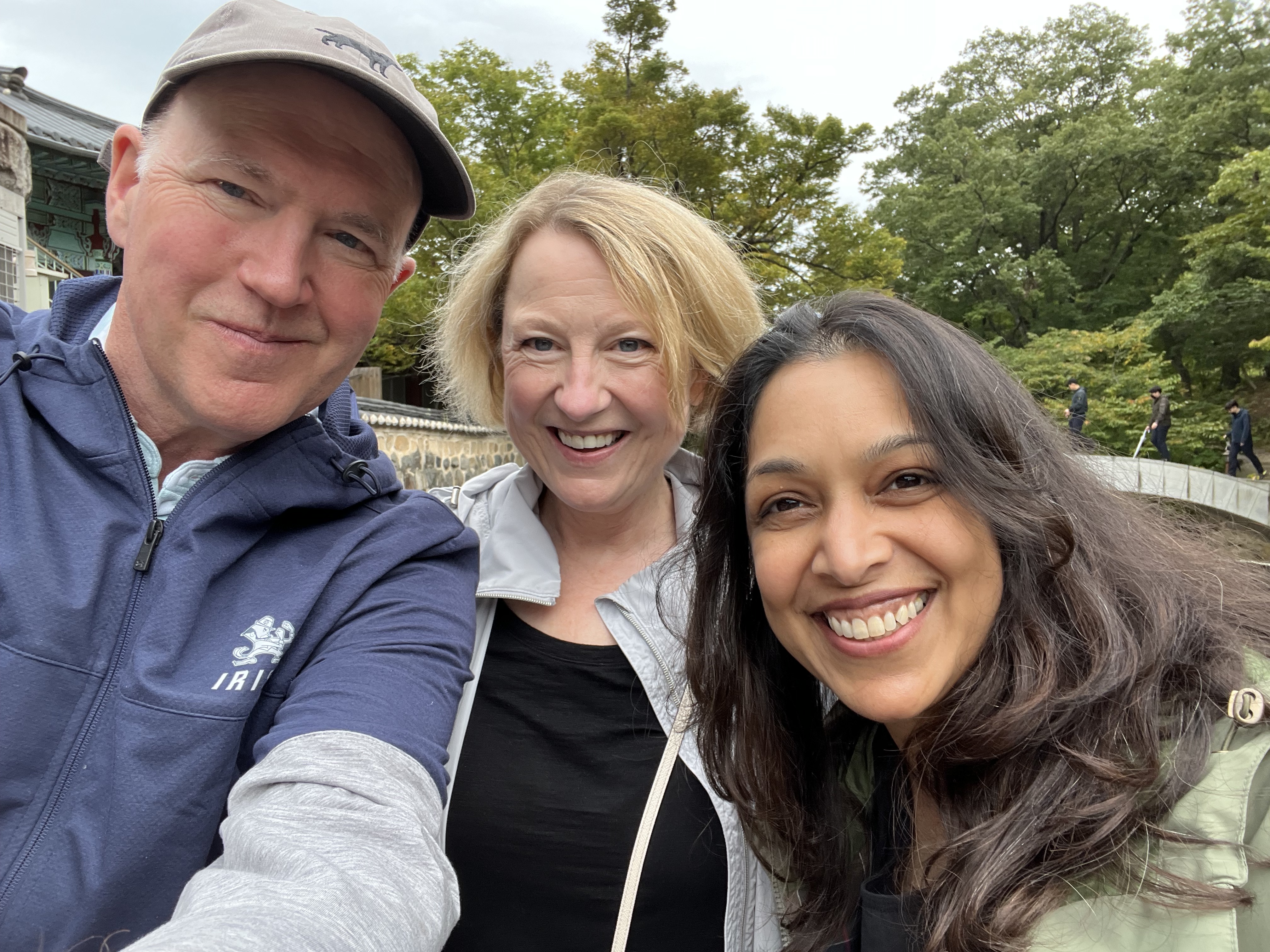
Our last night in Korea was our most special, which we spent with our friend Sunghee (you will know her from her husband’s frequent comments on this blog – Sungmin basically guided our trip from afar, worried about us throughout, and is looking forward to getting back to work now that we are safely home). Sunghee, who had arrived in Seoul from their home in California on Saturday to spend the autumn visiting family, took us out for a fabulous Korean meal in Gangnam. She drove two hours through terrible Seoul traffic on a trip that should have taken a half hour at the most. These were her old haunts, but she said she had forgotten how bad traffic can be, since the pandemic had cleared the streets of Seoul, as it had many other parts of the world. But Sunghee arrived in good spirits and shepherded us into a private room at a restaurant near our hotel – it was so thoughtful of her to choose someplace where I could eat without stressing out over getting sick in a crowded restaurant. 

 I hadn’t seen Sunghee for years, so it was wonderful to catch up. We used to see the Parks nearly every month at one fencing tournament or another. Our sons have fenced together since they were about 11 years old, and they were always a joy to see out on the road. Rick had been in Europe a few times when Sunghee was accompanying Donghwan, and I think they had shared some bad hotel food together. This night, though, the food was amazing, though I cannot tell you the names of the dishes. Sunghee had pre-ordered a banquet basically. She made little Korean crepes filled with vegetables; there was a large pot of meltingly tender beef and mushrooms, cold noodles for Rick, a tower of fresh raw fish, many, many side dishes, and raw, minced Korean beef. Mind you, I have not eaten even sushi – once a favorite of mine – since my stem cell transplant, and generally ask Rick to overcook all meat. But I guess there are certain moments, and experiences, in life when you just have to throw caution to the wind. And so rather than doing the “safe” thing, I ate a little sushi, and more shockingly, the raw beef. And I’ll tell you, that raw beef, which had little bits of what tasted like crunchy onion mixed in, was delicious!!! 
 There is something that comes from pushing yourself out of your comfort zone – something I have had a hard time with, both since being diagnosed, and since the pandemic doubled down on all my anxieties over health, sickness and death. To go nearly overnight from being a presumably healthy person who ran four miles a day to being a blood cancer patient for whom every cold, every virus, holds the potential of a hospital stay, or worse, is a trauma I am still working through. And in 2020, just when I seemed to be emerging back into a normal-ish life, the pandemic hit, amplifying those feelings of vulnerability and fear. At times, my life felt as if it were tied up in knots, constricted, paralyzed. As vaccines and antivirals made the world much safer, it has still been hard for me to let down my guard. My family and friends have been incredibly caring and patient with me, helping me take small steps. Our trip to Italy last May was a big one, but even then, I am not sure I ever really relaxed.
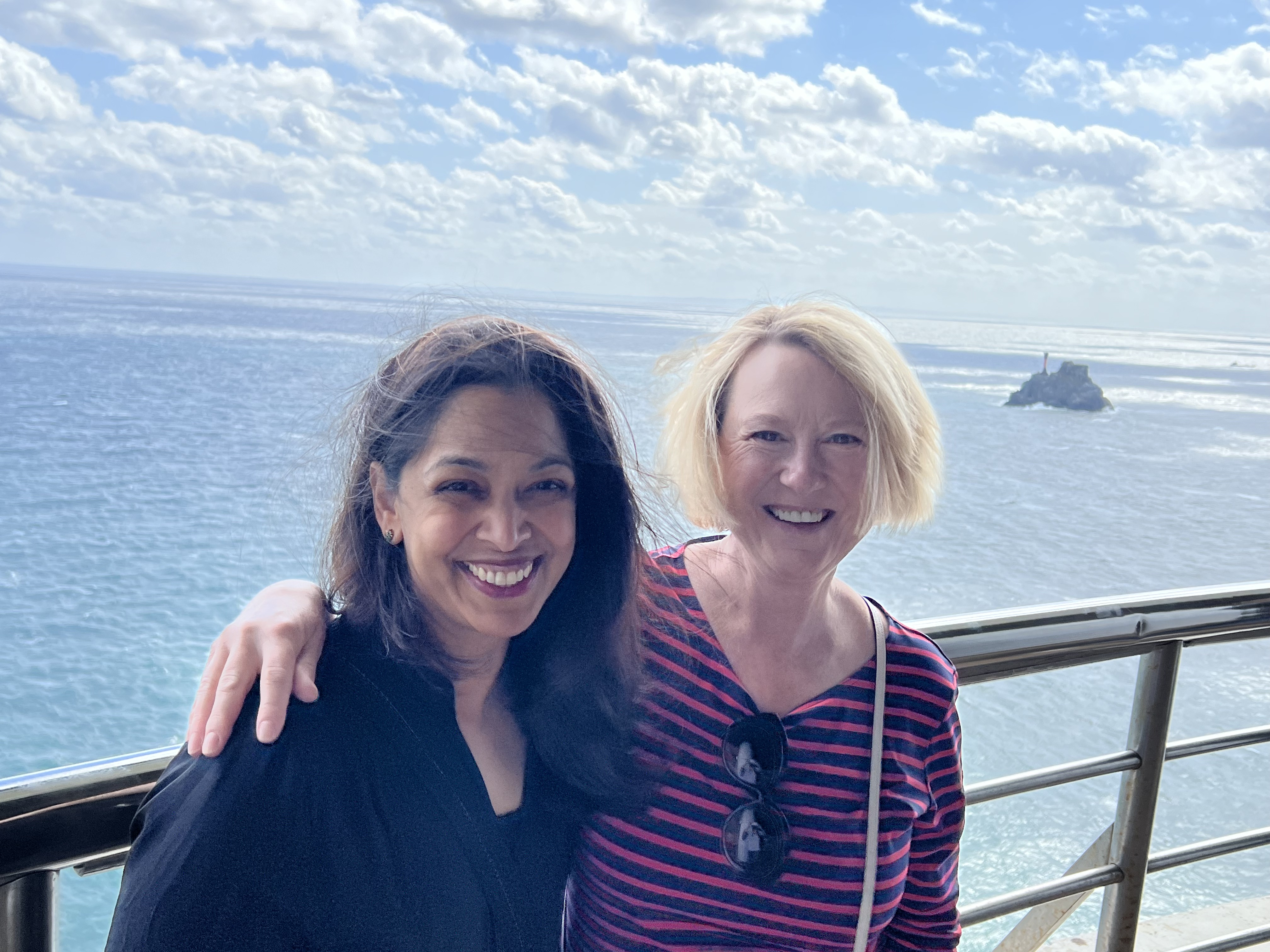
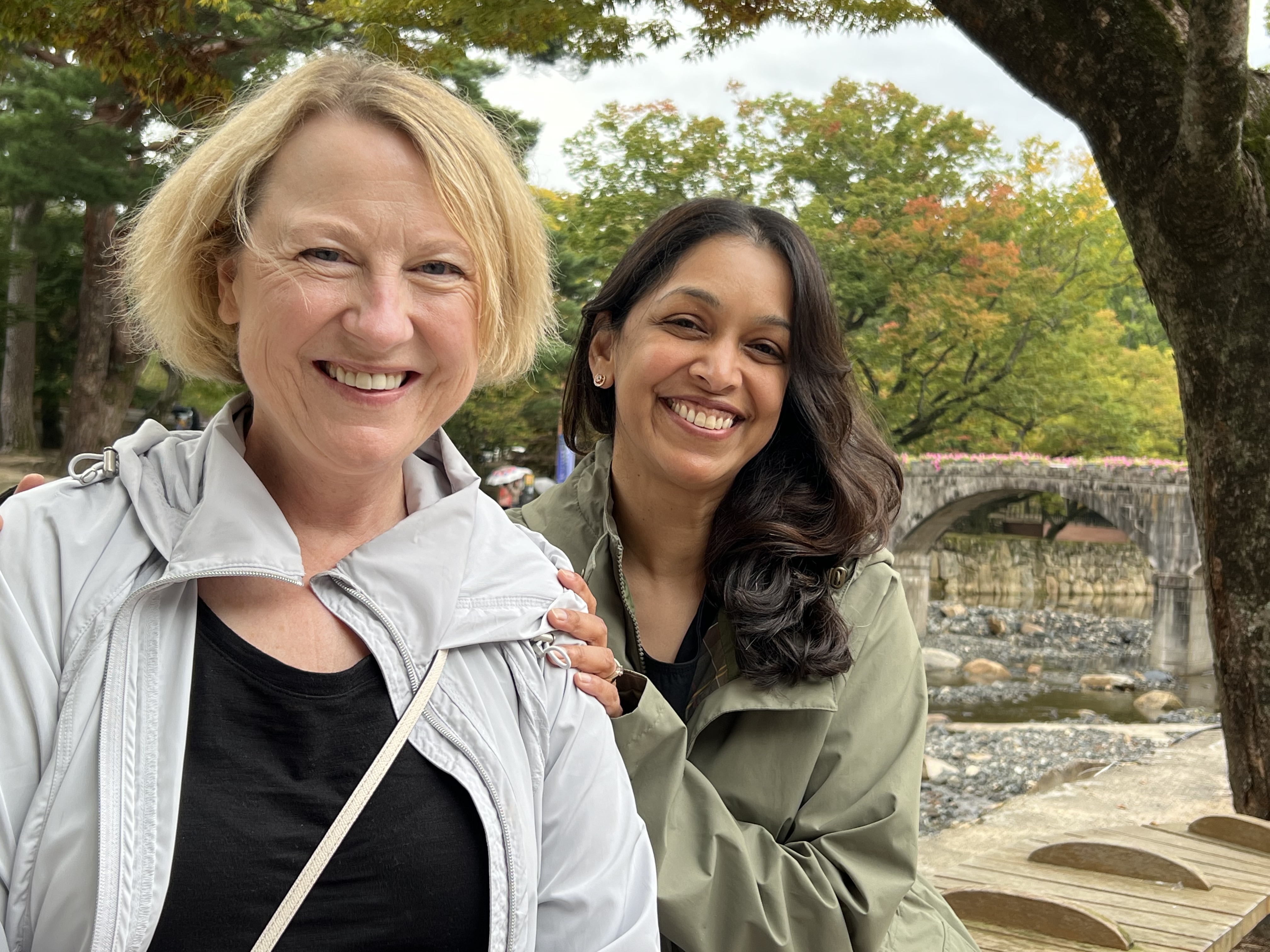
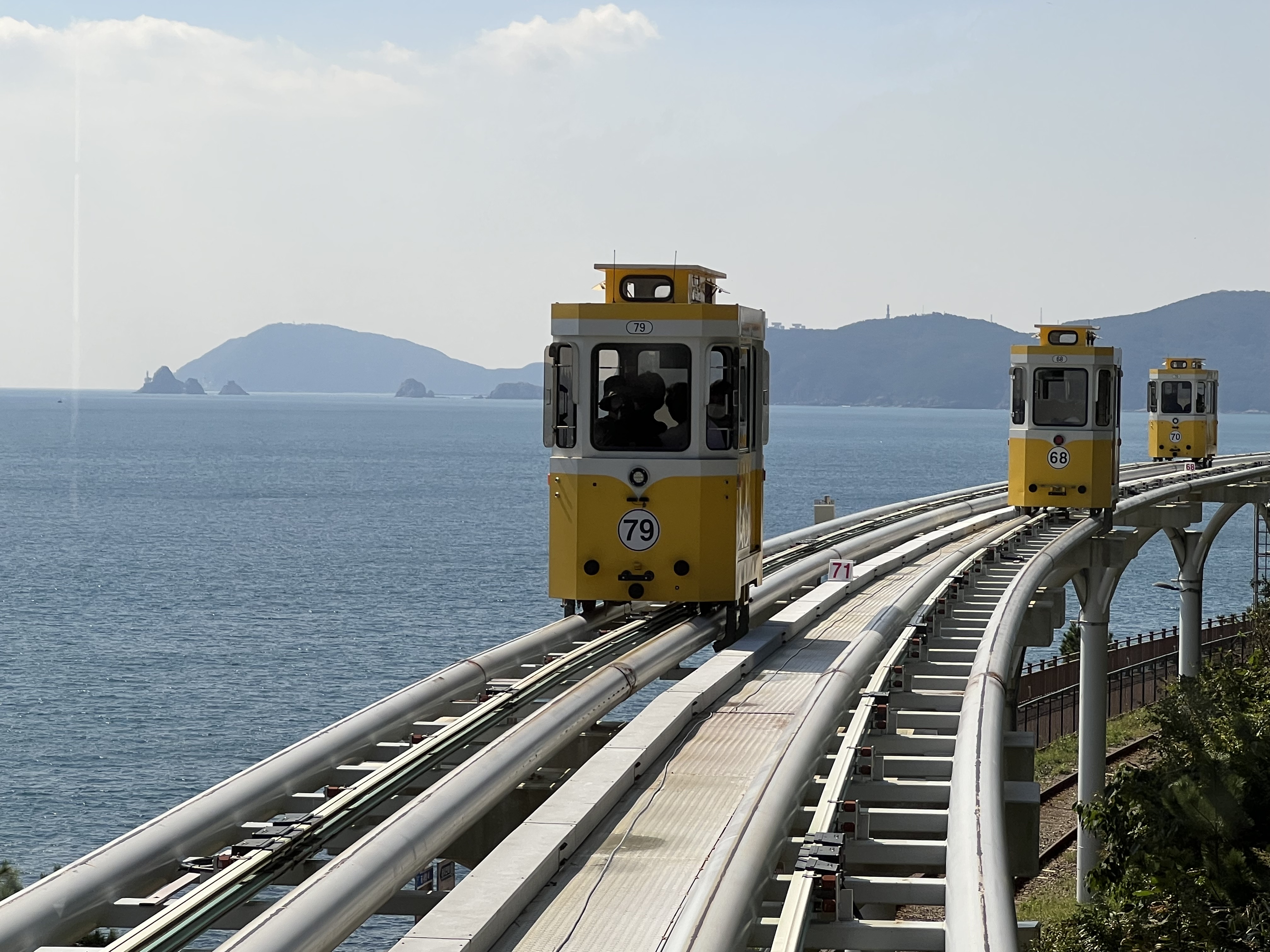
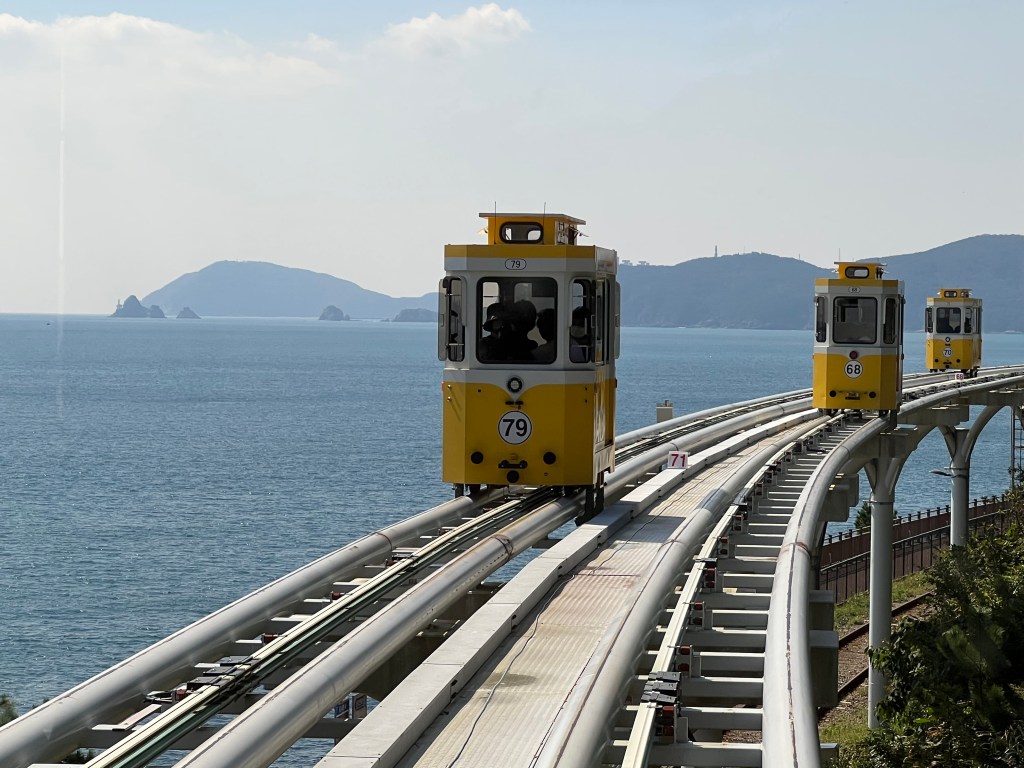
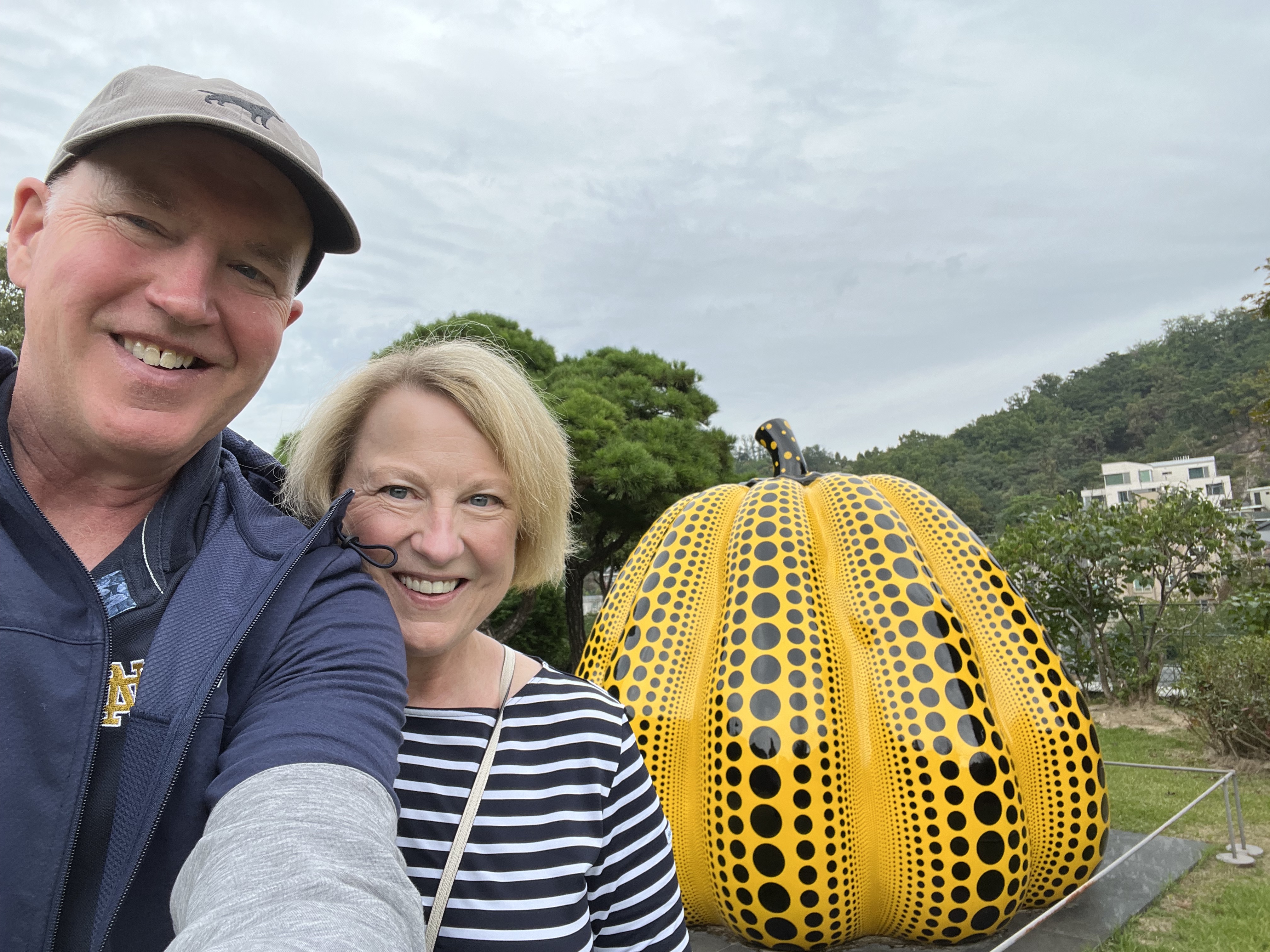
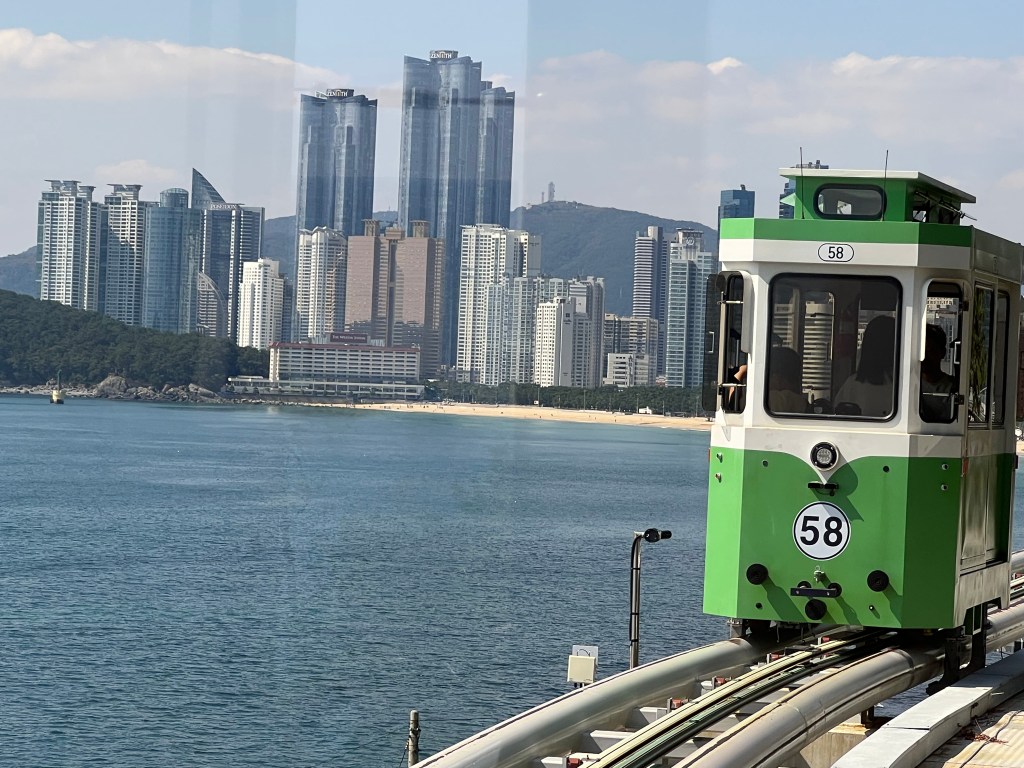
 But something happened on this trip to Korea that to me felt like a turning point, like a loosening of those knots – it was filled with moments of what I can only describe as utter happiness. No stress, no worries, nothing but a sense of adventure and joy, even fun. Even if just for a few minutes. Once was eating the raw beef with Sunghee, but there were many others on the trip. Like when Rick and I hopped on the funny little capsule train cars in Busan and puttered our way along a beautiful coastline when suddenly the skyscrapers and beach of Haeundae appeared – pure joy. Riding bikes past the ancient tombs of Gyeongju – utter fun. Or when Asma and I, laughing, struggled to stay upright on the sketchy cliffside stairs as a wild wind threatened to knock us into the sea – pure exhilarating joy. Or the glimpse of the beautiful, calm 8th century Buddha statue at Seokguram Grotto – pure joy. Or discovering modern Korean art at the Seoul Museum in the hills above Seoul – you got it, pure joy. 

  I will still mask when others do not; I will still be cautious about dining in crowded spaces; I will still stay away from sick people, most sadly our grandtwins, until they are better. But Korea helped me find a place in myself where I can relax and breath again. 감사합니다! Kamsahamnida Korea!
What the Burger?! Subhed: a Glorious Day in Gyeongju
Written by Courtenay

Monday, Oct. 10, 2022 – Gyeongju – We have had two wonderful days experiencing Buddhist temples and ancient Korea, renting a car in Busan and driving up to the “museum without walls,” the ancient capital of Gyeongju. We had envisioned a rather calm, spiritual end to our two weeks in Korea, when we could slow down from the sights, sounds and bustle of Seoul and Busan for some peaceful, you know, Zen time, at the ancient (7th century) Silla capital of Korea. Little did we know that the national holiday on Sunday, celebrating the 15th century invention of the Korean script, was also a school holiday on Monday. And everyone – I mean everyone! – from all over Korea seemed to have converged on Gyeongju, and our hotel, to celebrate the three-day weekend with their families. It was a madhouse.

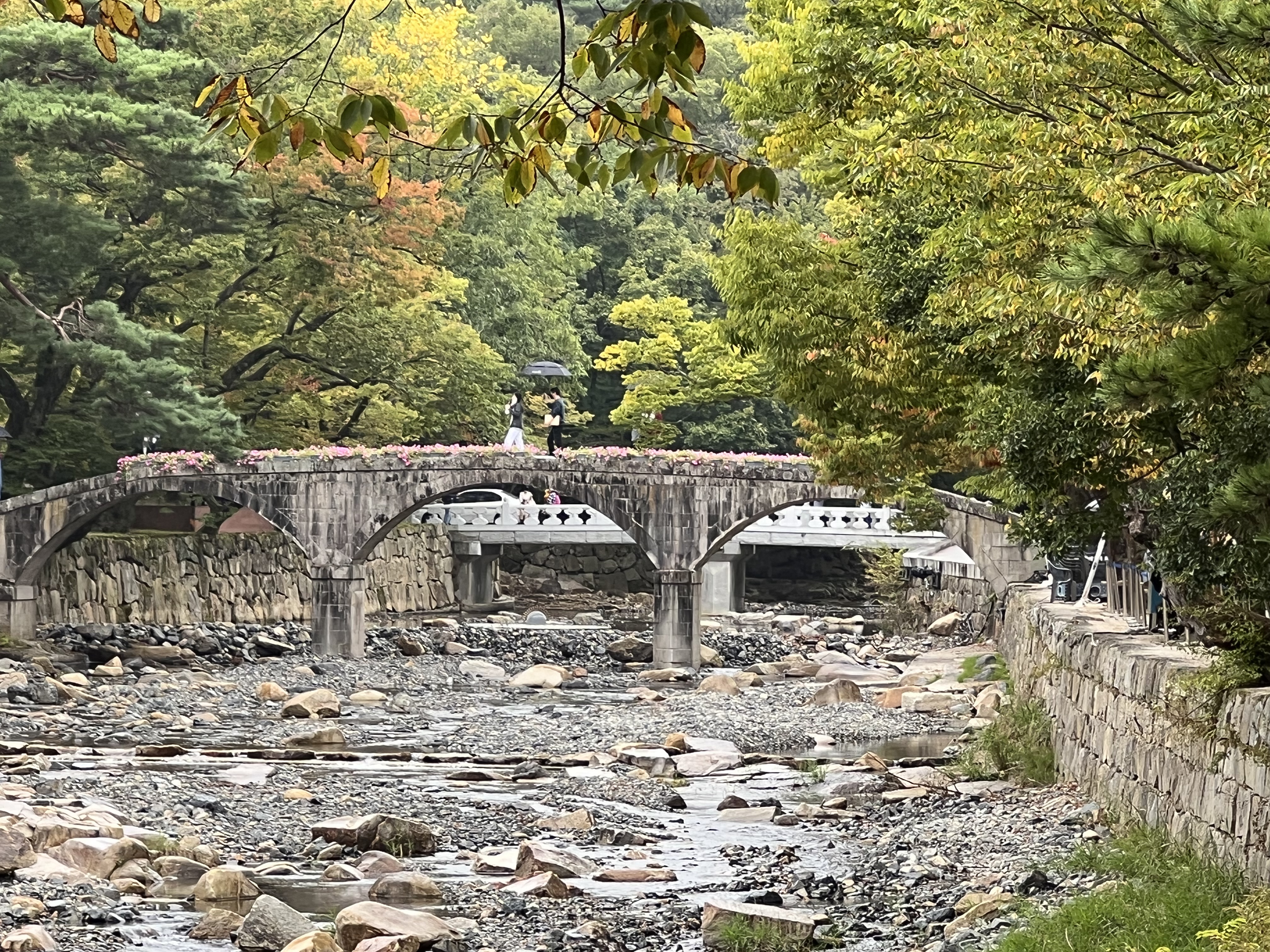
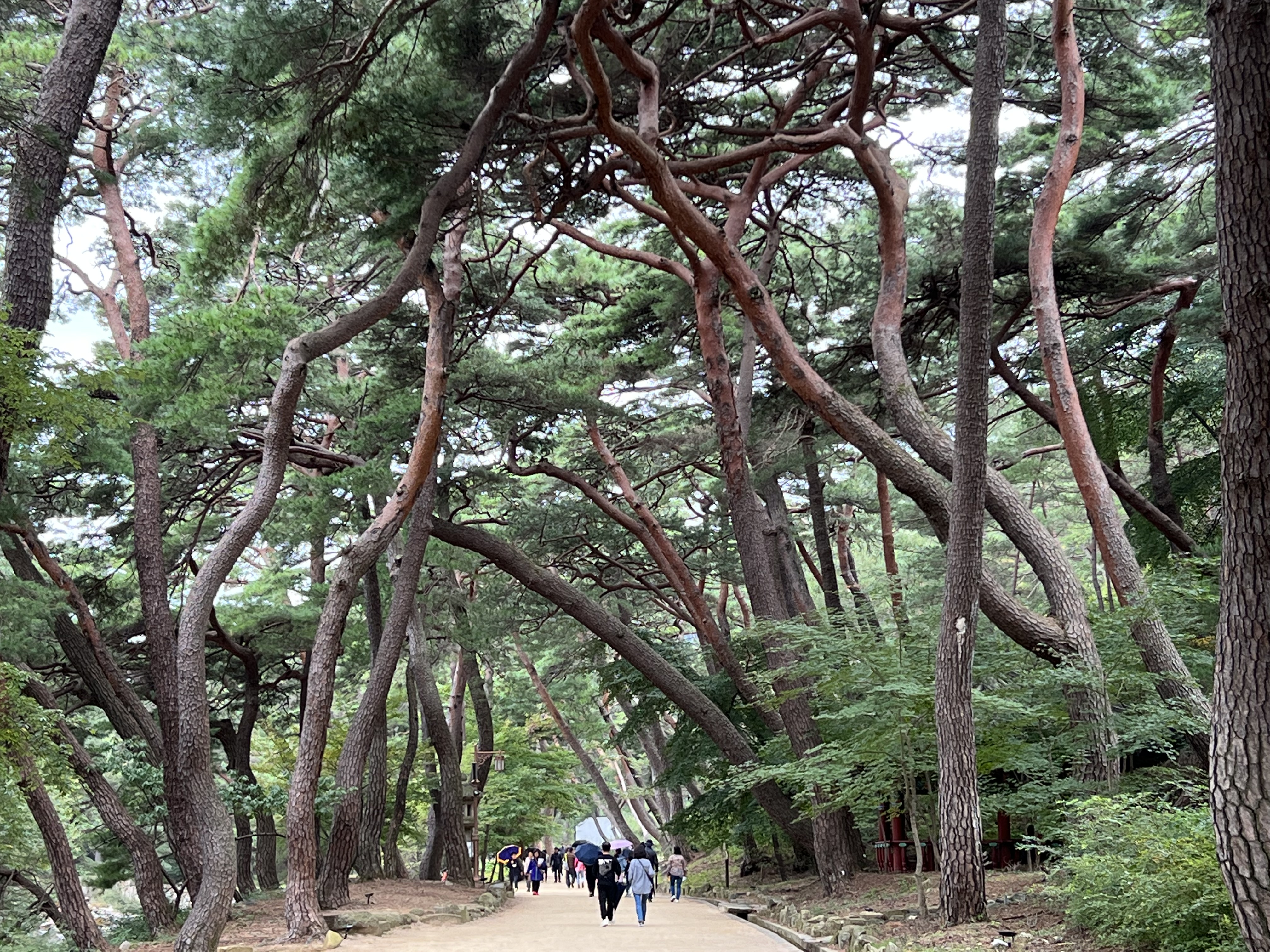
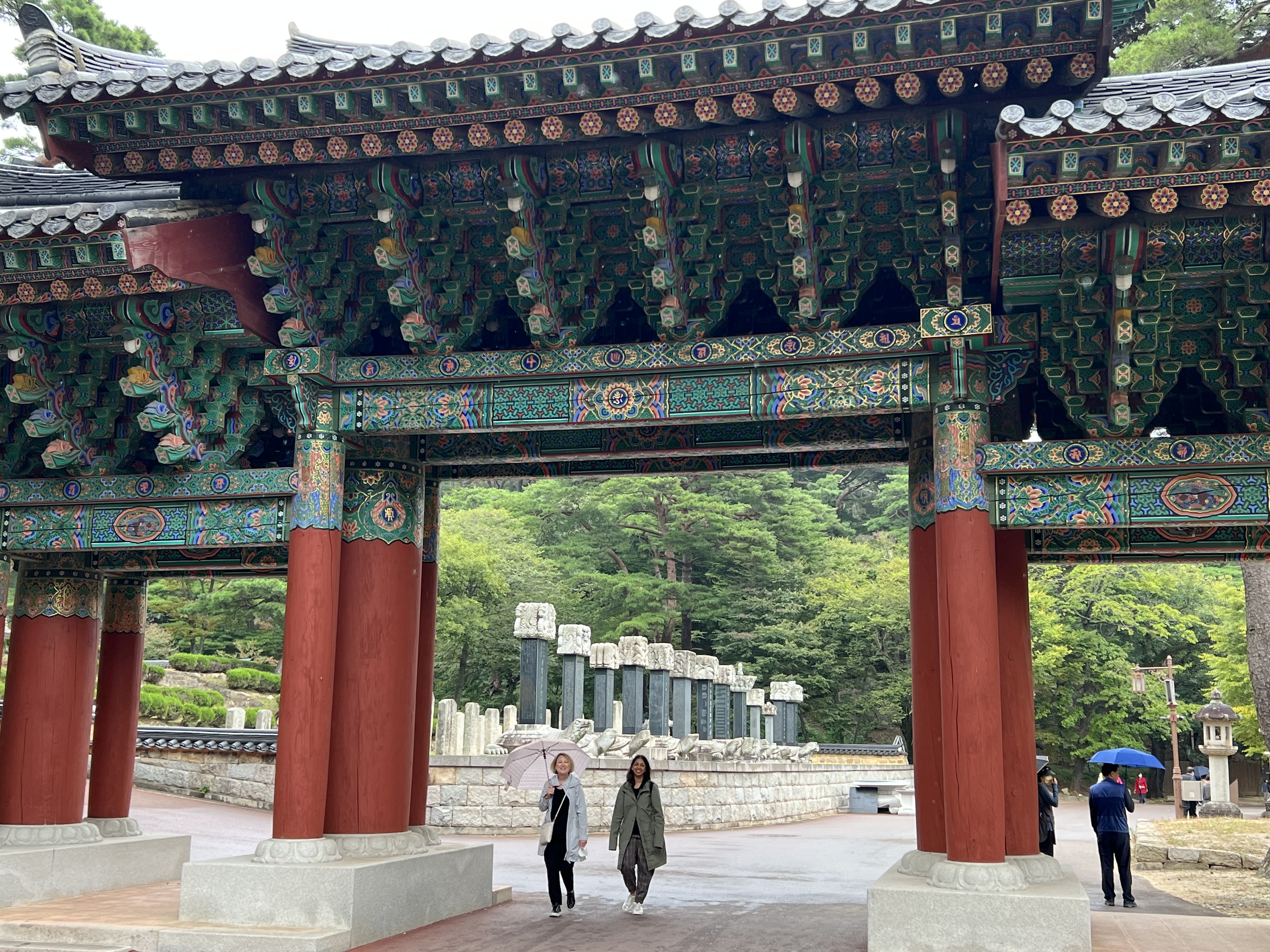
But first – we left Busan yesterday and rented a car. Rick was, as always, the intrepid driver and got us out of the city with one clutch, last-minute lane-change onto the correct highway north. On the way to Gyeongju, we stopped at two Zen temples – Beomseosa and Tongdosa. Tongdosa was our favorite – just a stunning setting and a beautiful 20-minute walk up along a river to reach the temple itself. We had a lovely bibimbap lunch just before at a restaurant I had found online – and it was a miracle that they not only could seat us, but that it was by a large sliding door, so we ate inside but had plenty of breeze. It was one of our best meals in Korea so far – and I was gently scolded for eating my rice with chopsticks, when I should have been using the spoon. So much to learn! It had been raining hard during lunch, but it had cleared up by the time we walked up to the temple, and we had a wonderful time. When we arrived at our hotel in Gyeongju in the late afternoon, we were met with a cacophony of children – they were everywhere. We were the only people who did not have a stroller in tow, or a grandmother. Literally.

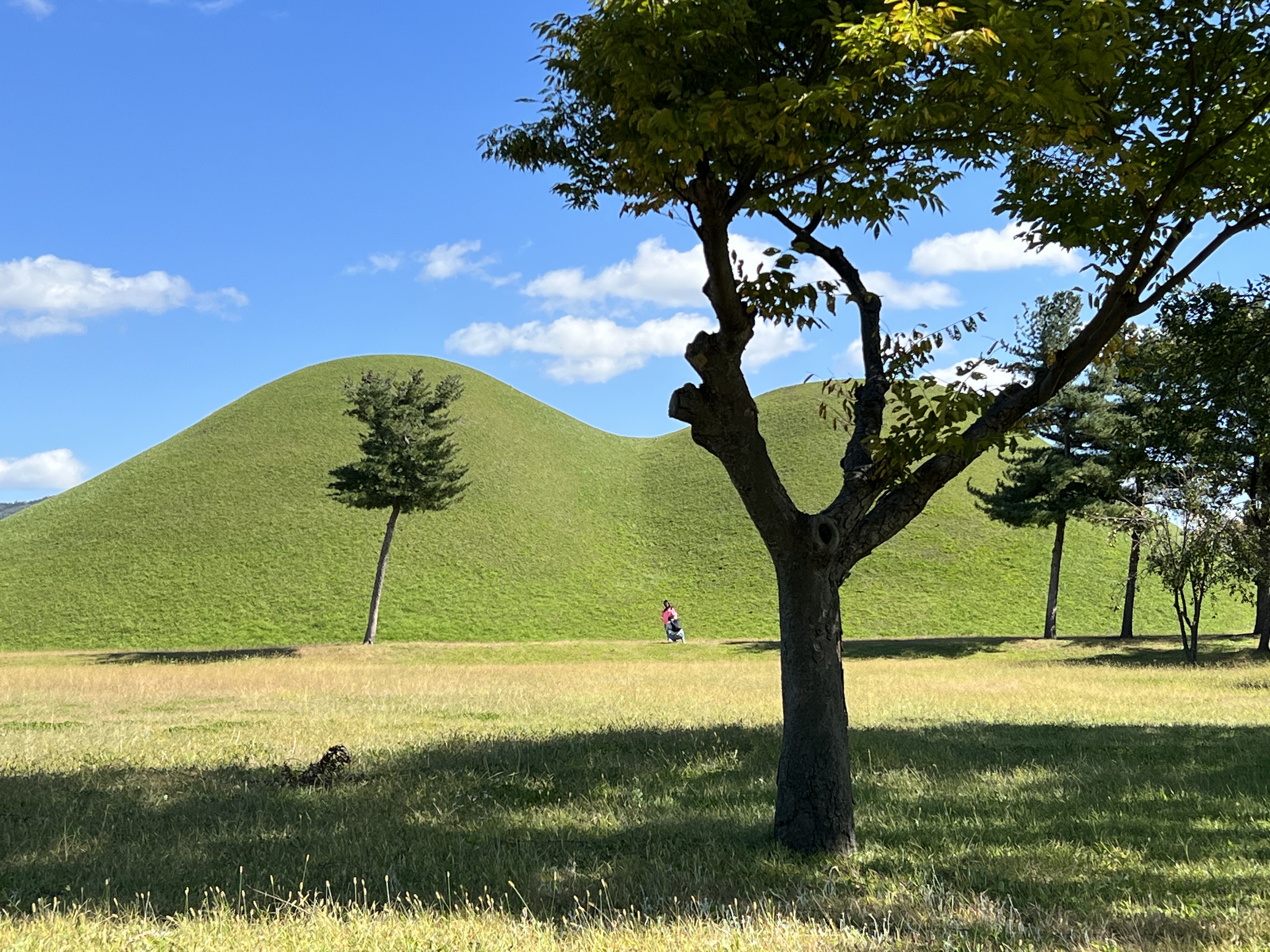
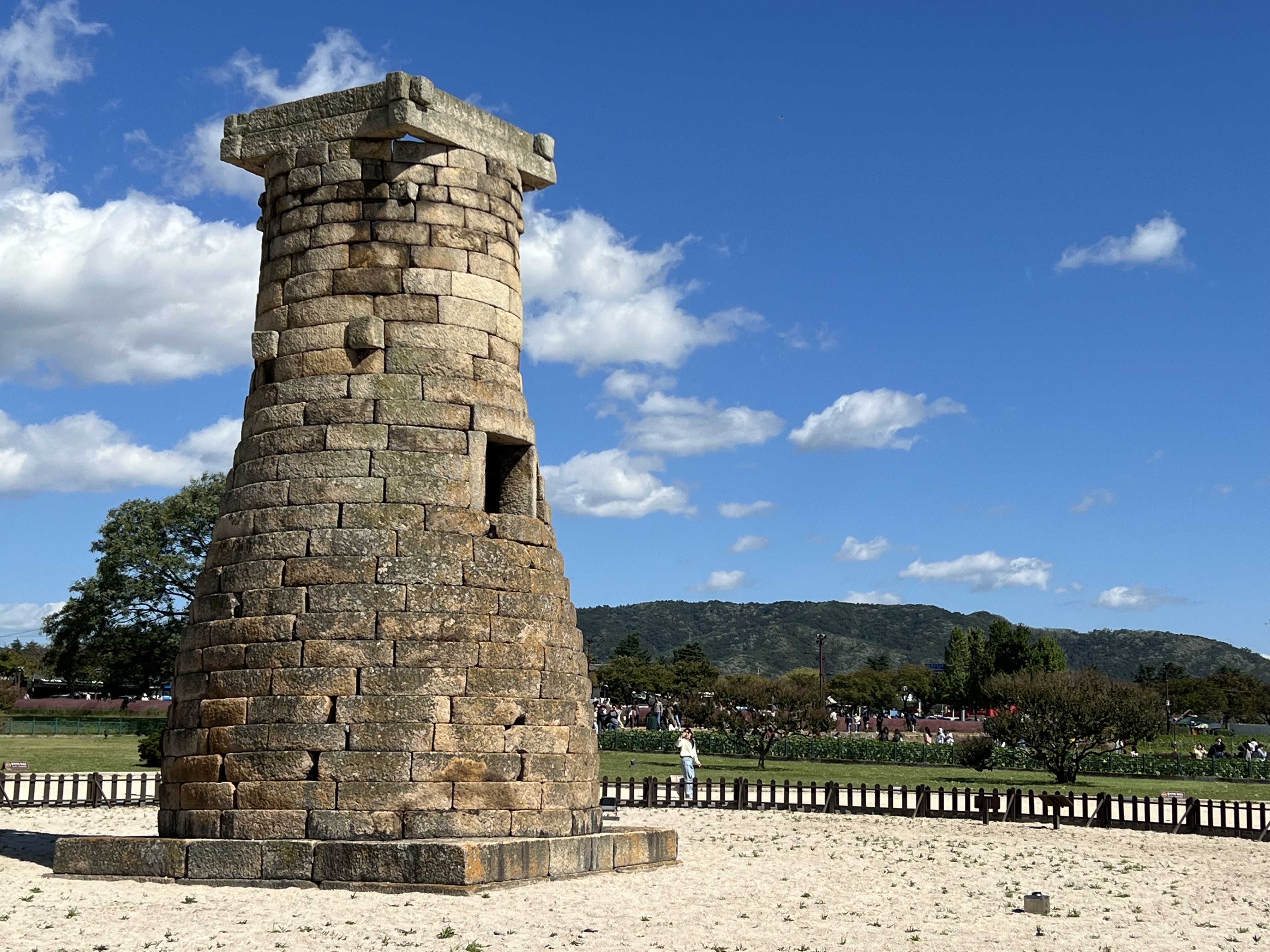
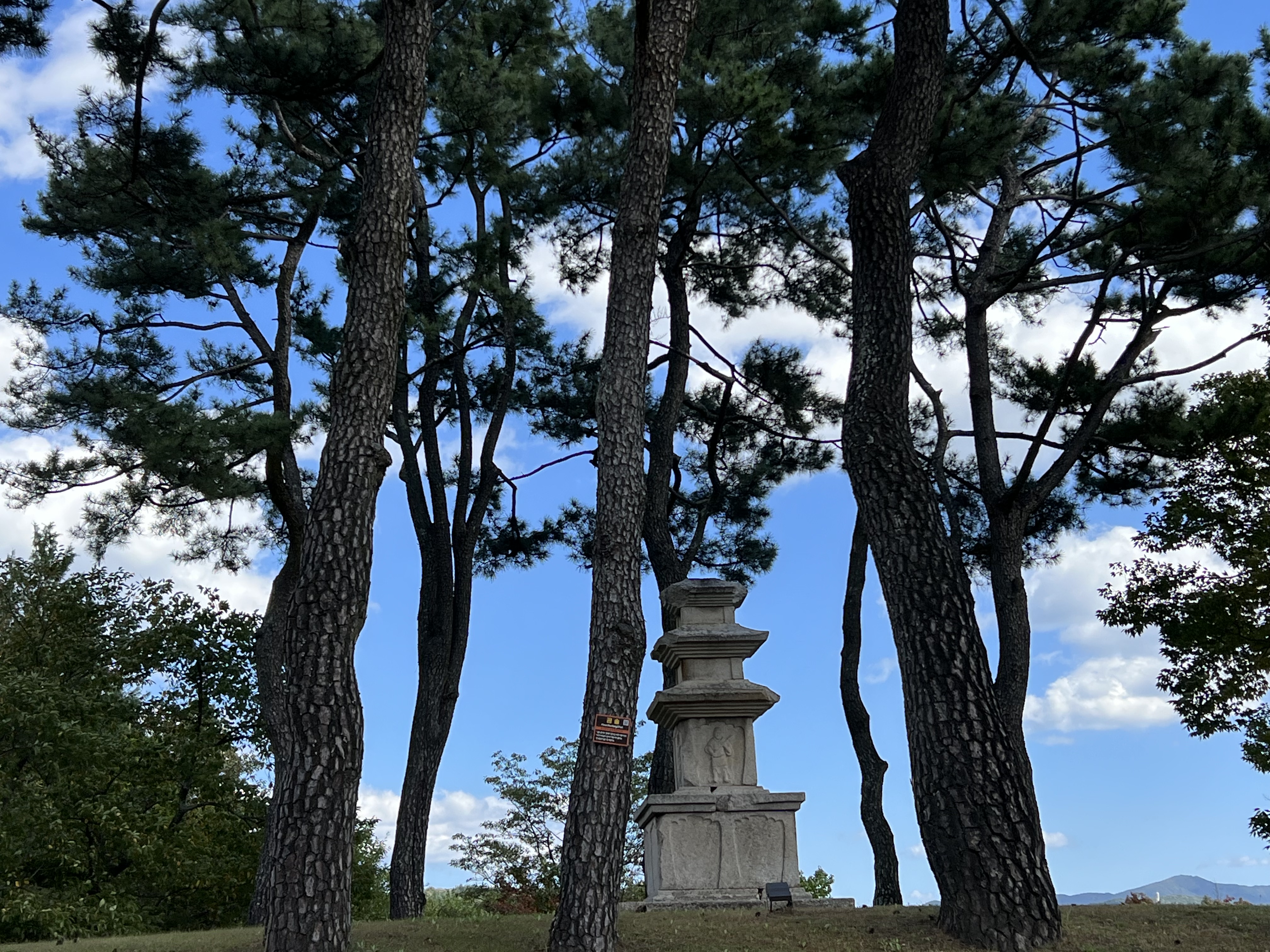
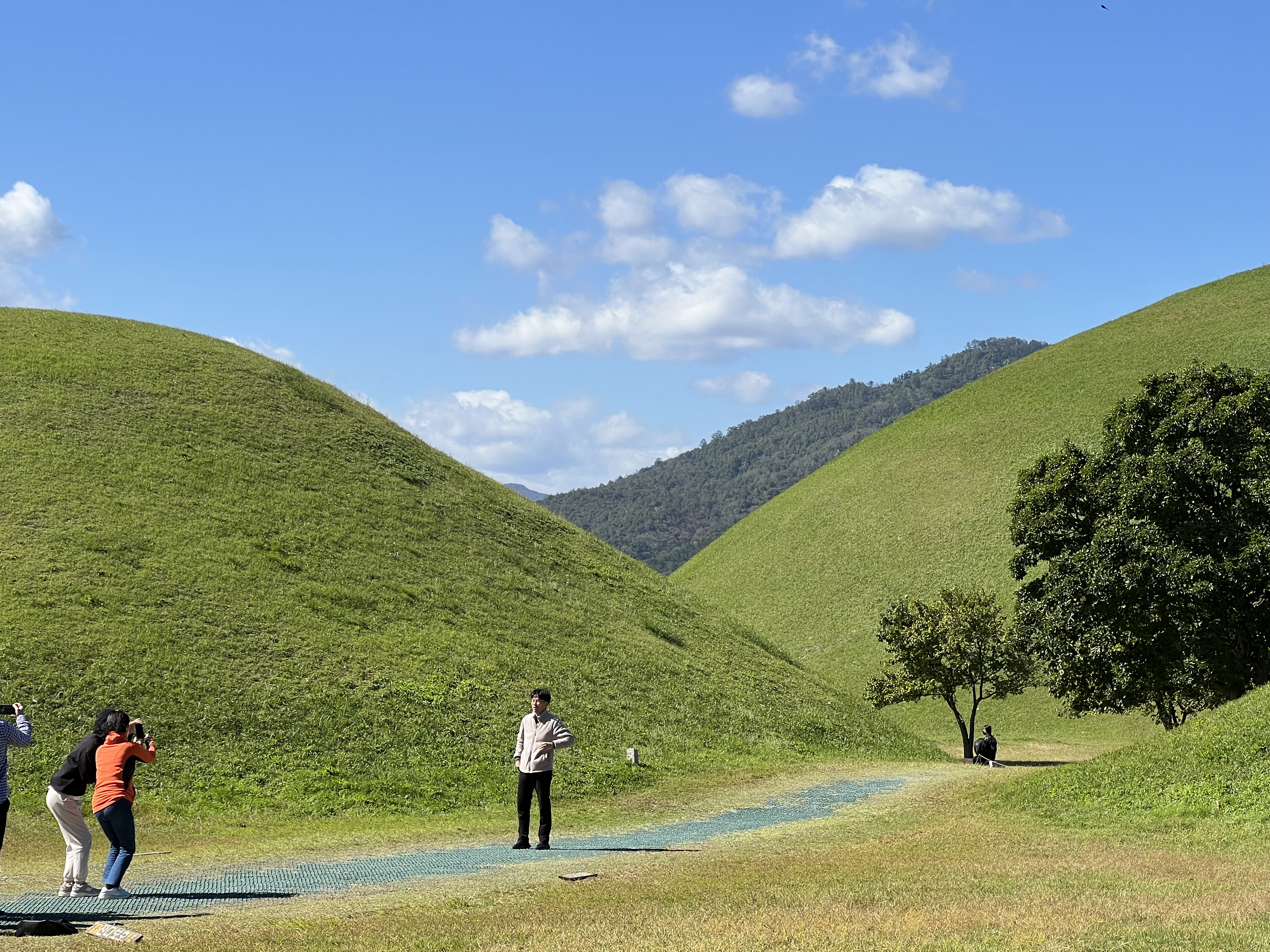
This morning, we still didn’t realize the scope of the crowds, or the fact this was a major family weekend getaway. We drove into Gyeongju proper, where the 7th-8th century burial mounds and sites are located, and we found ourselves in standstill traffic. Rick, fortunately, was able to pull another clutch move and took a side alley and found a parking space next to a bike rental outfit. We rented three bikes and took off on a tour of the historical sites. The guide books had talked about how magical it was to cruise freely through the ancient, grassy burial mounds, but there were so many people, and children, that we had to gingerly make our way along the paths, hoping we wouldn’t take out any small children or elderly people who veered into our way. But the air was fresh and the wind was brisk, and the grassy mounds – containing the graves of emperors and noble people from centuries past – the pines and maples, were all fluttering in the breeze. We made our way to the National Museum, where we saw beautifully wrought gold crowns and jewelry, grave goods found in the mounds, and stone pagodas and other treasures collected from around the ancient capital of Silla.

We finally made our way back to the parking lot – the location of which we remembered from the hilarious restaurant nearby called “What the Burger!?” – and we found a seriously dysfunctional situation: everyone was trying to leave from the same exit, into the same clogged street, and there was a bit a road rage, and we sent Rick out on his bike to scope out the escape routes. Again, he had a clutch move, and we found a back exit and were on our way to the beautiful temple of Bulguksa, and the nearby grotto of Seokguram.

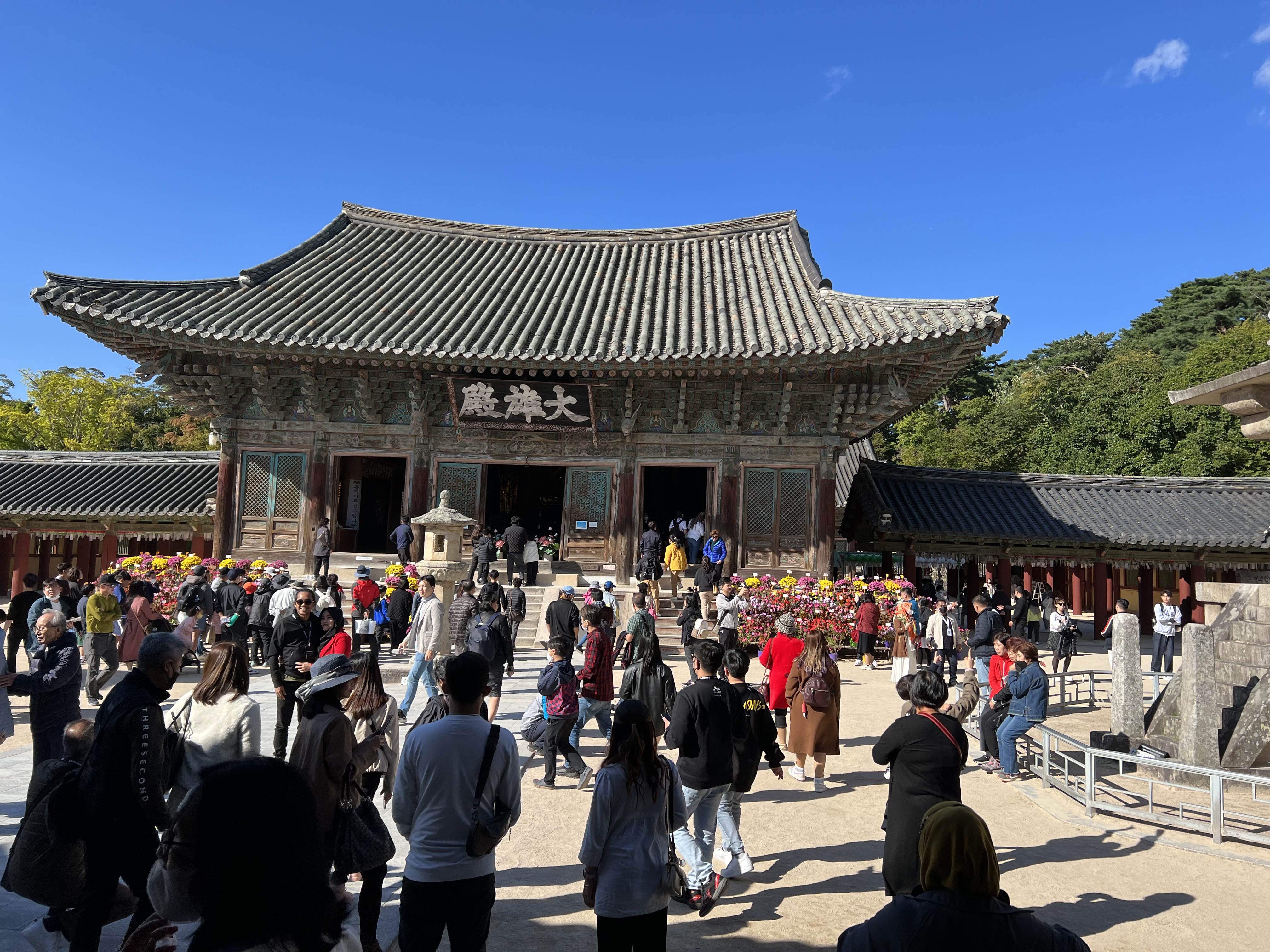
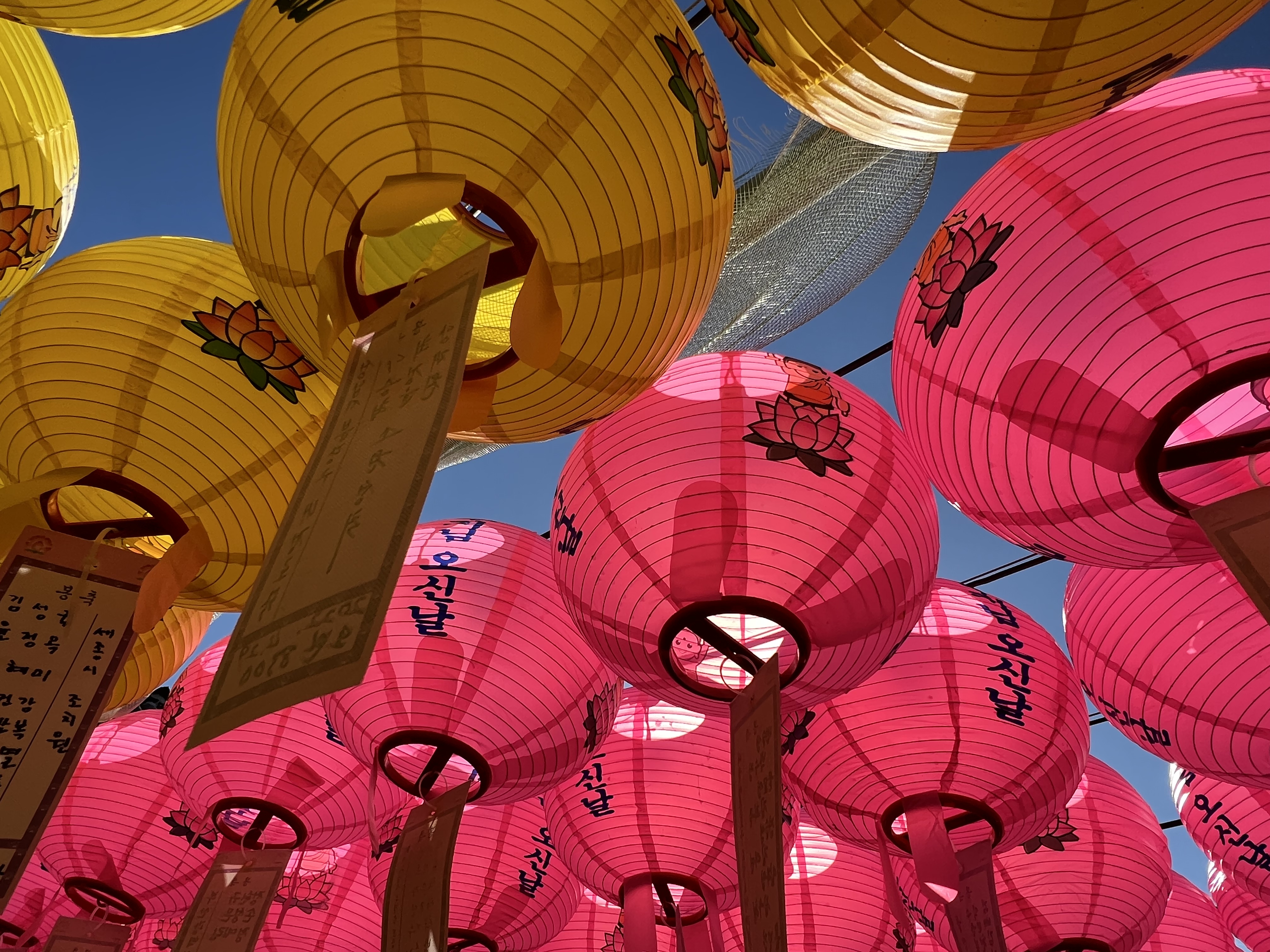
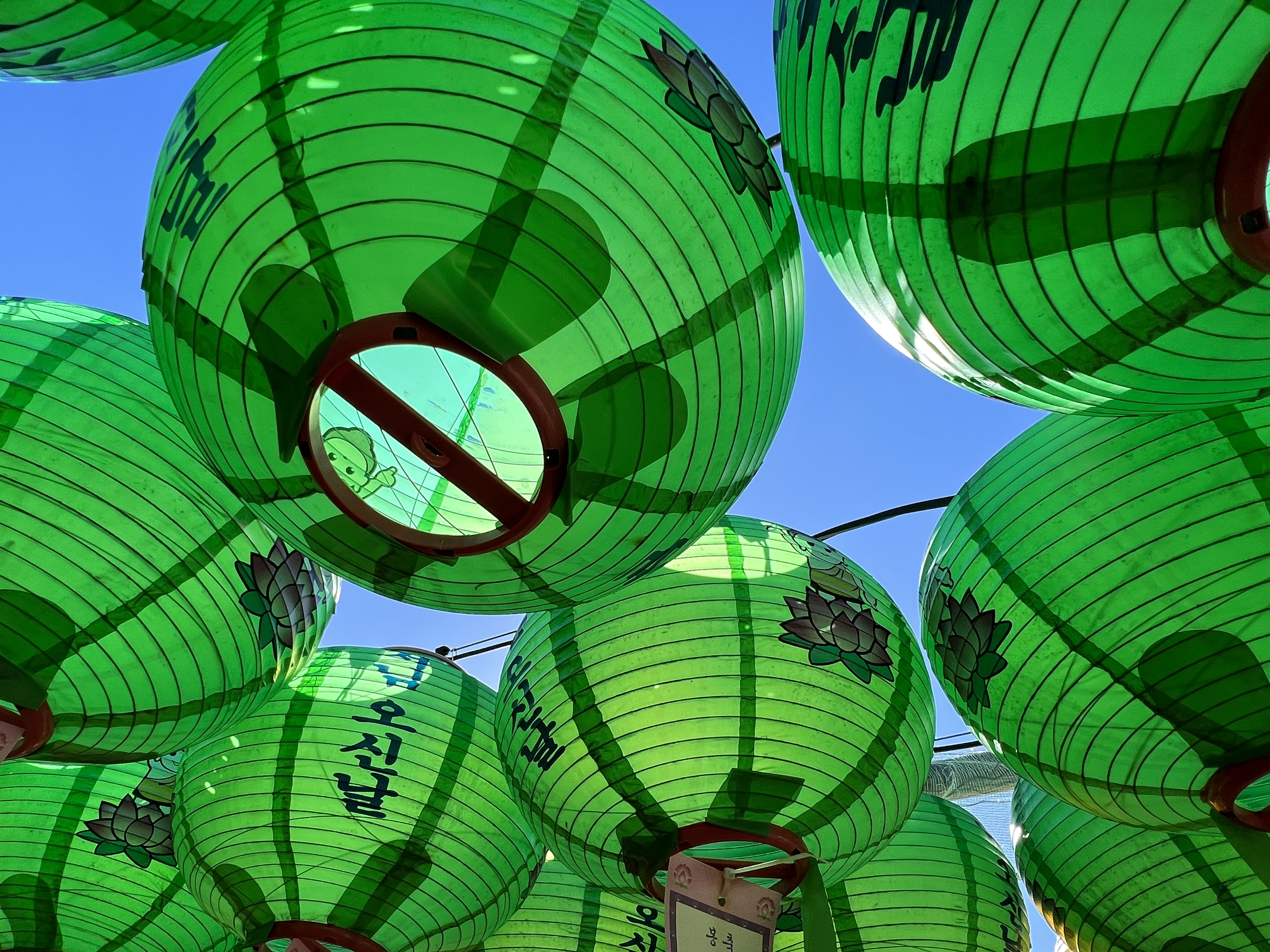
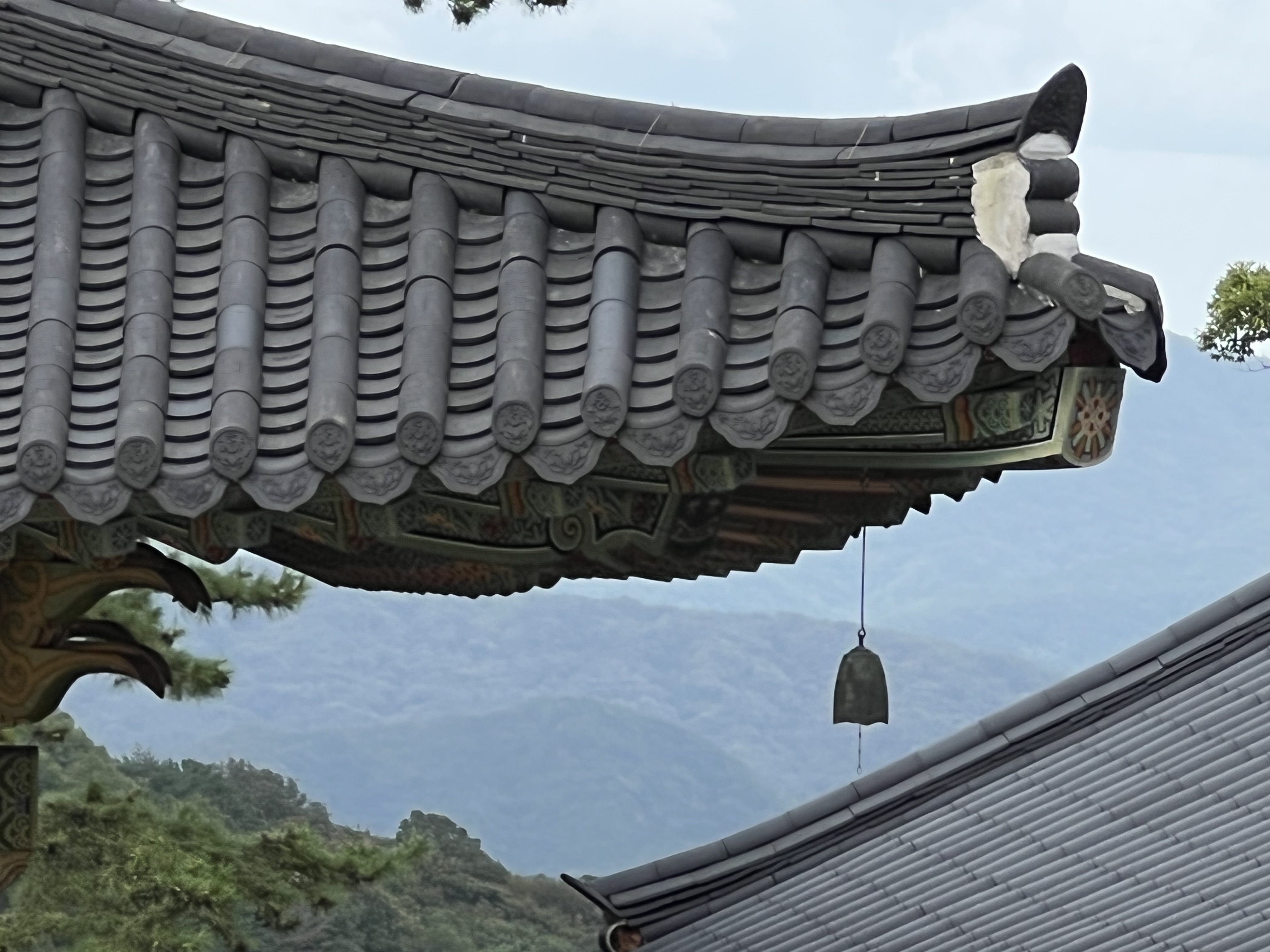
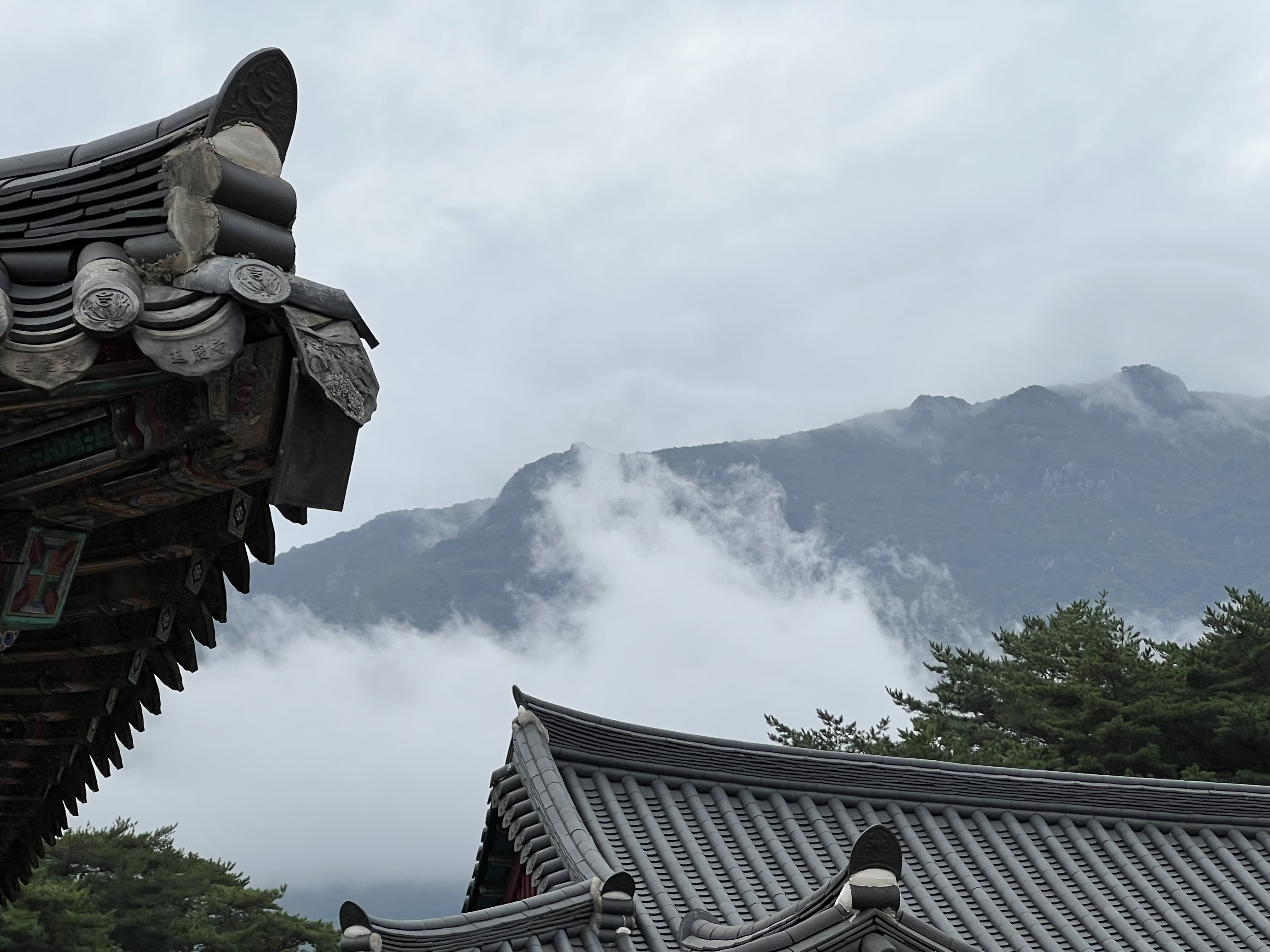
Bulguksa was lovely, nestled on the side of a mountain, a 7th century temple that was vibrant with offerings from the 21th century – flowers and paper lanterns fluttering in the wind, holding the hopes and wishes of modern people from an ancient tradition.

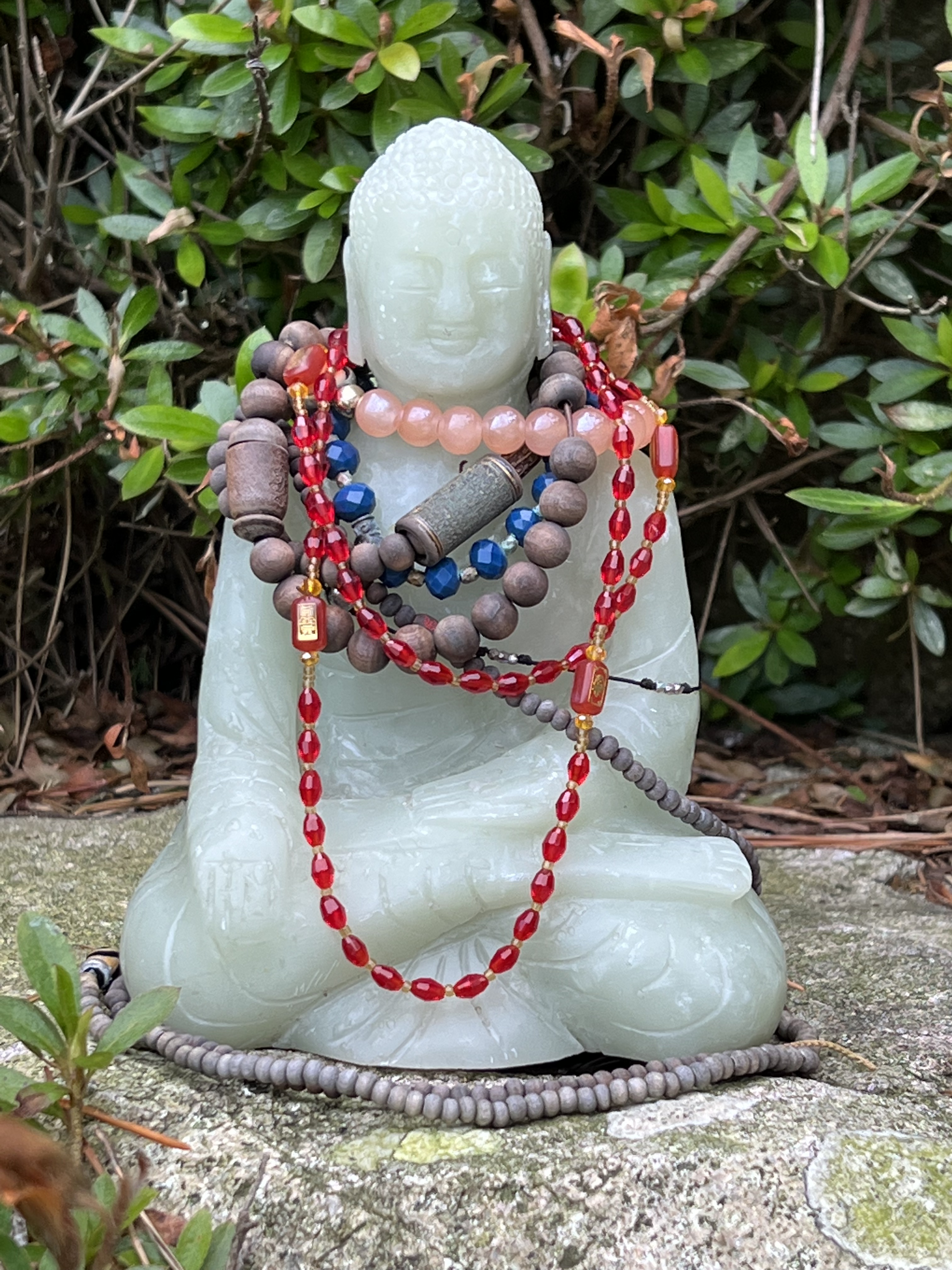
Seokguram, on the other side of the mountain, had an amazing view of both the city and rice fields of Gyeongju and the sea beyond. I made a small offering and was allowed to ring the huge bronze bell, the sound was astonishing, just lovely. The grotto, perched high up a hill in a carefully engineered, manmade cave, held the most beautiful Buddha, a 9th or 10th century statue, that embodied absolute peace – a Tang-Dynasty-style, with a full figure and graceful drapery. It was my favorite Buddha of the trip. After a long walk back to the car, we made our way back to the hotel, and with most of the families gone, so it is so much quieter tonight.

We head to Seoul tomorrow, and are so excited to have dinner tomorrow with Sunghee, an old friend from the fencing world, who is here visiting family. Her husband, Sungmin, has been our best tour guide and cultural consultant and cheerleader throughout. We are deeply grateful to him for his help on this trip, and for his support over the years, especially through my tough times of early diagnosis. They are a dear family to us, and we are so looking forward to reconnecting with Sunghee, whom we have not seen for a very long time.

Big, blustery Busan

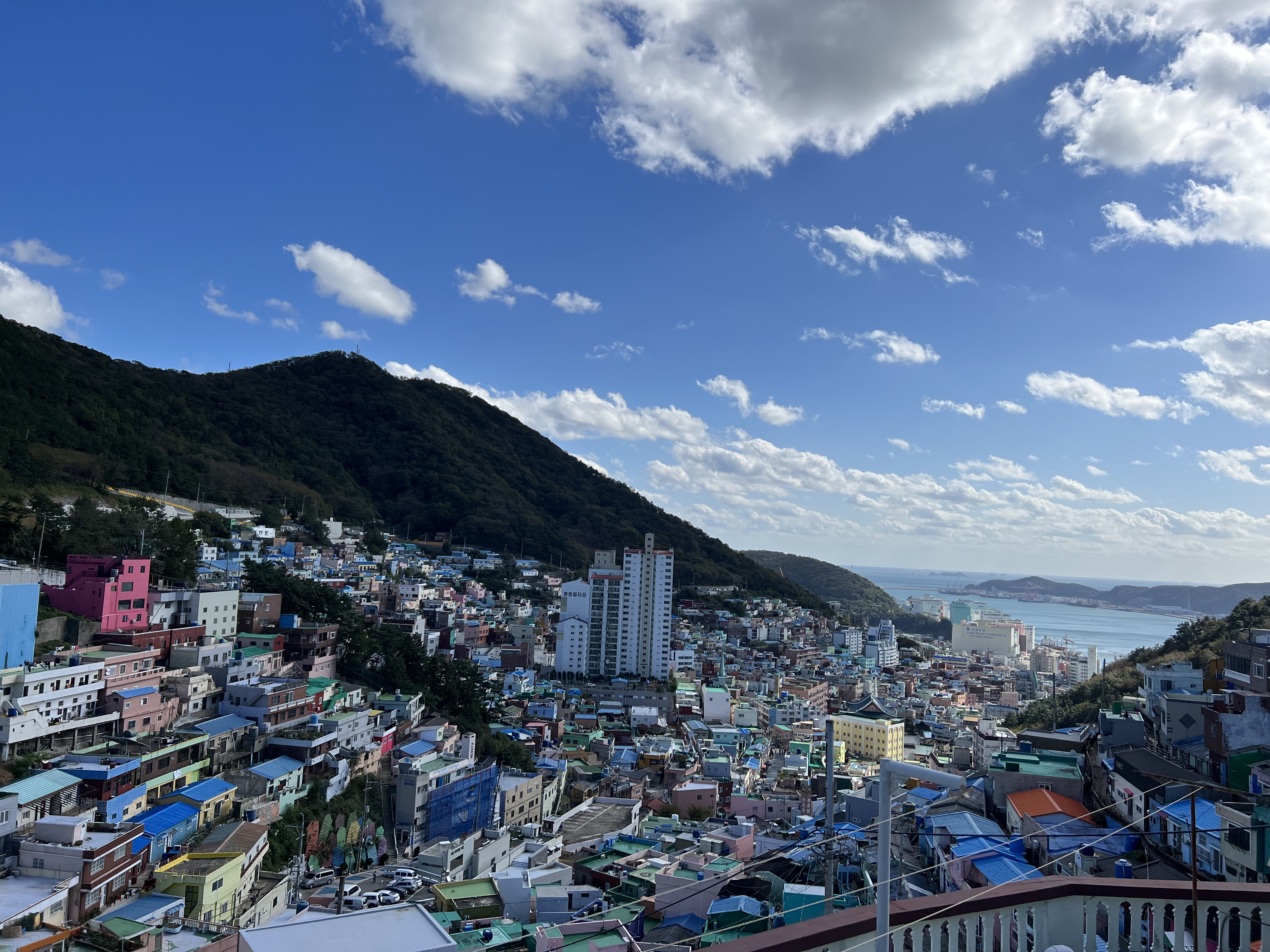
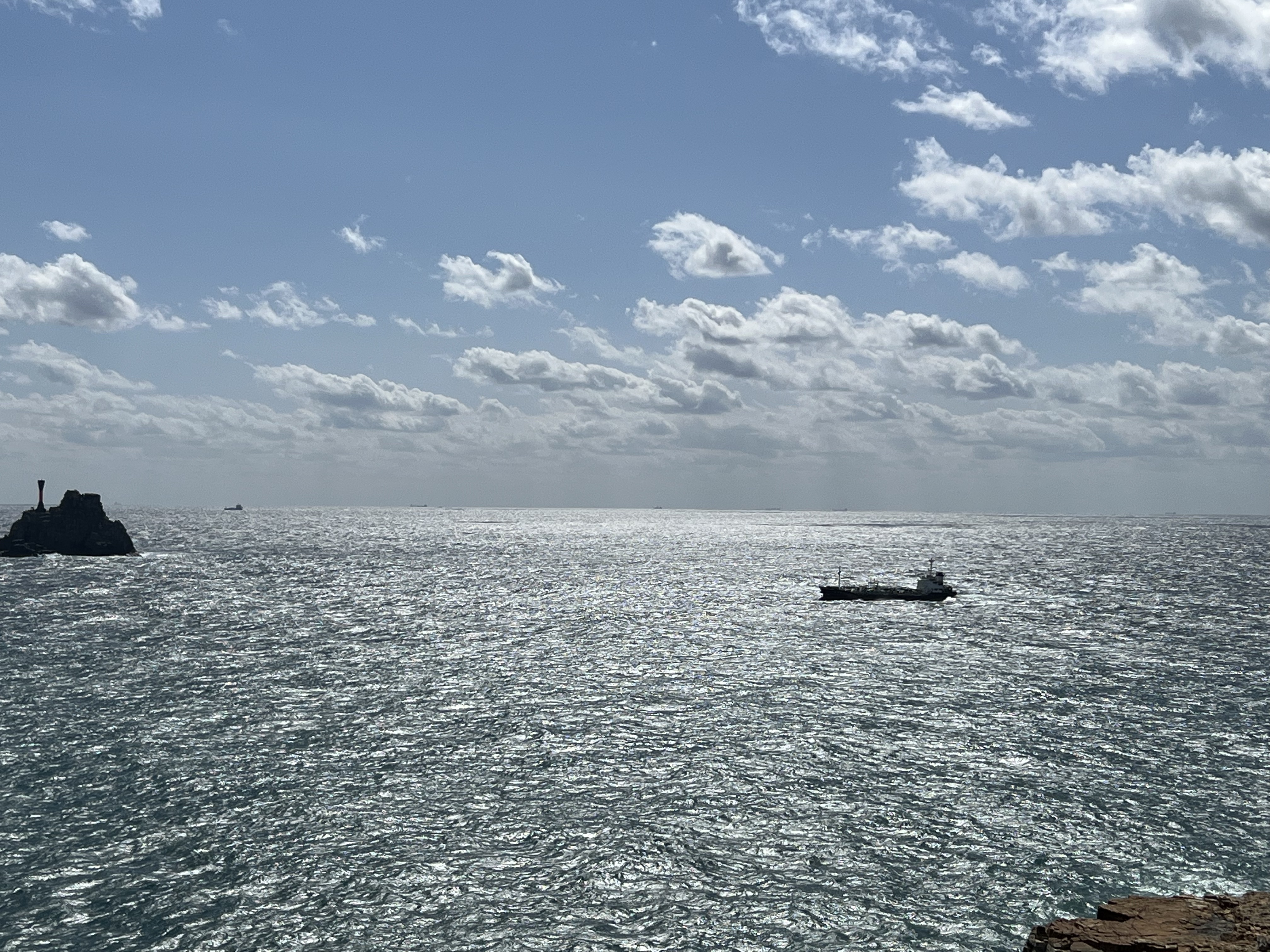
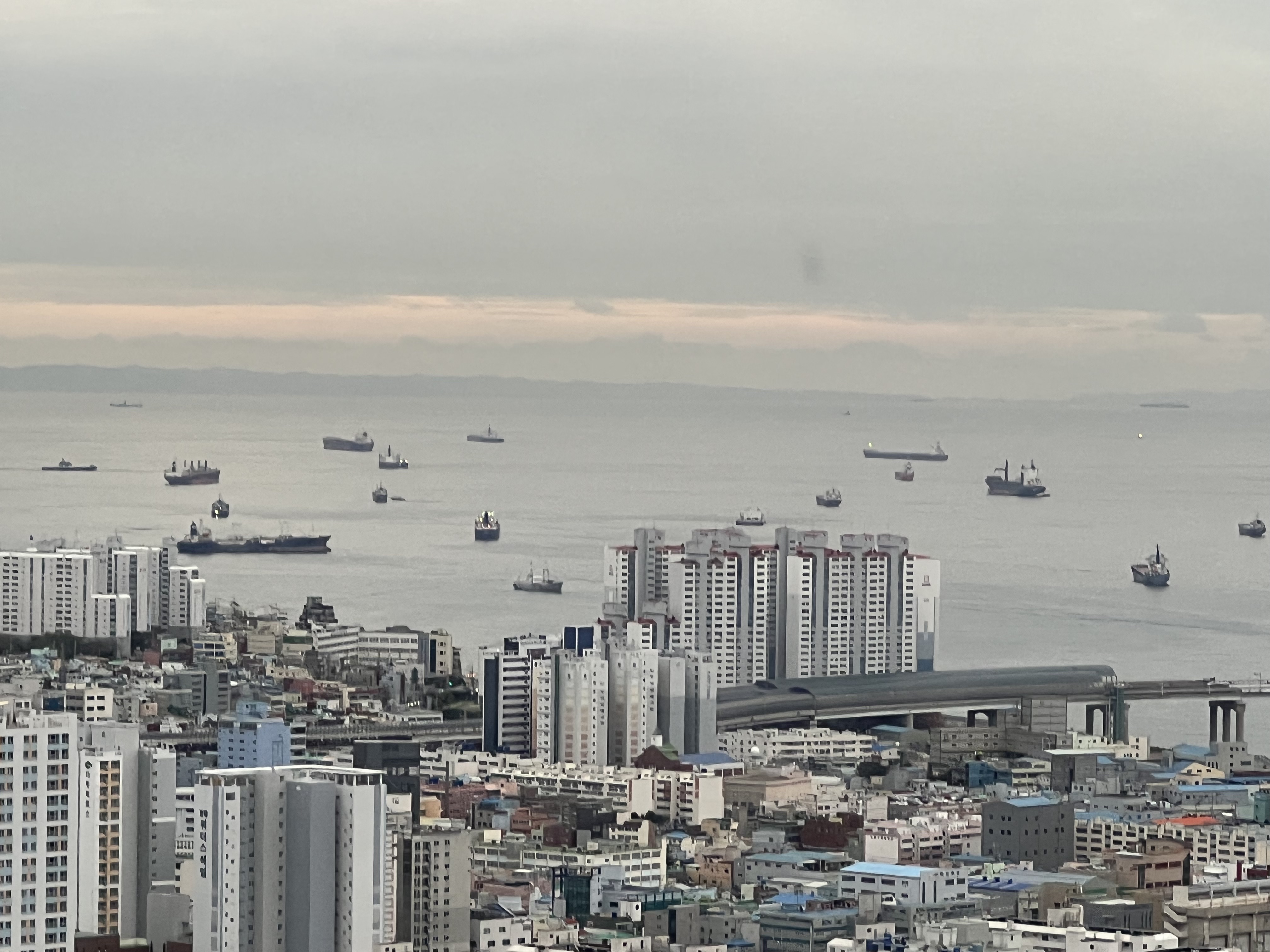
Saturday, Oct. 8, 2022 — On our last full day in Busan, we took a long cab ride to Taejongdae Resort Park to see all that powers this great city — the rugged coastline, the rough seas, the massive container ships making their way into the world’s sixth busiest port.

Taejongdae is a thick pine forest that sits at the southernmost end of Yeongdo Island, where, sixteen hundred years ago, the Shilla King Taedong liked to show off his archery skills. It’s the most stunning natural place we’ve seen during our time in Korea, where rocky cliffs fall off hundreds of feet down to a churning ocean, which was exceptionally wild this day, with howling winds whipping up huge swells that sent spray over the bows of the massive container ships making their way into the port.

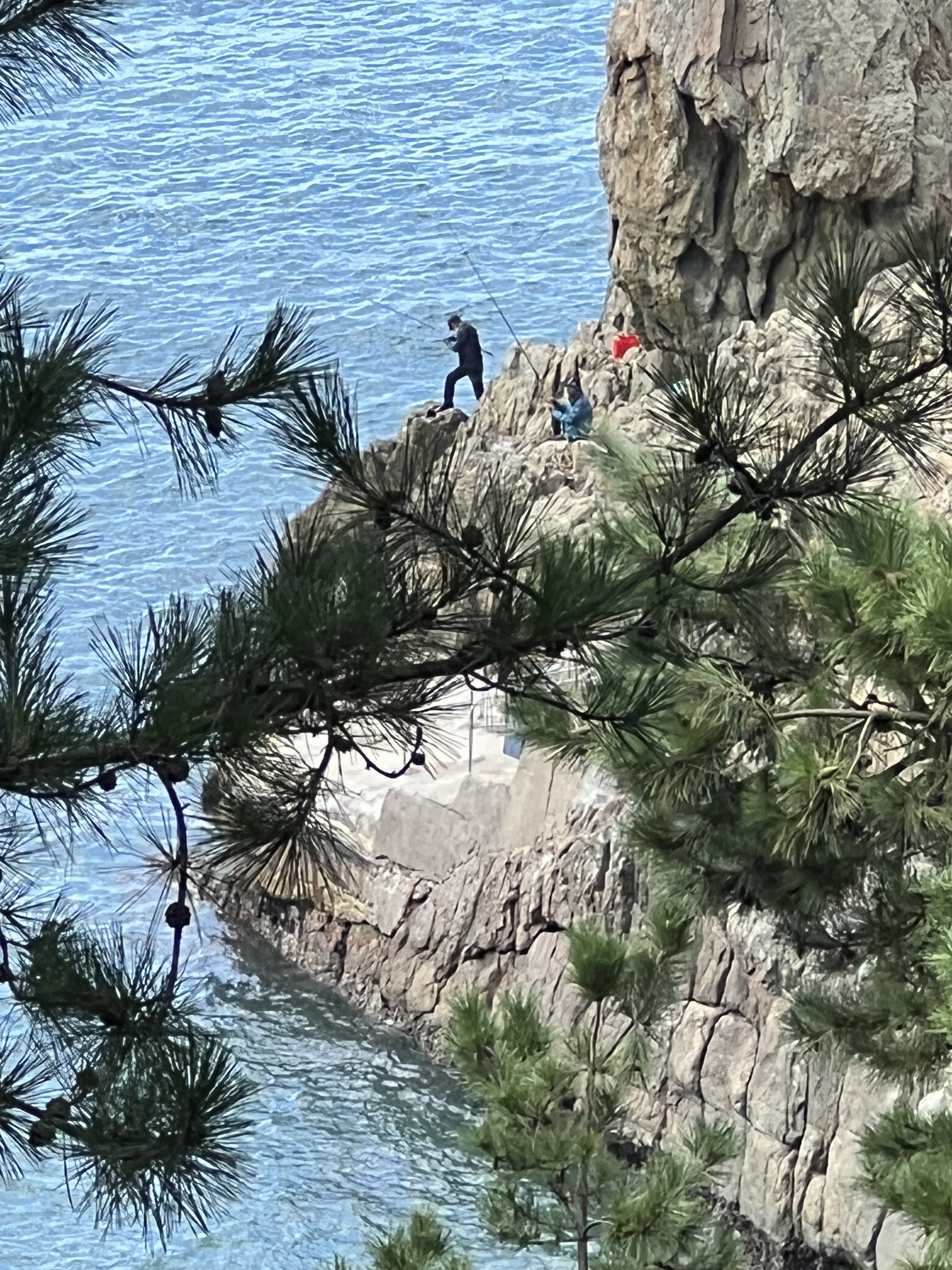
We walked a mile or so through the forest, looking down on fishermen clinging to the rocks on the quiet side of the island protected from the winds, where more than a dozen tankers and other ships were anchored. The park’s cute little tourist train, the Danubi Train, three cars on wheels, went past us a few time. The first stop was an observatory, at the southern point of the island, and, braced against the wind, we could look out and see, very close, Tea Kettle Island, and then about thirty five miles away, the blue-gray outline of a Japanese island, Tsushima, just 50 kilometers away.

Courtenay had some questions about what we were seeing, and what was ahead, for one of the park docents, a tiny, narrow-shouldered woman, who, rather than answer them, eagerly led us on to the Yeongdo Lighthouse, which has been a beacon for ships coming into Busan for over 100 years. “Many, many steps,” Courtenay’s new friend told us. She was a geologist by training, 75 years old, very excited to practice her English, and it turned out that she spoke fluent Japanese, and so the two of them walked shoulder to shoulder, gesturing, chatting, connecting, in three languages, the older woman clearly reluctant to say goodbye, as Asma and I followed along behind.

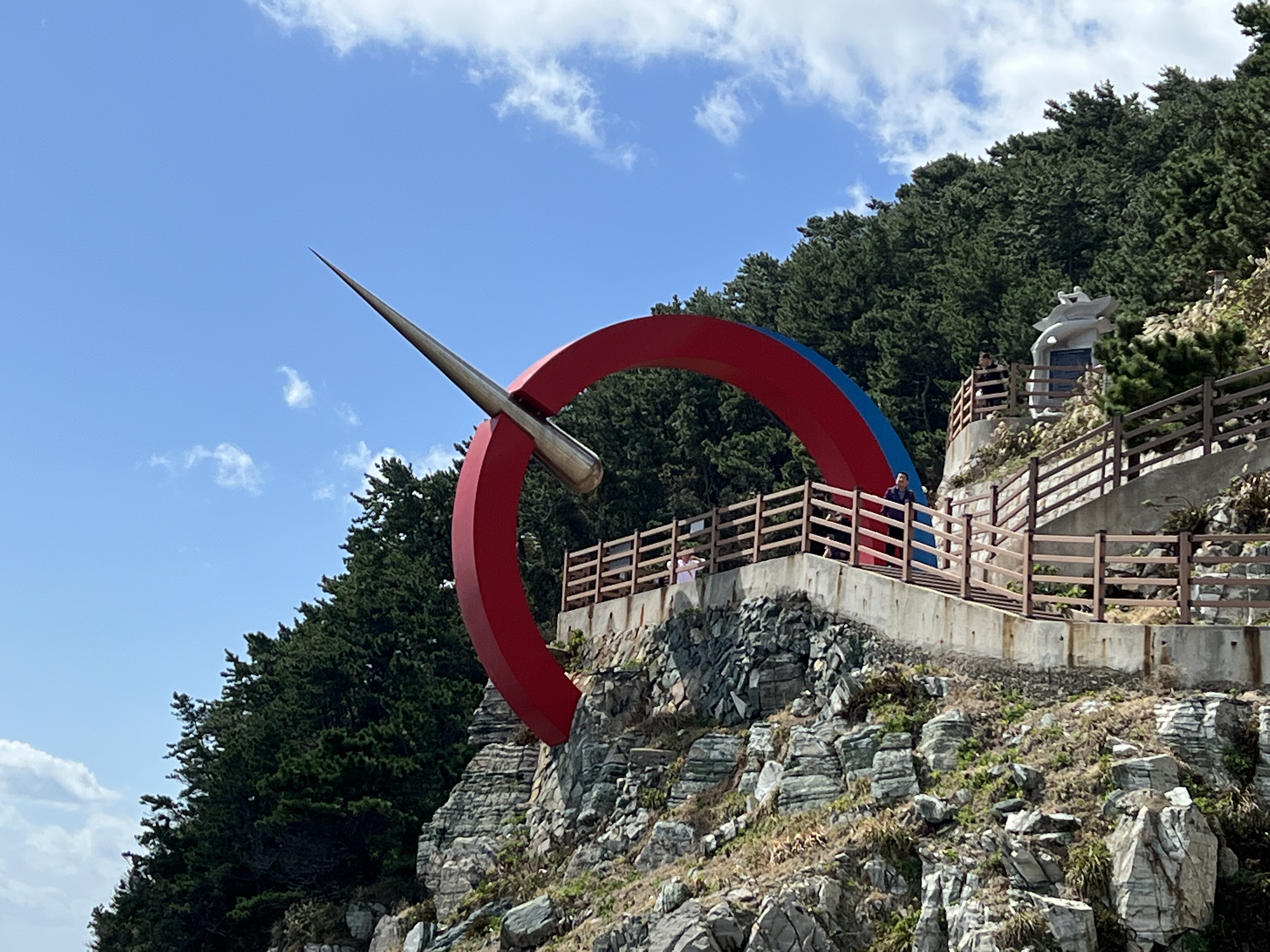
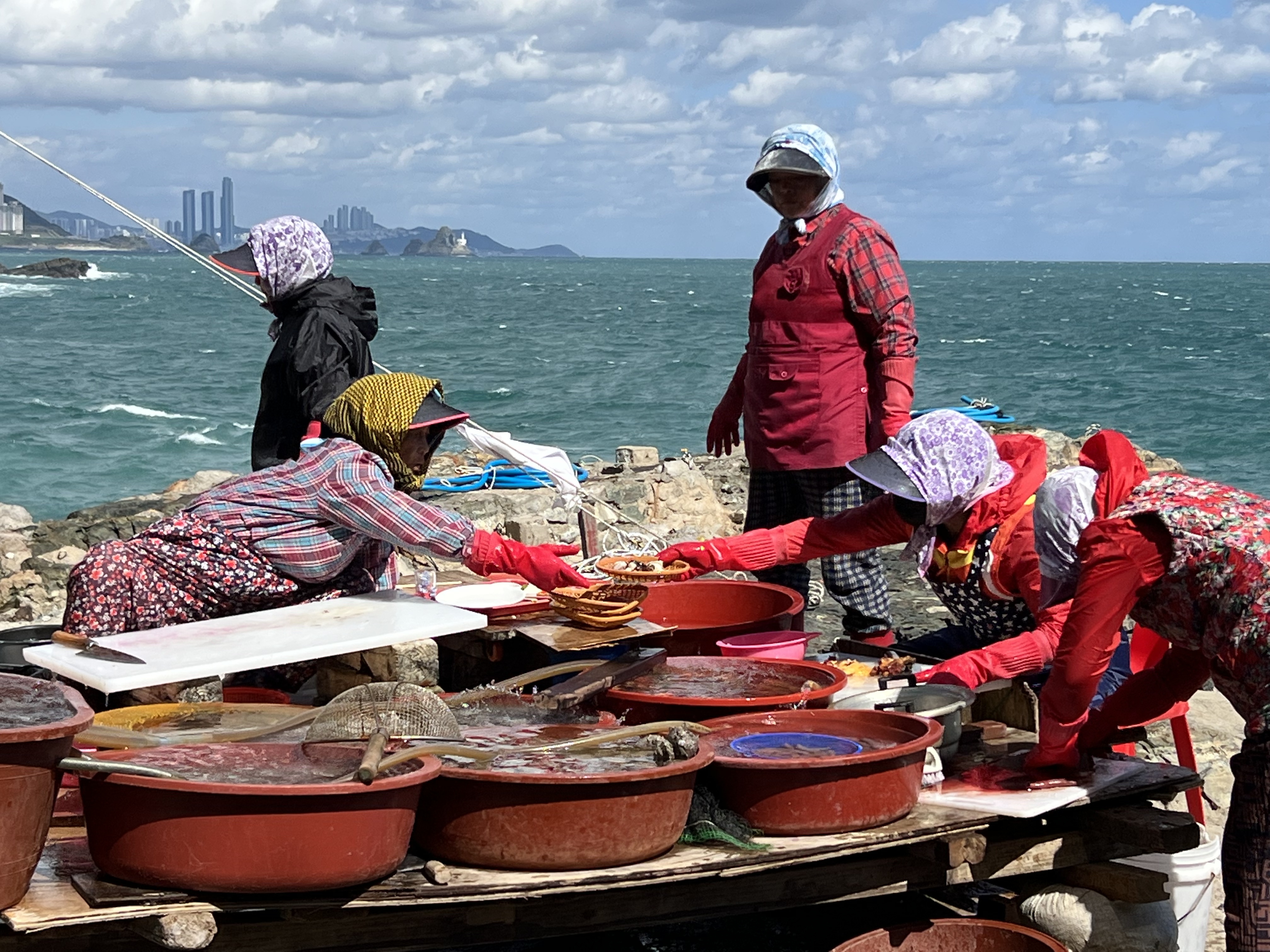
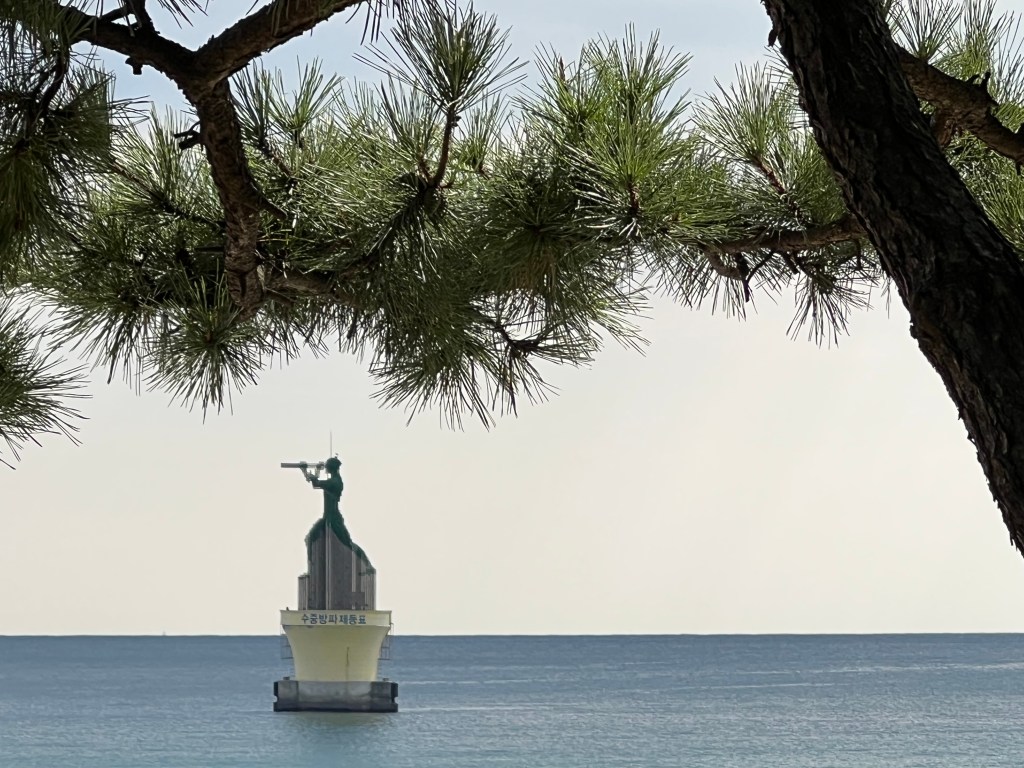
We walked “many, many steps” past the signature statue at the lighthouse, a silver needle in a circle of blue and red, pointed out to sea, and down a long, steep stairway to the rocky shoreline, where a half dozen women in brilliantly colored clothes cleaned and chopped fresh-caught abalone, clams, sea cucumbers and other seafood, the hard wind sending sea spray over them, and serving it to Korean families who sat on plywood platforms tucked behind the rocks.

It was an unforgettable scene, the deep blue-green water, all the ships, the women braced against the wind, the sun shining on the glittering surface. There is a Korean word, “절경 /jeol-gyeong/.” The word means a scenic view that can’t be better. That will be our lasting memory of Busan.

Fast train to sky capsule

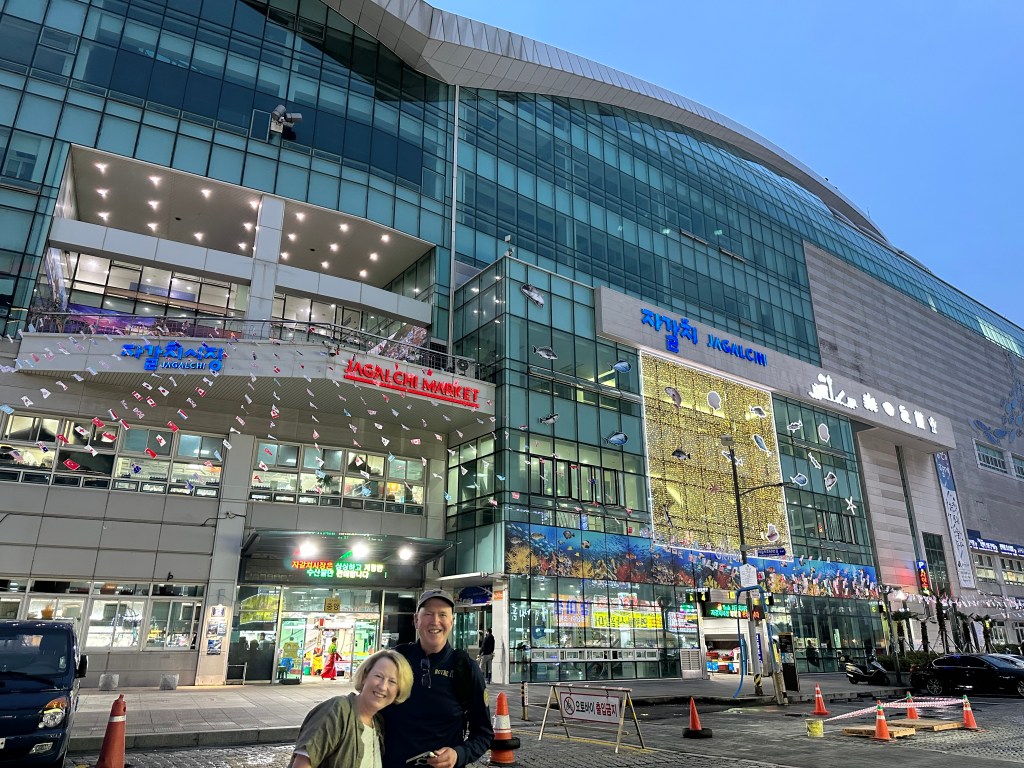
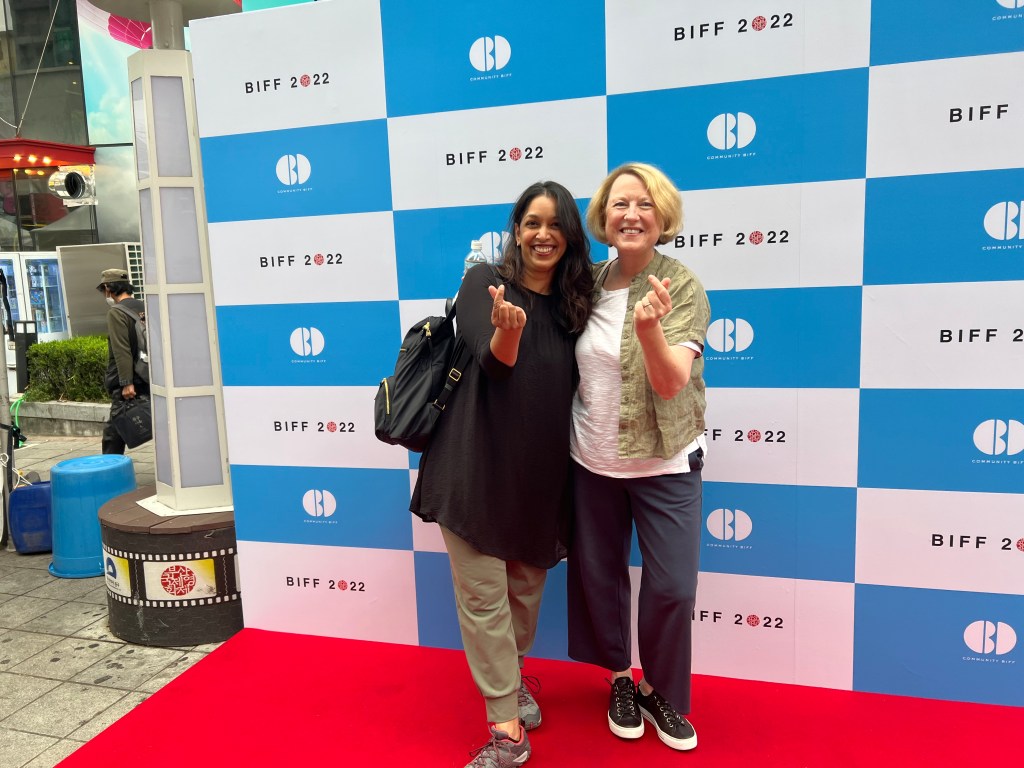
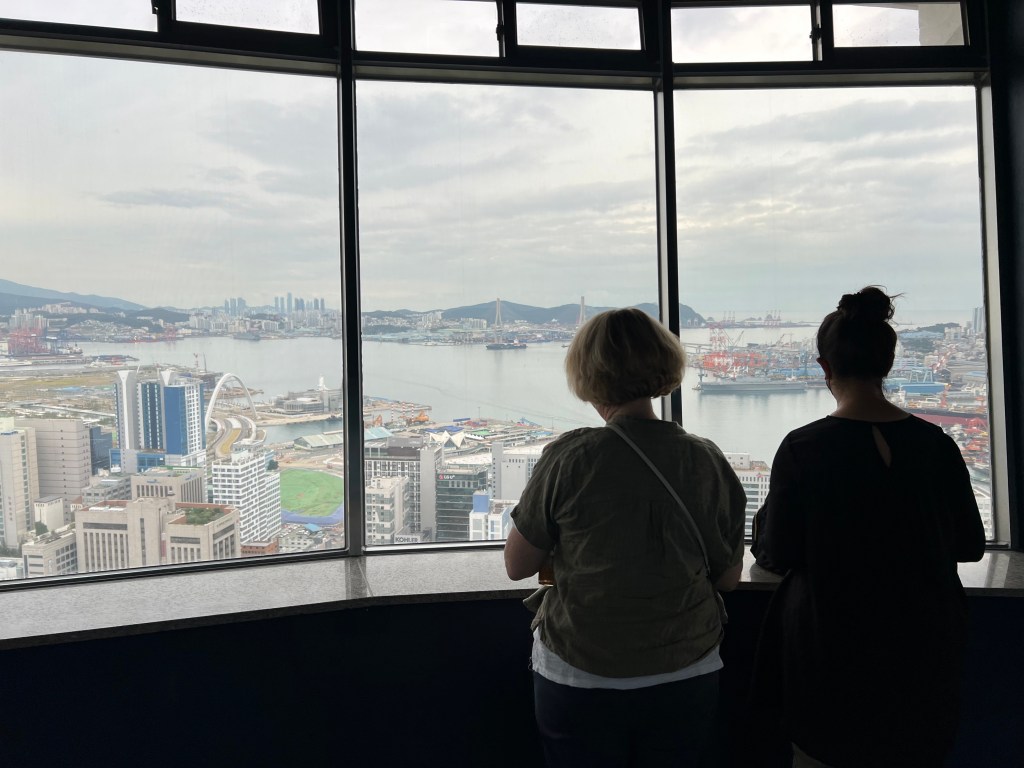
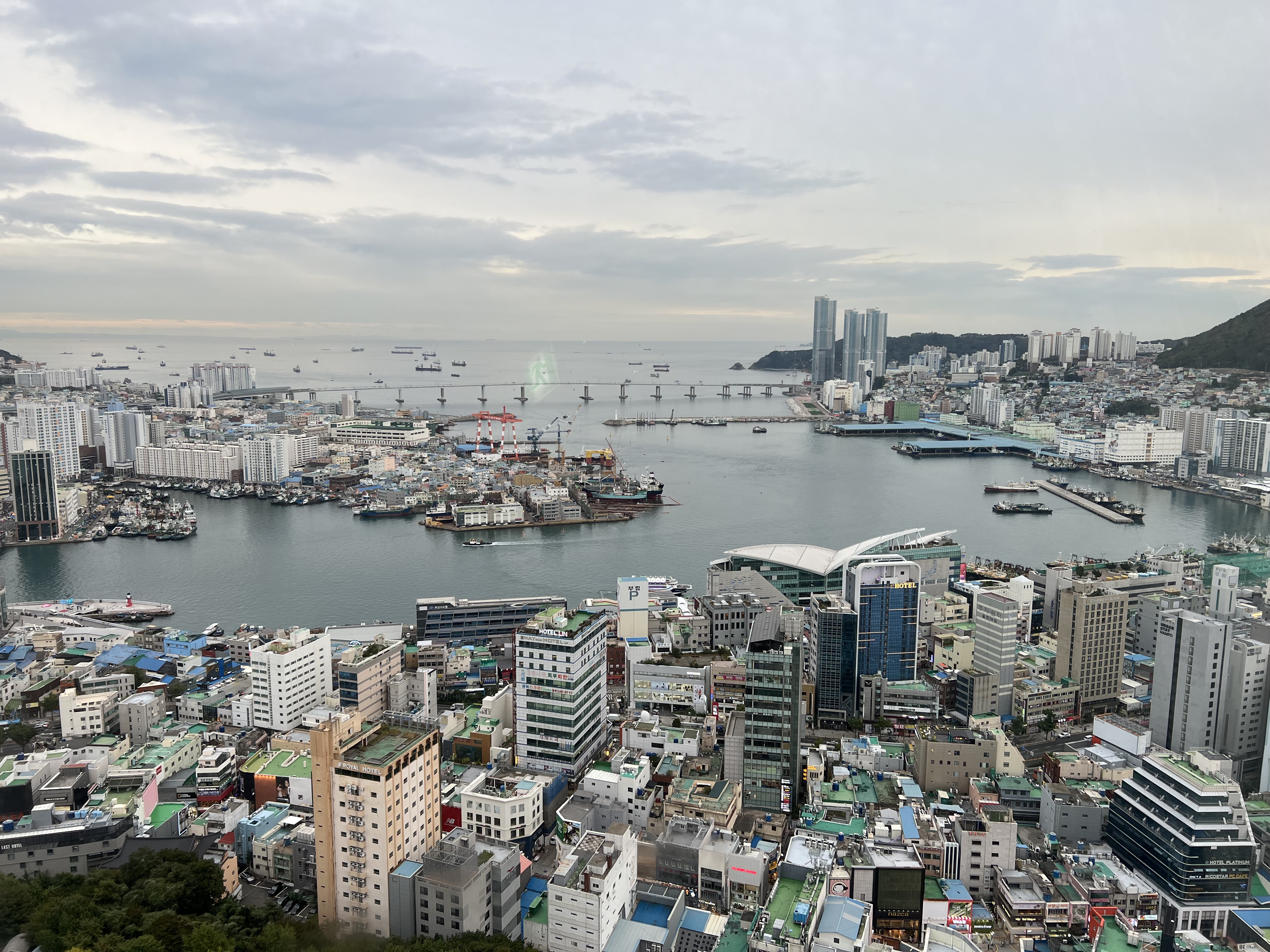
Saturday, Oct. 8, 2022 — A fast train swept us from Seoul to Korea’s beautiful, coastal second city, Busan, in a little over two and a half hours on Thursday, and we have kept moving ever since. The first evening we walked the Nampo District, from Biff Square, a homage to the city’s 27-year-old film festival, on to Busan Tower, and finally, explored the vast and fragrant seafood market, Jagalchi, where we saw a swirl of sea life and were beseeched by restaurant owners who wanted to feed them to us.

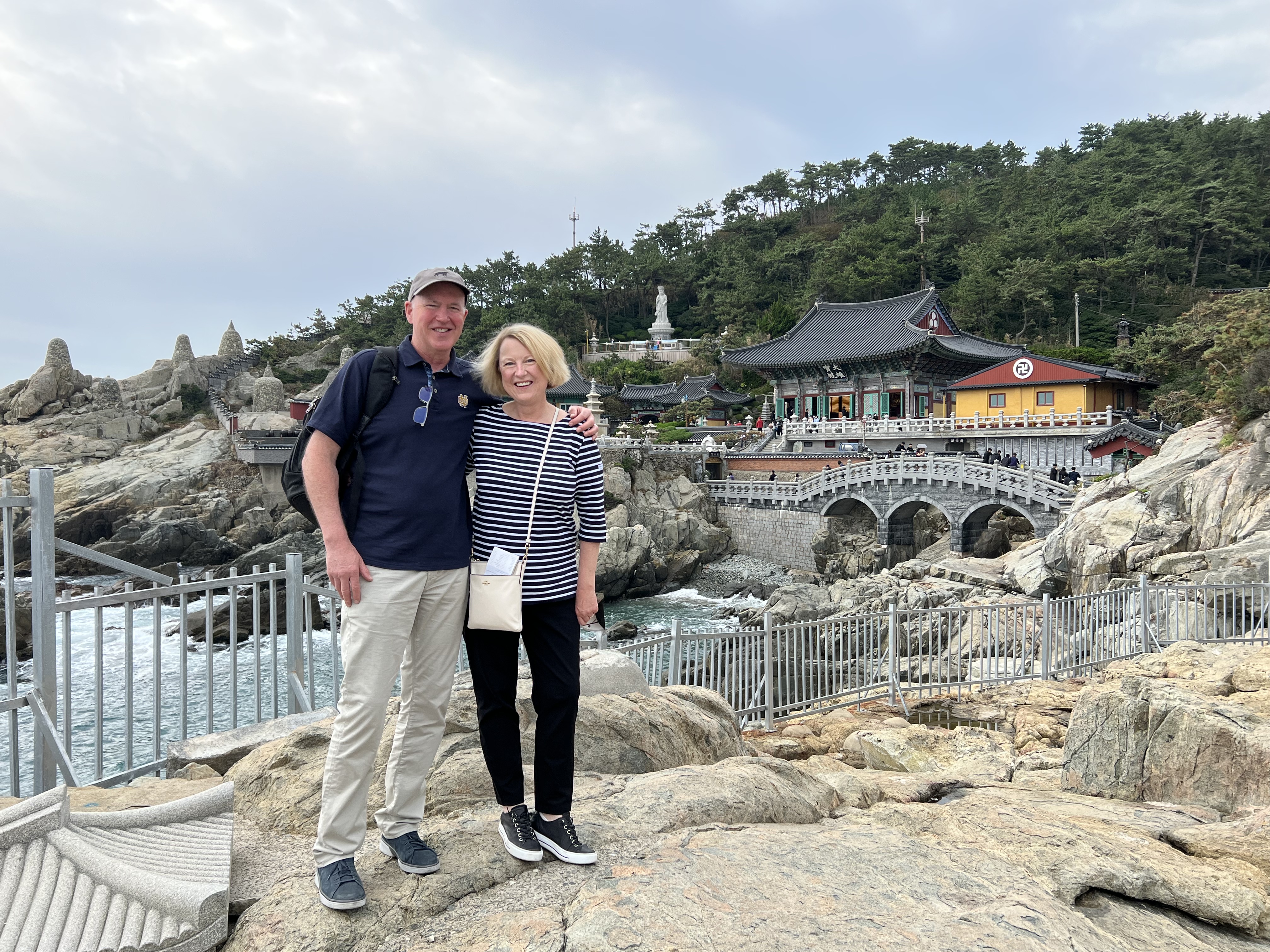
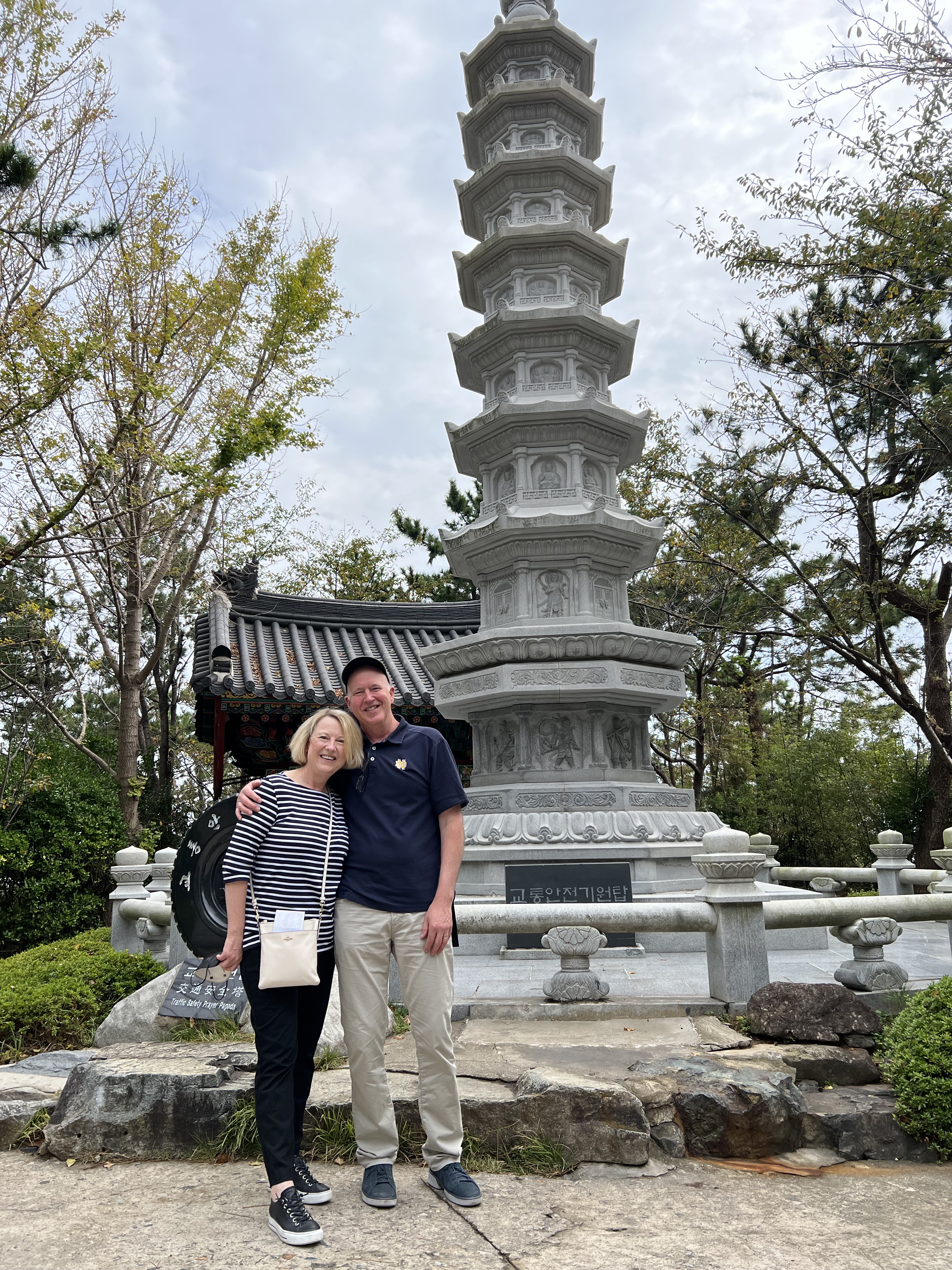
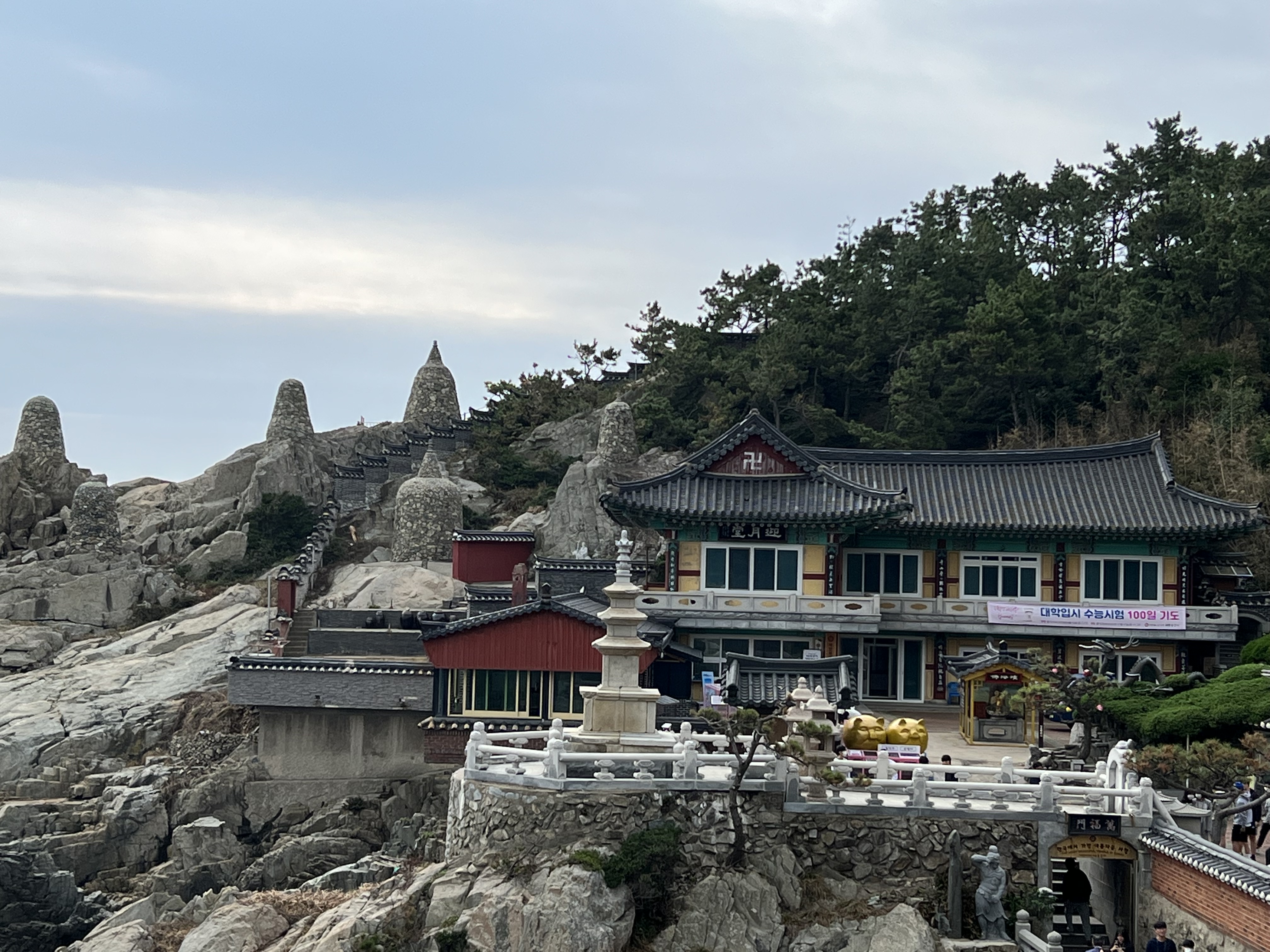
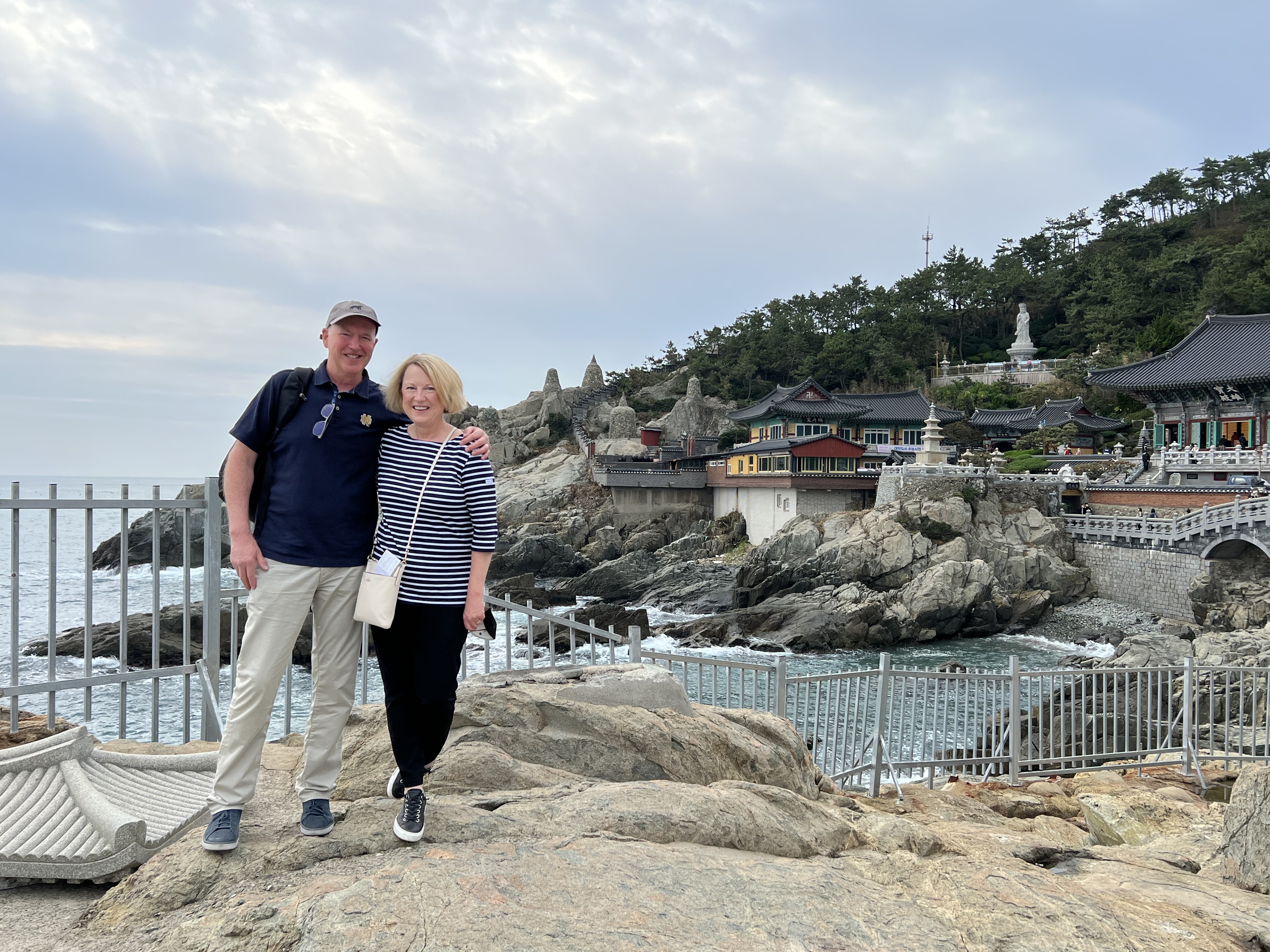
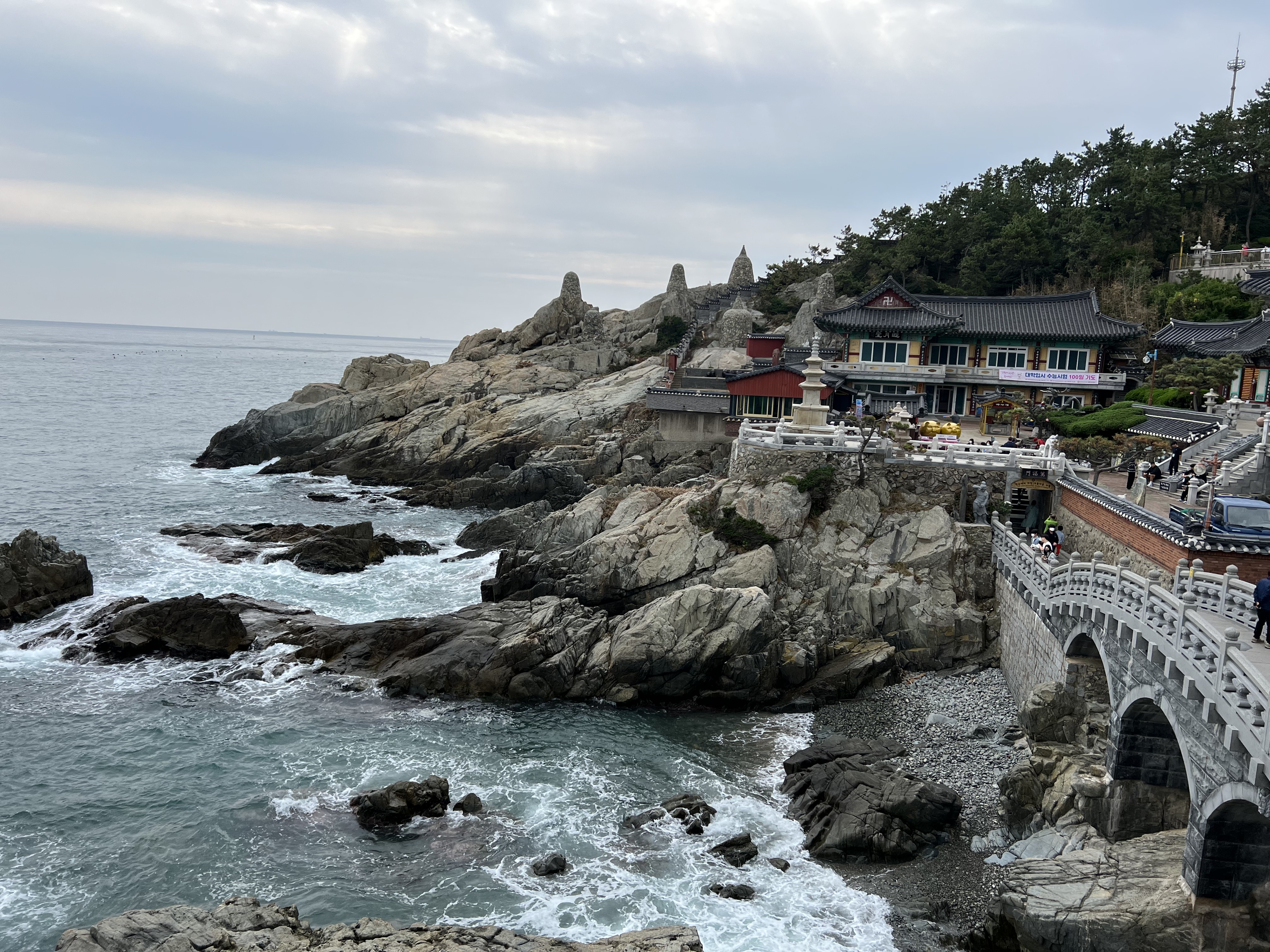
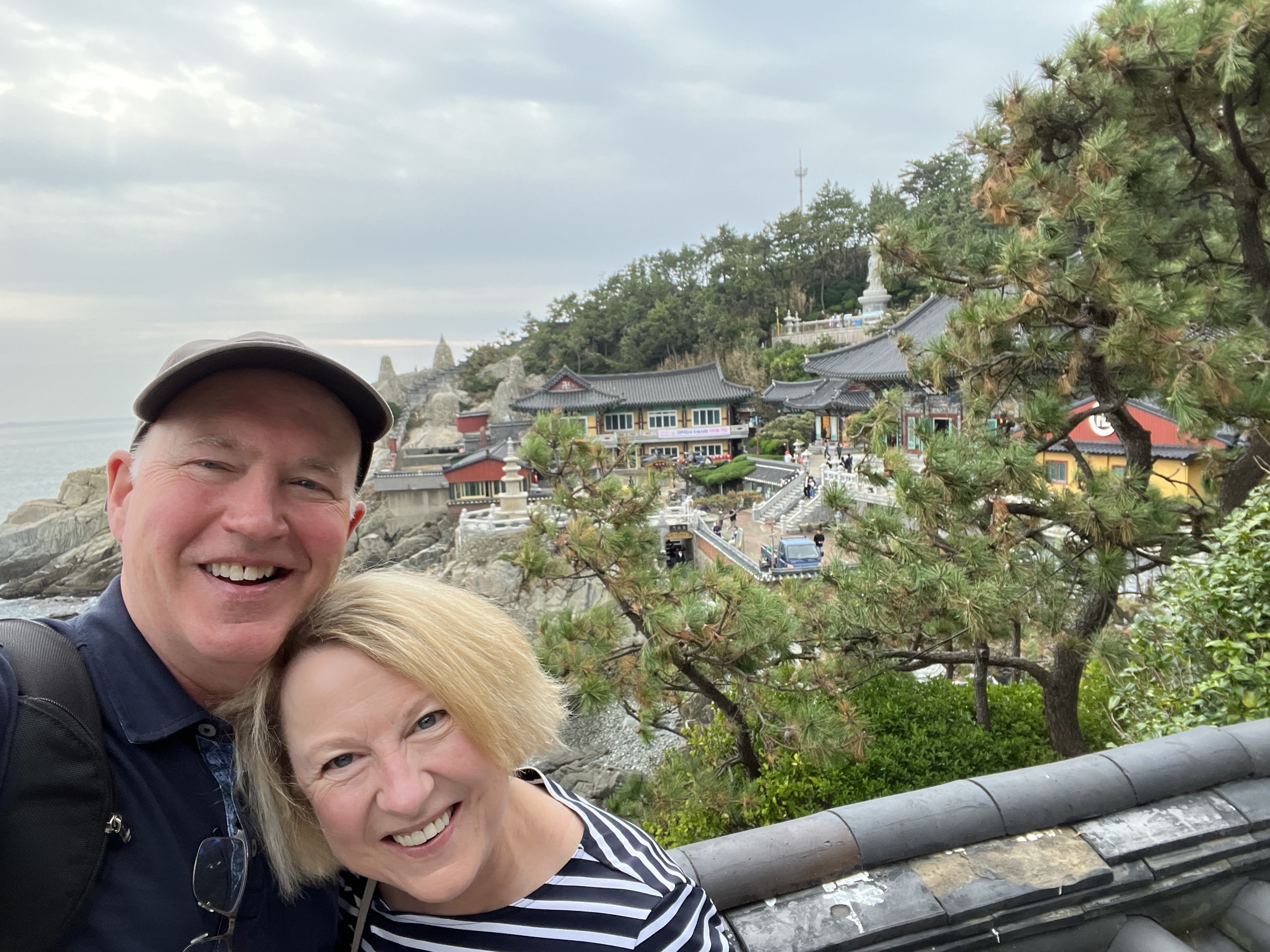
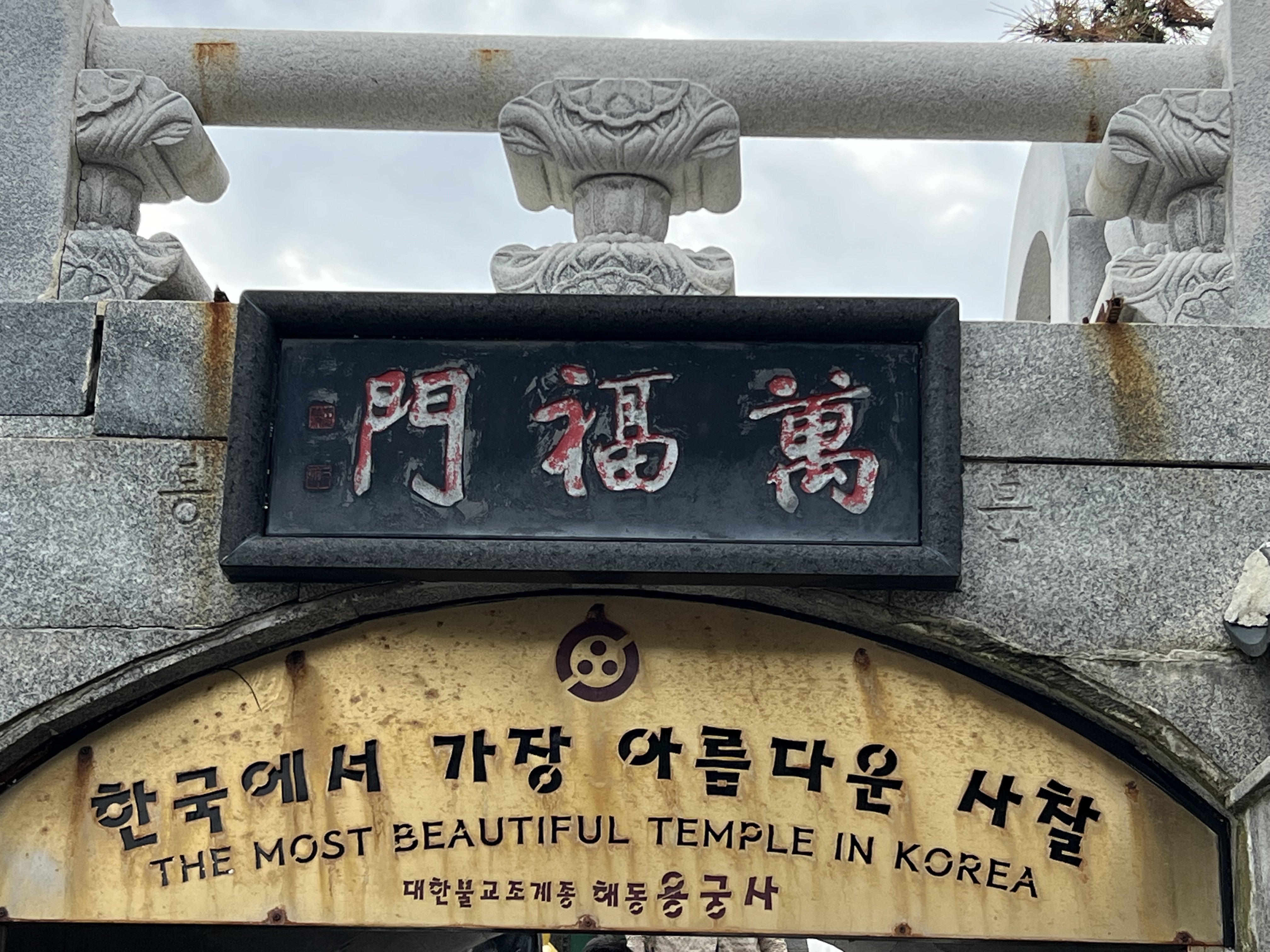
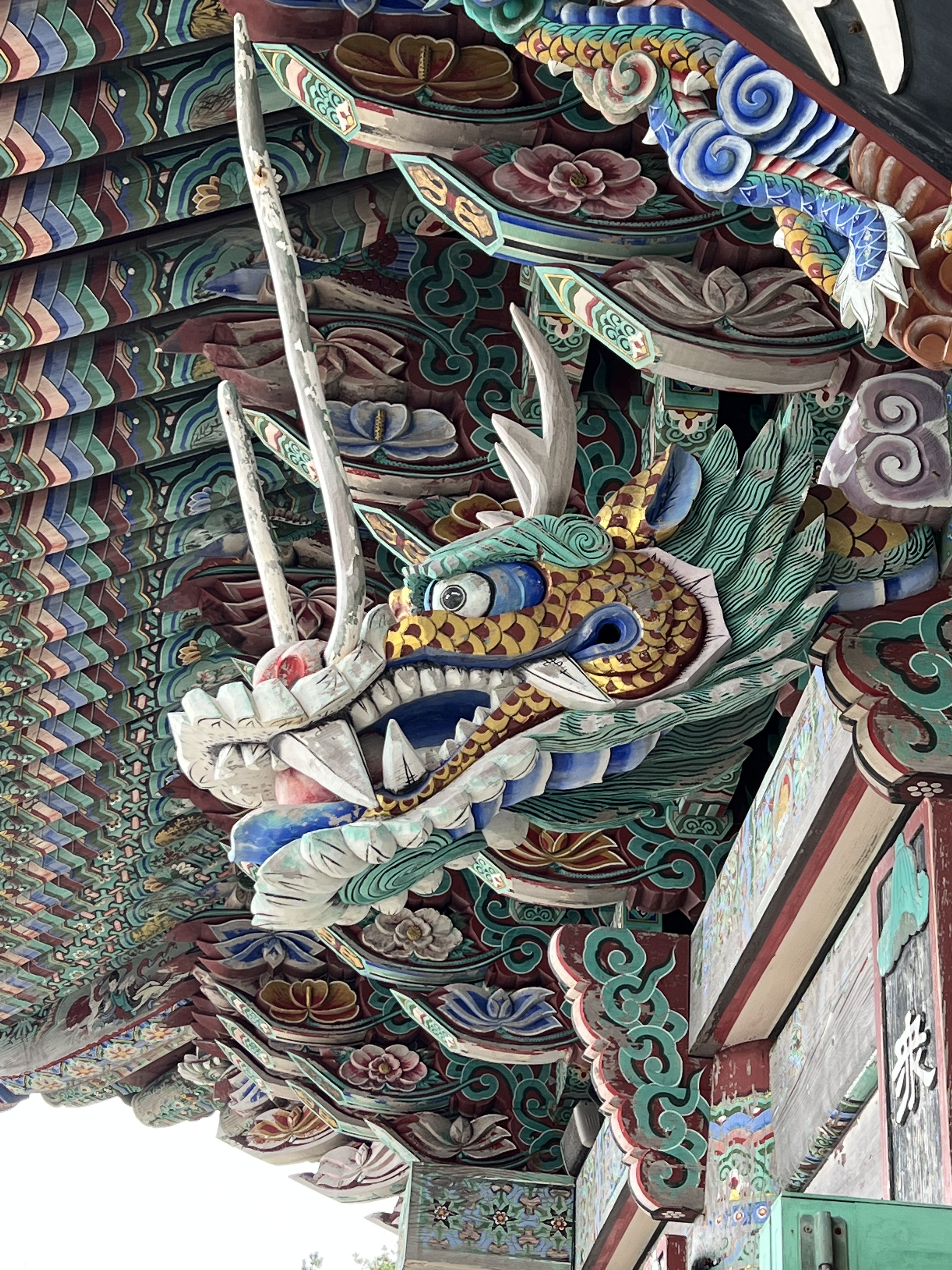
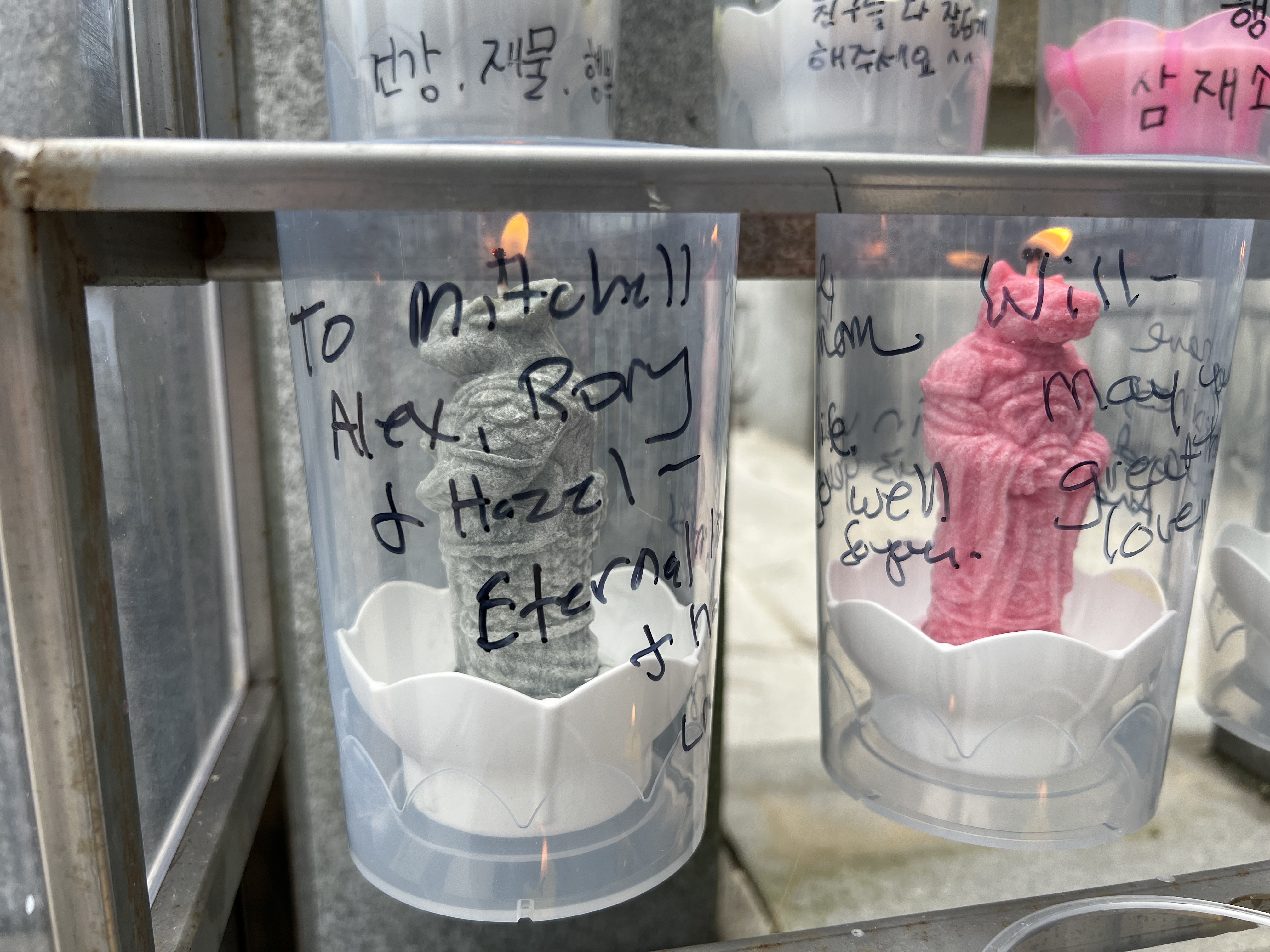
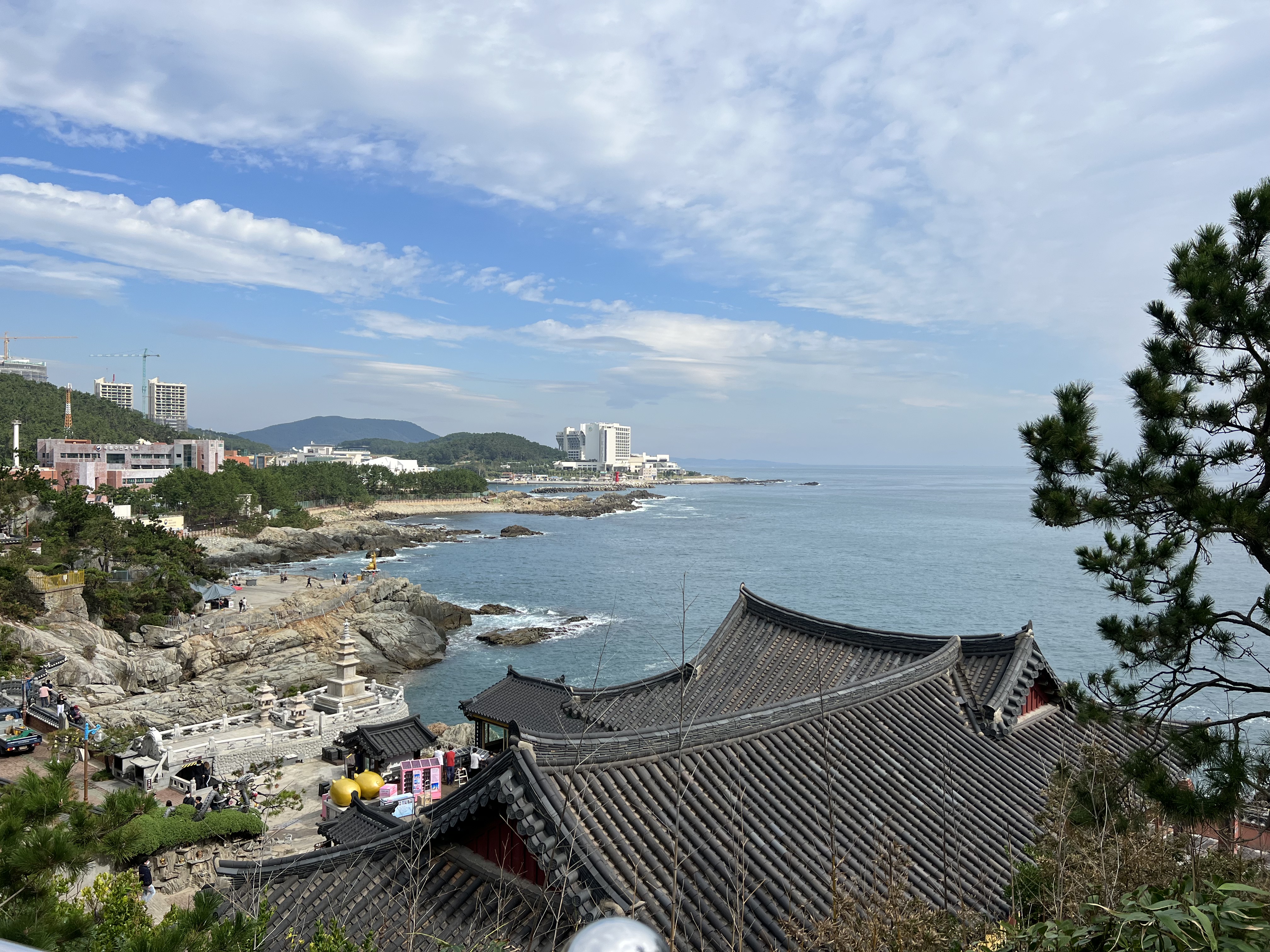
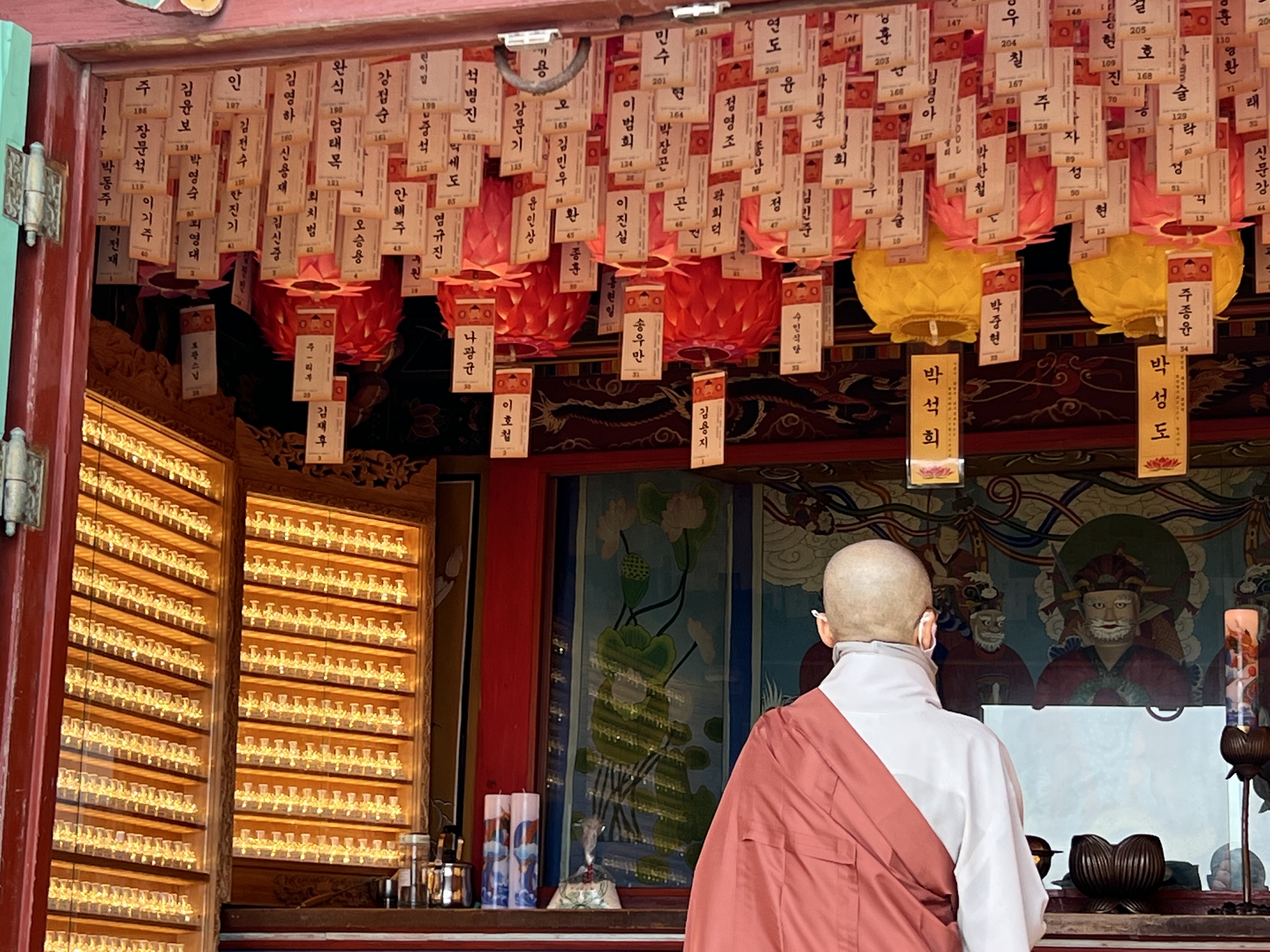
Our first full day in Busan was one of the best, most memorable of our trip so far. We took a long cab ride north of the city to the spectacular Haedong Yongungsa Temple, the only Buddhist temple situated on Korea’s rugged coastline. It is a special place, the sea crashing against the rocks only a few feet from the temple buildings, with infinite views up and down the rugged coastline. We listened to the chants of monks, lit prayer candles for our loved ones, and took picture after picture of the spectacular setting.

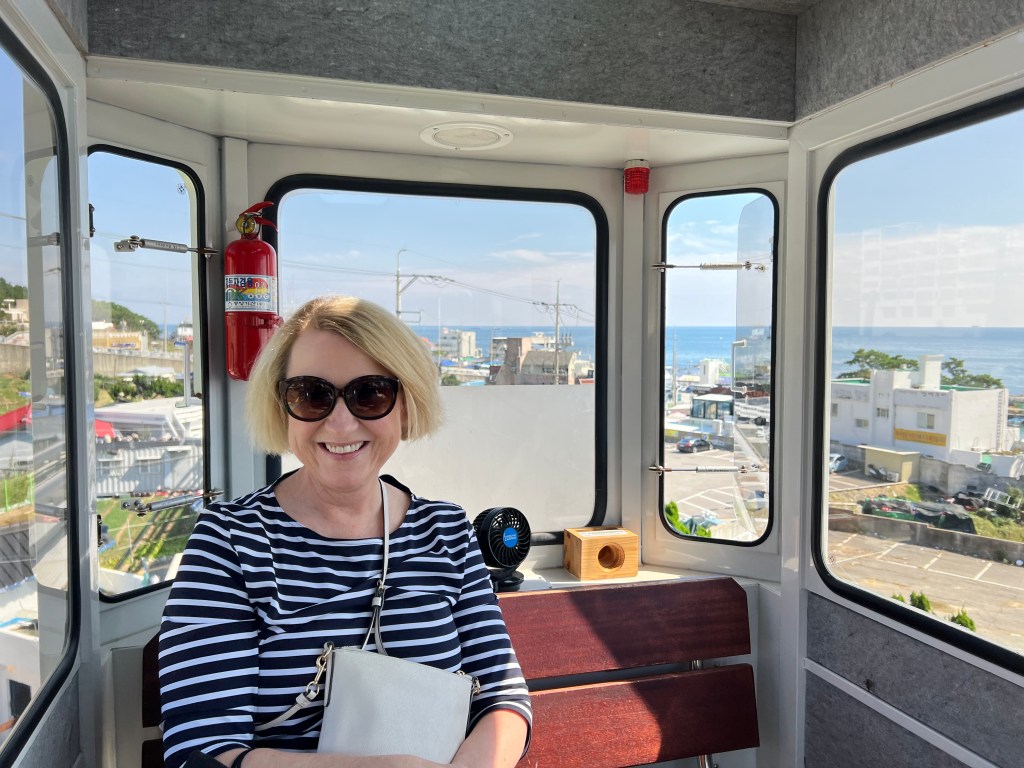
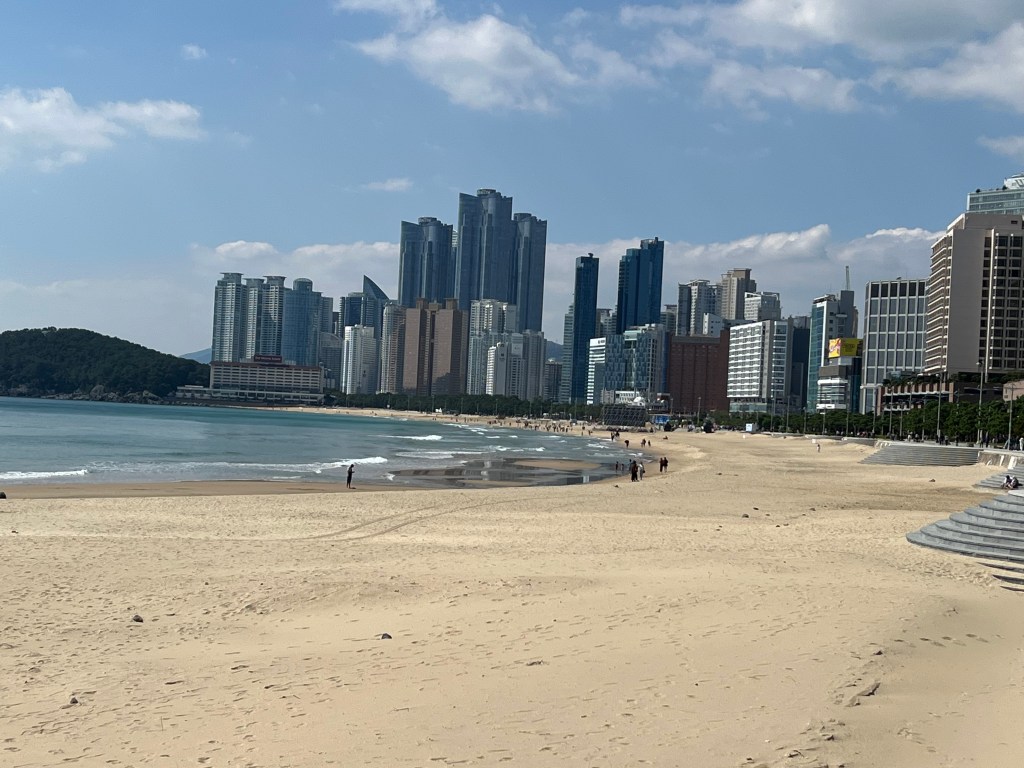
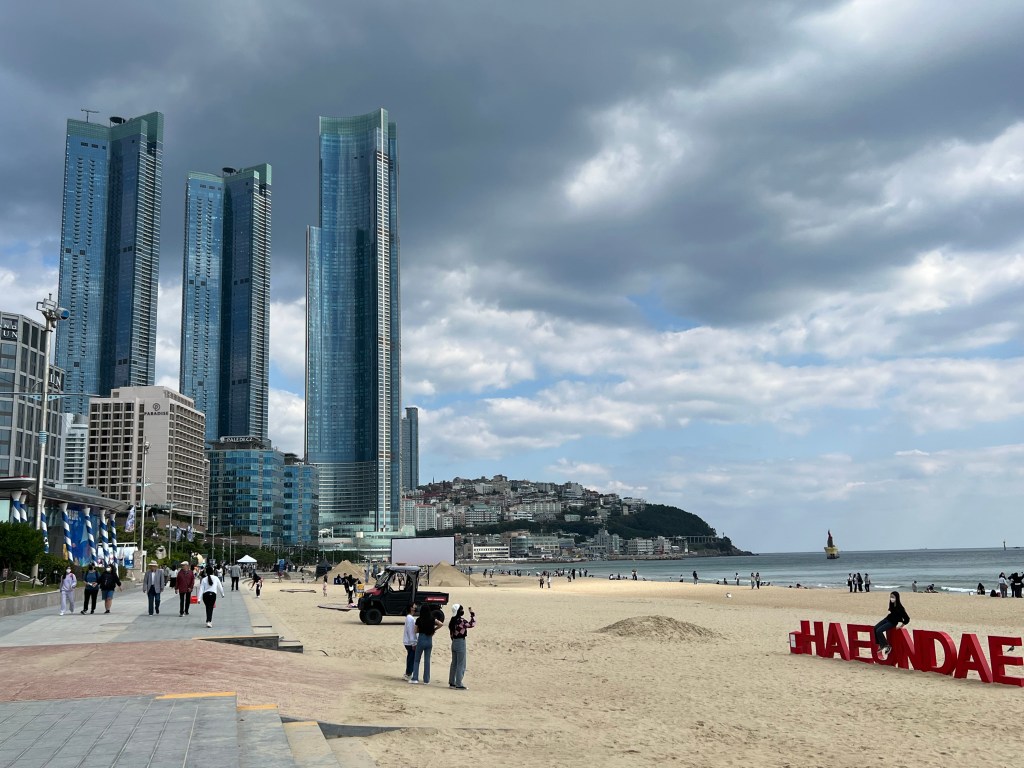
We cabbed from Haedong to the station for the Haeunde Skycapsule, where we boarded one of the boxy, sweet and silly rail cars and set off, slowly, down the aerial tracks. It was great fun, trundling along the coastline, making our way through a pine forest, and curving around a headland before we arrived at the north end of the Haeundae Beach, considered Korea’s best and most beloved beach. By Oregon standards, it’s a fairly small beach, at most a half mile long. But it was beautiful, lined on one side by high-rise hotels, and the other by blue-blue surf that glittered in the sunshine. We walked the length of the beach to Bay 101, a yacht club, where we met up with Asma.

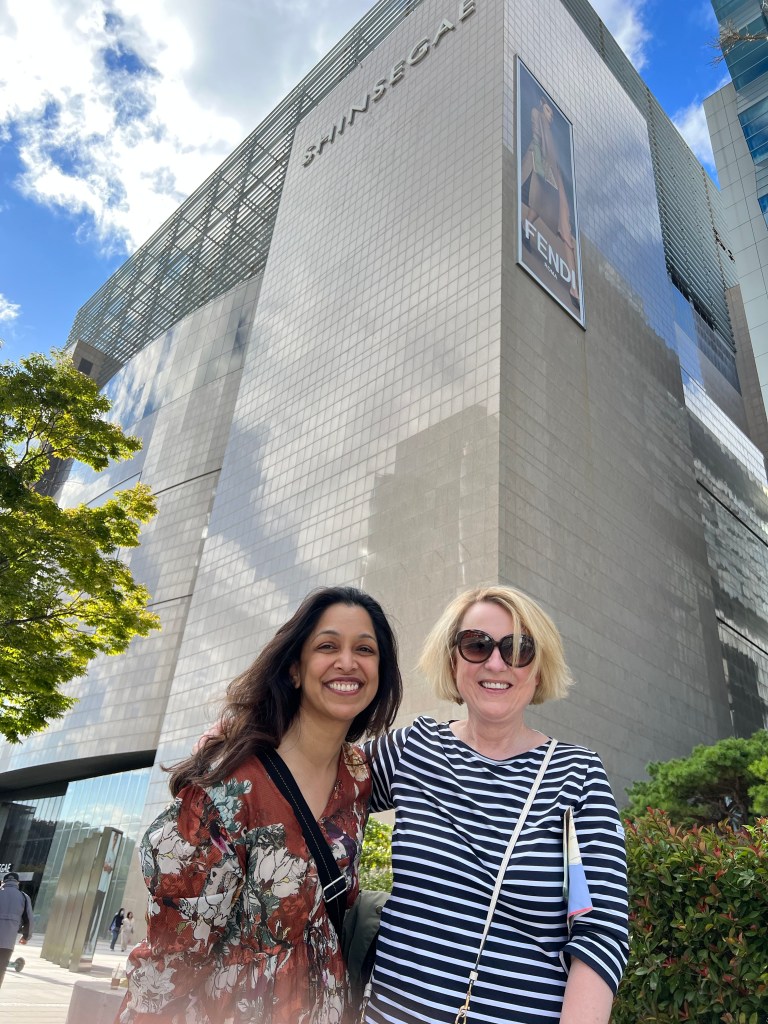
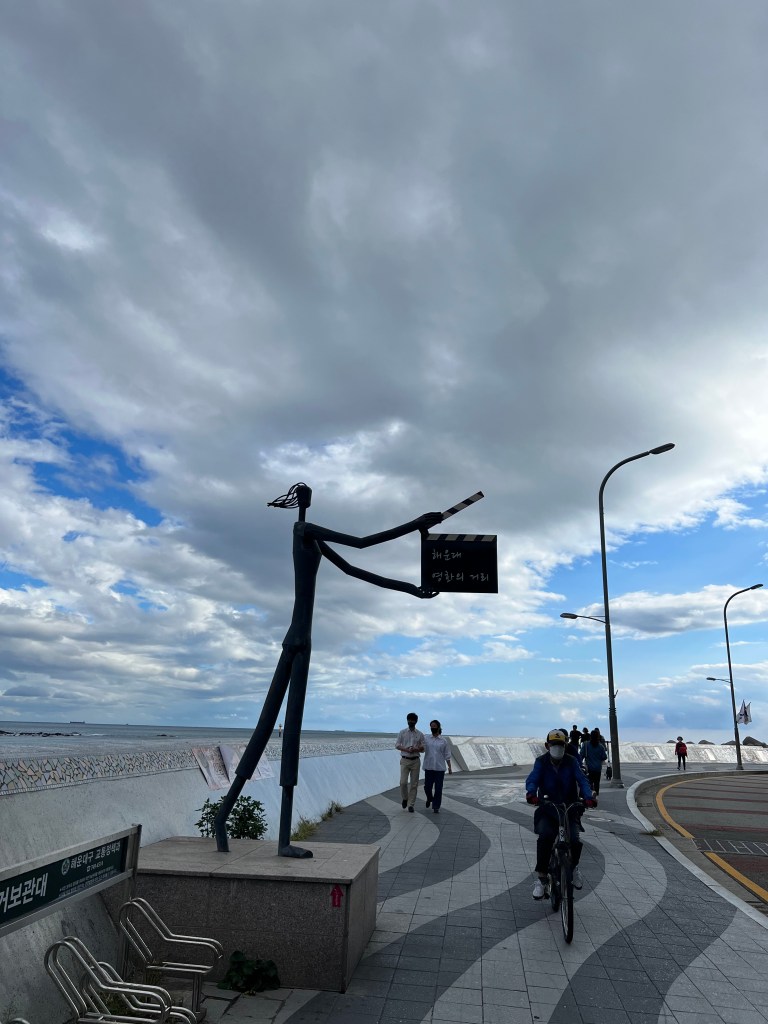
After lunch, we walked south along the waterfront to Busan’s Cinema Street, a quarter-mile stretch of boardwalk dedicated to Korea’s film history, with displays of many of the country’s most popular movies, actors and actresses, including Hong Kong’s greatest actor, Tony Leung. We wanted to go directly from there to the headquarters of the Busan International Film Festival (BIFF), which opened Friday, but had trouble communicating our wishes to the cab driver and Courtenay quickly and brilliantly asked instead to go to the Shinsegae Department Store, which is next door to the BIFF performance center. Shinsegae is the world’s largest department store, an incredible expanse with every conceivable high-end brand of clothing and accessories, and we lost ourselves in the place for an hour or so.

We emerged across the street from the film festival, which was buzzing with people and music. Asma and Courtenay explored the BIFF merchandise on offer, and then we heard a roar of excitement, saw hundreds of people hurrying to the seats in front of the main stage, and we followed them to discover that they were holding a live, in person interview with one of Asia’s greatest actors–none other than Tony Leung.