Category Archives: Uncategorized


Evocative Evora – From 7,000-year-old Star Gazers to Roman Temples and an Incestuous Royal Love Spat that Started the Portuguese Inquisition
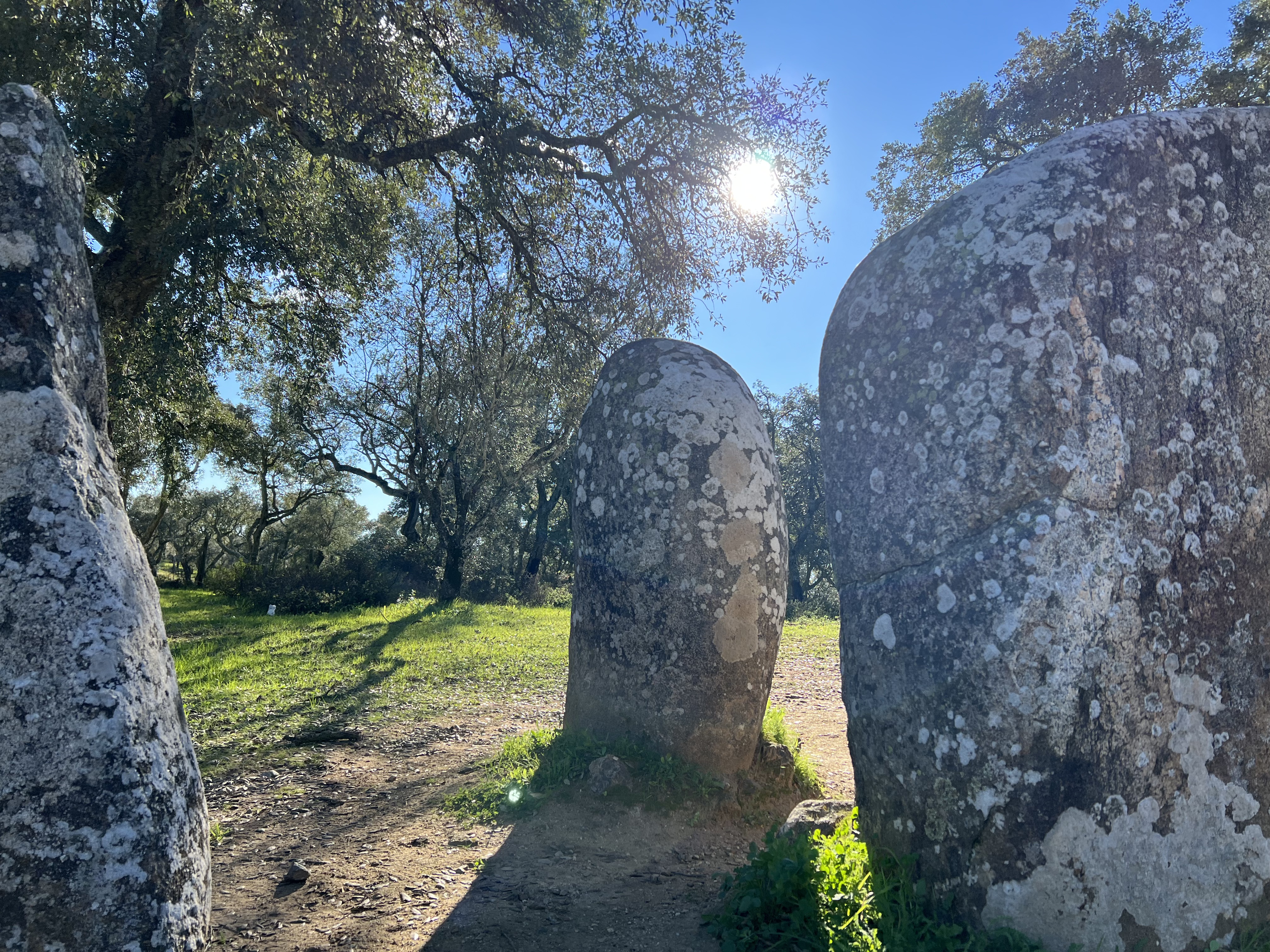
Lisbon, Wednesday, Sept. 25, 2023 – Ok, so there is no way I can possibly elaborate on everything in that much-too-long title, but that is how yesterday was – a mind-bending trip through history. We visited the oldest Megalithic site in Europe, huge granite boulders that helped ancient people trace the movements of the stars, and thus set their calendars for hunting, crops, harvest and preparing for winter. We saw an Augustan Age Roman Temple, still intact at the heart of the now Medieval city of Evora, where lawyer of history – the Romans, the Moors who ruled for 400 years, to the Christian King who set up shop here for a short period (and whose love spat sparked the Portuguese Inquisition.) We learned all this from a wonderful guide, Olga Miguel, whose life work is leading tours, and tours of the night sky, which we hope to do with her one day.
I wish I could tell more about our day trip to Evora, and the day trip the day before to Sintra, but we must be off to visit the Calouste Gulbekian Museum and the famous Azulejos tile museum. This is our last day in Lisbon and I will write more tonight when we are doing our laundry.
Lovely Lisboa
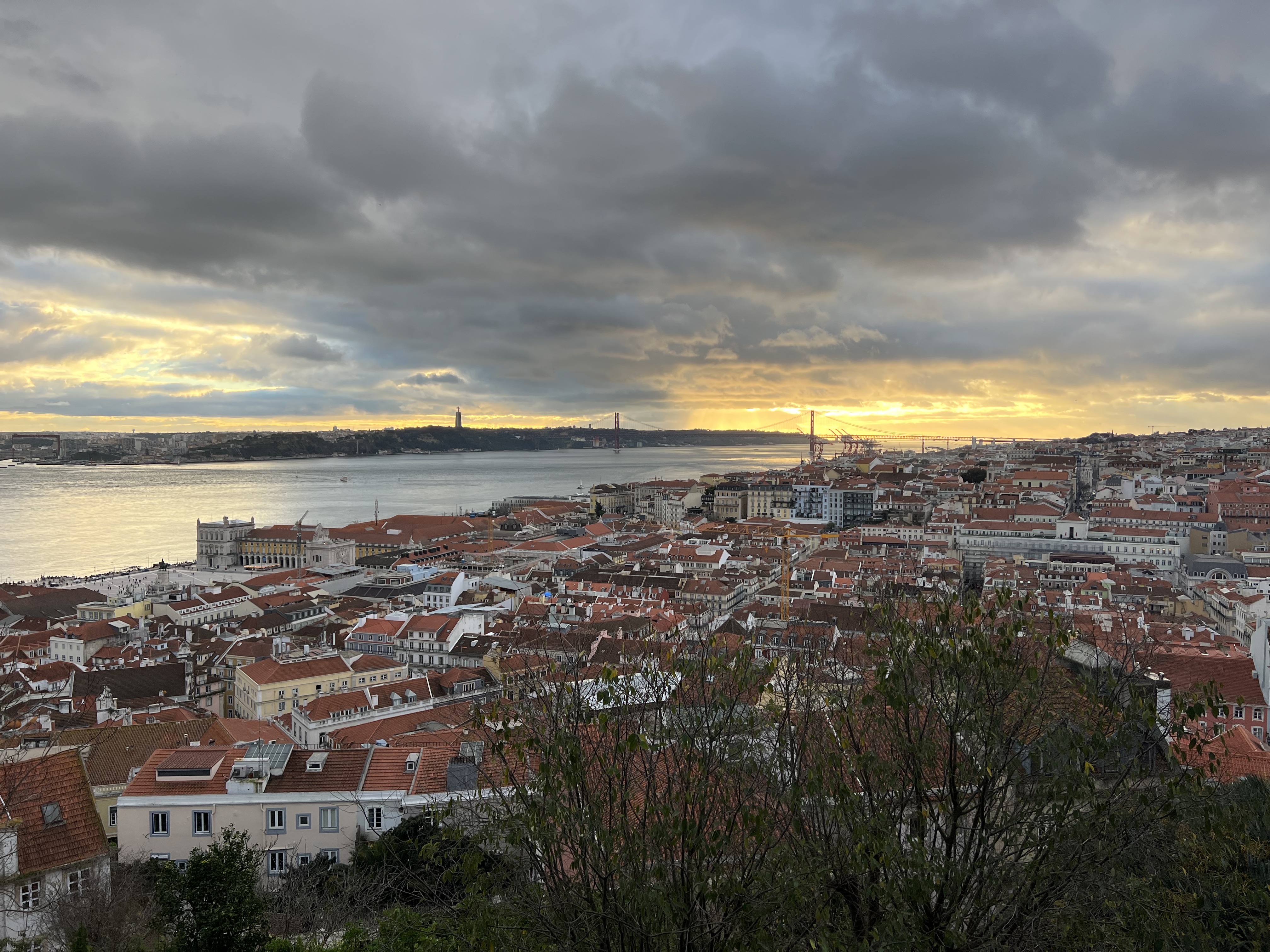
Saturday, January 21, 2022 – Lisbon, Portugal – We arrived yesterday afternoon in time to check in to a lovely little apartment in a converted textile factory in the heart of old Lisbon, on the border between the hilly Afama neighborhood topped with a castle and the Baixa, with broad promenades built after the entire area was destroyed in the great 1755 Lisbon earthquake. We like being a the epicenter of it all. After dropping our bags and fighting jet lag, we climbed up the Alfama, a neighborhood rich with history dating back to the Phoenicians – it is studded with ancient Roman ruins, followed by hundreds of years of occupation by Goths and Moors. Its winding streets include the old Jewish quarter, the ruins of a Roman amphitheater from the age of Augustus that seated 4,000 and a 12th century Gothic cathedral built on the remains of a mosque. At the top of the hill is a rebuilt castle that dates back to the Moorish rule of Lisbon, between the 8th and 12th centuries.

The ramparts, though rebuilt in the past 100 years or so, have a stunning panoramic view of the city, down to the harbor on the Tagus River where the riches of the 15th and 16th century Portuguese empire came to shore. We caught the sunset from the ramparts – it was stunning to see the city spread out below us, the sun and the clouds behind the Bridge of the 25th of April, a Golden Gate lookalike celebrating Portugal’s Carnation Revolution which ended decades of dictatorship in the 1970s. The city is so rich in history, and so atmospheric, with colorful houses, winding streets, and vistas of the water from its many “miradouros” or viewpoints. With its vintage yellow trams and steep streets, it evokes San Francisco, but much more charming and with better views. No offense, San Francisco. But Lisbon is pretty damn cool.
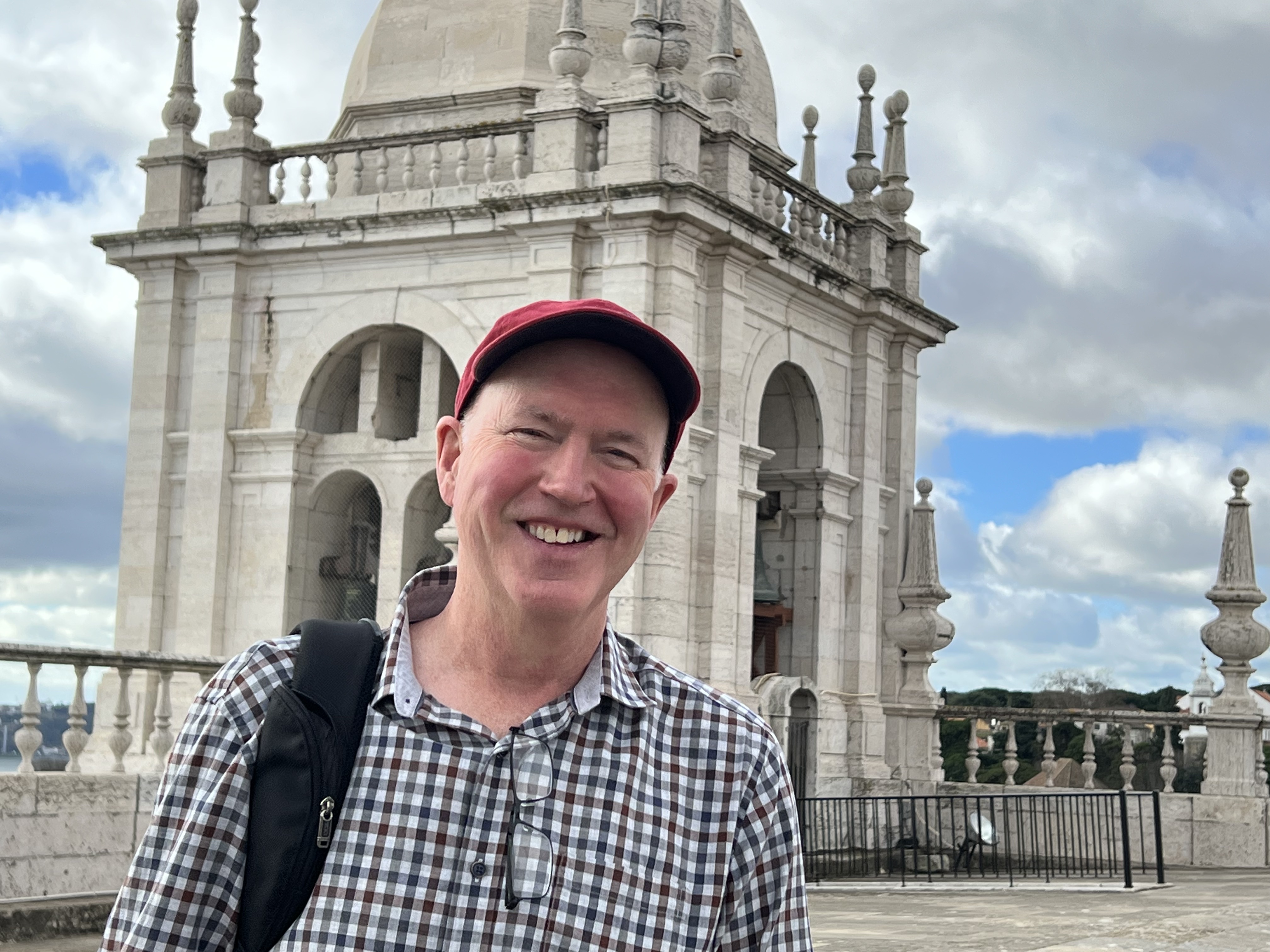
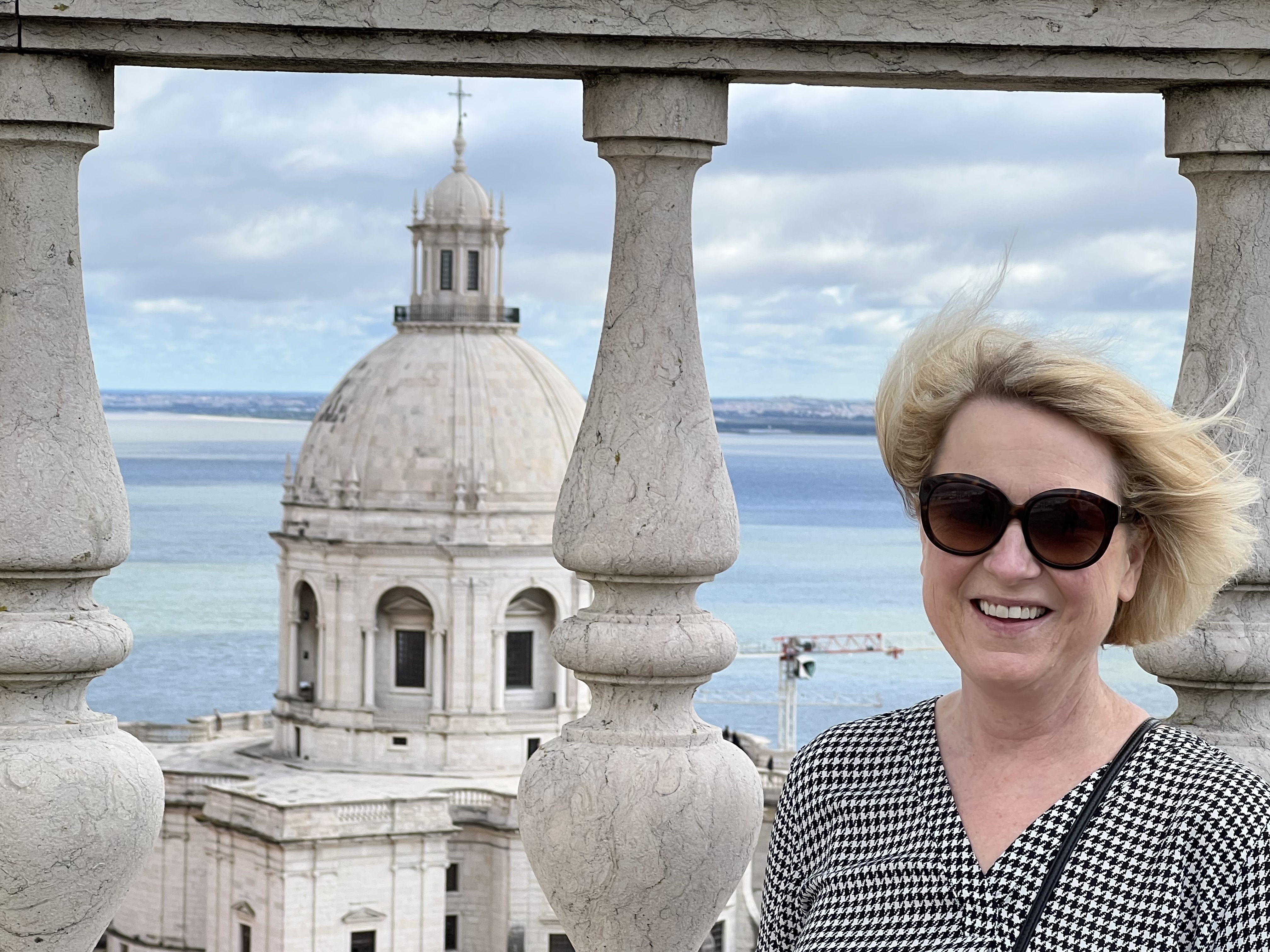
This morning we headed back out to the Alfama, where we visited the Monastery of Sao Vicente, the patron saint of Lisbon. It was here that hundreds had gathered on All Saint’s Day 1755, when a massive 9-magnitude earthquake, tsunami and fire leveled much of the city. Unfortunately, the church also collapsed, killing many inside. It was rebuilt, and the church and monastery are filled with the classic blue and white azulejos, or tiles, that are iconic to Portugal. The art form was adapted from the ceramic tiles that the Muslim Moors had used – they were beautiful and also helped keep the buildings moisture-proof and cool. There were spectacular views from the top of the monastery, looking over the river and the Pantheon nearby.
We had a wonderful walk back through the twisting alleys of Alfama, further from the touristy areas around the castle. At one point, we were walking down a narrow, stepped alleyway and there appeared an old woman in a doorway selling tiny cups of ginjin, the cherry liquor Lisbon is famous for, for 1 Euro. We were charmed by her sudden appearance and bought two. She explained as we sipped that the cups were chocolate and we could eat them – just like on the New Year’s Eve of my childhood! I told my mother this the other day, that she had always given us a shot of some liquor in chocolate cups on NYE and she denied it. 🙂 It was a quiet, charming area of the city, and there were few tourists. The rest of the city is much busier than we had imagined January would be – the “off-season.” If it is this crowded now, I cannot imagine how it will be this summer. It must be that everyone, the world over, is eager to get out and travel again after the pandemic. There are few Americans, but many French and Italians, a few English – mostly college-aged kids – and a lot of Portuguese on tour. But the streets are quite crowded in places. This is good, I suppose, for Lisbon, but it’s not what we expected in the dead of winter.
Speaking of winter, it was 65 degrees today and hot in the sun – cool in the considerable ocean breeze – in a word, perfect. We just got back from a nice dinner at Pateo, a seafood restaurant up in the Barrio Alto, a “downscale” restaurant by the upscale chef Jose Avillez. We had an amazing shrimp, avocado, apple and lettuce taco and some truffle burrata with honey, pine nuts and water cress, followed by a delicious grilled squid entree for me. And Rick, well, he chose poorly, and ordered one of their “signature” dishes – shrimp in a bread mush with raw egg stirred in. It was sadly hilarious. Fortunately, he had a few of my squid. But it was a wonderful place, and meal, and a sign of the serious foodie nature of this city. We had lunch earlier at the trendy Time Out Market -what Portland has always dreamed of – a vast foodie mecca filled with stalls featuring less-expensive fare from Michelin chefs and others. It was absolutely jammed on a Saturday, but we found a table at a restaurant outside and had a fine lunch before I dragged Rick back up another hill to the Chiado to trace the footsteps of a famous character in a novel by Nobel laureate Jose Saramago. Rick still needs to finish the novel, so he wasn’t quite as excited as I was to see the streets and the places the main character inhabited, but hopefully he will be so inspired by our trip that he will finish the novel.
Tomorrow, we are headed to Belem, a neighborhood west of the city, where the Portuguese King Manuel built a monastery with the riches from their early explorations to the East, and where there is a very cool modern art museum, and another museum that has rare Japanese screens with depictions of the Portuguese – “Southern Barbarians” – with whom they traded for a while and then perhaps wisely banned for centuries. We can’t wait.
Seoul Survivor
Written by Courtenay
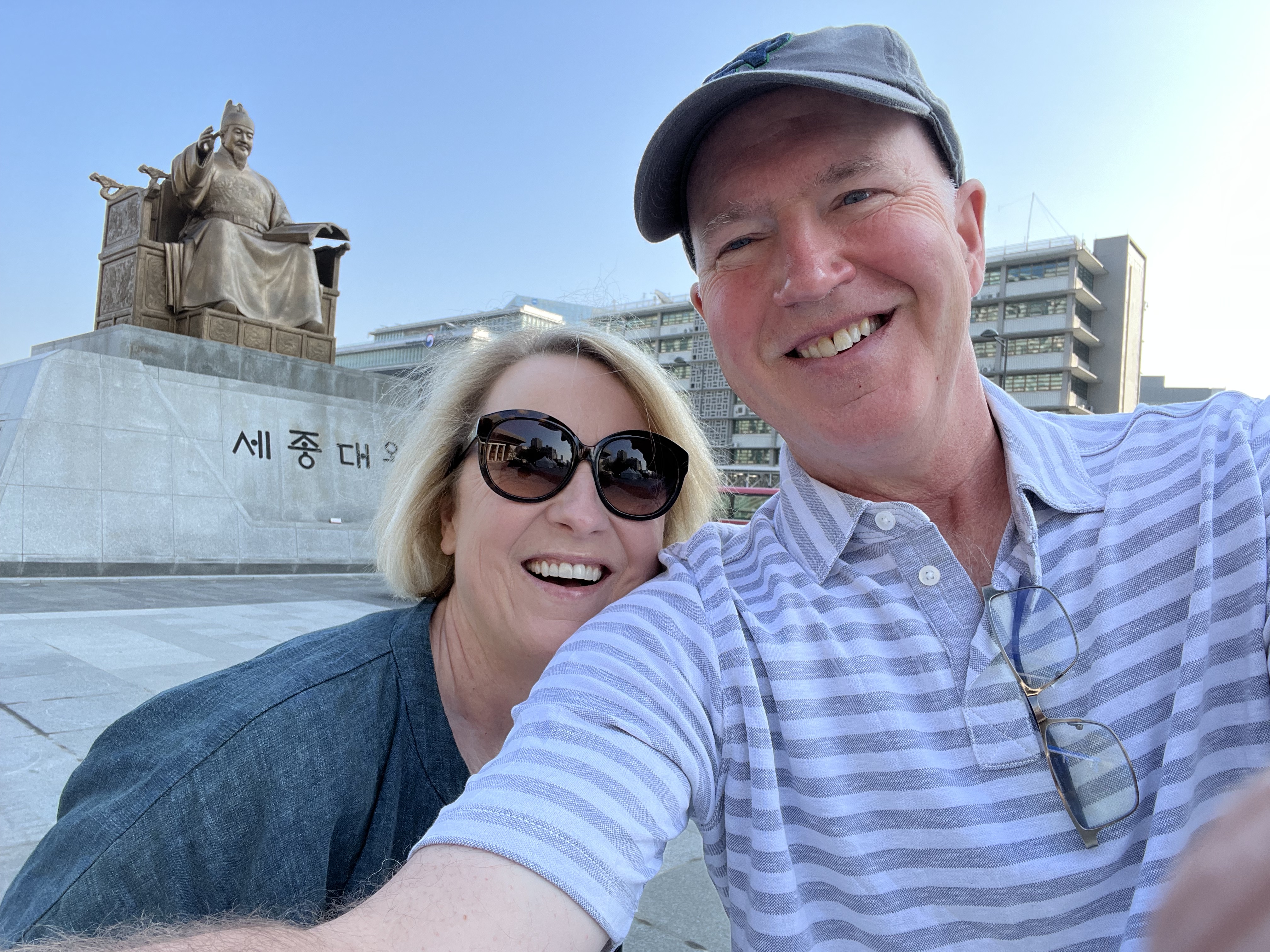
Wednesday Sept. 29 to Friday, Sept. 30, 2022 – Almost exactly five and a half years ago, I was sitting in an exam room at OHSU, trying to understand the incomprehensible news that I had blood cancer. I was in utter shock and despair. All through that terrible morning, my phone kept pinging – “Almost time for your flight to Tokyo,” “Four hours until your flight to Tokyo,” “Your flight to Tokyo is now boarding.” It was a surreal punctuation to a reality that rather than boarding a plane for a long hoped-for trip to Japan and South Korea with my family, I was facing a rather terrifying and uncertain future. We had planned to meet up with fencing friends in Seoul and take Will to watch our first international Grand Prix after a short stay in Tokyo. Instead, we found ourselves in a completely parallel universe, where the only travel that people talk about is your “cancer journey,” a term I despise. That ain’t no journey.
But I digress. One stem cell transplant and a lot of recovery later, in March 2020, we were set to take that same flight, to take Will, Mitchell and Alex on Alex’s first trip to Asia and our first trip to Japan in eight years. March 2020 – remember the lockdown? My timing was impeccable. I started to feel like I should never plan another trip to Asia or the whole world would come crumbling down. Our next attempt to travel to Asia – just South Korea this time and with friends Asma and Rehan – was scuttled last fall when the Delta variant surged. So you can imagine the trepidation – and disbelief – that I have felt over the past few days as we actually flew to South Korea. The feeling as we took off from Seattle was surreal, but a good surreal. It felt amazing to be able to do something I once thought I might never be able to do again, that flying here now, this fall, somehow helps – not erase – but lay down a new track on those traumatic memories. I feel blessed. I feel healthy, strong and excited to explore this totally new country, culture and language. I feel normal. I feel like me. There was a time five years ago when all I wanted was to not be myself, anyone but myself. I am myself again.
Oh, and Seoul is incredible.
Our friend Sungmin had told us so. He is right.
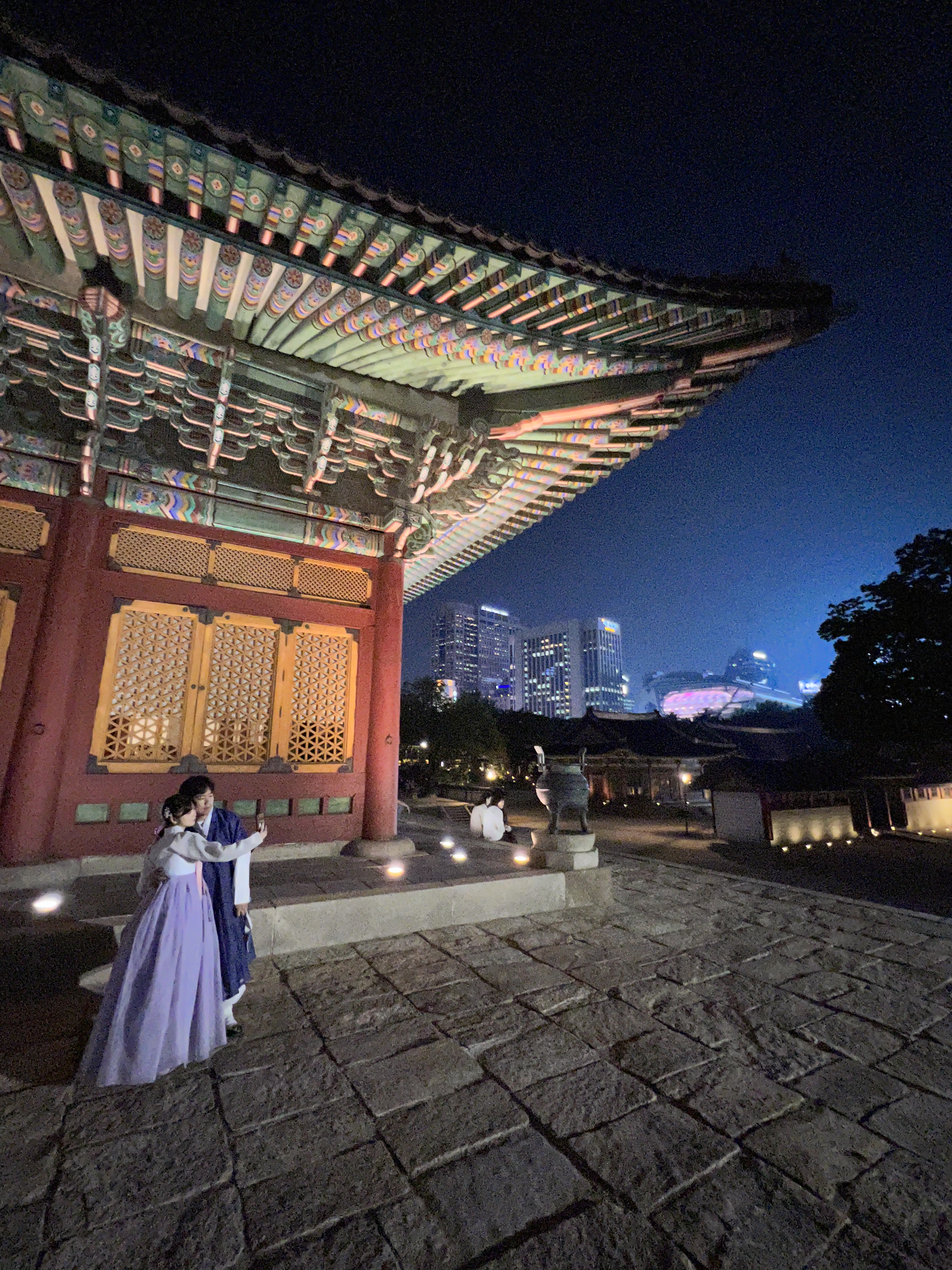
We got to our hotel Thursday just as the sun was setting, and after a quick shower, we headed out into the balmy evening to see the lights of the busy Gyeonghwamun district and the beautiful Deoksugung palace, with its beautiful, brightly painted gates and pavilions lit up in the night. Young people in traditional hanbok posed for photos, and families strolled in the cooling evening air, with the sweeping up-curving tile roofs of the pavilions set against a backdrop of tall modern buildings and neon billboards of the surrounding city. It was magical. The city has a mellow vibe, people on the streets don’t seem too busy, too much in a hurry. They hold hands and walk and laugh, or gather in clusters outside restaurants smoking cigarettes. And laughing. There is a culture of cafe hopping, as well as of bar hopping. We had dinner at a fried chicken and beer joint – a thing here – at the one free outside table – while a group of what looked like work colleagues drank and laughed and caroused just inside. It looked like no work-related party I had ever seen – they were doubled over in laughter.
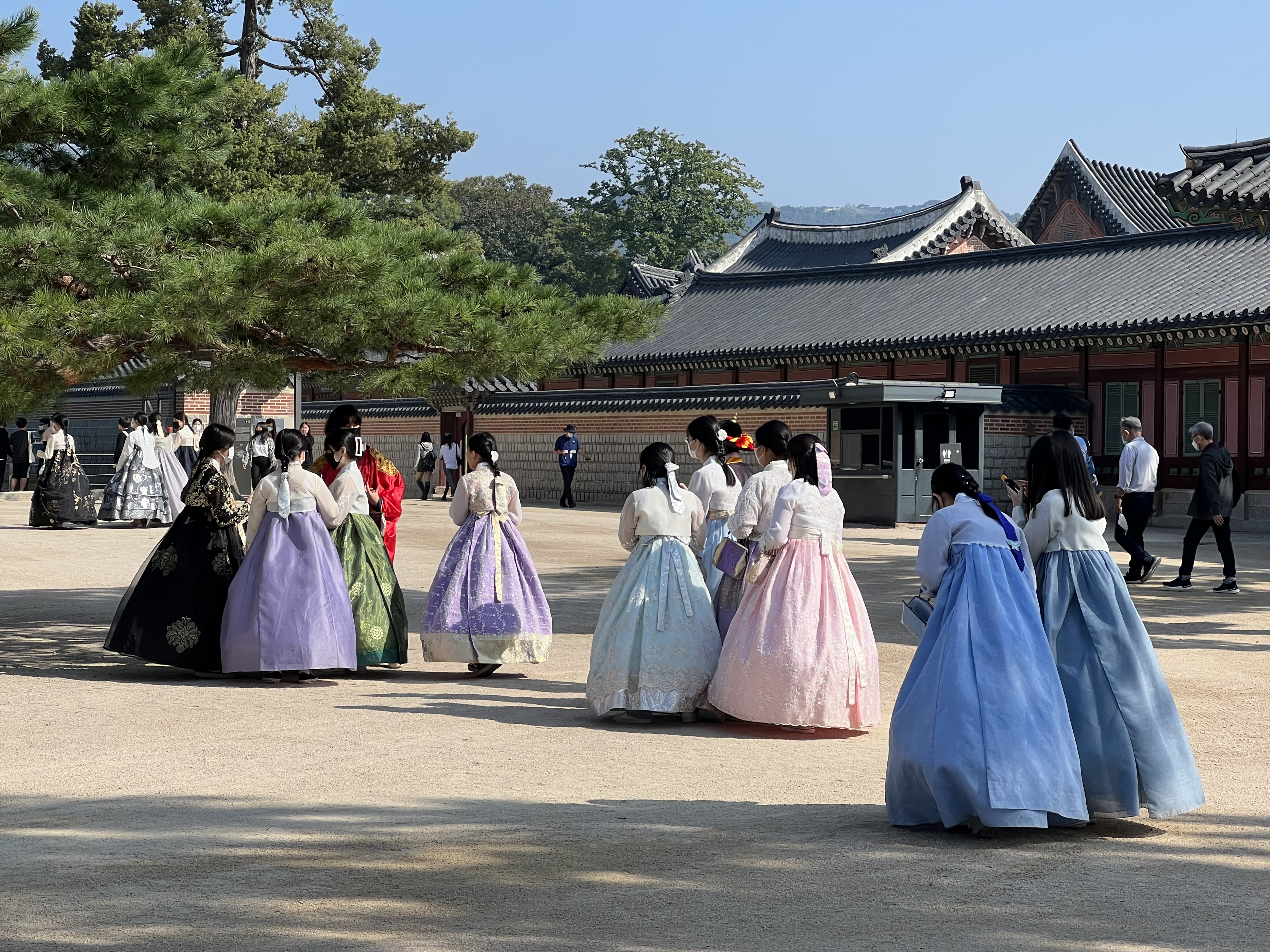
Today, our first full day in Korea, was a perfect day. We started in the cool morning air to explore the nearby palace of Gyeongbokgung, which dates back to the 14th century but was destroyed several times by the Japanese in the late 16th century and again in the 20th century during colonization. The buildings have been restored and the extensive grounds, while modestly landscaped, were beautiful and relaxing, especially with the backdrop of mountains just behind. Will called to talk while we were there, and it was so wonderful to stand in the shade of a gingko tree and talk, while groups of young people wearing traditional Korean clothing, snapping selfies and laughing, wandered past. We then ourselves wandered the galleries and very hilly streets of nearby Samcheong-dong, and found a quiet cafe with outdoor tables I had found online. (It’s such a miracle when your plans actually work out.) We wandered more and then had lunch in the courtyard of an old hanbok that had been turned into a bakery of sorts – another Google search find. My next Google search find didn’t turn out so well – the definition of a snipe hunt. After sitting out the heat of the afternoon in our hotel, we took a cab to a much-hyped night market along the Han river, which divides main Seoul in the north from Gangnam, the wealthy district of Psy’s famous K-pop hit Gangnam Style, south of the river. We consulted multiple websites, and even got the hotel concierge to confirm the super hip and groovy night food market was really happening. Well a 30-minute cab ride and a tromp up and down the river later, we found the folded up tents of the market, all locked up together. We will never know why it wasn’t held when it was supposed to be. But whatever! It was a lovely sunset along the river, and dozens and dozens of people had pitched picnic blankets or little half-tents to stay out of the sun and eat snacks and food and watch the sunset. It was like Central Park on a very busy summer weekend. We managed to snag a cab back to Namdaemun, a famous market area which we knew had a lot of street food. But as it is when you are in a big city, we found street food but are not sure still whether we found the Namdaemun food street. Whatever! We bought some mung-bean pancakes, kimchi dumplings and vegetable kimbap (seaweed wrapped around vegetables) and walked back to the hotel, where we ate our street food in the cool of our room. Rick is snoring now, though he is supposed to edit this post before bed. We have to get up at 5 a.m. for our DMZ tour – apparently the crowds were so bad there today that the tour group is making us meet in the lobby at 6 a.m. Arg! Stay tuned…
Will in Taiwan: Yingge Museum & Modern Toilet
By Will
During our first full day in the beautiful city of Taipei, we had the opportunity to visit the Yingge Ceramic Museum in the far suburbs of the city. We got to wake up at a respectable time, and the morning moved at a slower pace than the preceding early rising Meiho school days. After a traditional Taiwanese breakfast at the hotel, we left around 9:15 for the train station. It was raining super hard, and many of us were confused about what line to take and which way to walk to get to the correct train. In our two groups–Carter’s group and Li-Lings group–we were able to work out the train system, first the city train and from there we took a bigger and longer train to the suburb of Yingge. The full trip took over an hour, and being “Quiet Americans” was very difficult on the crowded train.
SAMSUNG CAMERA PICTURES
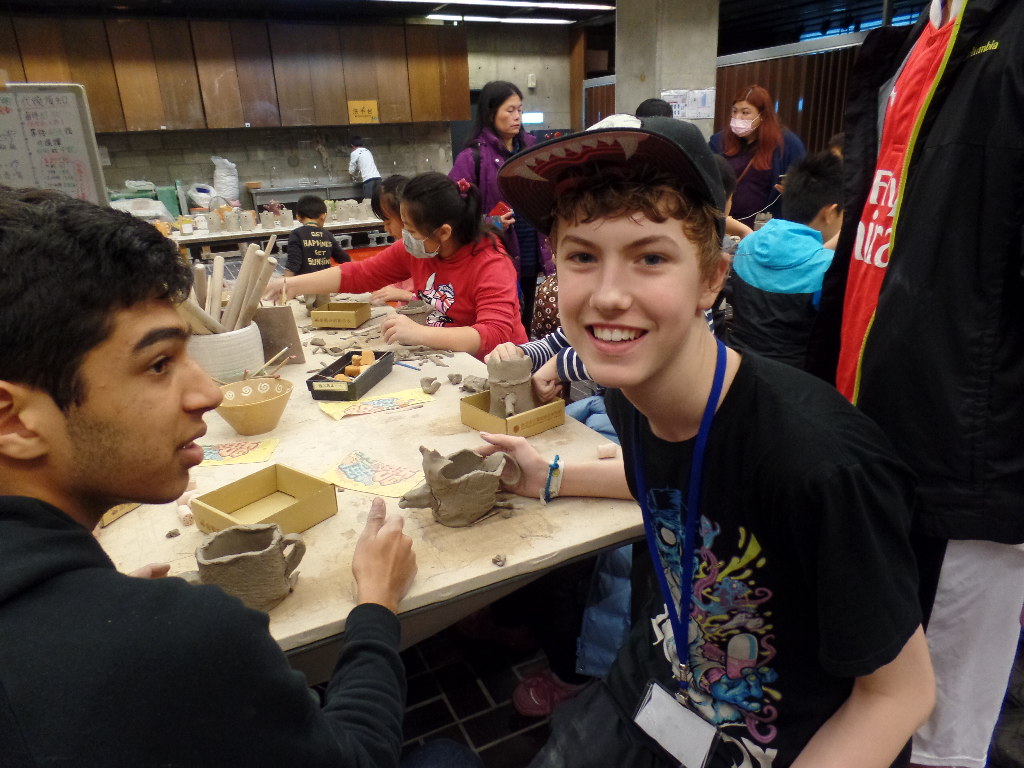
Once we arrived in Yingge, we took a peaceful ten minute walk past many ceramic shops, a sign of what was to come. Li-Ling told us that we had a ceramic class scheduled at eleven. I was ecstatic! Not only would we get to see the amazing ceramic art, but we would get to try it for ourselves! We walked past down the stairs to the ceramic studio and took a look around. It was a big room, with towering two story tall ceilings and tables stacked with all kinds of tools. They ranged from toothpicks to scrap paper, with mounds of caramel-colored clay rolled into balls and stacks on rectangular tables surrounded by small wooden stools. We spent the next hour learning to make a small clay teapot while the instructor showed us what to do on a huge projector while she spoke to us in sharp, quick Chinese. Because of the need for forty five days of kilning for the pots to solidify, we were unfortunately not able to bring our creations home.
After this experience, I was starving, and we walked over to the museum coffee shop and had a very nice lunch. Many people went back for seconds and thirds. After lunch we began the next section of our day, touring the museum. We were told to each pick one work of art about which we would write many specific details, along with how the artwork made you feel. This portion took about an hour and a half, and afterward some people went back to the coffee shop to eat more food. We toured the museum for a little bit more before beginning on the long journey home.
As you can imagine, it was just as long, crowded, and noisy as before, and afterward we were ready to unwind at the hotel. We will be spending about an hour and a half here before going out for dinner at the famous “Toilet Restaurant” in Taiwan, where all the food is served in toilets and we will be sitting on toilets while we eat. After this we will be shopping and touring the Ximending shopping district. After this, I expect that we will be very tired, and ready to rest up for the long day of touring the city with our new Kangchiao homestay buddies.
Around the Imperial Palace, at a 10-minute pace
I jogged around the Imperial Palace this afternoon, about a four-mile run from the hotel. I’m afraid I didn’t represent my country all that well; I was being passed right and left. Tomorrow is the Tokyo Marathon, one of the world’s biggest marathons, and a section of the course includes what I ran today. If only I were in better shape …
Yesterday was a long but eventful day in Sapporo. I toured a beautiful orchestra hall, and went to the top of the ski jump that was used for the Sapporo Winter Olympics, and is still used for events and training. I rode the chair lift up and down. There’s also a cool Winter Olympics museum there, with interactive games, including a simulator where you do a ski jump. I went 113 feet, far short of the 140-foot record. My hosts were nice about it, but clearly unimpressed.
I also met Sapporo’s mayor, a very serious but interesting man who talked about what he thinks Portland and Sapporo have in common, including an appreciation of nature, and beauty, and life conducted at a pace to enjoy both. I liked him, and his city, a great deal. I will always have found memories of Sapporo, and the people I met there, and how important it is for them to have a connection to Portland.
I said goodbye to Yoshida-san at the Tokyo airport late last night, bought sushi to go and ate dinner in my room. It was a relief to wake up at a reasonable hour this morning and have nowhere to go. I needed a break. I watched the Blazers lose to Cleveland on my computer, and then wrote a couple blog posts for The Oregonian. I also did some research on MFA programs at Antioch and Pacific, trying to decide what to do, where to go. I’m leaning Antioch, but I’m just not sure.
Courtenay and Will arrive in a few hours. I am eager to see them, share my stories and spend some time exploring Tokyo with them before I get back to work on Monday.
 The Thompson Attigs