The long, winding road to the Noto Peninsula

Kuroshima-machi, Wajima, Noto Peninsula, Japan, Nov. 12, 2023 – It is a chilly, rainy morning, and we are sitting in front of space heaters in an atmospheric 100-year-old sea captain’s house a block away from where the Sea of Japan is crashing ashore. The house has been lovingly restored, with its lacquered floors, tatami mat rooms, carefully curated furniture from Italian and German designers, even a Buddhist altar where the captain’s family must have worshipped. Each detail – salvaged calligraphy on a wall, beautiful reed shoji dividing the rooms, huge open wooden beams with modern touches like a slipper tub – feels like we are inside a living piece of art. We are moving slowly today, lingering over breakfast and laundry, unusual, for us, to be in no particular hurry.

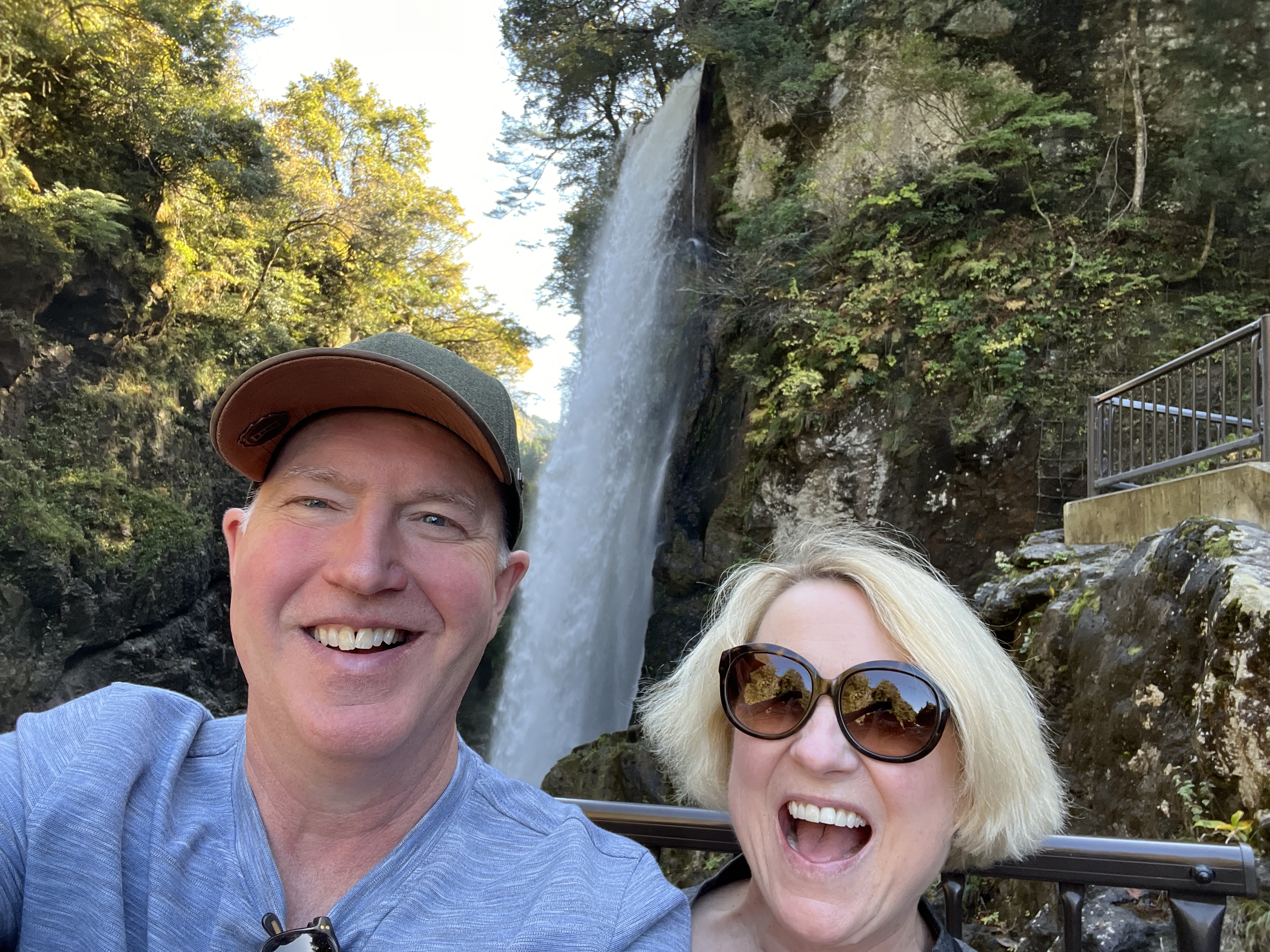
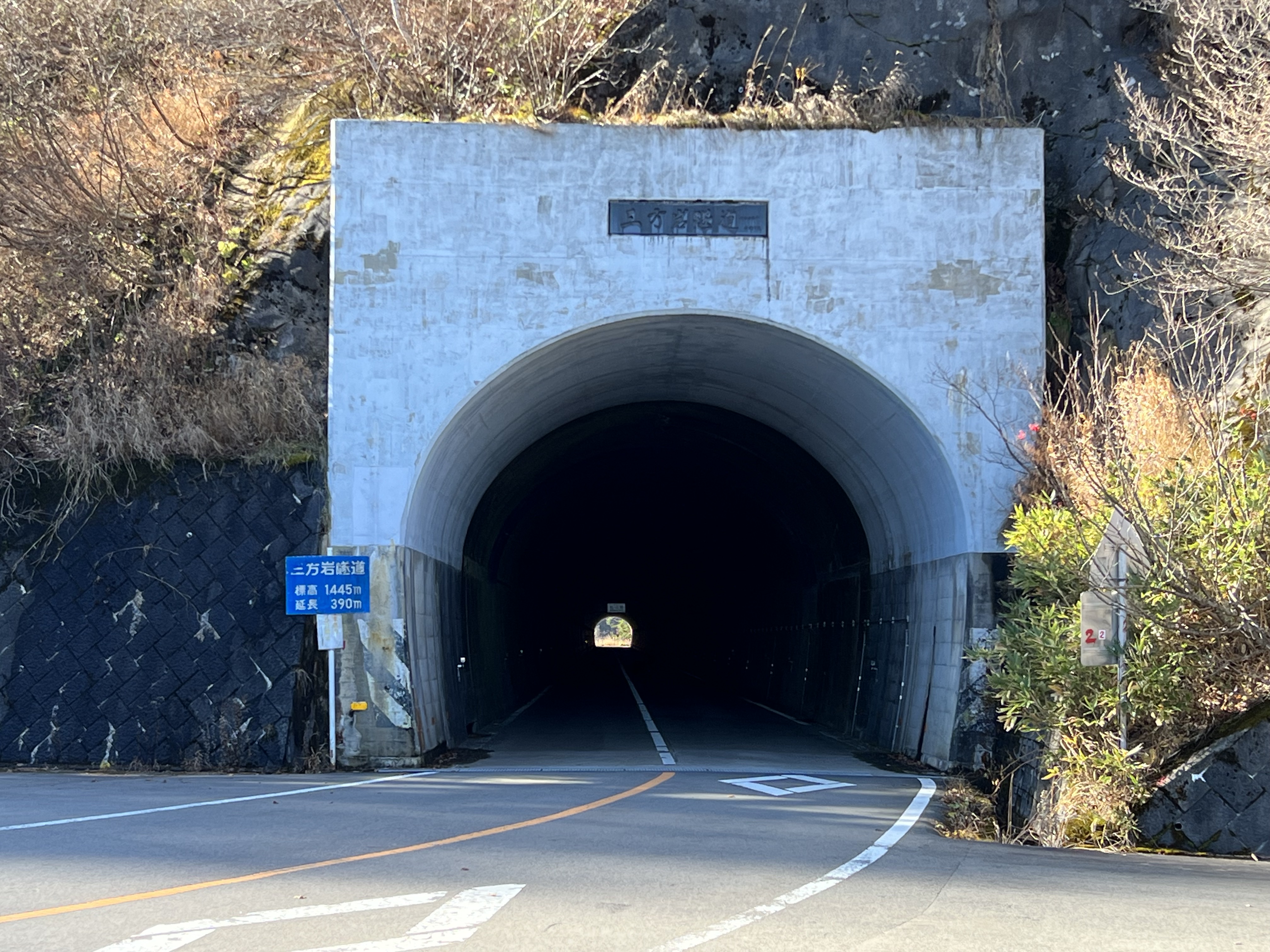
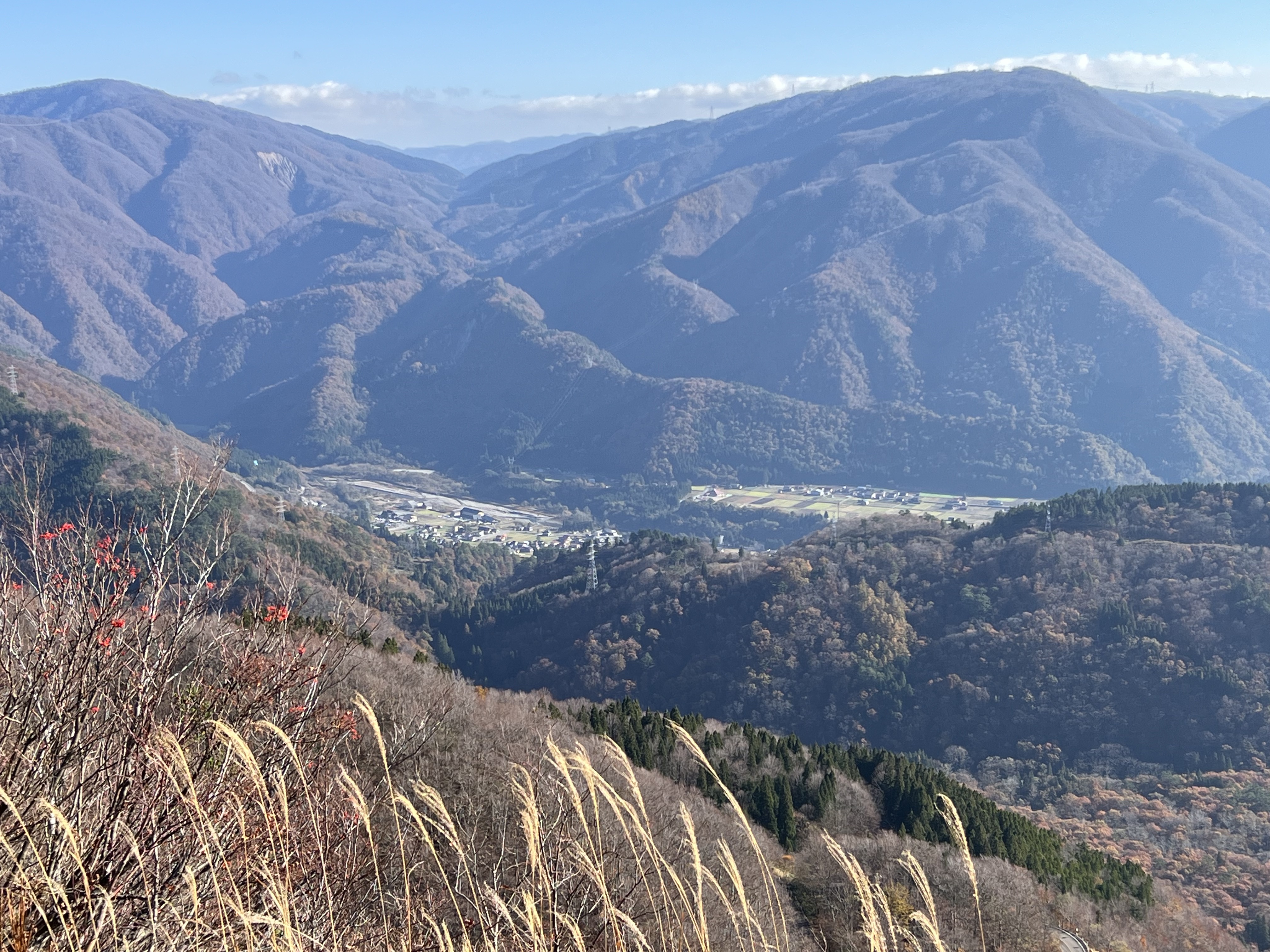
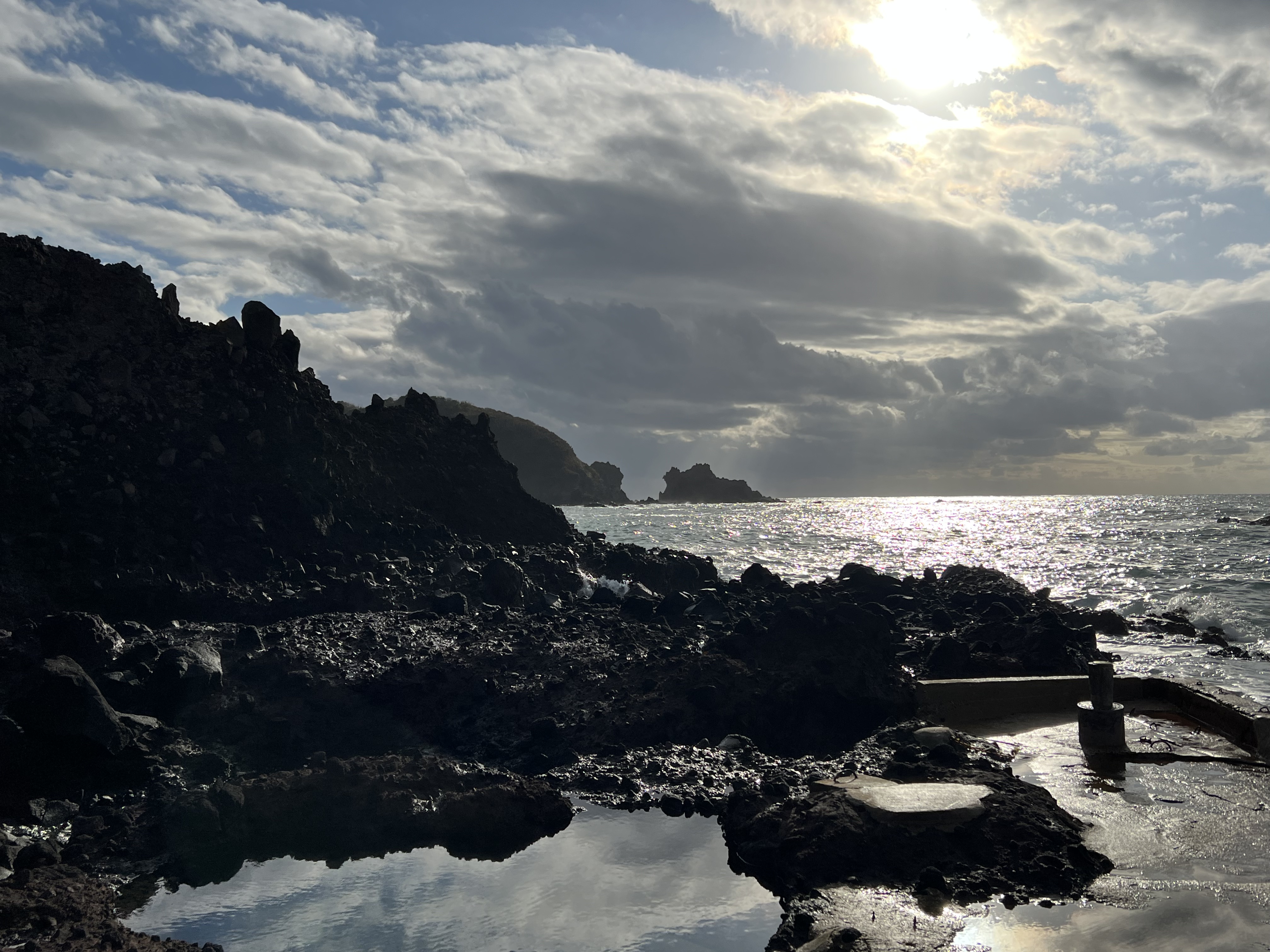
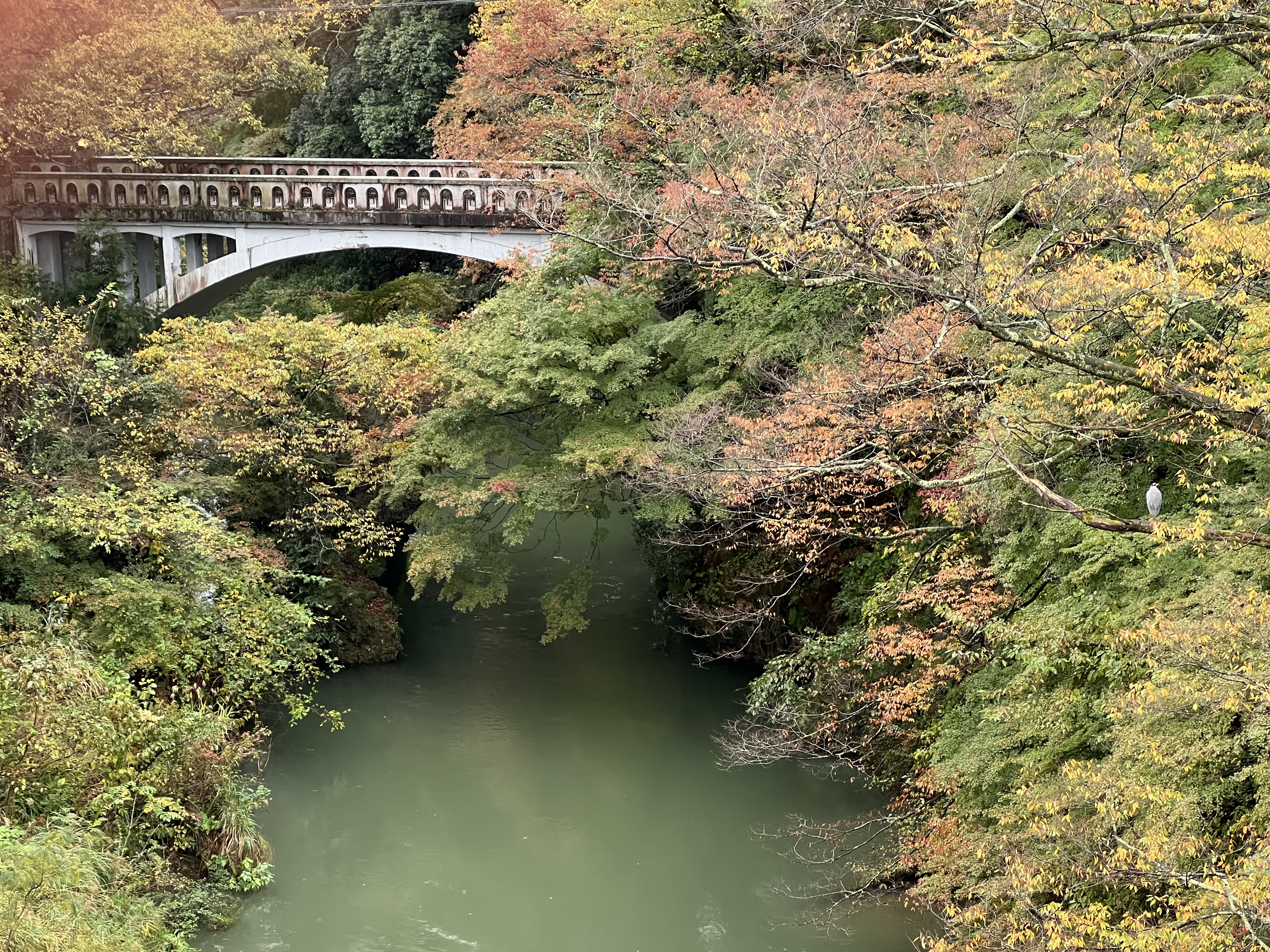
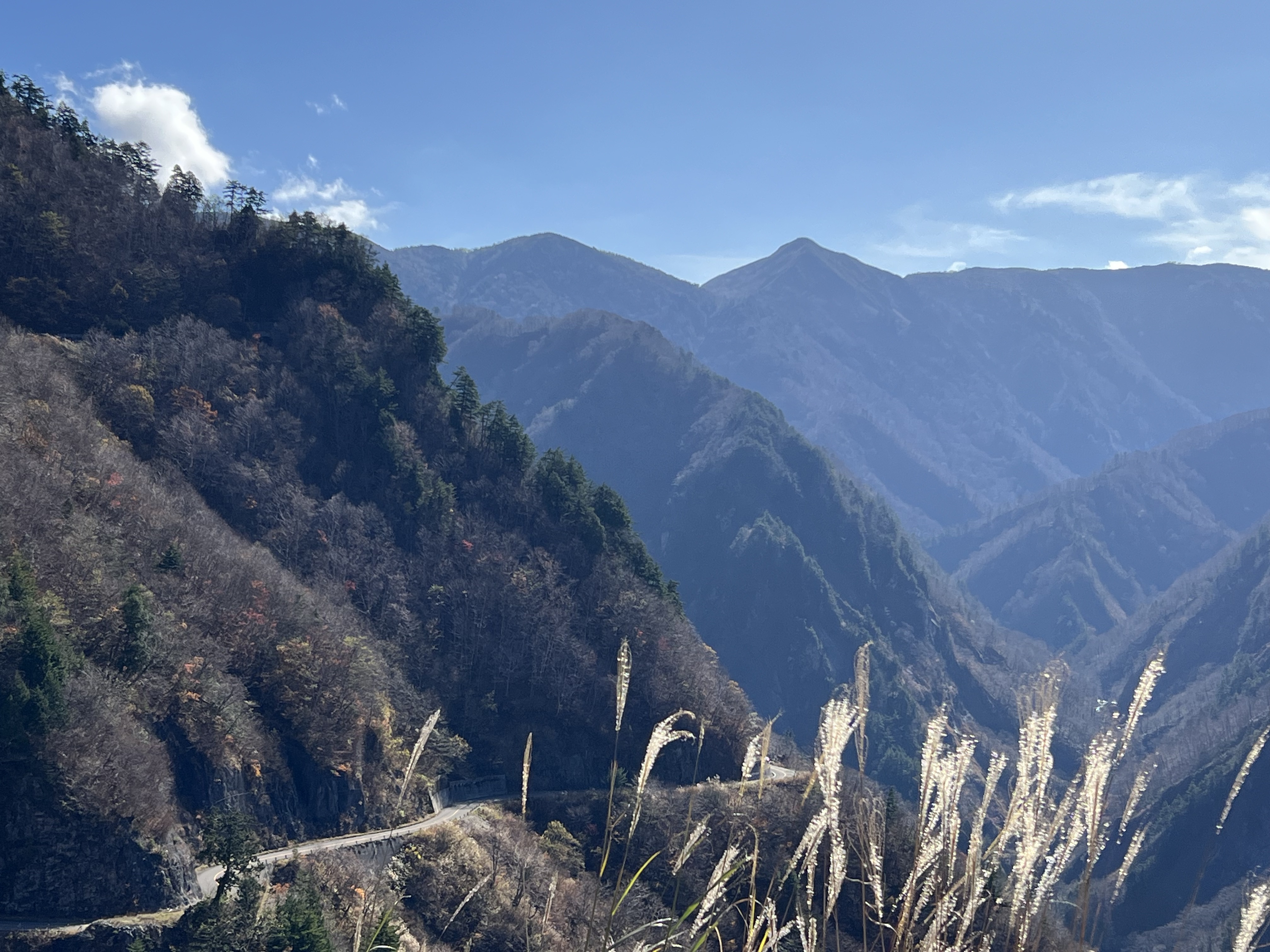
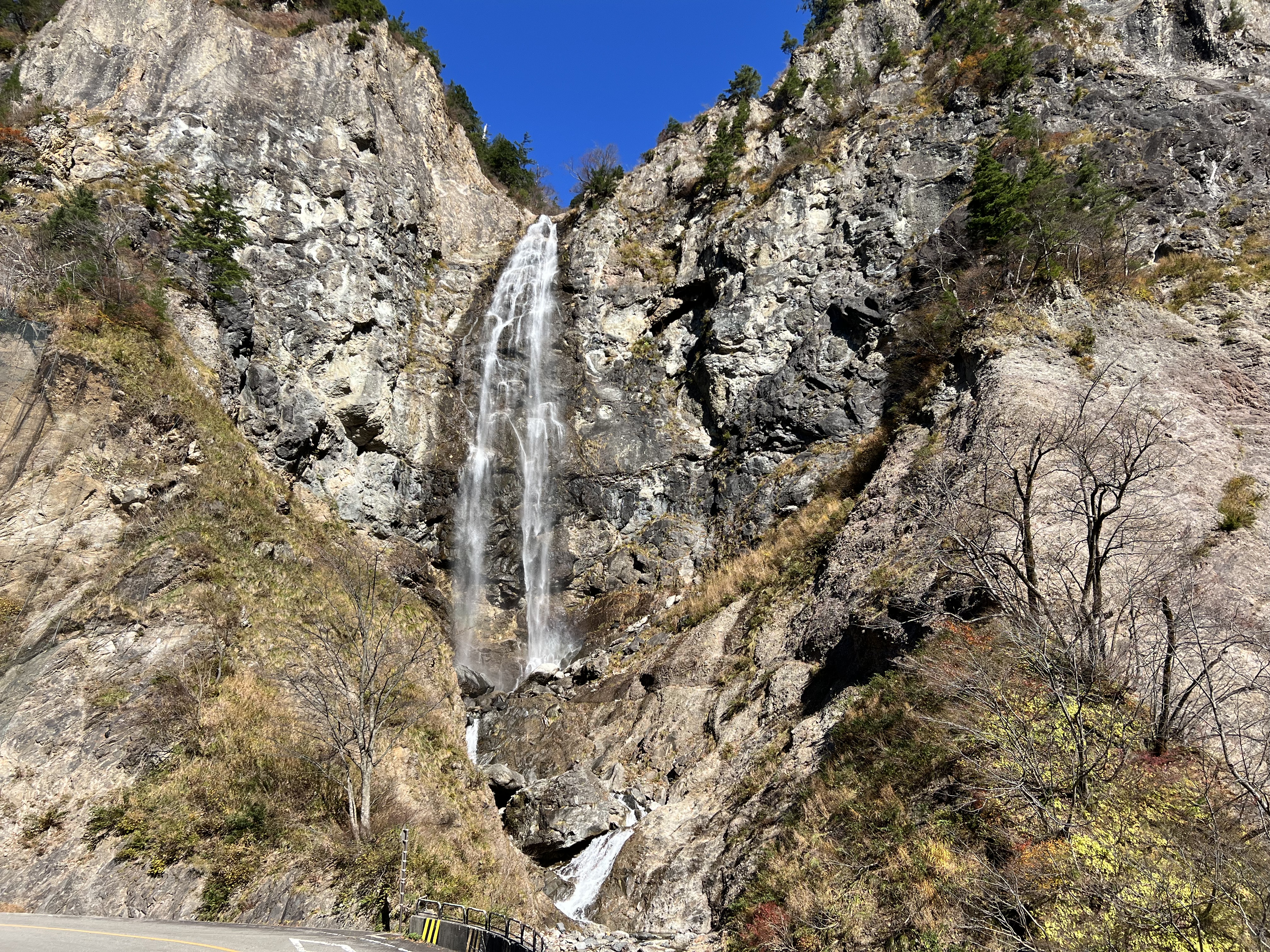
We have seen so much in recent days: sacred towering mountains, plunging waterfalls, and vast swaths of beech forests along the serpentine White Road leading from the iconic straw-roofed homes of Shirakawa-Go to the plunging Tedori Gorge, near where some fierce Buddhist warriors once made their last stand. We stayed at the beautiful Ryokan Kayotei in Yamanaka, part of the historic Kagan Onsen area, overlooking the gushing river in the Kakusenkei Gorge, where the 17th century haiku poet Basho lingered eight days. We, too, were reluctant to leave. But as we drove north, still anxious about driving in the left lane, we skirted the coast on the Sea of Japan, the spray of the waves crashing into the rocky shoreline of the Noto Peninsula that reminded us of our own Oregon Coast. 
And yet, what we will remember most from the past few days is not what we have seen, but what we have shared, what we have heard, what we have eaten, what we have learned, from the people who have welcomed us into their homes, cared for us, prepared our meals, and made the beautiful lacquerware and other crafts we have seen. 

Last night we dined with a friendly, engaging couple who had made the long trip from Tokyo, for one night only, to share a meal created by Chef Yutaka Kitazaki in an intimate, six-seat restaurant in a carefully remodeled house high in the thick forests outside of the village. They graciously helped with translation, and background on the extraordinary experience we had just stumbled into. The house itself was a work of art, the serving ware was lacquer from the house’s owner, artist Akito Akagi, friend and business partner of the chef. Our AirBnB host, who is working to create a kind of artists’ community here in Wajima, recommended this still relatively unknown auberge, Somamichi. Our host and his wife are working to support artists, artisans, chefs and others who have returned to the rural Noto Peninsula, where culture and traditions run deep. Our chef, trained as a kaiseki chef in Kyoto and who has headed critically acclaimed restaurants in nearby Niigata, opened Somamichi this summer. Though he is not from here, his grandmother is, so it’s a return to home in a sense.

 It seems like everyone we have met at the remote Noto Peninsula took a long, winding road to get here. Kitazawa-san did not plan to become a chef. Like our son Will, he studied liberal arts in college before becoming a chef. In a thoughtful essay for his university, he wrote that he loved the interdisciplinary approach, and has even commented on how his reading of Shakespeare, and its fluid meanings over time, hinted at a world that is hidden from sight unless one makes an extra effort to see it. We did not meet Akagi-san, but we read that he, too, started elsewhere, as an editor in Tokyo, before turning to lacquer as a way to find meaning in his life. He and his family moved to Wajima so he could apprentice – he now has his own studio and his work is featured internationally. As Will finds his own path in life, we loved to find that our renowned chef was also someone who loves the liberal arts.
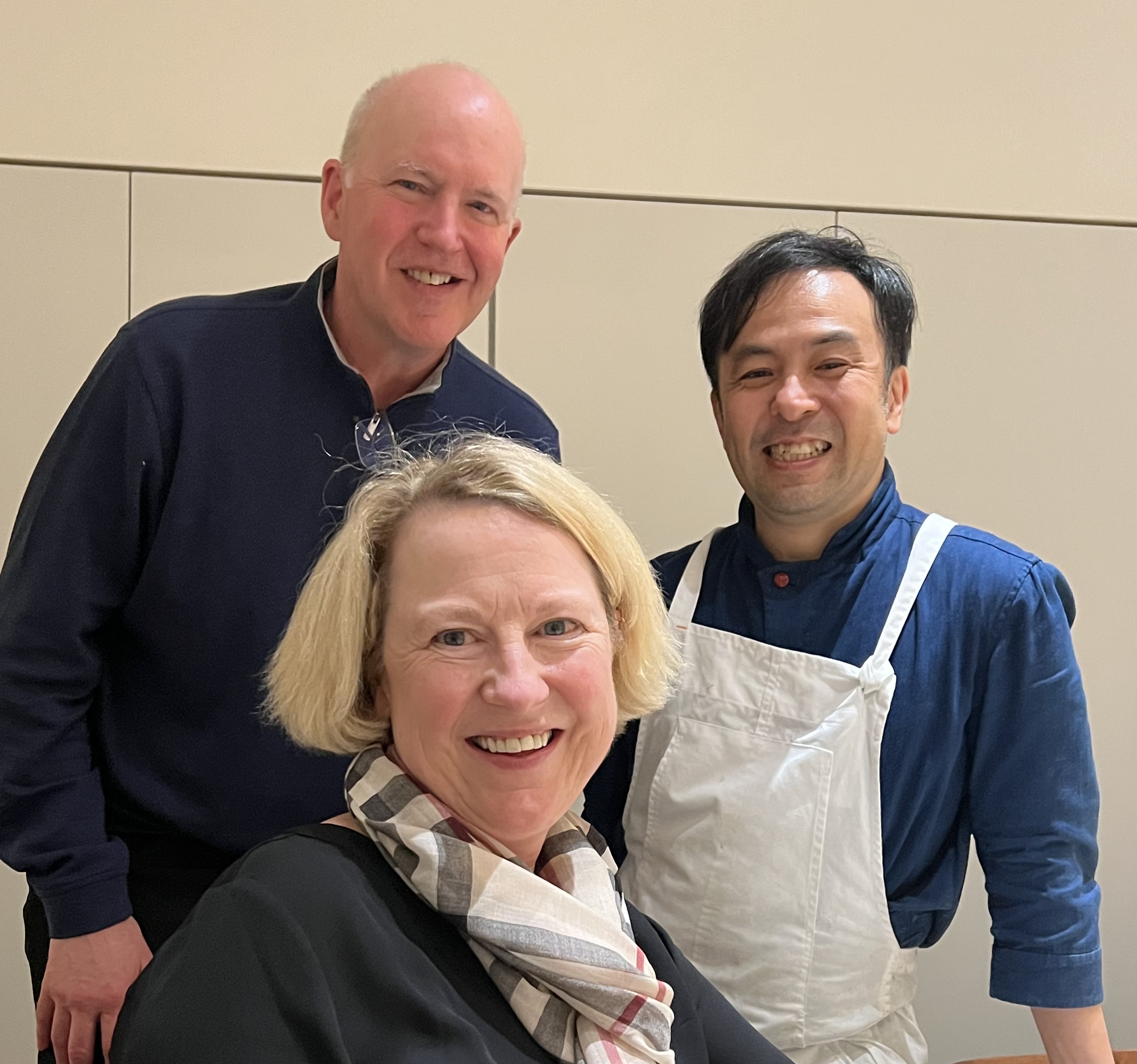
Kitazaki-san wrote: “I’ve become more and more conscious of the way I’ve been shaped by my liberal arts education. Every so often I’m struck anew by how the things I learned, just by following my own curiosity and interests, coalesced inside me and formed the basis of who I am. It has had a huge influence on my thinking as a chef. Nowadays, it seems to me, it’s not enough for a chef to be able to cook. At one time, any chef who had trained overseas was assumed to know more than everyone else, but information access is so advanced nowadays that our customers are often more knowledgeable than we are. That being the case, it seems to me that the important thing is to have a range of interests, to express one’s viewpoint on a plate, and to be able to talk about it with customers – the invisible aspects included. Of course, cooking is a profession predicated on technique, and one has to kep refining one’s skills. But once you can cook at a certain level, it becomes more about your philosophy. That’s why even a chef needs the sort of wide-ranging, multifaceted perspective cultivated by the liberal arts.”

The meal that Chef Yutaka served us was exceptional, fresh fish and vegetables from the nearby Wajimi Market, the oldest daily market in Japan, and an astonishing variety of colorful mushrooms, gathered by local grandmas and grandpas who refuse to reveal, to him or anyone else, where they find them. We spent hours savoring his food, talking with him and his talented sous chef, Koito Sano. She engaged us with her love of food and cooking, her passion for Zen meditation, her knowledge of local sake. She was delighted, and somewhat surprised, that we had visited her home region of Okayama, 11 years ago. Courtenay was only able to catch about half of what she shared, but our dining companions helped fill in, and it didn’t really matter in the end. The food was extraordinary – simply prepared, squid with a bit of salt and light soy sauce, wild mushroom tempura, wild boar, wild flowers. It was an unforgettable night, and it ended with yet another startling surprise: the chef himself driving us back home through the dark forest.
Shirakawago-go-go!

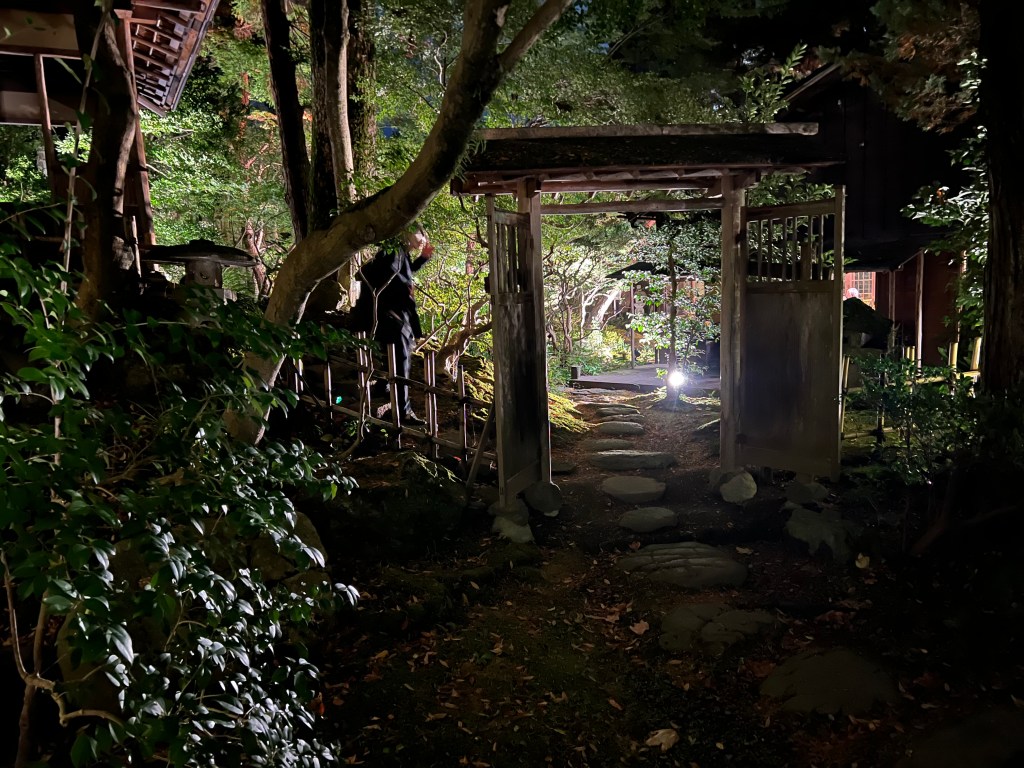
Shirakawago, Japan, Wednesday, Nov. 8, 2023 – After a lovely kaiseki dinner last night at an old samurai villa overlooking a garden even older than the famous Kenroku-en, we said goodbye to Kanazawa this morning. We were in a bit of a rush, since our plan to get a breakfast of sushi at the popular Mori Mori conveyor belt sushi restaurant in Omicho market went a little awry. Turns out you really need to show up at 7:30 a.m for the shop’s 8 a.m. opening, so we ended up waiting about 45 minutes for a place at the counter. But it was a wonderful way to say goodbye to Kanazawa, where conveyor-belt sushi was invented – note to the reader – no one actually takes the sushi from the conveyor! Whether this is from Covid, or news reports of naughty teens licking the sushi and going to jail for it, we don’t know, but it was fine because you can order from an iPad, and it was all delicious. More on that later…

After that, we picked up our sleek white Toyota rental car and hit the road for the mountains of Gifu prefecture. Rick handled the drive well, thanks to, and despite GPS. It turns out Japanese GPS can be just as stupid as GPS in the U.S. – and “the lady,” as my mom always calls her, sent us on a ridiculously circuitous route to get to the freeway. I had mapped out a direct one-shot straight route – but the GPS had Rick practicing his “left turn” and “right turn” out through some rice paddies and industrial land until she finally told us to go straight into a road block. We were able to get back to the main road, but it was a reminder to never blindly follow that voice coming from the dashboard. Or from anywhere, really.

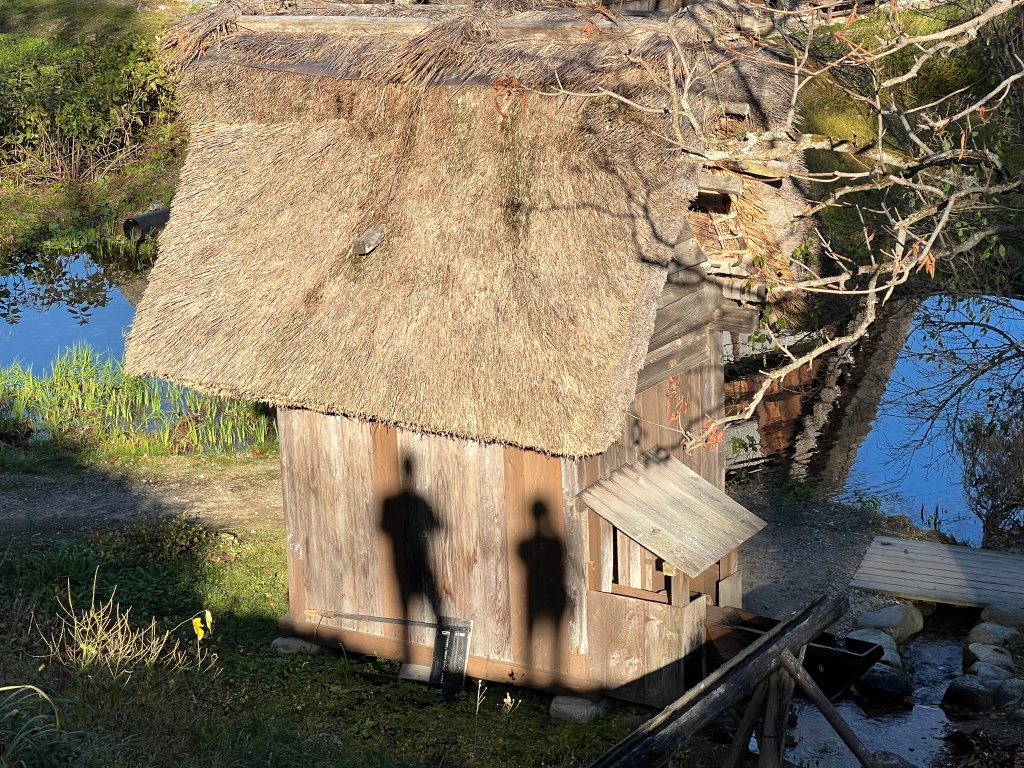
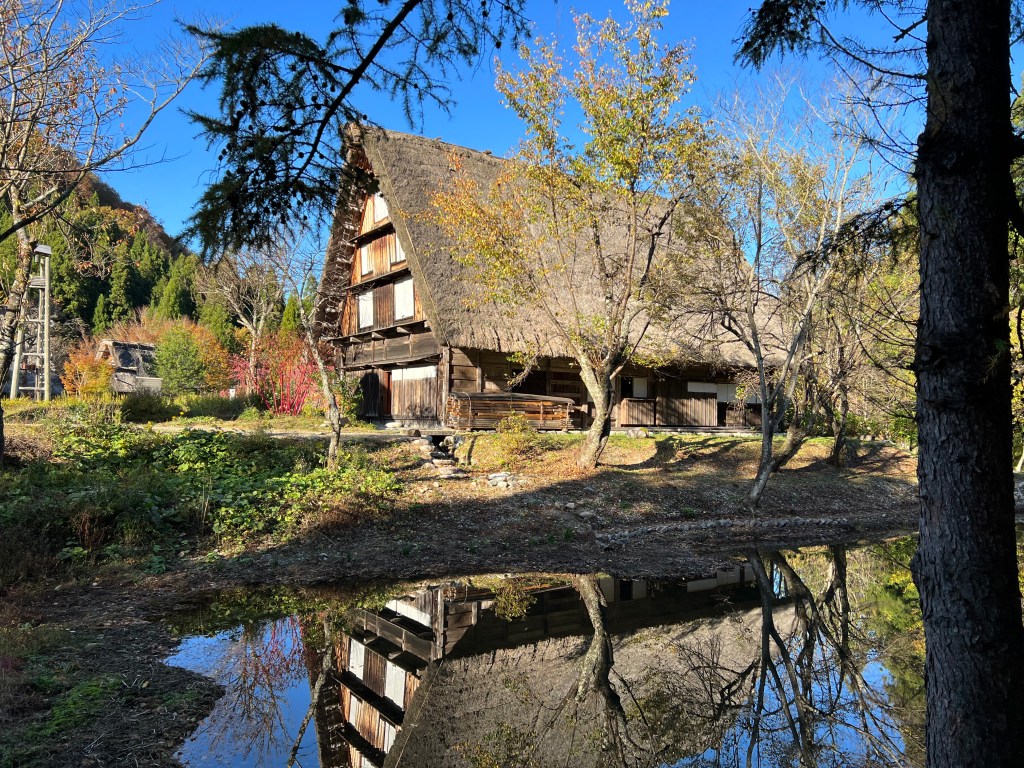
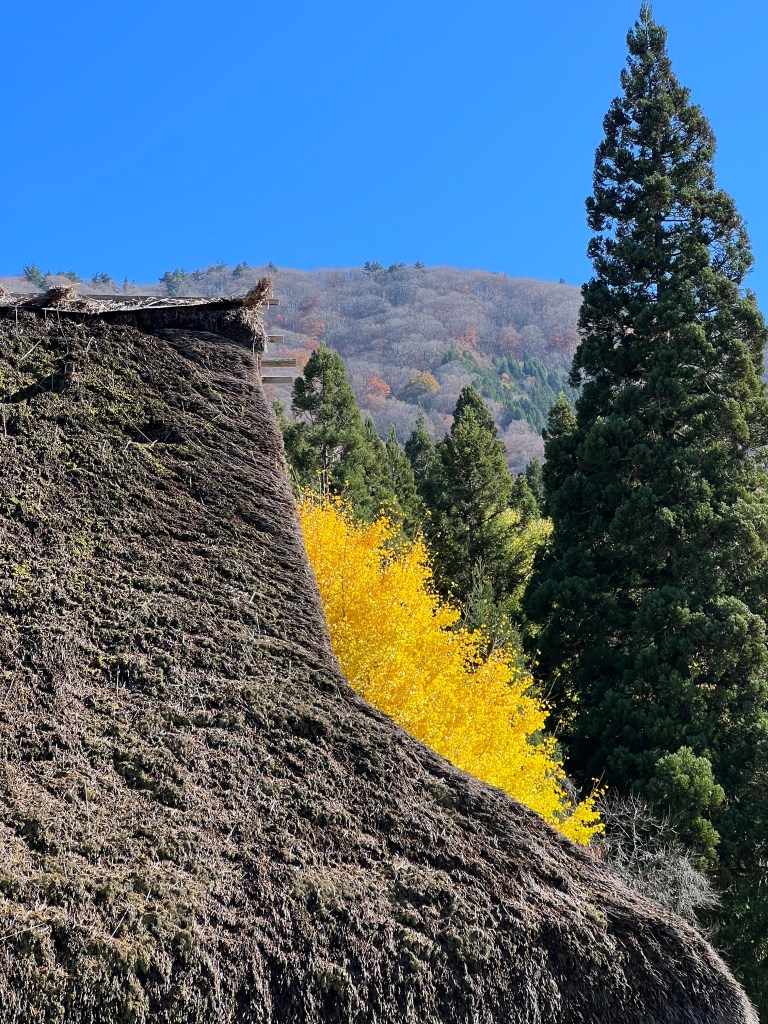
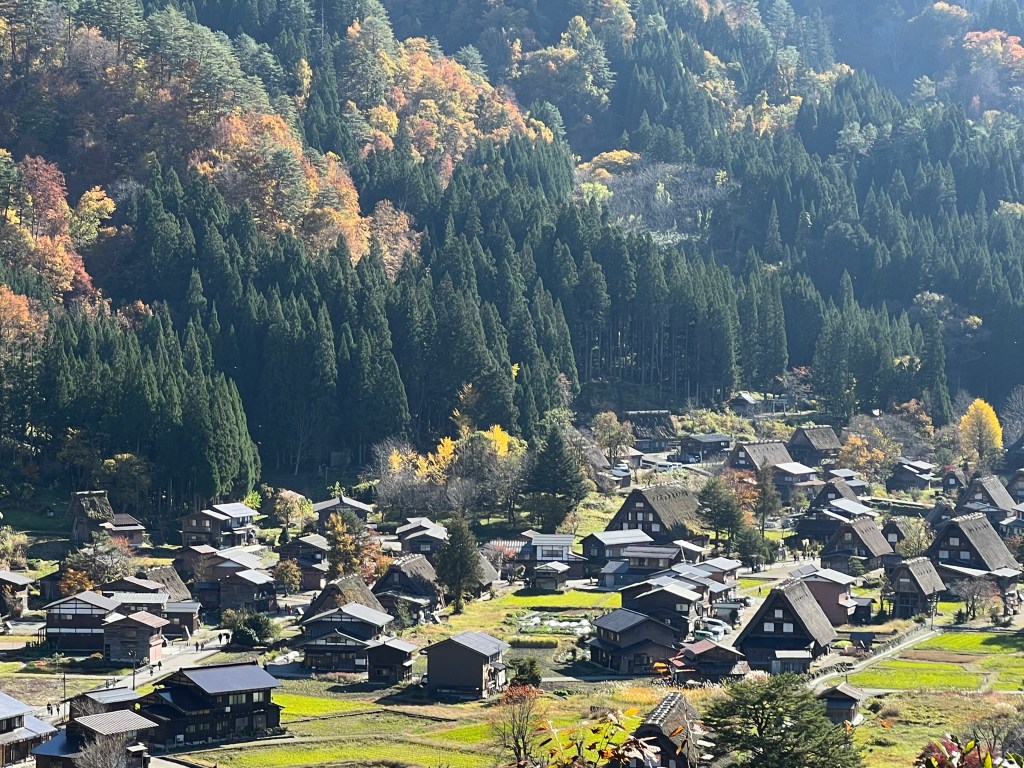
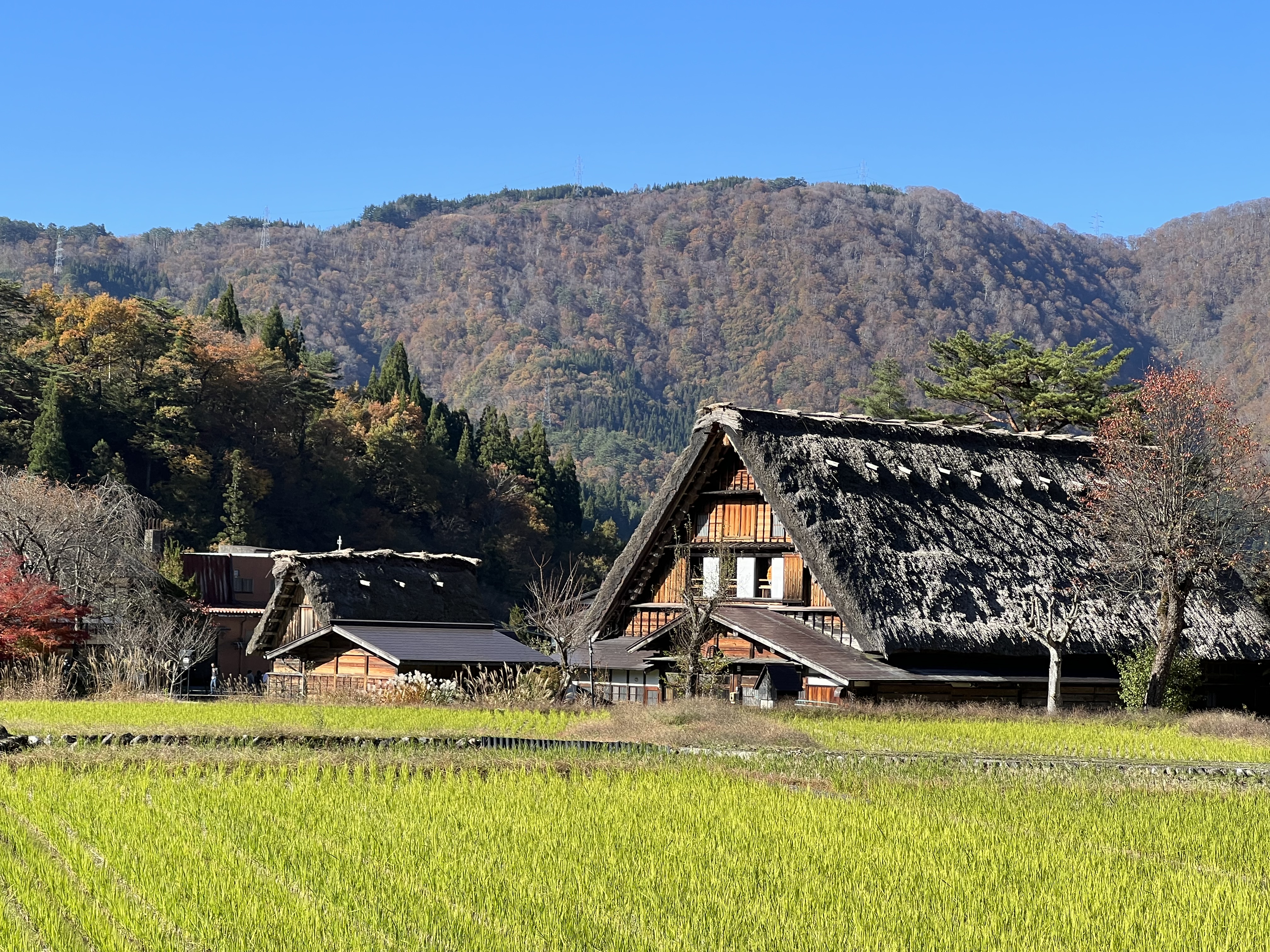
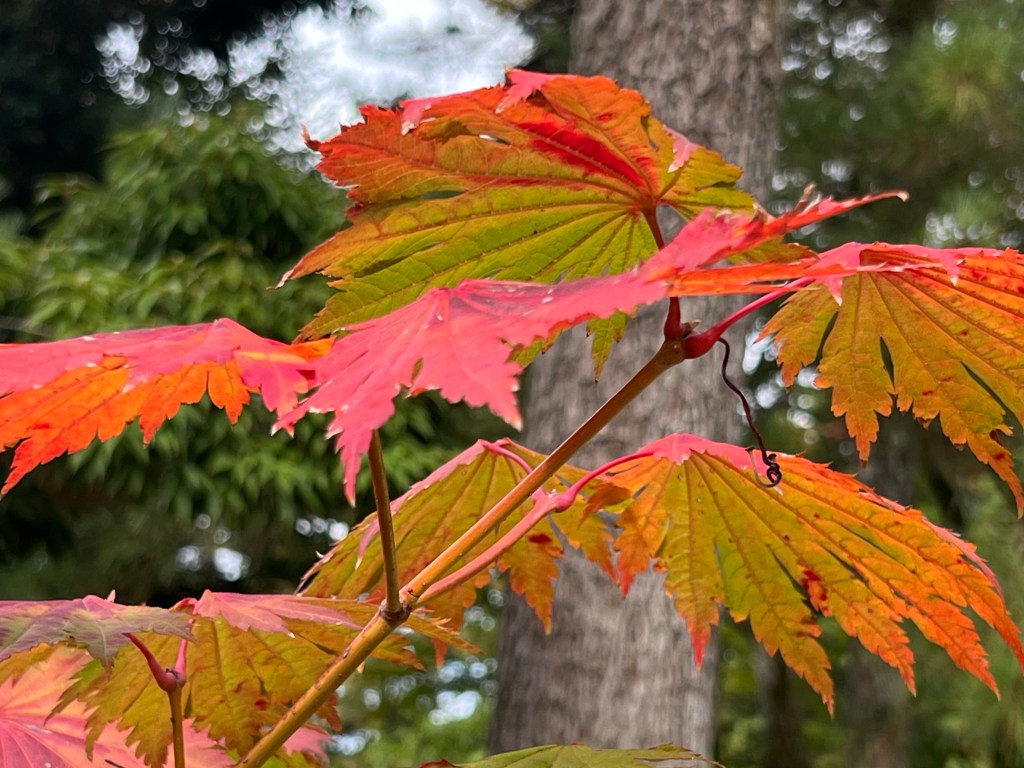
We arrived at Shirakawago in the late morning, along with a fleet of tour buses that disgorged their contents onto the crowded streets of the main town, Ogimachi. There were languages from all over the world, mostly Chinese, European, some Americans and Japanese. It is so picturesque, and it is a little hard to drive in Japan, so most people do come on tour buses. Shirakawago, or old white river, is in the mountains, until recently very isolated because the mountains are so steep and the snow so deep. But tunnels changed all that – we took so many tunnels – I’d have to check but some were pushing 5 miles long – and suddenly we popped out in this little hamlet of beautiful, steep, thatched-roofed homes called Gassho-zukuri, since they resemble hands coming together in prayer. The roofs are a meter-thick with thatch and are extremely difficult to maintain, but they apparently work well in the deep snows that blanket the region in winter. The snow usually flies about now in this region, but today was summer-like, hot in the sun. We toured an old temple, whose roof is also thatched, very unusual, and a large home owned by a wealthy farming family. We preferred the temple house, since it was run-down and very atmospheric. The houses have multiple levels, the very top reserved for the cultivation of silk worms, which were imported and silk became an important local product. The hills above the town rise steeply, and were colored yellow, red, orange and gray from the changing leaves. It may not have felt like fall today in the heat, but the hills are alive with color.
Our favorite time was walking around a little cluster of gassho-zukuri buildings south of the main town, which required an entrance fee. Few people came here, and it was quiet, and the afternoon was approaching, so the afternoon light and calm and sound of water helped you imagine what it might have been like to live here hundreds of years ago. Their lives were hard, very hard. Rice was hard to cultivate, communication with the “outside world” difficult, and the winters were long and hard. We saw the straw coats they wore on their backs for the snow, and all kinds of harnesses for carrying things on your back. There were sleds to haul lumber by hand, and that lumber had to be split by hand. We talked about how my dad, who never wanted to come to Japan, would have actually loved this place, the sense of history, the difficult way of making your way in the world with just some wood and some straw.

Kanazawa: City of the Six Sublimities

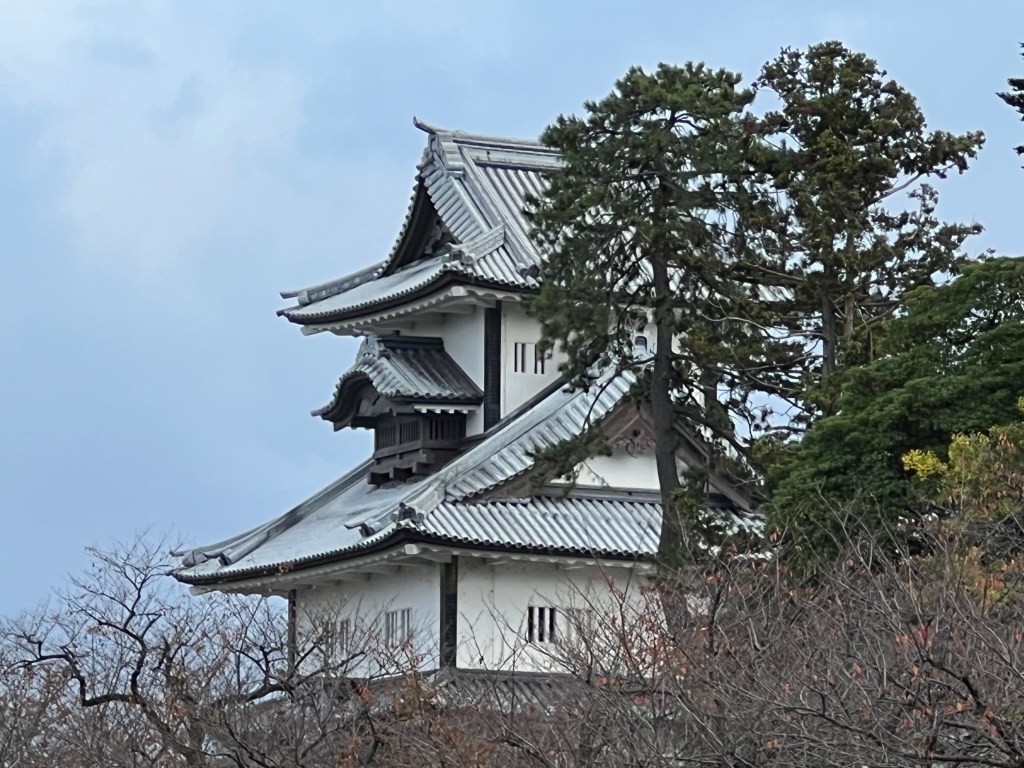
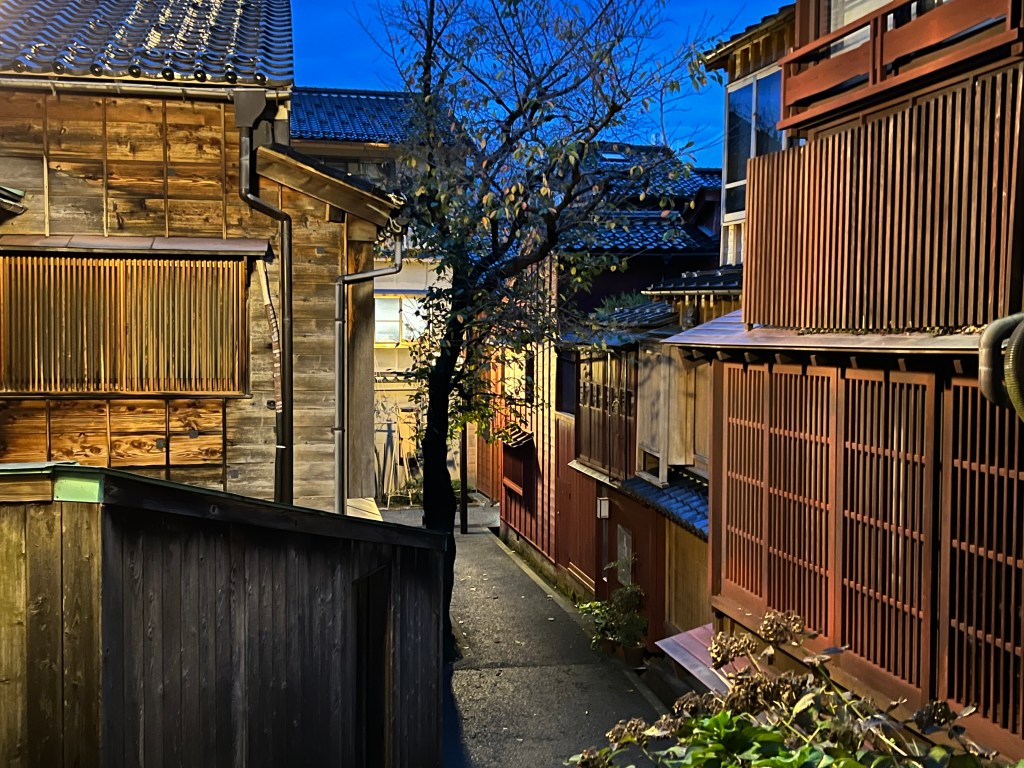
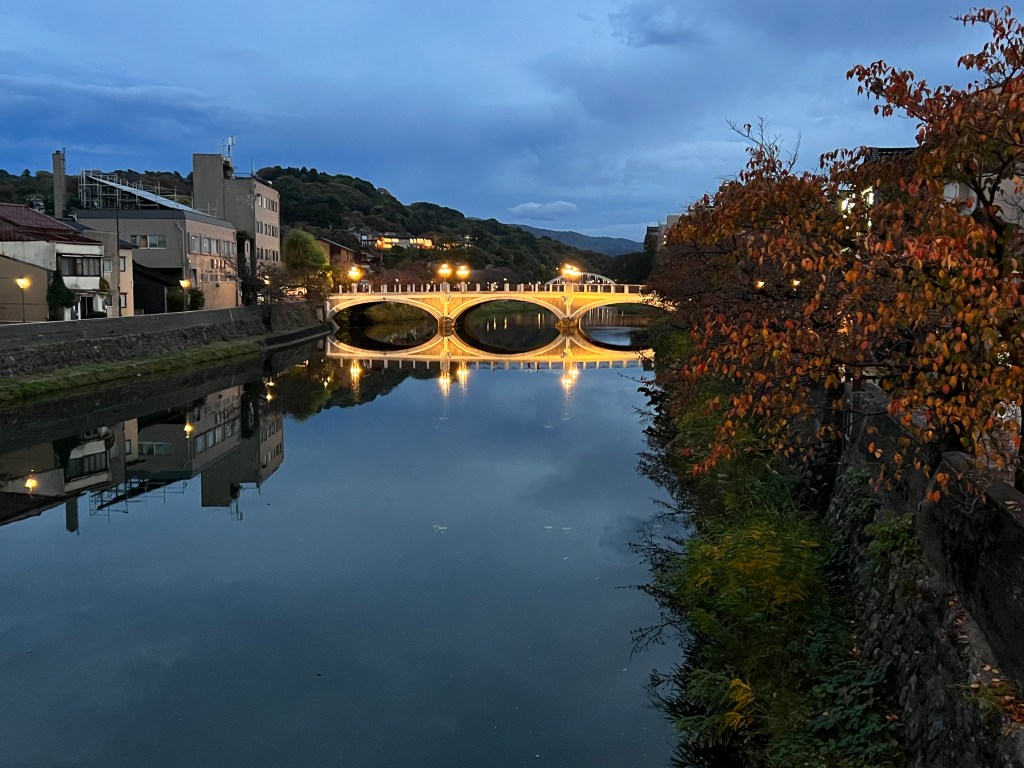
Kanazawa, Japan, Nov. 7, 2023 — We’re nearing the end of our three days in Kanazawa, a place we will remember for its atmospheric samurai and geisha districts, for its busy seafood market and an unforgettable sushi dinner, for the hawks known as black kites that swooped and soared over the beautiful castle grounds, and, most of all, for the timeless beauty of the Kenrokuen Garden and its twisted, evocative trees.

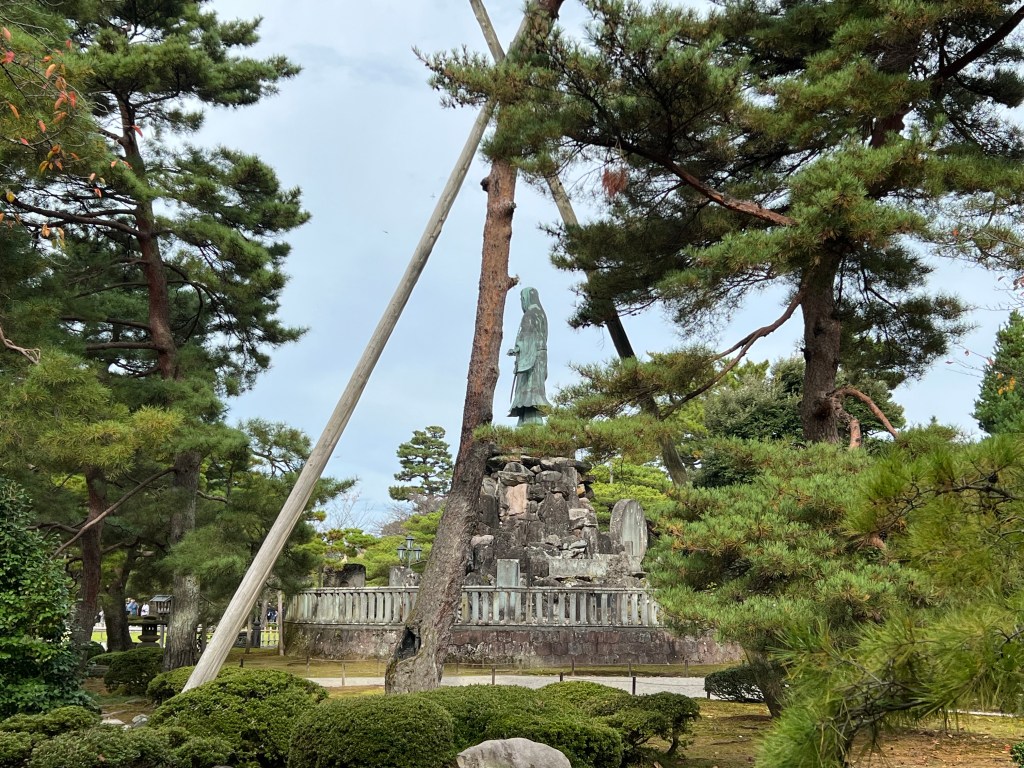
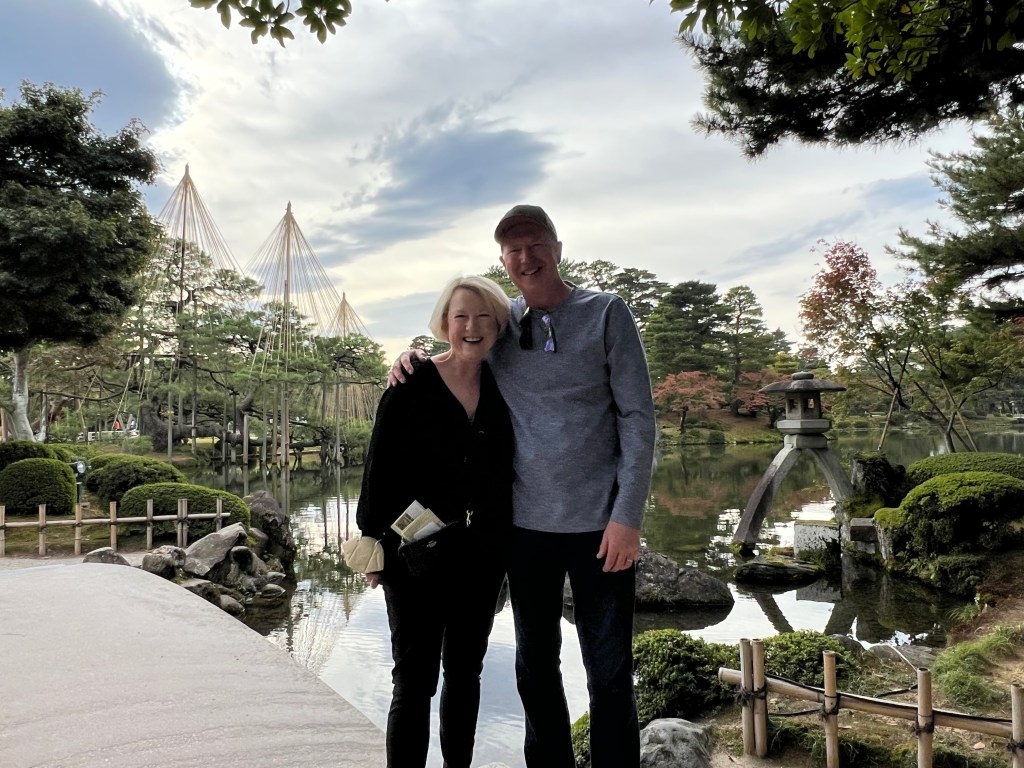
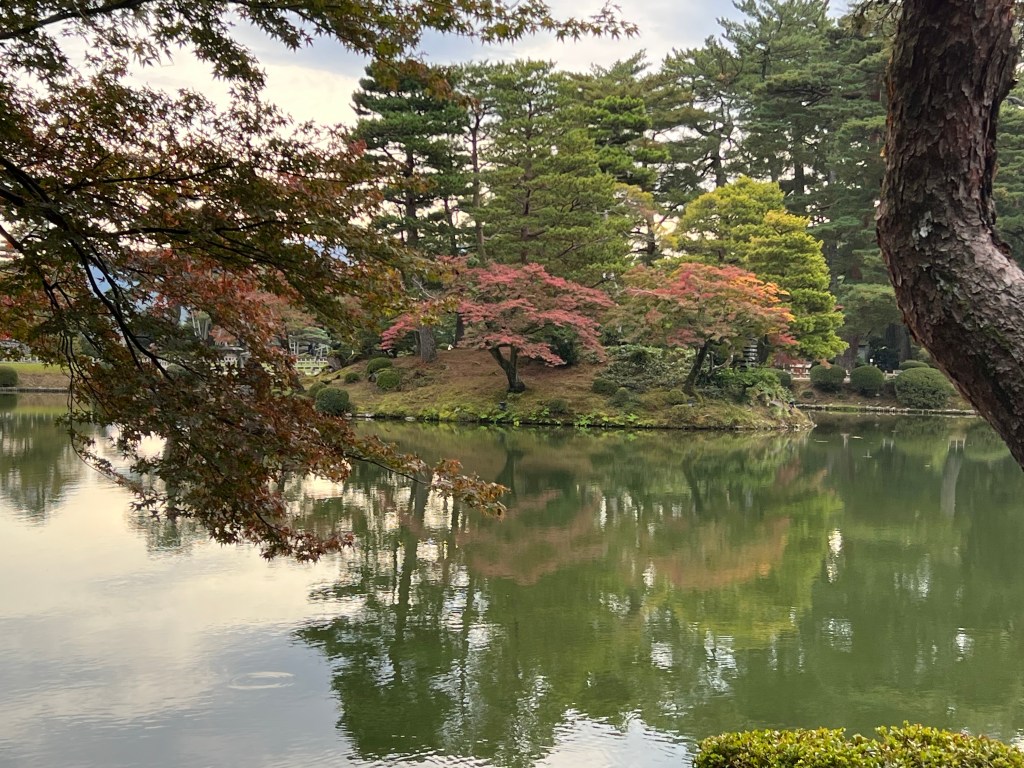
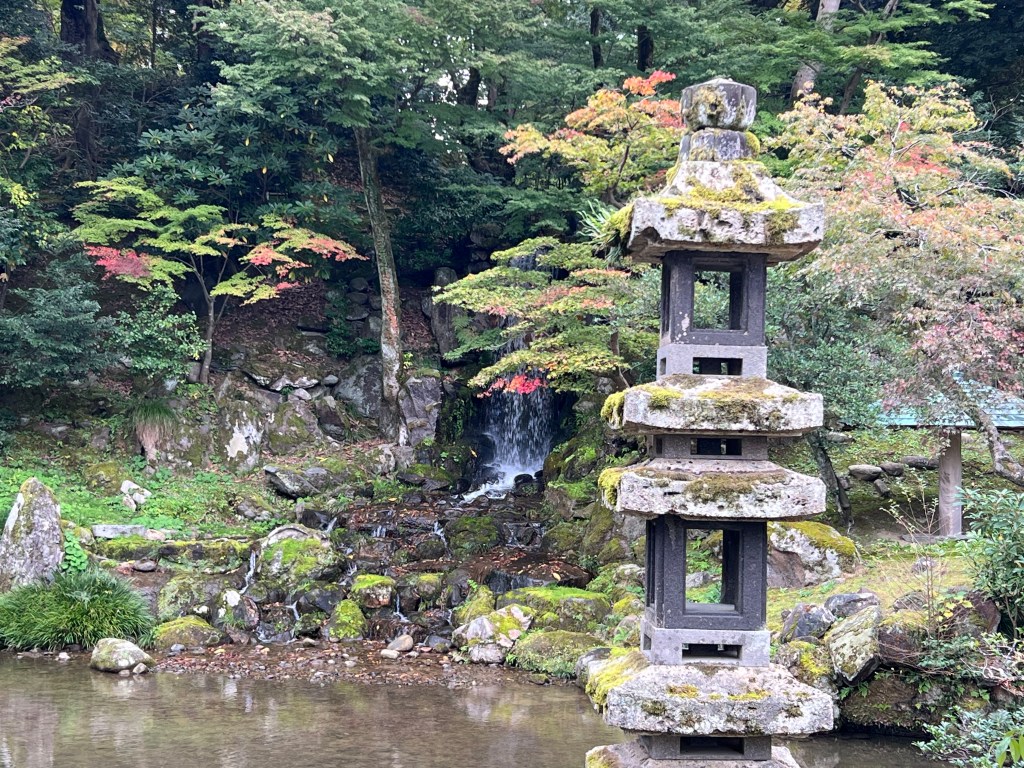
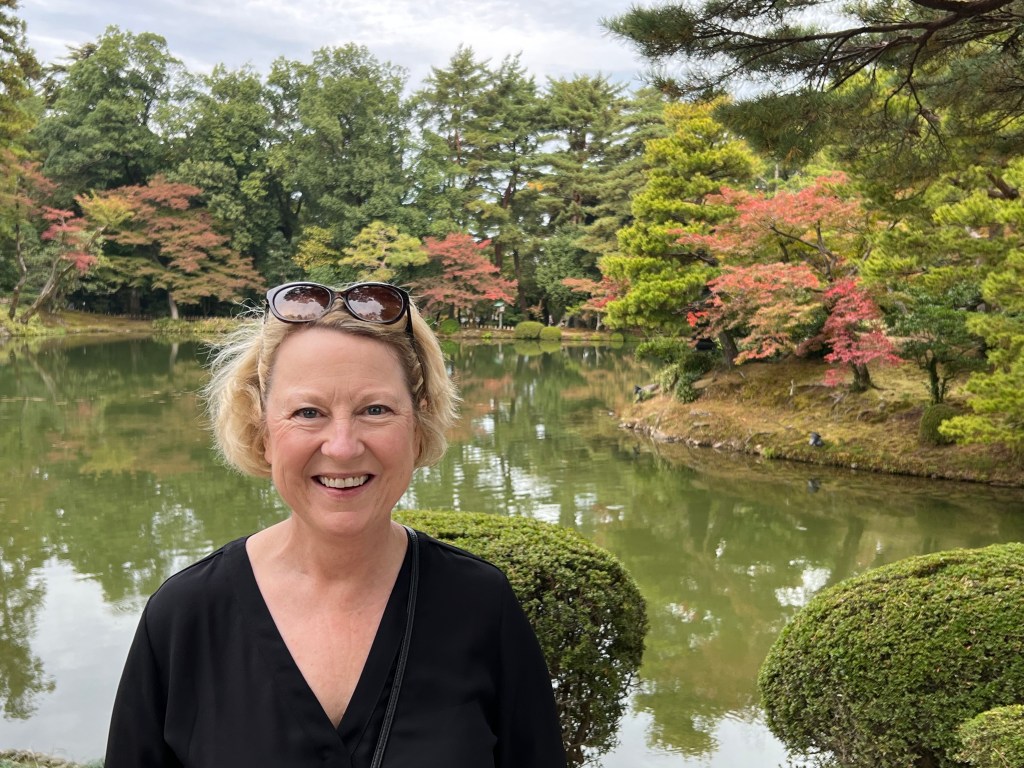
It was during our quiet morning strolling the curved paths of Kenrokuen, considered one of Japan’s three greatest landscape gardens, the only sounds the splash of water and the distant thrum of the city, that I felt most connected to Kanazawa, and the most in love with the city. The name Kenrokuen literally means “Garden of the Six Sublimities,” referring to spaciousness, seclusion, artificiality, antiquity, abundant water, and broad views, which are said to be the six attributes that make up a perfect Japanese garden. They make for a really nice city, too.

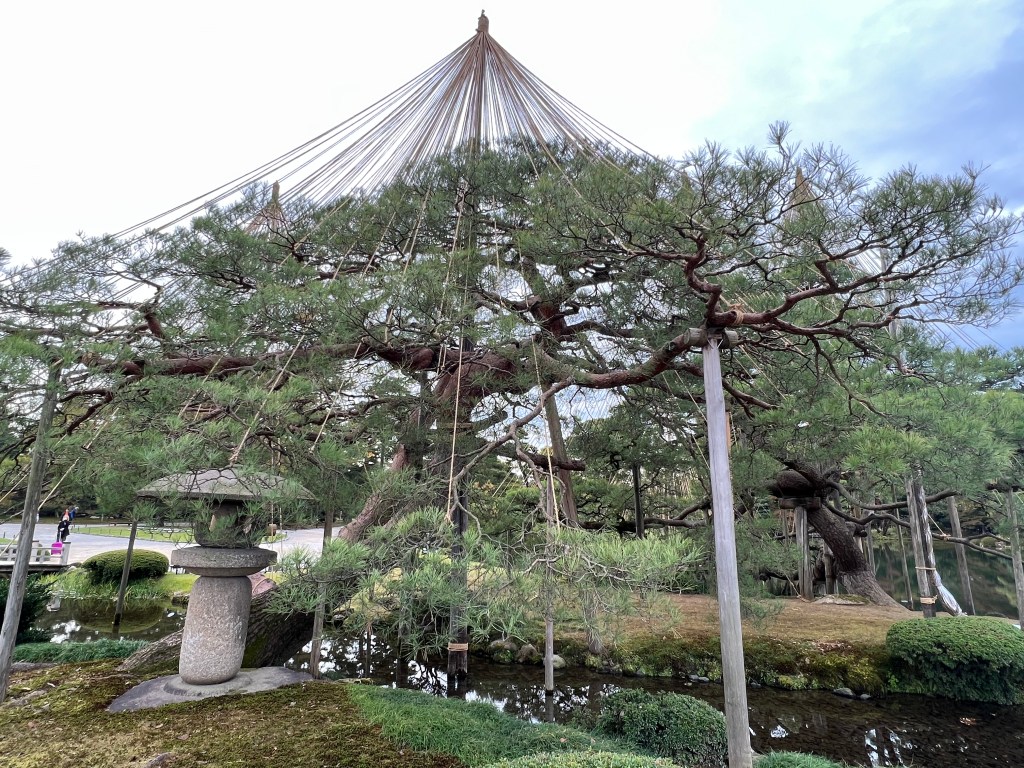
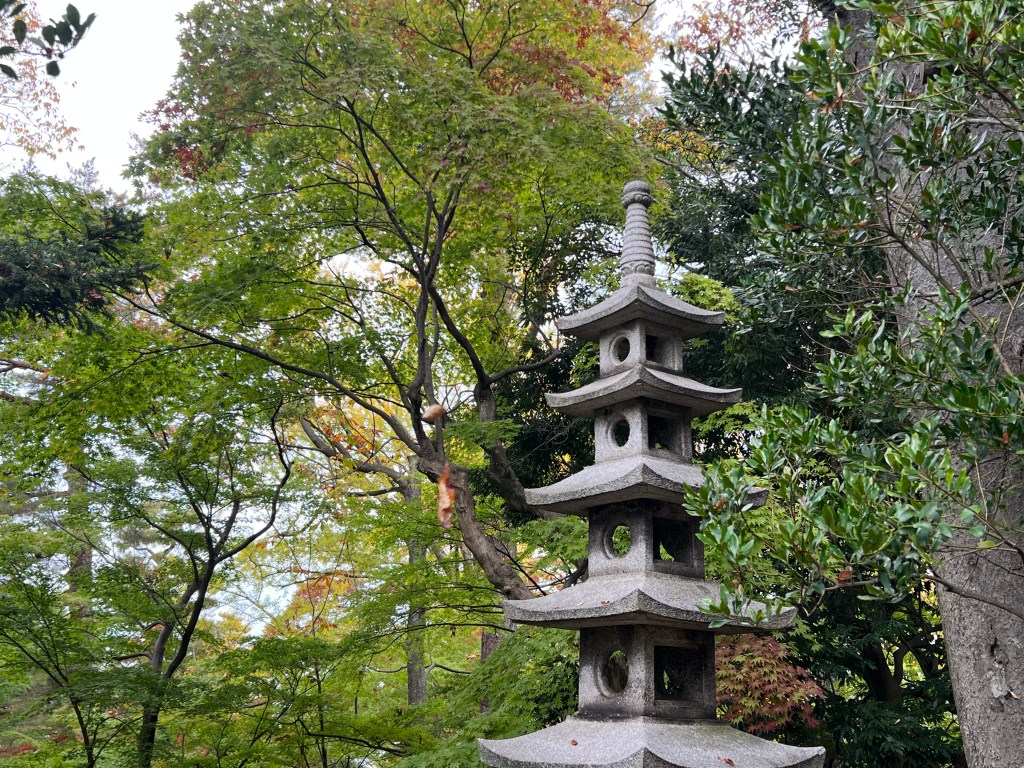
It’s taken centuries of hard work to make Kenrokuen the incredible garden it is today. The spacious grounds used to be the outer garden of Kanazawa Castle and were constructed by the ruling Maeda family over a period of nearly two hundred years. Kenrokuen was opened to the public in 1871. One-hundred-and fifty-odd years later, around every corner there is something to experience, to see and feel: Ponds, streams, bridges, teahouses, flowers, stones, viewpoints, lanterns, and thousands of trees, many of them very old, very twisted trees with their limbs propped up with all kinds of supports, some of them hanging low over ponds and streams. Many of the trees, especially the expressive pines, struck us as individuals, old men and old women, who had seen and lived through so much history, and we even wondered whether the gardeners had named them.

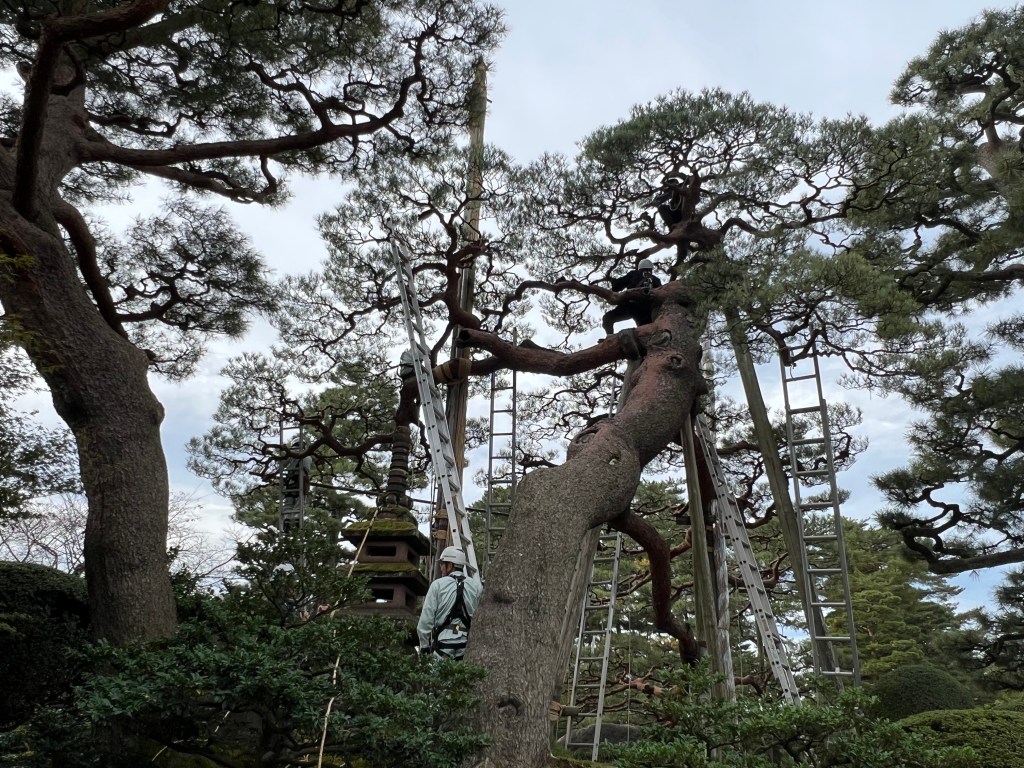
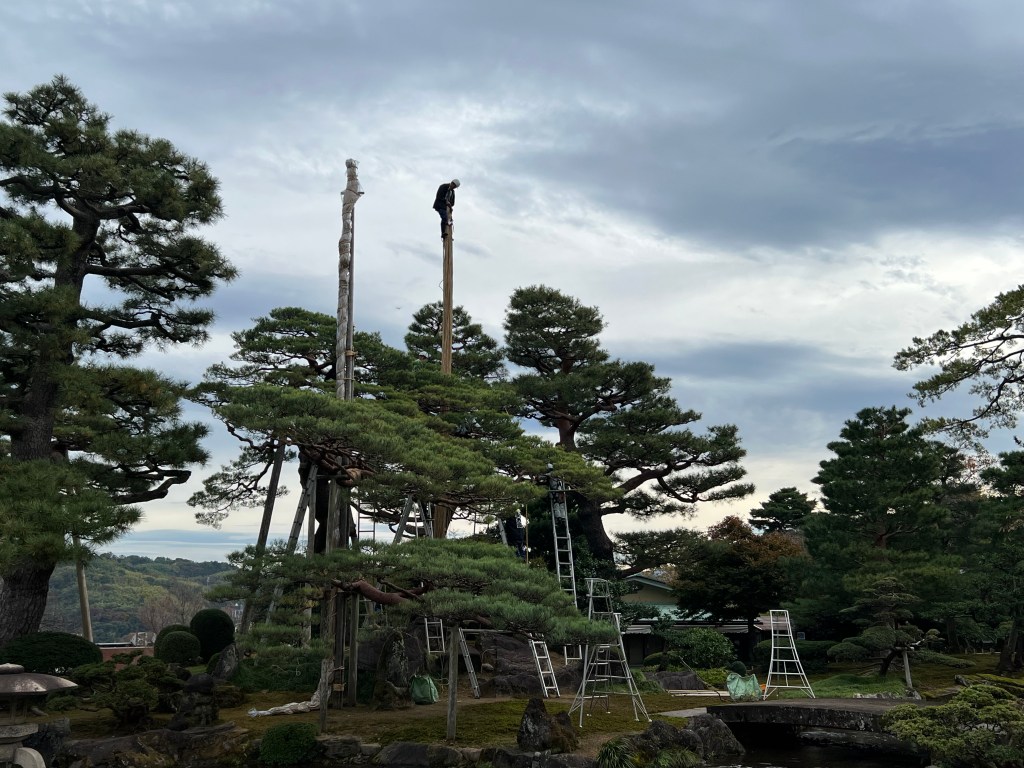
We’ve been in other gardens, in Japan and elsewhere, where the hard work of caring for them seem deliberately hidden, where the gardeners seemed to keep out of sight, perhaps not to affect the experience of the visitors, or maybe to make the landscape seem more natural than it actually is. Not so at Kenrokuen, at least not during our visit. The grounds were busy with crews picking up pine needles, plucking leaves from shallow streams, and, most spectacularly, a group of men who leaned ladders all over one of those big, expressive pines, and climbed among the heavy branches, even perching on the tip top of a towering center pole, while installing the elaborate rope supports that give the long-limbed pines the strength they need to hold up the heavy snows that will arrive in Kanazawa in the coming months.

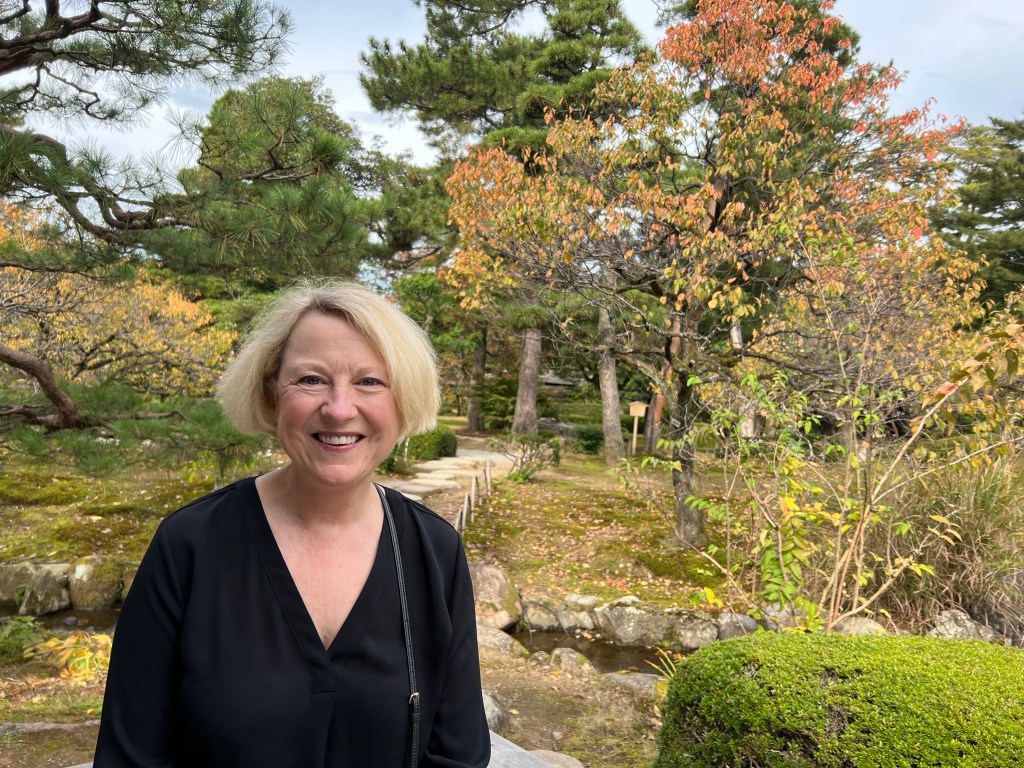
Over a couple hours of wandering Kenrokeun, we saw and felt and experienced every one of those many “sublimities,” the space and water and solitude, ancient stone paths, burbling creeks and quiet ponds, and on the edge of the garden, the broad views looking out across modern Kanazawa. We walked through a grove of plum trees, their last yellow leaves falling to the ground. We came up one path and discovered three wildlife photographers with two-foot-long telephoto lenses excitedly photographing something, we dared not interrupt them, the motor drives of their cameras firing away. We never saw what they were photographing.

It must have been another one of those beautiful sublimities.

Of Exploding Tigers made of Flowers, Scaling a Samurai Castle’s Ancient Stone Walls

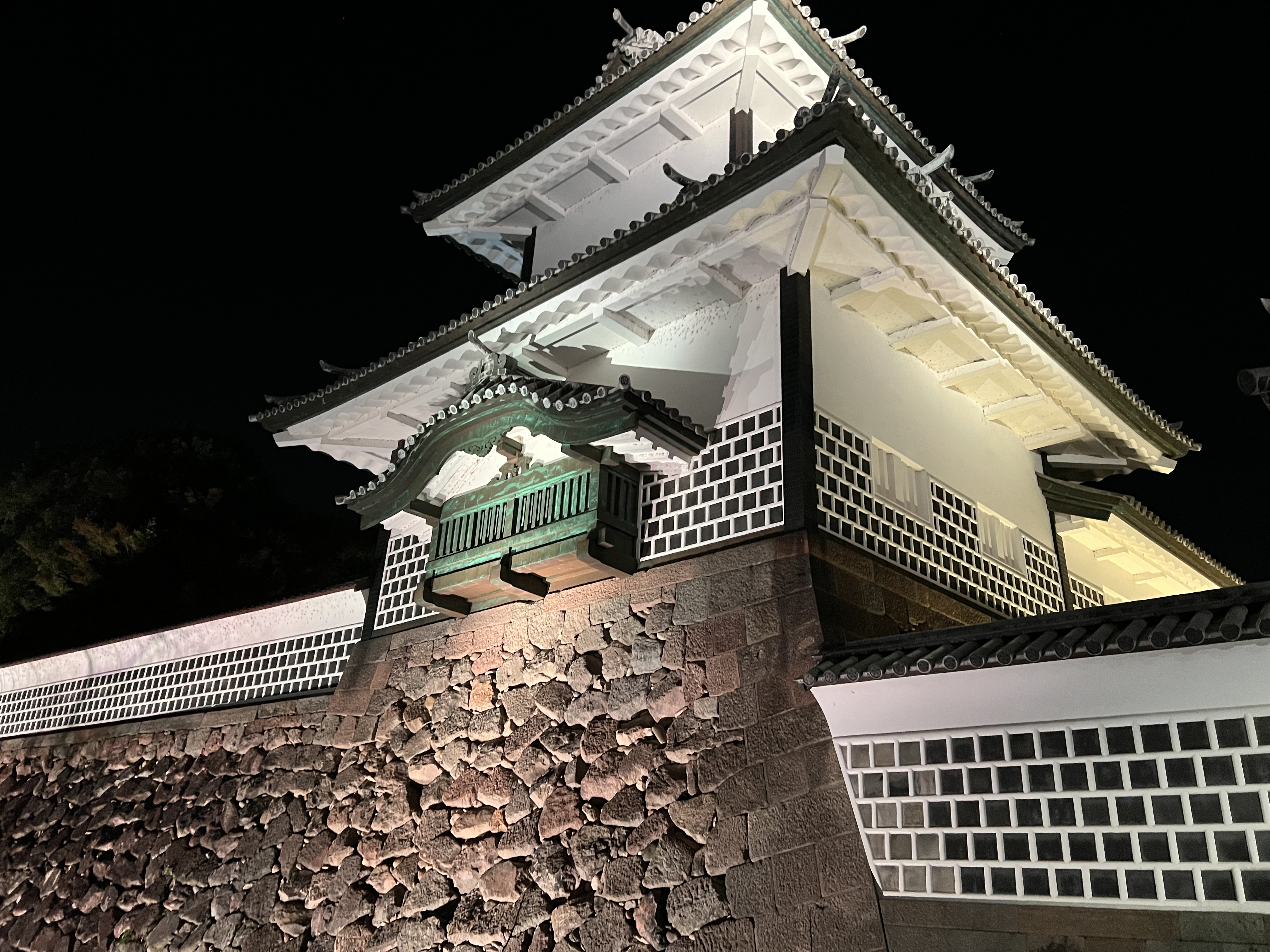
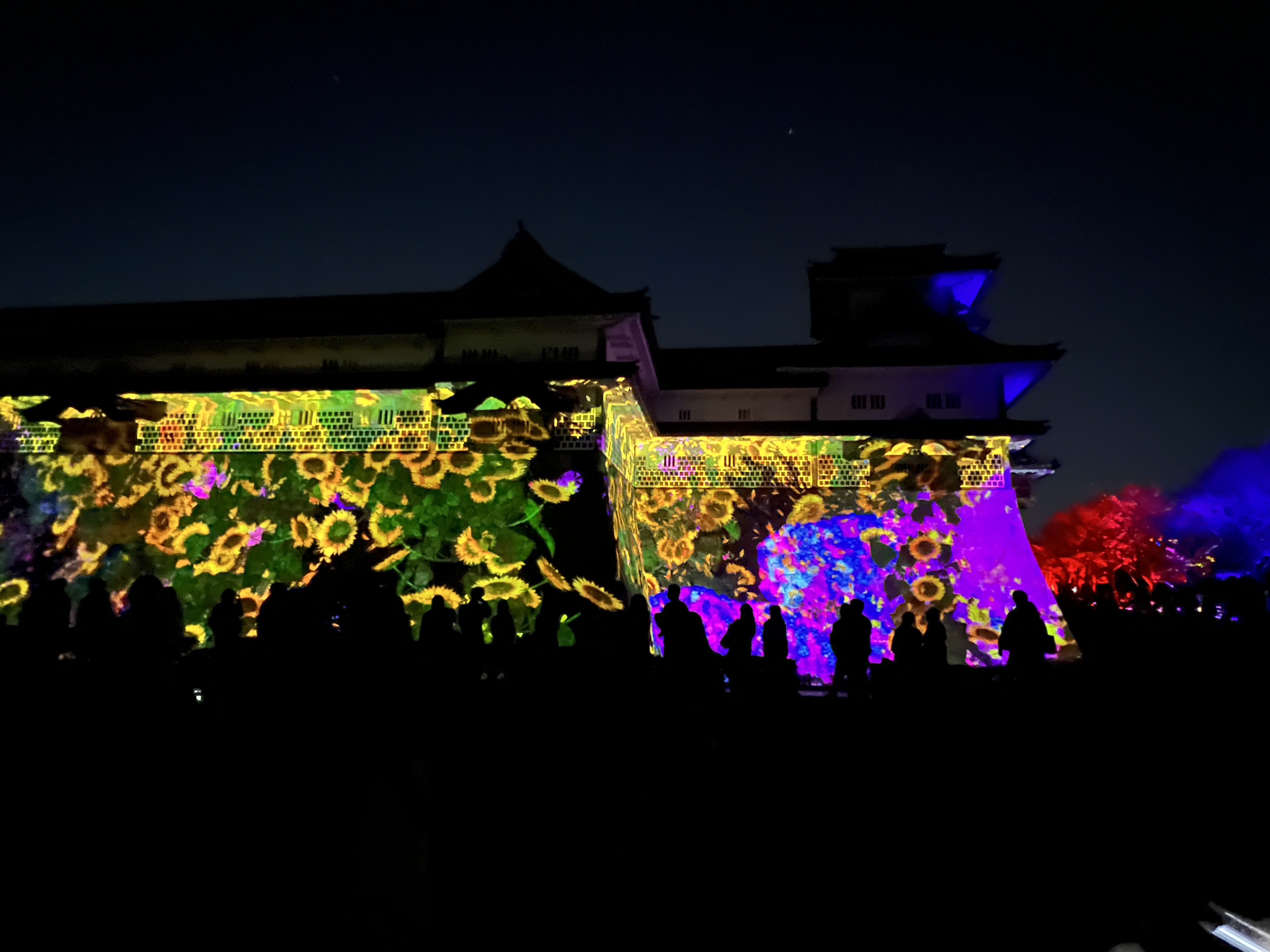
Kanazawa, Japan, Monday, Nov. 6, 2023 – It’s hard to even begin to describe the incredible spectacle that greeted us to Kanazawa, a culture-rich city on the Sea of Japan, home to beautifully preserved wooden houses, atmospheric geisha quarters, and mysterious temples used as a wily samurai lord’s secret defense weapons. We expected to experience the history of a city built by the Maeda samurai clan back in the late 16th and early 17th centuries. But we did not expect to find the castle grounds, and its surviving stone defensive walls, turned into a rich and moving digital art display, in turns amusing, inspiring, creepy, and beautiful, sometimes all at once. TeamLab, whose installation we saw in Tokyo Sunday (apparently everyone from BTS, to the Kardashians, Justin Bieber and U2 have also visited), is a somewhat mysterious collective of artists who produce digital art installations around the world. But this temporary exhibit in Kanazawa was much more powerful than the tourist-filled Instagram crowd in Tokyo. Crowds of hundreds of young Kanazawans climbed up the steep paths to the castle, which overlooks the city, to see spaces transformed by the magic of sound and light.

The first installation was of a famous Zen calligraphy practice known as Enso, where a Buddhist practitioner paints a circular shape using an ink brush as a form of meditation. The spontaneous act of painting embodies complicated religious concepts of impermanence and imperfection and being and nothingness, enlightenment and eternity, but this particular ink drawing was the projection of a ink painting on the massive stone walls – the image changed, and morphed, turning into fantastical shapes, before disappearing – and then it would start again.

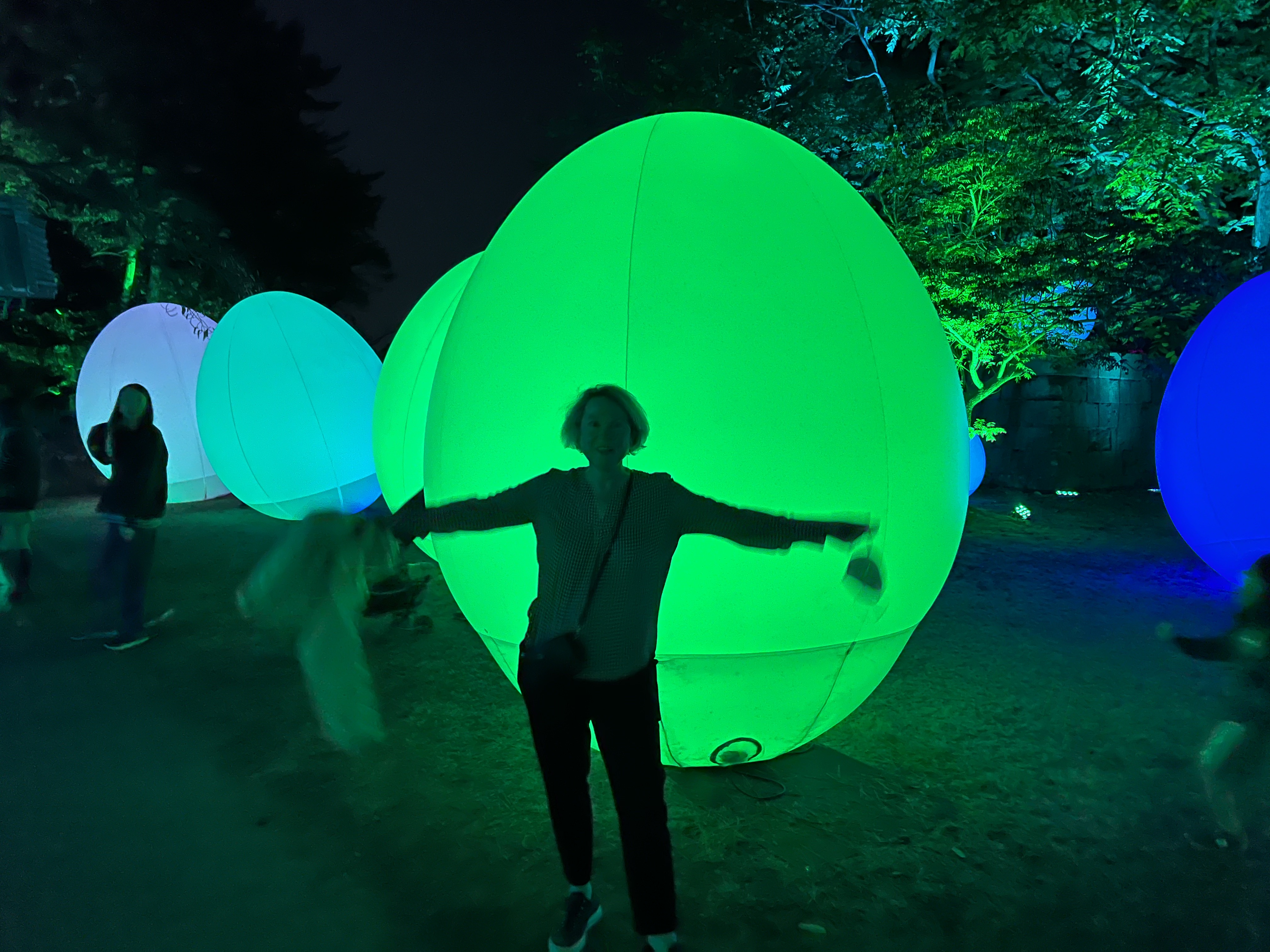
It’s hard to even describe what it was like to walk (sometimes stumble on the uneven surfaces in the dark) through the castle grounds, watching a row of trees lit up and humming with sound and color that changed as people walked by. There were strange ovoid shapes in a grove that would change colors and shape when you touched them. One stone corridor was filled with lines of marching creatures – frogs, and rabbits and humans wearing masks – in a very disturbing and vaguely martial procession. The images never repeat exactly, yet they repeat and repeat and repeat. Especially since they are projected on a castle’s walls, with its own violent history, they felt like a depressing reminder of how we humans can’t seem to break free of the cycle of violence.

But the piece de resistance was at the end, when massive images of creatures, from tigers to birds and various animals of indeterminate species – all made of flowers – cavorted on the stone walls of the castle. There was so much to love – the Enso was moving. The egg shapes in the forest were just delightful – everyone was breaking out laughing, and children were running wild, and the adults were also acting a little childlike. Japanese, American or European – the surprised and delighted laughter sounded exactly the same. The rabbit procession simply disturbed me, while the flower-tigers were gorgeous, if still a bit threatening. Though this is just a temporary display, I hope they make it permanent – ha, listen to me! Impermanence is the point… In any case, we loved it, and we love Kanazawa.

That was yesterday. Today we visited the famous Kenroku-en and the Myoryuji, or “Ninja Temple.” But those are stories for another day. Now, we have a omakase sushi dinner to get to….

Tadaima Tokyo!

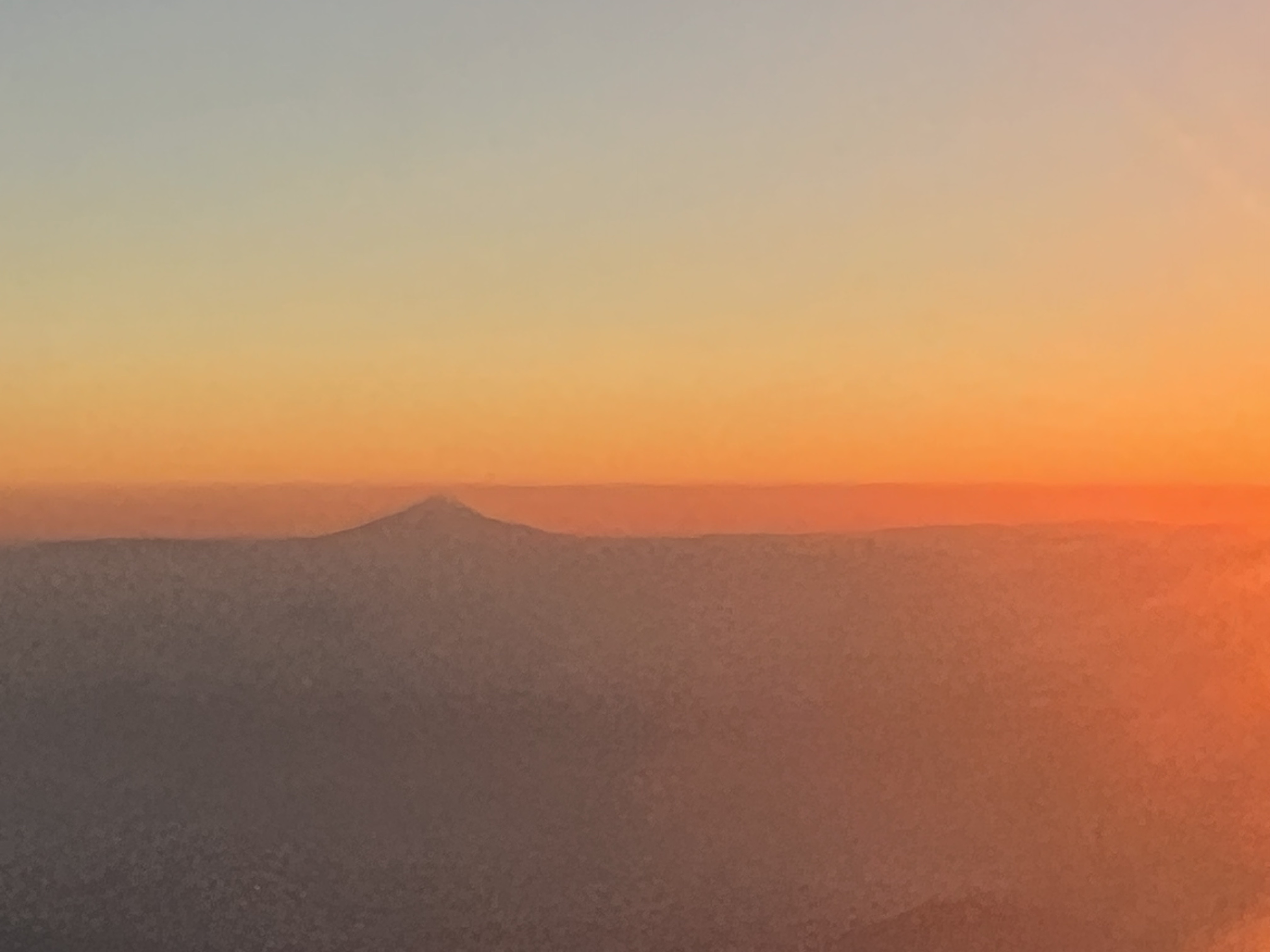
Saturday, Nov. 4, 2023 – After 11 years and at least three canceled trips, we finally made it back to Japan yesterday. It felt like a real triumph just to step off the airplane at Haneda. Six and a half years ago, we had already checked into our flight to Tokyo when a doctor told me not to get on the plane because I had blood cancer. I never thought I would make it back to Japan, or anywhere, ever again. Then a stem-cell-transplant a few harrowing years later, we planned a second trip in March 2020 with Mitchell, Alex and Will – that was obviously abruptly canceled by the pandemic. We tried again in 2021, but Japan still hadn’t opened back up to the world. I was increasingly anxious in the days leading up to this trip, certain that something horrible was going to happen. At the Seattle airport, we were told there was problem with our flight – a volcano in Russia blowing its top and sending a huge plume of ash into the sky, cancelling all flights into Seoul and Shanghai. I thought once again we would be foiled, but our flight made it, via a 2-hour detour south, stretching our trip into more than 12 hours. We were so grateful to make it. “Tadaima” is what you call out when you return home – and your family calls back “Okaeri-nasai!” or welcome back. I feel so lucky to be here.

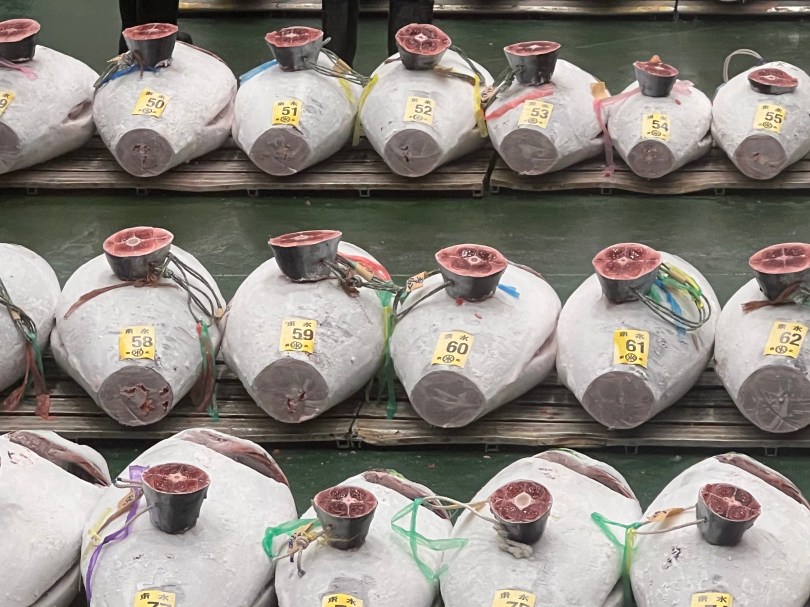
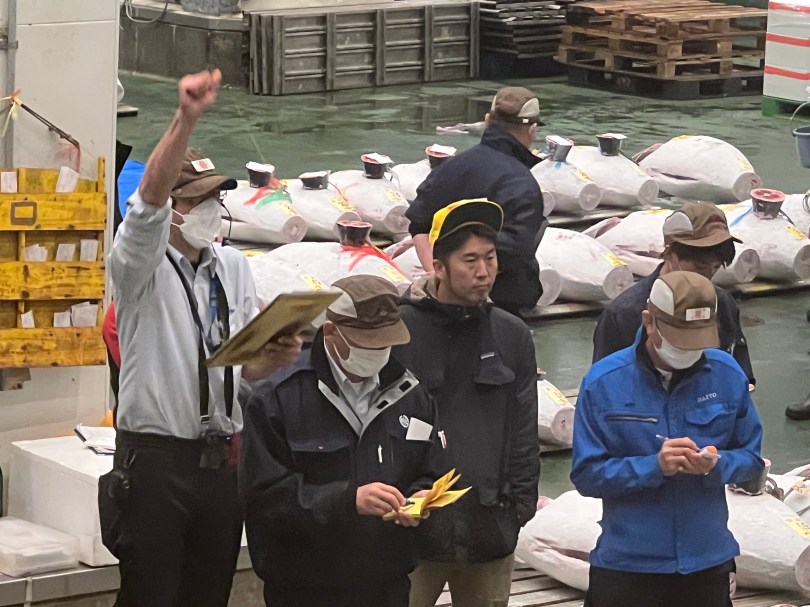
I will try to keep this short, since we are exhausted. Rick reminded me today how I pushed our friends Helen and Mike so hard on our first day in Tokyo 11 years ago that Helen actually cried because her feet hurt so bad. I still feel terrible about that, but Rick said I almost pushed him as far today! Not really, but it was a long day that started about 1:30 a.m. when Rick popped awake and never was able to go back to sleep. I think I woke up about 2:30 and called it a morning, fixed coffee and did laundry (no lines at that hour, conveniently the coin laundry was across the hall.) We are staying at a great hotel in Toyosu called the Matsui Garden Hotel Toyosu. Great design, absolutely phenomenal views from our 34rd floor room. It is small but perfect, and located very close to the new Toyosu wholesale seafood and produce market that replaced the old fish market at Tsukiji (more on that later). The hotel is also a short walk to the TeamLab Planets immersive digital art experience. (Elon Musk visited recently and loved it – it was also just named the leading attraction in Asia – yes, all of Asia.) We had no trouble making it to the tuna action at Toyosu Market at 5:30 a.m. We had won the lottery (only about 25 people a day win the lottery to get close to the daily tuna auction, where fish from all over the world are auctioned to the highest bidder and fish can go for over a hundred thousand dollars – per fish.)

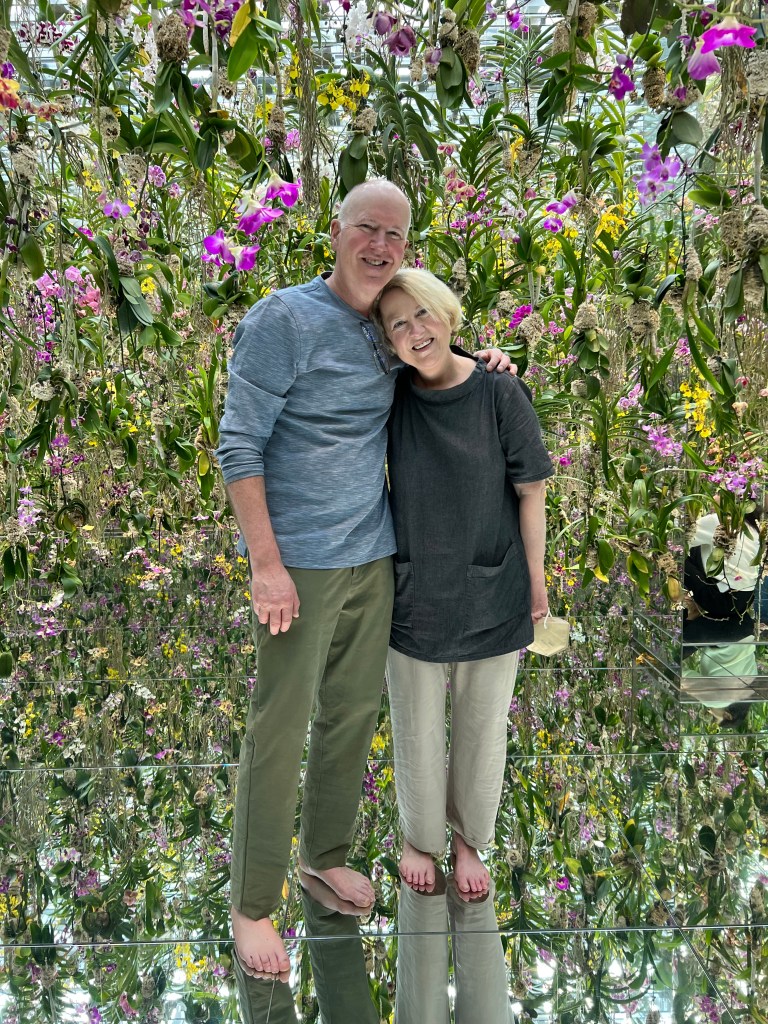
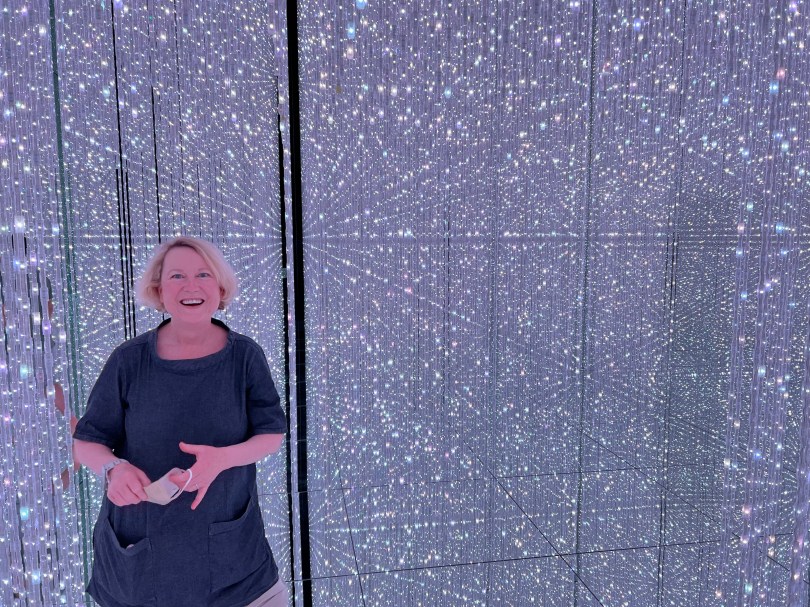
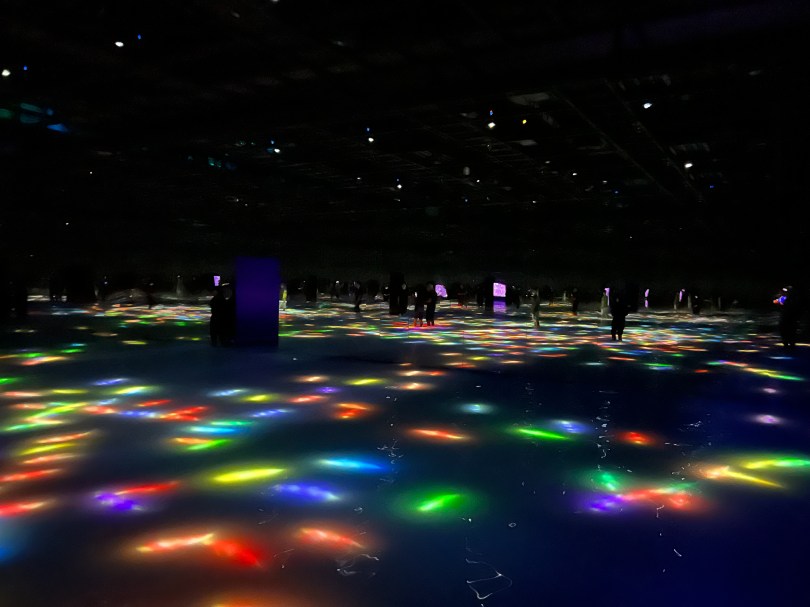
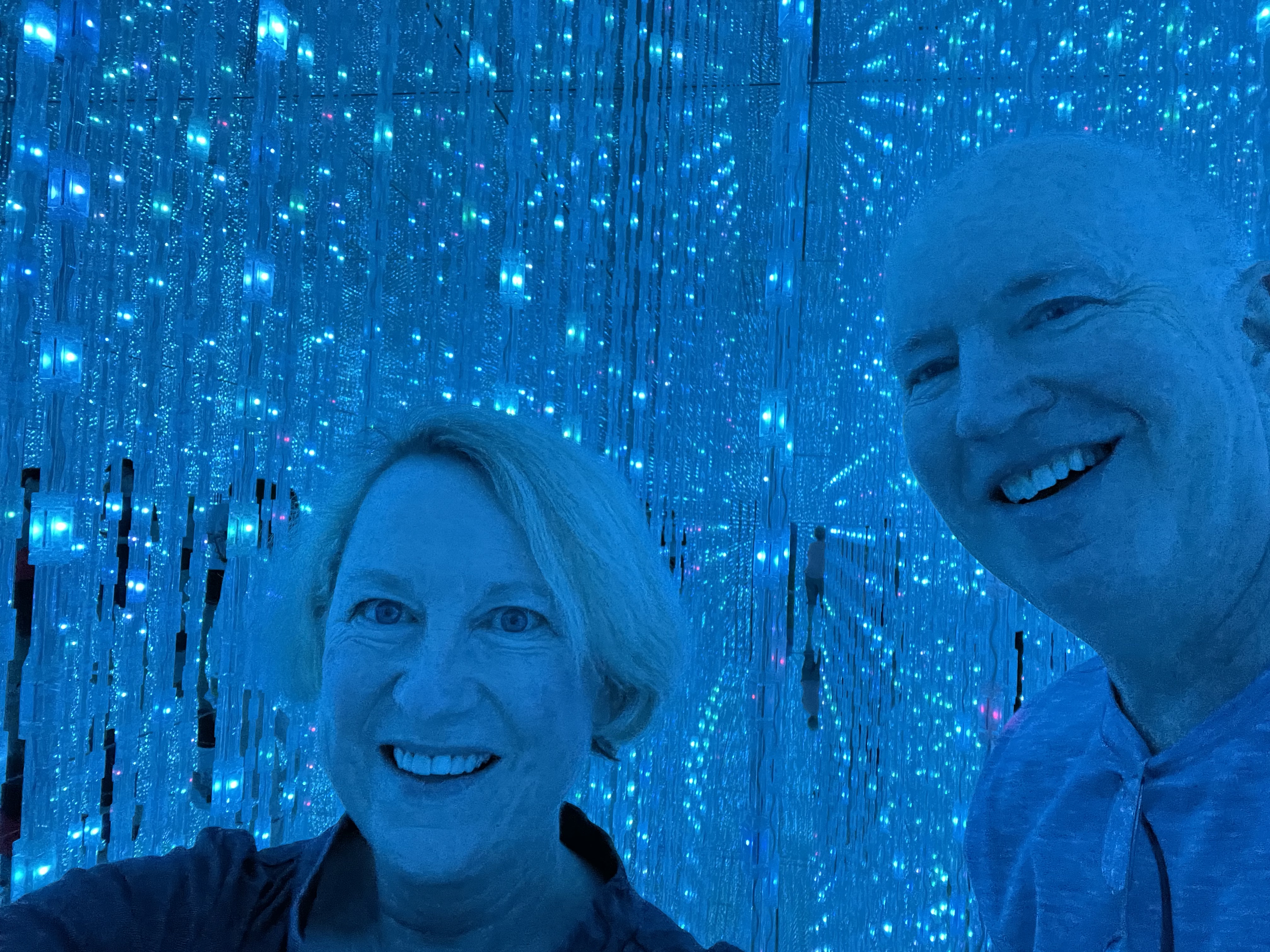
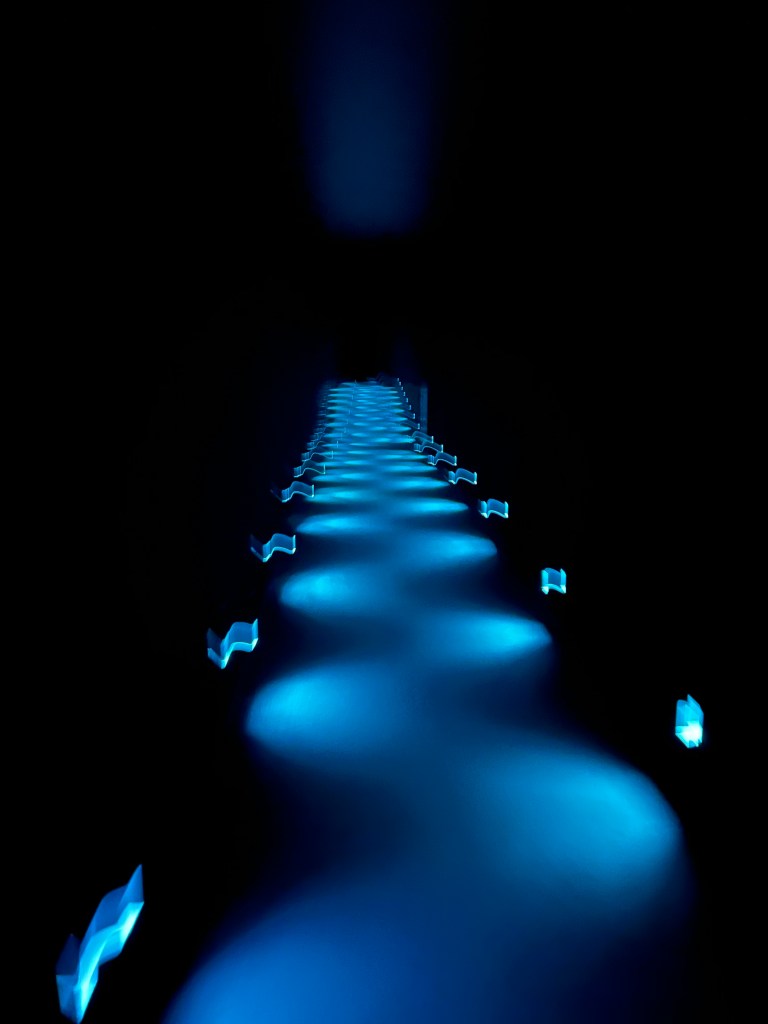
From there, we got in line at the digital art experience a half hour before it opened at 9 a.m. Though there were probably three dozen people in front of us in line, somehow we managed to get our shoes and socks stored in the lockers before everyone else and were the first people in. It gets very crowded so we felt lucky. We first navigated a hellish room with an uneven surface of collapsing marshmallow fun-house pillows – I fell at least three times – and from there it got better. There was an insanely beautiful “infinity” piece, where thousands of LED lights created gorgeous and dizzying light shows all around us. The mirrored floors and ceilings heightened the effect. It felt like Kusama Yayoi’s infinity pieces made infinite. Rick’s favorite was a room filled with water that reached up to our knees and was filled with digital fish swimming all around our legs. It was beautiful and so colorful. The images reacted to our movements, which was a little freaky. Perhaps the most gorgeous, but dangerous was the room where you were literally inundated with digital images of flowers. It was crazy – beautiful at first but then both Rick and I had severe vertigo – the whole room was spinning- and we fled.

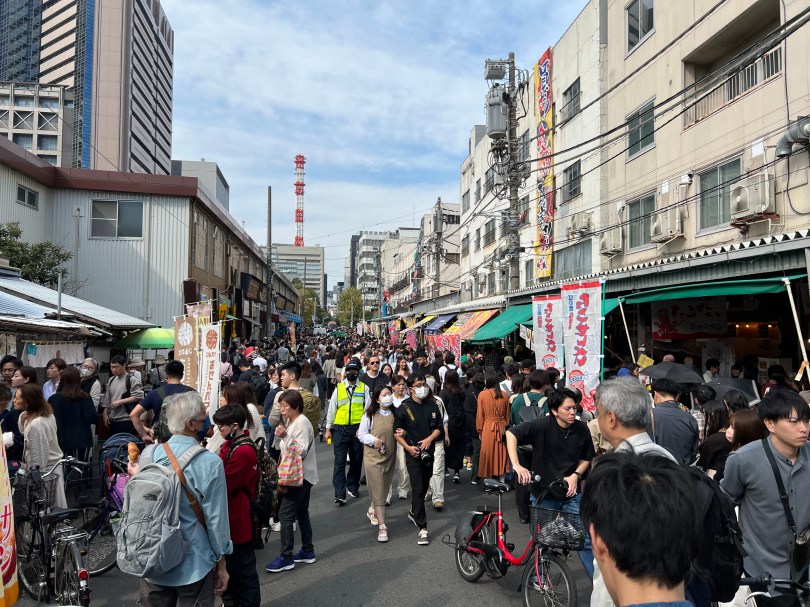
From there, we headed north, and stopped off in Tsukiji to buy a knife for Rick. I said, oh it’s close to the station, let’s just pop in to the Aritusgu knife shop. Well, we and about 100,000 other people were just “popping by” for lunch. The tiny streets around Tsukiji were crammed with holiday-goers, lining up in what looked like insanely long lines for sushi and ice cream and ramen and grilled anything. It was actually hard to even move at times it was so crowded. That experience drained us a bit, but not deterred we headed for Kappa-bashi, a street in the old part of Tokyo near Asakusa that caters to restaurants and chefs looking for everything needed to run a kitchen or a restaurant – knives, dishes, aprons, plastic fake food for display in the window, the signs and the curtains hanging over the entranceways to restaurants. It was so fun, but very hot and humid (in November!) and we wilted a bit. We bought some “Daigaku imo,” or university potato, a sticky-sweet roasted potato from what looked like an ancient shop, but could find no place to sit and eat them. You cannot eat on the street in Japan, which is hard when you want to eat street food! Rick was a gamer and we then took a subway to a neighborhood called “Kuramae,” described as the “Brooklyn of Tokyo.” It was filled with super hip coffee shops – on every block, filled with mostly fashionable young women – and expensive purse shops. It was a lovely, quiet neighborhood, the kind of place where a man noticed we were having trouble finding a subway station and walked us about 10 minutes to the correct entrance. Lovely.

Near Kappa-Bashi – view of SkyTree

We finished our day eating one of the “5 heritage rice dishes” of Japan – kamameshi – or the old fisherman’s dinner of clams over rice in the Kiyosumi-Shirakawa neighborhood on the east side of the Sumida River. We found a wonderful old hole-in-the-wall, famous for its kamameshi and just down the street from one of our favorite museums ever – the Fukagawa-Edo Museum. We brought Will here when he was little, and Mike and Helen a few years later. This was the first neighborhood where we saw Japanese women out walking in kimono – not the tourists in the rented “kimono” which were all over Asakusa, but just regular people out visiting the museum and temples in their neighborhood. (When I was here in the 1980s, kimono seemed much more common.) Here it seemed just normal. No one was taking selfies.

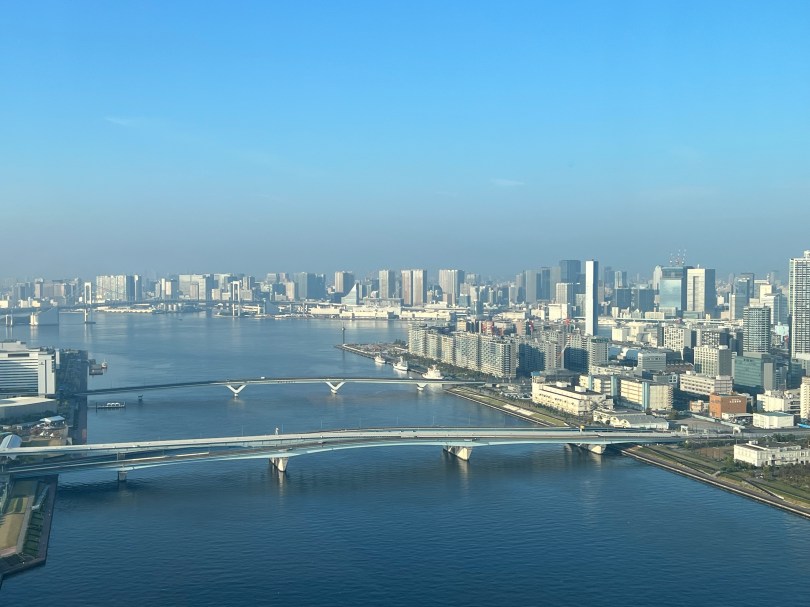
We are now back in the room – with our stunning view of skyscrapers stretching south along the Sumida River to the Toyosu Market and the bay beyond. Tomorrow – we head to Kanazawa. Hold onto your hats and stay tuned!