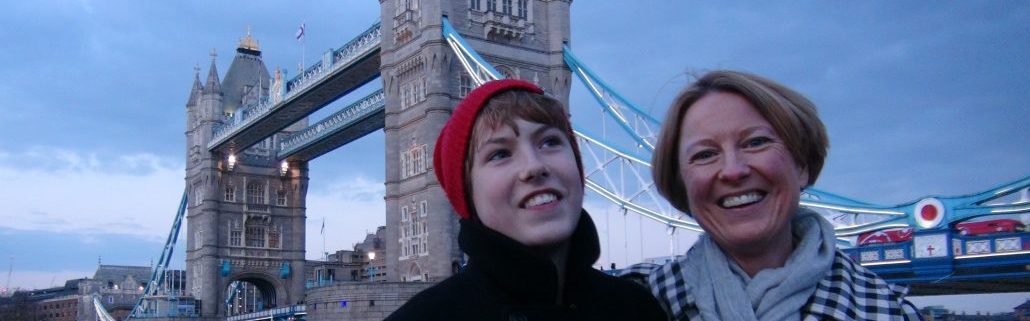
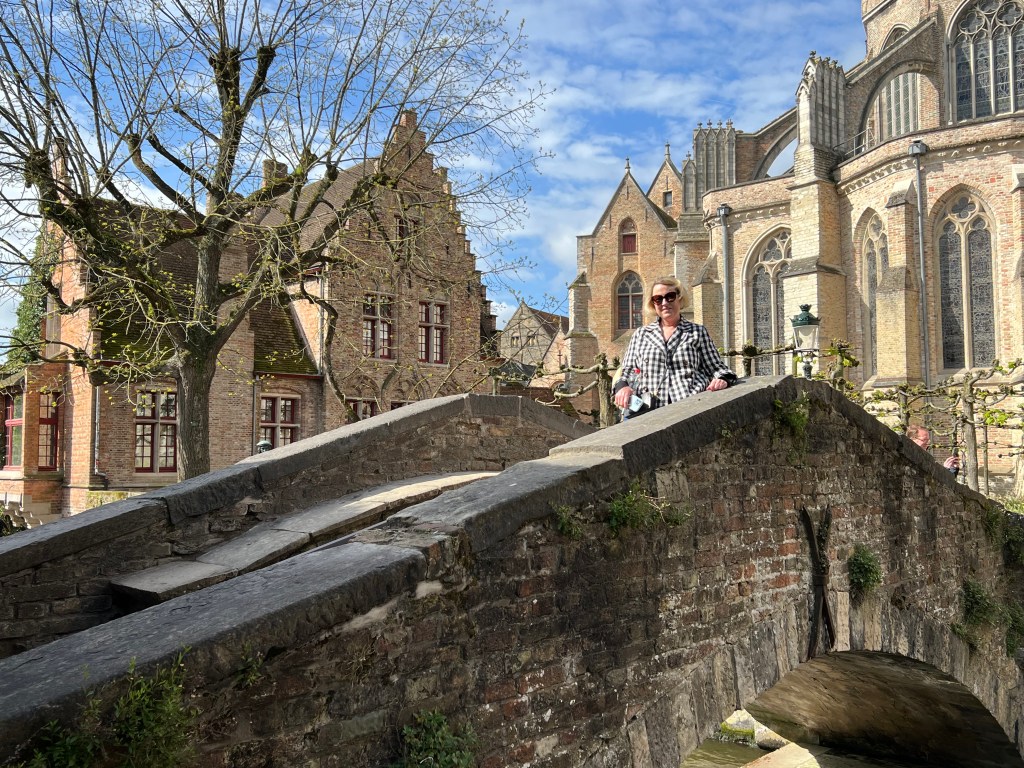
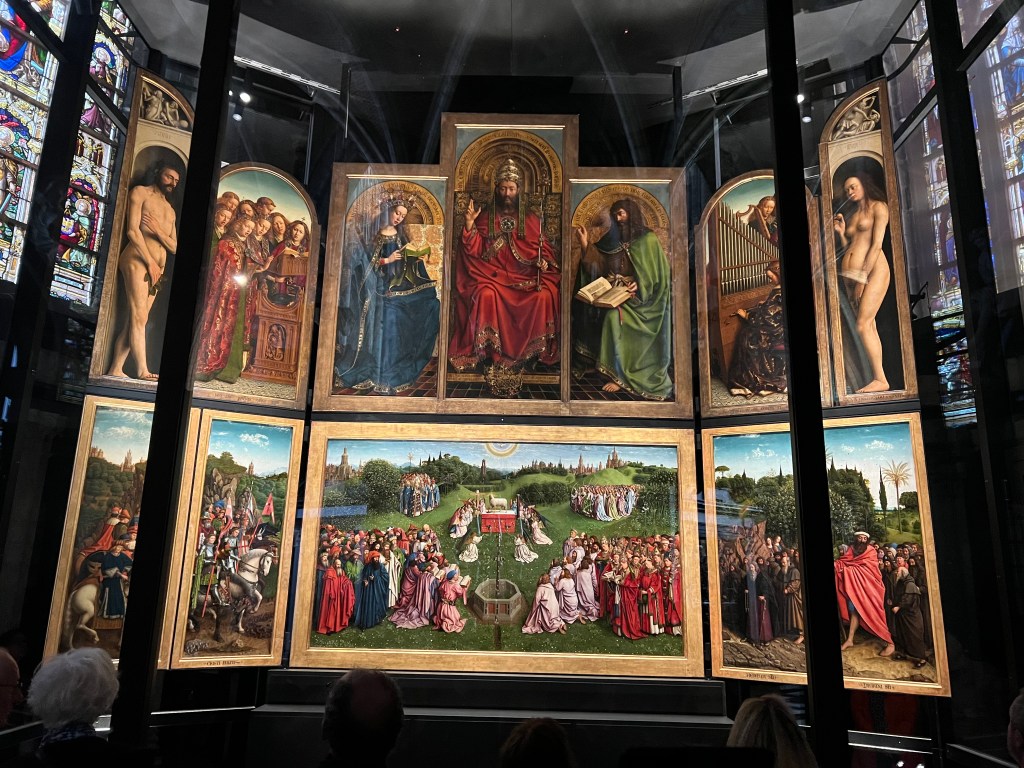
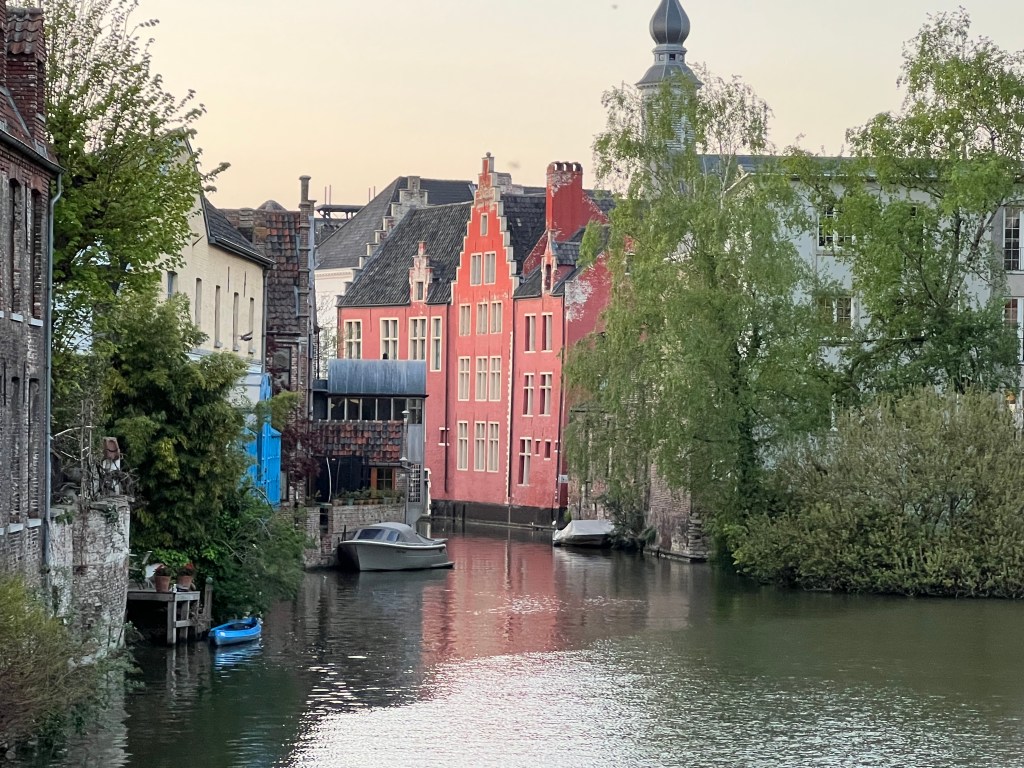
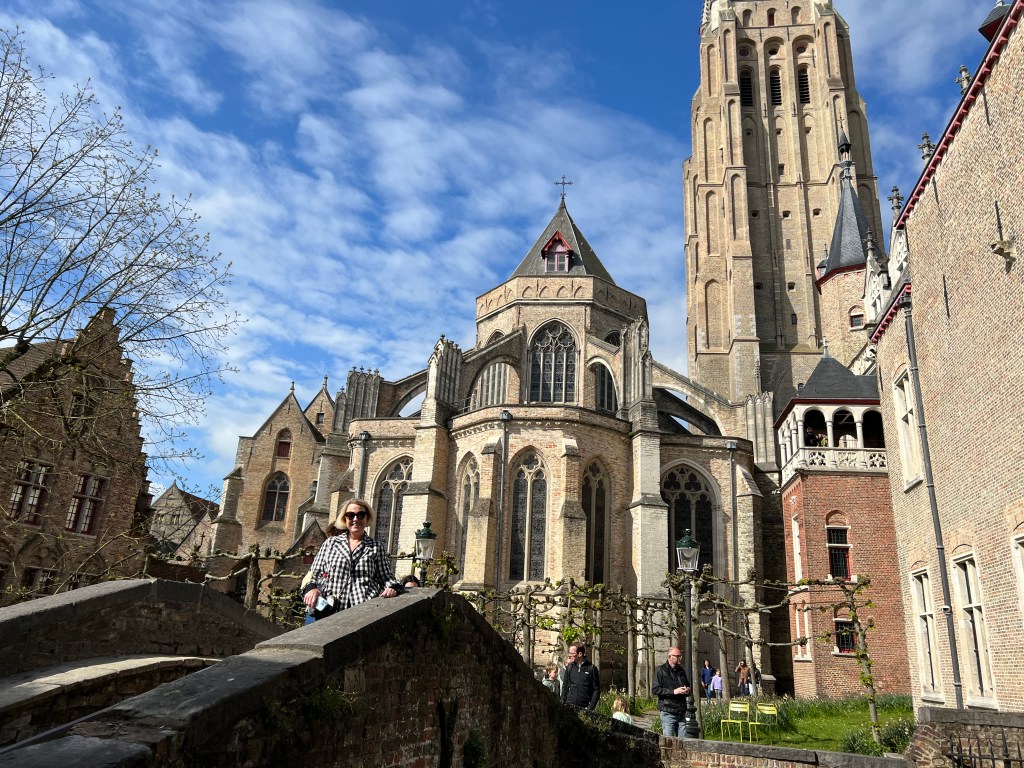
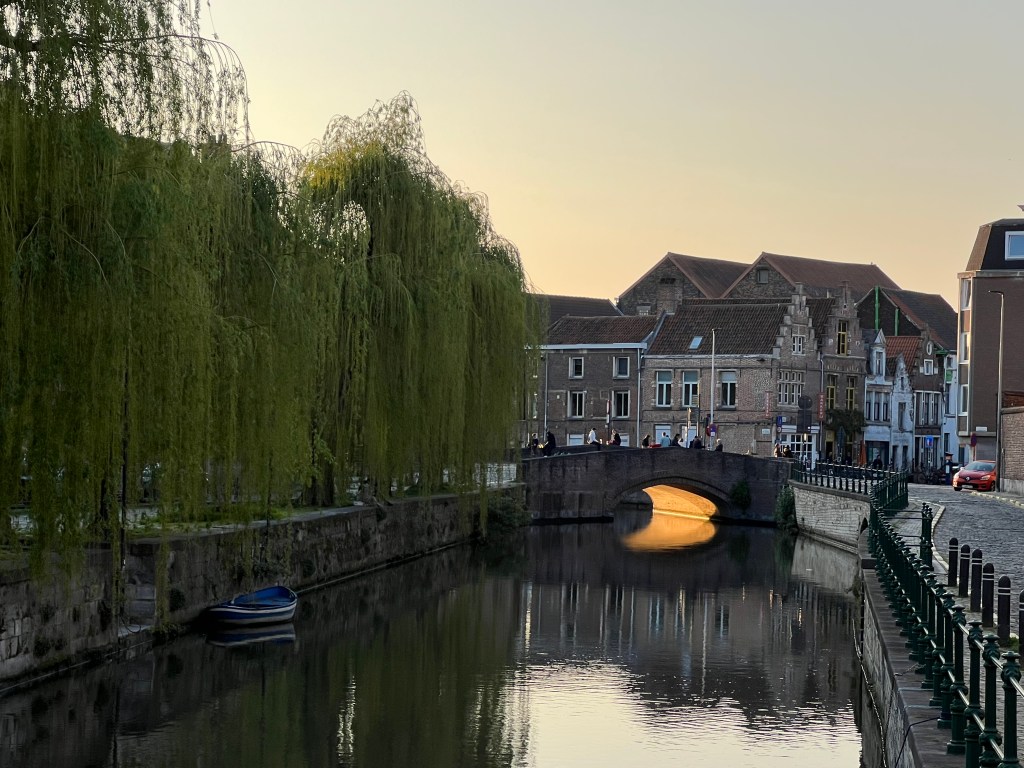
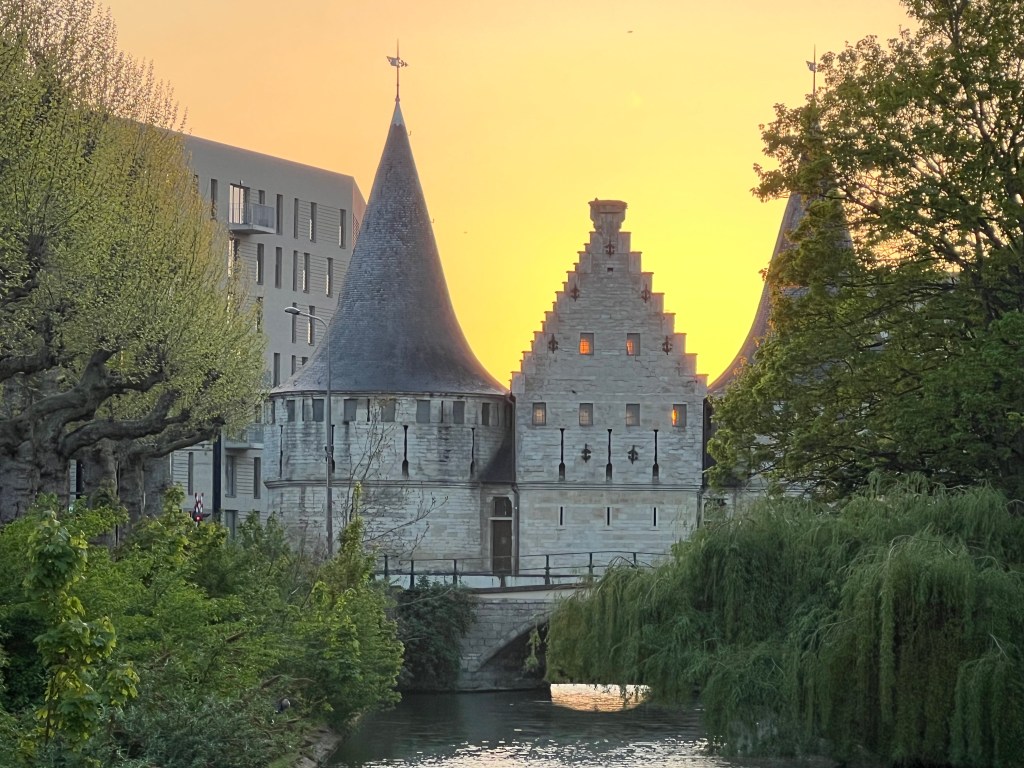
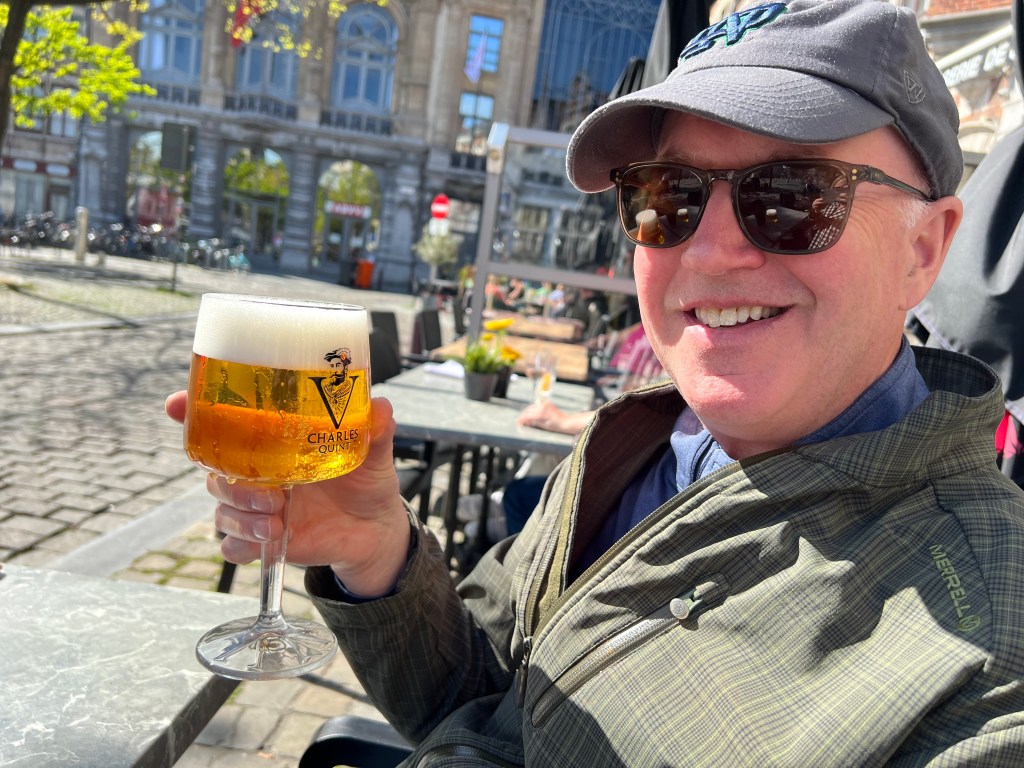
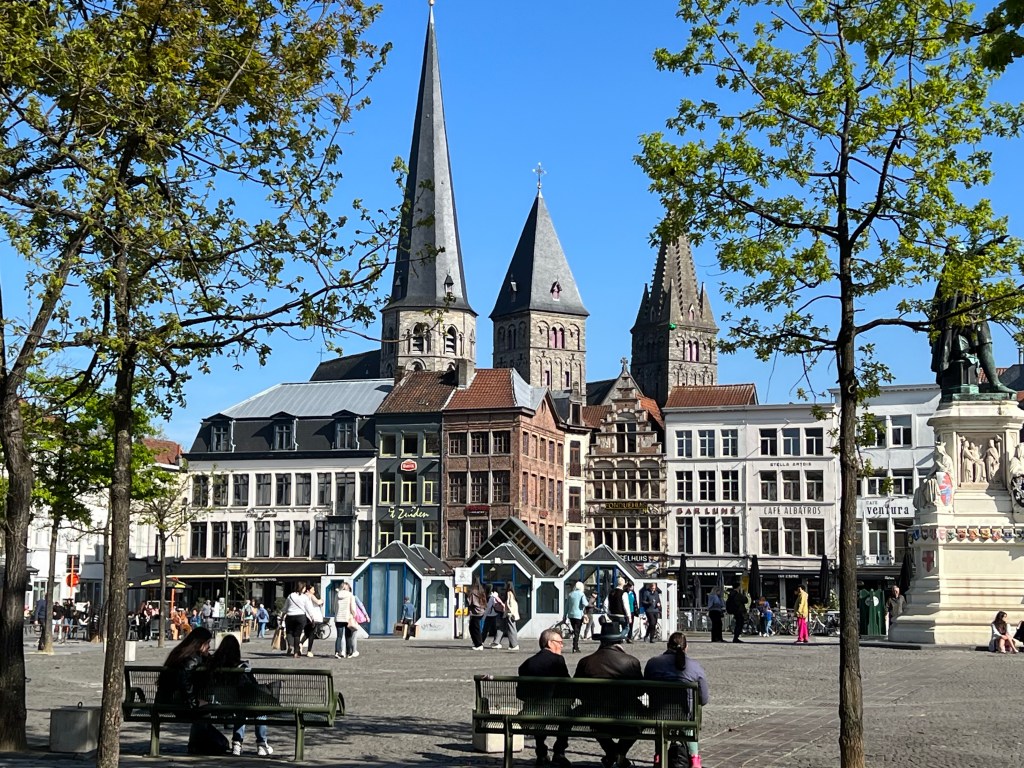
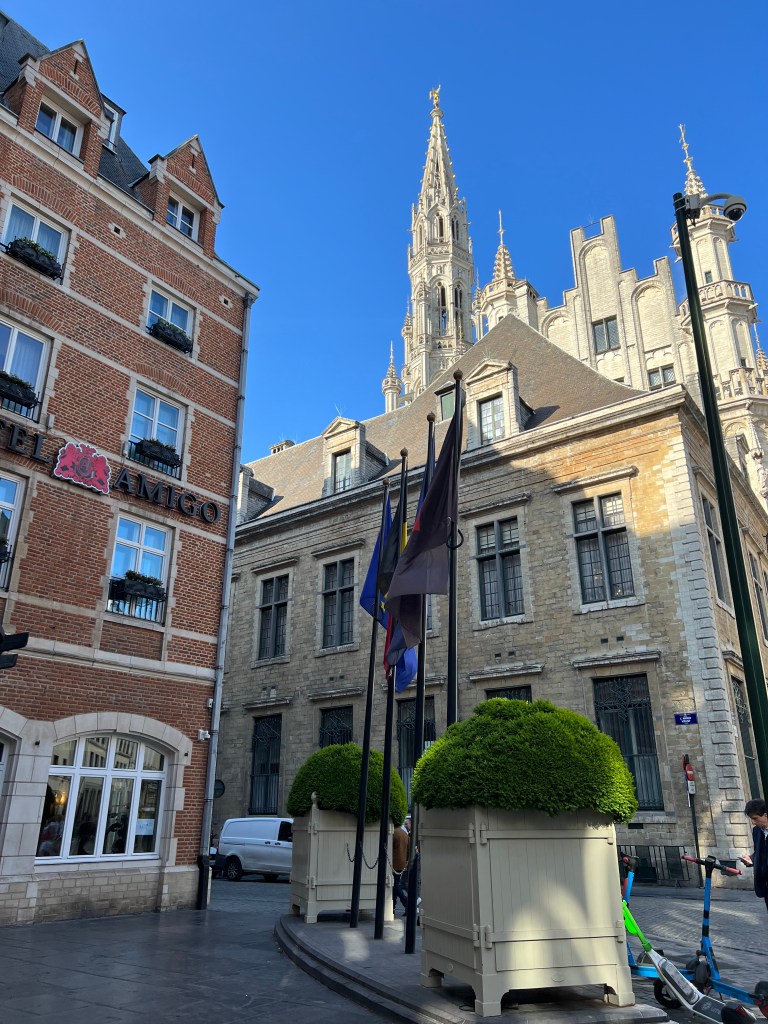
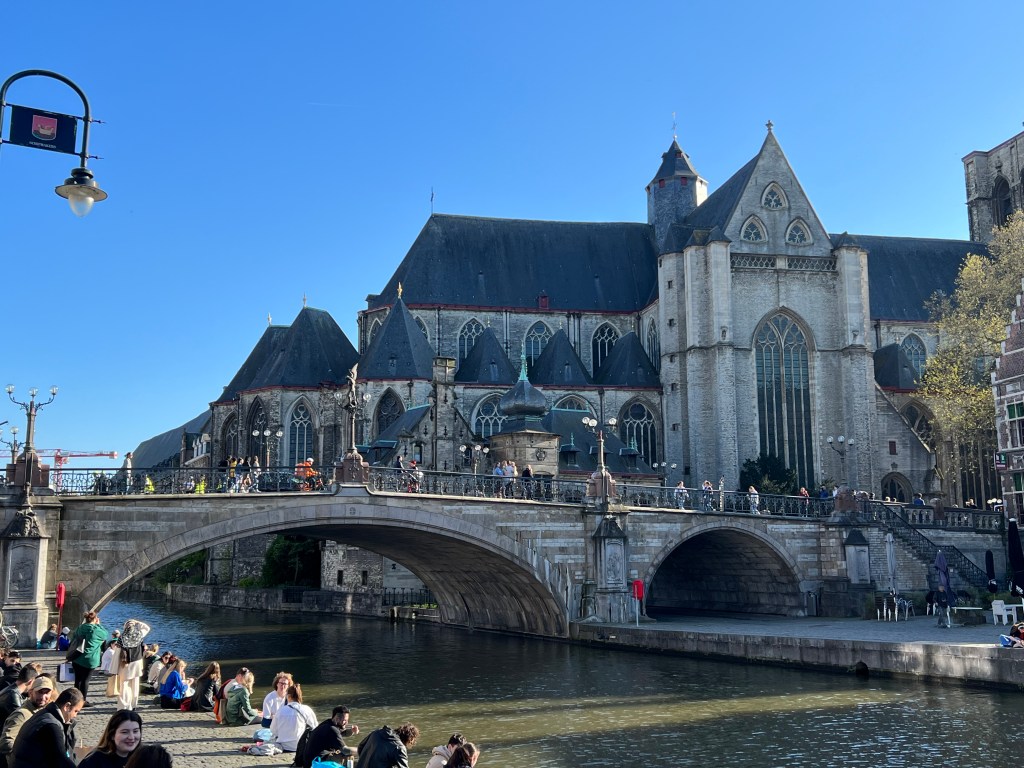
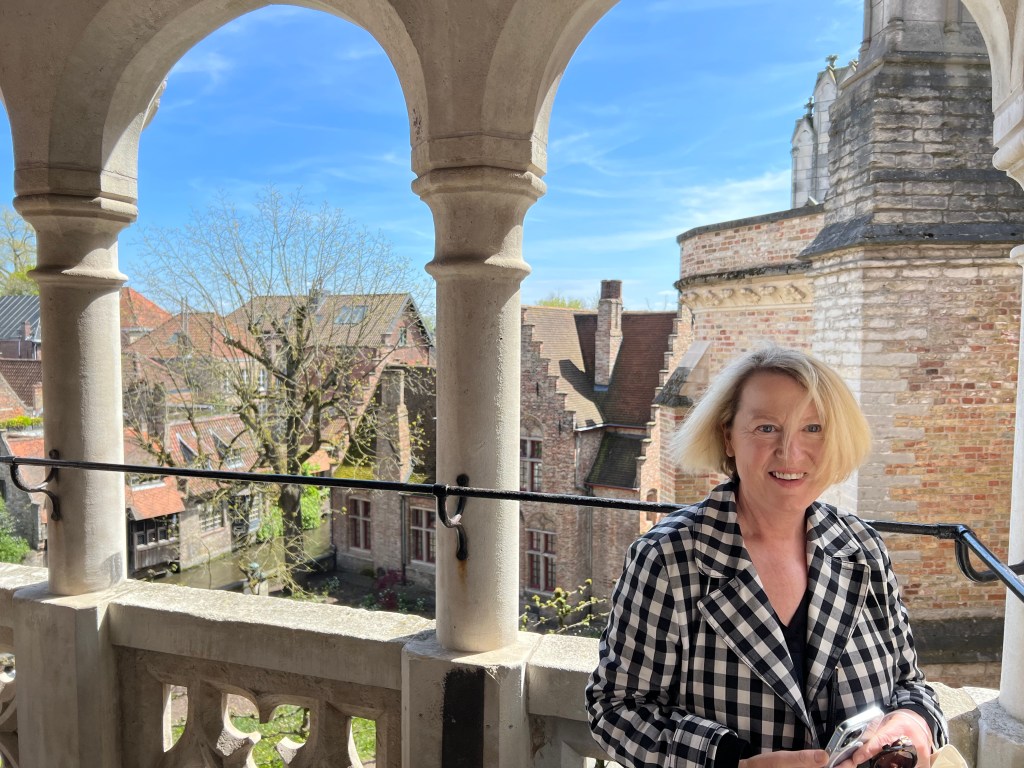
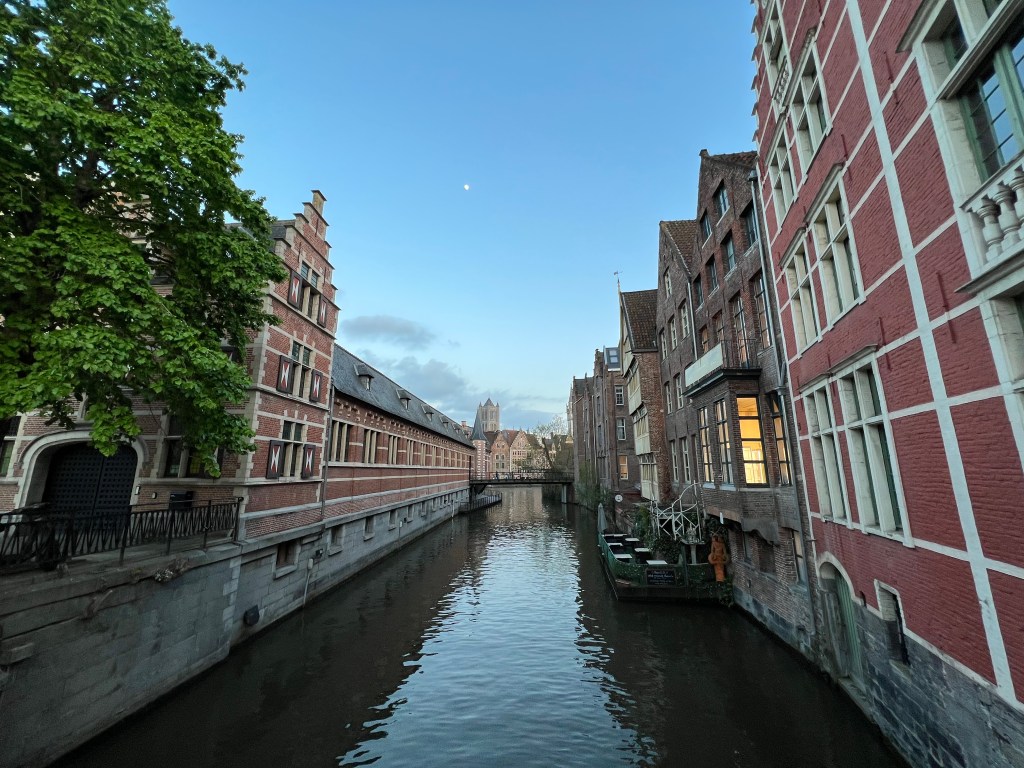
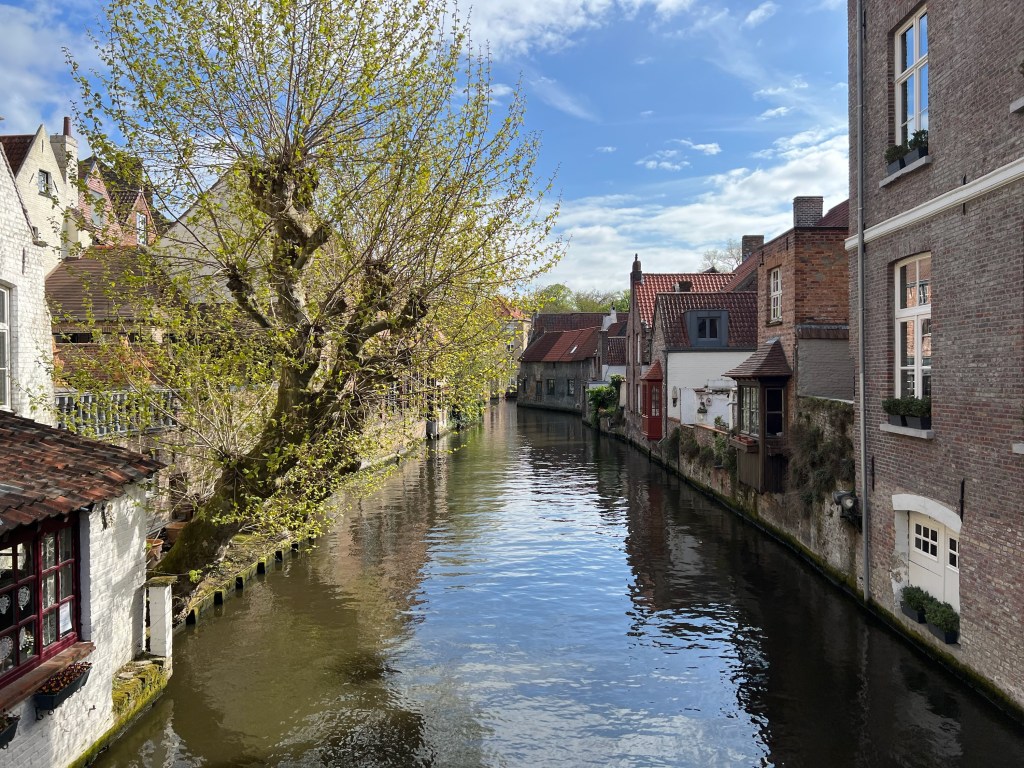
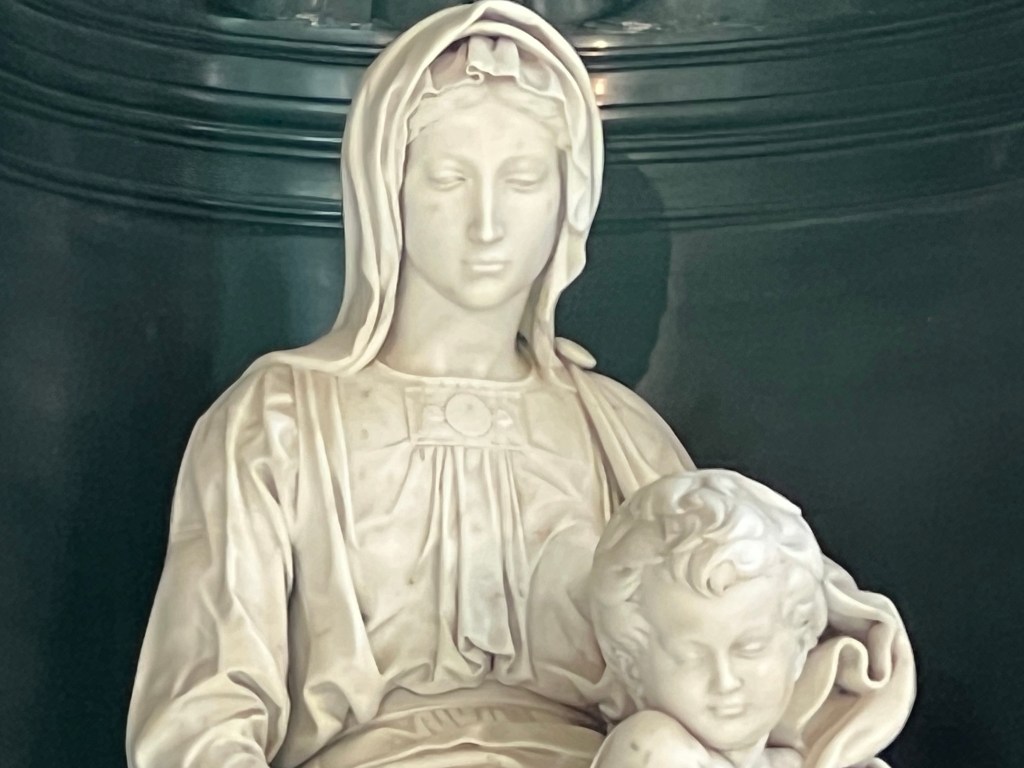
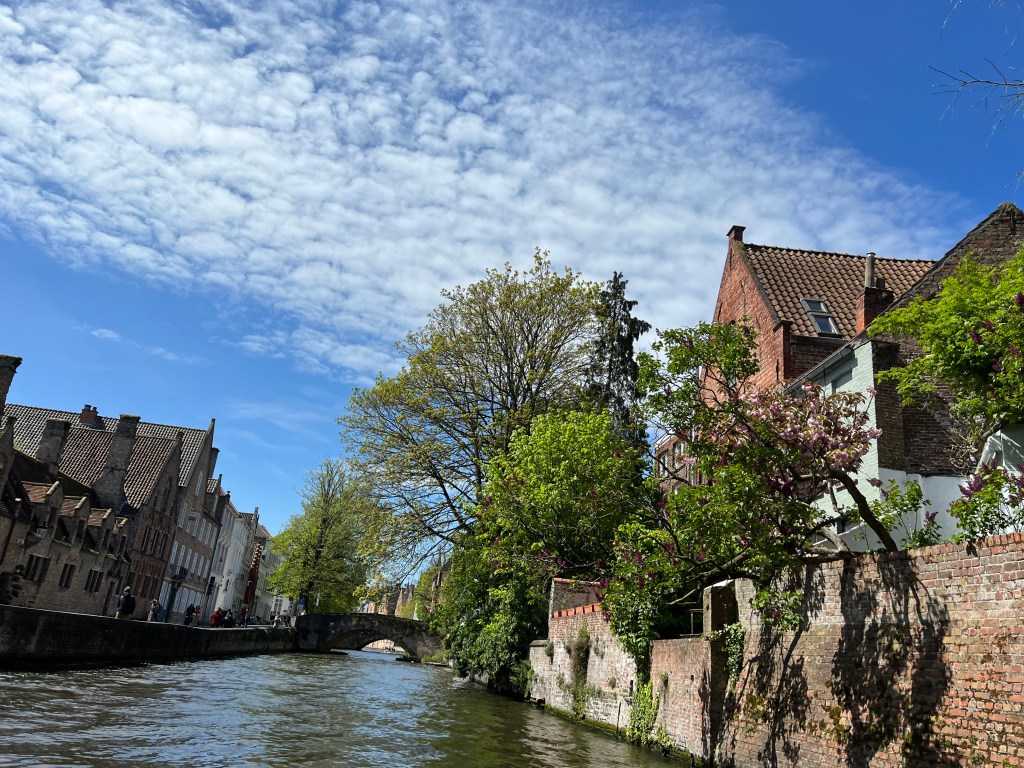
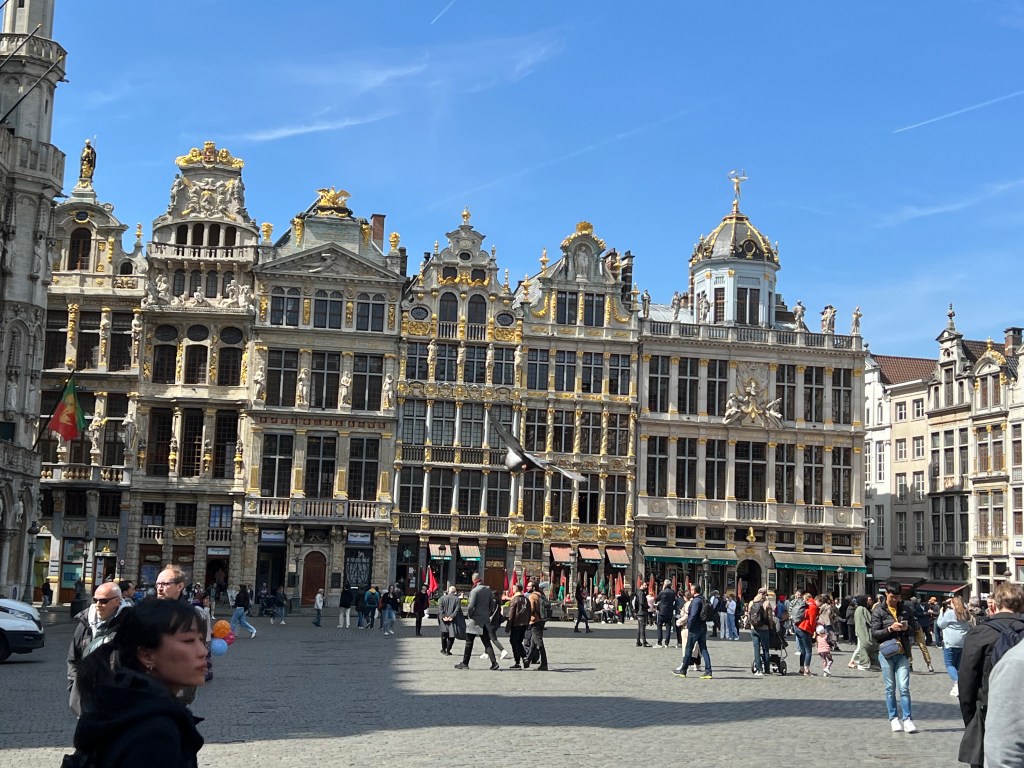
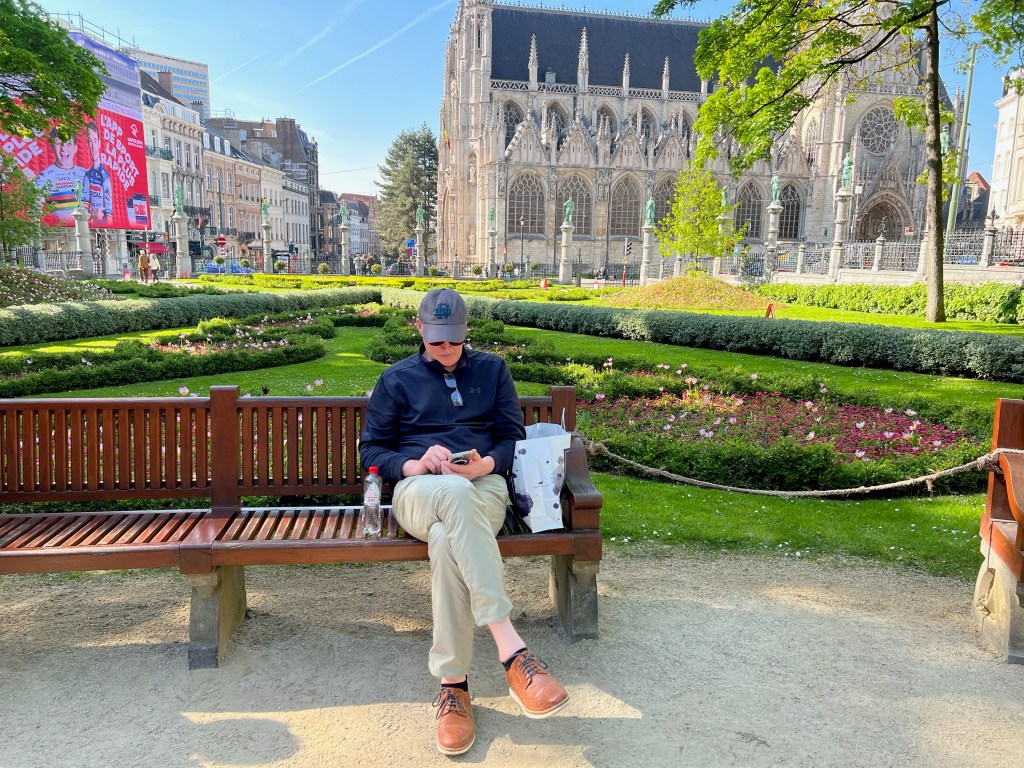
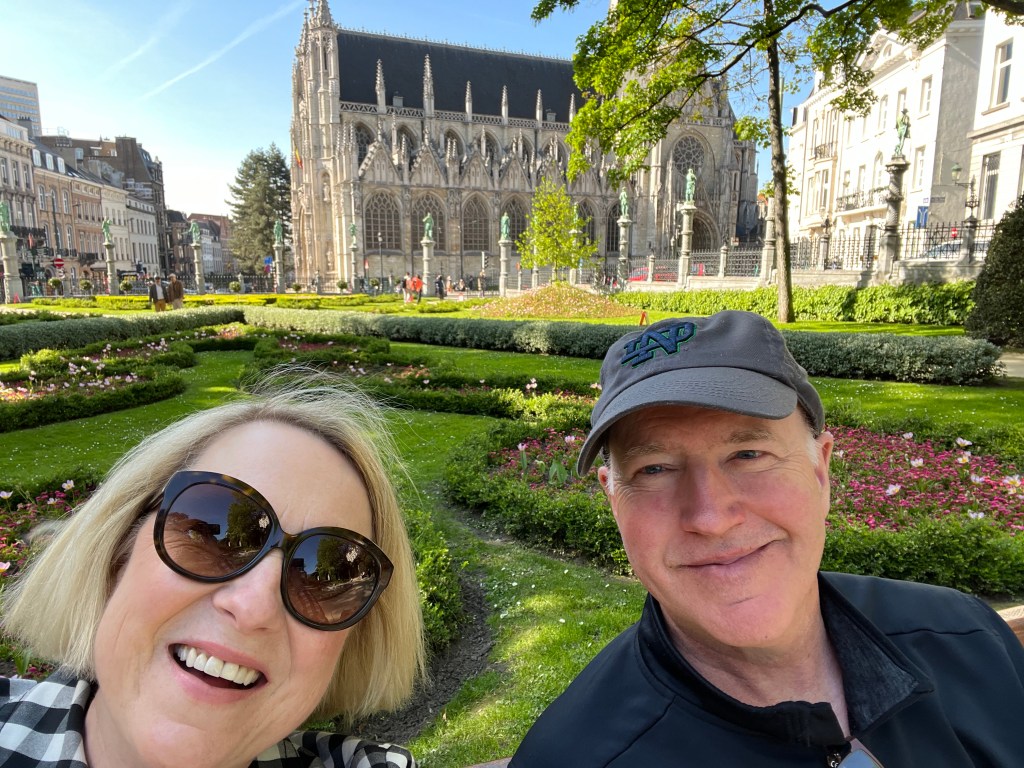
May 3, 2023 — BRUSSELS, Belgium — We traveled from Ghent to Brussels today, our last stop on our Netherlands/Belgium tour. Yesterday we took a day trip to Bruges. It’s getting late, both tonight and on our trip, and we’re too tired to write about it. We plan to write more about our memories from Ghent, Bruges and Brussels, but for now we’ll just post the slide show above.
Mostly we want to let our moms know that we’re doing well, and having a great time.
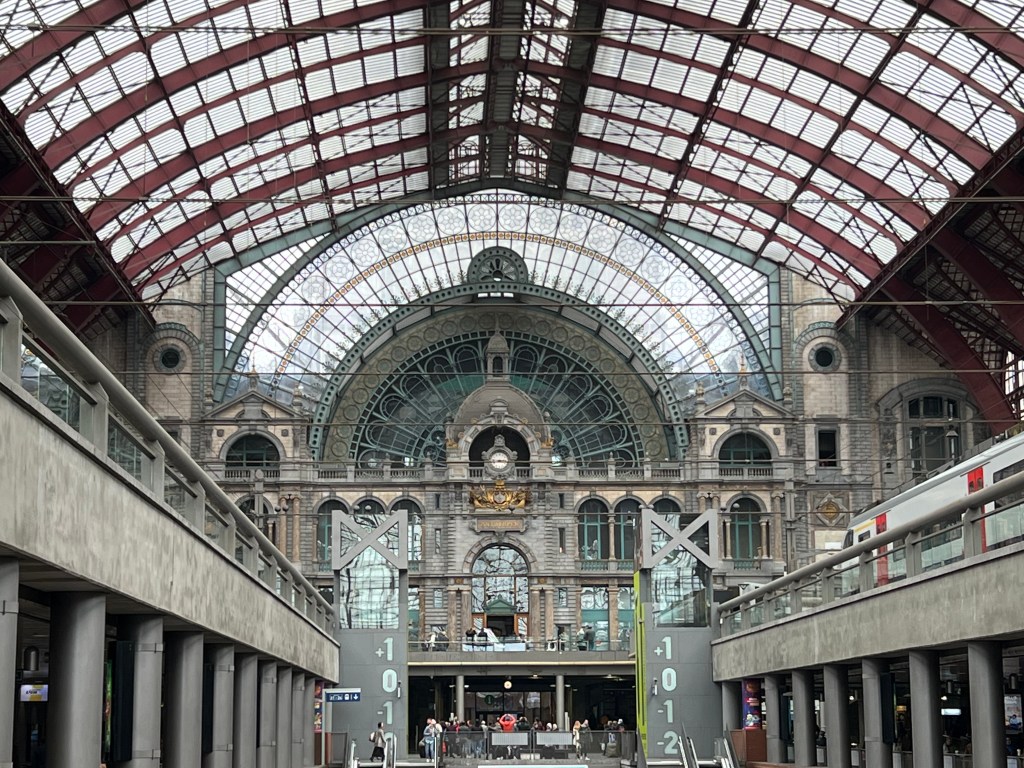
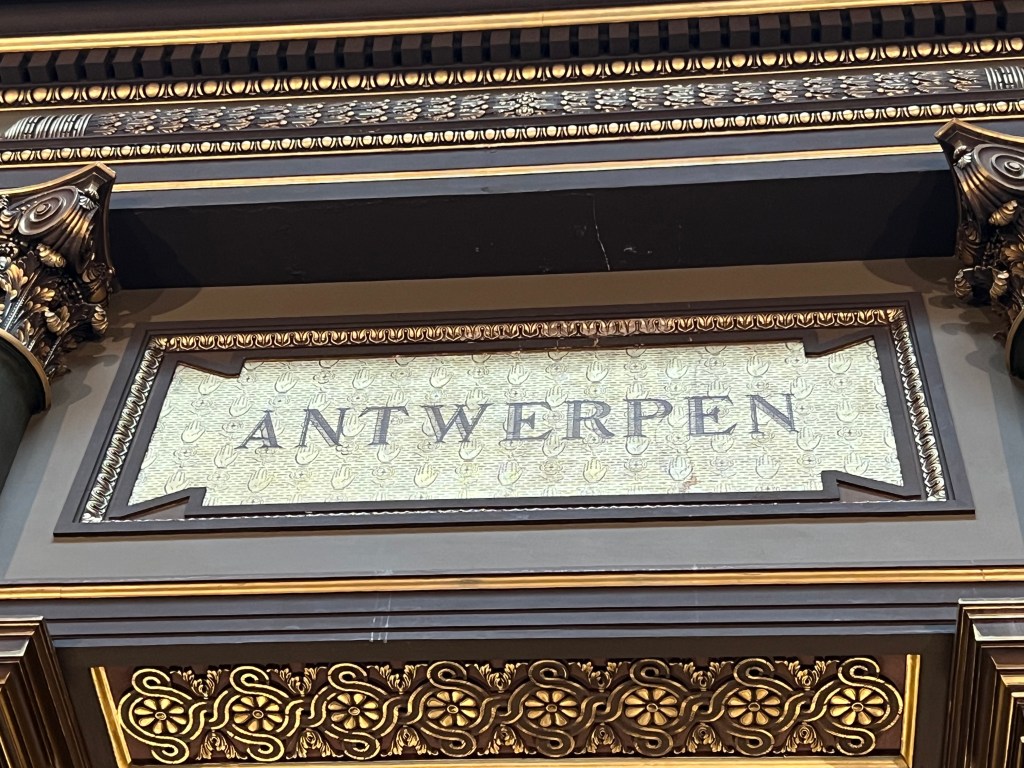
April 29, 2023, ANTWERP, Belgium — Following two short train rides from The Hague to Rotterdam, we left behind The Netherlands and rolled into the historic and very busy central train station of Antwerp in the mid-afternoon. We pulled our bags down the cobbled sidewalks and checked in to our hotel, which sits on the edge of a botanical garden, but failed to tip our welcoming hostess, which would later result in an icy glare in the lobby. (Rick later made amends and all is copacetic now.)
We started our exploration of Antwerp with a decadent dessert (one chocolate mousse and one apple/lemon chiffon creation) at a lovely patisserie run by pastry chef Willem Verlooy and his family, and then of course, a trip to the Royal Fine Arts Museum, which has a pretty fabulous collection of Rubens, and many other impressive pieces by some of the artists I have come to recognize and appreciate over the past few days, especially Frans Hals and Artemisia Gentileschi, one of the greatest female painters of the Renaissance.
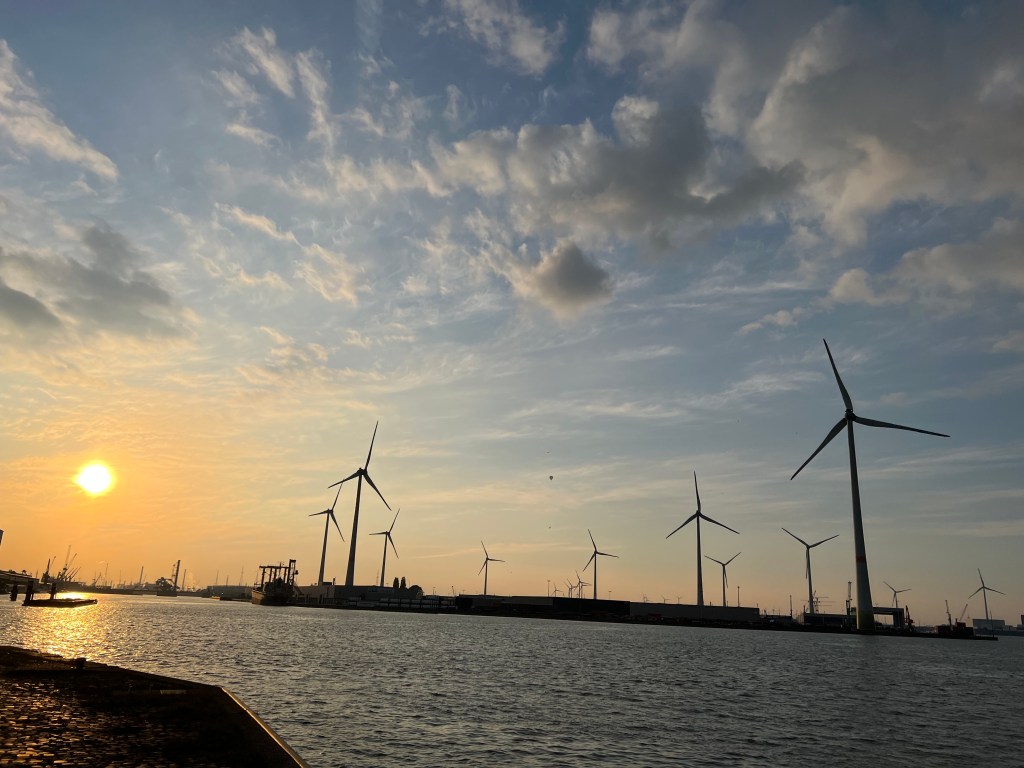
Antwerp is one of the largest and busiest ports in Europe, and we took an Uber out to the harbor’s edge on the far north of the city, where we had dinner at Het Pomphuis, renovated pump house with soaring ceilings and wonderful seafood. Outside the windows, barges and other ships glided past, and enormous windmills turned slowly in the breeze.
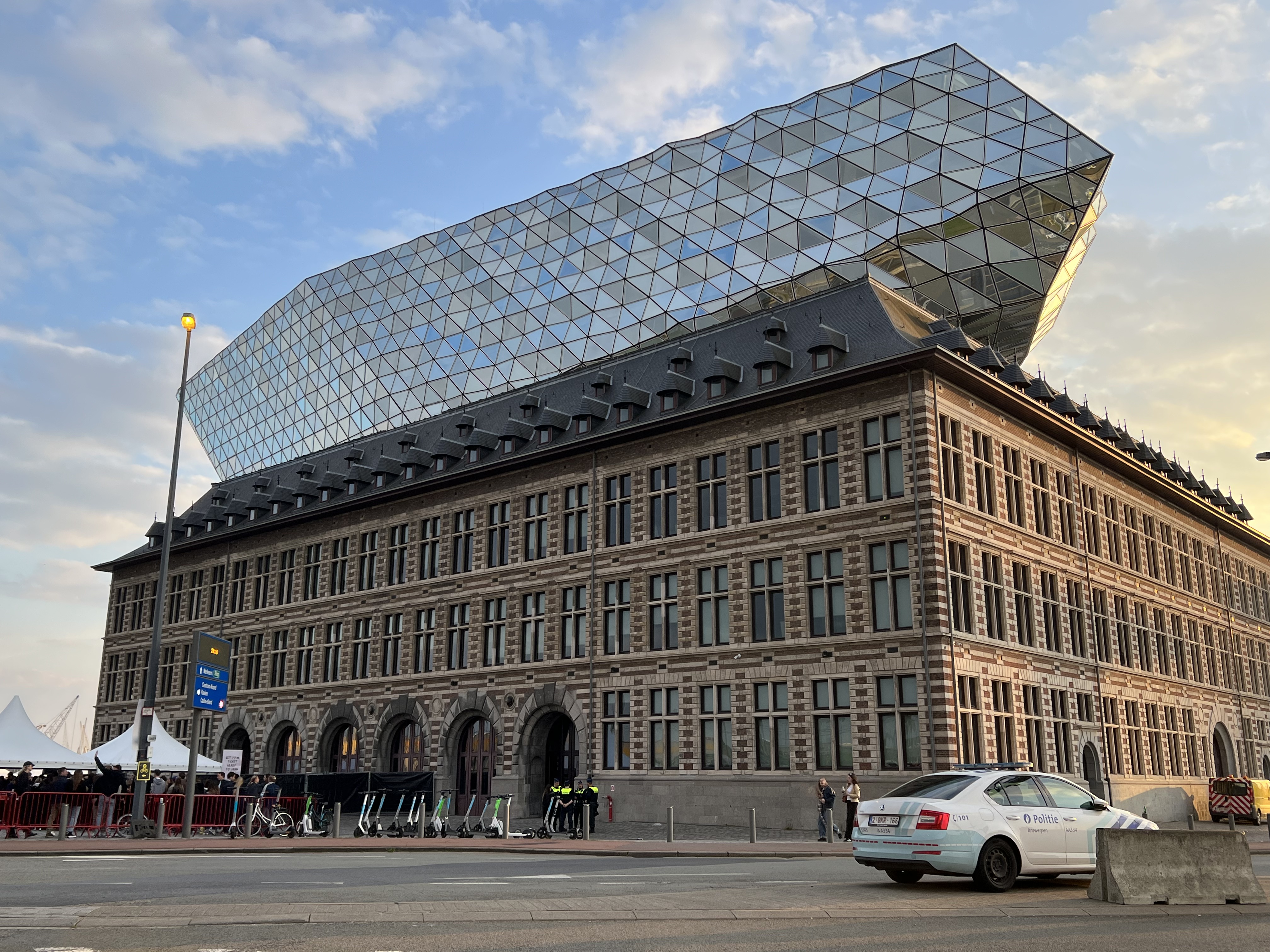
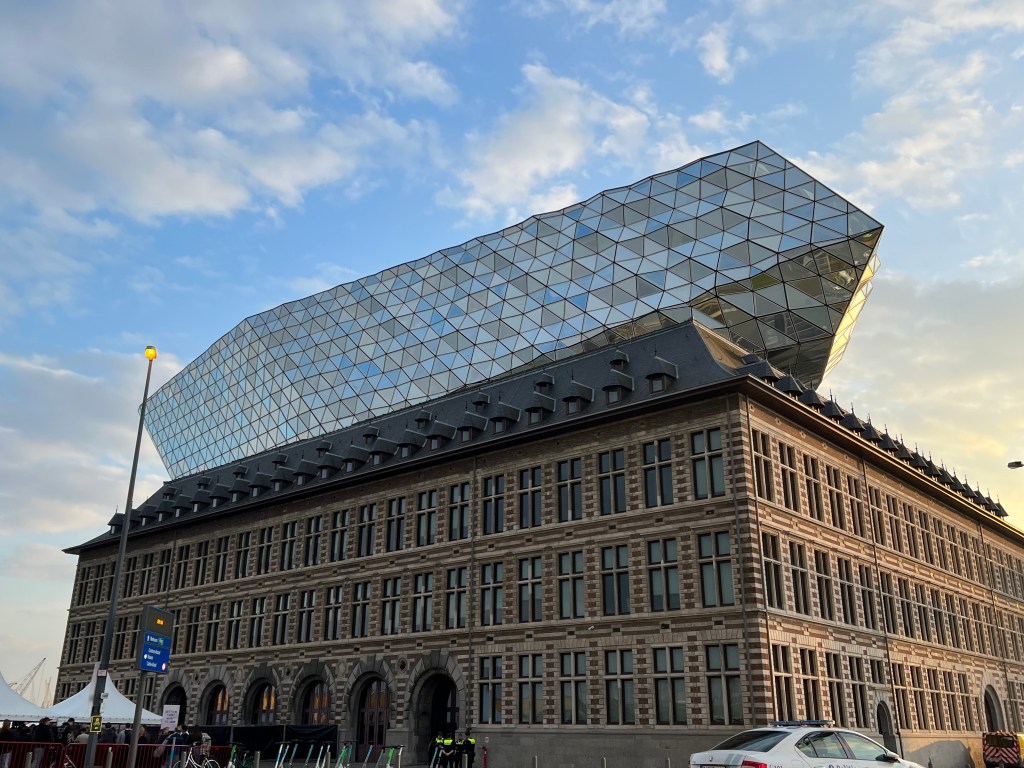
A hot air balloon floated over the center of the port, and across the road from the restaurant, a hundreds of party-goers streamed into a sold-out live electronic dance concert at the astonishing Havenhuis, the old harbor master building topped with a shimmering silver structure designed by Zaha Hadid. The building is hard to describe, but we have pictures. Hadid is the same Iraqi-British architect who designed the fabulous swooping Dongdaemun Design Plaza we visited with Asma this fall. After dinner we walked to the edge of the port and watched the sun setting over the ships and the windmills, and then to the thump of the electronic dance music, walked to catch a tram back to the center of Antwerp.
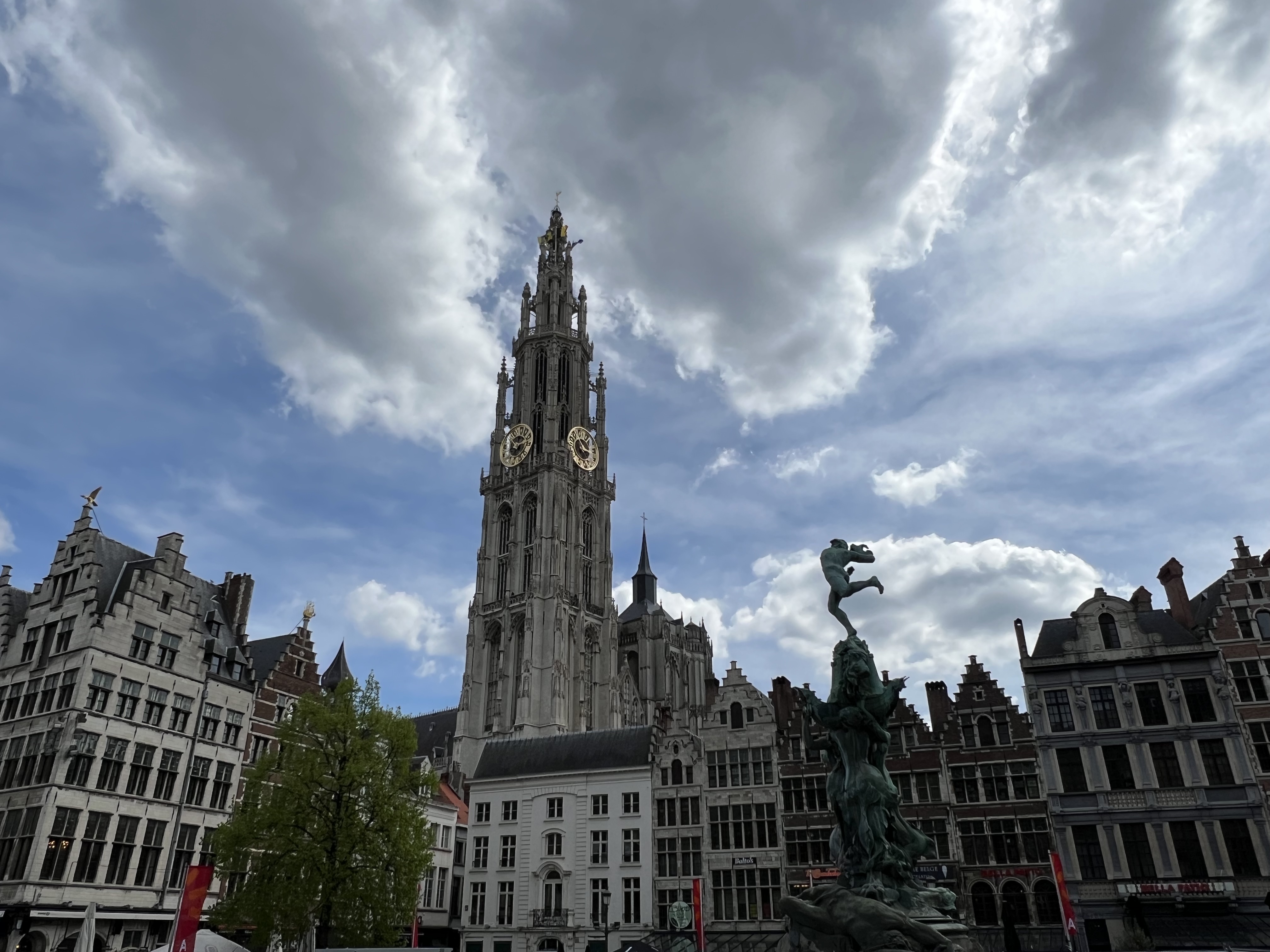
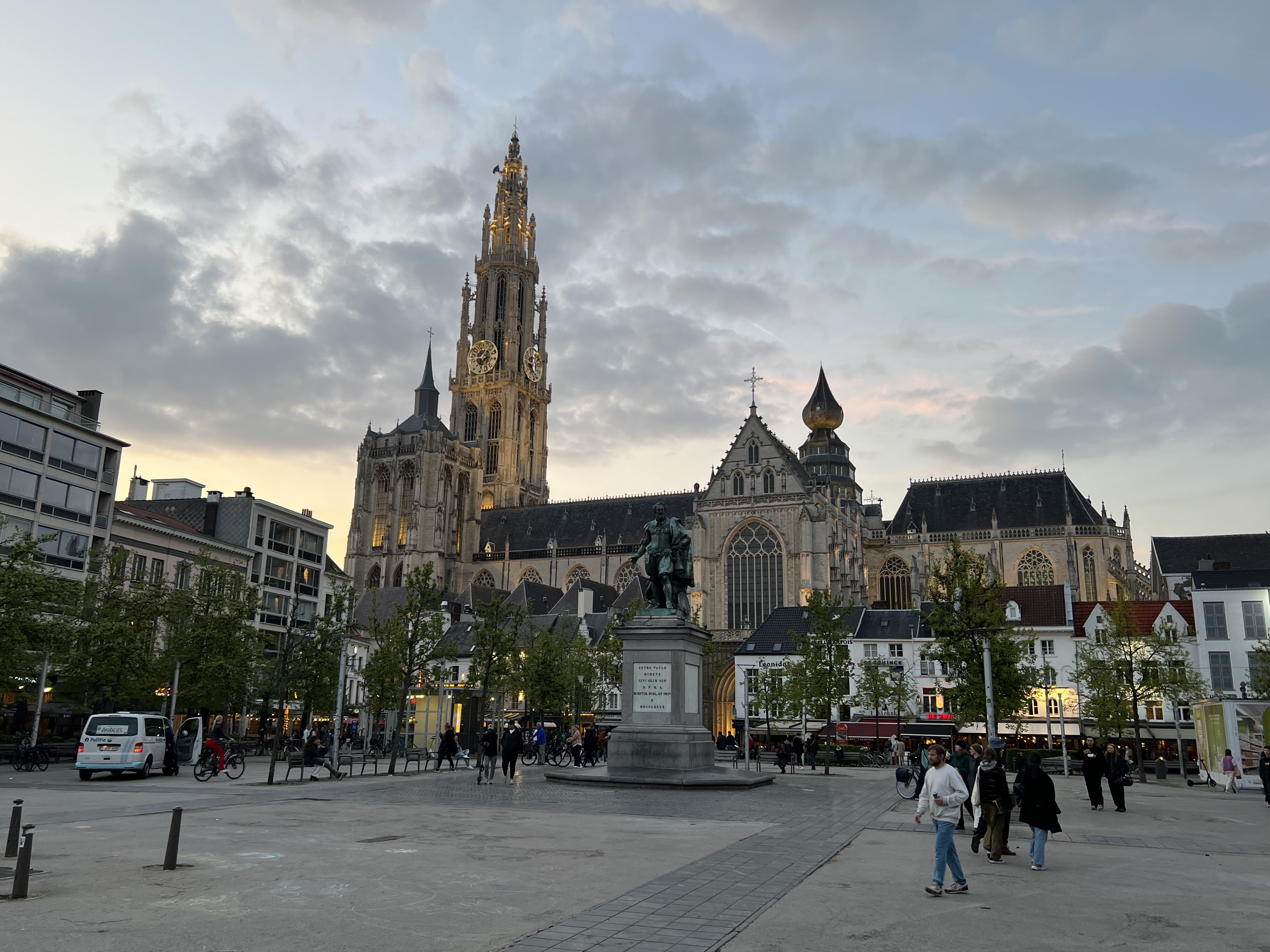
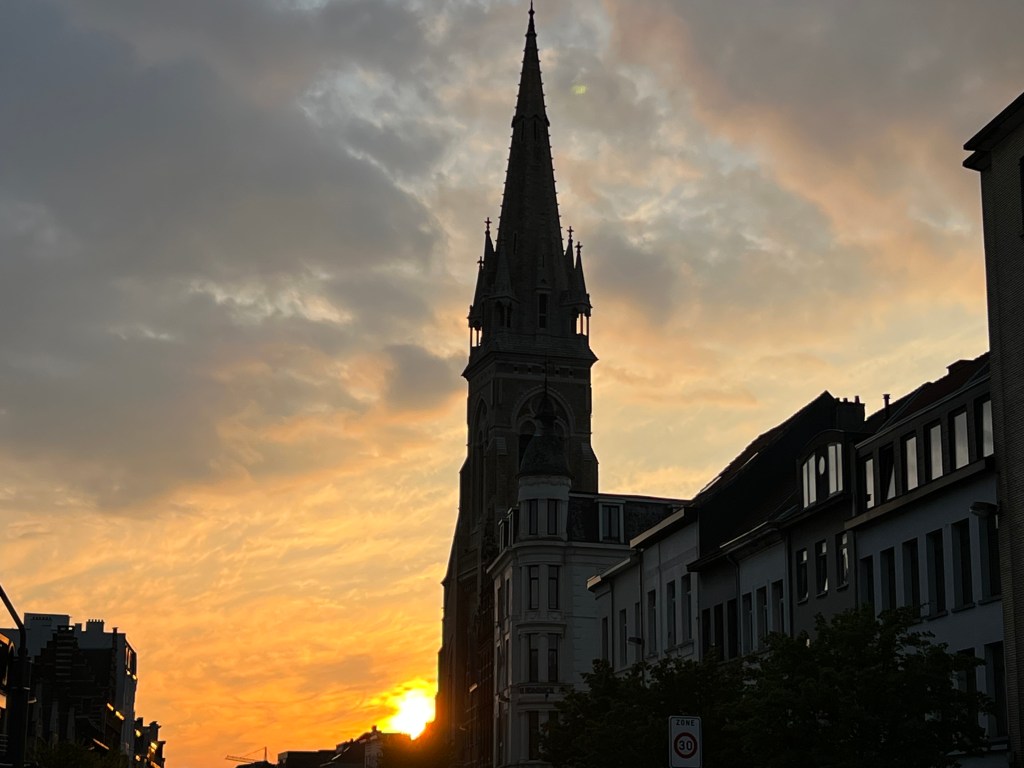
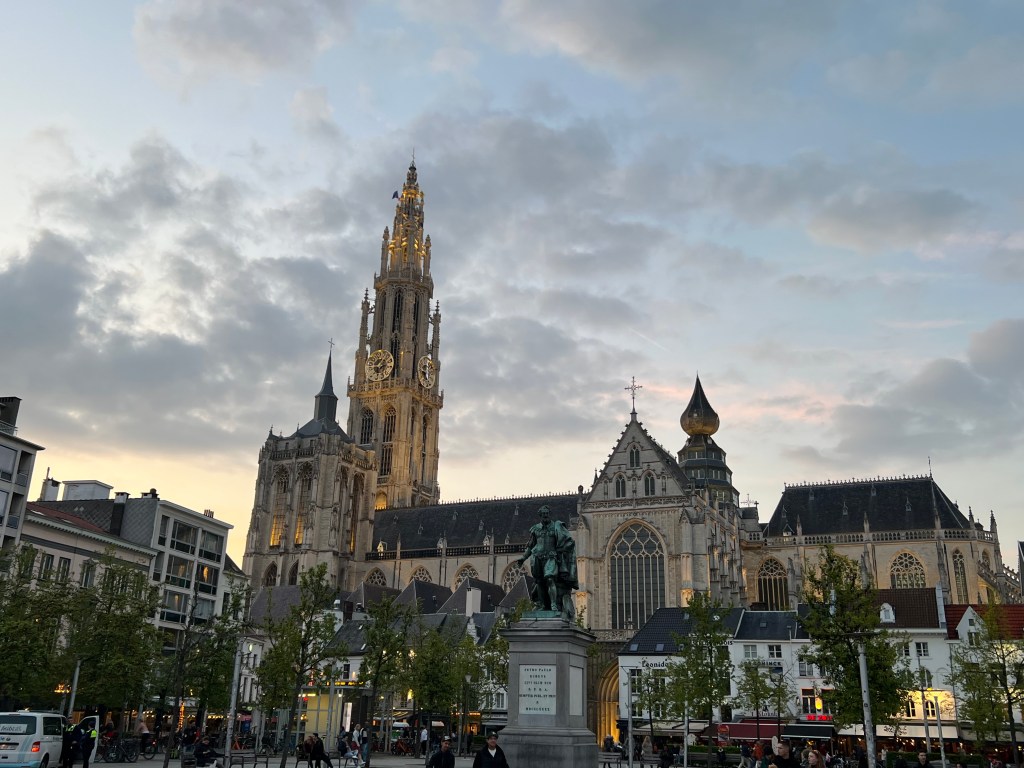
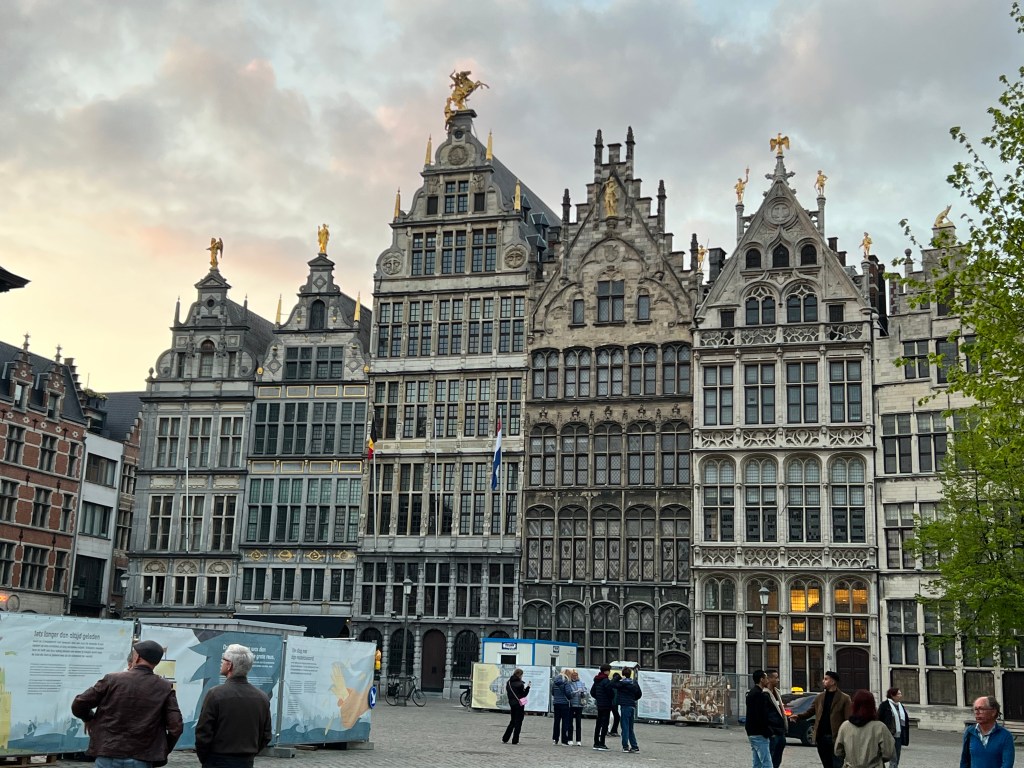
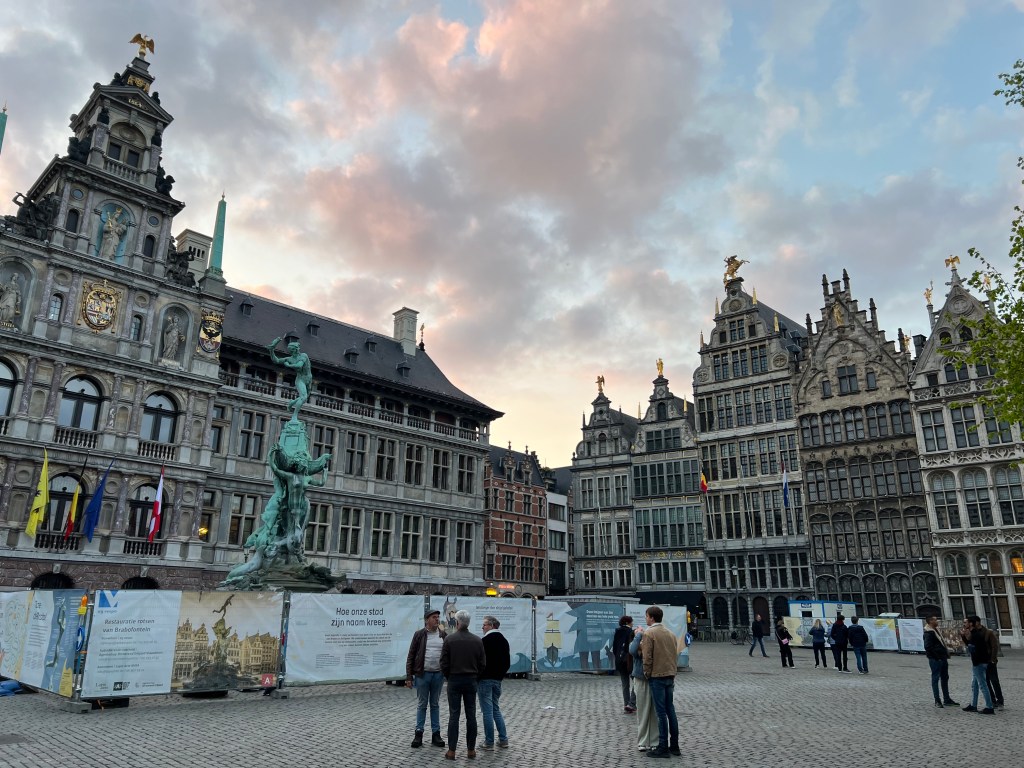
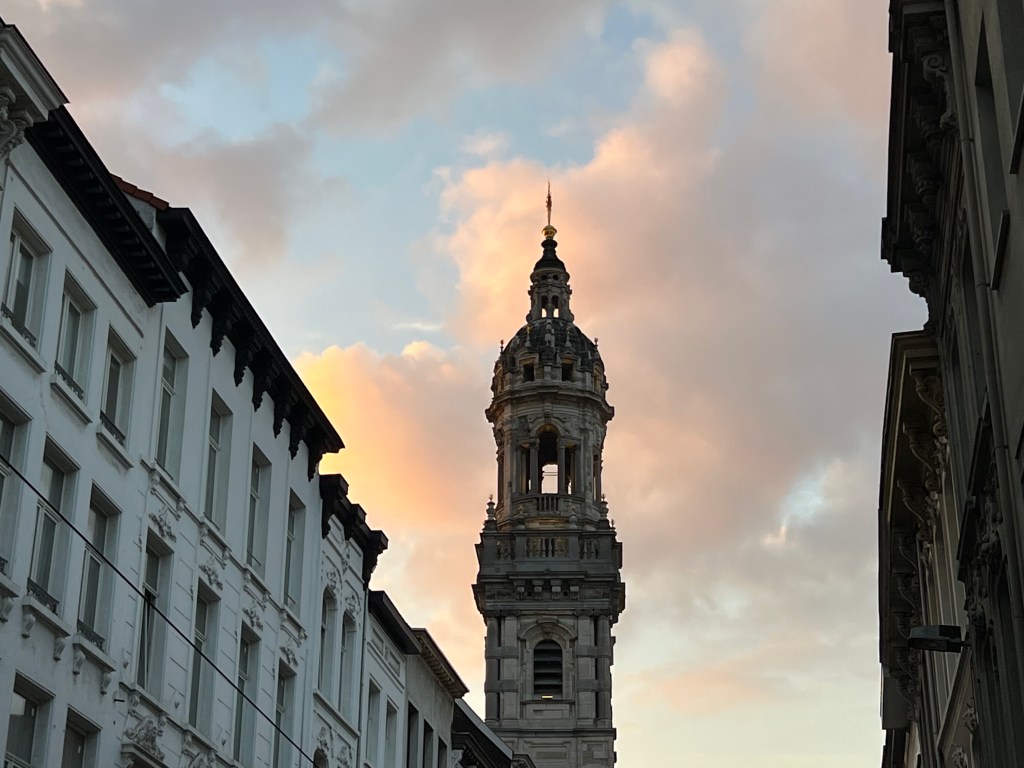
We finished the night walking through Antwerp’s historic center, which is packed with historic buildings and, on a Saturday night, busy restaurants. The imposing cathedral, which we plan to tour tomorrow, towers over the old town. Our late evening walk through the town center as the clouds colored from pink to blue, was a sweet and pleasant end to a good, good day.
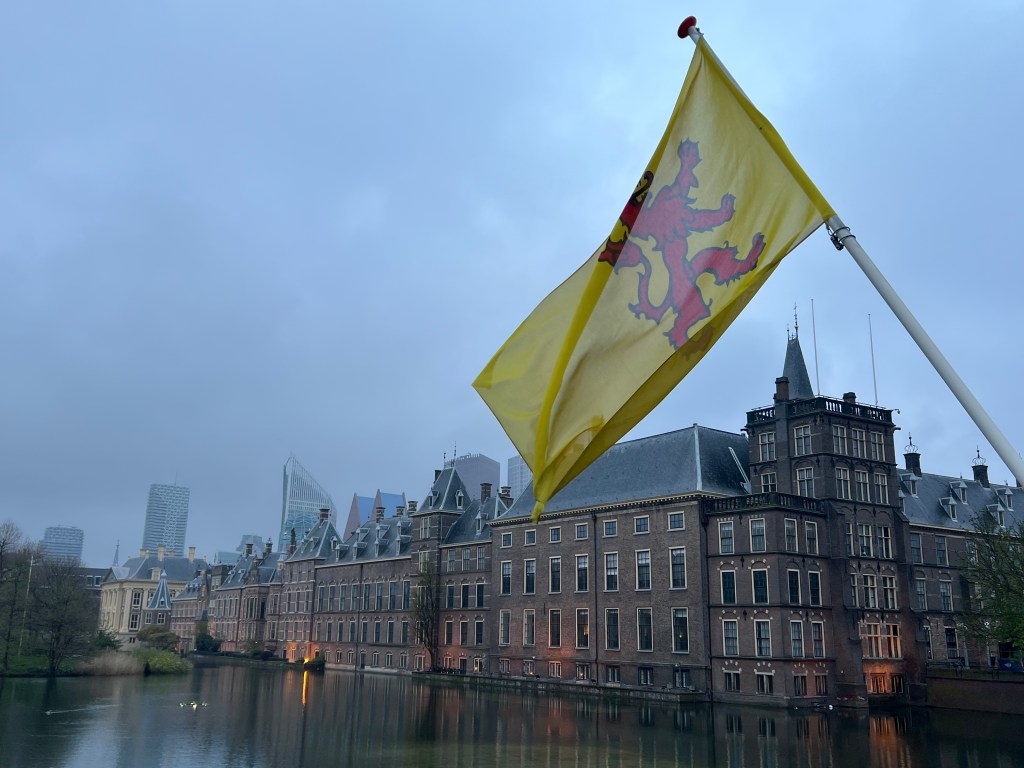
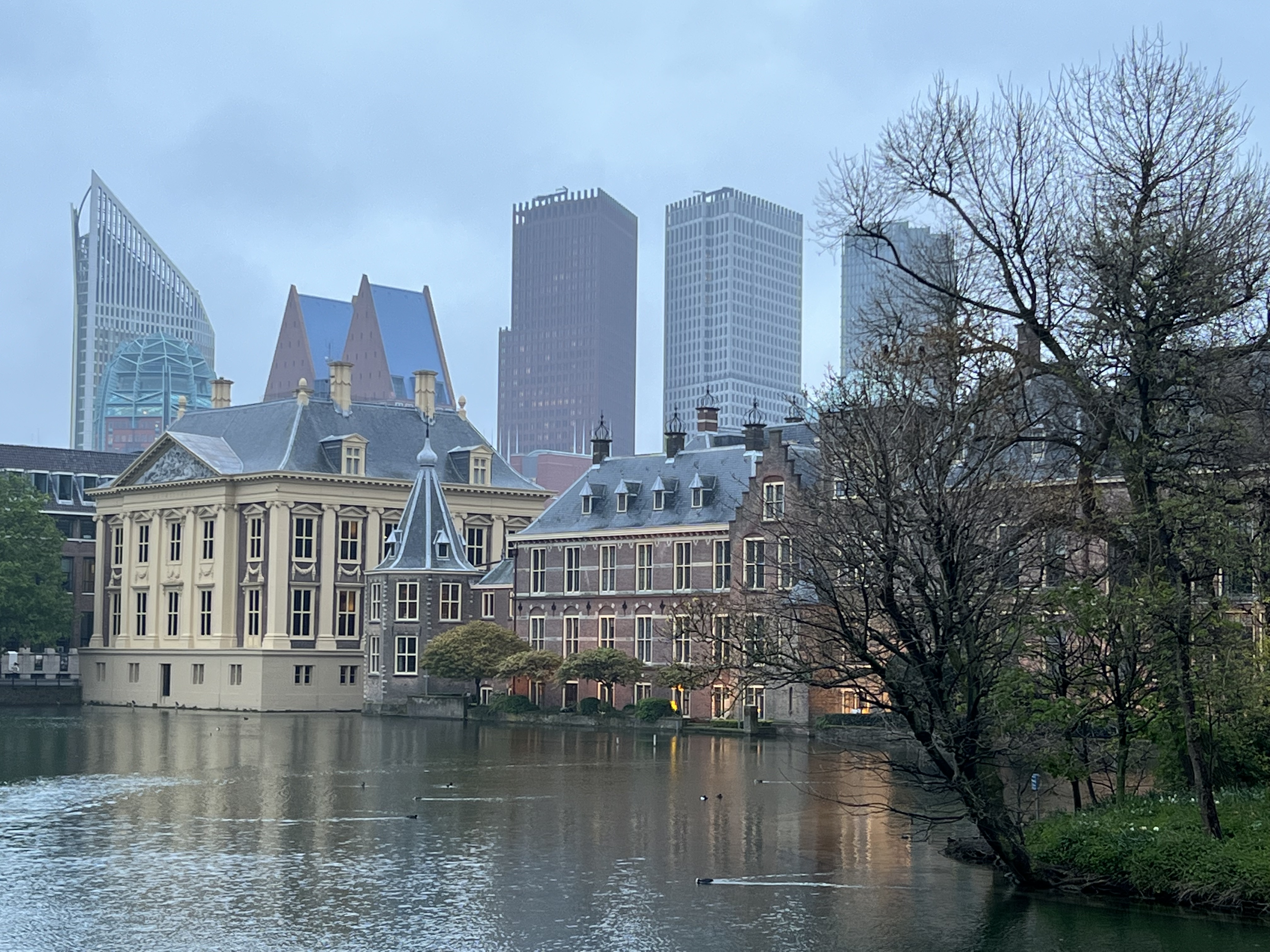
The Mauritshuis museum, left, and one end of the Binnenhof
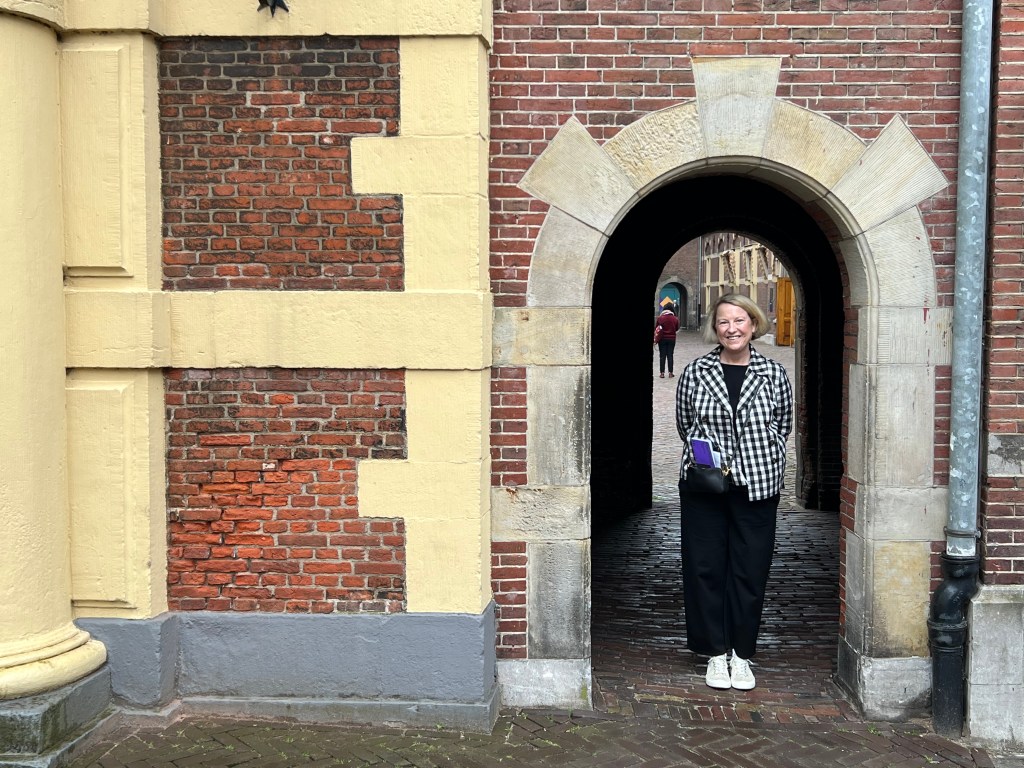
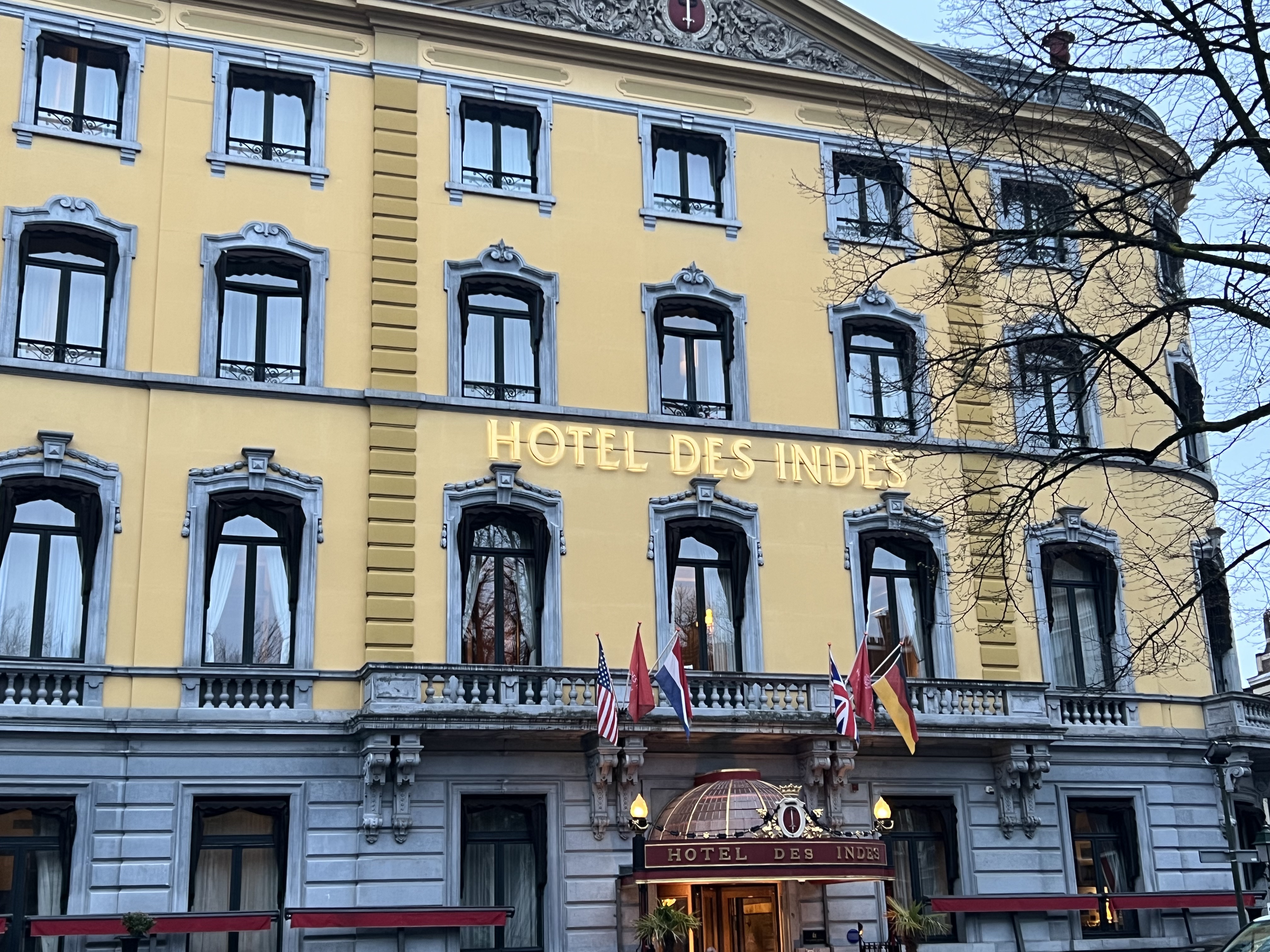
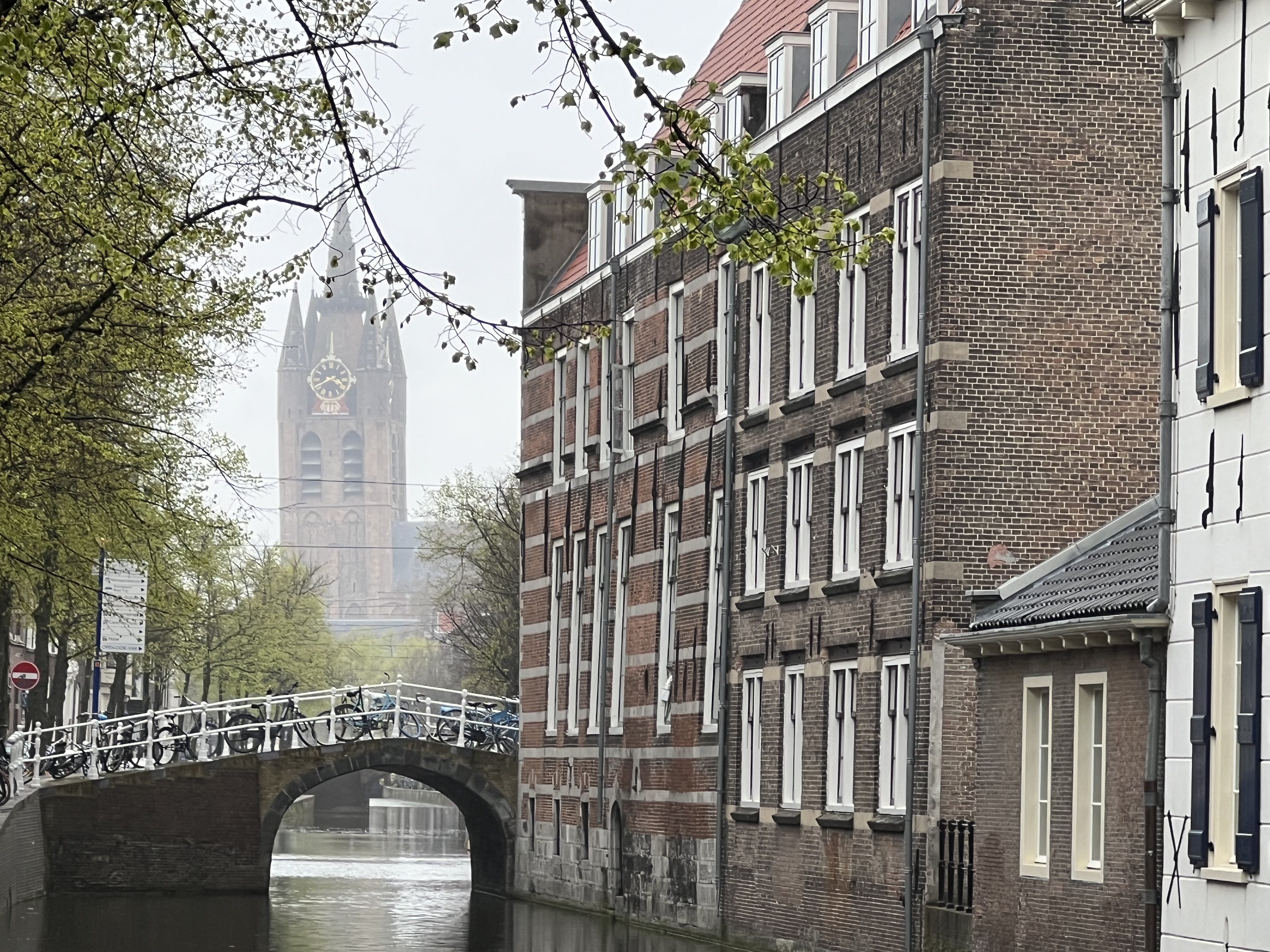
Friday, April 28, 2023, THE HAGUE, The Netherlands — We left the crowds and tumult of Amsterdam this morning and took an early train to The Hague. Fog and mist drifting in from the nearby North Sea wreathed the entire city, including the regal, deeply historic Hotel Des Indes, our home for one night. The Hague was cool, quiet and dignified, befitting a city that contains not only the International Court of Justice and the International Criminal Court, but also The Netherland’s Cabinet, States Genera, and its Supreme Court.
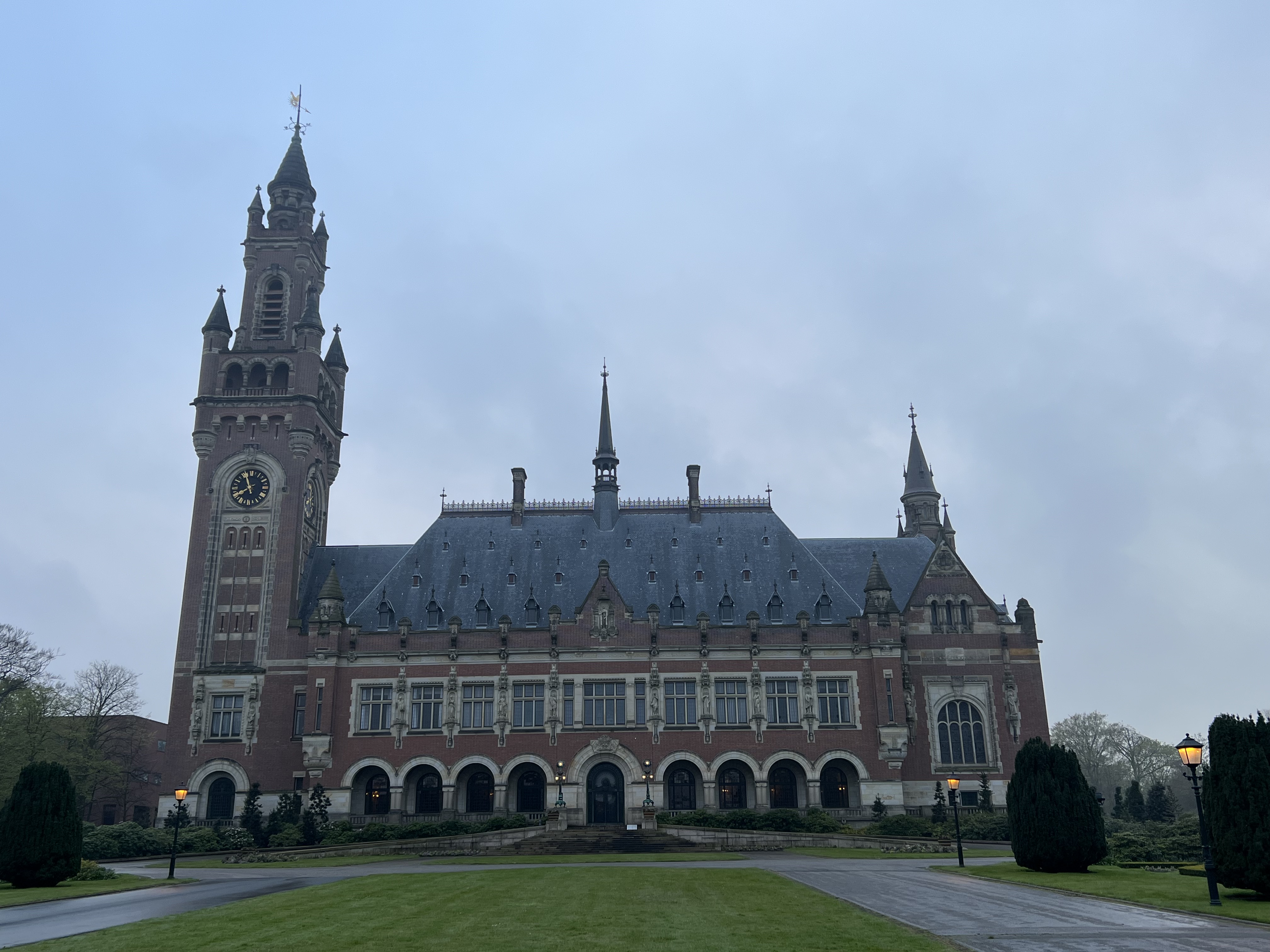
It was also beautiful, with the stone walls and spires of the The Binnenhof, a long row of historic government buildings, and the warm, light yellow walls of the Mauritshuis museum reflecting in the canal waters. The “Peace Palace,” built with a huge donation from Andrew Carnegie and home to the international courts run by the United Nations, is another quiet, graceful building that has a deep and important history.
We were pleasantly surprised by everything about The Hague, including the amazing Hotel Des Indes, which warmly welcomed us to our room, even though it was only 9 in the morning. Like so much of The Hague, the Des Indes has an incredible history dating back to the 19th century, having welcomed everyone from King Ferdinand (whose later assassination triggered World War I), to Teddy Roosevelt, to German occupiers, and to Churchill, Eisenhower and other Allied leaders after the Nazis were driven out of The Netherlands. All kinds of other notables have stayed at the Des Indes, including Eleanor Roosevelt, Mata Hari, the Kennedys, Bono, Michael Jackson, Josephine Baker and Prince..
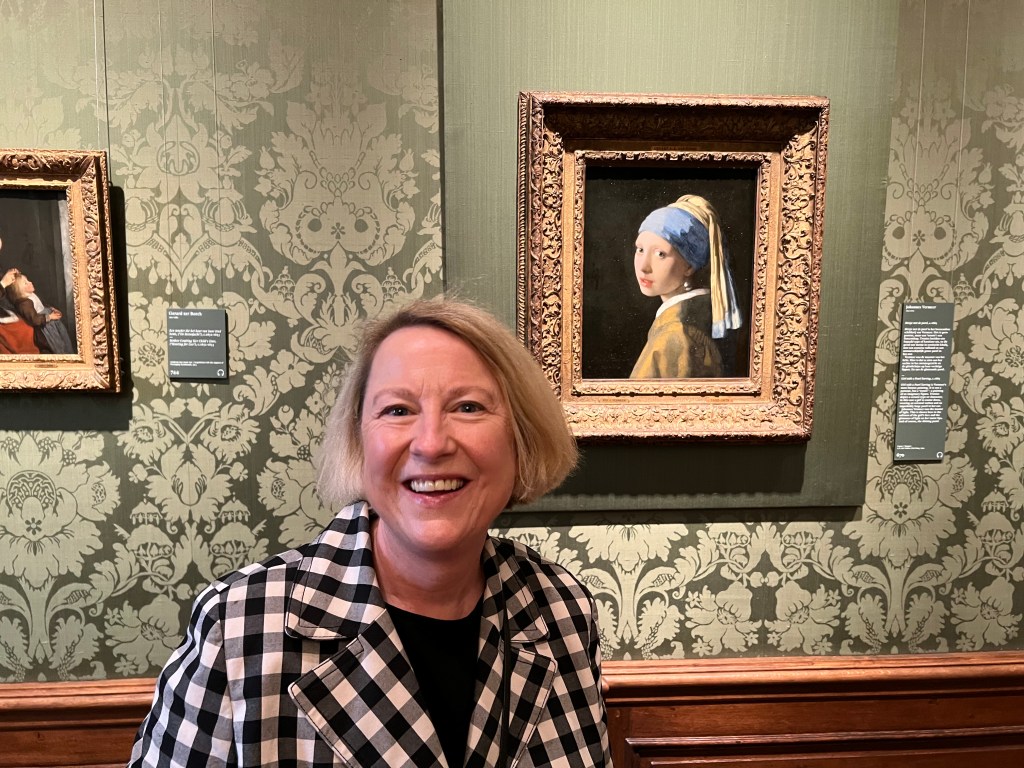
We started our day in The Hague with, yes, an early visit to the Mauritshuis art museum, home to Vermeer’s “Girl with a Pearl Earring” and other wonderful paintings, including many by Rembrandt and Hals. We also loved Paulus Potter’s 1647 huge painting of a bull and other barnyard animals, which is amazingly lifelike, right down to the bull’s twitching whiskers and the buzzing flies.
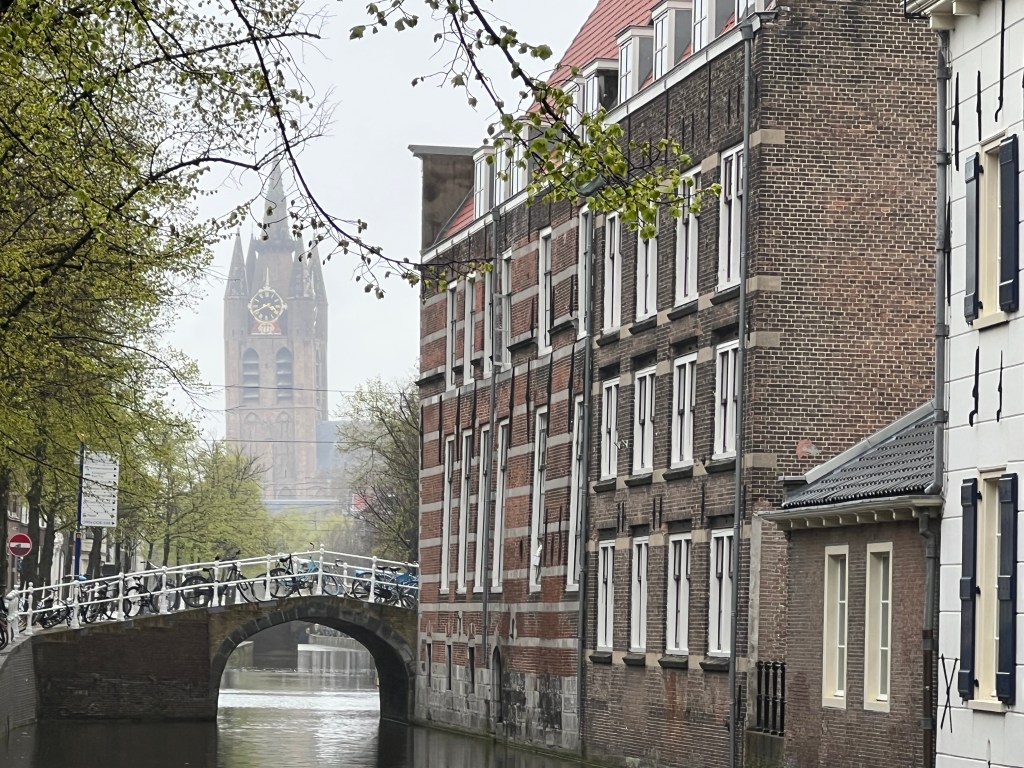
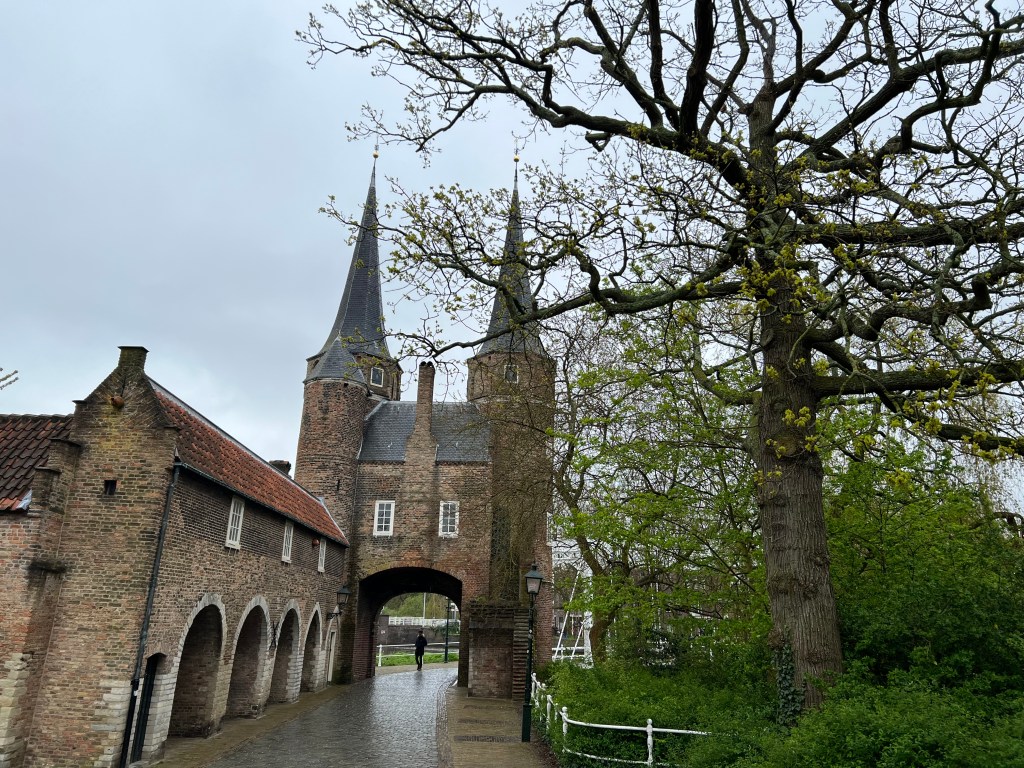
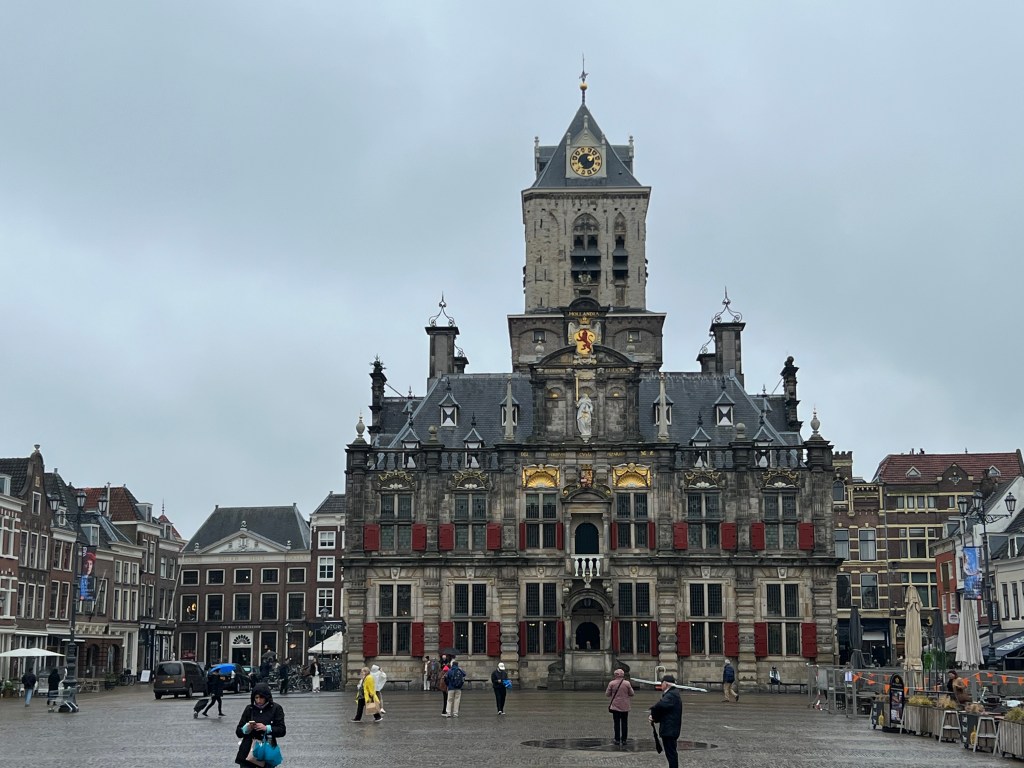
After a break for some coffee and homemade apple pie, from a hole-in-the-wall cafe with a funny, sweet server, we took a tram out to Delft, Vermeer’s hometown and the place with all that blue-and-white Delft pottery comes from. It rained lightly the whole time we were in Delft, but we were mostly inside, in both the Prinsenhof Museum, where they had a Vermeer exhibit and where the beloved William the Silent was assassinated, and the impressive Vermeer center, which gave a full and interesting account of his life and paintings. It a great way to round out our Vermeer expedition. William the Silent, also known as William I of Orange, led the revolt against the Spanish in the 1500s that resulted, eventually, in independence for The Netherlands. Children who visit the Prisenhof are given small metal “detective” cases that include a magnifying glass and other equipment to investigate William’s murder. Two bullet holes remain in the stairwell. Kids were down on their knees studying the holes with their magnifying glasses. (It was somewhat cuter than it sounds.) William is entombed in the beautiful “new” cathedral that we visited in Delft.
The Peace Palace, which includes the International Criminal Court
After we trained back from Delft, we had a wonderful Italian dinner in a tiny restaurant near the Hotel Des Indes and walked through the fading light to the Peace Palace, which was closed and quiet for the day. We stood behind the metal fence and hoped aloud that Putin and other Russians responsible for so much horror and death in Ukraine would one day be brought to justice in the building.
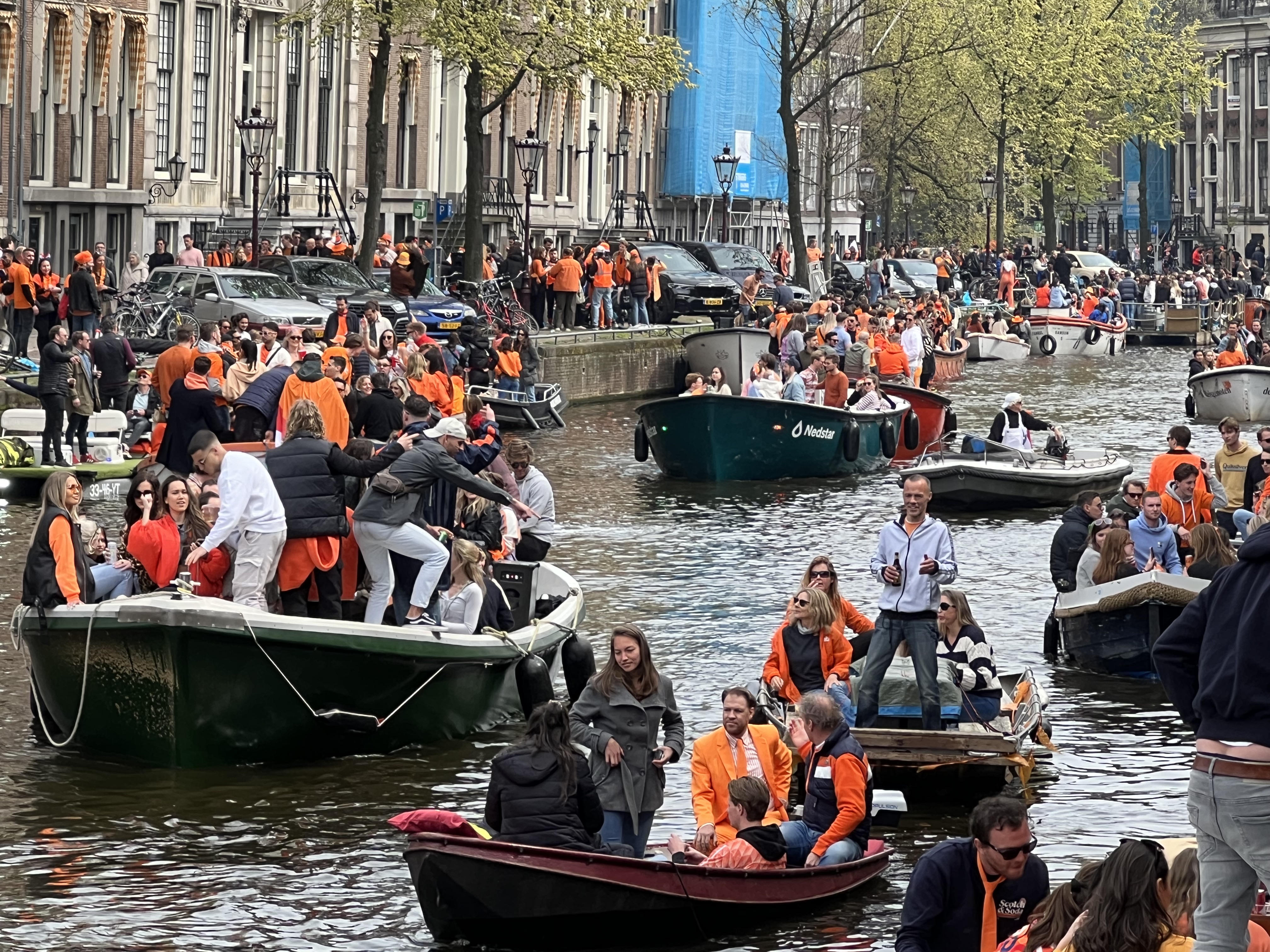
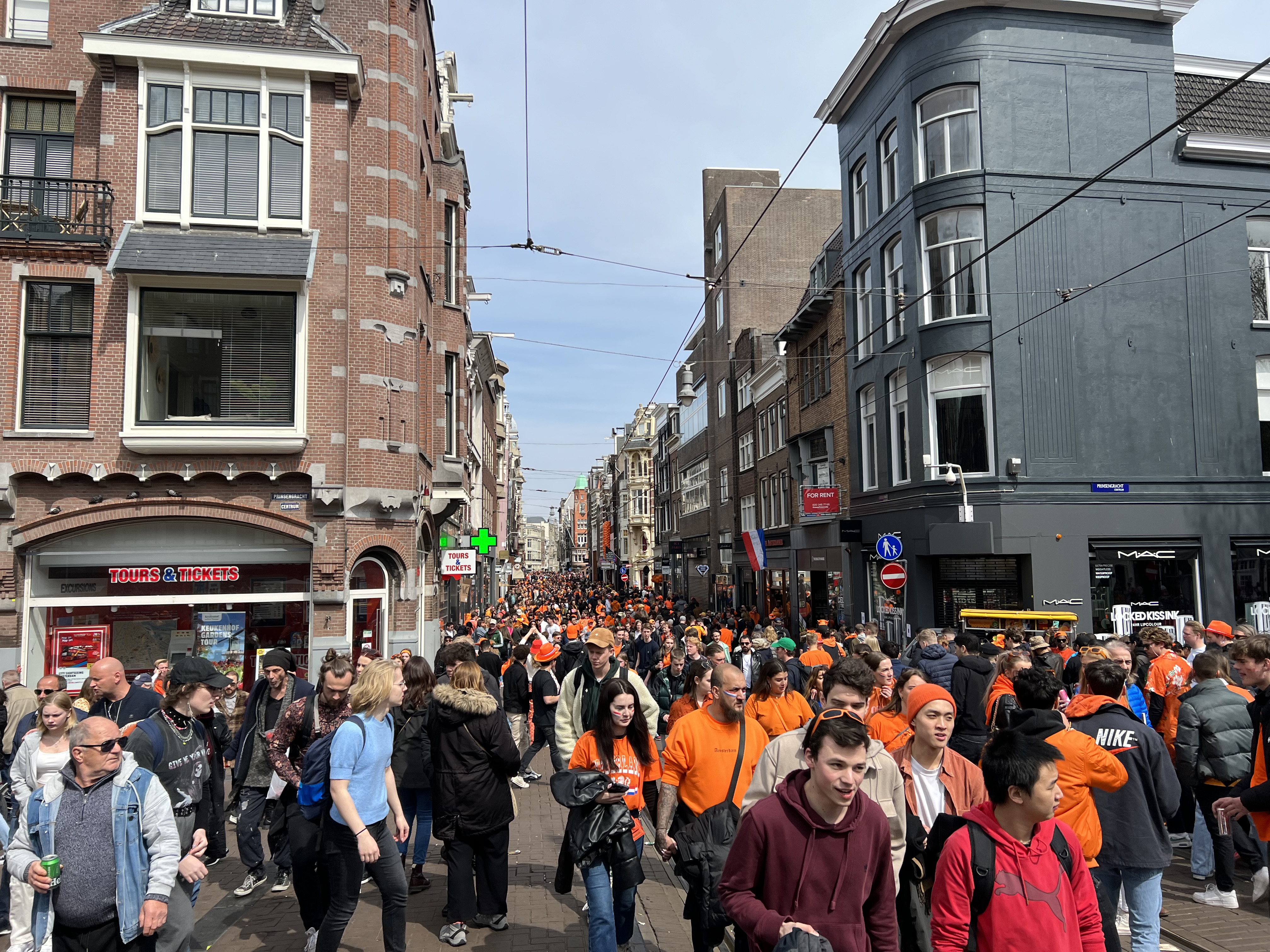
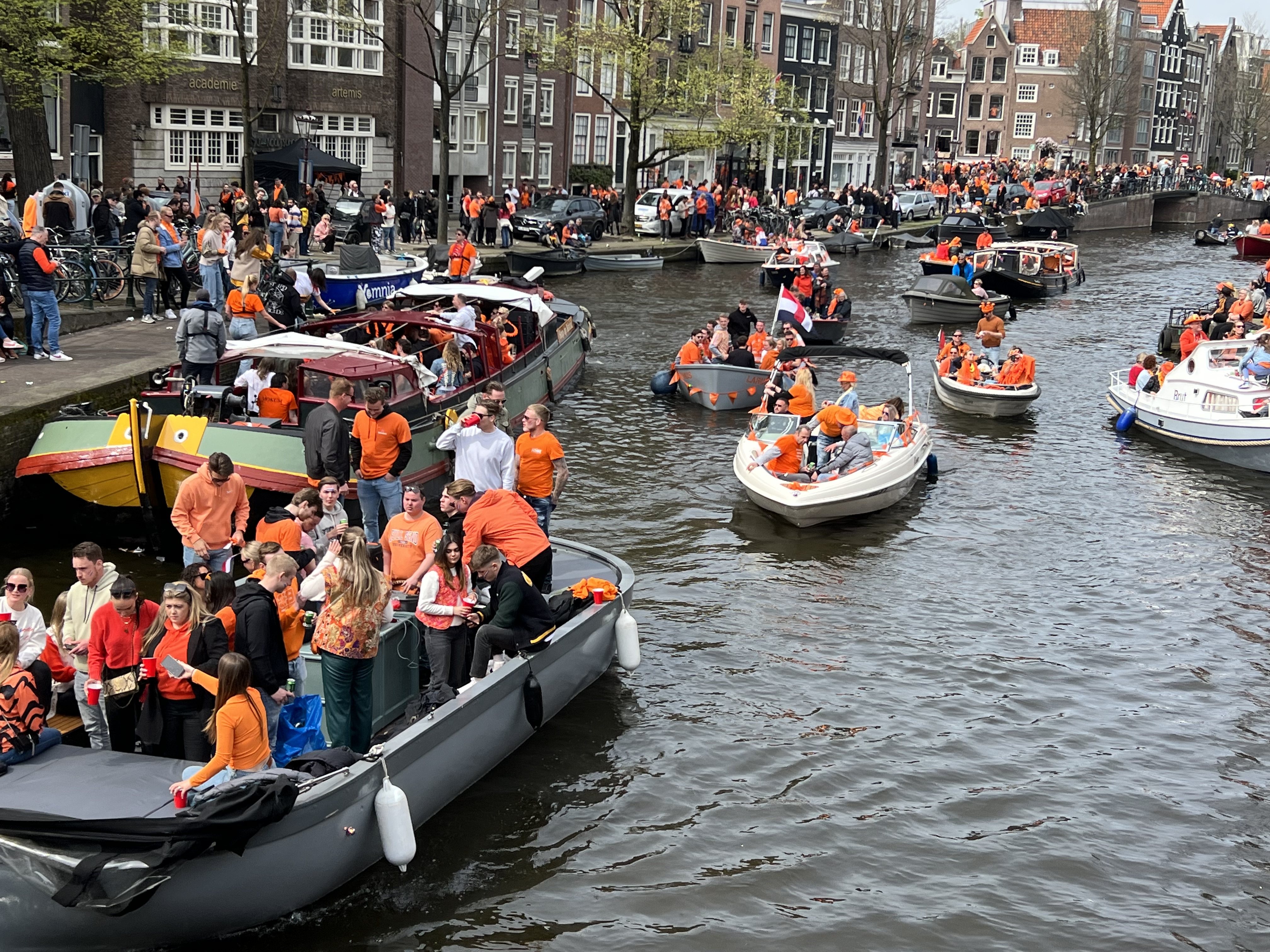
Thursday, April 27, 2023 — AMSTERDAM, The Netherlands — Mix beer, all manner of boats, blaring music, garish orange, hundreds of thousands of people, endless sidewalk junk sales, and much more beer, and you get King’s Day, or Koningsdag, in Dutch. It’s a national holiday, and it marks the birth of King Willem Alexander, and dates back to 1885. When the Dutch monarch is female, the holiday is known as Koninginnedag, or Queen’s Day.
In either case, it’s one hell of a party. We saw it, felt it, coming as early as the afternoon before, when walking the historic streets in the medieval center of of Utrecht, a college town, where there was a palpable sense of excitement and anticipation, people were staking out places for the sidewalk sales, the beer tents were going up, and the city crews were hurriedly placing pissoirs (urinals) along the canals and streets.
Still, King’s Day was wilder, bigger, louder, than we ever imagined. We came out of the Rijksmuseum, after our long-awaited viewing of the amazing Vermeer collection, into a sea of orange, with tens of thousands of people surging up and down the streets. We made our way to the first of the ring canals and watched the endless flotilla of party boats, blaring music, all packed with people drinking, dancing, and waving flags, a few of them puffing with smoke machines. The whole historic downtown was absolutely jammed with people drinking and watching the boats, and stepping around the yard sale tables set up everywhere on the sidewalks. One little girl was selling her Pokemon cards. We bought a couple ice-cold Heineken beers from a sweet pair of Dutch boys who looked about twelve years old.
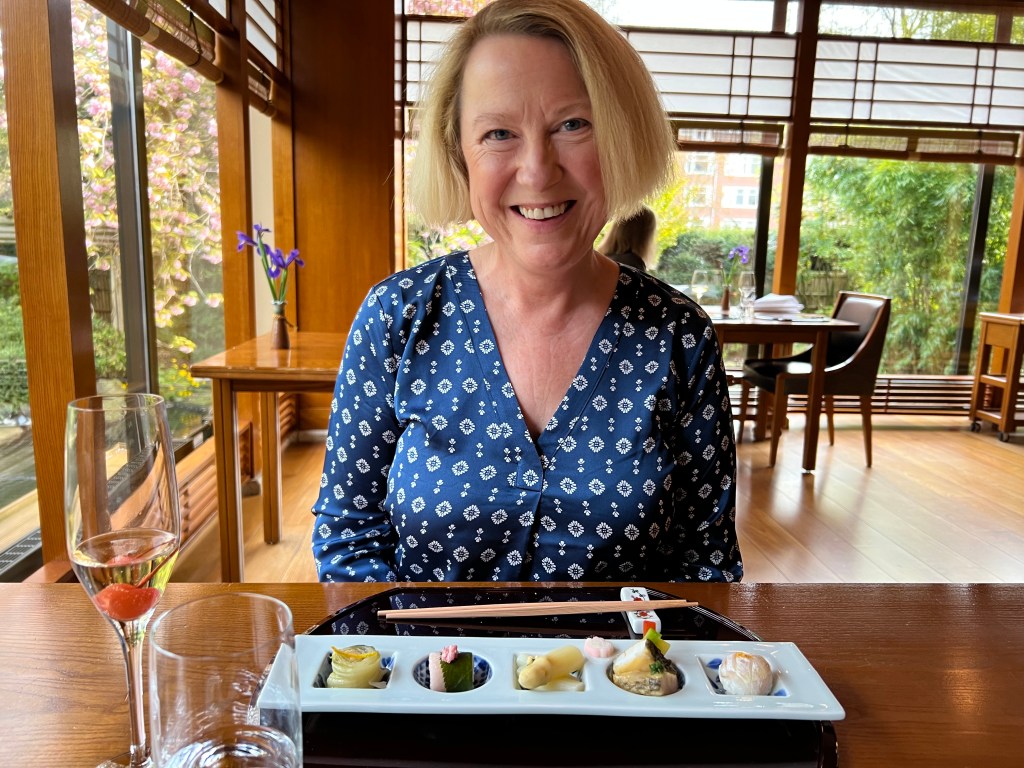
The party wasn’t confined to just the downtown, either. The entire tram system was canceled or blocked, more or less, and so we walked the mile or two back to our hotel. All the way home we passed thickets of partiers gathered around bars and tents, dancing and drinking, more sidewalk sales, and drunk guys leaning into the public pissoirs. Even hours later, as young Japanese women in kimonos served us an unforgettable multi-course dinner at our hotel, the Okura, we could hear the faint sounds of the boatloads of King’s Day partiers still floating past on the canal outside.
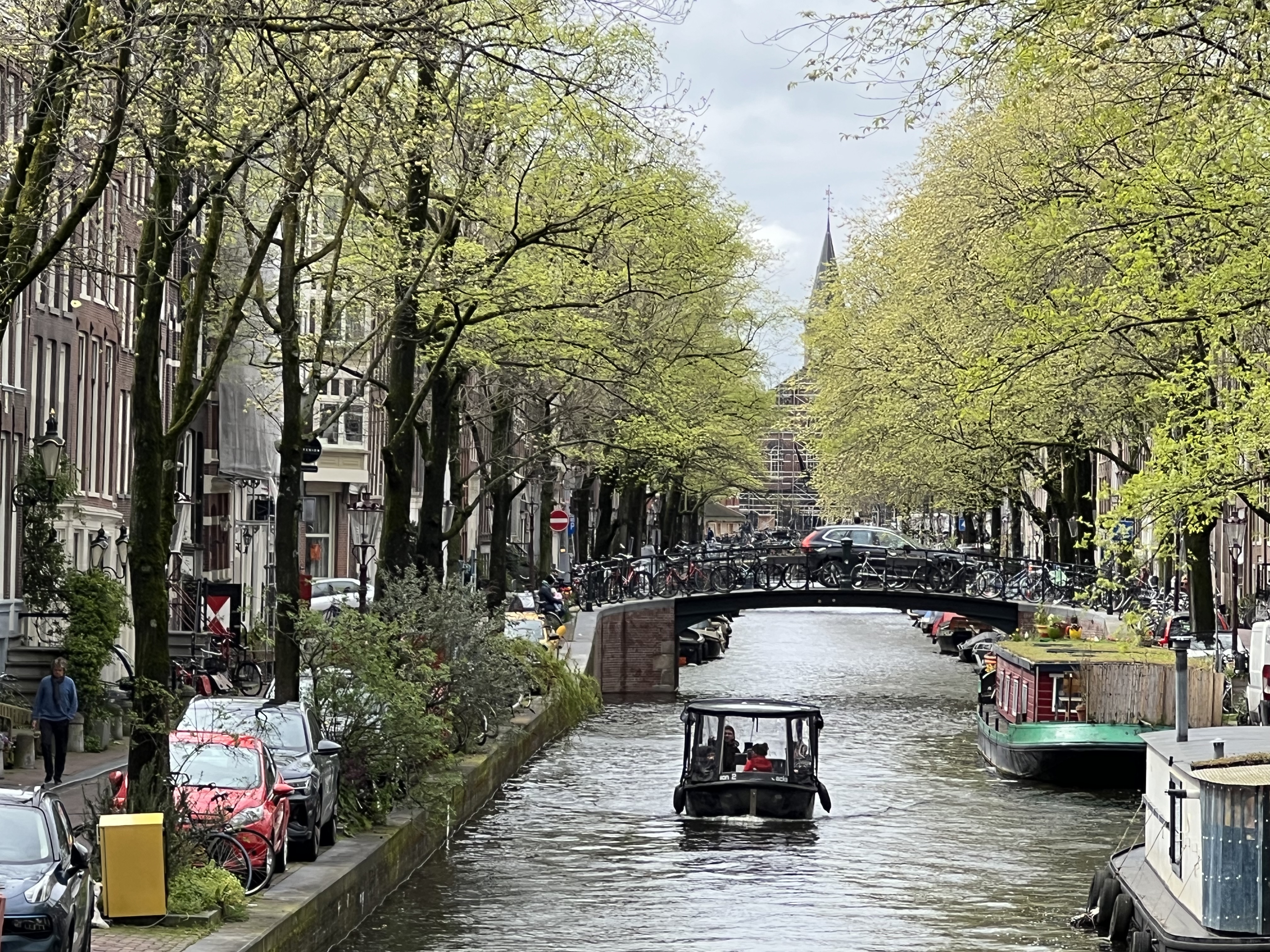
Tuesday, April 25 and Wednesday, April 26, 2023 – Amsterdam – We started our morning with an early tram ride to the museum quarter – a little too early it turns out since it was cold and a bit rainy and we had 45 minutes until the Van Gogh Museum opened. But it was also fortunate, since we decided to wander around the neighborhood and discovered the pleasant area along the canals near Spiegelgracht – where beautiful brick homes with polished black doors and gleaming red shutters line the canals. There was none of the seediness, or crowds, that we had experienced our first day, and the streets were cleaner, but still surprisingly not that clean. I know that coming from Portland, where the downtown is basically a garbage pit, I don’t have any grounds to criticize anyone. But still, it’s a bit of a mine-field here – you have to watch your feet to avoid stepping in something while at the same time keeping your eye scanning for the ubiquitous bikes. Especially deadly are the harried moms who hurtle down the street at full speed, a bobsled full of small children attached to the front, car seats and helmets be damned.
Ok, back to Van Gogh. We arrived back at the museum with our timed-entry tickets just in time – to get in a massive line. Since the museum was sold out for the day, these were all ticket holders like ourselves, eager to get in to see the largest collection of the Dutch artist’s work in the world. It is an unlikely collection, mainly from the many paintings Vincent sent his brother Theo, who believed in and supported his older brother’s artistic endeavor. Theo kept his brother’s paintings, since no one was buying, and when he died months after Vincent, Theo’s widow, Jo Gogh-Bonger, dedicated her life to preserving and promoting Vincent’s legacy.
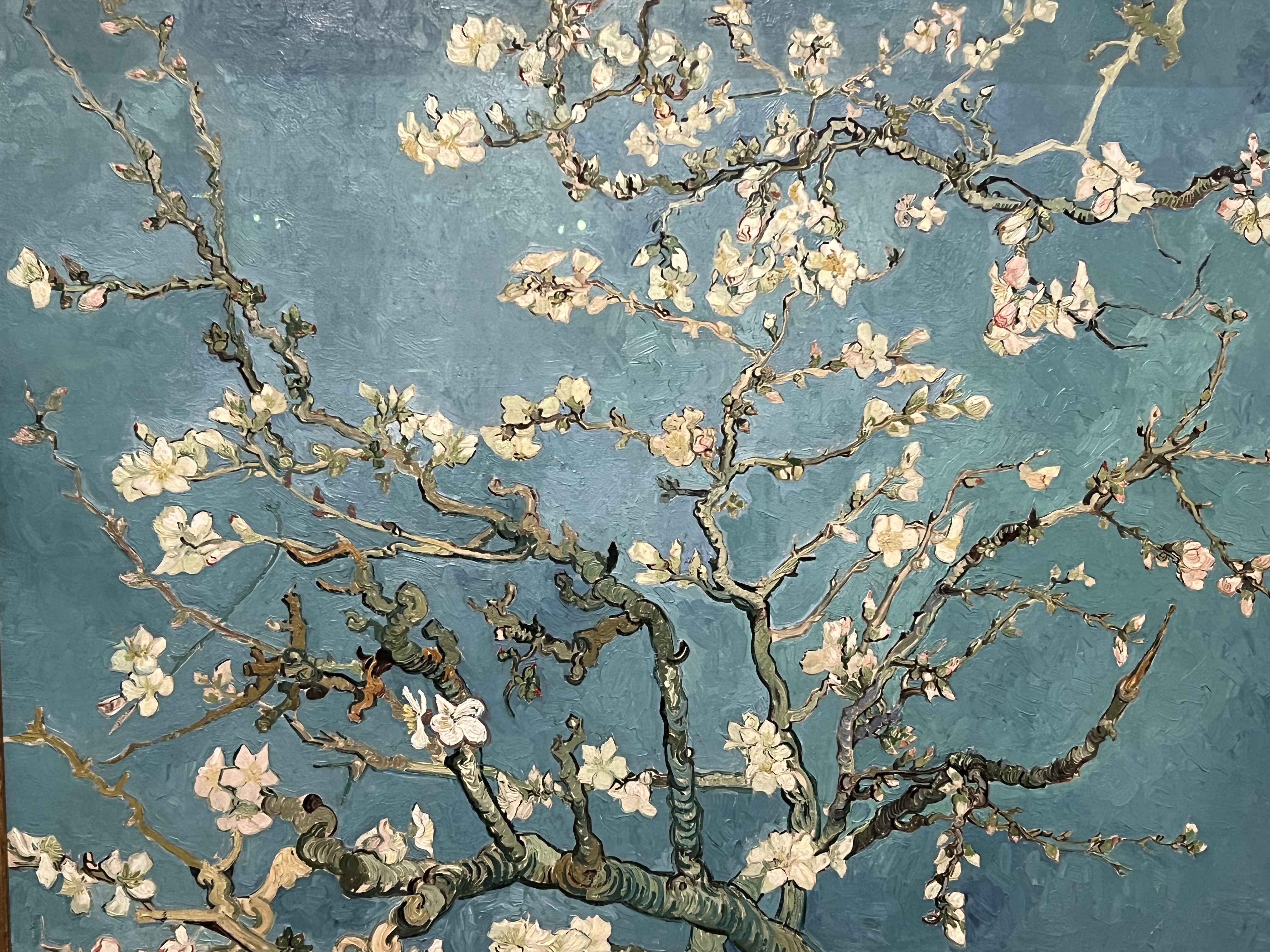
Van Gogh may have been hated in his own time – dismissed by other artists, feared by small children, a misfit who couldn’t keep a job and quarreled with his parents incessantly – but he certainly is adored today. As the crowds poured in to the lobby, scrambling for audio-tour guides and the coat check, I had a moment of true inspiration. I looked at the map and saw there were four floors to the museum. It is chronological treatment of Van Gogh’s life, starting with his dark, clumsy early works and his self-portraits on the lower floors, and slowly rising, floor by floor to his masterpieces from the end of his life displayed at the very top. I looked at the crowds, and at Rick, and said, follow me – we are headed for the fourth floor! We raced up the stairs and found the galleries populated only with a few chatting guards getting ready for the hordes to ascend. We had a glorious 30 minutes practically alone with some of Van Gogh’s most beautiful and iconic paintings — seascapes, fields in Provence, a peach blossom in a glass of water, his glorious almond blossoms on a blue background (made for his newborn nephew who would one day help inaugurate this museum), a man sowing grain against a halo-like golden sun and green sky, the twisted and almost surrealist tree roots he painted just before his suicide at age 37. We wandered through the galleries and were able to spend some time alone with each painting, before descending into the lower floors, sort of like Dante descending into various rings of hell. The next level down wasn’t too crowded, but by the first level, the crowds were unbearable – it was impossible to see or even get close to the paintings, especially the many self-portraits. It was a Mona Lisa moment. As in, nothing about art at all, but mostly about the selfies.
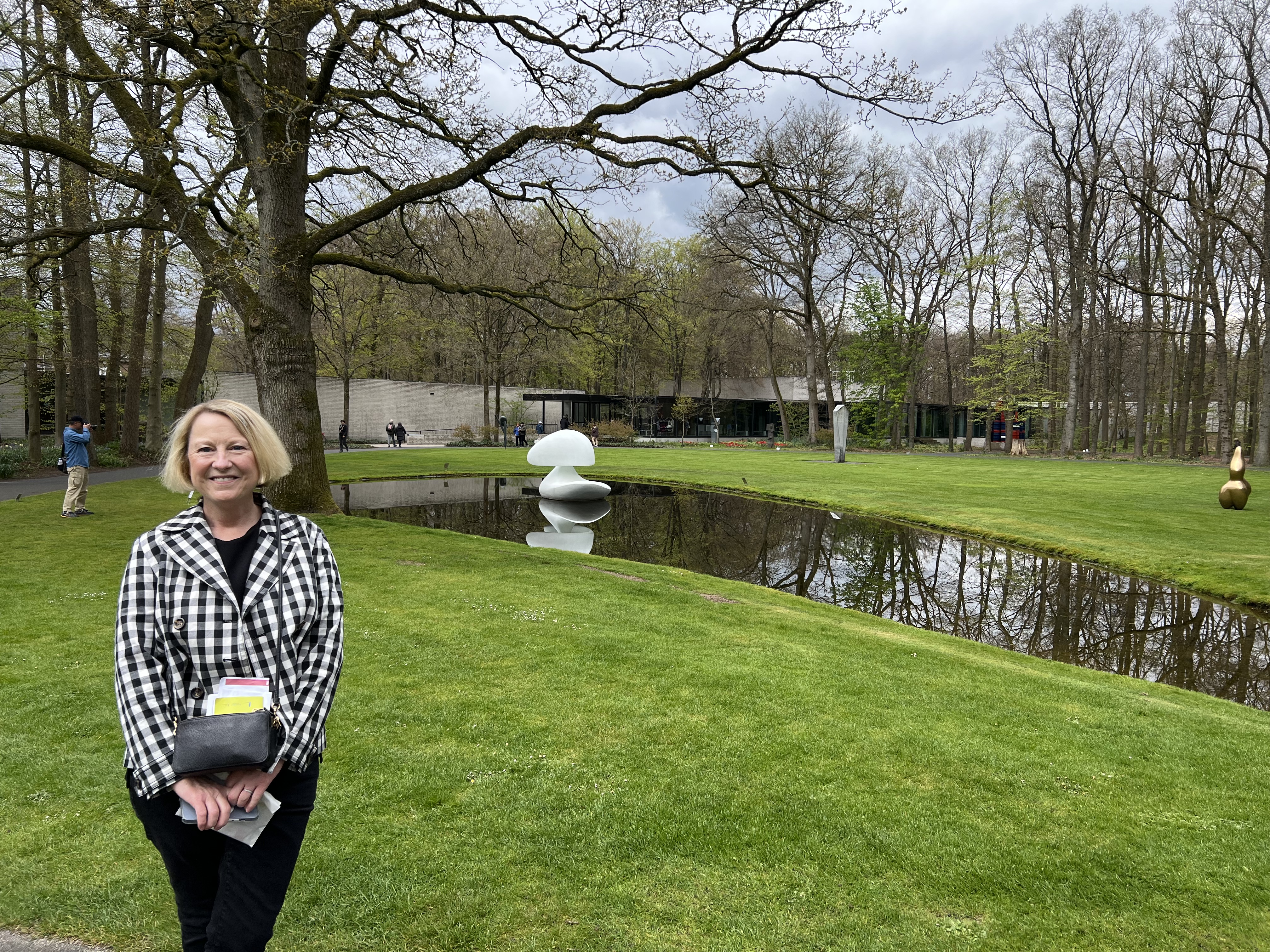
The sculpture garden at the Kroller-Muller Museum
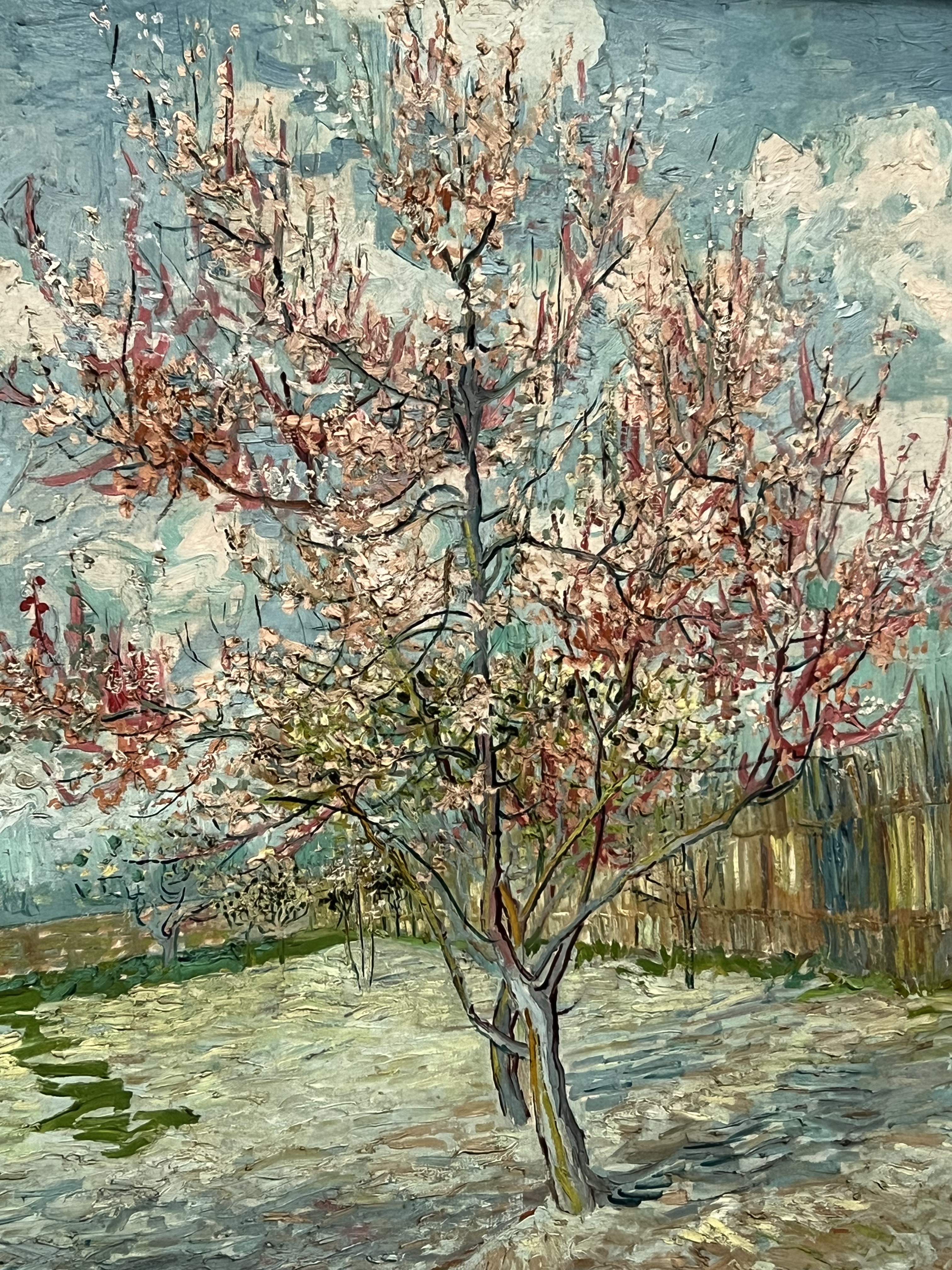
We were fortunate to follow up our museum visit yesterday with a road trip today one hour east of Amsterdam to see the Kroller-Muller Museum, which has the world second-largest collection of Van Gogh paintings, as well as an extensive modern sculpture garden set in a huge park. We had hoped (and had read) that because the museum was so far off the beaten path, that it would be quiet. But we found out, as we arrived a half hour after the museum opened, that we had been beaten to the punch by no less than five tour buses and several smaller minivans, including a large tour group of Chinese speakers, a few Japanese families and lots of Italians and French. Van Gogh is a global phenomenon. Fortunately, his work is phenomenal, and we had some lovely time in the galleries dedicated to him. Helene Muller, an early 20th century heiress, had purchased a number of Van Gogh paintings, as well as other modernist art, and this museum in the countryside was built to house it all. We loved the collection – a peach tree in bloom dedicated to his recently deceased uncle, a drawbridge in sharp, limpid colors, iconic portraits of his friend the postman and his wife, haunting cypresses, enigmatic haystacks, a reaper under a yellow sky and sun, lost in the golden yellow wheat field. Each painting seemed to express Van Gogh’s emotions – you could almost feel his passion in the fast brushwork, the thick paint, the movement that seemed to make objects like the trees vibrate. I can look at paintings endlessly online, or in classes, but standing in front of them and seeing the surface and the intensity of color, is like nothing else. You have such a sense of their physicality, that this strange and brilliant and very tormented young man had created them. It was very moving.
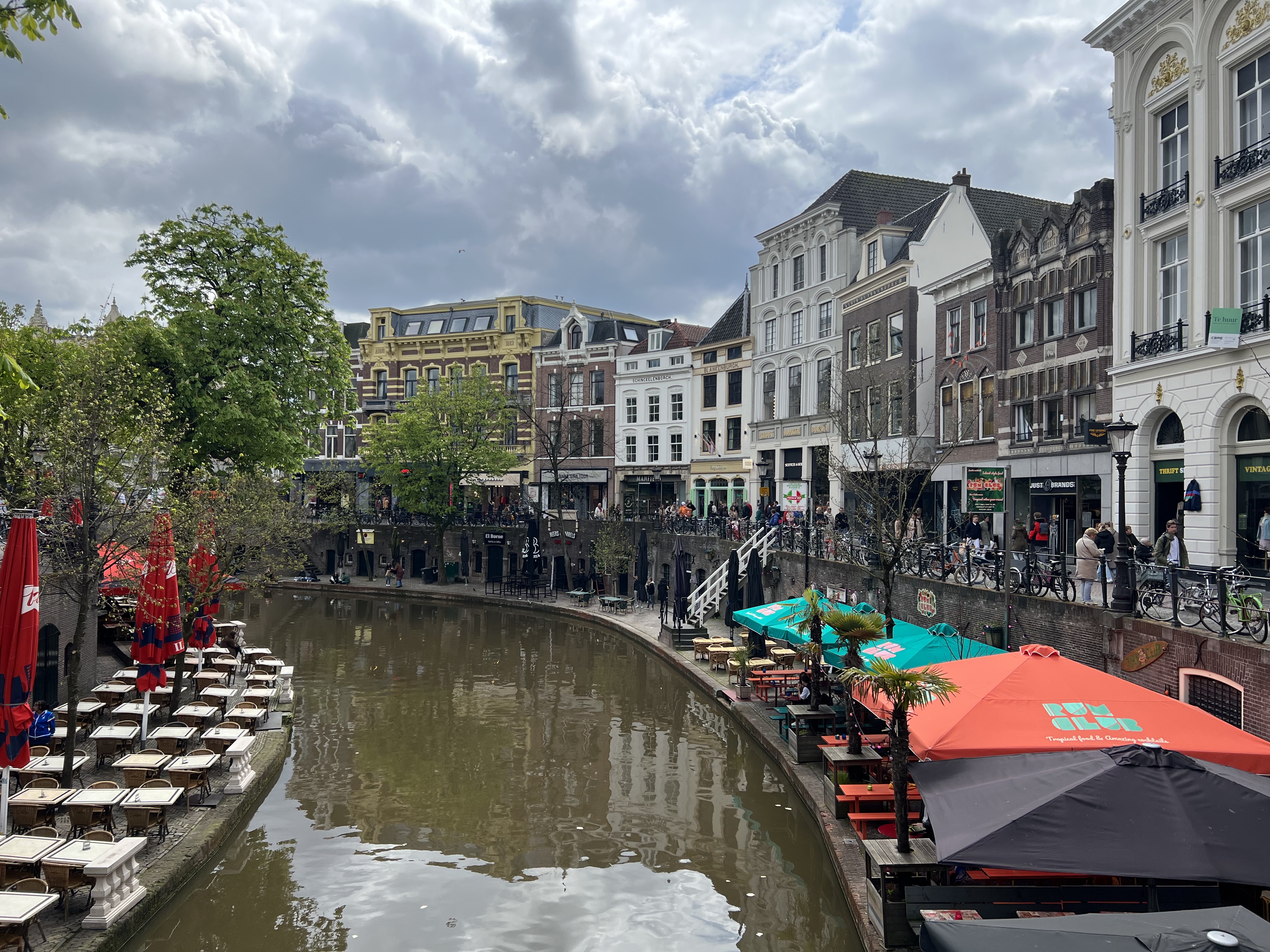
The canal in Utrecht, before the party
We decided to skip the planned bike ride in the park, since it was cold and rather bleak out. So we drove to Utrecht, a university town (and the fourth largest city in the Netherlands) that dates back to the ancient Romans. We wandered the beautiful canals, admired the houses dating back to 1300 and watched the 21st century inhabitants set up their stalls for the biggest party of the year – King’s Day, tomorrow, April 27, the birthday of King Willem-Alexander and apparently a day when the whole country goes berserk, wears orange (for the Princes of Orange), and loses its collective mind. In Utrecht they apparently start a day early, explained one young mother laying out her old clothes for sale. But despite the main squares being filled with huge beer pavilions and tents and stages of unknown purpose, we were charmed by the medieval winding streets, the busy street side restaurants – all filled not with tourists (like ourselves) but with locals out enjoying their city. The average age seemed to be about 21, no doubt because of the university, so it felt vibrant and fun. We loved Utrecht and would have loved to spent more time there. Next time…
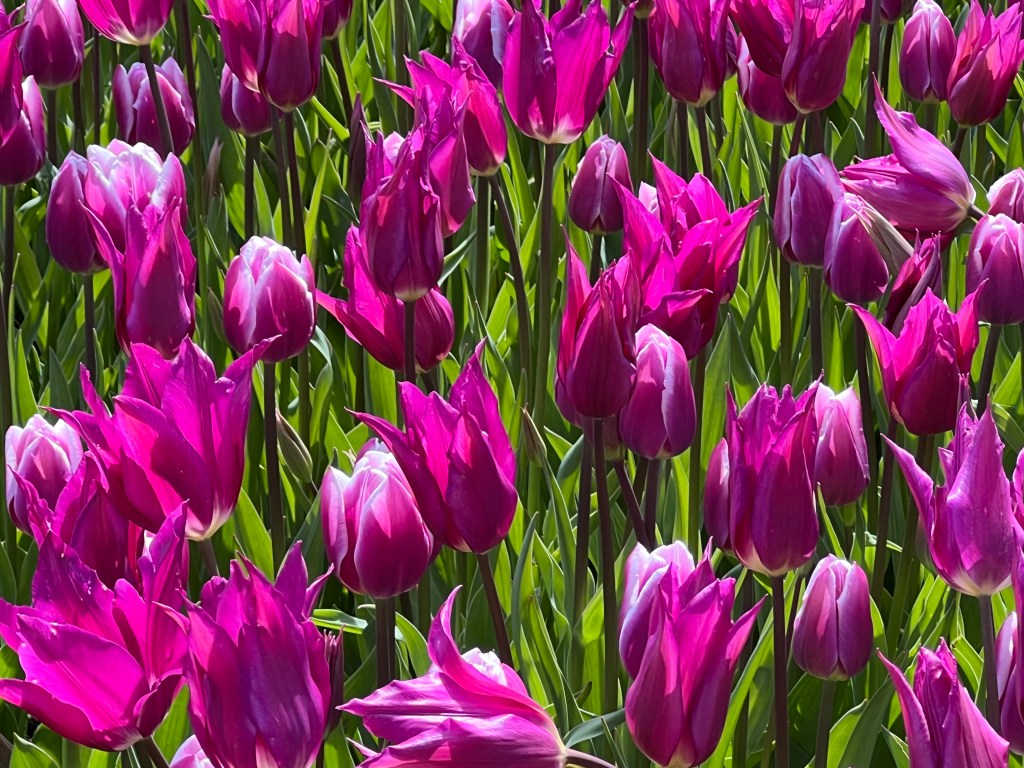
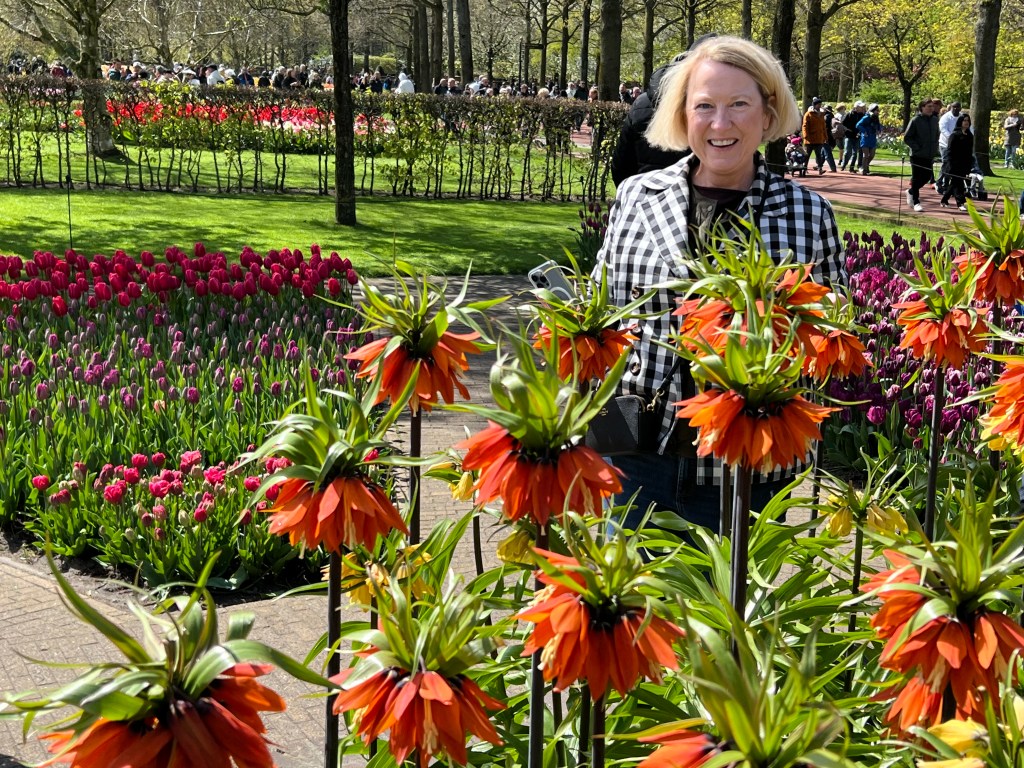
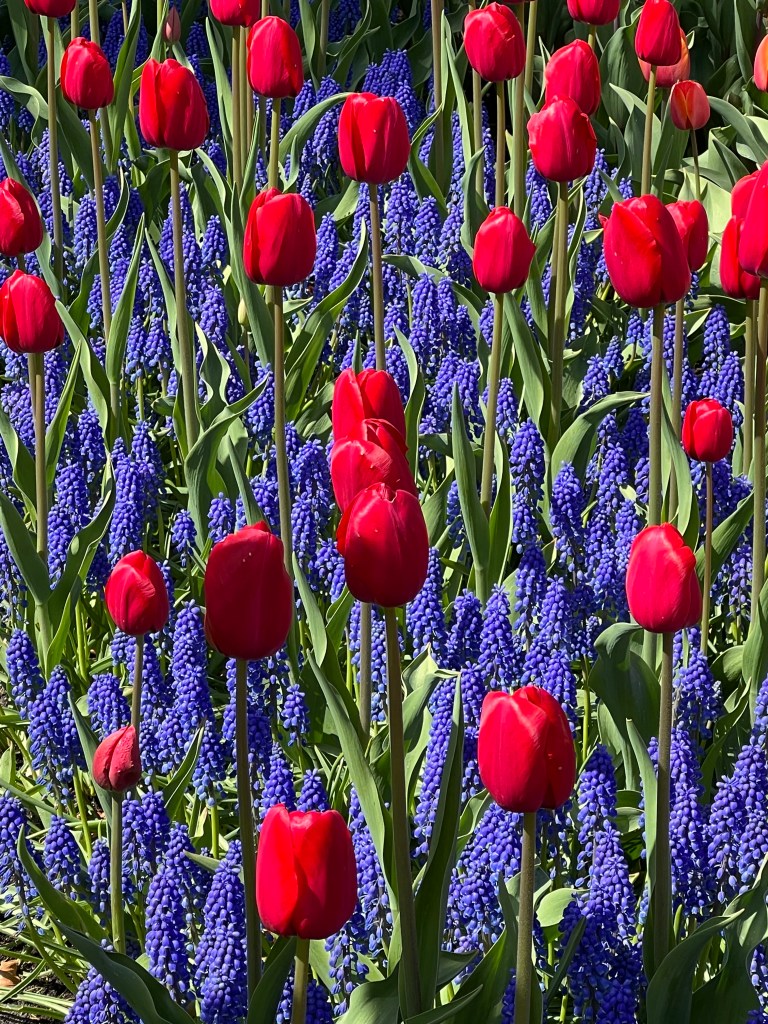
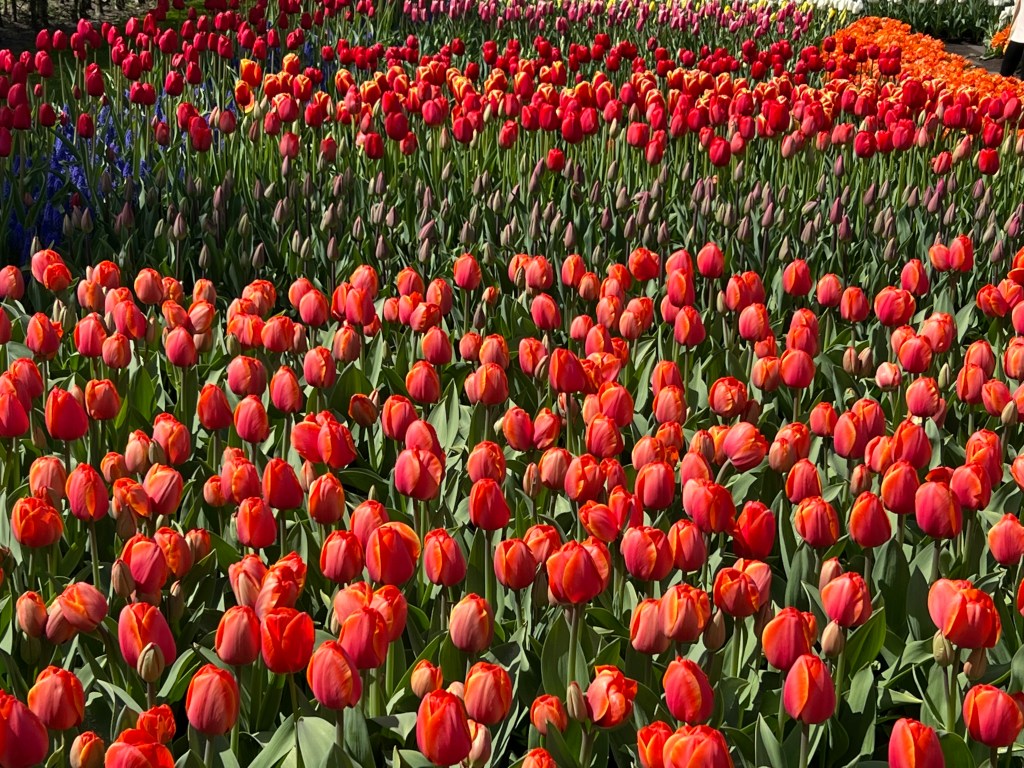
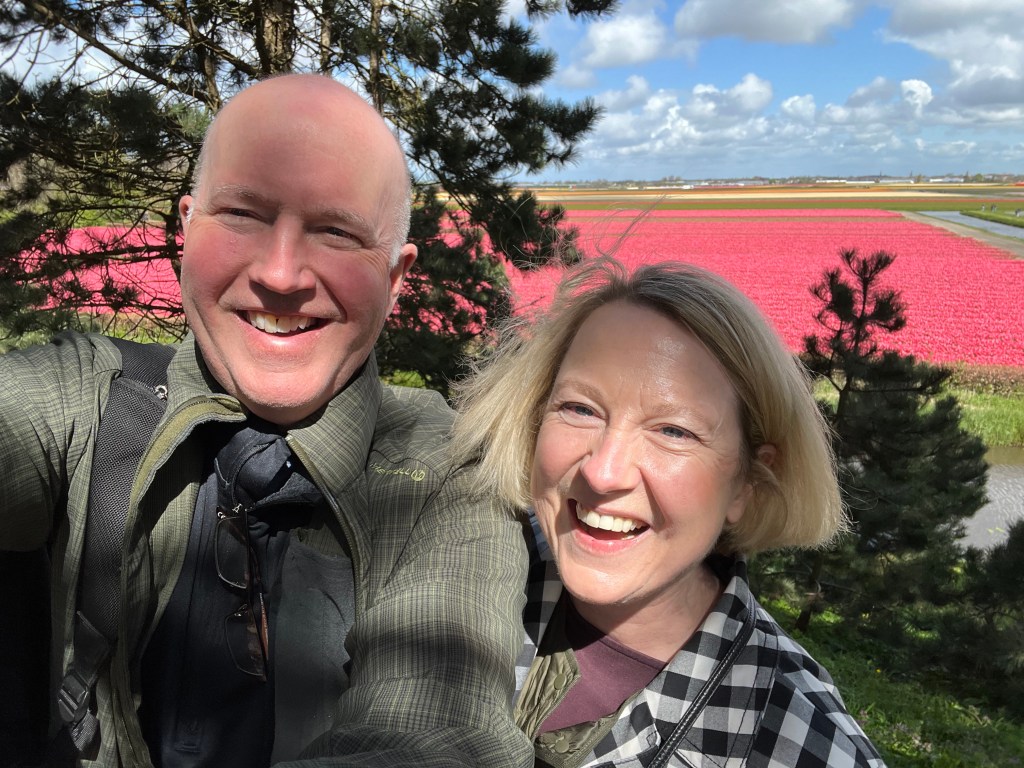
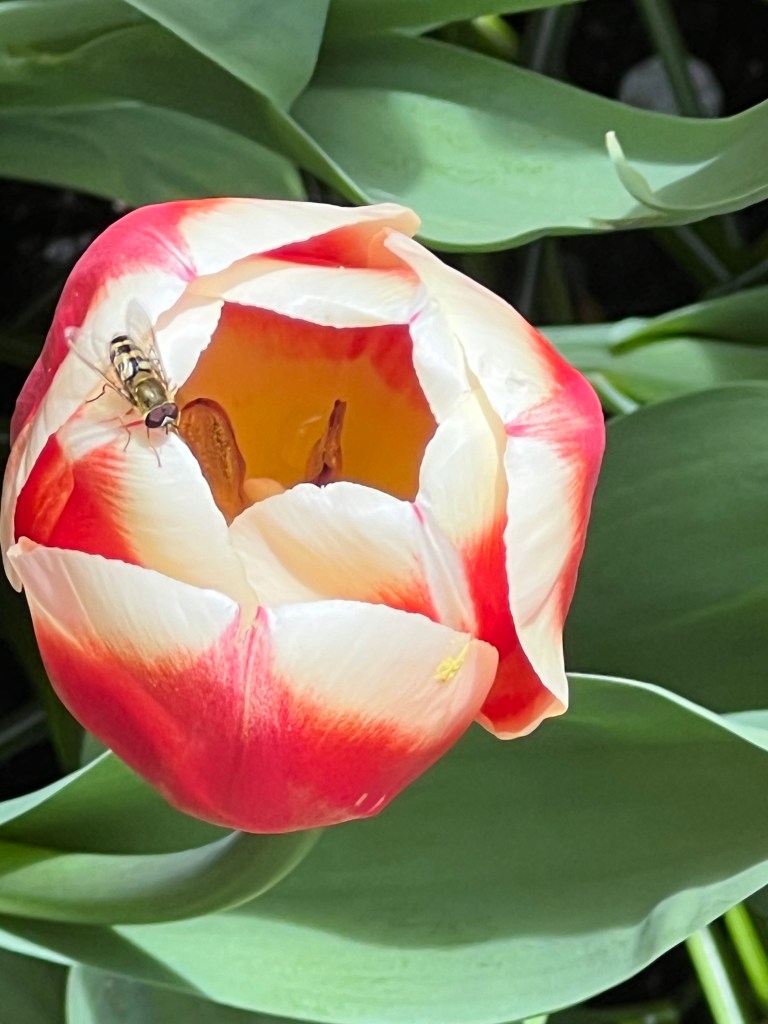
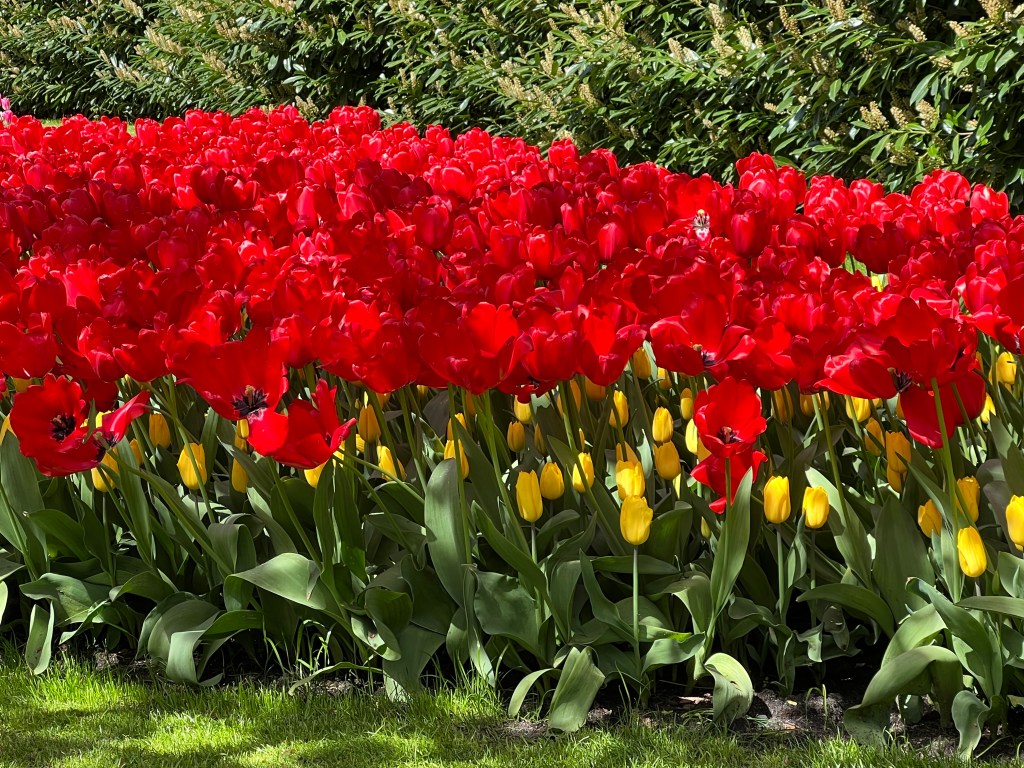
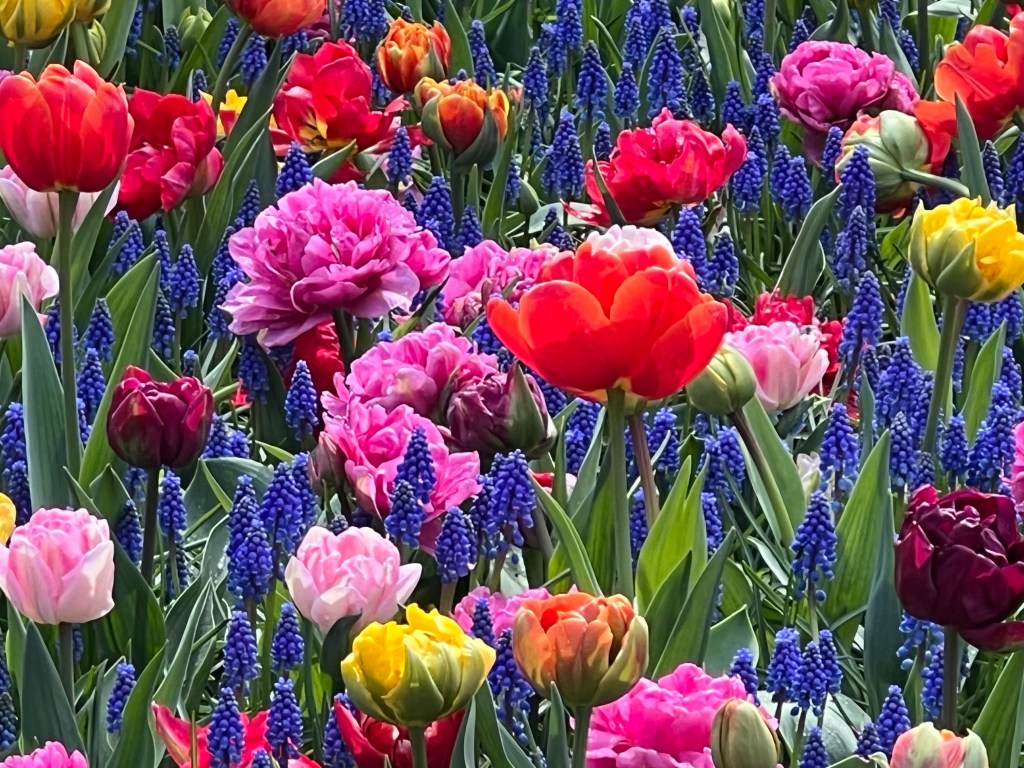
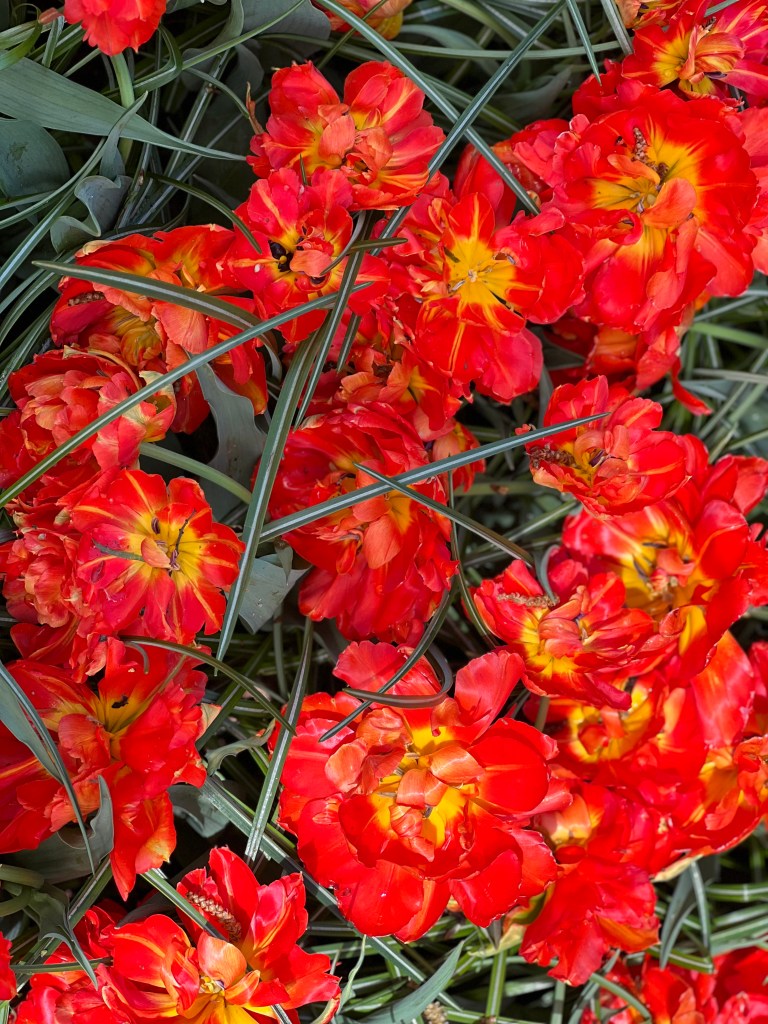
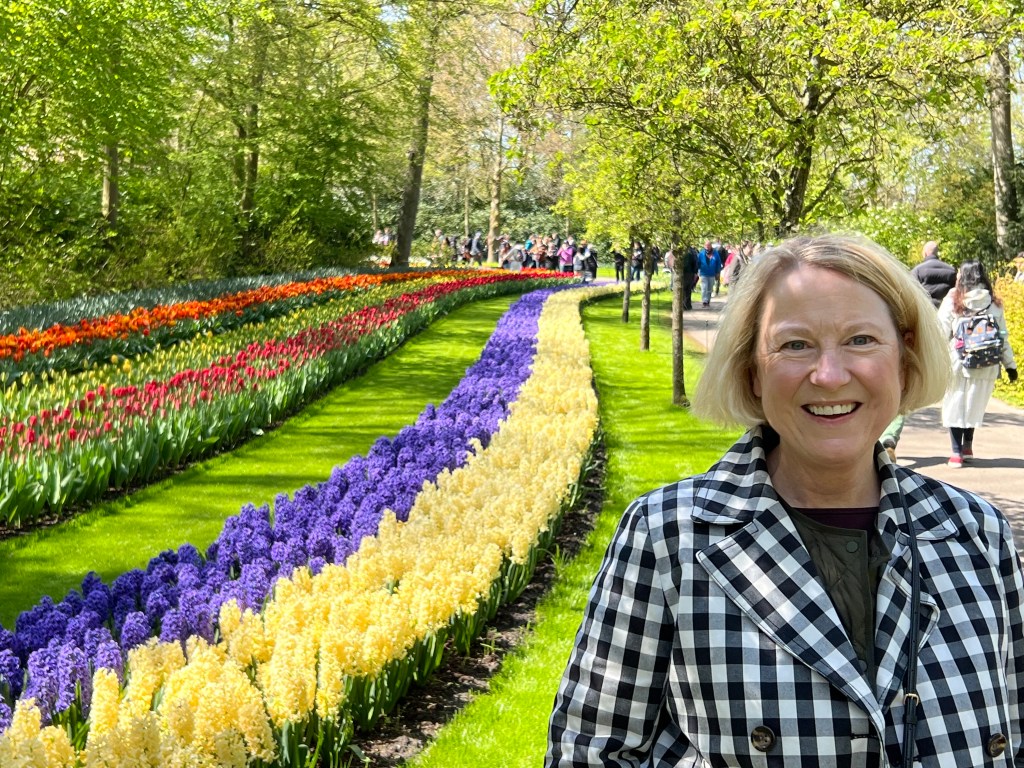
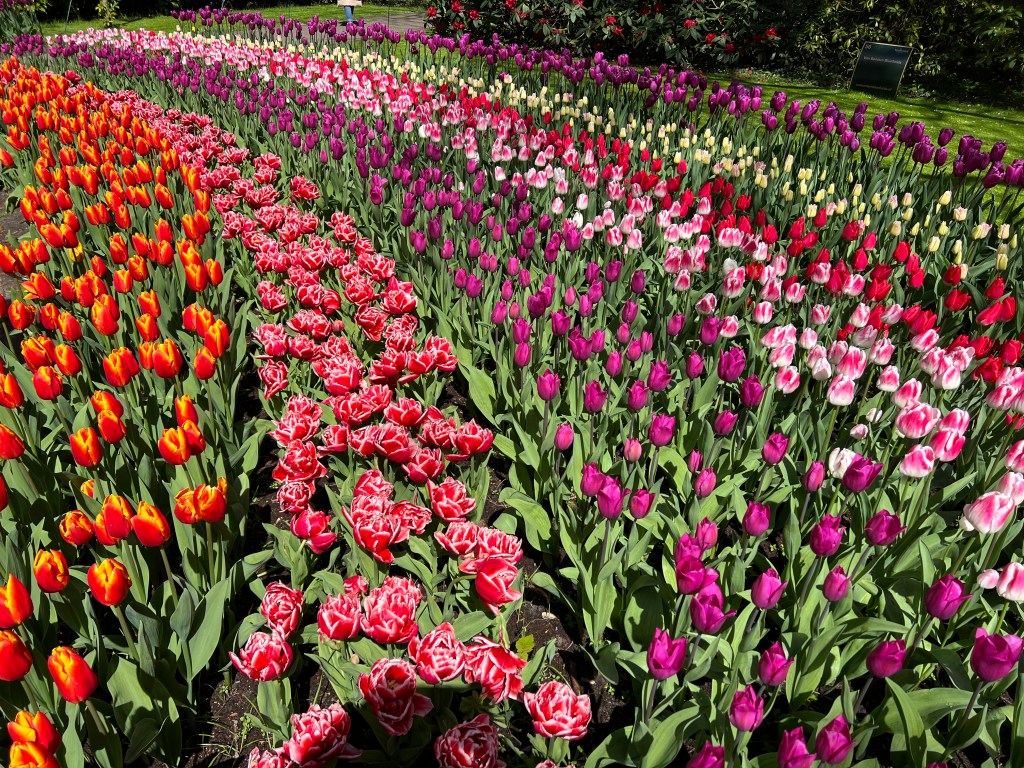
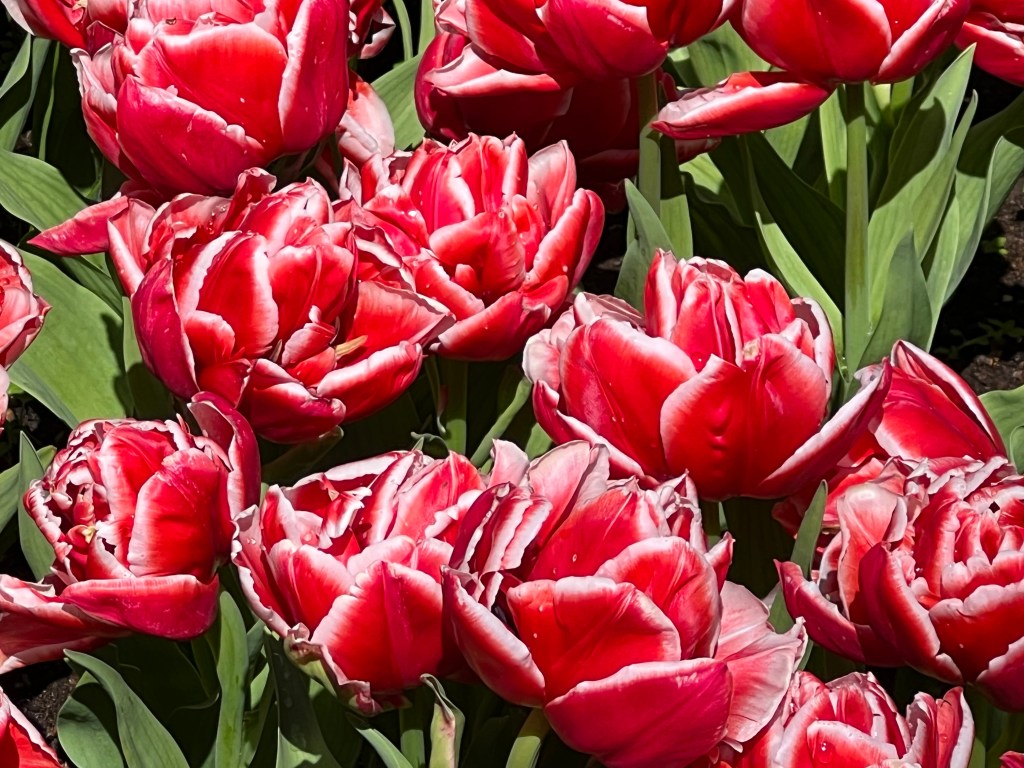
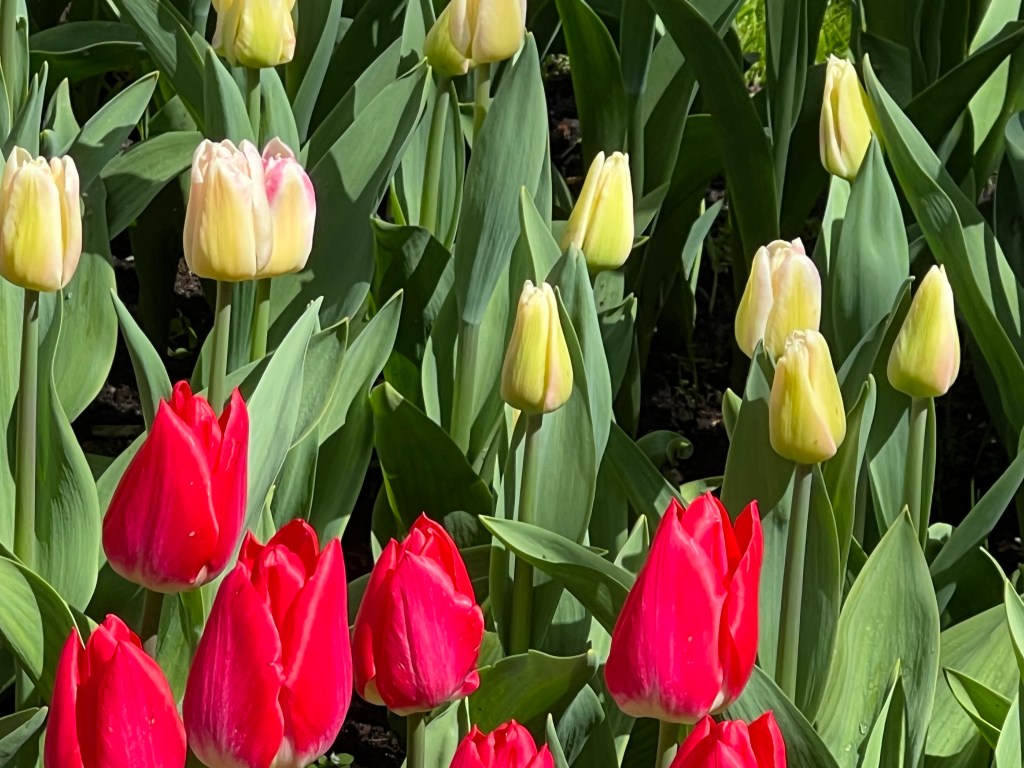
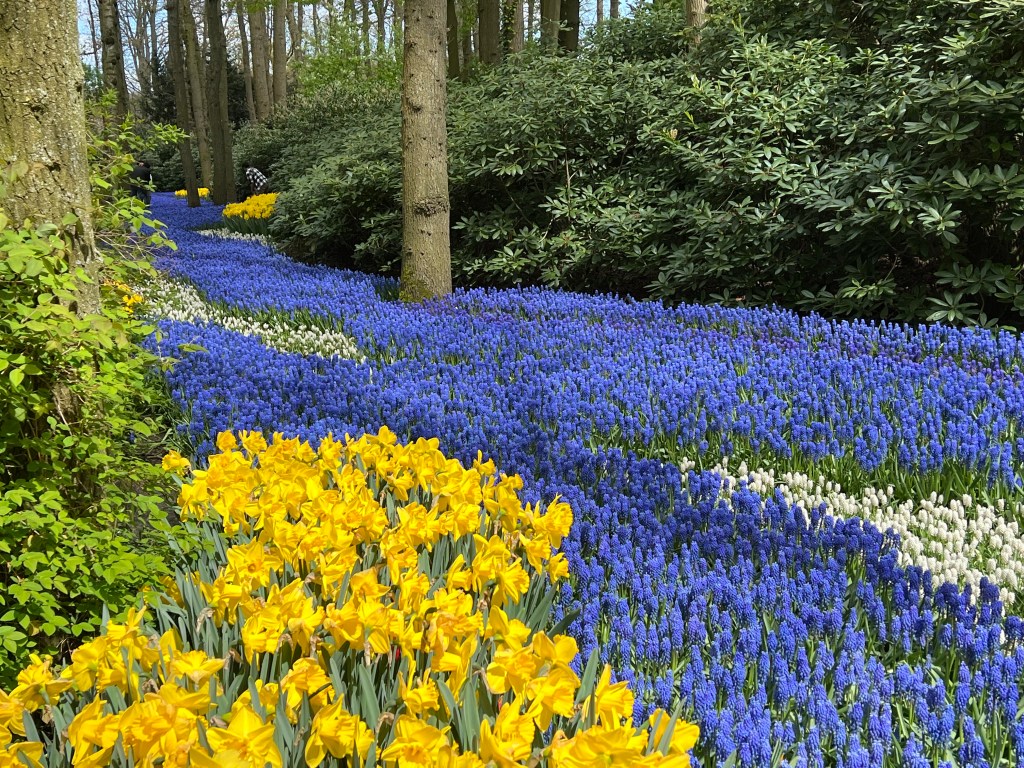
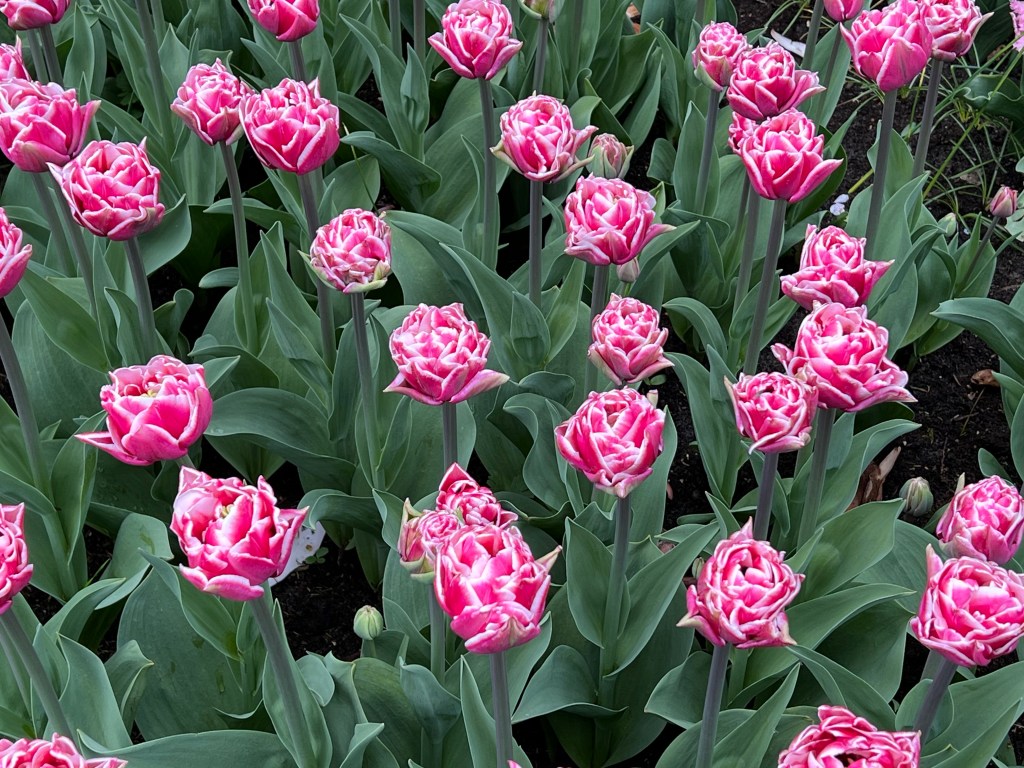
Tuesday, April 25, 2023, AMSTERDAM, The Netherlands — Today we and about thirty-five thousand of our tulip-loving friends, visited Keukenof, known as the Garden of Europe, and without a doubt the most stunning flower garden we have ever seen.
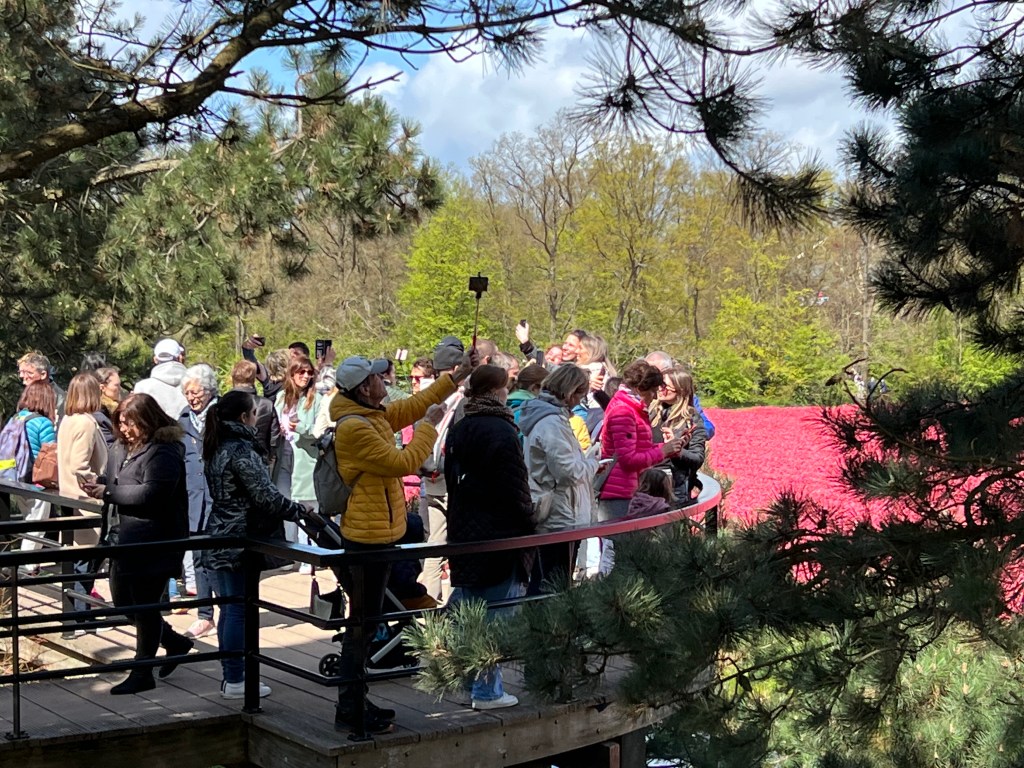
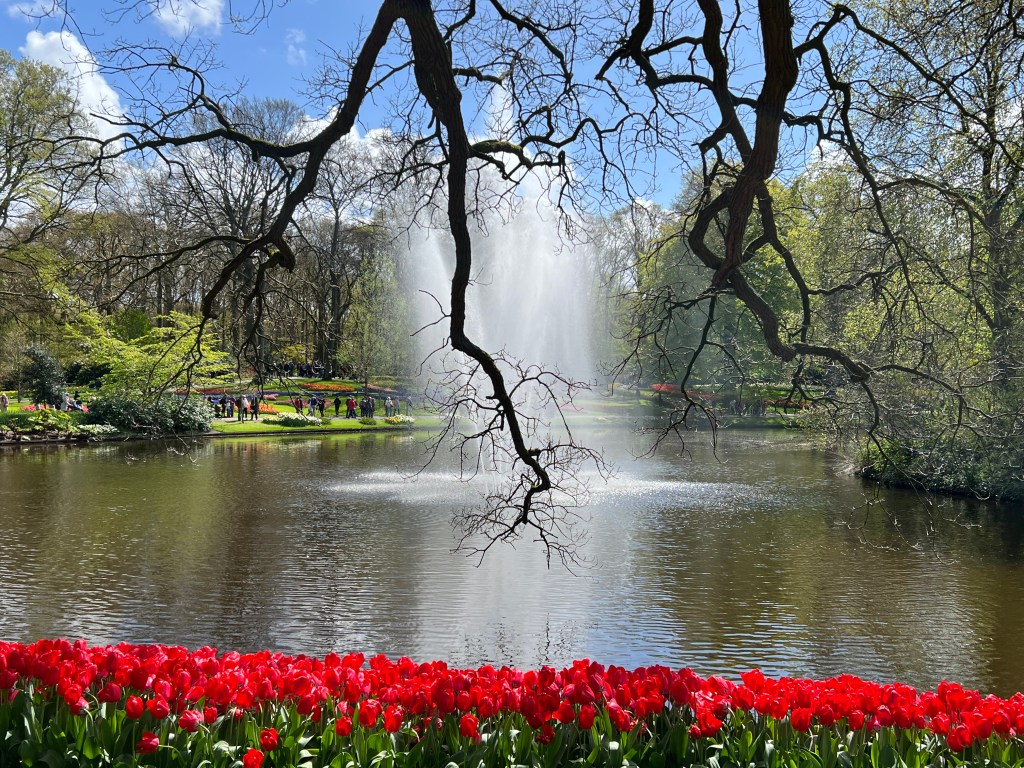
On a cool, windy late April day, with brief rain squalls drifting past every half hour or so, Keukenof was at its peak. The traffic getting to the garden was like a University of Oregon football game, backing up the final few miles, until we were directed to one of the last spots in the almost-full parking lot, partially packed with RVs. Just inside, the garden had a big-game feel as well, with excited people packed shoulder to shoulder on narrow paths surrounded by colorful beds of tulips, daffodils and other flowers. Everything about the experience was surprising–the size of the crowds, the extent of the 75-acre plus garden, the surreal beauty of the flowers.
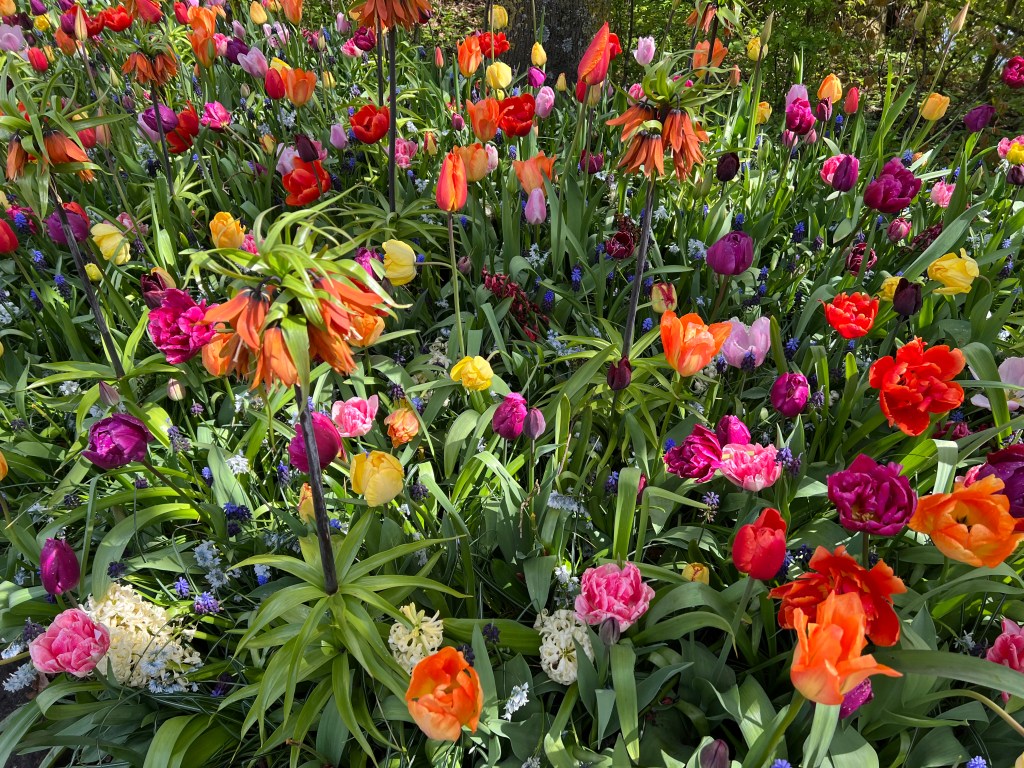
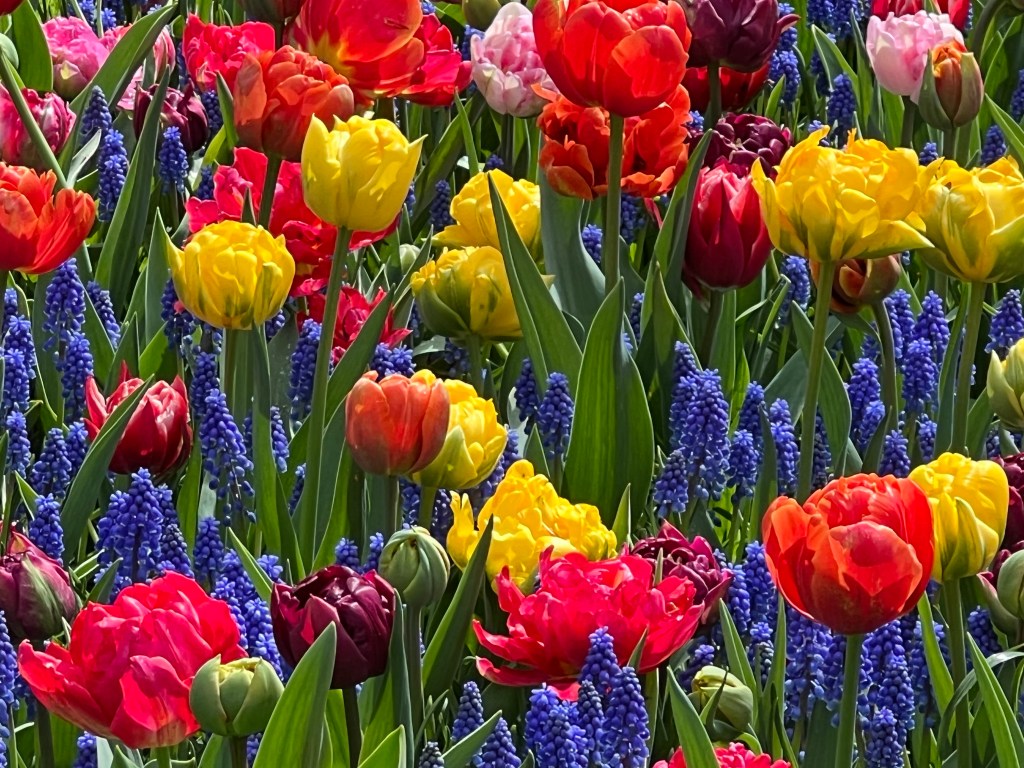
Keukenof’s 40-some gardeners plant seven million tulip bulbs every fall, layering them three-deep in beds so that new flowers come up during the short run when the garden is packed every spring, drawing one and a half million visitors in just six weeks. The garden once belonged to the inhabitants of a nearby castle, but now it’s an international tourist destination. It’s hugely popular with Germans, Americans, Italians, and the Dutch, of course, but we overheard people speaking many other languages.
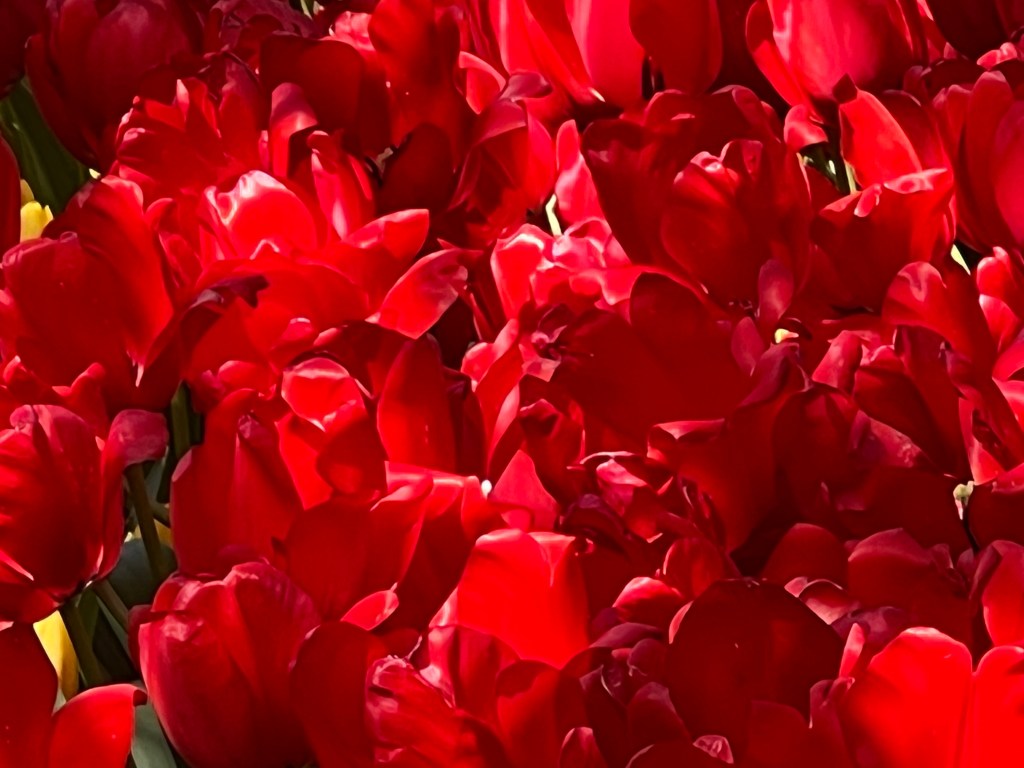
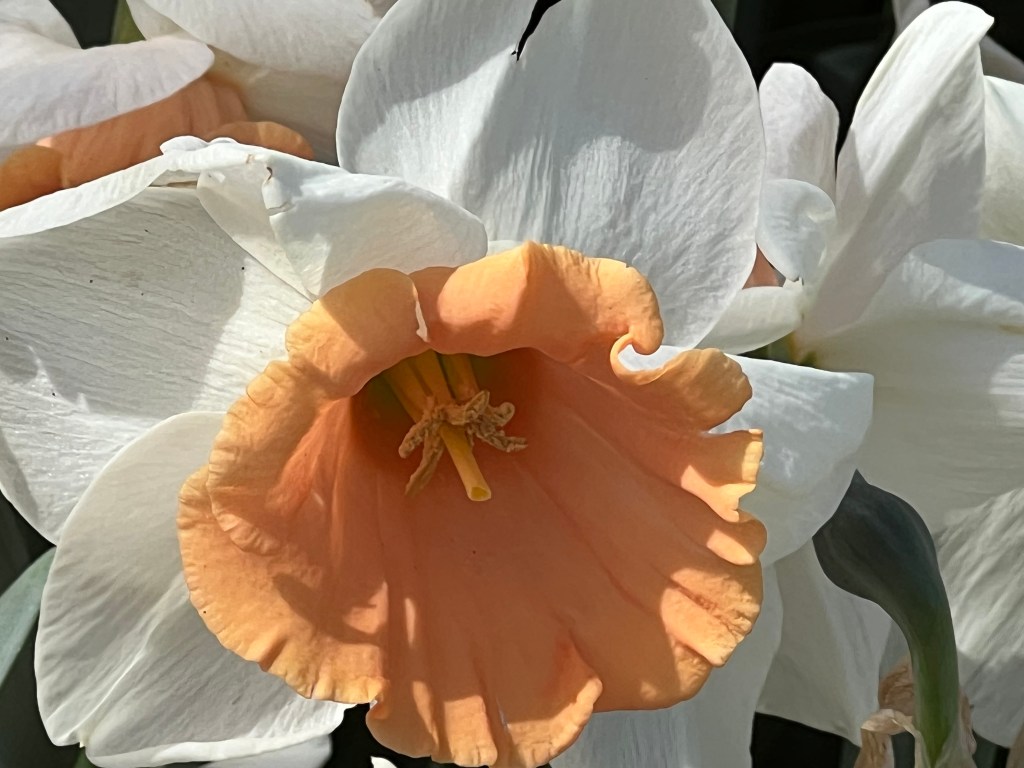
We probably heard the word “beautiful” in two dozen different languages. The garden featured ponds and a windmill that was whipping in the wind, pavilions filled with flower displays, hundreds of beds of purple, red, and yellow, or often, a rich mix of colors and flowers, and just outside the park, off in the distance, across hundreds of acres of fields, long rows of tulips grown for their bulbs. The colors were flat out amazing. You can see many of them in the slide show above. Even with the crowds, and everyone blocking the paths trying to take selfies and group photos, the garden was spectacular. Several times, Courtenay and I came around a corner, or emerged from a sea of people, saw another sweeping bed of colorful, perfect flowers, and simultaneously gasped the same thing.
Monday, April 24, 2023 – AMSTERDAM, The Netherlands – We arrived in Amsterdam early this morning after our overnight flight, but only one of us managed to get any sleep. So we faced a looooong day of staying awake until we could check in to our hotel this afternoon. It wasn’t a problem for me, since I was the one who catnapped across Greenland and Iceland, but poor Rick was dragging, though rather cheerfully, I must admit. We dropped our bags at our hotel and set out for Rembrandt’s house, a grand house in his day, the place where he lived and painted for nearly two decades before debts and overspending drove him to much humbler quarters and a pauper’s grave somewhere in the floor of the Westerkerk. So we devoted our day, this first day of our art tour of Netherlandish and Flemish art, to Rembrandt.
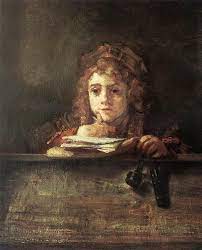
Rembrandt’s painting of his son, Titus, at his desk
Rembrandt was just 33 and a successful painter when he moved into the house in 1639. The red-shuttered building has been restored and furnished using a list of his personal property sold when he was forced out at the age of 52. It was very crowded when we arrived, so we didn’t linger in the small, crowded rooms and tight spiral staircases. For me, the two highlights were a small drawing of a canal and boats he had made as he himself wandered the streets of Amsterdam, and a gorgeous, pensive portrait of his son, Titus van Rijn, at a desk with writing paper and implements. The dark background, and the lovely touches of an earthy red (the color, it turns out of the ceiling of the Oude Kerk, the oldest church in the city dating back to the 12th century), brought life and poignancy to the portrait of his young son, who was to die before Rembrandt. His drawing of the boat, set alongside drawings made by Rembrandt’s contemporaries, was by far the most beautiful, a calmness expressed in a few swirls of ink in the sky.
We escaped the crowds at the Rembrandthuis only to find that the only place you could escape the crowds in Amsterdam is to actually go into a church. Both the 13th-century Oude Kerk, “old church,” in the red light district, and the Nieuwe Kerk, in the Dam, or central square of the city, charge admission – so many tourists take a pass! The “new church” dates from 1409, when it was, in fact, new, and it is beautiful inside. It no longer serves as a church, but as an art exhibition space, as well as serving royal functions such as the inauguration site for the king of the Netherlands, Willem-Alexander, back in 2013. Right now, the building is hosting the World Press Photo Exhibition 2023, honoring the best news photography in the world last year. We thought of our friend Elizabeth Dalziel, a photographer who has spent a lot of time in war zones. Much of the photography was painful – haunting images of the war in Ukraine, suffering in Myanmar, a 15-year-old from Afghanistan who had sold his kidney for $3,500 to the U.S. to help his family survive. But there were also photos of great hope, including of a young woman in Tehran, head uncovered, ankles peeking out between her jeans and her shoes, in a courageous act of defiance against the laws forcing women to cover themselves completely. There was also a wall remembering all the journalists killed since 1992 – a staggering number of names on a stark black slate rising high up against the gothic windows of the church. You can explore the winners at their website: https://www.worldpressphoto.org/collection/photo-contest/2023/Ahmad-Halabisaz/1
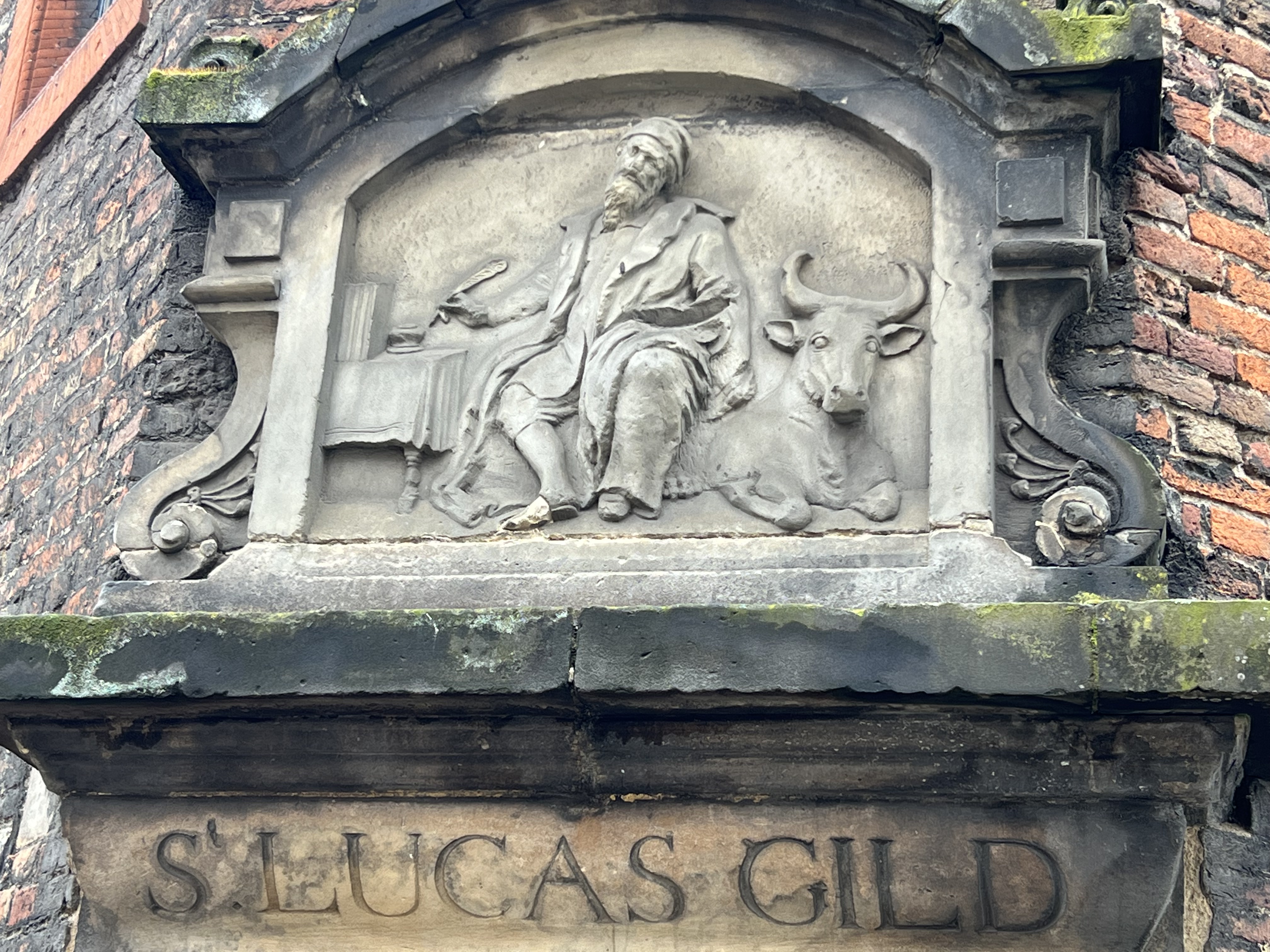
St. Luke, the patron saint of painters, over the entrance to the painter’s guild in the canal district.
After that, we needed some air. We wandered in the footsteps of Rembrandt, past the house in the canal district where he bought his paints, past the entrance to the painter’s guild where he belonged – the guild of St. Luke, the patron saint of painters, in the old gate house where Rembrandt painted his famous portrait of a doctor doing an autopsy on a criminal’s cadaver. Though it was a showery, cold day with a blustery wind, we managed to stay dry. The streets were crowded with tourists, speaking so many languages, and it was difficult to walk – you had to be on guard for the trucks, and the cars, and the bikes, and the garbage that seemed to be everywhere.
We finished our walk at Anne Frank’s house. We didn’t go in – tickets are sold out for days. I had gone years ago, and Rick decided he would honor her by reading her diary before our trip, rather than trying to see her last home and hiding place, which attracts thousands of visitors a year. He was moved, and depressed, by her diary – the senselessness of her murder, and that of millions of others in the Holocaust. The evil. The capacity of humans to harm one another, and the innocent. Like the photographs we saw earlier in the day. The only possible redemption was the power of this young woman’s words, like that of the power of the young Iranian woman’s courage, to stand as witness that the human spirit is strong, and very very beautiful.
We finally were able to check in, and Rick took a nap before dinner. We need to gather our strength for Vincent Van Gogh tomorrow – we have tickets for a 9 a.m. entry and then will (hopefully) spend the afternoon biking through the tulip fields outside the city!
Postscript: We had an absolutely lovely dinner at our hotel, in a window seat overlooking a canal. The cherry blossoms were in full bloom, and the wind turned the terrace outside into a pink snowstorm of blossoms. We are staying in a hotel out from the center, and we are glad to be away from the craziness of central Amsterdam. We loved being in an actual neighborhood, and we spent dinner watching the people walking their dogs along the canal, groups of women sculling on the canal, an occasional runner. We watched two men work for nearly two hours trying to get an old beat-up boat to start. They were still working when we finished dinner and went out to join the others walking the canal.
One other postscript: Portland Trail Blazers head coach Chauncy Billups was on our flight this morning. I speculated maybe he wanted to catch the Vermeer show too, but Rick said their general manager was at the Amsterdam airport when we arrived. Rick and Mitchell were abuzz with excitement that he might be trying to recruit some French superstar, or someone else unknown. Perhaps Coach Billups will also make time for Vermeer on his way home. I hope so.












 The Thompson Attigs