
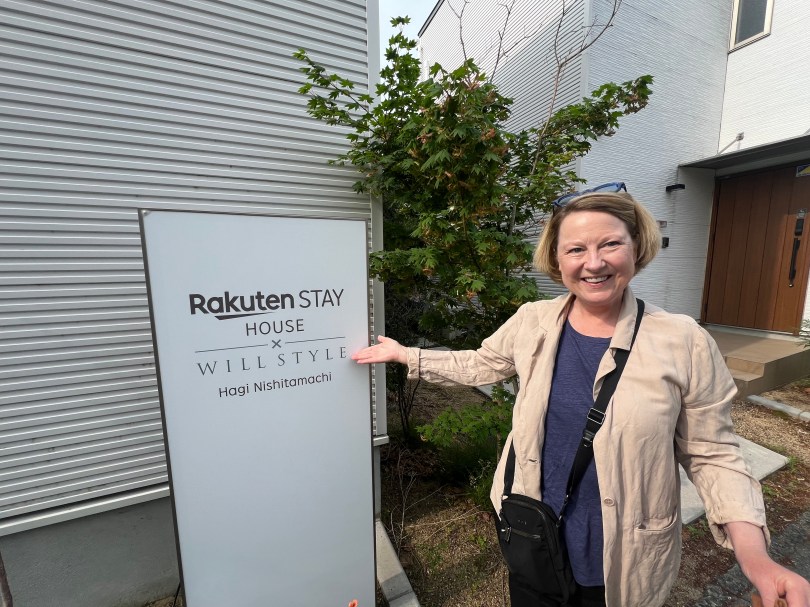
May 20 and 21, 2025—HAGI, JAPAN – We rolled into the historic town of Hagi after a longish drive from Shimonoseki, a short detour over the graceful Tsunoshima Bridge, and a side-trip inland to the Shuhodo Cave and the rocky, treeless Akiyoshi karst plain. We checked into a two-story apartment in a residential area, across the street from a school where a youth baseball team was having practice, the coaches hitting crisp ground balls to the fielders in the all-dirt diamond.
We walked to dinner at Hagi Samurai, a nine-seat counter restaurant that specializes in okonomiyaki, the savory Japanese pancakes loaded with seafood that Will likes so much. At the Hagi Samurai, the Hiroshima chef wears a traditional “samurai” topknot, or chon mage, where the center of his head is shaved and the dark hair on the sides is oiled and smooth. This description may make the restaurant and its chef sound more exciting than it actually was. In fact, the restaurant was strangely decorated in a mash-up samurai/baseball theme, the samurai guy was a bit strange, we shared the counter with only one other diner, and the okonomiyaki was laden with mayo and sort of mushy.
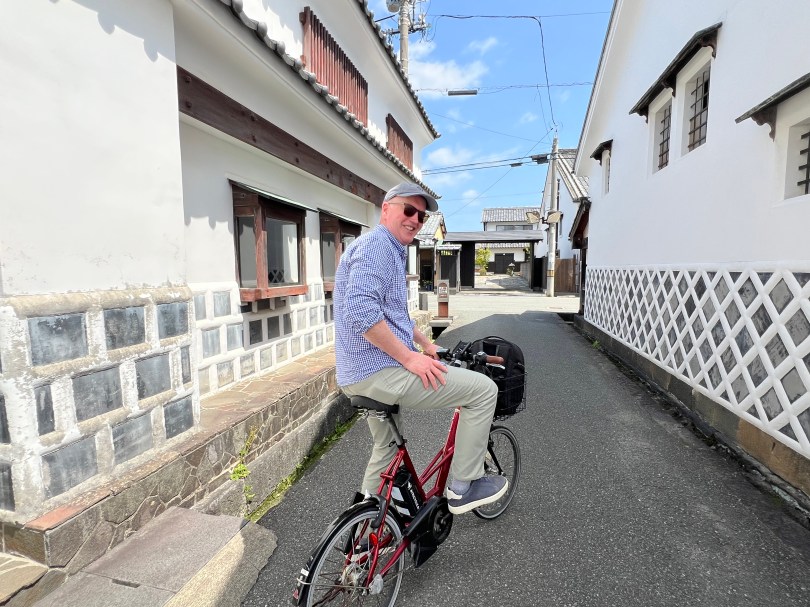
We woke up early the next day, as we have this entire trip, which was fortunate because it was by far the warmest and most humid day of our vacation. It was already pushing 80 by the time we had downloaded the apps and figured out how to rent electric bikes from the bikeshare, CogiCogi. Neither one of us had ever ridden electric bikes before, and there were no instructions, at least none in English.
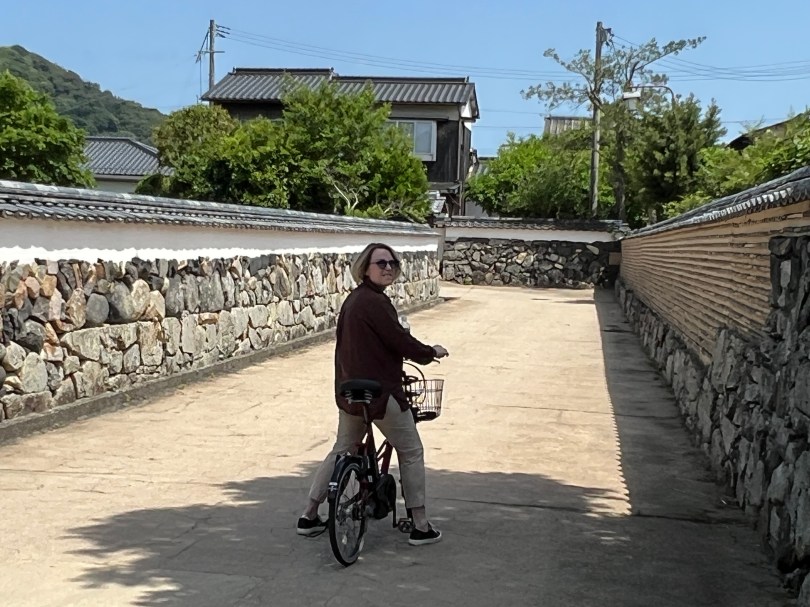
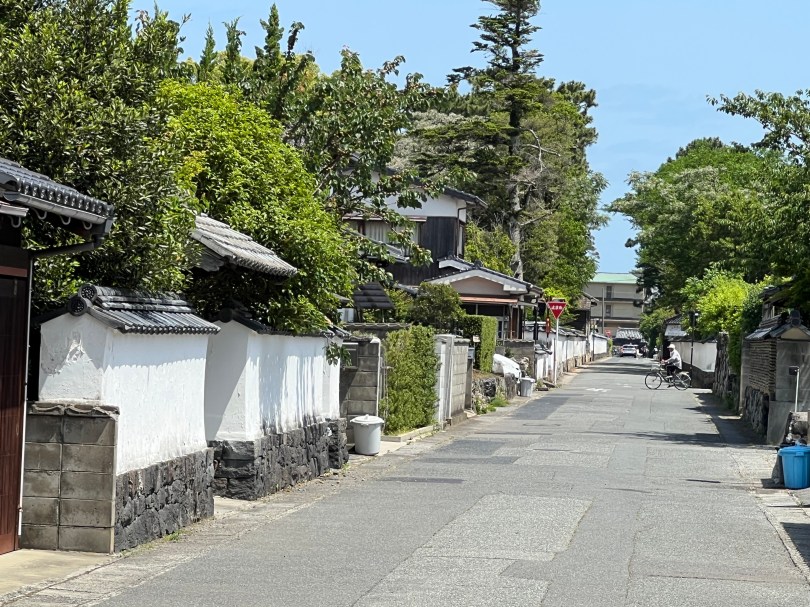
We started off at a brisk clip, although my bike had an annoying clanking sound. I was feeling pretty confident as we cruised into Hagi’s historic samurai neighborhood. It’s a surprisingly large samurai district, we are used to visiting towns with only a few blocks of historic buildings, but the thick walls and beautiful samurai houses in Hagi go on and on. The black tile and white plaster of the earthen walls was a symbol of prestige and wealth. These walls, with their distinctive crisscross pattern of tile and plaster, are called namako-kabe, or “sea-cucumber wall. Perhaps I was distracted by this remarkable history, and/or just clueless about electric bikes, but as I was following Courtenay around one sharp corner my CogiCogi bike suddenly accelerated with a thump into the back wall of one of the traditional samurai houses. There were no injuries, to rider or historic home. The good news is that it fixed the clanking sound on my bike.
To gather ourselves, we stopped for a Hagi pudding, and I had a cool, refreshing citrus flavor that the town is famous for.
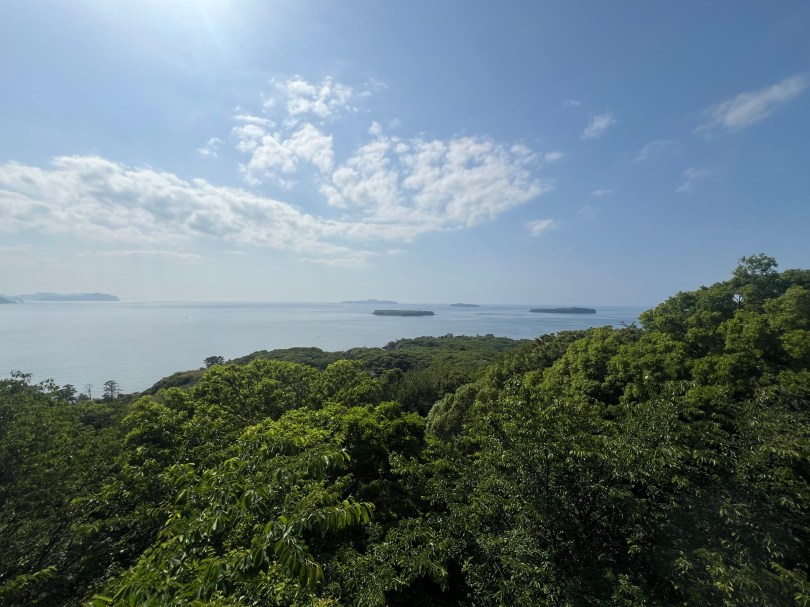
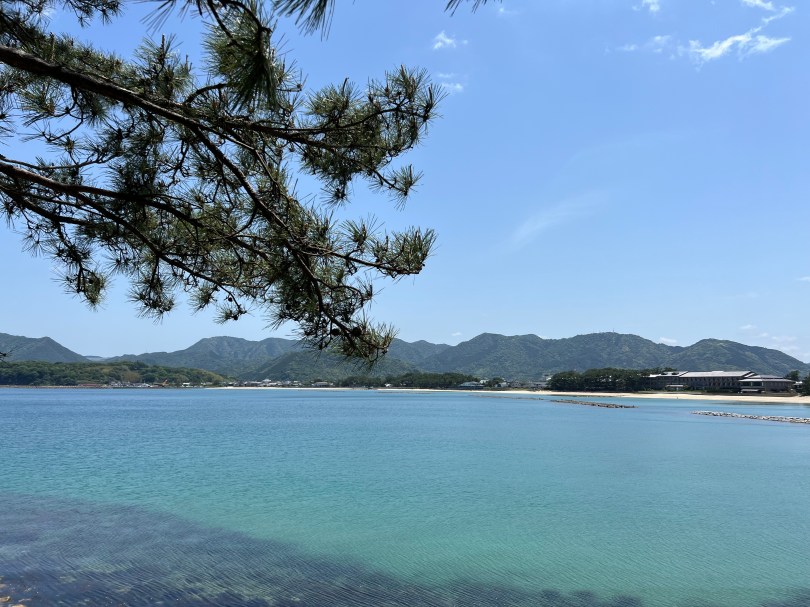
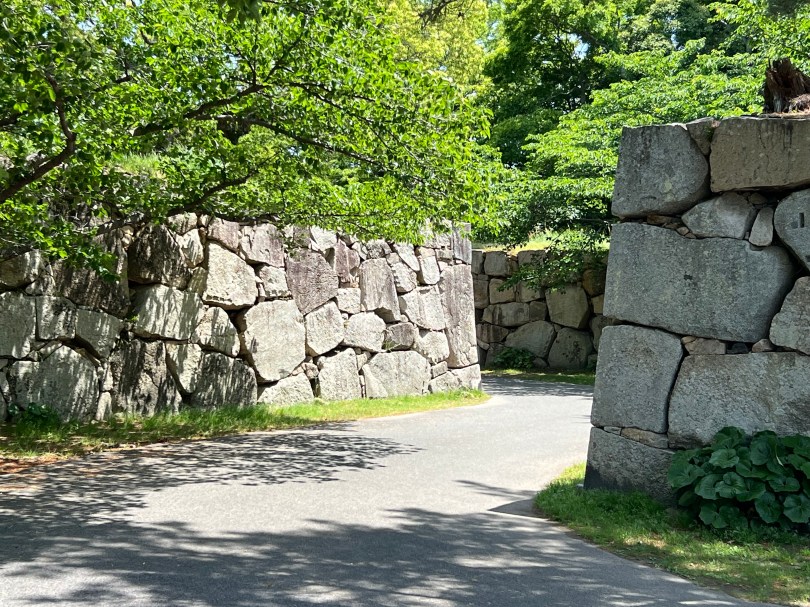
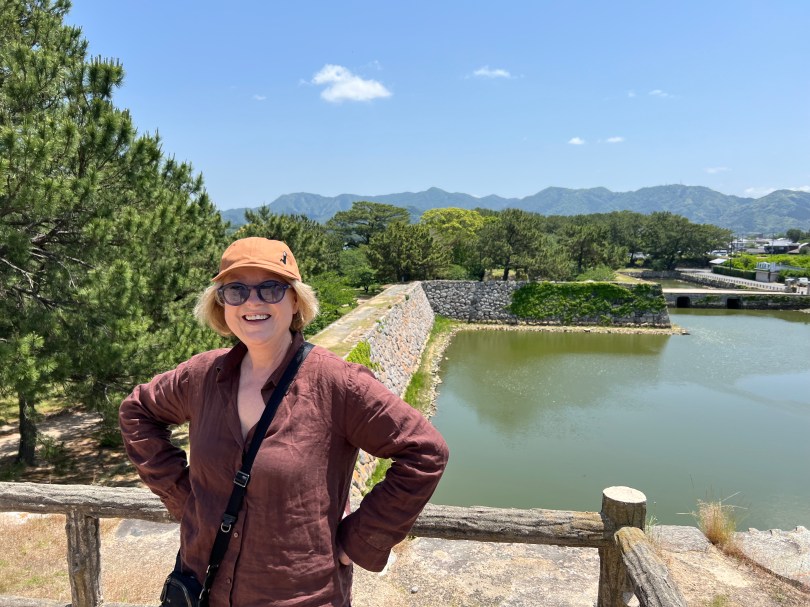
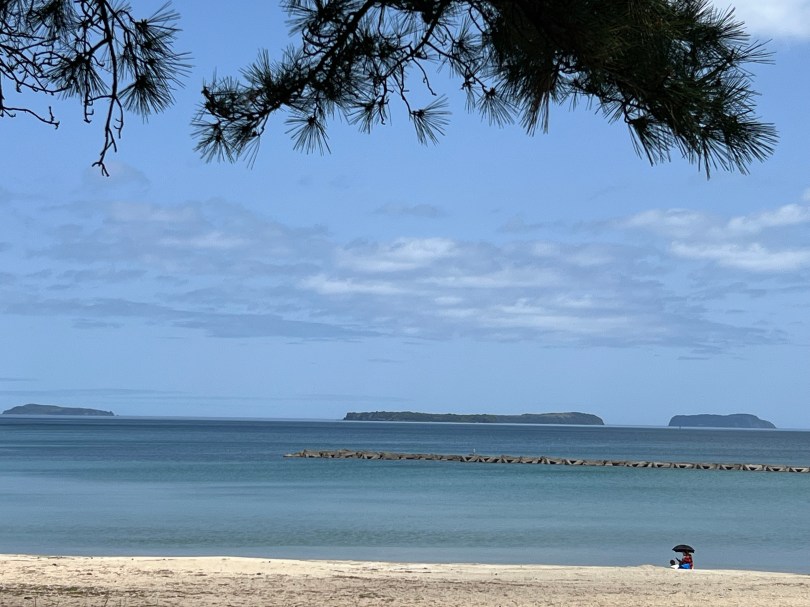
We rode on to the Hagi castle ruins, past a beautiful curved inland beach, where a few people were out and sunning at the water’s edge. There’s not much left of the Hagi castle ruins, just the stone foundation and low walls along the protective waterways. After lunch, where I had a Wagyu beef hamburger plate, it was so hot that we rode back to the apartment and exchanged the bikes for the rental car. We rode about twenty minutes to a well-known ceramics outlet, a cooperative where many artists display and sell their works. We bought a couple Hagi-style pieces, and on the way back, drove up Mount Kasayama for 360-degree views around Hagi and its coastline, which is dotted with islands.
We were really looking forward to dinner. Courtenay had found the restaurant on line. It was described as a tiny, hard-to-find place run by a couple in their 80s, who served omakase meals, which means the chef determines what is served each night. It sounded amazing. The restaurant was somewhat hard to find, but an old woman met us outside what looked like a garage and led us up a short flight of creaky stairs. There was a strong smell of cat urine. The restaurant has only four seats, with two of them set for us. We would be their only diners. It was quite possibly the oldest, most cluttered, perhaps least appetizing, place that we have ever eaten. However, the old couple was so welcoming, almost overwhelmingly so, and thrilled that Courtenay spoke and understood some Japanese. The old chef plied us with questions, wanting to know where we were from, why we were there, what we did for work, how long we had been married, while his shyer wife stayed in the background, preparing soup and taking away the chef’s used pans. I missed most of the conversation, but heard enough to understand that at one point the chef said I looked “like a movie star, but with a round, bald head.”
The chef got more and more animated, and eventually his wife joined in. He sat down next to me and began paging through a notebook filled with messages from foreigners who had come to Kokura, and had apparently fell for the same online descriptions that we had, with diners from Norway and Australia and Italy and Romania and many other countries. His wife helpfully noted that “No one in Hagi eats here.” The chef told us very excitedly that a “FBI SWAT team member” had visited, and he spent ten minutes fishing in his wife’s purse and looking around the cluttered kitchen before he found what he was searching for: a suspiciously fake looking “SWAT” badge that he proudly showed us. He was extremely excited after Courtenay told him that we were writers, and insisted that I write in his memory book. Like everyone else who had left a message in the book, I wrote how great his restaurant was, how much we had enjoyed the food, and what an unforgettable night we had experienced there. Some of that was true.
Somewhat surprisingly, we felt fine the next morning. Before leaving Hagi, we drove to the Aiba Waterway, a peaceful collection of homes constructed in the early 18th century for transporting rice and firewood. Fat and colorful Koi swam in the waterways around the beautiful houses, and we bought two tiny sake cups at a pottery store to bring home to remember our time in Hagi.



 The Thompson Attigs