SHIMONOSEKI, Japan — May 18, 2025 — We spent today exploring this deeply historic city on the edge of the Kanmon Strait, which over the centuries has been the site of some of Japan’s most legendary naval battles, and now is busy with shipping and fishing vessels.
It was a beautiful Sunday, and it seemed like everyone in the city — multigenerational families, young couples pushing strollers, packs of teenagers — were relaxing and picnicking along the waterfront. We started our day among the cannons and statues lining Mimosusogawa Park, the narrow pinch point in the Kanmon Strait, and where many fierce naval battles and bombardments have taken place over the years, including the famous 12th century battle that launched the age of samurai rule. (Our hotel room looked out on two island where the victors, under Minamoto warrior Yoshitsune, hid before defeating the Heike and their child-emperor.)
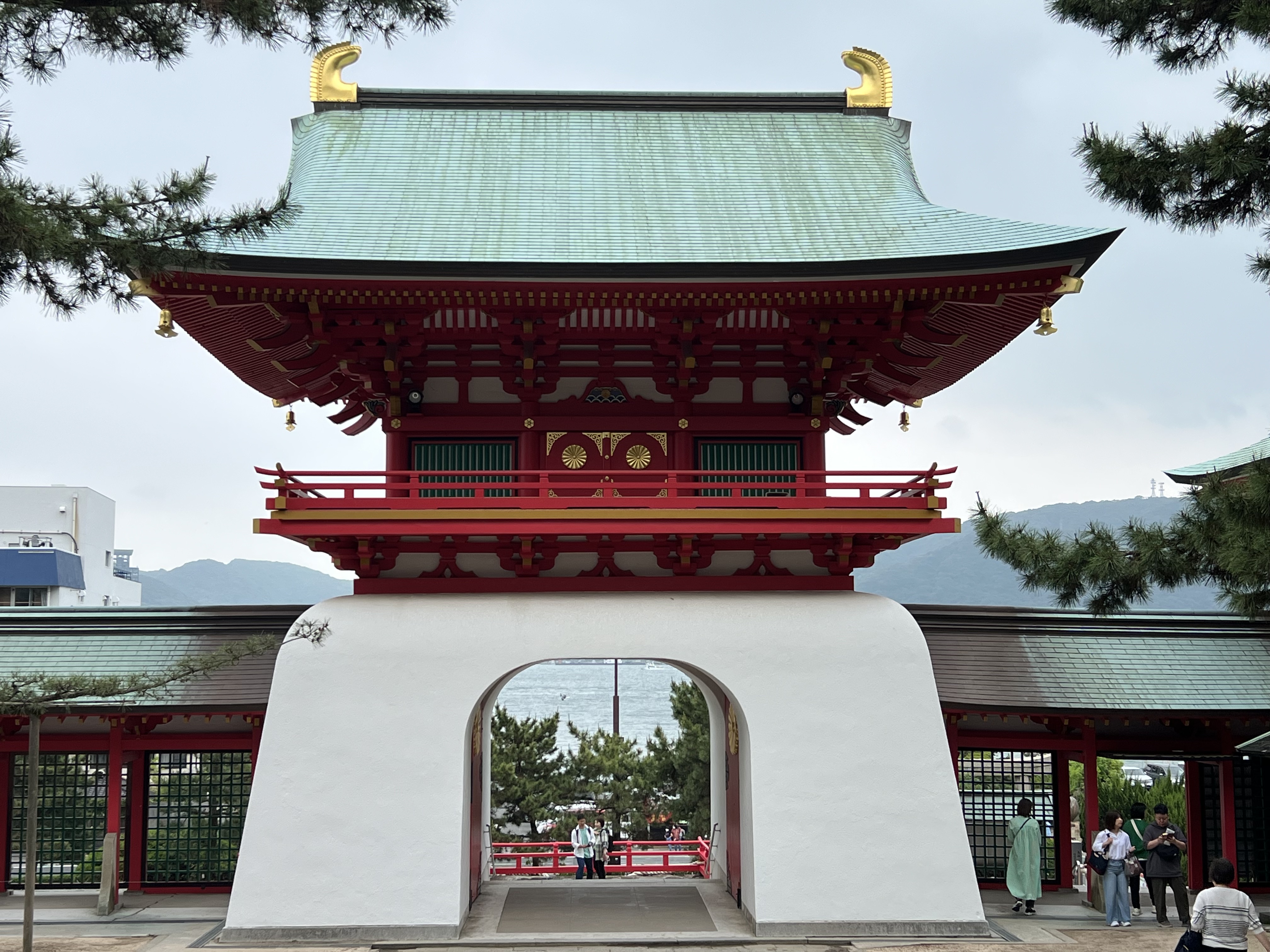
We walked on to Akama-Jingu, a shrine dedicated to a child emperor who was killed in the battle of Dannoura, in the churning strait, along with his grandmother, who saw how the battle was turning and jumped into the sea to perish with him. The story of the Heike became one of the epics of Japanese literature, its stories reverberating down the centuries. As we climbed the steps to Akama-Jingu, we came upon a wedding party posing for pictures, the blue-green waters of the Kanmon in front of the them, the bright red-orange shrine behind. We also saw the small and moving shrine to a blind Biwa-player named Houichi, who legend says lost his ears to the ghosts of the Heike.
From there, we strolled through a Sunday outdoor arts and crafts tent market, a nice scene with music and kids running all over the place, and past the Karato Seafood Market, which seemed like the epicenter of Shimonoseki life, absolutely jammed with locals. We weren’t hungry yet, but we would return later to pick up fresh sushi and join the people sitting and eating along the strait.
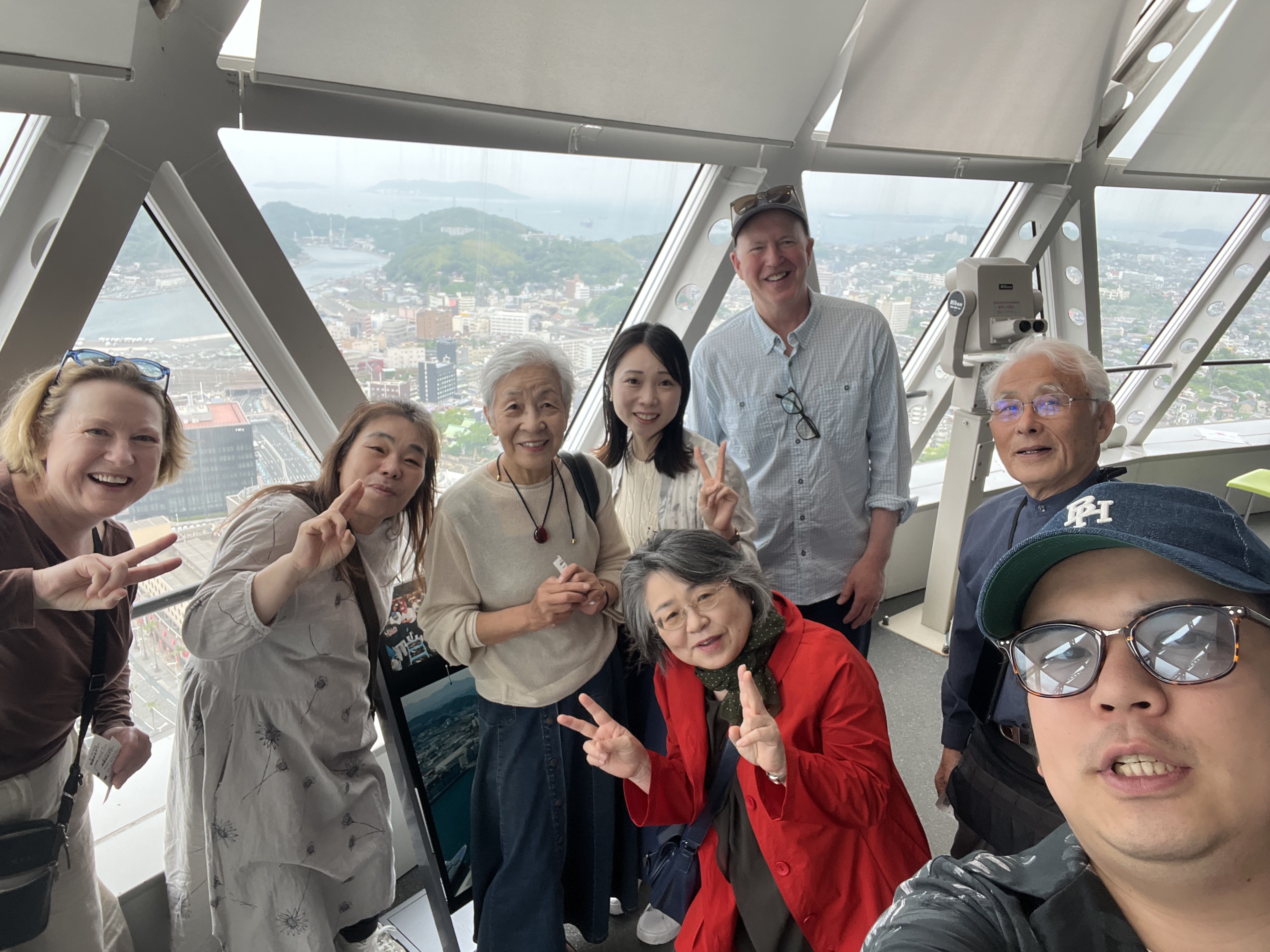
We went from the fish market to the Kaikyo-yume Tower, a 30-story-high observation tower that rises over Shimonoseki and offers a bird’s-eye view of the city, the islands and rugged nearby mountains, and the Sea of Japan in the distance. We wanted to take a bus to the tower, but were unsure about the routes and bus numbers. Courtenay asked some waiting passengers for advice, and it turned out that they, too, were headed for the tower, and that quick, we had new friends and travel partners. They were three generations of family, there to spend the weekend together. They were so friendly and welcoming, full of questions about us, and they guided us onto the bus and up to the tower, eager to show and tell us about Shimonoseki. The patriarch, who had attended twice-weekly English lessons for years, had spent his life here, and worked in construction management; he proudly told us that his company had been involved in inspecting the very tower that we were ascending. It was great fun, meeting and talking and posing for pictures with them. As we parted, they offered us gifts of fugu-themed rice crackers. (Everything is fugu-themed here – fugu, or the potentially poisonous puffer fish – is the local mascot and appears on everything from mail boxes to sewer covers. It also makes for a mean sashimi – just make sure you don’t try it at home – it has to be prepared by someone who knows what they are doing to avoid fatal consequences. BTW, we survived.)
We spent the afternoon in Shimonoseki’s Chofu Castle Town District, which is studded with shrines, abandoned temples, and samurai-era streets lined with stone walls and beautifully preserved homes. We started at the Iminomiya Shrine, where Courtenay had read might be celebrating a rabbit-themed spring festival today, which sounded like it might be a sweet scene. However, it turned out that the shrine was holding nothing more than a flea market, and a bit of a shabby one at that. (Courtenay thinks Rick is being overly harsh here, given the depth of his disappointment over the rabbits. It was just a regular flea market with dial-up phones, old clothes, some crafts.)

If the rabbit festival was a bust, the rest of Chofu Castle Town was actually quite cool. We wandered through the Chofu Mori Residence, a stunning house where the Emperor Meiji once stayed. We also walked up into the Kozanji Temple, one of the oldest temples constructed in the Zen-style in Japan and a designated national treasurer. I was wearing down after so much walking, but we came up on the Dangu Kawa River, more of a creek, I would say, where the town and its residents have restored the waterway and been trying to bring back the fireflies that were once common there. Courtenay asked me if I wanted to keep walking, and I said, sure, since the street we were on was “atmospheric and downhill,” which struck her as funny, and has since become something of a catchphrase on this trip.
We walked from the castle district on to the Chofu Garden, where we stopped to get our entry tickets and found the attendant absolutely sound asleep, and had to wake her to get our tickets. The garden, as you might expect, was quite peaceful. It was beautiful walking around a koi-filled pond while we heard the sounds of a pipe-player putting on a concert in a nearby building.
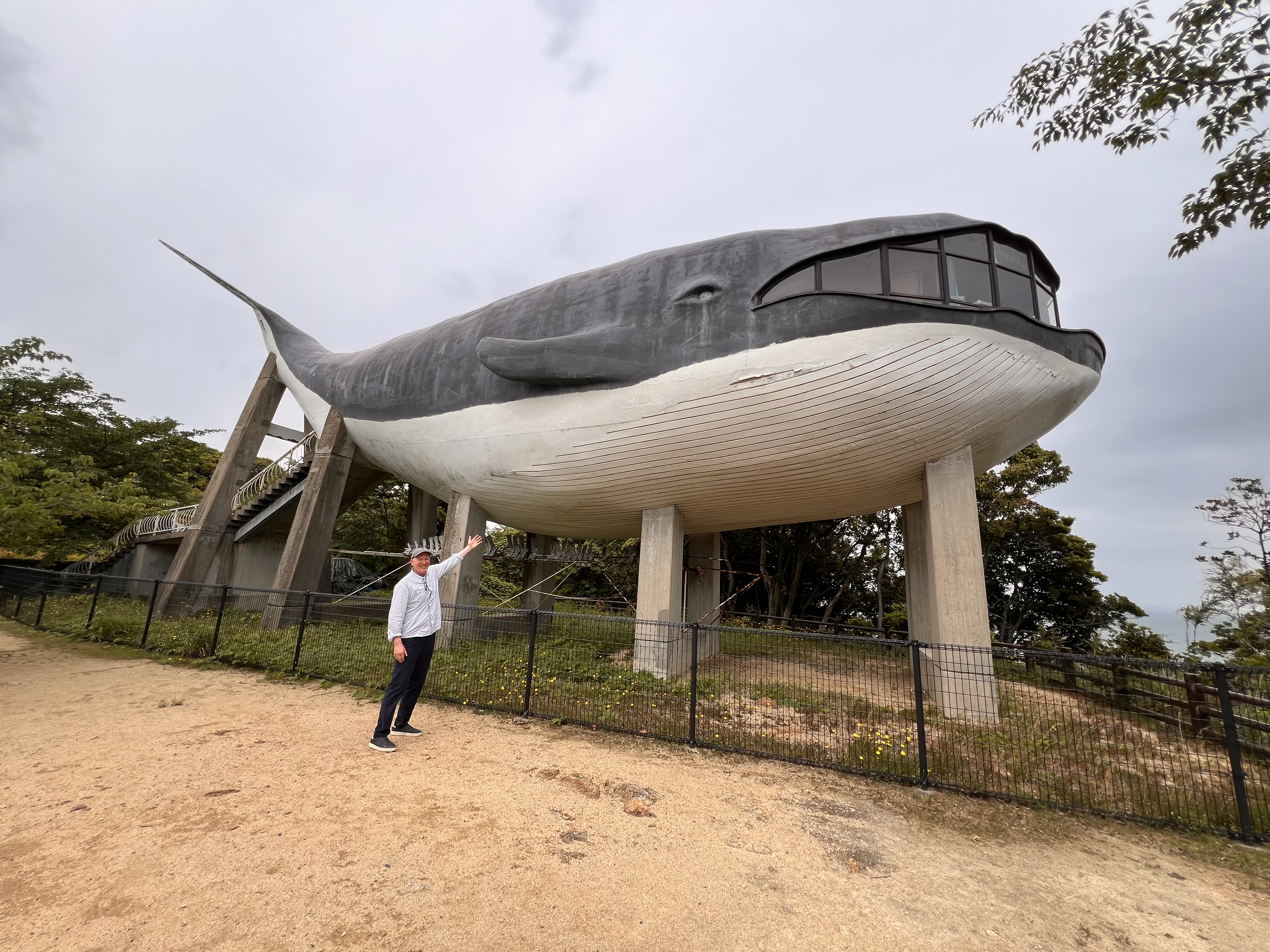
We finished our walk by climbing up to the ruins of the old Shimonoseki castle that overlooked our hotel. All that was left of the small castle that had once been here were some walls – the rest destroyed in the early 17century at the orders of the first Shogun Tokugawa Ieyasu, who wanted to limit the power of his provincial rivals. In fact, this part of the country is known for its independent, rebellious streak, resistant to control from the center. While Courtenay enjoyed the ruins, Rick was absolutely delighted by a giant decaying model of a great blue whale that once stood near the Shimonoseki Aquarium. The whale had seen better days and the aquarium apparently wanted to get rid of it, and so it dropped it on the hill by the ruined castle. I loved the whale; it reminded me of the cheesy Paul Bunyan and Babe the Blue Ox models at the Trees of Mystery, in Southern Oregon. — Rick
 The Thompson Attigs