CogiCogi: Crashing Hagi’s historic samurai district

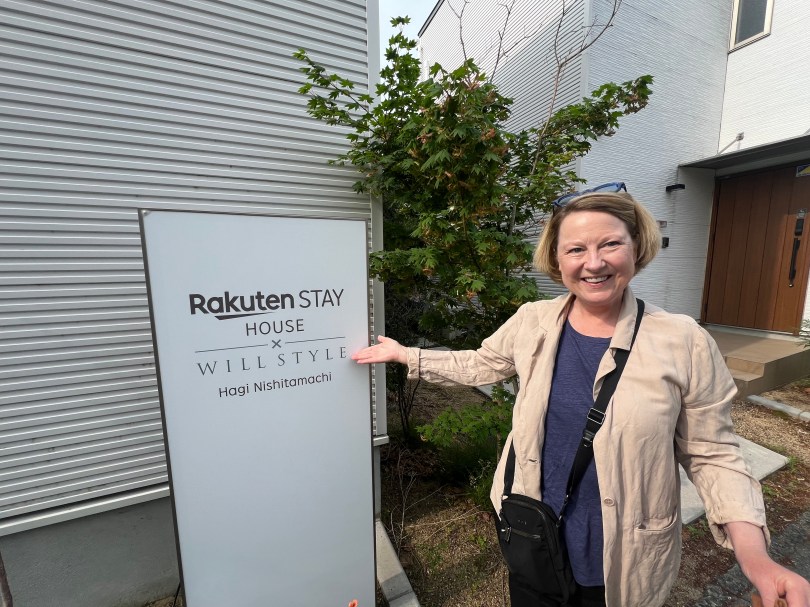
May 20 and 21, 2025—HAGI, JAPAN – We rolled into the historic town of Hagi after a longish drive from Shimonoseki, a short detour over the graceful Tsunoshima Bridge, and a side-trip inland to the Shuhodo Cave and the rocky, treeless Akiyoshi karst plain. We checked into a two-story apartment in a residential area, across the street from a school where a youth baseball team was having practice, the coaches hitting crisp ground balls to the fielders in the all-dirt diamond. 

We walked to dinner at Hagi Samurai, a nine-seat counter restaurant that specializes in okonomiyaki, the savory Japanese pancakes loaded with seafood that Will likes so much. At the Hagi Samurai, the Hiroshima chef wears a traditional “samurai” topknot, or chon mage, where the center of his head is shaved and the dark hair on the sides is oiled and smooth. This description may make the restaurant and its chef sound more exciting than it actually was. In fact, the restaurant was strangely decorated in a mash-up samurai/baseball theme, the samurai guy was a bit strange, we shared the counter with only one other diner, and the okonomiyaki was laden with mayo and sort of mushy.

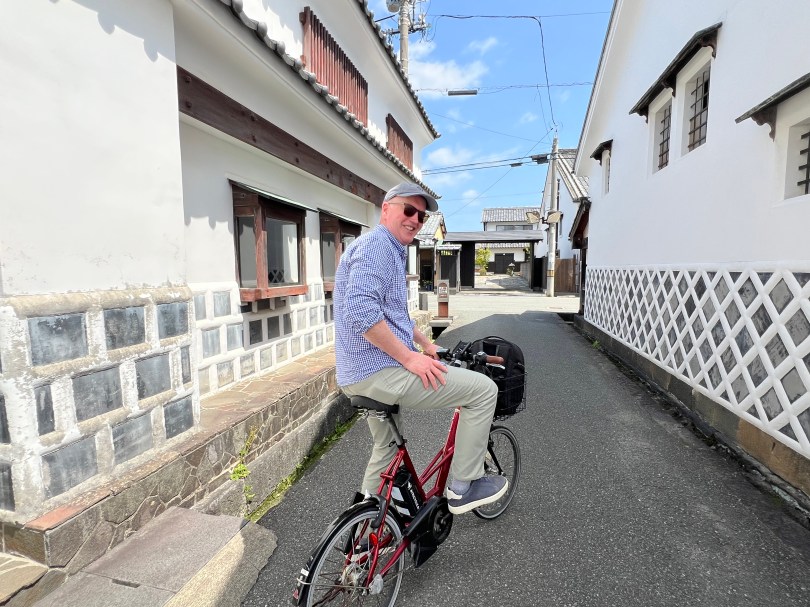
We woke up early the next day, as we have this entire trip, which was fortunate because it was by far the warmest and most humid day of our vacation. It was already pushing 80 by the time we had downloaded the apps and figured out how to rent electric bikes from the bikeshare, CogiCogi. Neither one of us had ever ridden electric bikes before, and there were no instructions, at least none in English.

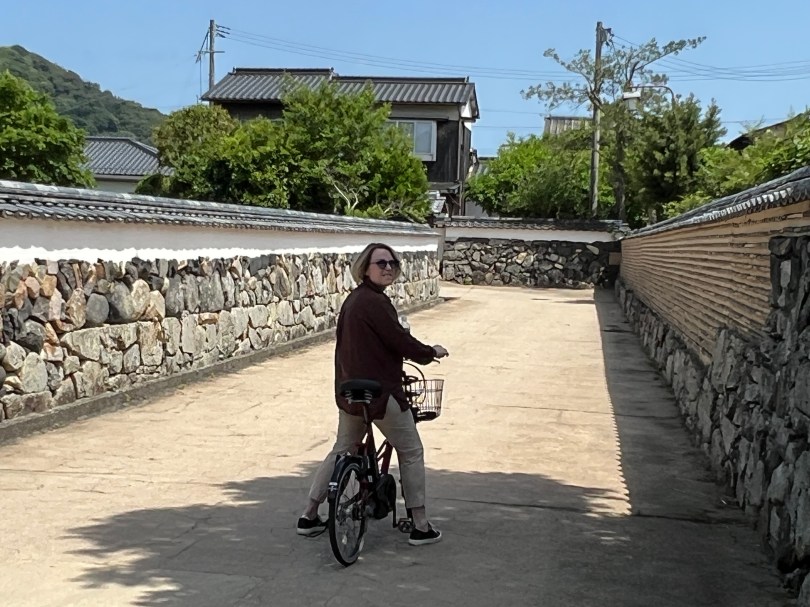
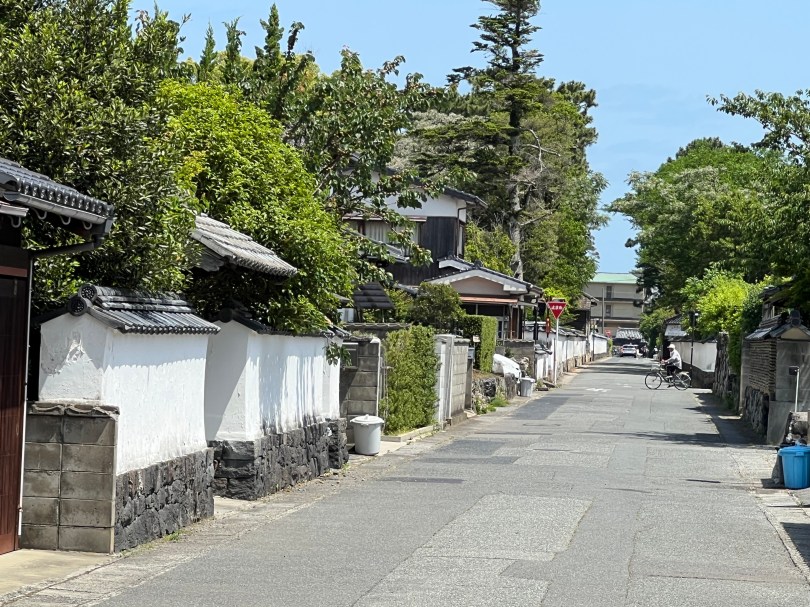
We started off at a brisk clip, although my bike had an annoying clanking sound. I was feeling pretty confident as we cruised into Hagi’s historic samurai neighborhood. It’s a surprisingly large samurai district, we are used to visiting towns with only a few blocks of historic buildings, but the thick walls and beautiful samurai houses in Hagi go on and on. The black tile and white plaster of the earthen walls was a symbol of prestige and wealth. These walls, with their distinctive crisscross pattern of tile and plaster, are called namako-kabe, or “sea-cucumber wall. Perhaps I was distracted by this remarkable history, and/or just clueless about electric bikes, but as I was following Courtenay around one sharp corner my CogiCogi bike suddenly accelerated with a thump into the back wall of one of the traditional samurai houses. There were no injuries, to rider or historic home. The good news is that it fixed the clanking sound on my bike.

To gather ourselves, we stopped for a Hagi pudding, and I had a cool, refreshing citrus flavor that the town is famous for.

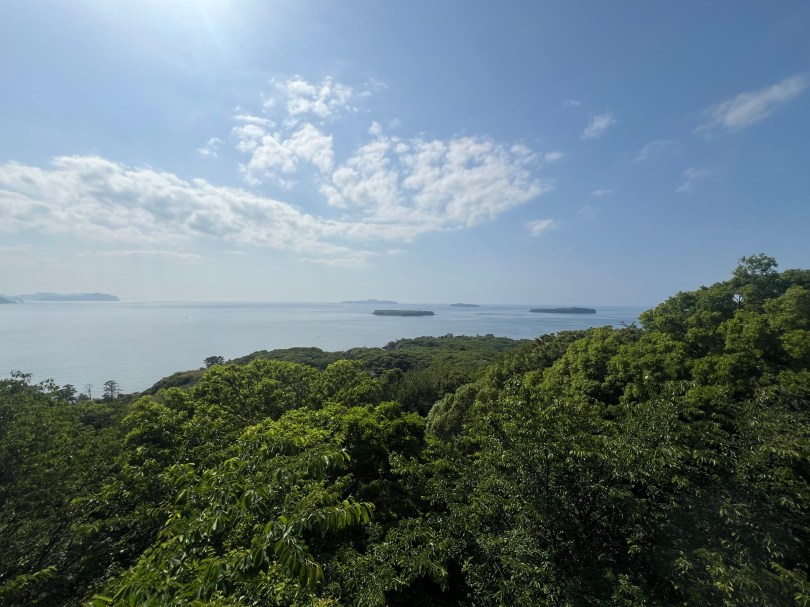
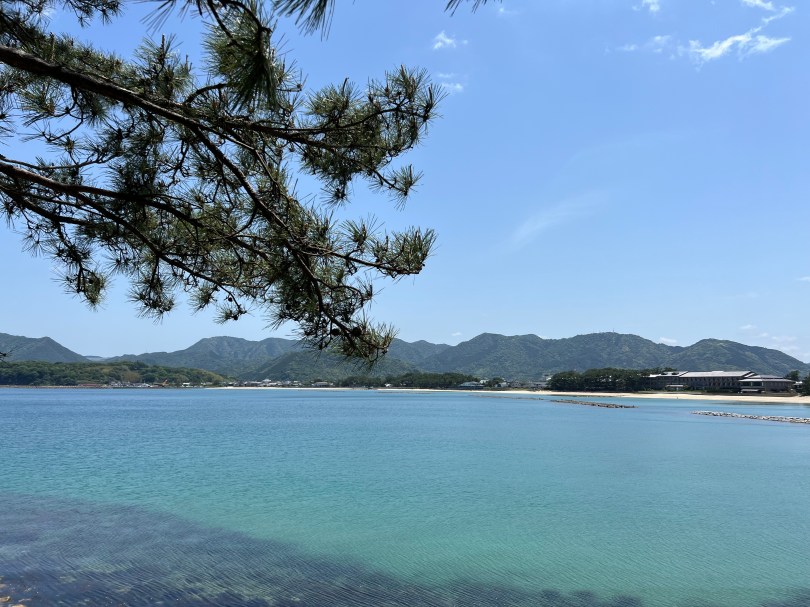
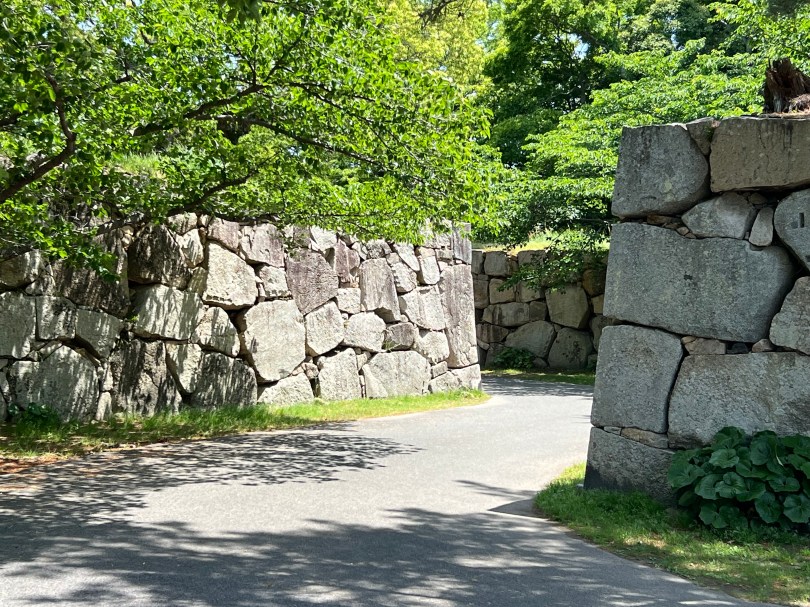
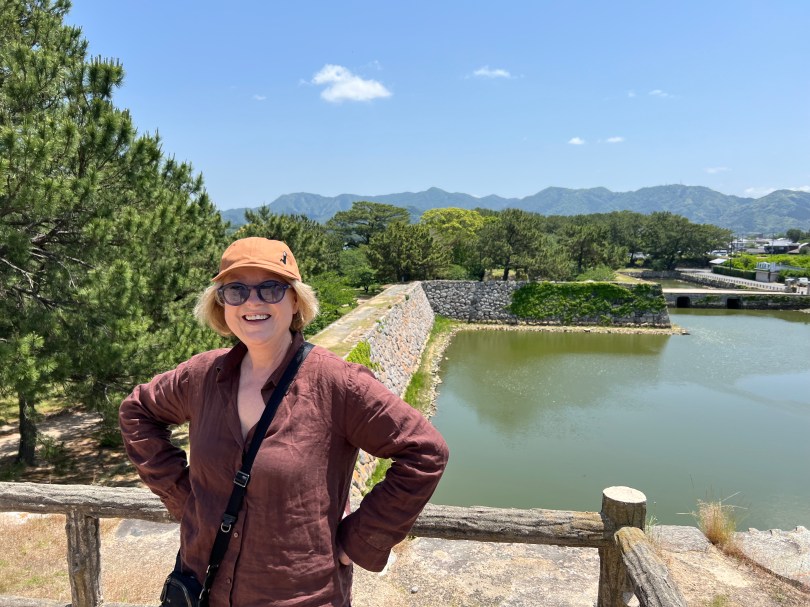
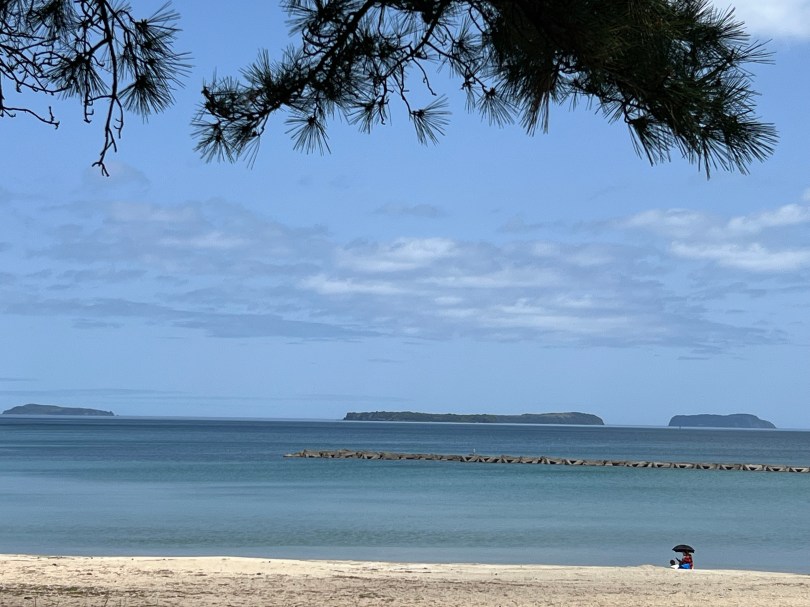
We rode on to the Hagi castle ruins, past a beautiful curved inland beach, where a few people were out and sunning at the water’s edge. There’s not much left of the Hagi castle ruins, just the stone foundation and low walls along the protective waterways. After lunch, where I had a Wagyu beef hamburger plate, it was so hot that we rode back to the apartment and exchanged the bikes for the rental car. We rode about twenty minutes to a well-known ceramics outlet, a cooperative where many artists display and sell their works. We bought a couple Hagi-style pieces, and on the way back, drove up Mount Kasayama for 360-degree views around Hagi and its coastline, which is dotted with islands.

We were really looking forward to dinner. Courtenay had found the restaurant on line. It was described as a tiny, hard-to-find place run by a couple in their 80s, who served omakase meals, which means the chef determines what is served each night. It sounded amazing. The restaurant was somewhat hard to find, but an old woman met us outside what looked like a garage and led us up a short flight of creaky stairs. There was a strong smell of cat urine. The restaurant has only four seats, with two of them set for us. We would be their only diners. It was quite possibly the oldest, most cluttered, perhaps least appetizing, place that we have ever eaten. However, the old couple was so welcoming, almost overwhelmingly so, and thrilled that Courtenay spoke and understood some Japanese. The old chef plied us with questions, wanting to know where we were from, why we were there, what we did for work, how long we had been married, while his shyer wife stayed in the background, preparing soup and taking away the chef’s used pans. I missed most of the conversation, but heard enough to understand that at one point the chef said I looked “like a movie star, but with a round, bald head.”

The chef got more and more animated, and eventually his wife joined in. He sat down next to me and began paging through a notebook filled with messages from foreigners who had come to Kokura, and had apparently fell for the same online descriptions that we had, with diners from Norway and Australia and Italy and Romania and many other countries. His wife helpfully noted that “No one in Hagi eats here.” The chef told us very excitedly that a “FBI SWAT team member” had visited, and he spent ten minutes fishing in his wife’s purse and looking around the cluttered kitchen before he found what he was searching for: a suspiciously fake looking “SWAT” badge that he proudly showed us. He was extremely excited after Courtenay told him that we were writers, and insisted that I write in his memory book. Like everyone else who had left a message in the book, I wrote how great his restaurant was, how much we had enjoyed the food, and what an unforgettable night we had experienced there. Some of that was true.

Somewhat surprisingly, we felt fine the next morning.  Before leaving Hagi, we drove to the Aiba Waterway, a peaceful collection of homes constructed in the early 18th century for transporting rice and firewood. Fat and colorful Koi swam in the waterways around the beautiful houses, and we bought two tiny sake cups at a pottery store to bring home to remember our time in Hagi.
Shimonoseki: Atmospheric and Downhill

SHIMONOSEKI, Japan — May 18, 2025 — We spent today exploring this deeply historic city on the edge of the Kanmon Strait, which over the centuries has been the site of some of Japan’s most legendary naval battles, and now is busy with shipping and fishing vessels.

It was a beautiful Sunday, and it seemed like everyone in the city — multigenerational families, young couples pushing strollers, packs of teenagers — were relaxing and picnicking along the waterfront. We started our day among the cannons and statues lining Mimosusogawa Park, the narrow pinch point in the Kanmon Strait, and where many fierce naval battles and bombardments have taken place over the years, including the famous 12th century battle that launched the age of samurai rule. (Our hotel room looked out on two island where the victors, under Minamoto warrior Yoshitsune, hid before defeating the Heike and their child-emperor.)

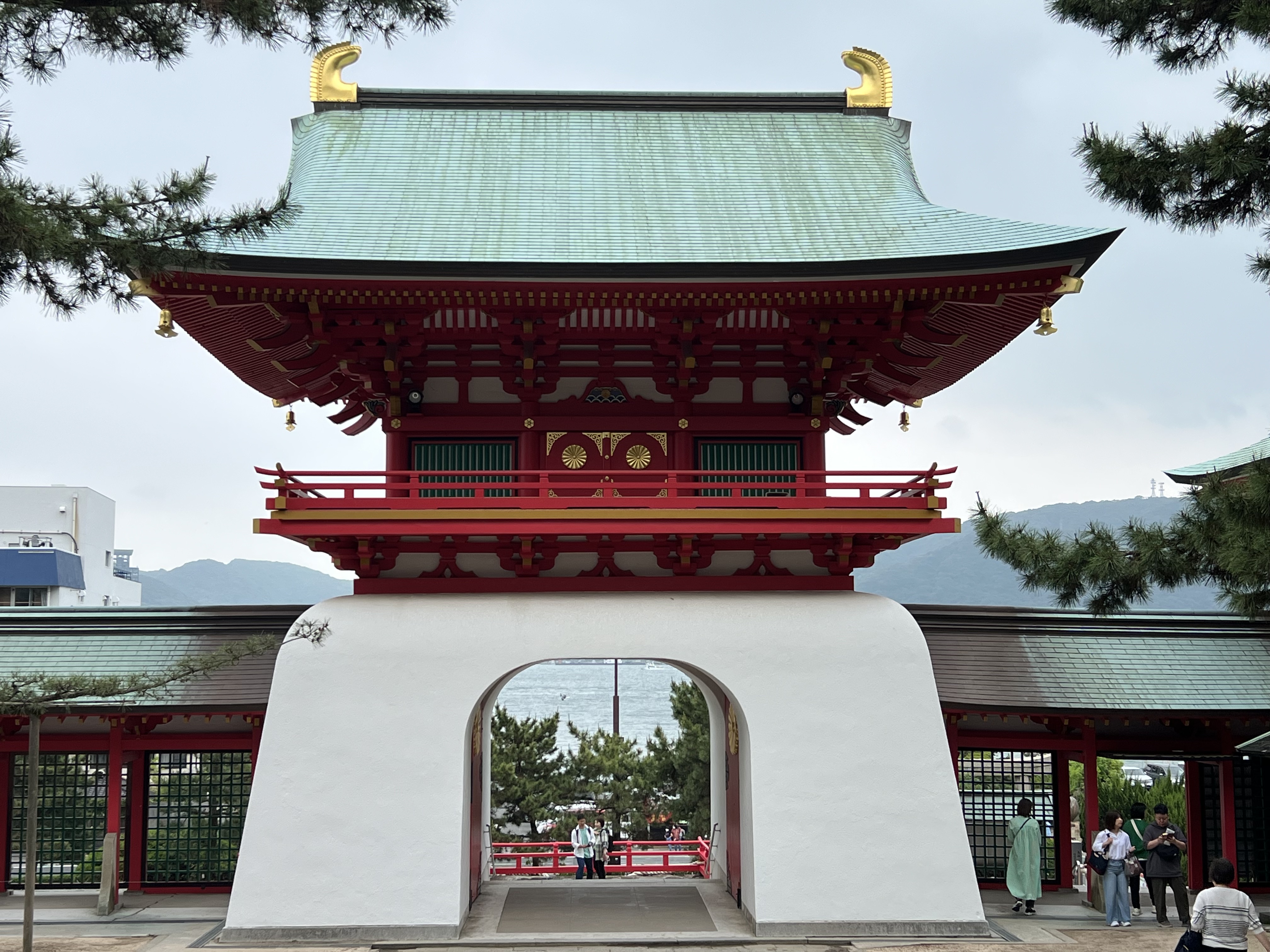
We walked on to Akama-Jingu, a shrine dedicated to a child emperor who was killed in the battle of Dannoura, in the churning strait, along with his grandmother, who saw how the battle was turning and jumped into the sea to perish with him. The story of the Heike became one of the epics of Japanese literature, its stories reverberating down the centuries. As we climbed the steps to Akama-Jingu, we came upon a wedding party posing for pictures, the blue-green waters of the Kanmon in front of the them, the bright red-orange shrine behind. We also saw the small and moving shrine to a blind Biwa-player named Houichi, who legend says lost his ears to the ghosts of the Heike.

 From there, we strolled through a Sunday outdoor arts and crafts tent market, a nice scene with music and kids running all over the place, and past the Karato Seafood Market, which seemed like the epicenter of Shimonoseki life, absolutely jammed with locals. We weren’t hungry yet, but we would return later to pick up fresh sushi and join the people sitting and eating along the strait.

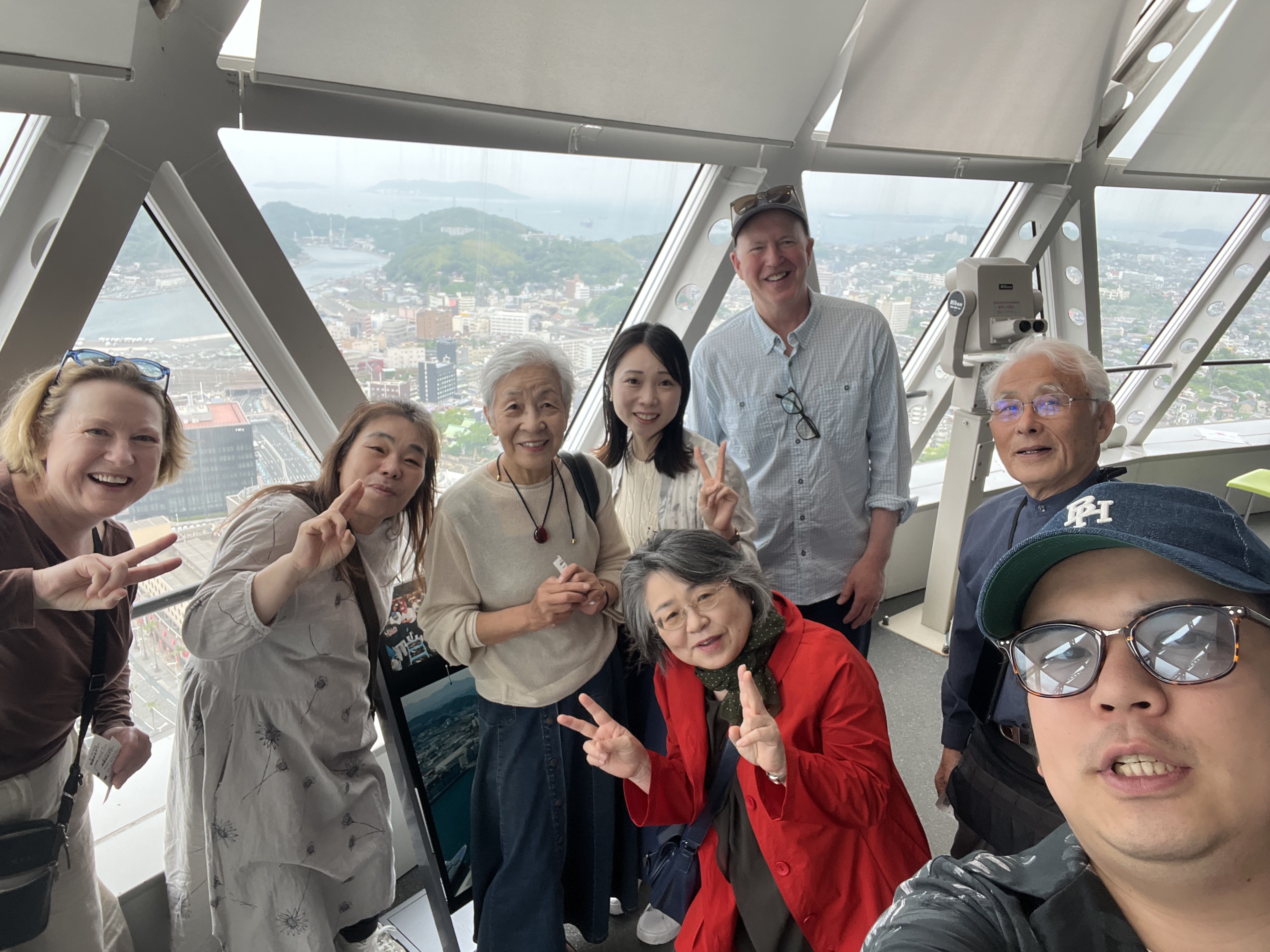
We went from the fish market to the Kaikyo-yume Tower, a 30-story-high observation tower that rises over Shimonoseki and offers a bird’s-eye view of the city, the islands and rugged nearby mountains, and the Sea of Japan in the distance. We wanted to take a bus to the tower, but were unsure about the routes and bus numbers. Courtenay asked some waiting passengers for advice, and it turned out that they, too, were headed for the tower, and that quick, we had new friends and travel partners. They were three generations of family, there to spend the weekend together. They were so friendly and welcoming, full of questions about us, and they guided us onto the bus and up to the tower, eager to show and tell us about Shimonoseki. The patriarch, who had attended twice-weekly English lessons for years, had spent his life here, and worked in construction management; he proudly told us that his company had been involved in inspecting the very tower that we were ascending. It was great fun, meeting and talking and posing for pictures with them. As we parted, they offered us gifts of fugu-themed rice crackers. (Everything is fugu-themed here – fugu, or the potentially poisonous puffer fish – is the local mascot and appears on everything from mail boxes to sewer covers. It also makes for a mean sashimi – just make sure you don’t try it at home – it has to be prepared by someone who knows what they are doing to avoid fatal consequences. BTW, we survived.)

We spent the afternoon in Shimonoseki’s Chofu Castle Town District, which is studded with shrines, abandoned temples, and samurai-era streets lined with stone walls and beautifully preserved homes. We started at the Iminomiya Shrine, where Courtenay had read might be celebrating a rabbit-themed spring festival today, which sounded like it might be a sweet scene. However, it turned out that the shrine was holding nothing more than a flea market, and a bit of a shabby one at that. (Courtenay thinks Rick is being overly harsh here, given the depth of his disappointment over the rabbits. It was just a regular flea market with dial-up phones, old clothes, some crafts.)

If the rabbit festival was a bust, the rest of Chofu Castle Town was actually quite cool. We wandered through the Chofu Mori Residence, a stunning house where the Emperor Meiji once stayed. We also walked up into the Kozanji Temple, one of the oldest temples constructed in the Zen-style in Japan and a designated national treasurer. I was wearing down after so much walking, but we came up on the Dangu Kawa River, more of a creek, I would say, where the town and its residents have restored the waterway and been trying to bring back the fireflies that were once common there. Courtenay asked me if I wanted to keep walking, and I said, sure, since the street we were on was “atmospheric and downhill,” which struck her as funny, and has since become something of a catchphrase on this trip.

We walked from the castle district on to the Chofu Garden, where we stopped to get our entry tickets and found the attendant absolutely sound asleep, and had to wake her to get our tickets. The garden, as you might expect, was quite peaceful. It was beautiful walking around a koi-filled pond while we heard the sounds of a pipe-player putting on a concert in a nearby building.

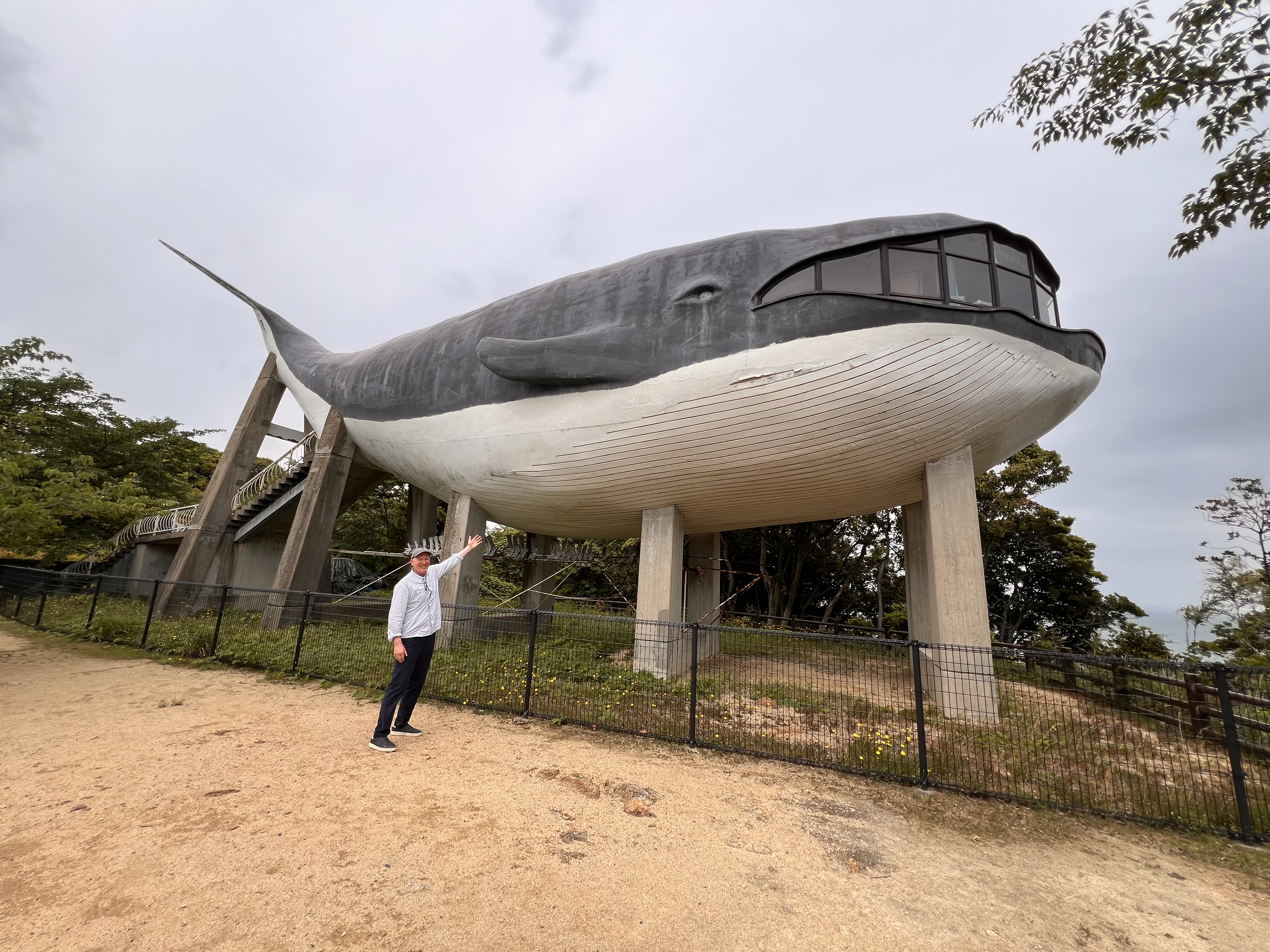
We finished our walk by climbing up to the ruins of the old Shimonoseki castle that overlooked our hotel. All that was left of the small castle that had once been here were some walls – the rest destroyed in the early 17century at the orders of the first Shogun Tokugawa Ieyasu, who wanted to limit the power of his provincial rivals. In fact, this part of the country is known for its independent, rebellious streak, resistant to control from the center. While Courtenay enjoyed the ruins, Rick was absolutely delighted by a giant decaying model of a great blue whale that once stood near the Shimonoseki Aquarium. The whale had seen better days and the aquarium apparently wanted to get rid of it, and so it dropped it on the hill by the ruined castle. I loved the whale; it reminded me of the cheesy Paul Bunyan and Babe the Blue Ox models at the Trees of Mystery, in Southern Oregon. — Rick

Sumo and the Six-Minute Shinkansen Transfer

ON THE SHINKANSEN, Southern Honshu, Saturday, May 17, 2025 – Our time in Tokyo went by as fast as, well, as fast as the 300-kilometer-an-hour bullet train hurtling us southward right now. We had a long, busy day yesterday, starting with the teamLab Borderless digital art museum/experience at Azabu-dai. It was classic teamLab – digital art projected on walls, ceilings and floors, or from strings of crystals or sparkling globes, hanging from the ceiling, surrounded by mirrors. The installations give you a feeling an infinity, like Kusama Yayoi’s famous pieces. We saw the same tigers made up of moving masses of flowers, and hauntingly weird rabbits and other frog-like creatures we had seen projected on the stone castle walls at Kanazawa back in 2023. (It was much more beautiful, and interesting, projected on atmospheric castle walls – don’t miss it if you ever have a chance.) Our highlight experience was probably the room that had children’s drawings of fish and other sea creatures swirling around the walls and ceilings of one room – we finally figured out we too could make drawings to be projected on the walls. So I made a “Hazel Fish,” and Poppa made a “Rory Fish.” Soon, Rory and Hazel were swimming happily around the room with the other fantastical creatures.

From there, we headed over to the other side of the Sumida River, where we visited a new and interesting museum dedicated to the woodblock print art of Hokusai, most famous for his series of prints “36 Views of Mount Fuji,” including his most famous “The Great Wave Off Kanagawa.” The Sumida Hokusai Museum, which became quite crowded, had excellent displays on how the blocks were drawn, carved, and printed in many layers. These woodblock prints had a big influence on the art of late 19th century France, including the Impressionists – Monet, Manet etc. – as well as Vincent Van Gogh, who collected them whenever he could find them.

After that, we stopped at a famous soba shop, Hosokawa, where the owner makes the buckwheat noodles by hand every morning. We had heard the lines can be long, so we went early, and immediately got a table with several groups of older Japanese women – two had been shopping and one elderly woman was enjoying her noodles all alone – they were that good. It will be interesting to compare them to the soba we have along the southwestern edge of Honshu, which is also famous for its pure buckwheat noodles. We love soba so seek it out whenever we are in Japan.

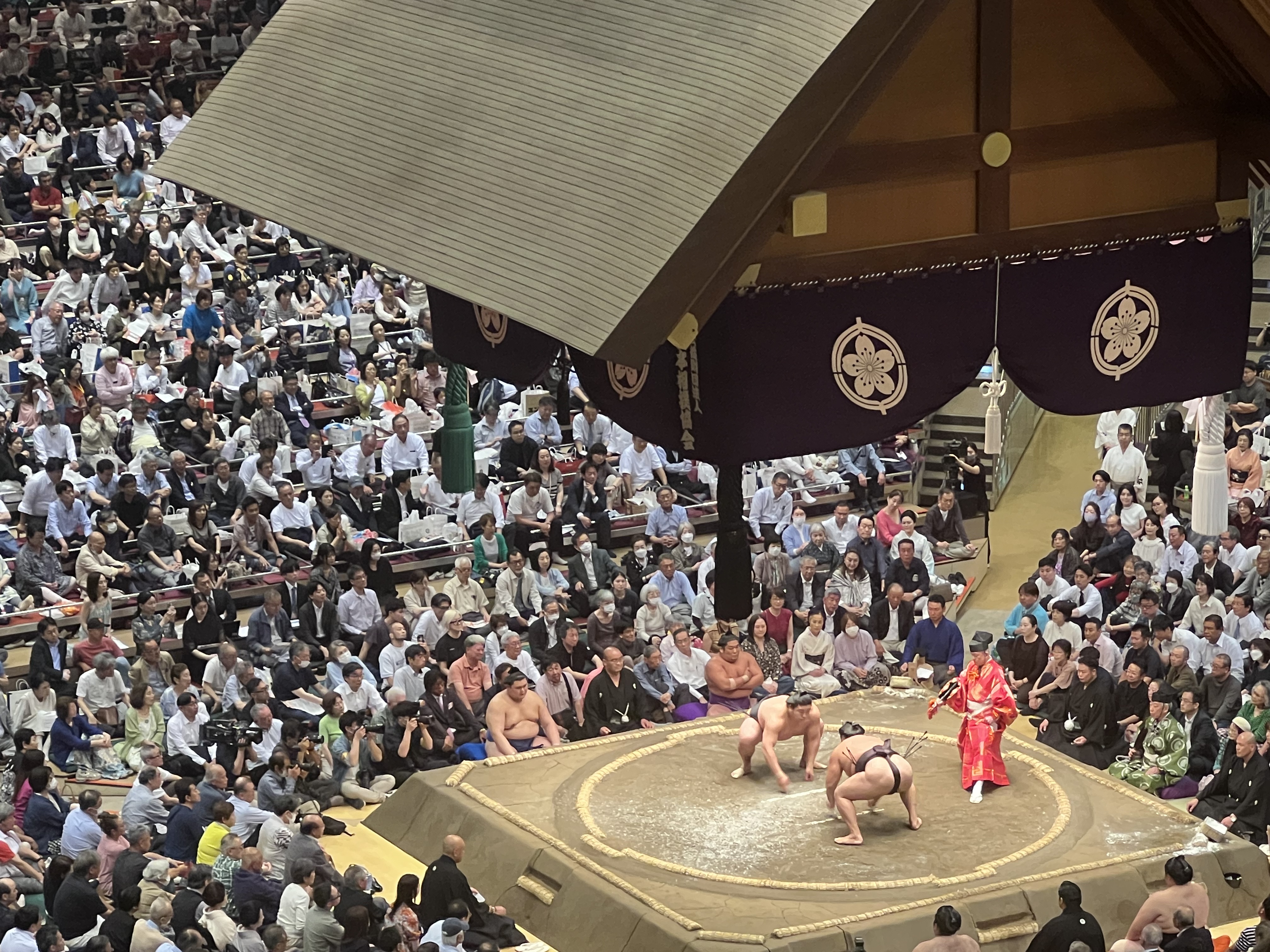
Our last stop was the Ryogoku Kokugikan, or the national sumo arena, a short walk away. It was only 1 p.m. and the main sumo didn’t start for two and a half hours, but we didn’t dare take a cab back to the hotel – the worst thing to do when you are jet lagged is stop moving. So we watched some of the rikishi, or sumo wrestlers, walk into the stadium in their yukata robes and flip-flops. We then took our seats, which were very far from the center arena, or dohyo, in a section that was filled with gaijin, as we foreigners are called here. All of those in our row had gone through the same hours-long process of trying to get tickets the second they went on sale. The website kept crashing, but those of us in row 9 had persevered and finally managed to secure tickets. I joked that the website had identified all the IP addresses outside Japan and stuck us all in the same section, but it was fine. Even the lovely Canadian couple sitting next to us were very sweet and didn’t mention anything about, um, things back home.

I had spent some time reading about the wrestlers – who is on their way up, who is on his way out – and had some fun details about which wrestler had a tiny toy poodle and loved gardening, and which was the bad boy who got caught at hostess bars during the pandemic, and. which was the eponymous “Flying Monkey.” In any case, we have followed sumo over the years, first when I was in Japan as an exchange student in college and then when Will was little and we would watch together in the evenings on one epic trip to Japan. So it was really wonderful to finally see it in person. My friend Hope had said it’s best to sit on the floor in reserved seating where she had gone as a child growing up in Japan, but we didn’t even try for those seats – we couldn’t imagine sitting on the floor for four to five hours straight without perhaps losing feeling in our legs and our legs altogether. So we sat in the nose-bleed seats and were really able to see all the action just fine. It was just too far to clearly see the rikishi’s facial expression or really feel the intensity of the wresting or the size of the wrestlers themselves, a few of whom are up to 6-foot-5 and/or 420 pounds. But to see the rituals and camaraderie of the sport which dates back centuries and is steeped in Shinto spiritual practices was really, well, awesome.

As you perhaps know, I am a cautious traveler who arrives at the airport two hours early and never books an airline transfer under 90 minutes, so I was a bit worried about a six-minute transfer from one Shinkansen to another today in Hiroshima. Six minutes? I mean, in the US, that would be insane for practically any transfer. But I trusted that the Shinkansen website would not lead me astray, and it turns out that six minutes is a loooong time for a transfer in Hiroshima. We just walked across the platform, and after a very long four-minute wait, there came our train – a sleek, pink Hello-Kitty themed train that everyone had their phones to capture its adorableness. So now we are speeding south on that pink cat-covered Shinkansen – which is also awesome. Rory and Hazel would love it. My mother would love it. I love it. I’m so happy to be back in Japan!

Cordoba aglow: A beautiful city, a call to prayer

March 13, 2025 — Cordoba, Spain — A light rain and a hair-raisingly sharp turn into the car rental return parking garage greeted us on our arrival in Cordoba, after a pleasant drive from Ronda with a memorable stop at the megalithic stone dolmens at Antequara. We had a wonderful lunch, by a huge hearth with an actual fire, at a roadside restaurant, the Caseria de San Benito, and drove the wide-open highway on into Cordoba. The only challenge of our van rental was on arrival in Cordoba, when all three passengers had to get out of the car and help Rick make it into the garage, with three-quarters of an inch on each side of the van to spare. In a gentle rain (yes, it has rained the entire time we have been here), we got our first look at a city that has a remarkably rich history stretching several thousand years with Carthaginian, Roman, Visigoth, Muslim, and Christian eras.

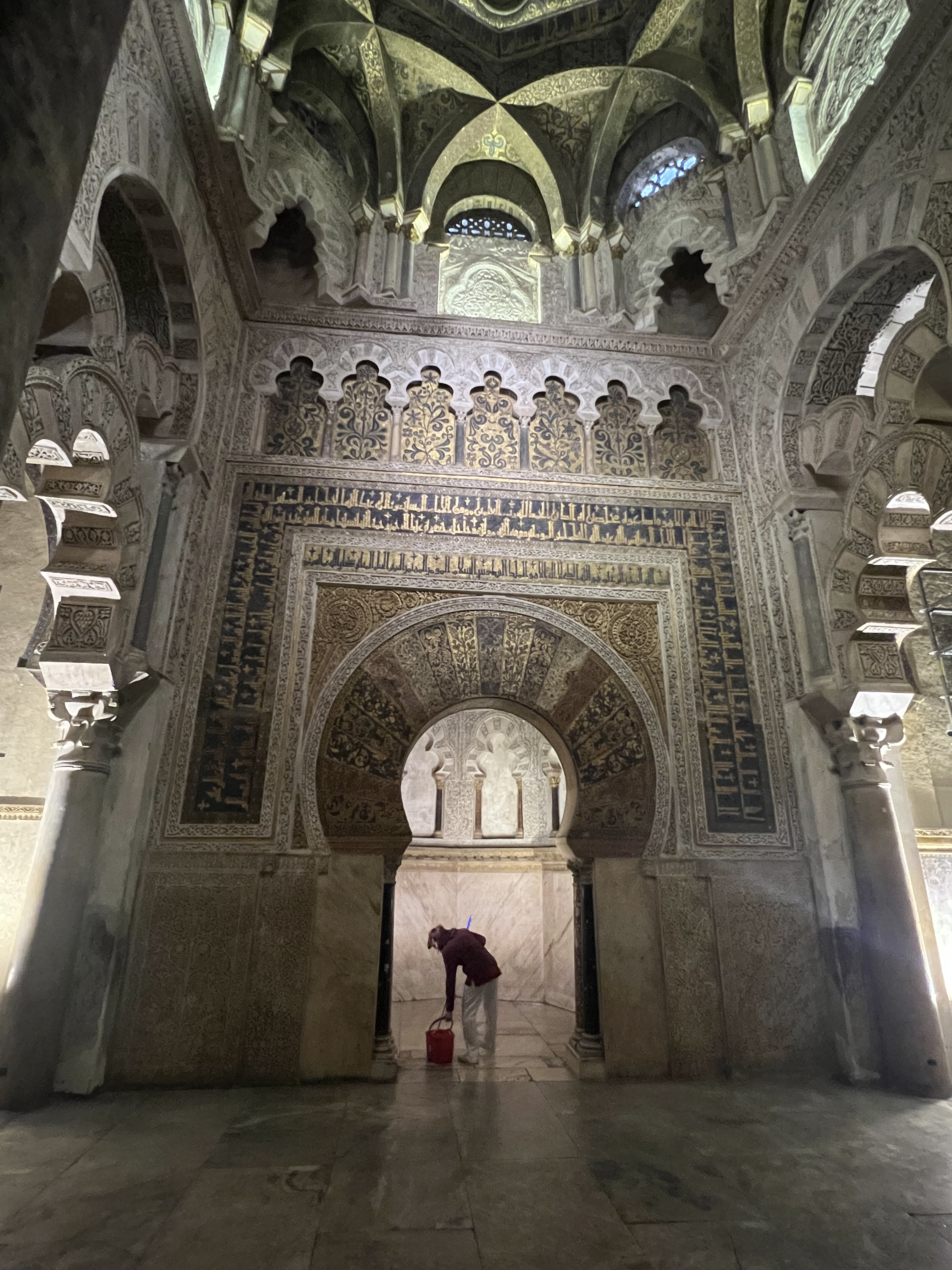
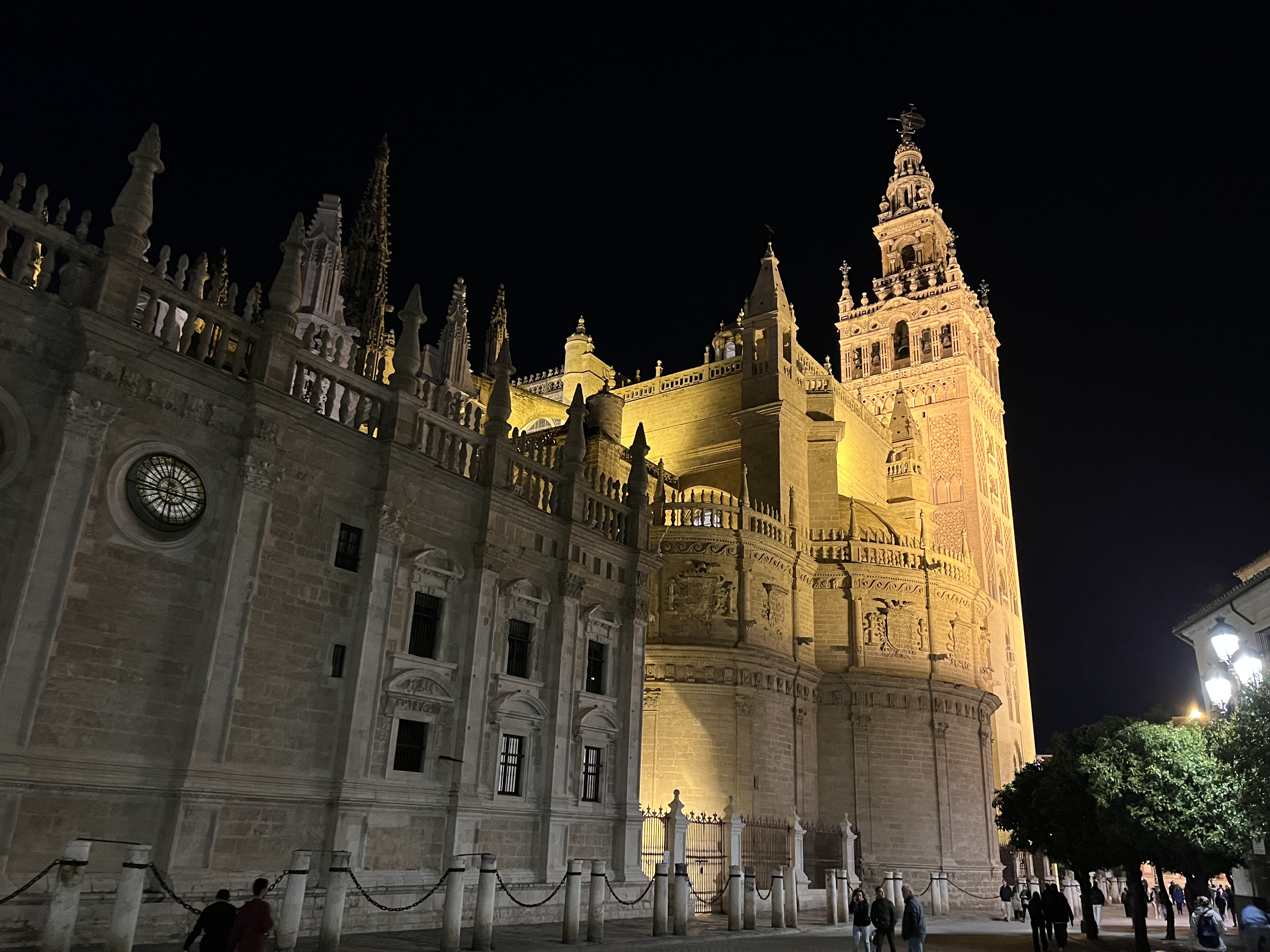
Our experiences in Cordoba began on the rooftop terrace of an historic hotel, formerly a 17th-century convent built around three courtyards, where we shared a bottle of champagne while rain tapped on the plastic shelter above us. One by one the city’s lights came on, illuminating the incredible Mezquita and its bell tower, only a hundred yards or so from our hotel. Like so many religious sites Spain, it has a long history – Roman temple, Visigothic church, Islamic Mosque, Christian cathedral. Though most of the Catholic rulers built their huge cathedrals to completely cover the large mosques, Cordoba is unique in that they left much of the mosque intact, but instead set a large cathedral in the center of the former mosque. As we looked over the Mezquita, in the distance we could hear a Muslim call to prayer. It was a moment that perfectly captured Cordoba, where Muslim and Christian history, rituals, and tradition–and even architecture–are intertwined in deep and unique ways.

Cordoba began as a Roman settlement, and we caught glimpses of its early Roman roots, including pillars and stones repurposed into the corners and walls of more recent buildings–some well over two thousand years old. Six pillars from a Roman temple still stand not far from Cordoba’s main square, the Plaza de Corredero, a formerly used as a bull-fighting ring. But it was the Muslims who built Cordoba into one of the world’s great cities, from the eighth to the 13th centuries. It was the ancient, or the ancient Alexandria, a center for intellectual, poets, mathematicians, and thinkers, Islamic and Jewish. A famed Muslim leader, Abdel Rahman I, a refugee from the Abassid coup over the Umayyads in Damascus, Syria, arrived in 756 and made himself emir, and he launched the golden ages of Cordoba. The city became the Ancient Rome of the medieval world, a great center of Muslim culture and learning, with over 300 mosques and 80 libraries.

For us, Cordoba was aglow with light and shiny with rain as we left the hotel and walked to the Puente Romano, the one-time Roman bridge that spans the Guadalquivir River, which flows downstream through Seville to the ocean. With all of the rain, the gushing river was running high and muddy. The bridge was originally built after Caesar’s victory over Pompey the Great. Later a Moorish bridge was built on the foundations of the Roman bridge. That’s the span that we walked across, sheltered by umbrellas, looking back at the soft yellow stones of the illuminated Torre de la Calahorra, a 12th-century gate tower that once functioned as part of the city’s medieval fortifications, and was the site of fierce fighting when the Catholic King, Fernando III, brought his troops to Cordoba during the Christian Reconquest in the 13th century. Now it’s a museum that celebrates the period in history when Christian, Jewish and Muslim communities of Cordoba lived in harmony. We felt that special blend of history, walking the atmospheric maze of streets in the Juderia, the Jewish Quarter, including the colorful Calleja de las Flores, lined with hanging flower baskets, and emerging with a spectacular view of the Mezquita Mosque-Catedral, a UNESCO Heritage Site, and one of the most incredible places we have ever visited.

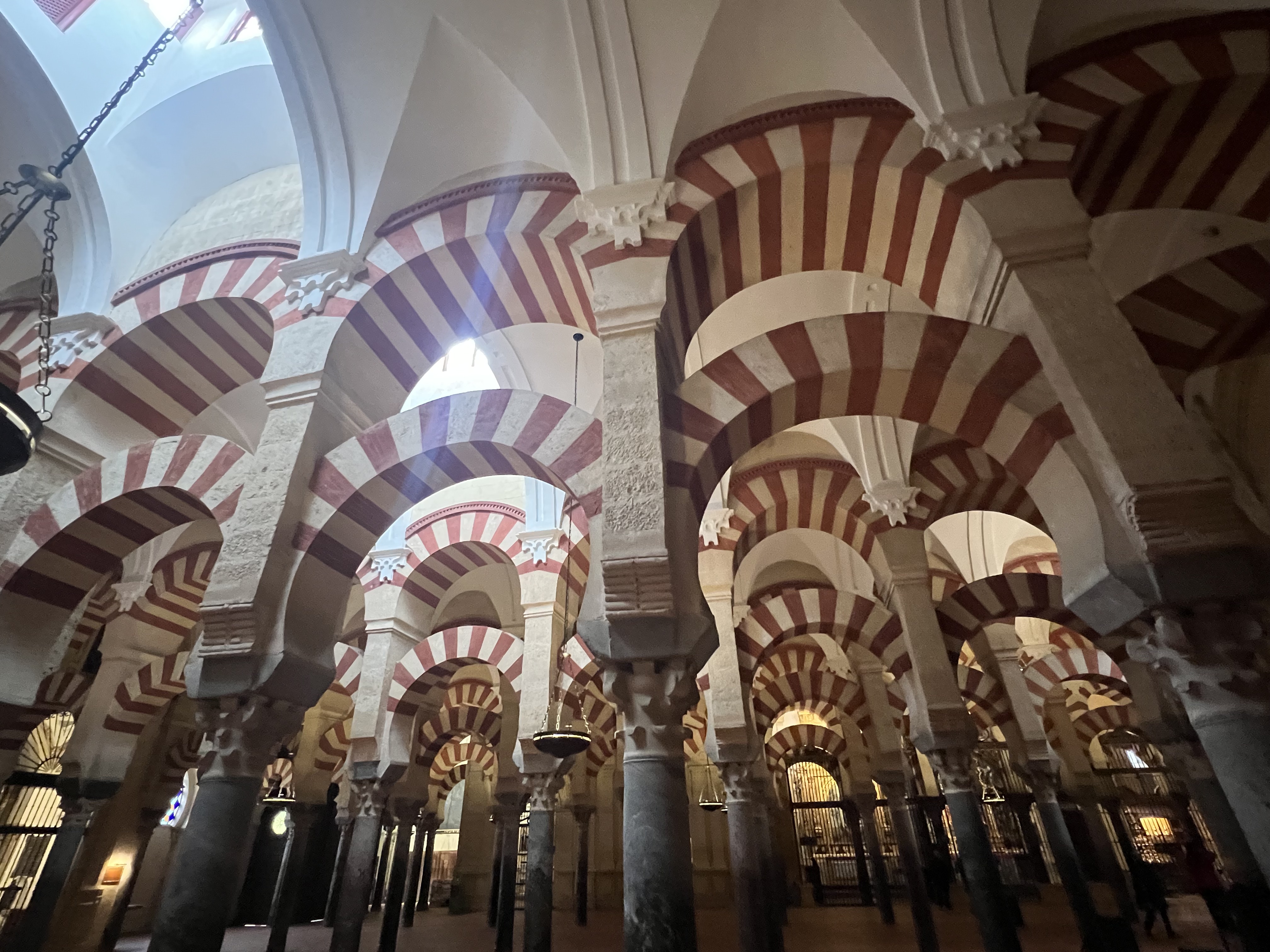
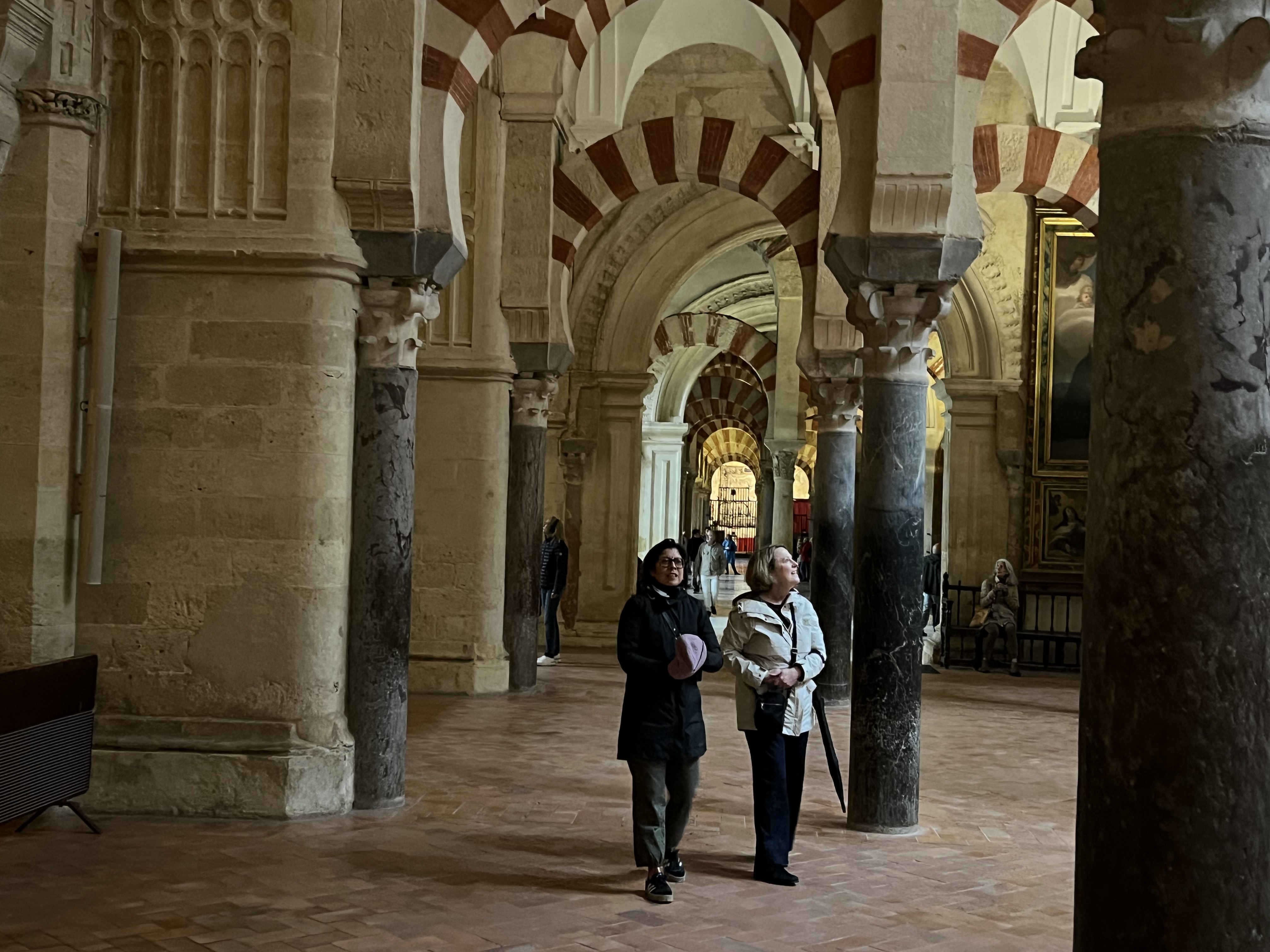
The Mezquita’s immense size and beauty is hard to describe, or even photograph. It was founded as a mosque in 785, built over the top of a Visigothic Church. It was an enormous mosque, large enough to fit more than 20,000 faithful. The praying space is a sweeping area of hundreds of honey-colored pillars (repurposed ancient Roman columns) with stripes of red brick. For three centuries, this building was the focal point of Muslim life in the city and inspired countless artists and intellectuals. The poet Muhammad Iqbal, for example, described it has having “countless pillars like rows of palm trees in the oases of Syria,” while the people of al-Andalus said that its beauty was “so dazzling that it defied description.”

We’re all so fortunate that this building survives. Charles V, the Holy Roman Emperor, instructed the Christians to not destroy the Cordoba mosque, now the only surviving one in Spain. He recognized its magnificence. However, the Christians did a major remodel, and in the 16th century build a massive baroque church in the middle of the mosque. It’s a mind-bending, unforgettable place to visit, wandering first through all those Muslim pillars and all that praying space, only then to emerge into a soaring cathedral space chock full of Christian imagery.

We saw a lot of other things in Cordoba, including a fun glimpse into the famous gardens and patio courtyards of Barrio de San Basilio, another part of the city’s Unesco World Heritage. The bronze medal winner of last year’s patio competition, the owner proudly showed us her courtyard, the walls filed with flower pots and ancient Roman mosaics scavenged from somewhere, while her son-in-law prepared lunch in a nearby kitchen.

But it was the breathtaking Mezquita, where we climbed the bell tower built atop the minaret of the former mosque, and where we could see century after century, wave after wave, of the people and religions that settled, built, and ruled, this part of the world.

From Italica to the White Hills, and Ronda

March 12, 2025 – Ronda, Spain – We left Seville yesterday morning, with a wonderful stop at the ancient Roman ruins 10 minutes out of town. Italica was the birthplace of two important Roman emperors, Trajan and Hadrian, who presided over the Roman empire at the height of its vastness and power. That they came from Spain, rich in metals and agricultural goods, is not surprising, and the grandeur of the city of Italica reflects their wealth and patronage. This city, on a rise in the landscape, was once almost forgotten, until its memory was revived in the last few hundred years and excavation began in the past century. Abutting the modern city, archeologists have uncovered a huge amphitheater, remains of a major temple to Trajan, a theatre, and homes graced with beautiful mosaics of birds, gods, and a medusa head. We wandered the rather muddy site, between rain showers, imagining the city of marble and stone now sunk into the ground, and mused on hubris and the fall of empires. It happens. History does indeed repeat itself. 

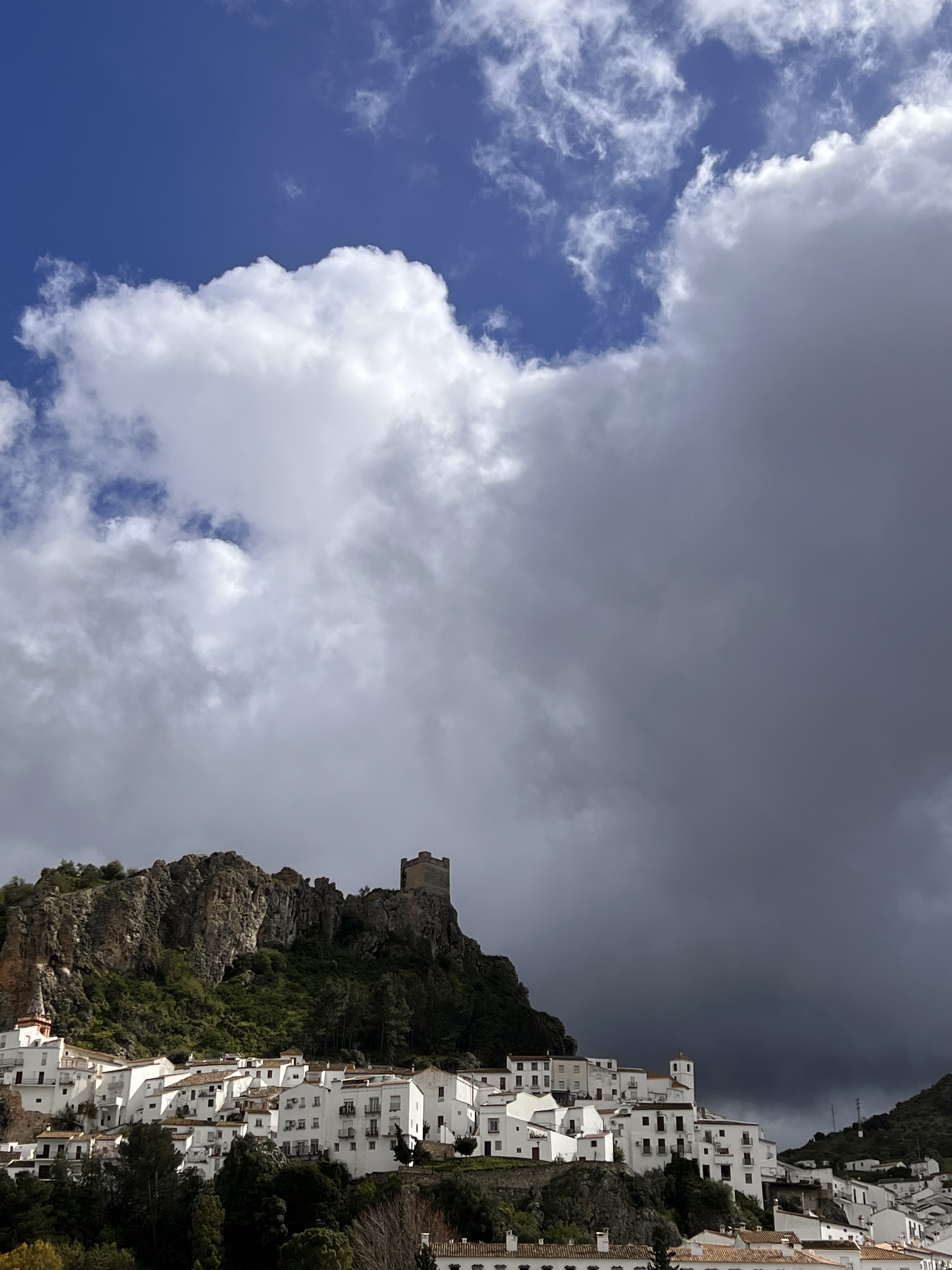
We then piled back into our land-yacht, a sleek black Mercedes van piloted by none other than Rick. It was the only automatic transmission available, so we will be avoiding any city center maze-driving. We then drove across a vibrant green landscape of rolling hills, covered with orchards (almonds? dates? Olives for sure), toward a mountain range with clouds roiling behind. We seemed to be headed into a storm, as we drove to our next destination, a puebla blanca, or white town for which this part of Andalucia is famous. We parked below the extremely picturesque town of Zahara de la Sierra, a cluster of white houses resting like a cloudbank below an old Islamic fortress. We climbed up to the small town square and visited the 17th century church, which was backed by a cliff rising to the fort. Two lovely old women inside greeted us and sat talking the entire time we wandered the small but ornate interior. We saw a papal indulgence given to the local men’s society in the 16thcentury. A papal indulgence! I had never seen on in person, but it was indulgences like these (basically a promise from the pope to get into heaven early, in exchange for a hunk of money) that lead to the Protestant Reformation. Martin Luther, a good Catholic, had had enough with indulgences and corruption in the church, and so lead a revolution against the church, and eventually the Counter Reformation, when the Catholic church tried to reestablish its glory and authority in the splendor of the Baroque.

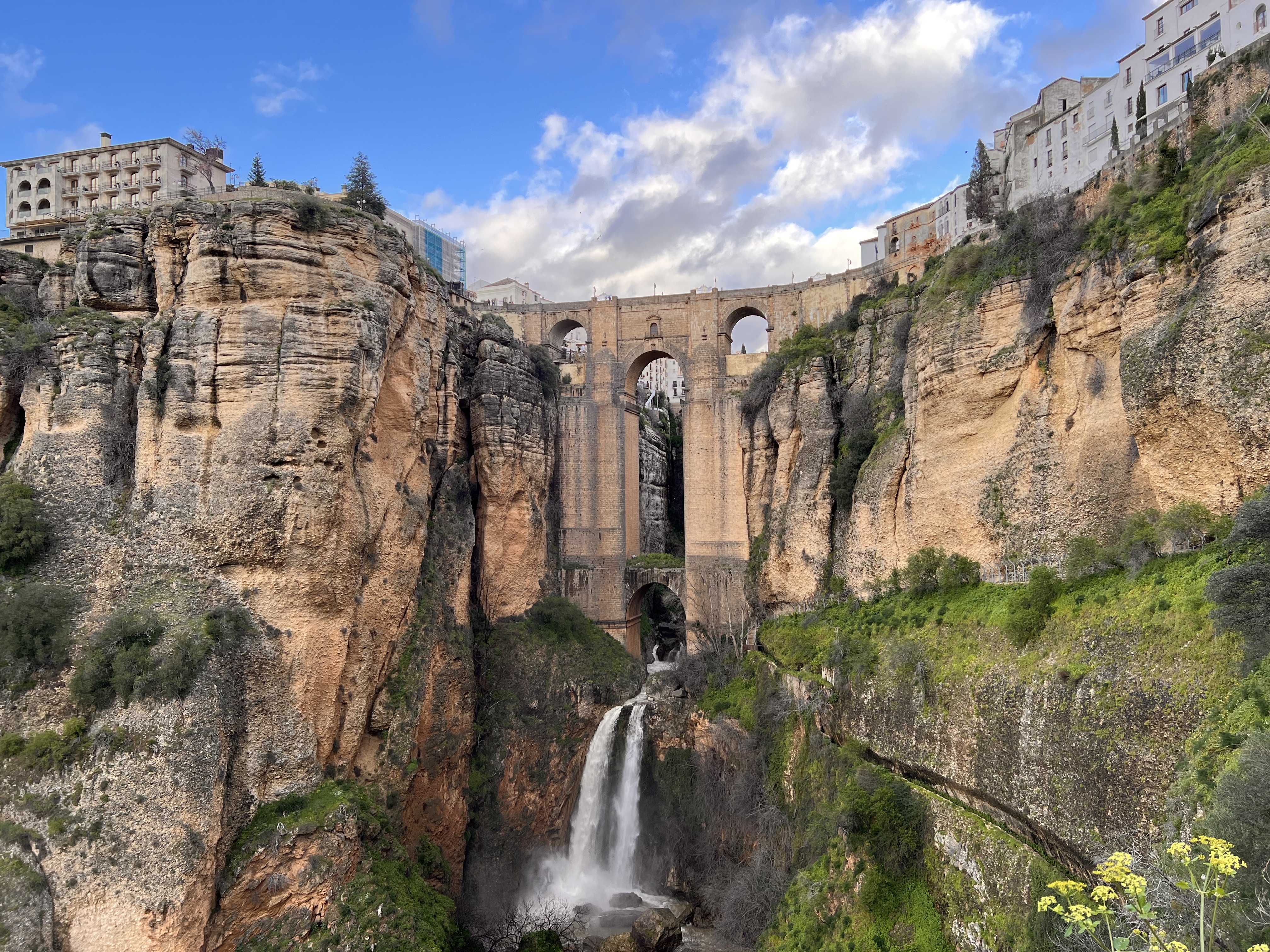
 We had a lovely little lunch in the only restaurant open in town, La Era, then drove on to Ronda, famous for bullfighting and Ernest Hemingway. Both Hemingway and Orson Welles loved Ronda, and spent a lot of time here – there are busts of the artists in the main park. We dropped our bags at our lovely hotel, which has a spectacular view over the valley and mountains in the distance. Because the weather is stormy and rainy, the mountains have been especially atmospheric. We wandered along the edge of the cliff to the dramatic 18thcentury bridge that spans the 300-foot gorge between the “new” Christian town and the older Moorish town across the gap. The first bridge collapsed six years after it was built, but this one seems to have survived. We decided to brave the walk down the hill to get a view back up at the bridge, and lucked on a gorge walk that took us to the base of the bridge. It is apparently a new “tourist attraction,” and for 5 euros, we donned hard hats and walked down a stone-paved pathway for some spectacular views back up at the bridge. We were lucky, because we were the last people admitted, arriving 3 minutes before the 6:30 p.m. closure. I had worried on the way down, since it seemed so far, but the hike up was easier than I thought. It helped that Will texted halfway up, so I was able to catch my breath. 😊

We then had a lovely evening (with some mediocre food) visiting a few tapas bars, and ended up back at our hotel for a glass of complimentary champagne on the terrace. All the people inside thought we were crazy for going out in the stormy weather, but it was covered, there were propane heaters, and we are Oregonians and Philadelphians.

 Today, we are doing laundry in Ronda and then heading off to visit an other puebla blanca and further back in history, to some 6,000-year old megalithic passage tombs and dolmens. Spain really has it all, when it comes to history!

Mirrors into the Past

Seville – Sunday, March 9, 2025 – We arrived in Seville last night on a fast-train from Madrid with our friends Helen and Mike, who were fresh off a plane from Philly. We had a wonderful time last night bumbling through three tapas bars – there are shifting mores and customs, depending on the city and the establishment, on how and what to order, how to gracefully snag an open table without enraging the staff, not that that happened!, but that is a whole other topic we can delve into sometime.

But after a short night (yes we have been going to bed at midnight!!! Imagine!!), but waking up at 5 am, I thought I would write a quick post on our museum experience in Madrid. We saw both the Thyssen-Bournemisza and the Prado, the later with our art historian guide Almu Cros. We have never had a guide for a museum, but she had a unique perspective on the collection – who the rulers were who commissioned or bought all this art – one of the greatest collections in the world – and also on how the artists used the collection over the centuries to inspire their own work. For example, perhaps the most famous painting in the collection is Las Meninas, Seville-born Diego Velasquez’s iconic 17th-century painting of the artist painting the king and the queen, when their little girl bursts in on the scene with her maids and her dog. Later artists, including many modern and contemporary artists, including Francis Bacon, have been obsessed with this painting and painted their own “versions.” What I hadn’t realized, is that there is another extremely important painting that had been in the collection in the 17th century, Jan Van Eyck’s Arnolfini Wedding from two centuries earlier, that Velasquez had been looking at. Famously, there is a mirror in both paintings, with a tiny, hard-to-discern reflection of the artist, or in the case of Velasquez, the subject of the painting – the King Philip IV and his queen. In the painting, there are other elements from the Van Eyck – a dog, the light shining in at a slant, many little elements that Velasquez drew on to create his uniquely modern (for his time) portrait of an artist at work. Another example, Picasso’s massive Guernica (which is at another museum in Madrid), the Cubist artists cry against the horrors of modern warfare on civilians following the Nazi bombing of a small northern Spanish town in the Civil War of the 1930. Though he was in exile from Franco’s fascist Spain, he drew on his memory of Goya’s depiction of the street fighting in the streets of Madrid during an uprising against Napoleon’s occupation in 1808. Once you look at the massive Goya painting in the Prado, you can see it – the horse (there were no horses in Guenica), the raised arms of the woman, the body on the ground with the broken sword. Another mirror into the past, and into an artist’s mind.

And you think the Spanish surrealist Salvador Dali is weird? Well he is actually just channeling his much, much weirder predecessor, 16th century Dutch painter Hieronymus Bosch, whose famously strange Garden of Earthly delights is a highlight of the Prado. Dali literally quoted from the Dutch painters strange and disturbing hybrid creatures who act out the follies of human behavior. But as Almu pointed out, even Bosch was looking to other strange minds for inspiration – the monks who drew strange hybrid (and sometimes obscene) monsters in the margins of the sacred texts they were copying.

That is looking at art with your mind – it’s magical working through the intellectual puzzles with your mind. But there is a far different way to experience art, something that the Stanford professor Alexander Nemerov (affectionately known to his undergraduates as the “Art Preacher”) opened me up to. You look a piece of art with your heart, not just your mind. You never know how a piece of art will affect you, and I am sometimes just so moved by something that I find myself in tears. That is the power of art to really reach through the centuries and strike you at your heart. Such a thing happened at the Prado, in the Goya room. We were standing in front of his painting of May 3, 1808, showing the execution of Spanish resisters to Napoleon’s invasion – the peasant raises his hands like a Christ-figure as he faces the firing squad. I have been haunted by this image since I saw it as a child, in my parent’s Time-Life history of Western art. But as I looked at the painting, thinking about the history, I glanced to my right and saw a painting I had only seen in art class, called the Drowning Dog, though I don’t think Goya named it that. It shows a small dog in a vast canvas of almost Byzantine gold, looking up as if he is swimming to keep his head above a wave that threatens to submerge him. It took my breath away – the tiny dog has the look of despair, or of hope, or of both – but it was an emotion I recognized, and recognize as I write this. The sense of that the world is out of one’s control, that feeling when you have to confront your own end, the terror, the horror and yet somehow, the hope. I had seen that look the day before, at the Thyssen, in the face of an El Greco Jesus, looking up to heaven with a look of despair, as if saying Why Me? Is this all there is? Seeing our friends again after all these years, when we have all faced life and health challenges and scares, when we face futures filled with uncertainty, uncertain diagnoses, uncertain futures, the gold, and the face of that sweet little dog from Goya’s dark period, gives me hope.

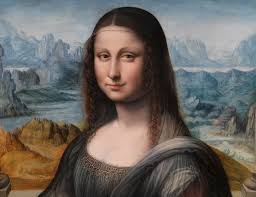
Last thought – don’t tell anyone, but the real Mona Lisa is not at the Louvre. It’s at the Prado Shhhhhh!!!! Almu has us convinced – the Prado’s Mona Lisa looks just like the one at the Louvre – except they cleaned it, revealing beautiful greens and blues in the background. Her iconic smile is there, the same clothes, the same pose, the same lack of jewelry. The label on the side says “Workshop of Leonardo,” but Almu has some wonderfully persuasive arguments that this, in fact, is from the hand of Leonardo. It was painted on more expensive wood, walnut, for example, using more expensive paint. Could this have been the version that the patron chose, leaving Leonardo with the other copy, which he would carry with him to France, where he died with it in his possession? She wears no jewelry, much like another Renaissance portrait of a young wife, painted after her early death. Could Mona Lisa be the painting for another grieving widower, and he chose the more exquisite of the two versions? Almu thinks so, and so do we. But God forbid that the word gets out – NO ONE was looking at the Prado Mona Lisa – ok, maybe a few people casually walked by while we were discussing it. But you cannot imagine how the experience would be ruined if the selfie-taking hordes descended on this Mona Lisa. Meanwhile, you can enjoy Leonardo’s wonderful creation in the relative peace of the photo-banning Prado.

Art – where you find a mirror into your self, into the past, into your emotions.

Pact of silence: Walking past the bullet holes

MADRID, Spain — March 6, 2025 — All the guidebooks say the same thing: When you come to Spain: don’t bring up, don’t ask questions, say nothing about the Spanish Civil War. Almost 90 years after the war, which was triggered by a Nationalist military coup against the democratically elected Republican government, it’s still too sensitive, too raw. And, supposedly, Spaniards of all sides “agree” on what they call a pact of silence about a terrible war that saw hundreds of thousands of military deaths and executions, and culminated in four decades of Fascist rule.

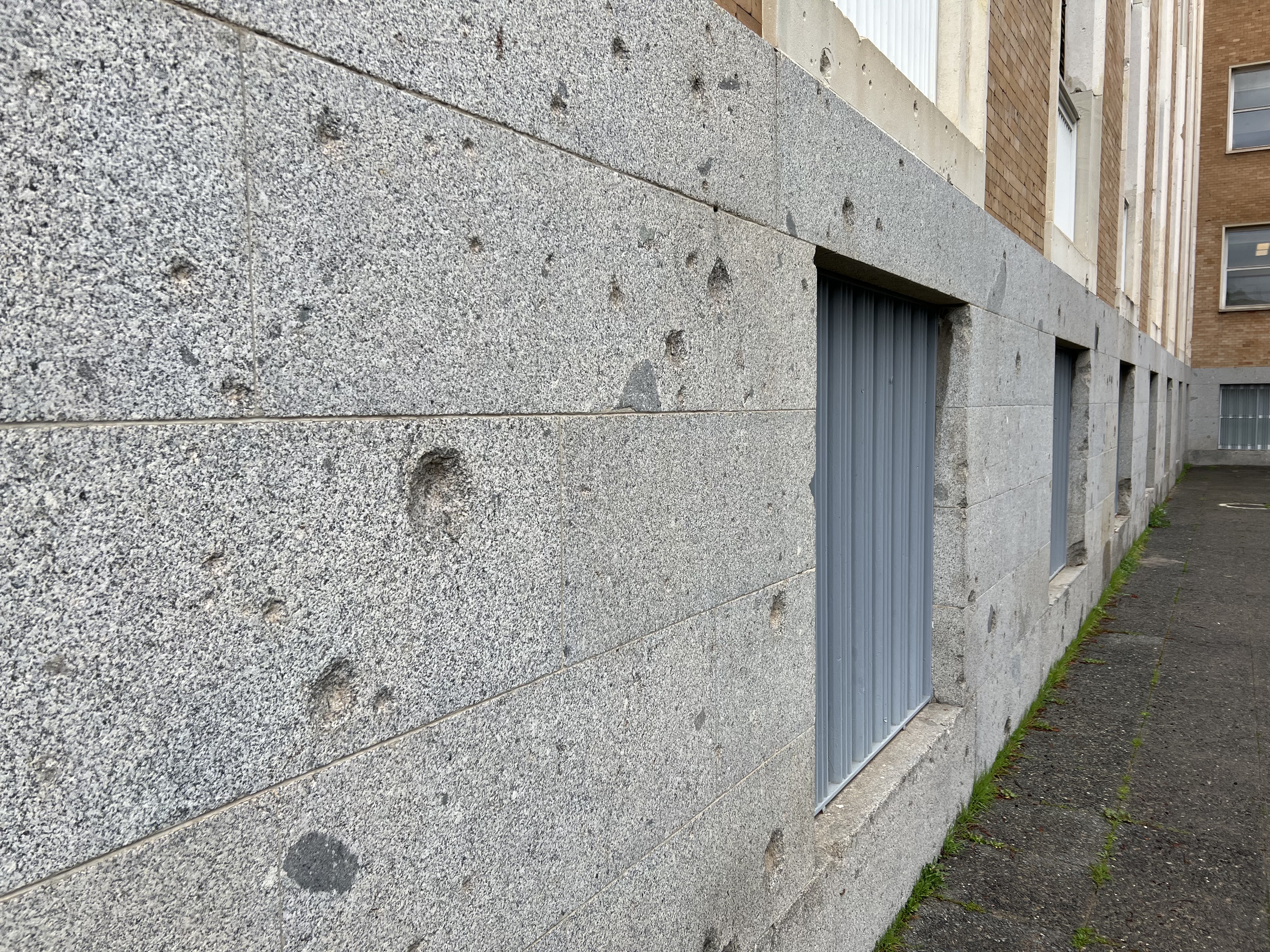
So, on this, our first morning in Madrid, we had many questions about the Spanish Civil War, which we knew mostly through Hemingway’s wonderful novel “For Whom the Bell Tolls.” We took a remarkable tour with Almudena Cros, an historian and guide who leads walking tours that are a tribute to the Spanish Republic, the International Brigades, and the forgotten victims of Fascism. We met at the Ciudad Universitaria, the City University, and as a light rain fell Almu led us onto the campus where students streamed in and out of buildings pockmarked by bullets and masonry damaged by mortar rounds. The university is where Republican forces stopped the Nationalist march on the Spanish capital, Madrid, and where, from a maze of trenches, both sides battled for years.

It’s hard to imagine a more powerful example of Spain’s pact of silence, its collective refusal to talk about, acknowledge, or even remember, what occurred after its Civil War broke out in 1936, than to learn that every day thousands of college students walk in and out of buildings riddled with bullet and mortar holes and other damage from the war, and yet are generally oblivious about what happened there less than a century ago.

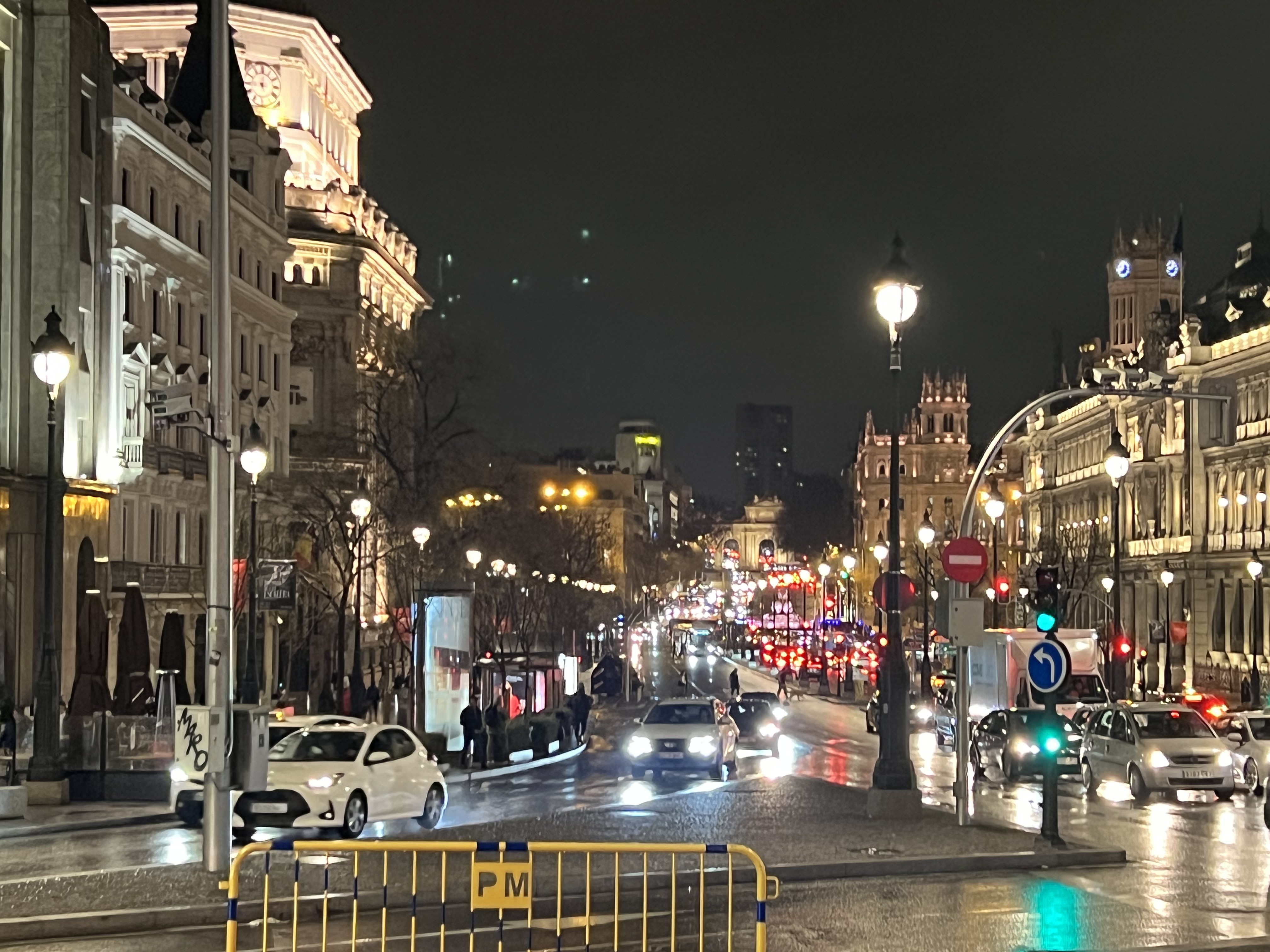
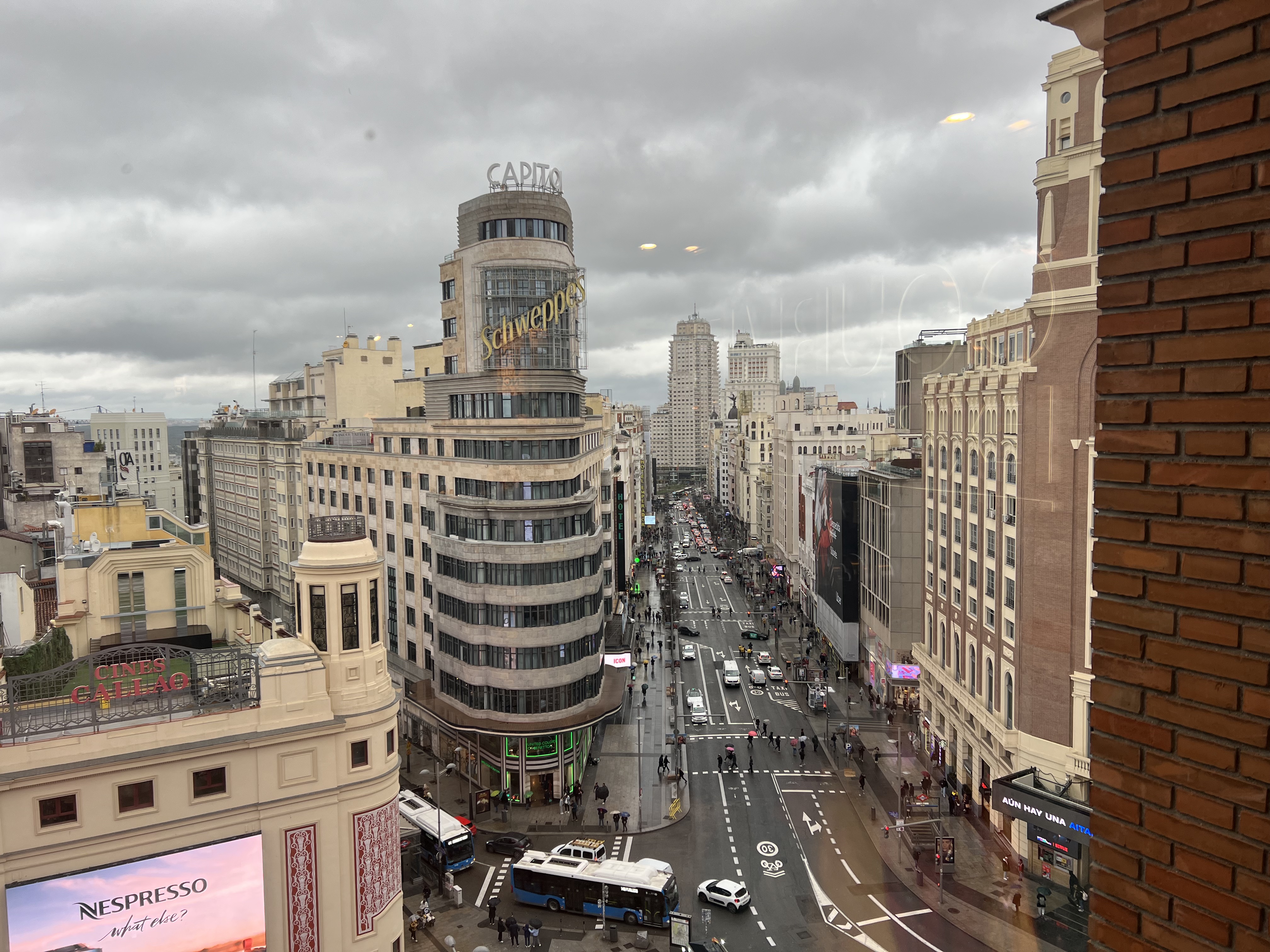
Almu walked us briefly through the history of the war in Madrid, showing us historic pictures of important sites during the war. We went into a nine-story building that was built on the site of the Hotel Florida, where Ernest Hemingway and many other international journalists had stayed and worked during the war. We saw the Plaza Mayor, where Nazi bombs had carved huge holes. We walked down some of Madrid’s most beautiful, and most lively, streets and compared them with Almu’s black and white photographs showing these same streets lined by crumbling buildings and rubble. How many of the thousands of people on those streets today know what happened there?

Almu fiercely believes it’s past time for Spaniards, and their government, to have more honest conversations about the war, to put up plaques and memorials that tell more fully, more truthfully, what happened. She seems to be a fairly lonely voice. Spaniards, it seems, are against digging into this part of their history, even refusing, in many cases, to unearth the mass graves of those executed during and after the war.

Thanks to Almu, we had an unforgettable introduction to Madrid and to the history of the Spanish Civil War. Her advice to visitors to Madrid, and her wish for those students that we walked past today, is this: Ask questions, notice the bullet holes, remember what happened there, and why, and take time to honor those who lost their lives fighting to defend democracy in Spain.

Arrival: Tommy the Talking Toilet and The Elevator Guy

TOKYO, Monday, Nov. 19, 2012, 4:36 a.m. — Hello everybody, it’s Will here and I am supposed to tell you about my day. We woke up REALLY early and my brother drove us to the airport. When we got there and navigated our way through security,customs and whatever you call it. We checked our baggage and mom got all darn WORRIED that her BAG did not go through. She thought the people there would be all like: “Oh there is a bag sitting on the ramp that was checked”. “Great John, let’s just leave it there cause we’re idiots.”Ha ha. We were sitting in our gate for like FOUR HOURS. Cause we had to come so EARLY!!! I read the new Diary of a Wimpy Kid book. It’s good. We got on our plane and they did not have those movie screens in the back of your seat thing and so I played video games for a LONGGGGGGGGGGG time.

When we got there dad looked up who won in the Ducks game and… NNNNNNNNOOOOOOOOOOOOOOOOOOOOOO!!!!!!!!! QUINCY, YOU DID NOT CHEER LOUD ENOUGH! The Ducks lost and so my mom was all smirky. So then I felt weird and started babbling. I said: “when I am in Africa I want to see Earl the talking elevator.” I felt SO weird and tired. When we got our bags we went to see if we could find our friends Mike and Helen. I was still babbling so I said, “Lets go find Michael Jackson and Helen of the Bob Dynasty We were waiting in this VERY long line and I found these two random people and thought it was Helen and Mike. Then they snuck up behind us.

We were in this very busy under ground train station and waiting in this long line. I was feeling awful. Mike turned my hat inside out and said it was my rally cap. Two hours later we were rushing to the train–we missed the first one because of this stupid security officer. I named him Vaz the Spaz. 45 minutes later we were on the train. I played video games for the whole hour long ride. When we got out we rushed out of this train station and into this department store. It was crazy. I got dumplings and a moon cake. It took a long time for everyone else to find their food. They found these snack boxes of WHAT? We never knew. Then dad randomly bought these fried things. I was just happy I had my dumplings. We stopped at this gum shop and watched them make hard candy and gum. They had samples. It was so good. It was still warm and fruit flavored.

We raced back to the hotel. and checked in. Some Japanese guy was in the elevator we waited for him to go and we pressed the button agian. AAAAAHHHH! THAT JAPANESE GUY WAS STILL IN THERE! We waited again and this time it came up empty. We went to our room and Helen and Mike went into the wrong room with some guy in it. We got in our room and the toilet open the seat when you opened the door. “AAAAHHHHH”!!! I screamed. I named it Tommy the Talking Toilet. We were going too have dinner. MY DUMPLINGS TURNED OUT TO BE FROZEN! So I had a moon cake for dinner because I did not want too touchthe purple rice and the fried whatever. Then I fell asleep. GOODBYE.

Editor’s note: As the grownups were finishing dinner and their beers in the hotel, Will reclined onto one of the beds and announced, “OK, that about wraps it up, folks,” rudely urging Mike and Helen to return to their own room, calling an end to our first hours in Japan ….