Rick Attig and Courtenay Thompson live in Portland, Oregon. Rick and Courtenay are former journalists and writers, and love to travel with their sons, Will and Mitchell, and Mitchell’s family, his wife, Alex, and twins, Rory and Hazel. We maintain this blog mainly to keep in touch with our family and friends while we are visiting new places, but we hope others enjoy our photographs and posts about our experiences.
You can contact us at rickattig@comcast.net or courtenaythompson@comcast.net
A play, a tour of the reconstructed Globe Theater, and a take-home meat pie for dinner.
Instead, we ended up in what Will termed a “passive-aggressive” argument at dinner in the shadow of the Tower about whether the take the Tube home at 7:30 p.m. or a cab. Obviously, we again tried to do too much. But that is the joy of travel, n’est-ce pas?
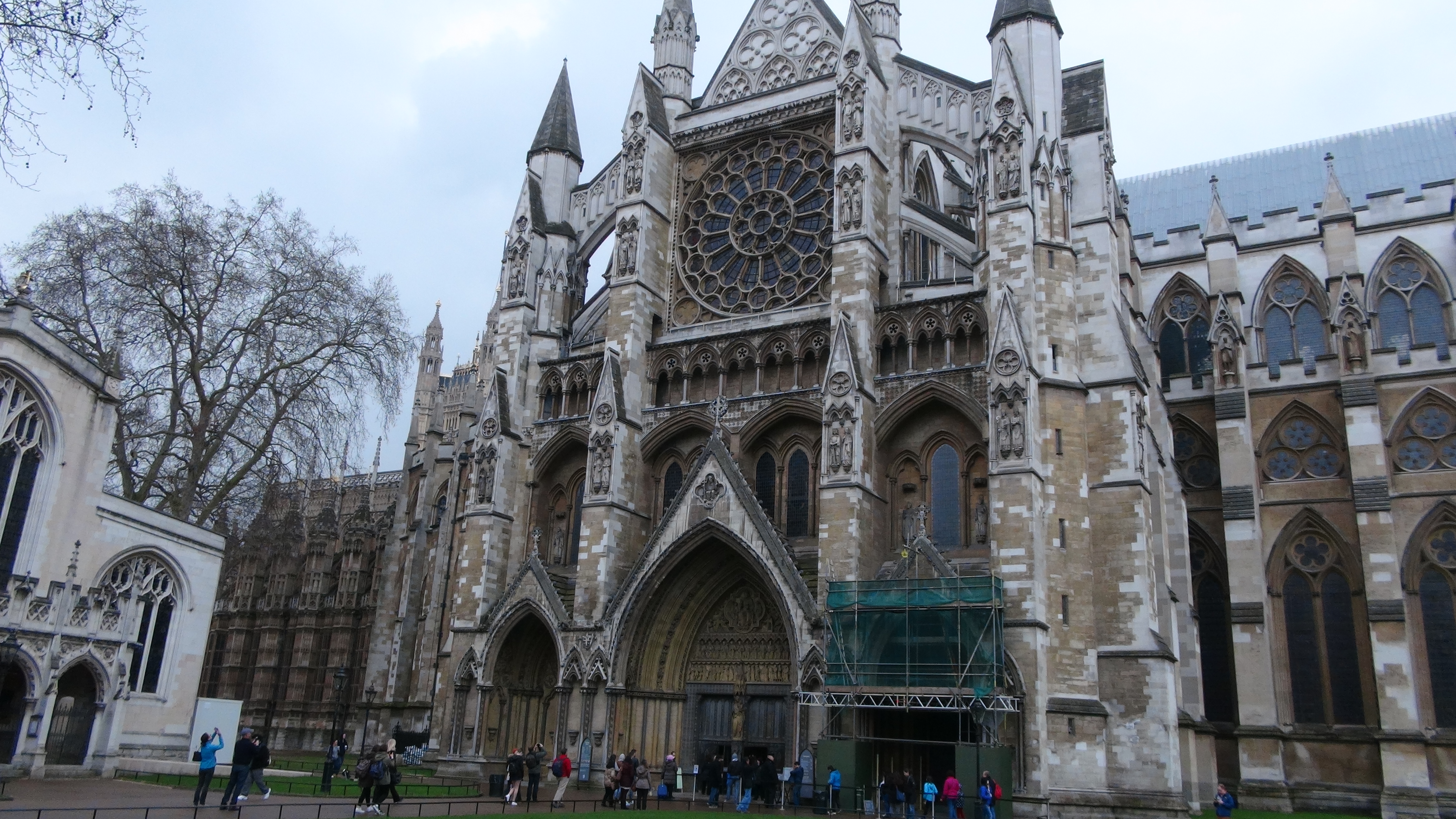
We started the day at Westminster Abbey, the 11th century former monastery that is the old English heart and soul. Here is where the kings and queens are buried, where poets are honored, where the Royal Air Force is commemorated and the Tomb of the Unknown Soldier lies. Its sense of history is overwhelming.
But the highlight of our visit was to the very heart of the abbey itself — the sanctuary of St. Edward the Confessor — the holiest spot in the abbey, a place not on the guided tour, the place the Pope himself came to pray on his visit to London. A sweet old volunteer told me, when we entered the abbey, that we could visit the shrine of the only English saint still intact and still buried in his original spot if we joined the 11 a.m. prayer. We thought it would be crowded, but only about eight of us showed up, to be ushered into the sanctuary, where lay the Confessor, the 11th century king who built the first abbey here. His tomb had been desecrated and stripped of ornament during the Reformation, but the chaplain told us King Henry VIII didn’t dare disturb the saint. Other saints were not so lucky, and their remains “scattered to the wind.” Richard II and Edward III, as well as Edward I Longshanks and Henry III were also entombed in striking bronze tombs in this elevated area.
We joined the chaplain in the Paternoster, and prayed for, among other things, peace among nations, end to strife, the health of the Queen and the realm, and asked Edward to hear us. It was quite lovely.
We then saw the tombs of Queen Elizabeth I, who shares her tomb with her Catholic half-sister Mary, who had once imprisoned her in the Tower. On the opposite side of the chapel lay Mary, Queen of Scots, who had been executed on the orders of her second cousin Elizabeth. They are all laid to rest together. As I said, it’s all a little overwhelming.
Will stood on tombs as diverse as Charles Darwin, whose seat he had taken yesterday at Ye Olde Cheshire Cheese, to Clementi, whose music he has played on the piano. We admired the lovely ceilings of the Henry VII chapel, as well as the Chapter House, where parliaments met from the 14th to the 16th centuries.
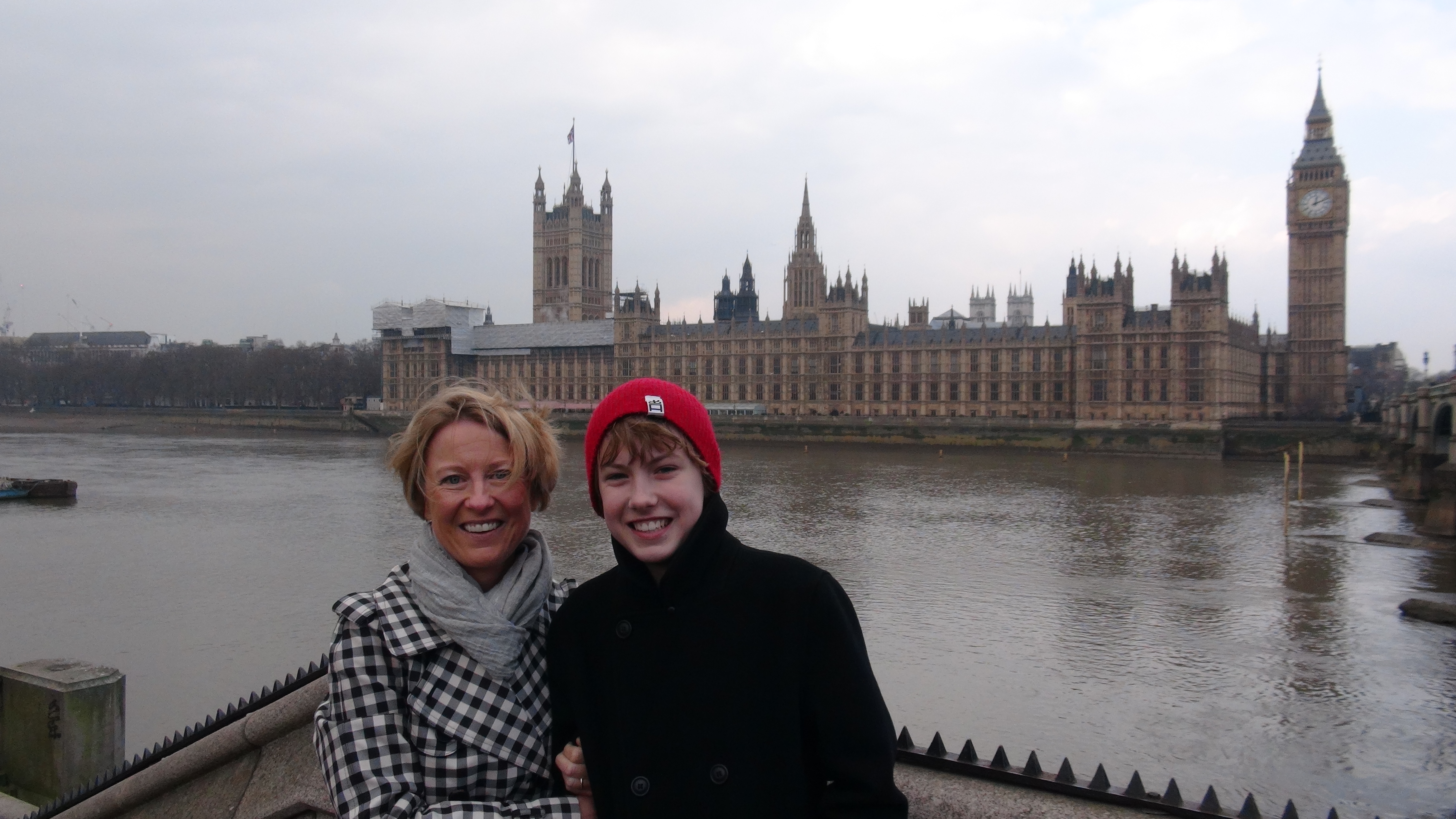
Lunch was in the old County Hall building across Westminster Bridge, a lovely lunch of crab cakes with a view across the Thames at the north bank. We then walked along the south bank, dodging the State Fair atmosphere at the base of the London Eye, and made our way to the Olivier Theater at the National Theater — we had just seen Olivier’s tomb, so it seemed fitting to be seeing a play in his theater. Treasure Island had some terrific sword-play, as well as the most incredible set that rose and fell into the stage, rotating, sprouting pirate ships and islands. Someone told us it’s one of only two such stages in the world — I think the other may be in Ashland. Remind me to check on that. Anyhow, the acting was good, but the second half got a little bloody, which was hard to square with the comedy. Also fittingly, Will’s favorite character was a ship crew member named Grey, whose name no one could ever remember. Grey, Will’s favorite painting at the Tate Modern, now Grey, the nondescript comedy relief.
Our favorite line in the play was just before one of the ships’ mates, a hefty woman very fond of pies, declared just before she died, “Thanks for the pies and adventuring.” Exactly our thoughts.
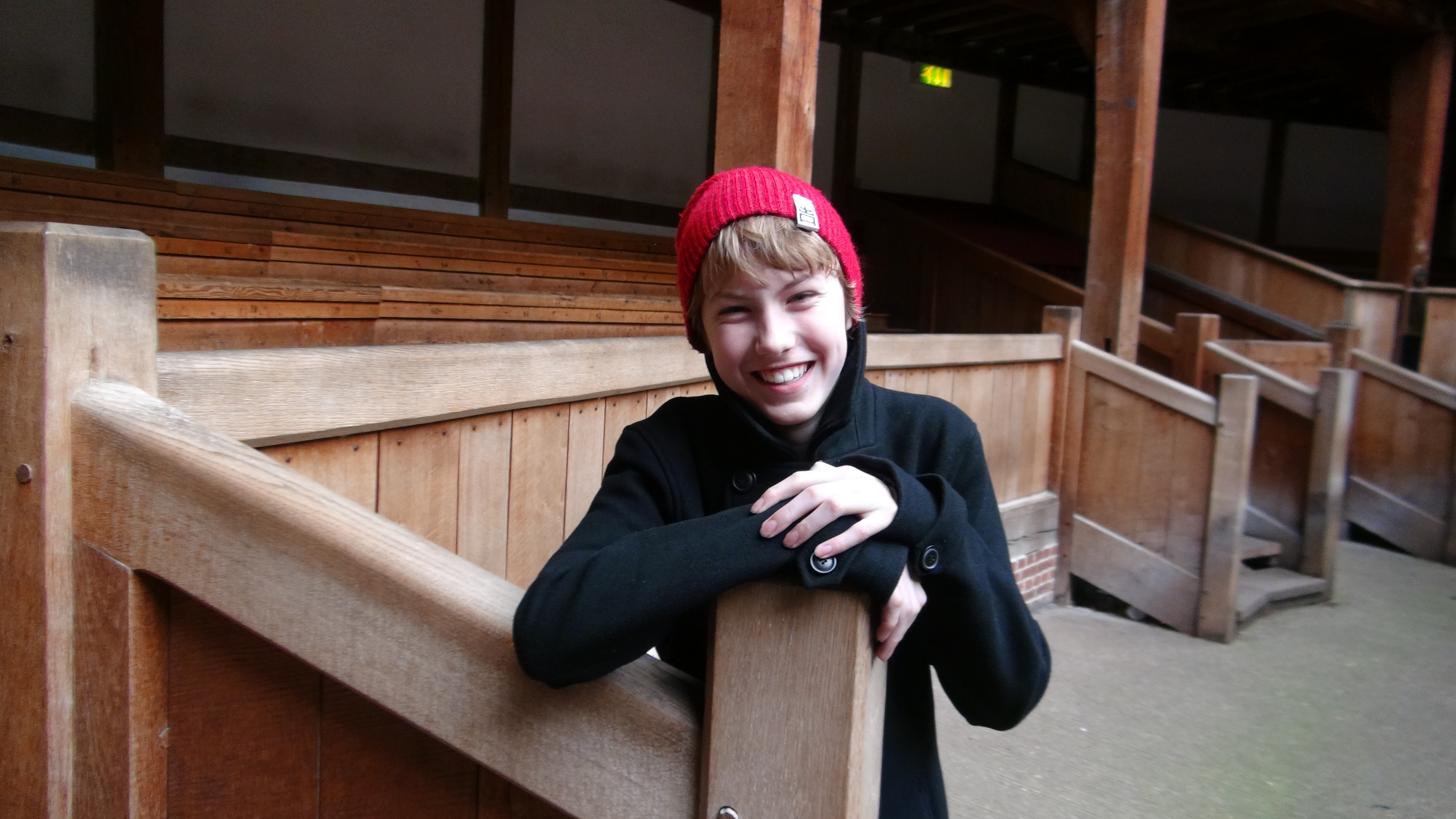
We then raced down the Thames to catch the last tour of the Globe, the vision of American director and actor Sam Wanamaker, built in the 1990s to recreate the theater that Shakespeare wrote for, down to the animal hair in the plaster walls. Rick was disappointed with the tour, since he wanted to hear how it was constructed, but it was interesting and wonderful to see. The guide talked more about the experience of the theater for a 16th century audience, who would pay one penny to stand in the pit at the base of the open air theater. More pennies got you a seat and better comforts, such as a pillow. The groundlings, or the 1,000 who crammed into the pit, apparently smelled quite atrocious, what with the lack of bathing and the penchant for eating raw garlic to ward off the plague. When they roared at the action on stage, apparently they let off a big stink, thus they were called the Pennystinkers. Rick thought the same name suited a certain boy we know and love, as well as a certain black Labrador. Our little Pennystinkers….
Looking back over the day, it seemed incredible we saw the tombs of the kings who appear in the plays by the playwright whose 400-year-old theater we just saw reconstructed. The Oregon Shakespeare Festival just announced they will put on Richard II next season, and here Will saw his tomb and his famous portrait at Westminster, as well as the memorial bust to Shakespeare. It all weaves together…
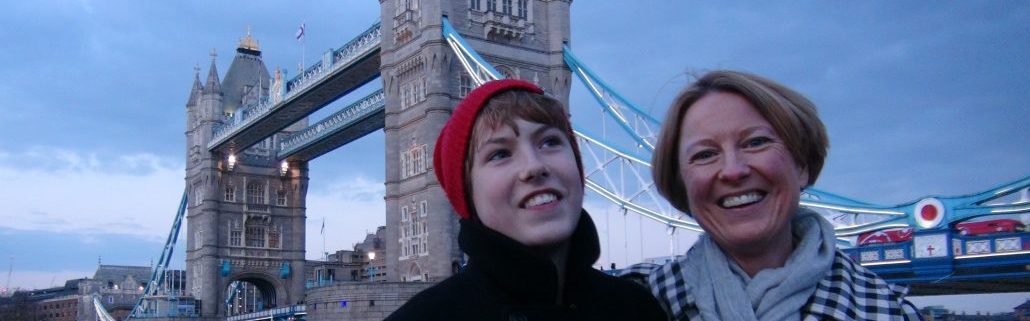
We were then off to dinner at the Perkin Reveller on the recommendation of our friends’ the Riches, and we had a wonderful dinner (yes, meat pies again, with Will eating half of mine, again) with evening views of Tower Bridge, the creamy stones of the Tower itself, and the Thames.
We ended with the fateful passive-aggressive argument — resolved when we took both the Tube and a cab. Good night all and cheers from London!
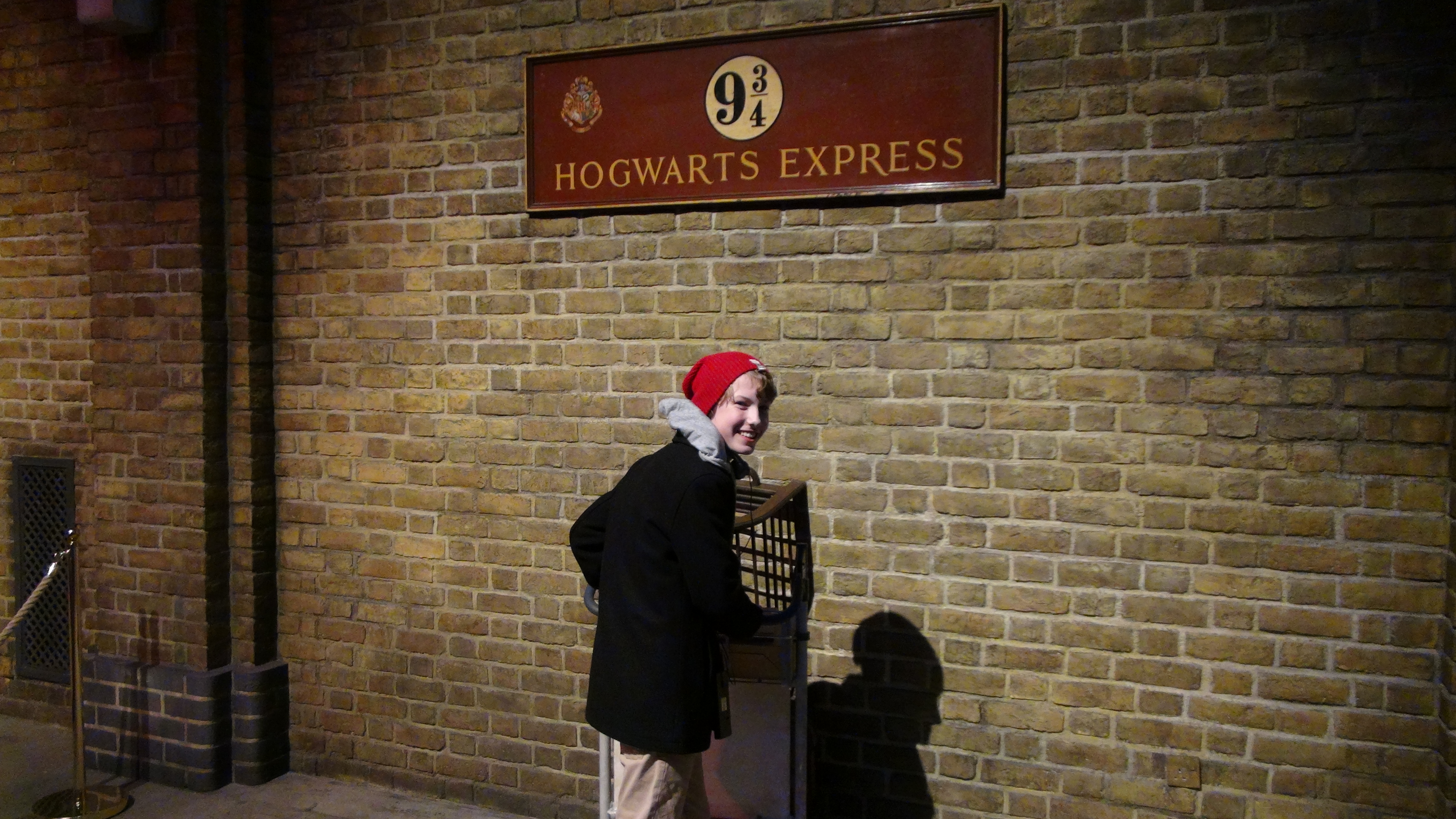
LONDON—Today we went to the Harry Potter movie studios. We got up and I ate a doughnut. After breakfast, we walked to the bus stop and stood in line for the “Harry Potter Bus.” It took about an hour to get to the Warner Bros. studios site, a former WWII airplane manufacturing site, because it is way outside of London where we are staying. When we got off the bus, we saw big statues of wizard chess pieces and we walked through the big doors inside an enormous warehouse-like building that had been the set for the movie and where the young actors spent most of 10 years.
We waited in line for a while before going into a big movie theater, where we watched a short movie about the production of the seven books leading to eight movies. Once the movie had finished, the movie screen floated through the ceiling and we were led through a giant set of double doors leading to the Hogwarts Great Hall! It was really neat because we got to see some of the costumes that the Hogwarts teachers wore; it looked exactly like in the movie, except there was no enchanted ceiling — that was added later. After we were finished gazing at the costumes in the Great Hall, we walked into another big room that was about the size of a convention center. There we saw the sets for the Gryfinndor common, Dumbledore’s office, and numerous props and costumes. The coolest props were the animatronic ones, like the pewter cauldrons that stirred themselves.
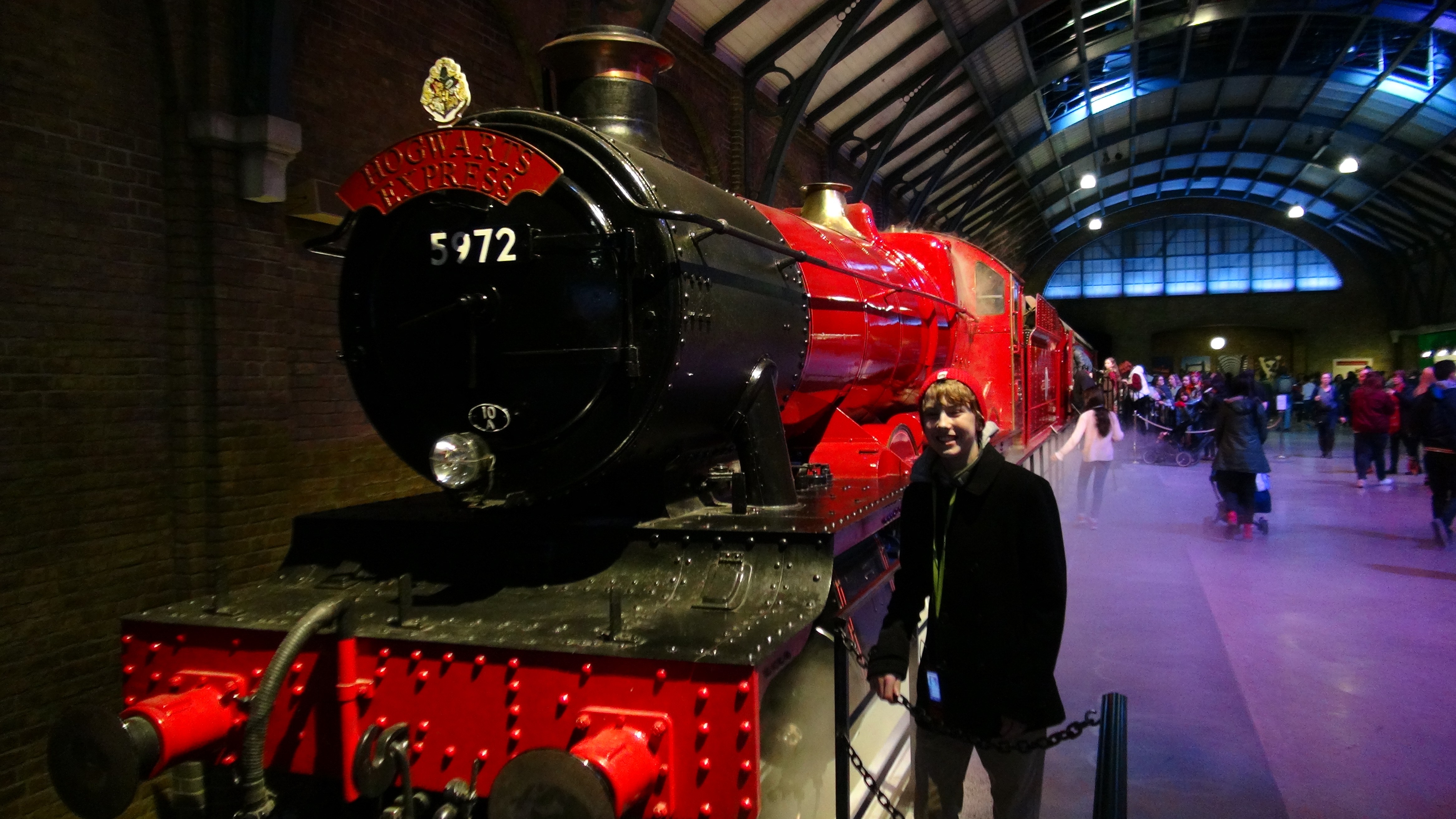
I got to fly with my mom in a magic car in front of a green screen, which made it look like we were actually flying over the Hogwarts Express. And I also put on a wizard robe and flew through the skies on a broomstick. See the video above, and make sure you watch until you see me!!!
We stopped on the “back lot” for a glass of butter beer, which was cream soda topped with cream to leave a smudge on your upper lip. We saw the Knight Bus and No. 4 Privet Drive and part of the Hogwarts Bridge.
Next, we went into a different big room where we saw most of the creatures that were in the movie. We saw Dobby the house elf, a troll, many goblins, Fawks the phoenix, Buckbeak the hippogriff, and a dragon head. It was pretty neat. We also ran into someone from Catlin Gabel!!!
The next room had blueprints and drawings of the original characters and monsters. The final room was pretty neat. It was the real castle of Hogwarts. It was really small and kinda disappointing (I thought that it was a real castle) but awesome anyways. After that we toured the impressive gift shop before I dropped a bunch of my chili from my chili dog onto my clean pants, and my mom was mad. At the end of the day, we hopped back on our bus and went home where we ate dinner in our hotel room.
* His mother, who is doing laundry as we speak: What Will really meant to say, was that he has been obsessively reading and re-reading all the Harry Potter books for weeks in preparation, and he really loved the day, though it was sweet and sad to his mother that some of the magic of the movies didn’t seem quite as magical to him when the illusory tricks were revealed. He loves to believe in the magic of the movies. But it was a little like realizing the Candy Fairy who takes away uneaten Halloween Candy and leaves a toy in its place is really me. “Hey no it’s not,” he’s shouting now. “There’s a real Candy Fairy.”
LONDON — Thirteen hours of sleep is apparently the magic number for an almost-13-year-old — just enough after a trans-Continental-Atlantic-North-Pole flight to rejuvenate Will’s soul. Or at least his energy level.
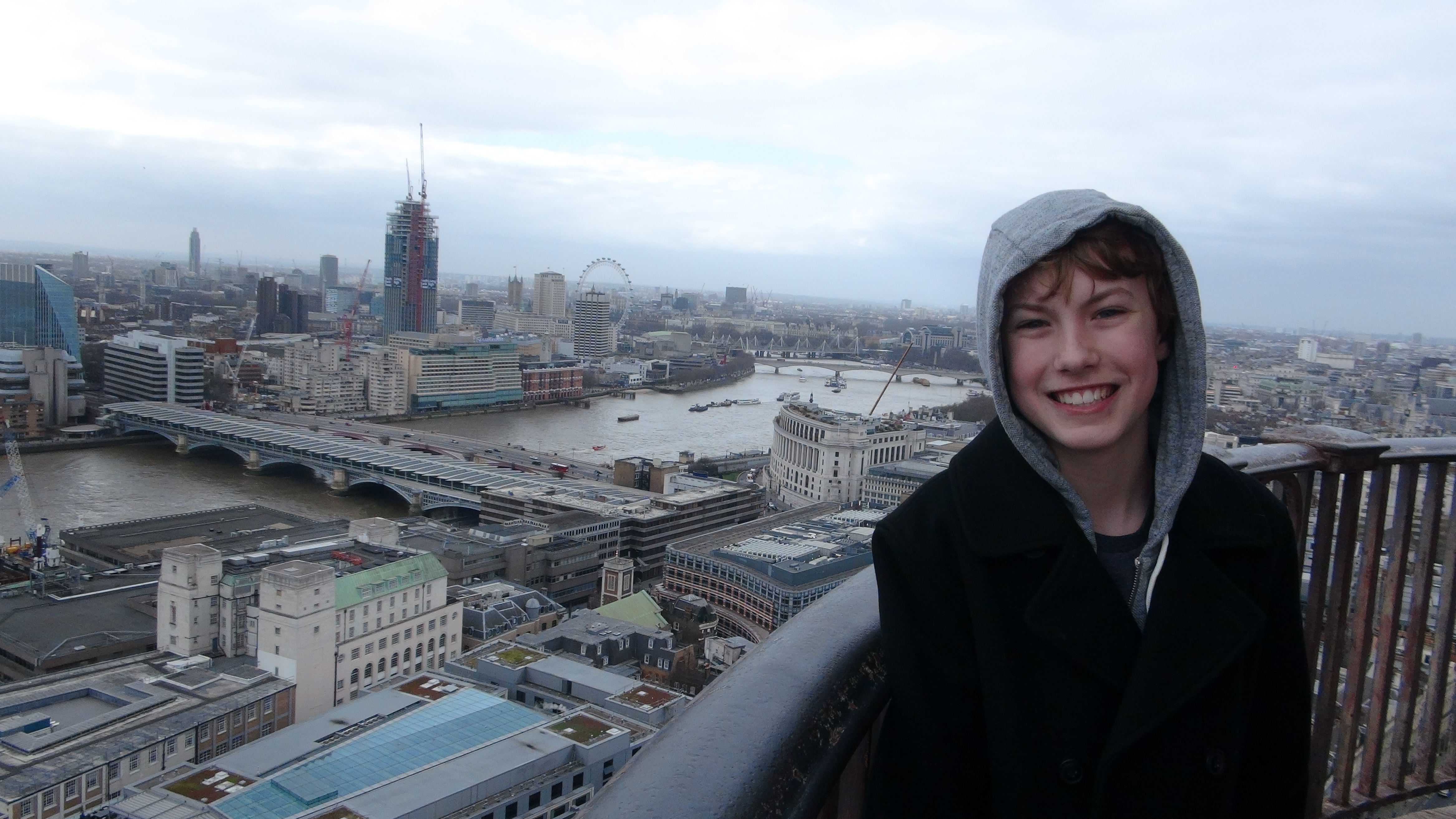
We started late today (much to Rick’s chagrin — two hours late! How will we ever make our lunch reservation?!? First day of our itinerary, and we’d already blown it!), but managed to still get to St. Paul’s Cathedral by lunch. The cathedral, of course, is historic, gorgeous, inspiring, the site more than a thousand years of history — fires, weddings, bombings, funerals, burials. What struck us was both its grandeur, but also its restraint — not as flamboyant as St. Peter’s in Rome, but still with enough bling and soaring space to inspire you to look, and think, of the heavens. Will especially liked climbing the 500-plus stairs to the top of the dome (Courtenay only made it halfway, to the Whispering Gallery, since the stairs to higher galleries were tight and claustrophobic. A guide helpfully told me that no one has ever gotten stuck, and quite large people are even able to squeeze their way up, but I didn’t want to tempt fate and a panic attack.)
The soaring stained glass windows and memorial at the end of the church, commemorating Americans lost fighting in World War II, was also beautiful and moving. As were the stories of the several hundred Londoners who took shifts holding vigil, night after night, to put out the incendiary bombs that rained down on this symbol of British resolve during the German Blitz of 1940-1.
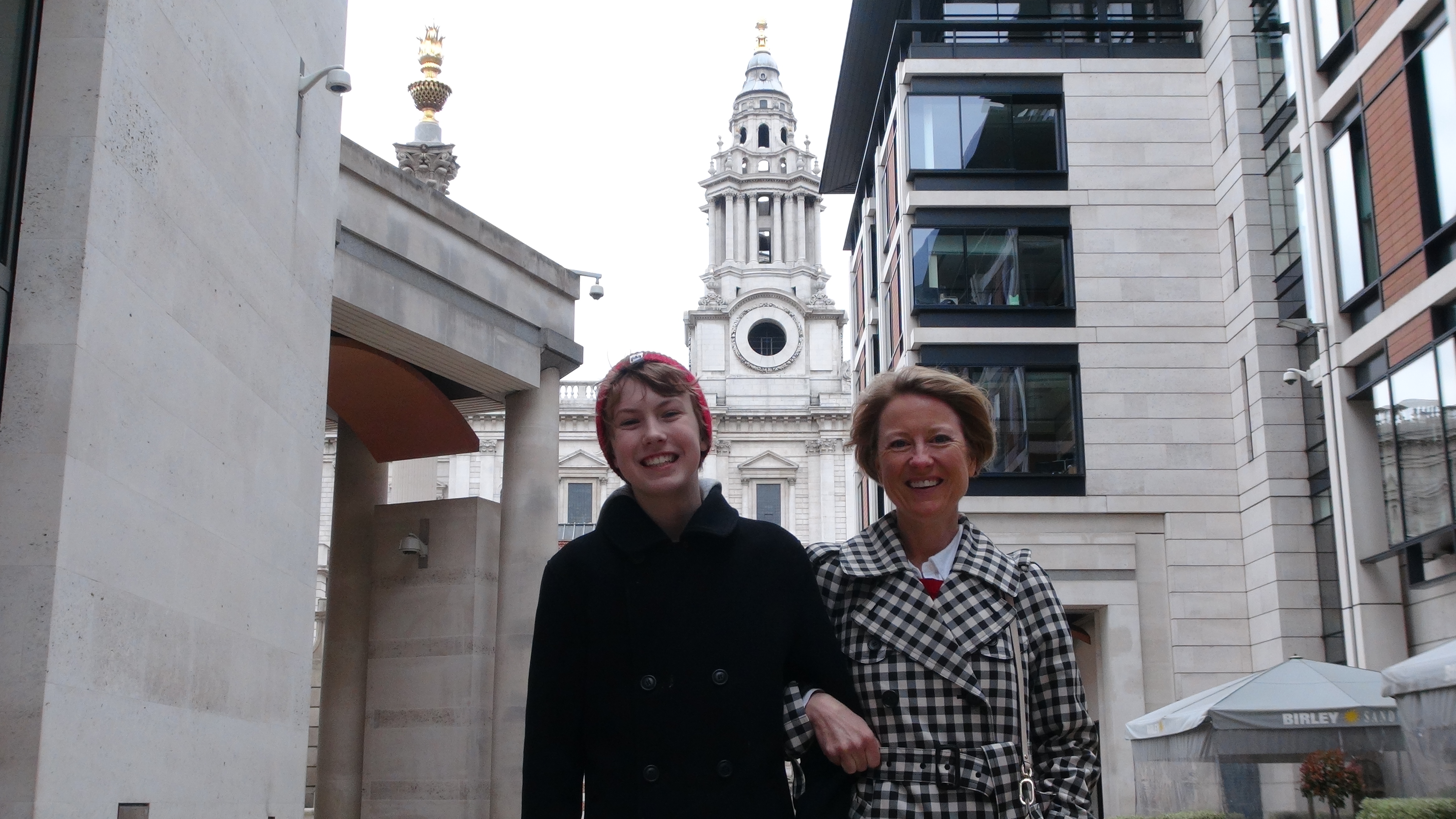
Will and Courtenay with St. Paul’s in the background
Rick had reserved us a hot table at a chop house nearby — only to find out when we showed up that he had reserved it at a pub of the same name — and that the chop house of the same name was closed on Saturdays. Will declared the pub smelled bad, so with a hunger-storm-food-mood brewing, we took off for the appropriately named Bread Street and chanced upon a Burger and Lobster joint (surf and turf taken to extremes) that Will declared was our lunch spot. The lobster was rubbery, but hey, Will ate at least half of his bacon-and-cheeseburger we were able to forge on …. to the Museum of London.
Nothing is very far away in the center of London, so we sauntered over to the museum, built just on the edge of the 2,000-year-old Roman wall that once ringed the city. The museum traced the city’s pre-history, through the Roman times circa 55 BC to 407 AD, Anglo-Saxon settlement, Viking invasion, medieval, Renaissance, Restoration, up to the present. It was well worth a visit — though Will said he’d seen all the medieval stuff already in his fall Cultures class (thank you Paul Monheimer). I loved the Roman artifacts, while Will preferred the reenactment video of a gladiator fight. Rick seemed most fascinated by the medieval history, up to the great fire of 1666. We marveled that since Will has taken up saber fencing, he no longer demands we buy foam or wooden swords to lug around with our luggage. “I have enough swords now,” he said.
You will not believe this, but as I am talking to these yahoos about what they liked about the museum, they claim I, me, Courtenay, was the one who forced them to speed through the Victorian and modern ages. I was only trying to be nice, since Will seemed to be DONE with the museum experience. Rick says, “God, we spend an hour just looking at chipped stones, and then we had to get out of there…”
Next we headed off across the Millennium Bridge to the Tate Modern, a converted power station, which was extremely crowded, this being a Saturday. Rick interpreted the works, and we made a game seeing how close he was what the artist actually intended. He actually did pretty good — a lot of artists struggling with modernity and technology. Will found a painting called, “Grey,” which was very grey, and really only grey, most interesting. Rick liked a neon blue rust-encrusted engine that spoke to his soul. Or something. I guess we were getting tired and a little loopy.
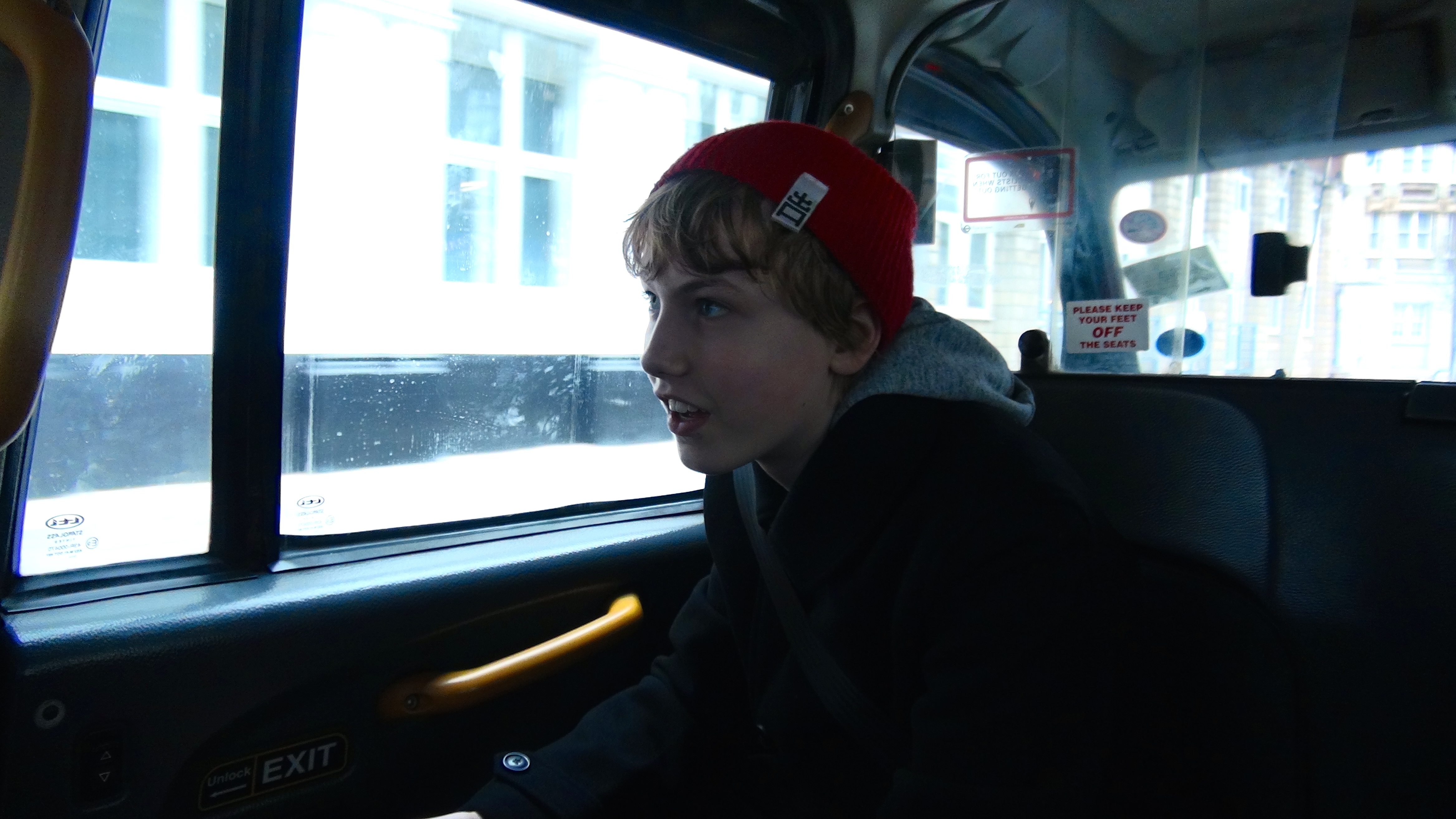
Will in the jump seat of a Black Cab (Working on the checklist of must-do things that his friend Ian gave him)
We ended our day in a black cab, where Will rode in the jump seat, on the recommendation of his friend Iain. And at DaCorradi Italian restaurant, where Will ate enough Spaghetti Bolognese to send him into another 13-hour sleep. Buona Notte from London!
SHANGHAI – We have moved so quickly, and with such full days, through Beijing, Xi’an, Chengdu and now, Shanghai, that none of us has had the energy at day’s end to produce a blog post. Everyone is a bit nostalgic for Courtenay’s Terrible Thompson Torture Tours, which at least give everyone a few hours break before dinner, our favorite time to blog.
But we came back to the hotel on our last afternoon in China to the news that Beijing has suffered its heaviest rain and worst flooding in years, with more than 37 deaths, and realized we should let our families and friends know we are happy and safe here in Shanghai. Tomorrow we catch our long flight home, via Vancouver, B.C.
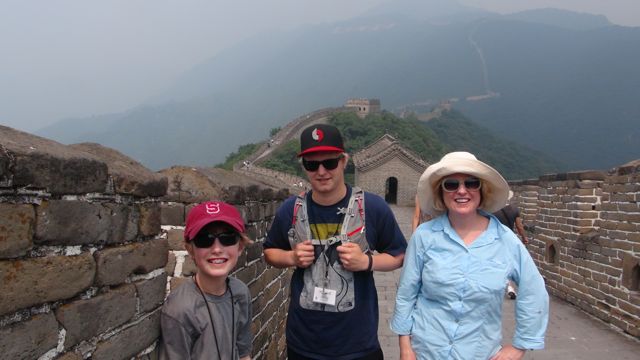
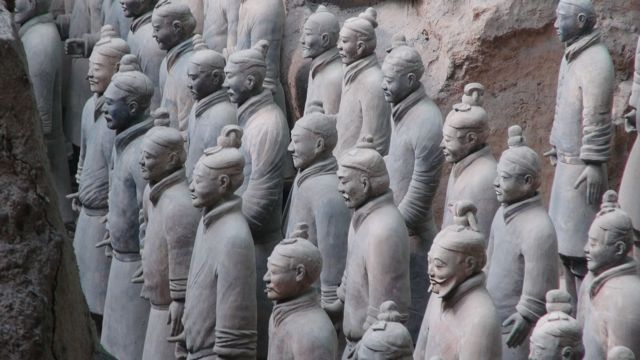
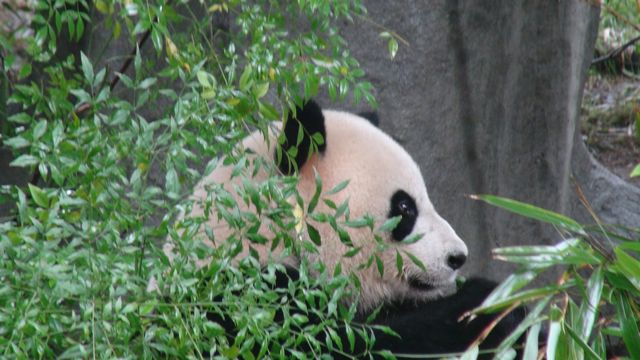
We have many stories to tell: Courtenay and Will enjoying a quiet walk together on the Great Wall far away from the madding crowds, Mitchell and I enjoying a young panda skittering through the grass only a few feet away, all of us mesmerized by the 2,300-year-old terracotta army.
It will take us some time to reflect on all that we have seen and learned in China. For now we all have this blur of memories, ancient art, acrobats and opera singers, middle-aged dancers and kite fliers livening up the public parks, the gray pall of pollution over Xi’an — with its beautiful 400-year-old walls and waiters who giggled charmingly at the silly Americans as they attempted to eat local dishes — the lush greenery of Chengdu, the stunning yet zany and futuristic skyline of Shanghai lit up at night.
There will be time to write later about the food we have experienced, some of it hot, some of it unidentifiable, much of it beautifully created and presented. And Will and Mitchell return with a trove of Chinese treasures—masks and warrior statues, chopsticks and chess sets.
“Everything new is good,” our guide cheerfully announced as we drove among the massive highrises of Shanghai on our way in from the airport yesterday. Well, yes. We have great new friends we have made among the Stanford travelers. We have fresh memories, new stories, moments in our lives that will remain in our memories. And finally, we have a new appreciation of China, this rapidly changing country that we have merely glimpsed over the past two weeks.
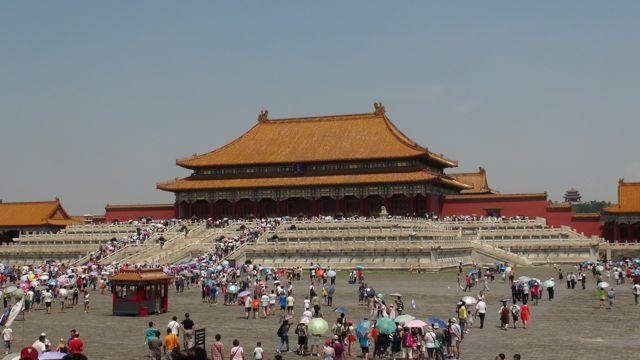
BEIJING – On a hot Sunday morning, with the temperature nearing 90 degrees, we walked with tens of thousands of other people across Tiananmen Square and into the main gates of the Forbidden City, which for more than 500 years served as home for Chinese emperors, their families and concubines. The crowds were incredible—imagine everyone leaving a college football game through the same few large gates, but for hours and hours and hours. It was a beautiful scene, though, a sea of brightly colored sun umbrellas moving across the stone walkways and into elaborate, brightly colored palace buildings. The Forbidden City is a collection of more than 900 buildings, and we toured fewer than two dozen of them over a period of several hours. It’s a massive place, on a scale that is hard to grasp even as you are being swept through the place with the sea of other visitors. During the trip, Will made a new friend in the group, Nicholas, who is here with his grandparents, and the two 10-year-old boys navigated the Forbidden City and its crowds together, chatting and pointing out things to one another.
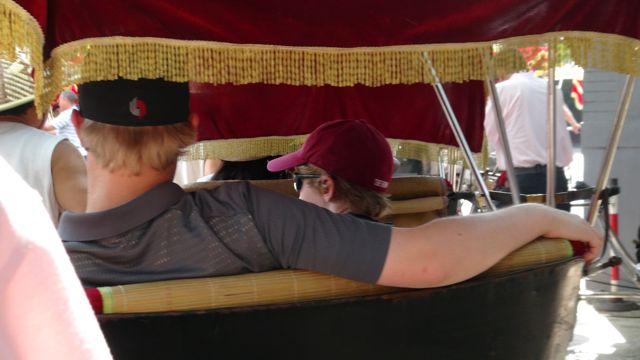
From the Forbidden City, we went to a group lunch at a small hotel near what is known as the Drum Tower, which served as a night-time clock tower in old Beijing, with drummers pounding out the time in intervals of every two hours. After that, we climbed two by two into a flock of pedicabs that had assembled outside the restaurant. Mitchell rode with Will, and after the driver took our camera and snapped a picture, Courtenay and I rode away on another cab. We rode slowly in a long line through a series of hutongs, the small alleyways of Beijing. We rode by Chinese cooling their infants in pots of water and old men playing board games. The cabs didn’t seem to have working brakes, and every time the group slowed for a corner, or a passing car, we’d bump the cab in front of us, and get a corresponding tap from behind. Yes, it was a touristy little ride that went out in 20- minute circle, but it was fun and interesting to rattle along through the hutongs, where there are piles of sand, dirt and brick everywhere, people working on their homes and tiny businesses.
The bus ride back to the hotel took us by dealerships for luxury cars such as Maseratis and Jaquars, and it was jarring to go so quickly from the sight of men driving rusting pedicabs to those shopping for some of the most expensive cars on earth. Beijing is both desperately poor and incredibly rich, sometimes within the same couple blocks. Everywhere you look you see the deep economic tensions in this country, which were described to us in an hour-long lecture late Sunday. The speaker, Frank Hawke, a Stanford grad who has spent most of his life in China, says it can go either way—with a hugely changed, reformed China joining the community of nations with a free and democratic economy, or a China in chaos. But it cannot go on this way, without change in some way.
By late-afternoon, we were back at the hotel, and Will hit the pool with some of his other new buddies among the Stanford travelers, while Mitchell and I took refuge at the hotel bar. It’s a great treat for me to have both of my sons here together, sharing these experiences. For Courtenay, today also was a new experience, the first that we have ever had together as part of an organized tour. It’s probably not something we’ll always want to do in our traveling, but it was clearly a relief for her to leave the organizing and the communicating and the decision-making to others, and just wander along taking everything in.
We go next to the Temple of Heaven and the next day to the Great Wall, before we say goodbye to Beijing and head for Xi’an, the home of the terracotta warriors. Whenever I think of Beijing, I will remember the mass of people streaming into the main entrance of the Forbidden City, the brilliant umbrellas flowing like a river through the blazing sun.

 The Thompson Attigs