BOLOGNA, Italy – Friday, May 20, 2022 – We have been extremely remiss in our blogging, so much so that my mother called me last night to remind us to “keep sending those blogs!” It’s nice to know we have a loyal readership.
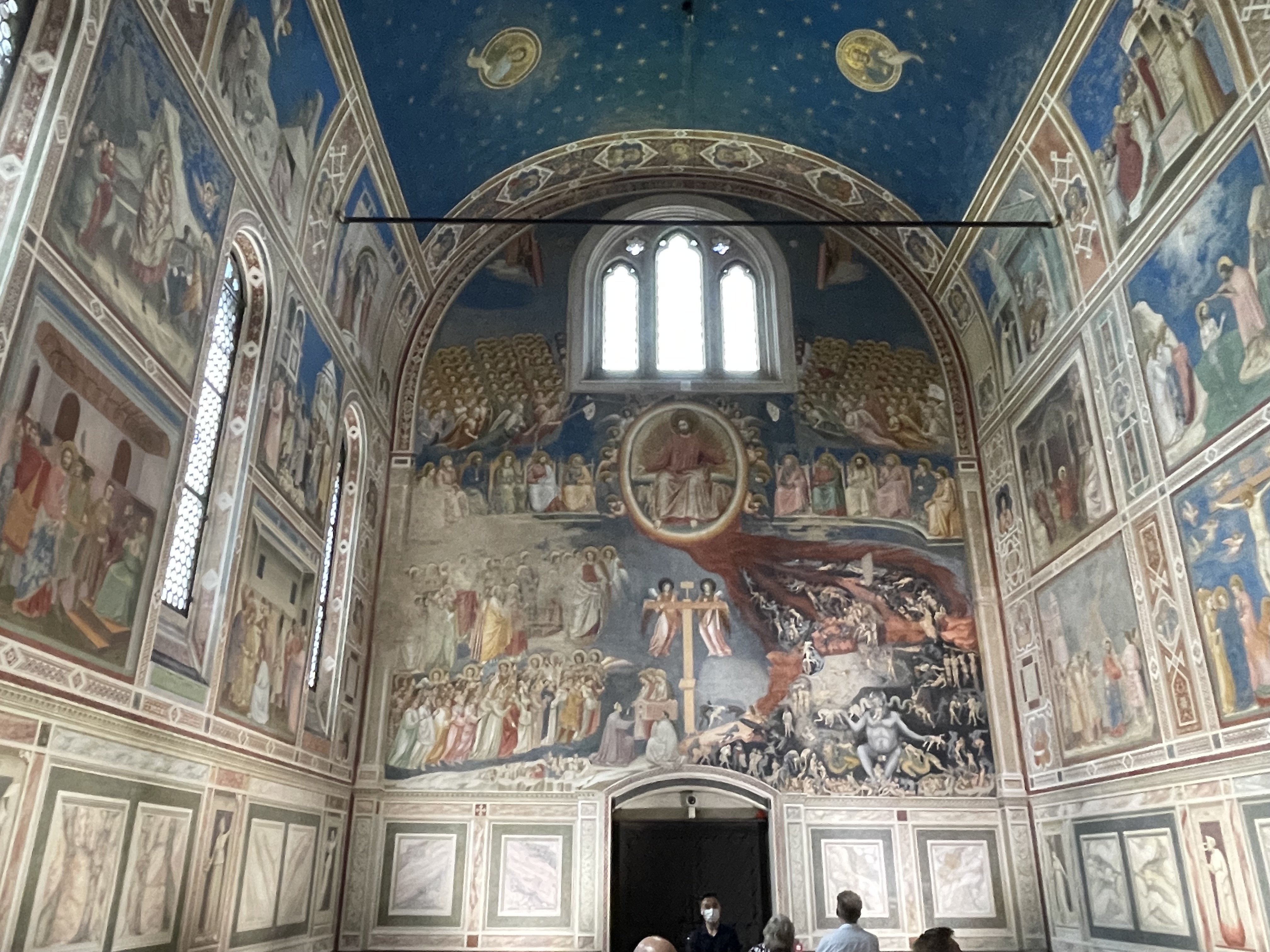
Let’s see, where to start? Maybe with our daytrip to Padua, or Padova, a small city outside of Venice with perhaps the most important works of Western art, ever, frescoes by the Florentine artist Giotto di Bondone, in a small early 14th century chapel next to an ancient Roman arena. Rick and I left Will and Amy in Venice to spend the day on their own, going to the Biennale, Venice’s huge modern art extravaganza, and shopping. But Rick and I opted for the medieval, traveling the 30 minutes by train to Padua, home of one of Europe’s oldest universities (Galileo studied there) and also the home this weekend to a saber Grand Prix, where several of Will’s friends and teammates are fencing. Will’s coach from OFA, Adam, and his daughter are here, and we are missing them in Venice by just one day. We joked with Will that his Notre Dame teammate and friend Jared Smith was going to take a break from the fencing to meet us at the Scrovegni Chapel, and that Jared just LOVED it.
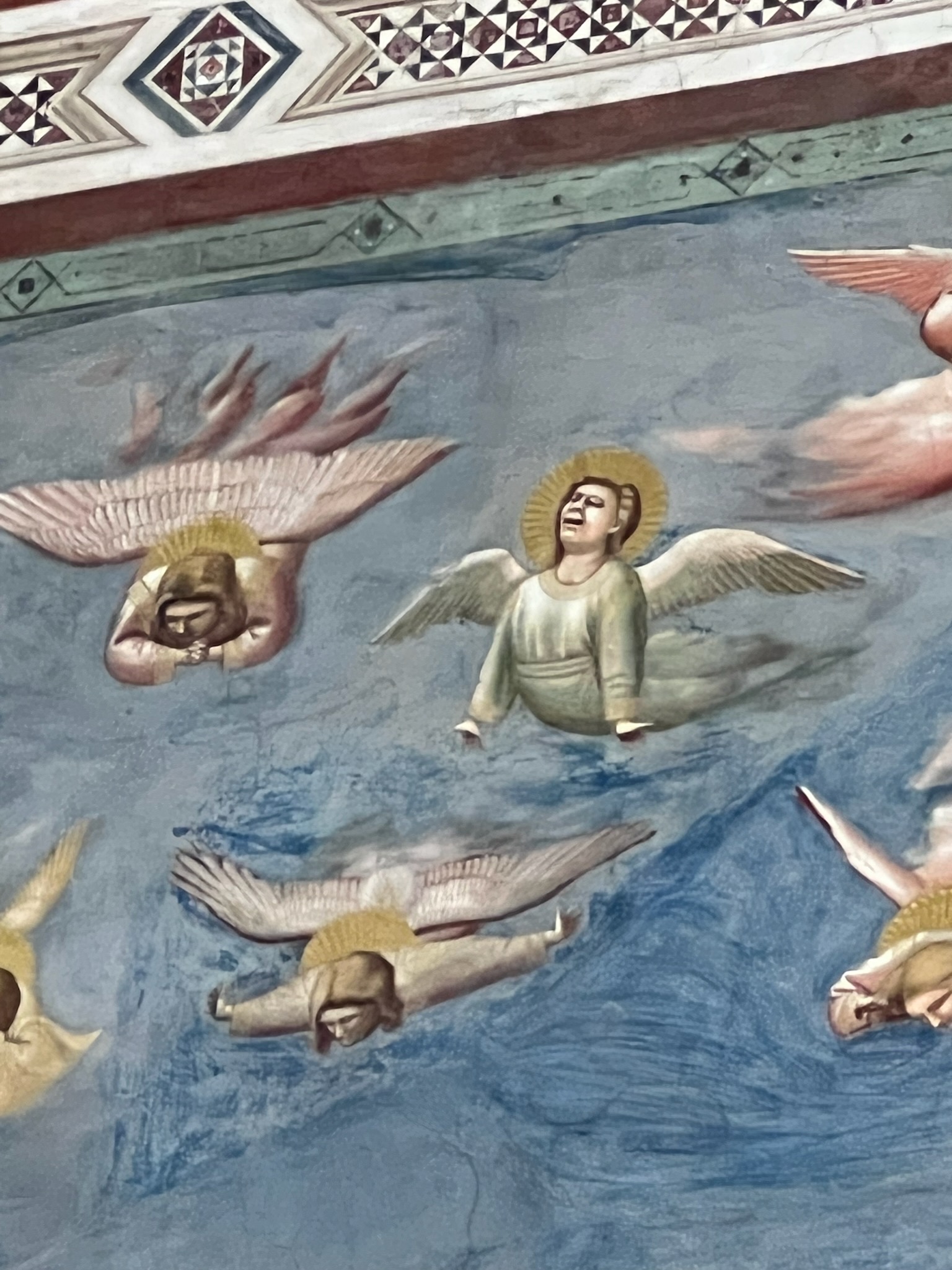
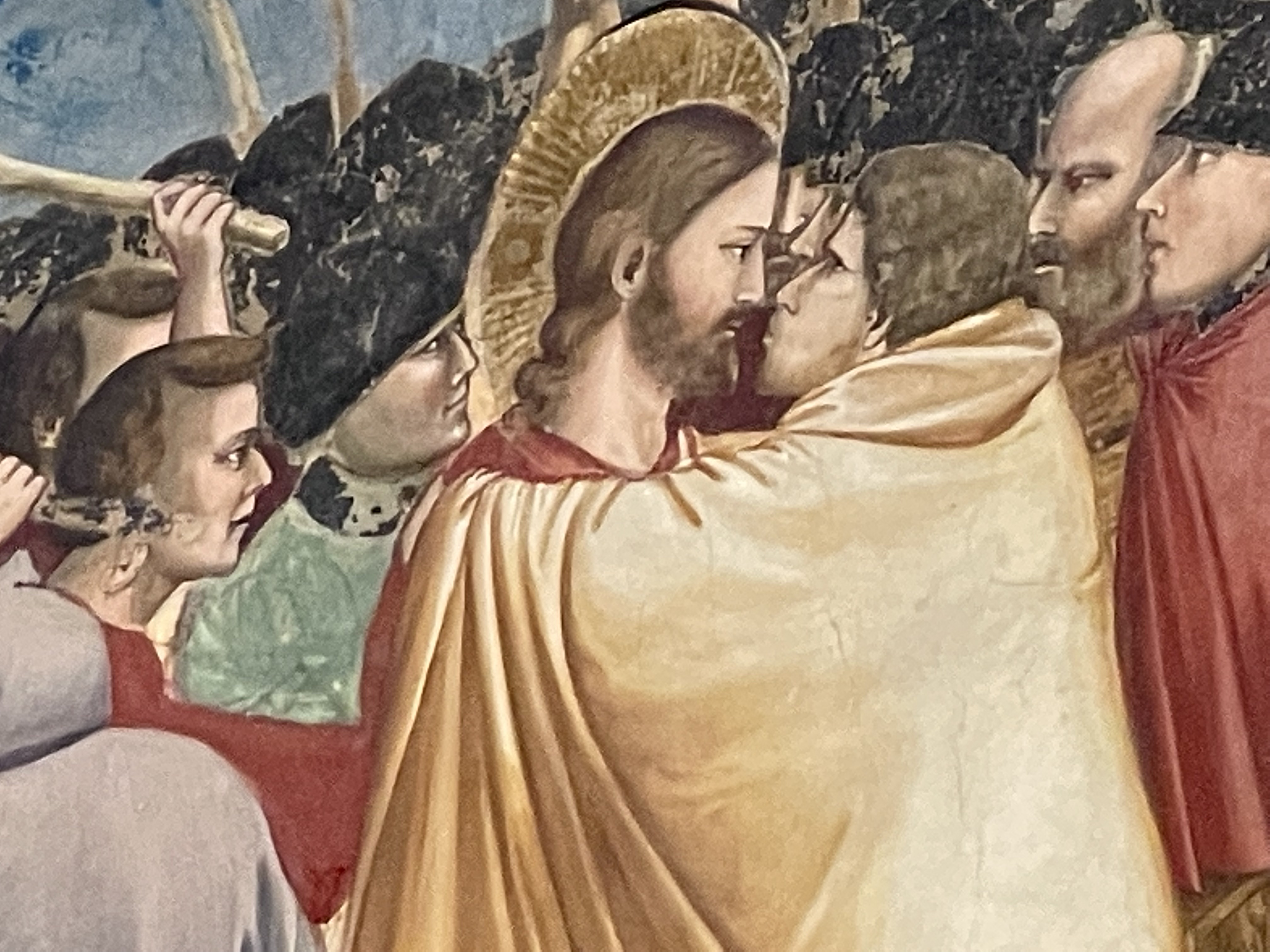
But all kidding aside, the Scrovegni chapel was breathtaking. I literally was moved to tears, not only by the beauty of the frescoes with their deep humanity – with pathos and humor instantly recognizable to a 21stcentury observer – but also that I was able to see them in my lifetime. With Covid and all, I wasn’t sure I would ever make it here. We only had 15 minutes in the small chapel – entry is restricted to limit the humidity, which can damage the frescoes, dating from 1303-05, but it was so moving to see them in person. Apparently, Dante (whose tomb we saw yesterday in Ravenna) was a friend of Giotto’s, and they are said to have hung out in the chapel while Giotto was painting it. You wonder if the depiction of hell in Giotto’s Last Judgement inspired Dante’s Inferno. The main walls are covered with deeply colored panels, telling the stories of the life of Mary, of Jesus and of his Passion and resurrection. It was hard to see the detail from the floor, but I had studied them in classes with Dr. Rocky (see previous posts) so I knew what to look for – the funny “side-eye” glance of a shepherd sizing up Joachim’s mental state, the bulbous, wine-sipping priest whose shape is reflected in the nearby wine jugs, the look of despair in the eyes of Mary lamenting her son, or the angels above who mourn with their whole bodies. And who can forget the two kisses – that of the parents of Mary – the “first kiss in Western art” according to Rocky – and the kiss of Judas, in which Jesus looks straight into Judas’s eyes at the moment of betrayal and basically melts him with his laser beam. These frescoes were part of the pre-Black Death zeitgeist in Europe, when Christianity, art and literature were being humanized, brought down to human scale. Dante was soon to write the Divine Comedy in the vernacular, in the Tuscan dialect, so that common people could understand it, if not read it themselves. At the time, everything written – and spoken by the priests in church – was in unintelligible Latin. Giotto was doing the same thing in paint, making the stories of the Bible human, making the people human, with real emotions, rather than the distant, otherworldly, highly stylized Byzantine figures of the Madonna and Jesus. This paved the way, after the Black Death, for the Florentine Renaisance of the 15th century. I tell you all this because it was incredibly exciting to see these frescoes, and think of all that came after, and before. They are just so beautiful, and even for a non-Christian, they are moving portraits of all the range of human emotion, and body language. People still make the same gestures, facial expressions, exclamations of full-body grief that people did 700 years ago.
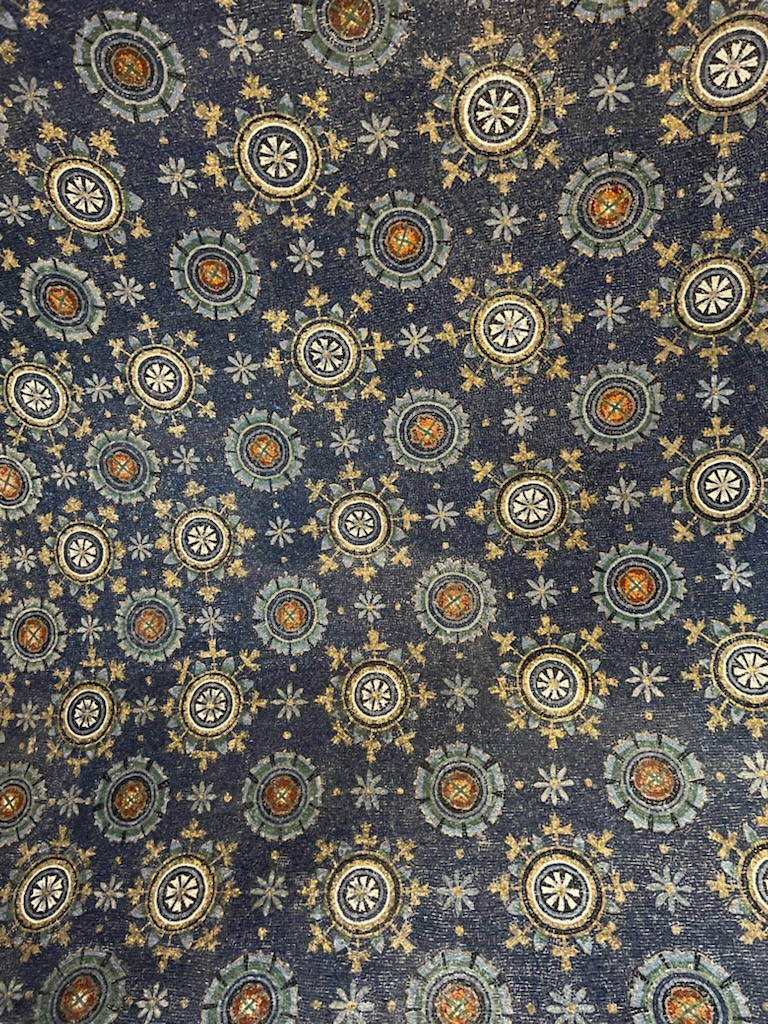
Fast-forward to yesterday – when we went to another important city and art pilgrimage site – Ravenna, a long two-hour drive south of Venice. A professor at Stanford, Martin Evans, who has since passed away, said once in a class I was in that everyone should try to go to Ravenna once in their lifetime to see the incredible mosaics from late antiquity. So I did. Finally. This ancient capital of the Roman Empire as it was collapsing in the 5th century has some of the world’s best preserved and most beautiful ancient mosaics – probably because it is so far out of the way no one bothered to plunder them. Our favorite was the Mausoleum of Galla Placidia – the 5th century AD daughter of an emperor who once wrote love letters to Attila the Hun – she was a scream. It isn’t believed she is buried here, but it is an absolute jewel box worthy of an imperial personage or a girlfriend of Attila. The deep blue sky of the small dome sparkled with gold stars looked like an ancient Persian rug, the beautiful plants, animals and Apollo-esque Jesus-as-Shepherd, all felt deeply tied to pagan antiquity. While the other monuments felt more political – the Emperor Justinian declaring his sovereignty (he had retaken Italy from the barbarians in the 6th century) in his portrait in San Vitale, or the wholesale re-writing of the mosaics at Sant’ Apollinare in Nuovo, where the barbarian-yet-Christian Theodoric had his courtiers repurposed as Christian martyrs by later Catholic re-conquerers. If all that sounds confusing, don’t worry, it is. But it was amusing – or canny – that the mosaicists failed to airbrush out the hands of his courtiers, still stubbornly holding onto the columns of the palace. Their bodies had been “mosaicked” over with curtains. But everywhere, the colors of the tiny tiles and the skill of the unnamed mosaicists were stunning. We had let Will and Amy go their own way, dropping them at the beach, while Rick and I sped through the beautiful old town, hopping from mausoleum to basilica. We had intended to take Will and Amy to one last mosaic-filled church on the way out of town, but it got so late we had to skip that last church. So they will have to come back on their own, one day, and see these mosaics themselves.
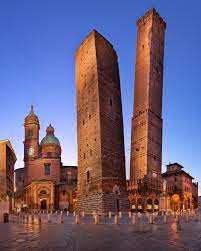
After loooooong hours of driving and perhaps 500 traffic circles, we arrived at Bologna last night, after driving from Venice to Ravenna, to the beach, to Ravenna again, to the beach, and then finally to Bologna. Bologna is a great city, with an estimated 40 km of covered porticoes – we had breakfast under a wooden one dating back to the 13th century – and swarms of young people. It is crowded but not with tourists – yes, there are tourists too, but mostly it seems to be university students, and people rushing to work – many on the not-quite-sea-worthy bikes that are ubiquitous. It has a nice vibe, and tons of great food, and shopping, and energy. We are glad we had a quiet day here and are gathering our energy for our trip to Florence tomorrow, where we will meet up with Grazia again.
So Ma, look! I blogged!
 The Thompson Attigs
We are loving being able to see some of Italy though your travel blog 🤗🤗💕